Opinion

Of Professors in the Ivory Tower: Inner Rumblings

By A. A. Bukar

Let me preface this with the caveat and confession that part of the reason I recently slow down hobnobbing with professors is my increasing abhorrence of this culture of excessive bootlicking and kowtowing that is creeping into academia and eroding the ideals of independent thought, spirit of free inquiry and detachment that hitherto characterise intellectual discourse. The radical critique of issues and events for the betterment of humanity and irradiating the society is slowly taking a wing, supplanted with overt politicisation of minor issues (and even non-issues). Today, young academics, like myself, are becoming increasingly afraid to express even simple admiration of who they consider as the IDEAL TYPE among their teachers and mentors in academia because of “interpretations”. For this, you can even be reported to the enemy of such a scholar to possibly victimise you “sabida ai yaron wane ne! Ku kyale shi, ai zai zo defence, ai za’ a kawo papers dinsa for assessment”. And on and on. Such pettiness and vendetta. Hence, many – out there – see  Nigerian academics as the worst enemies of themselves and are happy with how FG is dealing with them.

Little wonder whether this culture is obtainable in other parts of the world. Departments are compartmentalised into cliques and camps a la political parties in the larger society. Professors are becoming like emirs fortified by sycophants, making them unnecessarily snobbish and covetous of flattery. PhDs are deliberately delayed or tactically killed because a candidate does not BELONG. A blind eye is turned to obvious wrongs, mediocrity, and crass injustice because “our oga” is INVOLVED. Entitlements and privileges (especially of the younger ones) are stampeded to settle SCORES.

A friend sent me a Jumaat goodwill message, a quotation from Rumi which reads: “Listen to silence; it has so much to say”. How many PhD/MSc candidates do you know writhing in silent pain of frustration? Prof sirs and mas: listen to our silences and that shy smile that says “ba komai sir”. When I was an undergrad, I once overheard my teacher, Dr Gausu, talking about one of his colleagues in Economics, Business or Accounting (I can’t remember exactly) who’d become agoraphobic and almost schizophrenic because of PhD manhandling from a senior colleague. Of course, then I was too inexperienced to understand the heck that was about. They sarcastically even refer to the initials as “Pull Him Down”.

Whether this augurs well for generation, production and dissemination of ideas and knowledge typical of the Ivory Tower, I leave it to your imagination.

For these and more, many ideal intellectuals are on the lookout for escape windows from the suffocating atmosphere of poverty and frustrations taking over academia like a thick cloud on the horizon. Many are “diversifying”, hence diverting their attention from the absolute commitment ideal scholarship demands. Others are increasingly becoming nonchalant – that I-don’t-care attitude of: “if the department or unit fuels the generator set, fine, otherwise I teach the SPSS or Word Processing on the whiteboard”. Elsewhere blackboard. So Nigerian hospitals are not alone; medical practitioners are just a cohort.

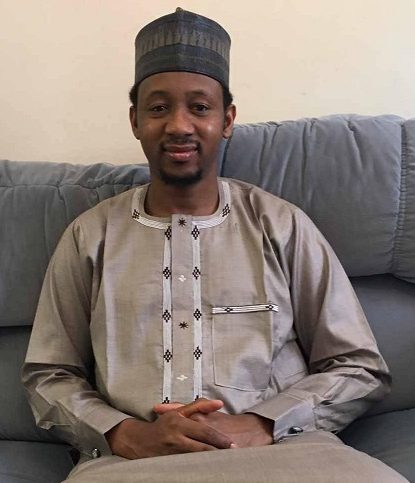
Despite all odds, I love being at the University. It is a place where I feel I naturally belong. And our campuses are still dotted with the IDEAL TYPE (just as there are IDLE TYPES who do not “profess” any knowledge) that constantly bring back to one’s memory my favourite: Edward Said. Critically engaging. Highly unassuming – like Mazrui. Passionate about nourishing the mind; concerned with the public good and Humanity as a whole. People who will unconsciously make you feel you are far from arriving without making you feel embarrassed. I have recently met and enormously admire one such intellectual is Professor Abubakar Mu’azu of the Mass Communication department, UNIMAID.

Interpret this one too the way you like. Report me anywhere. Land me into trouble. I no longer care. But Allah knows whether this is coming from the bottom of my heart or elsewhere. Such as an attempt to curry favour.

After all, what use is admiring people if you cannot tell them or others you do? Or should we hold on till they are no more? Wouldn’t that serve as a token of encouragement to maintain the course and tempo against all odds?

I have earmarked a few other similar intellectuals I will write about in due course on this space. I will unburden my heart about people I feel positively towards. Yes, I will specify those who fit my definition of the ideal intellectual. Part of this is, of course, honesty. Wallahi, no matter how engaging you are, you are out of the equation once it comes to the light you are dubious and too self-centred. If you’re extorting money or sex from your vulnerable students, you cannot be my model. But again, I am not looking out for an angel.

Back to the subject, I have met with Prof Muazu only a few times. One was when he came as an external examiner to my thesis in April 2018 and some months earlier as an accreditation team member for the college I taught in Yobe state. The last, some weeks back. Each, he left me with nothing but admiration and deep respect.

When I phoned my referee and supervisor at undergrad, late Prof Maikaba, to congratulate him on his last promotion, he typically enquired about the progress of my thesis. I told him then, “I was done with viva yesterday and effecting corrections now”. Curiously, he returned with a finder about the examiner. When I replied that it was Mu’azu, he said: “kace an sha aiki”. Toh Bukar. PhD beckons. You can’t wait, especially for one in this business. He admonished me as usual; I giggled, thanked and said my goodbye.

I don’t know whether it’s appropriate to reveal this too. Some hours before the viva voce, my supervisor, Dr Binta Kasim Mohammed, called alerting me “to prepare very well. Because the external examiner brought is extremely thorough and critical”. Sir, you are appreciated and held in high esteem not only by nonentities like us but also by your colleagues. But my assessment of you from afar is that: these things matter little to you (if at all) – out of humility.

From both you and the late Maikaba, I graduated with distinction. But each time we met, you left me feeling inadequate, making me wonder ‘when will I arrive?’. Parts of this are the books you recommend, which I never read, or know not exist. But somewhere in WHERE I STAND, Sheikh Gumi has opined along this line that knowledge is such enigmatic that the more you learn, the more you realise that you know very little. I wonder whether you feel something similar sometimes. Yes, despite the accomplishments. In just your last visit, you recommended, as the situation warranted, many texts. Among these are Peter Winch’s THE IDEA OF A SOCIAL SCIENCE AND ITS RELATION WITH PHILOSOPHY. Then the POSITIVIST DISPUTE IN GERMAN SOCIOLOGY. The latter is such a rare collection – in fact, my first time to meet Adorno, Habermas and Karl Popper in one place. Both books remind me of similar stuff I read from the staple of Claude Ake and Yusuf Bala Usman of blessed memory.

In this vein of characteristic modesty, you specifically asked me to read Ben Bagdikian’s MEDIA MONOPOLY after the viva voce in order to steel my argument on the influence of profit drive in media content production. A copy of my thesis still carries your adorable handwriting suggesting the title and other points. But little wonder you never drew my attention to the fact that you have written extensively on media in peacebuilding until my curiosity took me to the internet and a bookshop where I stumbled CONFLICT MANAGEMENT AND THE MEDIA IN NIGERIA  – a book coedited by you and Gani Yoroms. This was despite your awareness that my thesis is squarely about this matter of controversy. Quite recessive indeed.

With the crisis engulfing Nigerian Universities (the worst I have ever seen) and academics running helter-skelter for greener pasture, I equally wonder what becomes of the academia after the few of you that remain out of passion pass on to something else or the inevitable great beyond. And especially if this maddening ill-treatment continues from the federal government. Allah Ya kiyaye, amin.


Bukar teaches Mass Communication & Journalism at Ahmadu Bello University, Zaria.

Nigerian banks and the imposition of foreign Corona protocols

Have you tried entering any Nigerian bank these days? You will have an experience you will never want to go near bank again. The reason is that the banks have taken their Covid-19 protocols to a primitive, cruel and self-destructive level. It is time they throw away their Covid-19 protocols. I have long said if Corona had been what we were made to believe, probably by now we would have all been dead. But fortunately Africa, for unexplained reasons, has been spared the disasters predicted about the pandemic.

Bankers are like all of us when they leave banking halls. They go to markets, schools, airports, motorparks, shopping malls and places of worship where Covid-19 protocols are thrown to the dogs. What they don’t get from the bank they will still get it from outside the banks. If the rest of Nigerians don’t care about Covid-19 protocols, why should bankers be more Catholic than the Pope?

Schools resumed also with their mad frenzy for observing all Covid-19 protocols. But within a week they have gone back to basics. Students don’t have the discipline, patience and above all, the resources to keep faith with Covid-19 protocols. No one can be religious with hand sanitizer, facemask and hand washing. My children tried it and my Chief gets his facemask soaked in soup daily. He loses bottles of sanitizers daily. At his age there is no way he can understand Covid-19 protocols and will not be made to understand the dangers of Covid-19.

But all in all Covid-19 is past behind us. Social distancing and protocols should be part of individual responsibility. Covid-19 or no Covid-19 we are supposed to exercise distancing and hand washing hygiene. But that does not mean we should promote Covid-19 protocols to religious level.

Our African, and to some extent Nigerian Covid-19 is entirely different from the deadly foreign one. This is the best time to acknowledge the local thing over the deadly foreign one. Ours is more friendly and merciful. The banks should know these and stop their stupid and deceptive lies.

Aliyu Nuhu writes from Abuja, Nigeria.

Attention Yobe State Scholarship Board (YSSB)

By Khalid Yusuf Tebo

I am an indigene of Yobe state. I was among the beneficiaries of Yobe state scholarship bursaries from 2014 to 2020. I was paid for three sessions throughout my school days at the university. It is a government tradition in my state to pay students’ tuition fees since from the time of late Mamman Bello Ali (MAL), a former governor who pioneered the programmme. Unfortunately, the board is unable to pay the students bursaries every year and, on time.

Apparently, this scholarship is a motivation towards helping the students acquire their education across different tertiary institutions of learning in Nigeria and abroad. In addition, this monetary reward reduces the burden on parents who cannot support their children to earn an education in the state, especially the poor.

Nevertheless, YSSB had recently published a reminder on their Facebook page about the 2020/2021 session payment. As regards, I hope the board is aware of the hardship in the country and the situation in which students of the state are facing daily at schools. Of course, this is not to update the general public about the issue of payment only, as the board used to do in our days without a positive outcome. Obviously, it is about paying the students bursaries on time every year.

I can remember receiving my last payment in 2020 on a table instead of via my bank account as exercised by the board. I suffered a lot before I was paid my 2018/2019 bursary. I went to the board three times and paid transport for every trip from Maiduguri where I schooled and later from Potiskum to Damaturu. Some of my friends were studying in neighbouring states; they too faced the same problem.

According to the board, a technical problem was encountered, and the beneficiaries provided incorrect details and account numbers. While to my knowledge, I provided the correct details and most of the students too, I believe. But, as an economist, I don’t play with anything related to money, especially scholarship. So, last year, it took the board more than a year to pay a few students their bursaries.

As usual, the tradition in previous administrations is not like that, even though they skipped payment of bursaries than regularly. But, in Buni’s administration, students face a severe problem in their education than at any other time. Yet, Yobe is the only state that declared an emergency on education and is still among the states with the highest number of out-of-school children.

Therefore, I am calling the attention of YSSB to avoid such problems encountered in the past. An unconfirmed source said the problem was due to corruption. Anyway, one of the only sources of happiness for students is scholarship in Yobe state. Unfortunately, the government cannot employ graduates in civil service and areas of business. Lastly, I am appealing to the board to pay the students every year on time and encourage the students to be the ambassadors of the state in all tertiary institutions of learning.

May Yobe and YSSB succeed!

Khalid Yusuf Tebo is an economist and activist. He can be contacted via khaleedyusuftebo5@gmail.com.

Reconciliation of Kwankwaso and Ganduje

By Aliyu Nuhu

Kano State governor, Dr Abdullahi Umar Ganduje congratulated his predecessor and former boss, Senator Rabiu Musa Kwankwaso, on his birthday. I feel Kwankwanso and Ganduje will surely one day reconcile. These people have come a very long way together. It is the political devil that is harassing their conscience and calculations. However, their supporters gave Ganduje’s birthday message different interpretations and are killing themselves over it.

Kwankwasiyya followers said it was hypocrisy and deception. Some of them viewed it as a nice gesture. On the other hand, the Gandujiyya followers said it was a respect for the former governor.

Either way, I see it as an important step in building bridges and mending fences. How I wish Kwankwaso will, one day, do the same!

The supporters of the two camps should sit and just watch the two gladiators keenly and carefully. They shouldn’t be fighting and insulting one another. One day they Kwankwaso and Ganduje will reconcile. There is no permanent enemy in politics.

I am sure with time you will see Kwankwaso hugging Ganduje and singing his praises. On the other hand, Ganduje has always reached out and is still referring to Kwankwaso as his political father.

With this kind of move, reconciliation is easy.

Who expected Abubakar Rimi and Sabo-Bakin Zuwo to become friends again? Who expected Atiku Abubakar and General Olesagun Obasanjo to come back together? Who knew Nasiru El-Rufai and General Muhammadu Buhari would be together again.

On the flip-side who expected Buba Galadima and Buhari or Malam Ibrahim Shekarau and Buhari to part ways. One day they will also reconcile.

That is politics for you. Don’t lose sleep over politicians and their fights. They are very selfish and deceptive!

We have the simple Artificial Intelligence to secure our rail tracks

By Hamid Al-Hassan Hamid

I wrote twice about possible attacks on our rail tracks; it is just a matter of time. This, in my opinion, is just a test run; expect more to come if we continue to neglect simple and sincere advice due to ineptitude and corruption. The rail tracks are not left alone, on their own, anywhere in the world. They are protected, monitored and secured. It is done through determination and sincerity of purpose. How many souls would have been lost had the rail skidded and crashed! How disastrous!

Again, with all our tech universities, we cannot build local drones to fly 24/7 and monitor at least our rail tracks. The only thing our professors are good at is attacking another person who became a professor that they do not like.

The technology we need to curb these security challenges is too expensive to buy; we do not have the money. But it is cheaper to develop, and we can do that locally.

I once reached out to MTN, asking how much it would cost me to connect drones that will fly across the country, especially our forest, for intelligence gathering. I will build the server, and they will provide the network, without the Internet data, I don’t need the internet. They gave me two options:

1. Pay 150,000 naira monthly to connect as many drones as possible nationwide.

2. Make them partners in the project, and I will not have to pay a dime.

They needed confirmation and approval from appropriate security bodies. It has been about a year or so now. Getting the interest of the appropriate security bodies alone is more complex than quantum physics.

In Africa, the only thing we love is physical cash, but I don’t blame us. I just pray that God cures our sickness soon.

We need to establish private tech defence companies that are private entities and not owned by the government.

Artificial Intelligence has more practical use cases in Africa. In addition, it will be easier to implement because the biggest fear against Artificial Intelligence is that it will compete with humans in jobs and take away those jobs.

Africans don’t want jobs; they just want to have something to eat throughout the week. Forget about the rampant cry of unemployment. As soon as you employ, you will begin to see. Artificial Intelligence will have no resistance in Africa, especially in security.

What shall we do?

I have been getting messages and comments from brothers trying to help with the Private Defence Tech Company Startup. Some proposed sending proposals to either Minister of Communications and Digital Economy Professor Ali Ibrahim Pantami or Vice-President Yemi Osinbajo. Some also proposed promoting the idea in media houses until it reaches the ears of those in power.

First of all, I have access to Professor Pantami through childhood friends who can meet him whenever they want to. I also know people that can reach the VP. But I disdain the idea of sending proposals.

This is what I am doing at the moment:

I have a team of four individuals with backgrounds in the military and tech. We are making plans to partner with anybody (with genuine sincerity) interested in starting something simple that can be pushed into the market for testing and continue building from there.

At this point, what we want is to partner with the research department of any Nigerian university, military institutions like the Airforce Institute of Technology (AFIT), or the Nigerian Defence Academy (NDA). We want to start by building an AI that will be able to:

1. Identify faces at entrances through cameras.

2. Log check-in and checkout time of each face.

3. Determine if anyone checked in and did not check out, and report such cases to analyse the data to know why such checkout did not occur. The checkout may be missed because the camera did not capture the face or another exit was used, in which case we would like to know if the use of such alternate exits is valid and improve the AI to be more accurate with regards to missing faces.

4. Print out daily, weekly, monthly and yearly statistics on such check-ins and checkouts per individual and the whole entrants.

5. Try predicting possible movements of each individual based on the data collected as they grow.

6. Send silent alerts to mobile phones of respective security personnel on duty if a breach in the entry is detected, for example, an individual using an entrance or exit that is not within their jurisdiction.

We can develop the AI, create the server, and assist with the statistics as part of our responsibility.

We can start by using cheap Android phones as cameras at respective entrances and exits by connecting them to the server via wifi; this cuts down costs by far at the initial stage.

We want to grow the system gradually by later introducing drones to fly outside and see if they can recognise personnel that have been logged in the building at various entrances, identify the cars they use, log their car plate numbers, identify what canteen they like taking coffee within the vicinity and so on. Then gradually scale to state and federal levels.

It is very simple. But can corruption and corrupt individuals allow this?

Hamid is a social commentator, an expert in AI and writes from Sudan.

Letter to Hon. Mai Mala Buni, The Executive Governor of Yobe State

Dear Buni,

We need to talk; governance is beyond speeches. It requires actions, commitment and foresight. There is no place in history for those that failed to deliver the mandate given to them in any democratic polity. The world’s political leaders continue to champion the ideal democracy, tell voters you know the best, use your voice to bring change and take ownership of your destiny in knowing the details and aspects of governance. This gives prudent leaders the zeal and passion for taking responsibility, for leading by example. To incorporate new ideas and creativities, which provide an avenue for feedback and to believe in criticisms. These are the attributes that make them stand out amidst many challenges.

However, if we are to measure the growth and progress of our society, the indices we can use is education because acquiring quality and functional education is the concern of every community. That is why scholars in the field of public policy emphasize that, when it comes to educational policy, the stakeholders and actors are paramount to the policy’s success. They need to be integrated, involved, and allowed to participate freely without hindrance from the policy formulation and implementation stage. All their ideas and contribution need to be examined, analyzed and incorporated into the policy. They need to feel important in every step of the policy process. This will give them ample opportunity to take ownership and responsibility for its success and bring about a higher level of commitment in implementing the objective of the policy.

You declared a ‘state of emergency on basic and secondary education’ on your assumption of office. We all cheered and understood something needed to be done to save the sorry state of education. We believe in your powerful speeches on the first-ever ‘Educational Summit’ held in Yobe state. You declared that “I know there are a lot of complaints about some teachers, who are not qualified to teach, and complaints about some teachers who are not able to speak or write well in [the] English Language. This has to change”. We all hailed again, thinking the messiah and symbol of hope had arrived.

From your oratory speeches, we develop confidence that today’s governance transcends what had happened in the previous administrations. We all got a sigh of relief and hoped new ideas and philosophies would guide your administration. The people of outstanding calibre would be called to serve the state, people with foresight and reason.

The problems facing the Basic and Secondary Education policy are many. The broad objective of the policy was in papers, and in practice, it did not demonstrate what it entails. The problem emanated from the formation of the team or committee saddled with the responsibility to craft the policy and to non-involvement and proper participation of actual stakeholders: Teachers, Headmasters/Headmistress, Education Secretaries, etc. Supervisors, Zonal Inspectorates, former and serving Principals and parents of the pupils/students. These are the most important actors and stakeholders alongside the legislative and civil society organizations (CSOs).

This action makes the policy a product of educational elitism or an avenue of wasting state resources. It did not reflect the wishes and aspirations of the general populace. It did not cover every stakeholder because most of the committee members are teaching in higher institutions of learning. They don’t have actual expertise in what it takes to make primary and secondary education functional. The committee lacks the wisdom or vision to go beyond their thinking to involve the real stakeholders in generating the policy ideas.

Since the signing of the committee’s report on January 16, 2020, by you, and declared that “all hands must be on deck to actualize the goals of the policy”, eleven months later, on December 16, 2020, Daily Trust released a survey of the number of out-of-school children in Nigeria by Nigerian Education Data Survey (NEDS). Yobe state has 57 per cent of school children in the country, and this figure corresponds with the technical committee’s report that 40% of Yobe children are out of school.

What have you done to improve the students’ enrollment and retention in the state, enhance teachers’ capacity, and employ new ones to fill the gap? The emergency is not about pronouncing a word; it requires action, and, in this part, you failed to lead and hold the oath of office you took to manage the affairs of state that you’re ready to make education functional and accessible. Leadership is all about making an impact in people lives you promise to govern.

I was surprised by the emergency in education, particularly the deduction of teachers’ salaries in August and September. Everybody knew there was uncertainty in revenue generated and allocated to the state, but this would not be an excuse. You need to understand, the critical stakeholders in achieving the goals of your policy are teachers. How can you declare an emergency on a sector hoping to improve it but end up eating their hard-earned cake?

You need to double teachers’ salaries and allowances, provide proper capacity building training, provide accommodation, and motivate them to work hard. This singular action smeared the image of your administration. Unless you reverse this policy of salaries deduction and apologize to them for the hardship and problem your administration causes them, you’re heading in the wrong direction.

Moreover, as we all know, the significant source of revenue to finance all the intended projects are Federal Allocation. Due to uncertainties in the global oil market, the government should review the policy and allow all relevant stakeholders to review and execute the policy. The government should cut the cost of governance, reduce unnecessary expenses, and accommodate all the projects you intend to achieve in realizing functional education in the state.

In all the projects done in some schools across the state, the major funders of these projects are donor agencies and development partners in collaboration with the State Emergency Management Agency (SEMA) and North East Development Commission. However, what is the role of other institutions, especially the State Universal Basic Education Board (SUBEB) and Ministry of Basic and Secondary Education, in complementing the efforts of these Donor agencies in making and realizing the objective of the policy? Unfortunately, we do not see their visibility, even the recruitment of SUBEB, for almost a year, there is no result.

Given the background above, we need to sit down and talk about governance. History is there to those who leave a golden legacy or otherwise ensure your government adopts a participatory approach to policymaking involving all stakeholders. The policy should be the product of citizenry wishes and aspirations by allowing them to participate in policy design and implementation, enhance teachers’ and administrators’ capacity with the sole aims of improving their productivity and increasing their salaries and allowances.

Funding is key to achieving the policy’s objectives; 26% of budgetary should be allocated to education and ensure proper utilization. In addition, you need to create a Basic Education Trust Fund (BETF), be managed by accomplished education administrators, and provide robust and proper collaboration and partnership with Donor Agencies and Development partners. What we want from you is action and taking responsibility to show you can do it.

Umar Yahaya Dan-Inu wrote from Hausari Ward, Nguru. He can be contacted via umarnguru2015@gmail.com.

Nigeria: In need of El-Rufa’ism

By Tahir Ibrahim Tahir (Talban Bauchi)

Do you remember when Governor Nasiru El-Rufai chased bandits into the bush along the Kaduna/Abuja expressway as he encountered a bandit attack along the highway? He practically trailed the assailants into the bush, chasing the gunmen, along with his entourage of armed escorts. He wouldn’t stand aside and watch the security men put their lives on the line alone. They had no choice but to cover him as they pursued the bandits. Some were shot, and a few escaped with injuries.

El-Rufai is a hands-on man and practically chases the reality of things to the letter. If you were a Chief of Air staff, with El-Rufai as your C-in-C, you would probably be called to a scenario where El-Rufai is in one of your bases, manning a drone attack himself. I bet you, he could even be in one of the Tucanos, spitting fire on terrorists; and you would end up answering yes sir to him, over the mic, from the fighter jet. No garrison commander or head of any of the counter-terrorism operations would ever allow himself to be caught flat-footed by his irrepressible commander in chief. You can’t be in a command guest house somewhere while your Commander In Chief is in an MWRAP elsewhere on the battlefield, charging your soldiers on to carry the battle to the terrorists.

El-Rufai would not waste time naming the bandits as terrorists, so he wouldn’t be handicapped in annihilating their terror! If all the North-Western states’ governors had co-operated with El-Rufai’s plans long ago, they would have proactively put in place all the crunching measures — that would have ended the banditry plaguing the region today.

Do you know that Kaduna’s IGR of 13.6 billion in 2019 has grown to a whopping 51 billion in 2020? Anticipating a 60 billion IGR in 2021? This could mean that our monthly federation allocation of an average of 600 billion could be well over 1.5 trillion, to a probable 2 trillion naira monthly! Elrufai would find all those nooks and crannies of our economy that are not yielding fruits to the federation account — and make sure they matter to our economy. The Kaduna IGR example is a classic case of economic diversification, which is what Nigeria desperately needs. The President Muhammadu Buhari-led administration has laid the template for this, and what remains is the right lieutenant to take it to the next level.

States would be mandated to replicate the Federal template on revenue generation, and there would be less pressure on the federal purse. More viable states would be the elixir to the economic emancipation of Nigerians. Governance would be made to impact the local level, as revenue generated would reflect in the development of the rural areas. Under El-Rufai, revenue generation would not be a problem at all!

Have you seen how El-Rufai is developing a new generation of technocrats, entrepreneurs, and public servants? We have a Chief Executive in Kaduna state who is just 29 years old! Most of his commissioners are under 40 years of age. New metropolitan authorities have been constituted and are charged with the development of their base areas. All these executives are young indigenes who are representing the younger generation well.

El-Rufai is giving the youths a hands-on advantage of learning and gaining experience. He is grooming a new age of leadership in the state, which would never be bereft of ideas, and the zeal to implement those fantastic developmental ideas. This is aside from making youths SAs or SSAs only, as the highest offices they can attain. This is profiting from the abundance of technical knowledge that the youths can offer. This is harvesting youth IT knowledge and potential away from the yahoo-yahoo industry.

Nigerians aren’t so law-abiding and are fond of cutting corners and profiting from the lapses of our laws, as well as law enforcement. To date, no FCT Minister is missed, the way El-Rufai is yearned for in Abuja. The disarray and chaos in Abuja are unbecoming. It would take an El-Rufai to reset the city and make it a befitting nation’s capital. I’m sure the income that the FCTA would generate will be unprecedented — enough to manage itself, with or without any Federal interventions.

Kaduna has become one magnificent project site as projects run rampage across the state. A before and after picture of the Kawo bridge area is breathtaking. ‘Kasuwan Bacci’ is now a ‘Kasuwan Farke’ (a transformed and brand new metropolitan market).

I can only imagine the Mambila hydro project in the hands of El-Rufai or the Abuja/ Kano/ Maiduguri highway. The North-Eastern road networks’ deplorable situation would become history. I’m sure the South West and South East would be filled with light rail networks.

The industrialisation of our agro-allied processes would be in full swing, just the way agro-processing industries are springing up in Kaduna. We would then be ably competing with countries like Holland, in the production of milk. We could compete with Mexico in the export of tomatoes, where they make over 2 billion dollars. El-Rufai would make sure that Federal laws are respected and adhered to and would make real scapegoats to deter other goats from grazing on the wrong side of the law.

Nigeria desperately needs Elrufaism. If Nigerians can target their own national infrastructure and bring it down to a halt, who better to handle us?

Tahir is Talban Bauchi and can be contacted via talbanbauchi@yahoo.com.

Audu Bako: The military administrator who made Kano great (I)

By Mubarak Ibrahim Lawan

Audu Bako, a Police Commissioner, the first military governor of the old Kano State from April 1967 to July 1975, was a wonderful human who executed superhuman projects that were, to this day, unsurpassed. When he came, Kano was the most educationally deprived among the 12 states created in 1967. Nevertheless, he made it compete with the rest before he left.

Together with his dutifully well-meaning permanent secretaries and commissioners, Audu Bako charted a good Kano development plan that was followed by successive governments up to the year 2000. Only a few changes were effected in the last 20 years. However, he was regarded as the most insightful governor of Kano to date.

Audu Bako gave Kano life when he came despite having met only 743 staff in the entire state, most of them junior officers; no single Kano indigene that could operate a bulldozer; only 241 primary schools, 16 post-primary schools and 139 teachers; no tertiary institutions in the whole state except Bayero University College and Advanced Teachers College, ATC Kano.

With the take-off grant of N10 Million on 1st April 1968, Audu Bako created six ministries, (1) Agriculture, (2) Forestry and Community Development, (3) Justice, (4) Education, (5) Finance, Industry and Commerce, and (6) Works and Surveys, as well as three other commissioners under the governor’s office who took charge of Home Affairs, Local Government and Information Division.

To bring the government closer to people, Audu Bako established 8 administrative headquarters: (1) Kano North Central -Ɗambatta which includes Ɓaɓura, Garki, Ringim, Gabasawa, Gezawa and Minjibir; (2) Kazaure, Comprising Roni, Yankwashi and Amaryawa; (3) Gumel which includes Sule Tankarkar, Maigatari, Ɗanzomo and Gagarawa.

The fourth (4th) was Haɗejia comprising Birniwa, Malam Madori, Guri, Kirikasamma, Auyo, Bulangu and Kafin Hausa. (5) Kano West with headquarter at Gwarzo includes Dawakin Tofa, Bichi and Ƙaraye. (6) Kano South-East with headquarter at Birnin Kudu has Gaya, Jahun, Dutse, Sumaila and Gwaram. Then (7) Kano South-West -Rano, Dawakin Kudu, Kura, Ƙiru, and Tudun Wada. Lastly, (8) Kano Metropolitan that comprises Ungoggo, Kumbotso, Kano and Waje.

This way, the far-sighted governor touched the lives of everyone in the state. Among his accomplishments, Audu Bako expanded the government house, built administrative area offices, the famous Gidan Murtala, the Audu Bako secretariat and the State Fire Service. He also built the Bagauda Housing Estate at Dakatsalle, Bagauda Lake Hotel, 13 junior Staff quarters, the 500 Housing Units at Tiga workers village, the bedroom houses at Suleiman Crescent and WRECA Staff quarters at Challawa and Gari Dams.

He also built 130 housing units at the pilgrims camp and junior staff quarters at Haɗejia and Gumel. Similarly, he built Teachers’ Housing Estate at Gwammaja as well as Waziri Giɗaɗo Flats at Lagos. As for roads, he laid tarred roads at Gwagwarwa, Tudun Wada, Kano City, Gyaɗi-gyaɗi, Tarauni, Nassarawa, Sabon Gari and other places.

He dualized Murtala Muhammad Way, from Ahmadu Bello way to Triumph Junction; BUK Road, from Ƙofar Nassarawa BUK; Aminu Kano way; Triumph Roundabout -Ƙofar Mazugal, Ƙofar Ruwa, Katsina Road Junction; Ibrahim Taiwo to Ƙofar Mata, Ƙofar Ƙwaru, Ƙofar Kudu, Kasuwar Rimi to Ƙofar Nassarawa. Still, he dualized State Road from Silver Jubilee Roundabout to Audu Bako way. Others are Lagos Street, Airport Bridge, Mandawari to Ƙofar Kabuga and Suleiman Crescent.

These were part of his achievements in infrastructure. The next write up will look at his success in Kano rural areas, Agriculture, education and health sectors. Indeed there were leaders who, because of their honesty, integrity, political will and commitment, achieved, in about 8 years, what present leaders put together can not achieve in 30 years.

May we learn from this past!

Mal. Mubarak Ibrahim Lawan is a Lecturer at Alƙalam University, Katsina and writes from Kano State.

Why Not Just Make a Waqf Now?

By Abdullahi Abubakar Lamido

I begin, after praising Allah and sending blessings to the beloved Prophet peace be upon him, with three stories from Nigeria. They are all real. The first is of a rich man who died and was survived by a wife and her two children. His estate included mansions in choice areas, high worth investments, company shares, farmlands, etc. This “beloved” wife was advised to make a waqf (perpetual charity) of just a mosque as a source of everlasting reward for the late husband from the hard-earned wealth he spent his life gathering. She was reminded that less than one per cent of his wealth could do it.  The wife answered in one word: “Impossible”! Rather, she offered to cook rice and beans every Friday and give to the begging Almajiris around as sadaqah. To be fair to her, she did so for some months until she met a new darling husband with whom she now enjoys her inherited, halal fortune! End of story!

The second story is that of a religious and highly influential personality who died and left behind several sons and daughters, all of whom had already grown wealthy and influential. The deceased’s bosom friend, who was the custodian of many of his possessions, approached the heirs. He pinpointed a plot of land in a choice area in one of the largest Nigerian cities and offered that if they would designate it as a perpetual charity, he would build an ultramodern Islamic centre there as a waqf for their late father. This, he said, was to create a ceaseless flow of rewards to their late father. Alas! To his face, they simply said no! And the rest is history.

The third is the story of a woman philanthropist who was the wife of an influential person. She was known for her dedication to building mosques, schools, among other charitable interventions. After her demise, the husband learned of several uncompleted mosques and schools that were part of her charitable initiatives. He called her children to a conference and suggested that from her inheritable wealth, they should dedicate what would be enough to complete such ongoing projects. And what a small portion of her wealth was that! They unanimously rejected his offer, departing in a “just give us our money” mood. It was the father who used his resources to finance the completion of the projects. I gather that he was lucky to have learned some lessons here and begin to emulate his late philanthropist wife. He actually increased his budget for Islamic philanthropy as he was already known for charity also. May Allah accept it for him, and for her.

I am sure by now you, my dear reader, have started to recollect several similar stories you have heard on several occasions or which might have even happened close to you. I also have many to share. But these ones suffice as examples. At least for now. What lesson, then, have you learned from this?

Now, remember the Prophetic hadith in which he explains that the moment a person dies, his reward fetching deeds terminate except three; waqf or perpetual charity being the first of them. The other two reward sources are the prayer of a pious child and beneficial knowledge. Interestingly, in the hadith is an equitable distribution of reward sources of some sort. The wealthy folks no doubt have access to the “lion share” in terms of perpetual charity. Beneficial knowledge is the share of the scholars essentially. For the non-rich, non-scholar believer, giving a good upbringing to his/her children guarantees them prayers from pious children and a continuous flow of reward.

Many owners of surplus resources miss the opportunity of making a waqf due to procrastination and other flimsy considerations. By doing so, they deny themselves the most important investment of their lifetime. How can Allah give you the opportunity of making an investment that may pass a millennium fetching you rewards only for you to refuse to do so? Daniel Crecelius explains to us that several waqfs, created for the provision of various social, religious, educational, economic and welfare services free of charge to the public, have survived for five centuries, and some for over a millennium. Now! Imagine yourself, in your grave, receiving “alerts” of rewards daily while charting with the Angels! Can you imagine the amount of reward you would earn by continuously creating benefits, solving problems, drawing happiness to thousands or millions of needy and poor lives for decades, centuries or even a millennium after your departure from this deceptive world? Consider the following stories.

You already know the third caliph of the Prophet, Uthman bin Affan (may Allah be pleased with him). After the migration to Medina, access to water became a great challenge for the believer. They had to buy from a Jew who owned a well called Ruma. The Jew was so wicked, charging exorbitant prices, and making life difficult for the believers. The solution was for the Muslim community to own it. The Prophet peace be upon him announced a guaranteed direct entry certificate to Jannah for whoever purchased it. Uthman did. He surrendered it as a waqf. People now could get water at zero cost. This charity became blessed and continued to expand. During the Umayyad period, it began to grow date palm trees in its surroundings. Many grew. The Ottoman Empire paid particular attention to developing the trees generating income from them. The returns would then be shared into two; a portion distributed as charity and the other saved. Later, the Saudi Arabian authorities opened a bank account in the name of Uthman Bin Affan. They save half of the returns and distribute half in charity. As the savings grew, a hotel was built in Medina, still in the name of Caliph Uthman. Half of the returns is reinvested while the other half, amounting to about 500 million Riyals annually (equivalent to about USD14 million) is distributed in charity. 1400 years of ceaseless reward, thanks to waqf!

Then the story of the great philanthropist, lady Zubaiyda, daughter of Ja’far al-Mansūr, granddaughter of the second Abbasid Caliph Abū Ja’far al-Mansūr; wife of the 5th Abbasid Caliph Hārūn al-Rashīd and mother to the 6th Abbasid Caliph, al-Amīn. Although she died in 216 AH (832 CE) in Baghdad, her source of reward is still yet to! In 186 AH (802 CE), she visited the Holy land as a pilgrim. She then noticed the serious difficulty people experienced in Mecca vis-à-vis accessing water. There were no reliable wells and springs from where to fetch portable water. The people rather relied on rainfall or poor wells that were irregular in providing water. She then ordered her treasurer to look for “world-class” engineers and professionals from different cities to embark on the work of constructing a befitting well. Having observed how difficult the project would be due to the nature of the soil which was rocky and hard, she declared her readiness to pay a dinar for every single digging, until they reached water level. Soon, highly professional engineers and experts flooded Mecca and started work, surveying between hard rocks until they were able to sink the well. In the end, they parted with the dinars and she parted with the never-ceasing reward! She dedicated the well as a waqf for the residents and visitors of Mecca. Water became abundantly available. Water scarcity became history.

But not only this. Zubayda also did a waqf for the waqf; waqf of rentable houses and landed properties for the maintenance of the water wells.  The ‘Ayn Zubaydah has been described as the largest waqf known in history in terms of the cost of its capital, the magnificence of its design, as well as its contributions to welfare in a sustainable manner. Importantly, the Well of Zubaydah, as it came to be known, has remained functional and productive to date. About 1200 years? It is being utilized by the people of the city as well as visiting pilgrims to the Holy land.

Dear reader! Make a waqf. Look around you. Investigate; what is the greatest problem of the poor around you? Food? Water? Lack of a clinic? Lack of a school for their children? Lack of capital for the poor widows who need money-generating ventures? Make a waqf to provide a sustainable solution for them. Build a plaza, a shopping complex, a rentable house, a garden or buy shares and dedicate as waqf for funding such charitable courses. Do not wait for your wife to make sadaqah of rice and beans for you on Fridays! If you want to enjoy your wealth perpetually, why not just make a waqf NOW?


Abdullahi Abubakar Lamido is the Chairman, Zakah & Waqf Foundation, Gombe, Nigeria. He can be contacted via lamidomabudi@gmail.com.


M.D. Aminu: A transition from academia to consultancy

By Ahmadu Shehu, PhD.

Recently, my friend Dr Mohammed Dahiru Aminu took a step further in realizing his promised greatness. He joins PricewaterhouseCoopers (PwC) as Manager in Sustainability and Climate Change consulting. PwC is one of the ‘big four’ accounting/management consulting firms and the world’s second-largest professional services networks, operating in 157 countries with over 742 locations. The annual revenue generation of the company is around $42.4 billion, which is greater than Nigeria’s annual budget.

Dahiru, as he is known and called by persons close to him, was born in Yola to Dr Aminu Raji’s family, a descendant of Modibbo Raji—one of the most prominent 19th-century Islamic scholars in northern Nigeria and the most important scholar in the Fombina emirate. Dahiru earned a bachelor’s degree in geology from the University of Maiduguri and a master’s degree in petroleum engineering from London South Bank University. In addition, he holds a PhD in carbon capture and storage from Cranfield University.

Upon completing his master’s degree, Dahiru launched a career in academia as an Assistant Lecturer at the Modibbo Adamawa University of Technology before moving to the American University of Nigeria as an Assistant Professor of Petroleum Chemistry. Brief as it may seem, Dahiru’s academic career is a story of success. He is amongst the world’s first generation of PhDs in the emerging carbon capture and storage area and has produced consequential papers in the leading journals in that discipline. One of his papers, entitled “A review of developments in carbon dioxide storage”, published in Applied Energy—a leading journal within Energy and Environmental Science—is arguably the broadest published paper in the open literature on any aspect of carbon dioxide storage. Other contributors to the article were Professor Vasilije Manovic and Dr Syed Ali Nabavi of Cranfield University, and Dr Christopher A. Rochelle of the British Geological Survey, Keyworth, Nottingham, UK.

Because of the paper’s relevance within the field, it won an award as one of the most cited papers ever published in Applied Energy since the journal’s inception in 1975. The award was announced at the International Conference on Applied Energy (ICAE) in 2020, which was scheduled to hold in Bangkok (Thailand), but due to the Covid-19 pandemic, the event was held in a virtual conference in December 2020.

Similarly, all chapters of Dahiru’s thesis, completed under a research program entitled “Carbon Dioxide Storage in the UK Southern North Sea: Experimental and Numerical Analysis”, were published in leading scientific journals as the International Journal of Greenhouse Gas Control and Heliyon.

Dahiru has also been actively involved in community service and is a member of several advisory boards, councils, and committees. He is a member of the Roster of Experts of the United Nations Framework Convention on Climate Change (UNFCCC), Bonn, Germany; and serves as member and secretary of the Working Group on Solid Waste Management for implementation of the Nigeria Climate Change Response Programme (NCCRP), Federal Ministry of Environment, Abuja; amongst others.

Although Dahiru’s scholarly achievements in academia were remarkable, nonetheless, those of us who know him have always felt that the academic career path was a transitional phase. His expertise would be better harnessed for the more public good in the private or policy sectors, where he could apply his training and knowledge in a more instrumental setting. This move should also offer him greater visibility and voice in meaningful African conversations around sustainability and climate change.

Beyond academia, Dahiru’s profile reaches into the arena of public commentary and public service. He is one of Nigeria’s prolific and influential young public intellectuals. His writings and talks on national issues and sharp analyses and prognoses of Nigeria’s economic and developmental challenges are as informed as they are illuminating. He publishes opinion pieces in Nigeria’s leading online and traditional newspapers. He is also a visible and strident voice in Nigeria’s vibrant cyberspace. As Dahiru joins the world of consulting, where he will work on finding solutions to the problems posed by climate change as one of humanity’s greatest challenges, he will undoubtedly deploy his expertise and experience in a more hands-on approach, now more than ever.

Dr Ahmadu Shehu holds a PhD in Linguistics and writes from Yola, the Adamawa state capital. He can be reached on ahmadsheehu@gmail.com