Opinion

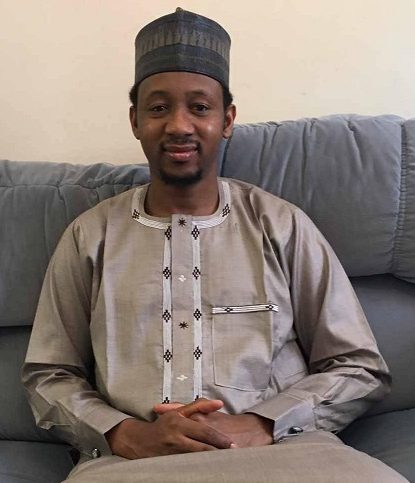
The Wise Souls

By Habeeb Abdullah Musa Kiru

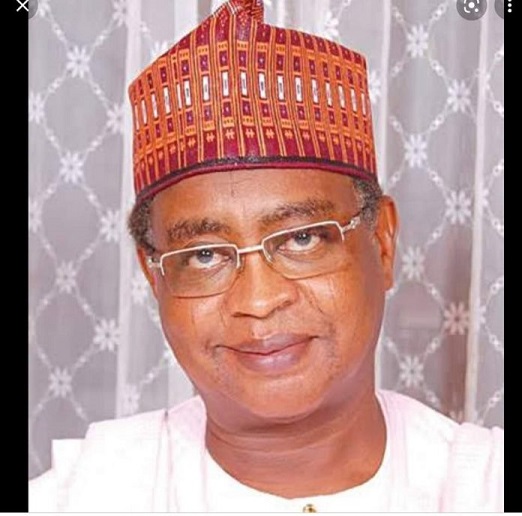
Tofa the last of the black-maned lions is no more!
May you walk amongst the saints,
As God enriched your life in this world may he grant you a Billion folds in the hereafter.

You didn’t neglect your portion of this world!
Opportunities unwasted nor a life of regrets,
A life at its best!
If I want to be Tofa Oh! From where do I start?

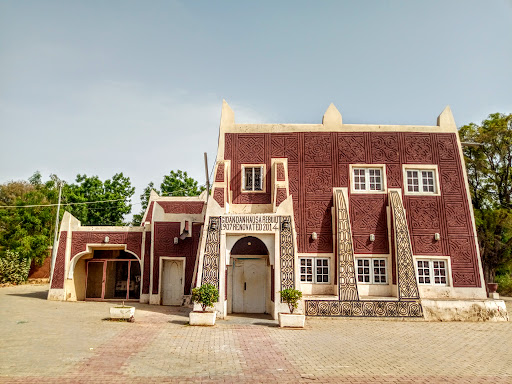
Is it Tofa of the beautiful palace and the most elegant of Mosques !?
Whom the good Lord granted a life of wealth, piety, fame and prestige !?
Whom he honoured above most men,
Bestowed him with talent and he utilized it all?

A former presidential aspirant,
Whom had a passion for Nigeria
Makes us wonder what could have been!
The travails you’ve foreseen
The security of the Nation of which you were so keen! 

The father to all, a mentor to many,
A connoisseur of the arts; A keen student of religion, the sciences include!
The historian whom tried his best to preserve an Emirate of which he was immensely proud.
“Advocates for a united Kano” we recall!

Tofa the Philanthropist who contracted tailors whose work was to sow for the destitute by night and day.
An Author of great works that would suffice a life of peace in this chaotic world.

An Ambassador of Islam,
A prince of the North,
A Poet, Reformer and Astronomer.
His collection of telescopes till date are unmatched!

A statesman, an icon of democracy, a colossal Pillar;
His Philosophy is not what can the North do for me but what can I do for its people!
You tried to secure our lives and future, generations will forever be grateful.

Men sat to mourn you,
A madwoman came!
Thus she spoke:
“From home, you’ve had your fill;
Now you have buried the one, who gives us feed.
Now I’m hungry
Have you no feelings?”

Such was the generosity of Tofa,
A saintly character,
With his absence now you will see!

So what will be the fate of the Nation when the Lions keep ascending and the reigns falls to the Jackals?
Who will steer the cubs away from fracas?

We always believe such men immortal,
Constantly putting it off, that we’ll find time and meet them.
Forgetting that as we grow so their time draws nigh!
When a great man dies, a whole library burns…
All the ideas they envisioned for Arewa unless in print, flees and with it comes our doom!

We didn’t tap into the wisdom of Sardauna nor of Balewa to study the art of statecraft!
So we procrastinated in meeting Dan Masani to learn diplomacy and eloquence.
We believed Bayero would forever be here to shield us!
And Sheikh Jaafar left; Ahmad Bamba same, Albany is at faraway Zaria we can’t take the bus;
Deluding ourselves that Dantata is inaccessible to us,
His Highness Sanusi just too busy for us!
Nor would I go to Alfurqan to rid my heart of its rust.
No wonder we are lost!

We’d rather disparage the Tofas amongst us;
Ridicule their reverence,
Tell them they are useless, toothless and clueless!
Our utterances reckless;
And manners thoughtless.
You friend,
Without them, rudderless!

And so they keep going,
And morals are ebbing,
Our heritage dissecting,
Standards are falling,
Culture’s corrupting,
The Nation is ailing,
‘Cos the wise souls keep leaving!
Why do we ignore religious domestic violence?

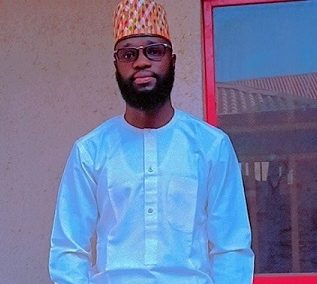
By Sabo Ibrahim Hassan

Did I just say Religious Domestic Violence? Of course, you heard me very right. It may though initially sound quite odd and obfuscated, but when you allow it to sink and give the brain some time to analyze the phrase critically, it will indeed become your today’s take-home. While countless homes unknowingly suffer from this type of domestic abuse, notably in religious geographies, the need to unveil and tackle this type of intimate partner violence becomes an inevitable obligation.

According to the United Nations (UN), Domestic Violence, also called “domestic abuse” or “intimate partner violence”, can be defined as a pattern of behaviour in any relationship used to gain or maintain power and control over an intimate partner. Abuse is physical, sexual, emotional, economic, or psychological actions or threats that influence another person. This includes behaviour that frightens, intimidates, terrorizes, manipulates, hurts, humiliates, blames, injures, or wounds someone. 

In line with the definition above, we can say that religious-domestic violence refers to the use of half-baked understanding or rather misconception of religious command, painted with sentiment, to inflict a sense of insecurity, and manipulate or frighten the psychology of partner, to ultimately have their total control.

The ill-conceived interpretation and manipulation of some scriptural verses is the primary cause of this religious-domestic violence. However, the issue remains controversial because many deem it the only way to sustain their power and maltreatment against their intimate partners. Besides, our inability to question any irrational interpretation of any scripture, simply because the compass of our thought has been disoriented, hence forced to think in lower rather than higher resolution, has chiefly contributed to the escalation of this menace. Meanwhile, we are not challenging the scripture rather the unfair interpretation of it. Additionally, the fear that you can be easily given your certificate to hell by some so-called custodians of religion has made this type of domestic violence seemingly undefeatable.

The effect of this pseudo-domestic violence is such apparent that it has stolen the joy and peace of many homes, leaving most women helpless with severe psychological trauma. Moreover, the effect is not restricted to the primary victim. It also affects the closest people to the victim, like children, affecting their psychology and perspective. Hence, the fear, insecurity, and misconception of the sacred meaning are passed through different generations, leaving potential victims banged up in fright and uncertainty.

Religious domestic violence often cuts across mental, economic, and psychological boundaries. For example, in a situation where one, due to his badly thought-out interpretation, renders one’s wife inferior, with no regard in decision making, it becomes psychological. Similarly, when one marries or bears children more than one’s capability, that certainly involves both the mental and economic nature of domestic violence. The superiority of men over women lies in their ability to protect them with all their might, provide for them, support them with all they have, and be a shoulder for them to lean on, anywhere, any time.

Rational and fair explanations of some sacred commands, notably those related to marriage, should be the priority of any society that wants to see the end of this menace. That reminds me of a viral video of a woman perceived to be a scholar, preaching to some Muslim women that, should their husbands slap them, they should be patient and respectful enough to, perhaps, kneel and ask for forgiveness while pretending like nothing though happened. I still can’t see any rationale behind her counsel, let alone relevance. Authorities should inexcusably halt such fake scholars. Fair counter-explanation and how to morally react under situations of such nature should be explicitly taught and encouraged.

Until a reasonable explanation of the scripture becomes paramount, and an irrational interpretation painted with sentiment is scrapped, many homes will continue to live in agony. Many men will continue to hide under the masquerade of religious interpretation to maltreat their partners. Therefore, creating a paradigm shift in geographies affected by this unfair perspective becomes necessary. Sensitization is vital, and the responsibility to do that is collective.

Know your religion and what it says, seek rational interpretation of the scriptures, and do not hesitate to question anything irrational.

Sabo Ibrahim Hassan sent this article via ibrahimsabohassan60@gmail.com.

Cultural heterogeneity: Where it comes from, how to confront it?

By Safwan Suhaib Ibrahim

Culture, just like science, is never static. As we read more, travel more and impinge more and more on one another through trade, schools, international and religious organizations, our culture and behaviour patterns become heterogeneous – more cosmopolitanised. As people who are committed to the acquirement of wealth and knowledge for the power and insight they give, we must accept the challenges (?) they come with, which is, “Cultural Dynamism”.

Culture, to put it in a mild way, does not only centre on customs and attitudes inherited from our predecessors or the circulation of folktales by word of mouth. It’s also a formal way of training the young in a body of knowledge or creed, borrowing techniques and fashions of others, adopting and selling new ideas or products. Thus, cultural homogeneity is our – everybody’s – way of life.


It’s often not realised, least of all by a layman, that culture is a step further from people’s traditional food, dress, language, music and ceremonies; rather, it’s the people themselves and the society they live in. The human being is an evolutionary animal who is always assimilating new changes brought about by the socioeconomic wind. As we live, we design our culture and we also get designed by it. The everyday flirtation of native dress, songs, dances and language, skin colour or faith are never what exactly our culture is; they only represent a wee portion of it. Our ideas, our ties, our standards and the logic we reflect on a specific problem that confronts us speak more about our culture. 


We – Hausa – have perpetually claimed to be a unique breed of people who despise, or claim to despise, copying others, especially the Western world, though our current moral attitudes and ceremonies are in no way different from theirs. We’re now men of two worlds. So, It’s, of course, a sheer delusion for some of us to pretend to reject everything they’ve acquired from foreign culture simply because it’s “foreign”, but it’s not foolish to rescue one’s culture from total extinction. There’s a need for the revival of awareness of Hausa culture with its great philosophy and epos of music and poetry, dress and language and its ancient literature, but not a total rejection of foreign or alien culture; for that’s as illusive as self-defeating. 


Lest I be misunderstood, I’m not denying that foreign culture or ideas cannot have a destabilising influence on us (of course they do), but I believe there are some that impart a new impulse that prods us to create a new method of organisation and new hope for development. Thus, before we start thinking of driving those alien cultures and ideologies away, we need to study our culture and our people well. We need to start from the basics. That’s, I think, there’s a wider conception of our culture which we give little or no particular emphasis that needs to be tapped now.

Our respect for elders, hospitality to strangers, our feeling of brotherhood and community, our mutual aid for the provision of support and development of services like health protection and education, our freedom of expression, our readiness to provide an economic surplus to neighbours which was so deep-rooted in us that none was allowed to starve, wander in the street or suffer when there’s anything could be done to help him out, and our democratic statecrafts are all but an adventure to us and our progeny. Don’t you think the fight should be on our abstract, not physical culture? 


Safwan Suhaib Ibrahim sent this article via bagwaisafwan@gmail.com.

Finally, the Super Eagles joined the party

By Aliyu Yakubu Yusuf

Compared to its more illustrious continental equivalents, the African Cup of Nations (AFCON) receives far little media fanfare. With its scheduling in the winter when European football is well underway, the AFCON has been a pain in the ass for many a European club. And the actions on the pitch so far have elicited little excitement among watching fans. Goals have been at a premium, with just nine goals scored in the opening eight games in the tournament, making it a ratio of just over a goal a game.

The Super Eagles of Nigeria took on the Pharaohs of Egypt in a much-anticipated clash of African football titans. With Mohamed Salah at his mesmerizing best for his club, Liverpool and Nigeria having to play without two of its most in-form forwards, Victor Osimhen and Emmanuel Dennis, who are unavailable for various reasons, many pundits and bookmakers earmarked Egypt as the favourite. However, the Eagles didn’t read the script. As soon as the match kicked off, the Nigerians asserted themselves and dominated the early exchanges. However, they were made to wait until the 30th minute of the game before they got the deserved breakthrough.

Moses Simon, who was a menace for the Egyptian defence all first-half long, left the Egyptian full-back, Tawfik, for dead before putting in a teasing cross that Hegazy partly cleared. The ball fell nicely to Joe Aribo, who directed the ball to Kelechi Iheanacho, who fired an unstoppable missile into the Egyptian net to send thousand Nigerians who crossed the border to Garoua to watch the game into rapture. That was to prove the game’s only goal that turned into a topsy-turvy affair in the second half.

If the Super Eagles were great in the first half, they were effective in the second. The Pharaohs improved massively in the second half. However, the Nigerians fashioned many gilt-edged chances on the break. With a little more composure in front of the goal, the Super Eagles would have won by at least three clear goals. But, assisted by the evergreen Wilfred Ndidi and the silky Joe Aribo at the middle of the park, the Nigerian defence line comprised Ola Aina, Troos-Ekong, Kenneth Omeruo and Zaidu Sunusi successfully managed the unenviable task of keeping Mohamed Salah at bay.

Credit must go to the coach Agustin Eguavon who made his debut today. The Super Eagles had been a shamble for long stretches at the end of Gernot Rohr’s tenure. If this match is anything to go by, the future looks promising for the Super Eagles. Of course, as a traditional footballing powerhouse in the continent, Nigeria goes to any AFCON tournament as one of the favourites. However, it is still early days, and there are better teams in this tournament than the Pharaohs. So, I think Nigeria has an outside chance to go over the finish line.  

Aliyu is a lecturer at the Department of English and Literary Studies, Bayero University, Kano. He can be reached via aliyuyy@gmail.com.

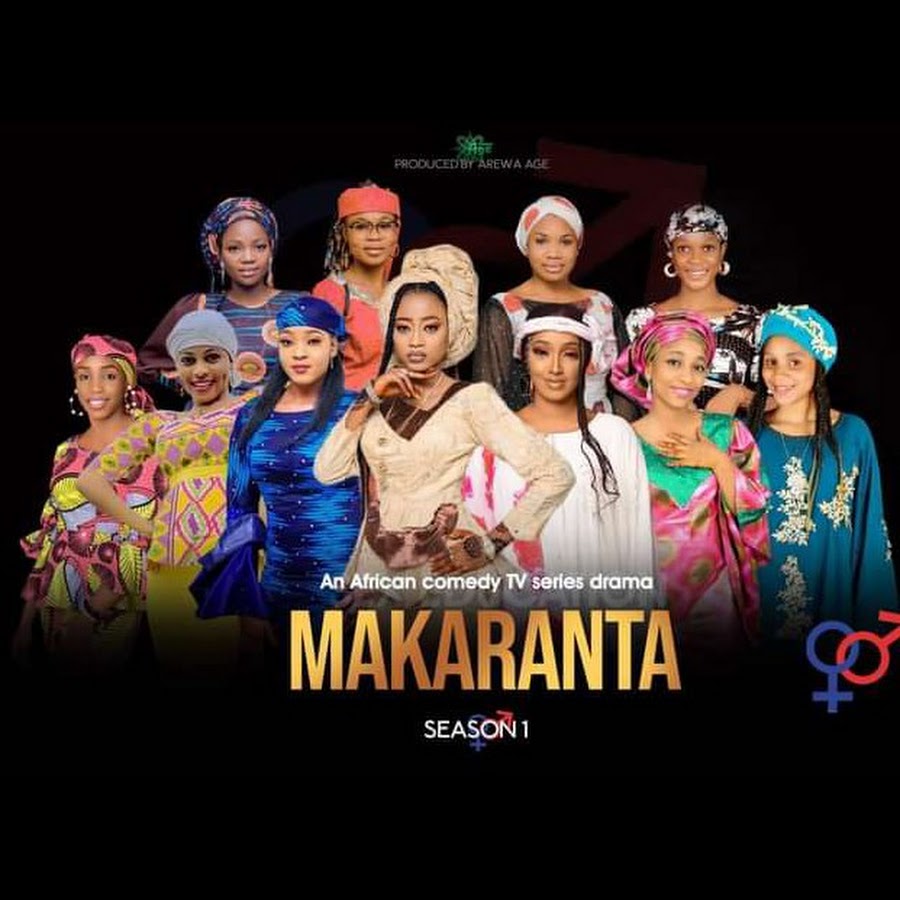
On the racy Hausa film, ‘Makaranta’

By Habibu Maaruf Abdu

Since the middle of the previous week, the trending news on Kannywood has been revolving around a racy film entitled Makaranta. The Kano censorship board declares the film’s director Aminu Nasara wanted for releasing the uncensored film trailer, which embodies obscene content.

The trailer starts with a school setting, and a female voice is heard talking about jima’i (‘sex’) crudely without euphemism. Two female students are then shown conversing in a classroom where one of them advises the other in a vulgar dialogue as follows:

“Banda tsabar sakaci da dolanci kawai kina zaune har ya buɗe jaka ya ɗauki bireziya baki sani ba. Idan kikai wasa da wannan dolancin kina sakin baki wataran sai ya cire miki pant…”

“If not for sheer foolishness, why would you just sit there while he opened a bag and took the bra without you knowing. Unless you are careful, he would, one day, take your panties off…”

The aforementioned are just a few of the many vulgarities in the trailer. So, if the two-minute-long trailer alone is this bad, how do you expect the complete film to be? Males and females are even shown touching one another and licentiously dancing in some scenes!

No doubt, such despicable movies are a threat to the well-being of our society. They can negatively influence viewers, especially the young generation, and dent our beautiful reputation as the Hausa Muslim populace. A film is a reflection of the society where it’s produced. I, therefore, strongly condemn the immoral movie. Making such a film is insolent, and all those involved should be brought to book.

Although the film director is trying to dissociate it from the mainstream Kannywood, his claims are unacceptable because the film is mainly in the Hausa language. Moreover, many of its characters are portrayed as Hausa Muslims (We hear names like Luba, Saudat and Suwaiba). Our society, therefore, has every right to follow it up since it’s something which, they think, could tarnish their image. The director is thus subject to both public outrage and censors punishment. The National Film and Video Censors Board should collaborate with their Kano counterpart to ban this film and impose a total ban on all films of its kind.

I will conclude by commending the efforts of the Kano censorship board in sanitizing Kannywood. Moreover, I call on them to devise more extreme punishment in dealing with the perpetrators of immorality in the industry. This would serve as a deterrent to others.

Habibu Maaruf Abdu wrote via habibumaaruf11@gmail.com.

Dear Governor Bala Mohammed, listen to Jama’are people

By Y. Z. Yaú

In 2018, the Jamaare Local Government Area of Bauchi State suffered a devastating flood that destroyed farms and houses and the central market. There was a Government in Bauchi State, but it did not respond to the crisis. Those who died due to the flood ended up as mere flood statistics. The descendants of Dilara took it calmly and in their strides.  They consulted among themselves and prayed to God to answer their prayers. In his infinite mercies, God answered and wiped their tears: the federal government through the Ecological Fund responded with an intervention to mitigate the effect of the flood.

In a three-part initiative, the Ecological Fund financed a new drainage network in the town and promised to rebuild the market destroyed by the flood. The third aspect was the dredging of the river so that the flood could be reduced if not altogether eliminated. The state government was to contribute as counter funding. But, unfortunately, it did not, and the flood came back with more vengeance during the last raining season, and for the first time in over 50 years, the flood got into town, occupied and destroyed many houses. Several people, mainly farmers and their children, died while crops were damaged in the waves. The loss to the community was shuttering. Again, not a whimper of sympathy from the state government. 

Over five years ago, as part of the ecological intervention, the Federal Government decided to upgrade the power sub-station, which serves more than four local governments, to improve the electricity supply in the area. A significant new sub-station was to be built on the understanding that the State Government would do the civil works while the Federal Government does the engineering component. The Federal Government delivered its part, and to date, the State Government has not delivered its component, so the project remains uncompleted. 

What does the frequent flood tell? While flood in itself is destructive, it reveals that if the water can be controlled, agricultural production can be improved to raise the national food production capacity. After all, already along with the Hadejia wing of the Hadejia-Jamaare Rivers basin, this area is perhaps the largest rice production belt of the country. Stabilization of the flood plain of the Jama’are river is, therefore, a project not meant for the benefit of the Jamaare people only. It is to improve national food security and farming resilience in the country. It is thus in the national interest. 

The flood plain of the Jama’are river is a fertile agricultural area and a ready-made natural laboratory for agricultural research that will improve farming systems and practices across the country. This consideration led the Faculty of Agriculture of the Bauchi State University in Jama’are to leverage this natural laboratory for research, experimentation and teaching. In addition, Jama’are people will benefit from agricultural extension services, agricultural advice from experts, improved skills and knowledge for the farmers, and uptake of research outcomes to address agricultural, livestock, and horticultural issues.

It will also benefit from the usual town-gown interaction that a university made possible. But above all, however, the state and the country stand to gain in enhanced agricultural production, livestock production and development of horticulture. The foresight of the Committee that searched and selected the site of the Faculty of Agriculture must be commended for their deep sense of patriotism and adherence to professional ethics. 

The Faculty is already on the ground with hundreds of students and over 100 academic and non-academic staff engaged in academic activities in the college. Academic activities have stabilized, and a sense of synergy between the campus and the host community has taken shape. 

Suddenly, there are rumours making rounds that the state government is planning to relocate the Faculty to another place for the Federal College of Education takeoff that the federal government recently decided to establish in the town. This move to relocate the Faculty that was sited based on clear reasons of functionality and leverage not only smacks of the politics of blockage but also totally lacking in appreciation of the considerations for the setting up of both the Faculty of Agriculture and the Federal College of Education in Jamaare. It certainly does not show concern for the deep patriotic thinking of sitting the Faculty. But this apart, the argument of justice and fairness has led to the establishment of the Federal College of Education. 

Jama’are is one of the oldest local governments in the state, established in the country’s first wave of local government creation. Jamaáre Emirate is a foundational emirate, resulting from the Dan Fodio Jihad and not a recent political design of some politicians. Of the four emirates in the state, until 2014, it was the only one lacking in any institution of higher learning. Even when the Faculty of Agriculture was established, the Emirate was nowhere near the others in terms of the number of higher institutions. It was to promote equitable educational development and the spreading of educational opportunities across the state that reinforced the rationale for selecting the site of the Faculty of Agriculture and the establishment of the Federal College of Education in Jamaare. 

It is difficult for the people of Jamaáre not to read the purported attempt to remove the Faculty as one more instance of deliberate discrimination against people known for their peaceful disposition. For all the deprivations, they have never taken to a protest. Not that they value their rights nor that they cannot fight for their right. They believe that what you do not get in peace will not necessarily come in violence. They live in the humble Fulbe spirit of not giving to showing pains or pleasure. Therefore, when last Monday they met from all corners of the Emirate at the Jamaare central mosque and led by the leadership of the scions of the Dilara dynasty, the community has taken this attempt to disinherit them calmly and resorted to prayers, in the hope that as usual, Allah will ensure that justice is done. As a peace-loving community, we take solace in our patience and trust our density. 

It is still not late for the Bauchi State Governor, Bala Mohammed (Kauran Bauchi), to dispel these rumours and assure the people of Jamaáre, and indeed the whole country (which stands to lose from this move) that what is theirs shall remain theirs. They will embrace him with brotherly love and in that spirit. We hope that Kaura hears our humble request for his heart to take flight into the hearts of Jamaáre people who would warmly embrace him in eternal gratitude for acting as a true leader who treats all parts of his constituency equally. We are waiting and watching.

Ya’u is the executive director of the Center for Information Technology and Development.

The drama that is 2023 general elections

By Idris Yana

Bola Ahmed Tinubu’s declaration of interest to contest for Nigeria’s presidency in 2023 is a prologue to the array of drama that we are going to witness in the next couple of months.

The 2023 presidential election will defy many political and analytical rationales.

Tinubu’s candidacy poses a challenge to both Tinubu himself and the Nigerian political philosophy. Currently, the unsigned sacred pact is that Nigeria cannot afford a president and his vice who belong to the same faith. Thus, Tinubu, being a Muslim, cannot have a Muslim vice-presidential candidate. Another “gentleman agreement” is that the president and his vice cannot come from the same part of the country. Therefore, this means that Tinubu’s running mate must come from the North and be a Christian. Though we must define where is North, at some point.

This is the epitome of the complexity (you can call it confusion) of Nigeria’s democracy. I will tell you why shortly.

The Northern Nigeria I know and live in can hardly support Christian to become Tinubu’s running mate. This, whether we say it out loud or not, is the mentality of an average Northern Muslim: A fact we all pretend does not exist.

While I cannot foresee an enduring strategy that Tinubu can use to navigate through this maze, I believe two parties stand a chance to benefit from his quagmire. The first is the current vice-President, Yemi Osinbajo. Although the witty professor-cum-pastor did not come out yet to declare his intention to run for the number one office, his body language and some events that have unfolded have already shown that he is in the race.

Osinbajo, being a Christian from the South, is very much aware that Tinubu’s dilemma is to his advantage. Many people in the North will prefer to have him as the presidential candidate so that they can field a Muslim running mate for him.

The other party that stands a chance to benefit from this is PDP. Like Osinbajo, I am sure PDP monitors the unfolding of Tinubu’s candidature and waits for the right time to make their move. They have many options to explore. One of such options is appealing the sentiment of the North by fielding a Muslim candidate from the part, most likely Atiku, and a Christian running mate from either South-South or South-East with Nyesom Wike as the most likely candidate. They have the option of reversing this and trying their luck.

Whatever happens in 2023, Nigerians will have multiple lessons to learn from. For me, the most important lesson is the dire and urgent need for the country to move away from the political ideology that favours primordial sentiments over competence. Instead, Nigerians must learn to elect a leader that is capable of saving us from us.

Idris Yana writes from Exeter, United Kingdom. He can be reached via idrishyana@gmail.com.

ISLAM: Disagreement is not a blessing but a scourge

By Abdullah Yahaya

In contrast to the popular belief that the disagreements which existed between the famous scholars of the early post-Qur’anic time [The leaders of the four schools of thoughts] and still exist between the contemporary Islamic scholars—that the variation in some of their juristic rulings is a blessing—is an antithesis to the correct teaching and lessons of the Qur’an and the authentic sayings of the Prophet [PBUH]. In no single incidence would you find either in the Qur’an or authentic hadith in which disagreement is encouraged. However, there are a plethora of divine injunctions where Allah and His Messenger [PBUH] frowned on disagreements or conflicts. 

In Suratul Anfal 7/46, Allah (SWT) says, “And you should obey Allah and his apostle, and do not dissent, you will crumble, and your strengths will fade away”. Another indication of the negative effects of disagreement happened when the Prophet Muhammad [PBUH] was alive. Two people among his companions engaged in a fierce dispute inside the Prophet’s mosque during the dawn prayer [Subh], and it happened that at that night the Prophet had a dream about the actual date in which the Night of Decree “Lailatul Qadr” will fall on. Upon reaching the mosque, the Prophet saw the two disputants and quickly went and reconciled them. As a result of that delay caused by their disagreement, the Prophet forgot about the contents of his dream and the Ummah is left until today in doubts of the actual date of Lailatul Qadr. The instances are too numerous to list out. Al-Subqee said, “Kindness and compassion require that we should eschew disagreement.”

The above and many other Quranic and sunnatic injunctions and the sayings of our guided forbears [Athaar] are combined efforts meant to stifle the adverse effects of disagreement, which include fragmentation of the Ummah, disunity, loss of strength and self-esteem among the Ummah and so on. The holy Qur’an has more of these examples.

Surat Daha, 20/83-97, explicitly relays to us what happened to the Israelites “Banu Israel” when Prophet Musa (AS) went to discuss with Allah, after which Musa Thamiri manufactured a calf from the clay embellished with gold and said it was their god and that they should worship it. Prophet Haroun (AS), whom he left as his representative, tried to call them to order to no avail. When Musa AS returned and met them in that situation, he reprimanded his brother and asked why he did allow them to commit polytheism. He said, “Oh my brother, seize me neither on my beard nor on my head, for I was afraid that you would say I cause a rift between Banu Israel just because they refuse to listen to me”, replied Prophet Haroun (AS).

With the above evidence, one can deduce that Islamic preachers ought to be extra heedful in airing to the public what will cause rift and disagreement between the Muslim community, especially on issues whose knowledge or ignorance will not harm someone’s belief. Moreover, disagreement in juristic rulings between our scholars is not a blessing but a scourge. This is considering the number of fractionation and fragmentation caused within the Muslim community then and now.

Abdullah Yahaya can be reached via abufudaily88@gmail.com.

How I started my own business with zero naira

By Zainab Ahmad Dantsoho

Most people believe that one cannot start a business without huge capital, but that is absolutely wrong. So let me first define what capital means according to economics.

Capital is anything that increases one’s ability to generate value. It can be used to increase value across a wide range of categories, such as financial, social, physical, intellectual, etc. In business and economics, the two most common types of capital are financial and human.

But I will like to give my definition because the most neglected is the Human Intellectual faculty.

In the 21st century, capital is the ability of an individual to think using the intellectual capacity to make money in the absence of little or no resources.

I want to stick to my definition because based on analysis, our economic index can be weighed by the standard of living and income expenditures, but I come from the North where according to the average statistics of people living in poverty as of 2020 holds 87% of Nigeria’s poverty rate – World Bank

So, are there resources in the North? Of course, YES! But the problem is intellectual capital.

In a community where people can’t even feed properly and begging seems to be a way out, how do we end poverty in families and our communities? I have asked this question to myself a lot of times.

Our northern community would be great if only our brains can think about starting a business with zero naira or little or no capital. And this makes me think that in the absence of money and basic resources, the only value any society could have is thinking skill because that’s the best way to beat poverty!

Let me take you through my journey of 1 kobo.

At a point in my life, I just decided to start my own business, make money in a halal way, take care of myself, and help the people close to me and my community at large. So I asked myself, “Zainabu, what about the capital? Where will you get the required amount to start the business?” Of course, this immediately came to mind, but then I remembered capital doesn’t necessarily have to be money.

Thus, I started going to some perfume shops, taking pictures and samples of the perfumes, showing friends, advertising on my social media platforms. Then, when someone asks for it, I’ll quickly go back to the shop and get what they wanted while adding a little profit for myself. This continued for months, and I was able to save some money!

So, I realised that the only capital I have in the absence of resources is my intellect, the ability to think and make money. So, these are a few basic things I had my eyes out for when starting my one kobo business.

  • Location – Where can I sell this product?
  • Demands – Is the product highly consumables, highly used in my environment?
  • Standard of living – this is where I have to think critically. Can they afford it? If they can, at what cost, and what’s my profit because nobody wants to start a business losing. It’s a win-win goal.

Then when it comes to branding – since I have no resources and capital of my own, whenever I want to make more profits, I usually meet the producers and negotiate with them. They make it, but then it carries my business name and agrees on percentage without losing anything but gaining. Most traders into cosmetic products typically agree with this since it offers mutual benefits.

Now, let’s talk about mind poverty, also known as mentality poverty. Mentality poverty is not the absence of cash and resources. It’s simply our way of thinking and behavioural pattern.

And I also think our average mentality is poor, and that’s why poverty in African societies seems to be inherited. We have resources, yet we are poor. It’s time to shift from the cash flow method of capital and currency to its intellectual flow because, that way, our community will grow.

If we were to cut down the amount we spend on our phones, clothing, accessories, cosmetics, etc., we would be surprised at how much we will save.

One may wish to know the advantages of this type of business. Don’t stress yourself. I will help you with some basic information.

1.  It empowers you

2. It eradicates poverty

3. It`s easy to access

4. You earn without deposit

5. You can advertise from your home using your social media handles.

If you aren’t on social media, you can do Door to Door, attend events or places where you can meet many people, and take advantage of friends to friends marketing strategies.  Especially for those that don’t go out.

But here are some of the challenges you will face with this type of business:

1. People may want to take credit from you, and you can’t give it out since the items don’t particularly belong to you; for me, it’s even risky giving and selling items on credit.

2. You may need more time and patience to get customers.

3. Sometimes such items may be out of stock, so that means you need to know or keep contact with the store, to what’s available and what’s not available

4. You may need one or more stores to patronise, if you want quick profits and if it’s worth the energy!

My advice to our young entrepreneurs is that we should always avoid perishable goods, except if the areas we live in have a high demand for those particular items.

Lastly, with the way our economic system is currently running, it is still possible to start a business with zero or little income. So don’t wait for significant capital. You can save and think, spend wisely, and Allah will certainly help you.

I hope you will find this article very helpful and join our one kobo community to start your business and get substantial information from us.

Why not make a move and be your boss with zero naira today?

Zainab Ahmad Dantsoho is a graduate of the Federal University, Gusau and an entrepreneur. She writes from Kaura-Namoda Town of Zamfara State. She can be reached at zainabahmaddantsoho@gmail.com.

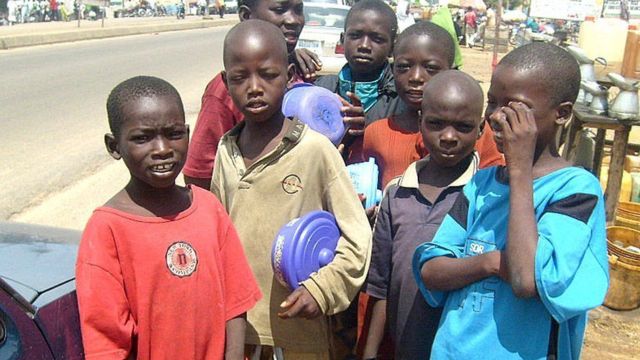
The Almajirci Syndrome: A menace to our society

By Aisha Abdullahi Bello

The word “Almajiri” is derived from the Arabic word “Almuhajir”, which means an immigrant or someone who migrates from one place to another. So, originally, Almajiri is an immigrant who leaves his place of birth at a very tender age to acquire Islamic education.

It was believed by the people then that if a child received Islamic education at a very young age, he was likely to retain it throughout his lifetime. This had made many parents enrol their male children in the system.

In the ancient days, the system was so organised, and the parents were much responsible that they didn’t just dump their children at the “allo [slate]” schools the way today’s parents do. They also made it mandatory upon themselves to provide necessary food items and other provisions for the children, which would be enough for them throughout their stay with the “malams [teachers]”.

At each interval, maybe a period of three to four months, the children were readied for a return to their various homes. So, you’ll find out that each Almajiri would at least visit his parents thrice or even four times a year.

Now, the system is no longer what it used to be. Everything seems to have changed completely; the system, the parents and the children have all turned into something else. If you call the name ‘almajiri’, instead of the title to ring the bell of a child who came from a distant land to acquire knowledge, a different bell will ring. The name suggests an unlucky child whose parents gave birth to and later abandoned on the streets to fend for himself by whatever means.

I am used to asking myself, what could be the cause of this disguised child abuse in the name of almajirci”? What is the essence of bringing a child to this world if you cannot cater to his basic needs such as food, clothing, shelter, and quality education? Could this problem (almajirci) be attributed to poverty, lack of parental care, or is it a lack of adequate measures to tackle the menace by the government? These are the series of questions that are yet to be answered.

The rate at which the syndrome is growing could be checked if the parents control their birth rate through family planning measures. The government should try to enlighten parents on the benefits of family planning and its impact on society as much as possible.

To sanitise the system, the government should create a committee that will focus on the issues by standardising it to suit the present time. This could be achieved by taking the statistics of all almajirai, providing them with uniforms and building classrooms for them to have a conducive learning atmosphere. This will go a long way in curbing the extent to which they wander over the city.

The government and well-to-do individuals in the society should join hands together to create skill acquisition programmes and sponsor programs on TV and radio to educate the almajirai on how to acquire skills and make use of them for survival.  These skills could be tailoring, dyeing, soap making, blacksmithing, shoemaking, etc.

With this, I believe the rate at which the almajirci syndrome grows will hopefully reduce to some considerable level and, if carefully sustained, will someday become history.

Aisha Abdullahi Bello sent this article via aishaabdullahibello@gmail.com.