Opinion

Between lectures and side hustles: How UDUS students balance academics and survival

By Asma’u Sa’adu Waziri

For many students of Usmanu Danfodiyo University, Sokoto (UDUS), academic life extends beyond lecture halls and classrooms. While lectures form the core of university education, a growing number of students now engage in side hustles to support themselves and cope with the realities of campus life.

Across the university and its surrounding communities, students can be seen involved in small-scale trading, tutoring, and other income-generating activities. These engagements are often carried out after lectures, on weekends, or during free periods. For many students, such activities are not driven by choice but by necessity.

Rising living expenses, transportation costs, and the need for basic learning materials have made it increasingly difficult for some students to rely solely on home allowances. As a result, combining academics with part-time work has become common among many undergraduates.

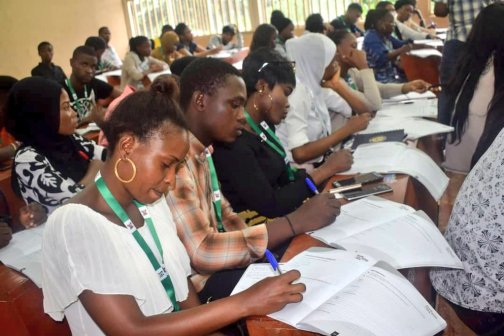
A student reads on campus, reflecting the academic demands students balance alongside other responsibilities.

Balancing academic responsibilities with side hustles, however, comes with its challenges. Managing time effectively remains a major concern, as students must attend lectures, complete assignments, and still find time to work. During test and examination periods, pressure increases, with students striving to meet academic expectations while maintaining their sources of income.

Despite these challenges, some students view their experiences as part of personal development. Engaging in side hustles has helped many students develop discipline, responsibility, and basic financial management skills. It has also exposed them to real-life experiences beyond academic learning.

University life is often perceived as a period solely dedicated to education, but for many UDUS students, it also involves navigating economic realities. Between lectures and side hustles, students continue to adapt, balancing academic goals with the practical demands of everyday life.

El-Rufai, Ribadu and the politics of mutual destruction

By Abdulhamid Abdullahi Aliyu

Nigeria has seen political fallouts before, but few are as unsettling as the growing public rupture between Nasir El‑Rufai and Nuhu Ribadu. What makes the moment troubling is not merely the personalities involved, but what their dispute threatens to do to national cohesion, public trust and the already fragile boundary between politics and security.

If two men who once symbolised reformist zeal and institutional courage now choose a path of mutual destruction, they should pause and reflect—on their faith, their region, and the national interest. Because stripped of rhetoric and television soundbites, this is no longer about governance, security reform or leadership ethics. It is the bare-knuckle politics of succession, alignment and survival ahead of the next election cycle.

There was a time when this clash would have been unthinkable. Both men emerged from the same political generation shaped by the reformist moment of the early 2000s under Olusegun Obasanjo. El-Rufai, the outspoken technocrat as Minister of the Federal Capital Territory, and Ribadu, the dogged anti-corruption crusader as Chairman of the Economic and Financial Crimes Commission, were once celebrated as “Obasanjo’s boys”—symbols of a new order that promised discipline, accountability and institutional renewal.

They shared proximity to power, similar access to the president, and a reputation for fearlessness. Their friendship appeared not only political but personal—jolly, confident, mutually reinforcing. That such men could become open adversaries a decade later is not just strange; it is genuinely shocking.

What, then, went wrong? Part of the answer lies in the nature of Nigerian elite politics, where alliances are often forged by circumstance rather than conviction. Power rearranges loyalties. Ambition redraws friendships. And as the political terrain shifts, yesterday’s allies can quickly become today’s obstacles.

But there is a deeper, more consequential problem. When elite rivalries migrate into the realm of security narratives and intelligence insinuations, the damage goes far beyond the individuals involved. Allegations and counter-allegations—especially those touching on surveillance, coercion or misuse of state power—can corrode public confidence in institutions that should remain above partisan struggle.

This is why the current El-Rufai–Ribadu episode deserves sober national reflection, not cheering from partisan sidelines. Nigeria is a country where trust in institutions is already thin. Security agencies operate in an environment of suspicion, insurgency and widespread fear. When senior political actors publicly weaponise security claims—whether substantiated or not—they risk weakening the very structures holding the state together.

It is also important to situate this dispute within the broader northern political landscape. Both men command followings. Both are seen, rightly or wrongly, as voices of influence in the region’s political future. Their feud therefore does not remain personal for long; it reverberates across communities, factions and aspirations. In a region already grappling with insecurity, poverty and political fragmentation, elite infighting of this nature sends the wrong signal.

Faith, too, imposes restraint. Public officials who openly profess moral and religious values must recognise that conduct matters, not just intent. Politics may be a rough trade, but there are lines that, once crossed, are difficult to redraw. The public expects elders of the political class to rise above personal grievances when national stability is at stake.

None of this is to deny that grievances can be real, or that power can be abused. Whistleblowing has its place. Accountability is essential. But there is a difference between principled dissent and public escalation that inflames tension, invites speculation and drags sensitive institutions into political theatre. Mature democracies resolve such disputes through discreet inquiry and institutional processes, not media duels.

Perhaps the most sobering lesson here is how quickly reformist legacies can be overshadowed by personal wars. History is rarely kind to public figures who allow ambition to consume perspective. Nigerians may forget policy details, but they remember conduct—especially when it appears reckless or self-serving.

As the country edges closer to another election cycle, the temptation to settle scores early and loudly will grow. That is precisely why restraint is needed now. The question is not who wins this clash, but what Nigeria loses if it continues.

El-Rufai and Ribadu have both served the Nigerian state at critical moments. Their names are etched into recent political history. They owe the country—and perhaps themselves—something better than mutual ruin. Because when elephants fight, it is not the elephants that suffer most, but the grass beneath them.

Nigeria cannot afford to be that grass.

Abdulhamid Abdullahi Aliyu is a journalist and syndicate writer based in Abuja.

RKK holds a symposium in honor of Nigeria’s slain leader, Murtala Ramat Muhammad

Today marked a poignant and memorable milestone in Nigerian history as hundreds of students, dignitaries, scholars, veterans and guests from within and outside Kano converged at Bayero University, Kano for the 50-year Commemoration Symposium organised by Rundunar Kishin Kano (RKK) — also known as the Kano Patriotic Front. The event was held in honour and remembrance of the late General Murtala Ramat Muhammed, the former Head of State whose leadership left an indelible impact on Nigeria’s governance and national identity.
Punch Newspapers

The symposium, convened on the anniversary of General Murtala’s assassination on 13 February 1976, brought together a diverse audience, including university dons, students, political leaders, community figures and patriotic Nigerians who came to reflect on and celebrate the life, leadership philosophy and enduring legacy of one of the country’s most revered leaders.

In his opening remarks, the Convener of the event and National Coordinator of RKK, Major General Ibrahim Sani (rtd) received widespread praise for spearheading a well-executed and inspirational program that resonated deeply with all present. The event was noted for its meticulous planning, vibrant energy and strong turnout — a testament to both General Murtala’s continued relevance and RKK’s organizational capacity.

“General Murtala Ramat Muhammed remains one of the most powerful voices of integrity and reform in our national memory,” General Ibrahim declared. “Today, we do not only remember the man, but we recommit ourselves to the values he championed — patriotism, leadership with integrity and unwavering service to our nation.” The address set a reflective and aspirational tone for the day’s activities.

The symposium featured a range of speeches, video show, purposeful discussions and academic reflections on the late Head of State’s life and leadership. Distinguished speakers shared insights on his role in reshaping Nigeria’s civil service, tackling corruption, restoring national discipline and positioning the country as a principled voice on the global stage — contributions widely acknowledged as foundational to the modern Nigerian state.

Students from various faculties at Bayero University actively participated in the discussions, underscoring the relevance of historical leadership lessons for the country’s youth.

Special prayers were offered for the repose of General Murtala’s soul and for the nation’s continued unity and progress.

Guests attending from outside Kano described the symposium as “inspiring and deeply moving,” highlighting the significance of such platforms in preserving Nigeria’s historical consciousness and encouraging cross-generational dialogue.

As Nigeria commemorates this golden jubilee of General Murtala’s legacy, events like today’s symposium reflect a broader national effort to celebrate and critically engage with the leadership ideals that have shaped the nation’s trajectory.

About General Murtala Ramat Muhammed:
General Murtala Ramat Muhammed was Nigeria’s Head of State from July 1975 until his assassination in February 1976. Though his tenure was brief, his leadership remains celebrated for decisive reforms that revitalised the civil service, strengthened national governance and anchored Nigeria’s international stance on justice, Pan-African solidarity and anti-colonial advocacy.

The successful commemoration by RKK at Bayero University stands as a fitting tribute to a leader whose legacy continues to inspire Nigerians five decades after his passing.

AI disruption: Why Africa is missing from the conversation

By Abdulhameed Ridwanullah

This week, the article titled “Something Big Is Happening” was published on X by AI entrepreneur Matt Shumer. It became viral with around 80million views, 36k retweets, 105k likes and 5.7k comments at the moment of this writing. The virality stems from the central thesis of the post – AI disruption of white-collar jobs within years. Days later, the CEO of Microsoft AI, Mustafa Suleyman, while granting an interview to the Financial Times, claimed that the tasks undertaken by white-collar workers will be automated within 12 to 18 months (watch the details in the video). Previously, Dario Amodei predicted that up to 50% of entry-level white-collar jobs would be automated within one to five years in his January 2026 essay.


All week, the debate has been whether AI will take your job. The discourse is loud. Spoiler alert! The discourse is almost entirely about the West. The Global South is often an afterthought. So, when I read Shumer say, “the experience everyone else is about to have,” or Suleyman say, “most tasks fully automated in 18 months”, I ask: Whose experience? Automated for whom?


The West debates whether AI will take their jobs. Much of Africa is still waiting for the jobs AI is supposedly coming to replace.


Most importantly, studies have shown that automated AI moderation barely works in the Global South (read the CDT study by Mona Elswah and her colleagues here). In my PhD research, I study how AI content moderation systems fail in Nigerian languages. The failures are systematic, not incidental. Moreover, there are over 2000 languages in Africa. AI moderation seldom works in 3 major Nigerian languages. There is a wide gap between what Silicon Valley promises about AI and the deliverables to the world population. That is the story.


Moreso, this doomsday discourse about new technology is not new. The pattern is real. Connor Boyack’s rejoinder (AI isn’t coming for your future. Fear is) beautifully captures by invoking Bastiat’s insight about the “seen and unseen” changes brought by new technology. The debate all week has been focused on the “seen”, but the “unseen” invoked by Boyack are the new industries and possibilities that emerge when technology reduces costs and eliminates drudgery. No doubt, every major technology disruption has eventually created more than it destroyed. If anything, Africa’s unofficial content creation economy is a pointer to such an opportunity. 


However, the challenge is that the benefits are never evenly distributed. They are concentrated where infrastructure exists, languages are resourced, and capital flows. The boom and doom are not the same for a worker in London or Boston and someone in Cape Town, Lagos, Kano or Nairobi. One pays $20 ChatGPT subscription and enlists AI as a co-pilot. But the other is faced with the unseen failure of AI moderation, wreaking havoc in their community. This inequality runs in both directions: who benefits from AI’s capabilities and who is harmed by its failures.


So, the future of AI is not one story. It is two. While professionals in well-resourced economies leverage, adapt, upskill and thrive, billions of people in low-resource economies remain in the blind spot of a technology that was never designed for them.  


The real question is not whether AI will take your job. It is whether AI will equally serve everyone or continue to perpetuate historical inequality.
This is the conversation we should all be having.

Abdulhameed Ridwanullah is a doctoral researcher working on AI and platform studies in Nigeria at Media for Empowerment and Impact Lab, Northeastern University, Boston. He can be reached at olaitanrido@yahoo.com

CAC @ 35: Powering Nigeria’s economy in the digital age

By Abdullahi Danlami Hassan

The Corporate Affairs Commission (CAC) was established in 1990 under the provisions of the Companies and Allied Matters Act (CAMA) as an independent regulatory body responsible for corporate governance and business registration in Nigeria. The Commission formally commenced operations in 1991, marking a significant step toward institutionalising corporate regulation in the country.

In its early years, CAC services were largely centralised in its Abuja headquarters. Customers from across the federation travelled to the capital for business registration, often enduring long queues and extensive paperwork. Registration processes for Business Names, Companies, and Incorporated Trustees (such as Non-Governmental Organisations, religious bodies, and associations) were entirely manual and could take several days to complete. However, by the late 1990s and early 2000s, CAC expanded its operational reach by establishing state offices nationwide, thereby improving service accessibility.

A major regulatory transformation occurred with the re-enactment of the Companies and Allied Matters Act 1990 into CAMA 2020. The revised legislation strengthened the Commission’s mandate by enhancing its roles in business registration, corporate supervision, incorporation processes, and regulatory compliance. The new Act also modernised corporate governance structures and introduced reforms aimed at improving transparency, efficiency, and ease of doing business in Nigeria.

One of the most remarkable developments in CAC’s evolution has been its transition from manual operations to fully digitised services. The Commission has successfully developed a seamless online service delivery system that offers 24/7 accessibility to customers. This transformation expanded CAC’s service offerings from 33 operational services to over 109 digital service functionalities, significantly reducing processing time and improving customer experience.

As global economic systems increasingly integrate Artificial Intelligence (AI) into administrative and commercial processes, CAC reached another milestone with the deployment of the Intelligent Company Registration Portal (ICRP) on July 6, 2026. The AI-powered platform revolutionises company registration by offering automated name searches, smart name suggestions, alternative business name recommendations, and instant approvals for Business Name registrations. The system operates continuously with minimal human intervention while maintaining strict credential verification standards. Notably, it enables instant registration, electronic certificates, and status reports within approximately ten minutes.

The introduction of AI technology has dramatically improved registration efficiency. Business Name registration under the ICRP is reported to be approximately 336 times faster than the previous Company Registration Portal (CRP). Additionally, the system has enhanced CAC’s registration capacity, enabling up to 10,000 daily Business Name registrations. Based on current projections, CAC anticipates that by the end of 2026, Nigeria will record approximately three million registered business names, reflecting significant growth in the country’s formal economic sector.

Further technological advancement is evident in the introduction of the AI-Lawyer system within the CAC digital framework. This innovation provides customers with detailed guidance on registration procedures, legal compliance requirements, stamp duty processes, and other regulatory services. The AI-Lawyer simplifies complex legal procedures and improves customer engagement by offering real-time support.

Nigeria’s broader commitment to digital economic transformation also aligns with CAC’s technological innovations. At the 2025 World Economic Forum in Davos, Switzerland, Nigeria’s Minister of Industry, Trade and Investment, Jumoke Oduwole, emphasised the country’s digital economic future during an interview with CNN Business correspondent Richard Quest. When asked to summarise Nigeria’s economic trajectory for the next four years, she boldly wrote “Digital,” highlighting the government’s strategic direction. CAC’s digital reforms clearly demonstrate alignment with this national vision, reinforcing its role in advancing Nigeria’s economic competitiveness through technology-driven solutions.

As part of activities commemorating its 35th anniversary, the Registrar-General, Ishaq Hussaini Magaji, SAN, announced several corporate social responsibility initiatives. These include free Business Name registration for 3,500 micro and small-scale enterprises, scholarships for six outstanding Corporate Law students across the six campuses of the Nigerian Law School, and enhanced staff welfare packages, including a 25 per cent gross salary bonus, housing loans, and vehicle support schemes.

In conclusion, the Corporate Affairs Commission’s 35-year journey represents a significant milestone in Nigeria’s economic and regulatory development. Through sustained institutional reforms, digital transformation, and technological innovation, CAC continues to play a pivotal role in strengthening corporate governance, promoting entrepreneurship, and facilitating economic growth. Its commitment to modern service delivery positions the Commission as a key driver of Nigeria’s participation in the global digital economy.

This is Abdullahi, writing from the Customer Service/Call Unit at the Headquarters in Abuja.

My battle with malaria parasites last year and the tenuous nature of our health

By Sadam Abubakar

I wish I could blow life into words. I wish the words could be woven to assume a shape and posture palpable to human beings.

My recent experience in bed with sickness made me long for words to have the ability to breathe, talk, and describe by themselves certain events that occurred to us in our lives. Some events and situations in our lives are beyond our ability to describe. The words should talk themselves.

The event that sparks my scribbling hand is a disease condition that turned me almost lifeless. It started as something not uncommon but metamorphosed into a thing of mystery and convolutions.

At a particular time of one day, my legs began to appear as if they didn’t belong to me. There was a slight headache and some traces of loss of appetite. These symptoms are common among people with malaria, an endemic disease in our region, especially this time of year. The next thing was the thought of taking P-Alaxin, a particular brand of antimalarial drugs, and some supporting drugs.

Two days later, my disease condition appeared to be getting worse, even though it didn’t cripple me in bed. I rushed to a particular medical lab for diagnosis, and after a rapid test for malaria, it appeared that the malarial parasite was still in my blood, running through my veins. The P-Alaxin drug didn’t kill the parasite in my blood? Maybe I needed to take more for a couple of days. I continued with the medication with P-Alaxin the next day, but to my surprise, the malarial parasite was still in me—perhaps even more active, since the disease succeeded in stagnating me at home for the whole day.

Combining therapeutics to treat a particular disease is arguably one of the best strategies to eliminate a disease that appears intractable. Thus, I received an intramuscular injection of chloroquine, continued with the P-Alaxin, and some supporting drugs. That day was the beginning of more suffering from the disease. I sustained a severe headache, and my body temperature kept alternating between high and low. I also occasionally shivered, and fatigue became my friend. I kept telling myself that today I would beat the malarial parasite in me, considering the combinatorial therapy. Was I right?

After a brief respite from the pain, I felt I could go out to the Masjid to pray Asr. I whispered to myself, no matter what, go and pray—who knows if it would be your last Asr to offer. I crawled to the bathroom, performed my wudu, and headed to the Masjid. I was walking while holding my head, as I could still feel the hammering of the disease in my head. I thought I could surmount that pain, and I kept going. Halfway to the mosque, the pain intensified, and I succumbed to the idea that I could only proceed to the mosque.

I managed to return home. But then another episode of the disease set in. My neck started bending, and my head followed. At some point, I had to ask my wife to straighten my neck to mitigate my pain. Meanwhile, I could feel my teeth gnawing at themselves, and some were abrading. I continued shivering while my wife still tried to cover me with a blanket. The situation escalated. The guy running the best medical lab in our town came. One of the best community health practitioners in our town, who is also my good friend, was summoned. They did what they could and assured things would be alright.

It seemed like they were right, given the temporary relief I had, but then things escalated around Isha prayer time. My mum came and prayed to me profusely. Almost all my family members came and offered their prayers for a speedy recovery, but things appeared to stand still. No progress in my health whatsoever! Finally, they all admitted I should be rushed to Ahmadu Bello University Teaching Hospital (ABUTH).

I already succumbed and felt I was going to die. My beloved brother, Alhaji Garba, shouted that his car should be driven out of the garage and that they should rush me to ABUTH. We started the journey, but before driving out of Soba, it started raining heavily. Musbahu, who was not only my good friend and neighbour, was the driver. He wanted to turn on the long-distance light, but he couldn’t because of confusion. He phoned Alhaji Garba to say the car’s lighting system was faulty. Another car was sent with another driver, and we journeyed to Zaria.

The road from Soba to Zaria is in poor condition. So many potholes on the main road, and the shoulder is no longer in existence in most parts of the road. I was lying with my head on the lap of my wife, in extreme pain. With every bump into an unavoidable pothole on the road, the incessant pain in my head increased. I lost hope. I started whispering Kalimatus Shahada, hoping it would be my last word, since I already knew we couldn’t reach the hospital while I was still alive.

With the pain still sustained, we reached Zaria while it was still raining. Instead of going to ABUTH, some argued that with the urgency of my situation, we should head to a private hospital, and that the bureaucratic process of ABUTH before my treatment could worsen my situation. We headed to Pal Hospital. They quickly examined me while I was telling the doctor I knew I couldn’t make it. The doctor, from my history, suspected immediately that I was suffering from cerebral malaria. He argued that because I was out of Nigeria for a very long time, my immune system might not be robust against malarial parasites, and that worsened my situation.

Alhamdulillah. I am writing this because I survived. After the medication, I finally recovered. But this whole experience has reminded me again that it doesn’t matter our age; we can die anytime. Our health is pretty tenuous, and death is always around the corner. May we live our lives with God consciousness so that we go to paradise in the hereafter.

Sadam Abubakar wrote via sadamabubakarsoba@gmail.com.

The Pantami experiment: Morality in the politics of grime

By Ibrahiym A. El-Caleel

Given his profile as an Islamic scholar and public servant, Imam Dr Isa Pantami’s aspiration for the Gombe State governorship continues to attract attention from multiple quarters. What caught my attention yesterday were the closing lines of Jaafar Jaafar, the publisher and editor of Daily Nigerian, in a brief social media post on the candidature. Jaafar remarked:

“Nigerian politics is grimy. You cannot work in a sewer line and expect to come out clean. Mallam (Pantami) should prepare to mudsling, dip his paws in a cookie jar, dance to the tune of Rarara songs, shake hands with female foreign investors and diplomats, visit churches, steal some billions from security vote, divert public funds for political activities, hire thugs during rallies, lie during campaign, rig during election, take kickbacks after contract award, etc.”

Jaafar is clearly not endorsing these practices; he is only highlighting the grime and immorality that dominate Nigerian politics. Yet I disagree with the implicit suggestion that Mallam Pantami must get his hands dirty simply because he is now in frontline politics. No, he does not.

Pantami does not need to embrace corruption to win elections, nor must he compromise his morals to win or govern successfully after victory. These practices do not constitute the winning formula for elections even in Nigeria. Their dominance in our politics are symptoms that our political system has been hijacked by the morally bankrupt over the years.

Unfortunately, many Western philosophers and some Eastern philosophers have theorised a political thought that sidelines morality. They present it as if power must always be ruthless and corrupt. Niccolò Machiavelli, in his famous work The Prince, famously separated politics from conventional morality. He argued that the end justifies the means and that a ruler should be prepared to use deception, force, or cruelty to consolidate power. Better to be feared than loved, he asserted, if both cannot be achieved.

We see the same philosophy from the likes of Friedrich Nietzsche, Max Weber, Henry Kissinger and even the famous Robert Greene of our age. Their common premise is that politics is about power and domination; that stability and the balance of power matter more than moral ideals; that leaders may employ force, deception, and unethical means to maintain authority; and that some, like Nietzsche, even suggest that morality is a human invention of the weak.

The consequences are visible across the globe. Leaders who internalise these philosophies often govern through ruthlessness, corruption, and moral compromise. In so doing, they have soiled their hands in blood, sex scandals, human rights abuses, economic sabotage, and corruption. This is why, for example, several prominent world leaders have skeletons in Jeffrey Epstein’s wardrobe. They have abandoned morality in their pursuit of power. Today, they are prisoners of their actions.

In contrast, Islamic political philosophy teaches that a ruler must be powerful yet morally accountable, serving as a role model for society. Consider Umar ibn al-Khattab (Umar I), the rightly guided caliph, whose governance was a masterclass in combining justice, authority, and compassion. Umar I punished governors publicly, enforced the law even on the elites, maintained military discipline, and ensured state stability. Yet he was profoundly compassionate: during a famine, he refused to eat butter or meat until the people were fed, and he personally delivered food to the hungry. This was not a democracy; it was a caliphate, yet moral leadership reinforced his authority rather than undermined it.

Umar ibn Abdulaziz (Umar II), the Umayyad Caliph, provides another striking example. Before his ascension to power, the Khutbah (Friday sermons) were often laden with political propaganda, and some rulers ordered preachers to insult and curse Caliph Ali bn Abi Talib from the pulpit in political rivalry. They turned the khutbah into a tool for political rivalry rather than moral guidance. Umar II stopped this vile practice immediately he became the Caliph. He banned curses and political abuses from the revered pulpit of sermons and replaced them with Qur’anic verses. This was exemplary moral courage.

However, Umar II returned the stolen wealth of his predecessors and officials to the national treasury. He reformed corrupt systems gradually because he believes moral change is institutional, not emotional. He abolished oppressive taxes and unjust land confiscations, redistributed state wealth to reduce inequality, and institutionalised meritocracy. Under this meritocracy, he appointed governors and officials based on competence rather than family or tribal loyalty. He removed corrupt and incompetent officials even from his own Umayyad family. Therefore, he revived Islamic ethics in governance.

The last example I will cite here is the famous Abbasid Caliph Harun al-Rashid, who was cited by Chinua Achebe in his book, The Trouble with Nigeria. Harun al-Rashid is another classic example of a leader who combined political power with moral conscience. He was known to travel incognito at night among Baghdad’s citizens to hear complaints directly and make amends where needed. Despite his moral inclinations, the Abbasid dynasty reached its political and cultural peak under Harun al-Rashid. His reign kicked off what later became known as the “Islamic Golden Age”, which gave the world an intellectual gift, the Baytul Hikmah (House of Wisdom).

These examples make one point crystal clear: moral corruption is a choice, not a prerequisite for leadership. The more the world internalises Machiavellian philosophies, the more it empowers the ruthless and morally bankrupt. For Imam Dr Isa Pantami, his candidature is a litmus test. Should he compromise his ethical standards, he risks tarnishing decades of personal integrity. Yet he also has the opportunity to carve out a niche in Nigerian politics by leveraging his clean record, focus, and moral credibility. If he can win ethically and govern without succumbing to corrupt pressures, he could make history, embodying the same fusion of power and moral conscience exemplified by Umar ibn al-Khattab, Umar ibn Abdulaziz, and Harun al-Rashid.

I wish him success and look forward to observing whether he can translate his reputation into leadership that blends authority with moral responsibility, setting a new standard for governance in Nigeria. He is a specimen we should observe; let us see how morally upright people swim against the black tides of our politics. If he succeeds, more morally upright people need to enter politics and help us fix this broken country as early as possible, before it’s too late.

Ibrahiym A. El-Caleel wrote from Zaria, Kaduna State, via caleel2009@gmail.com.

The menace of Sara Suka and the effects of drug abuse : The way forward 

By Isyaka Laminu Badamasi

Recently, an Imam at Kurmin Dorawa in Karofin Madaki, Bauchi state, led a joint Maghrib and Isha’i prayer due to credible fears of a possible attack by suspected thugs in the area. This decision, though unusual, was taken as a precautionary measure in response to rising insecurity—either as retaliation for earlier clashes involving local youths or as part of the resurging menace of ‘Yan Sara Suka’.

Ordinarily, the combining of prayers occurs during the rainy season, while travelling, during festivities, or for other lawful reasons as permitted in Islam. That such a step was taken purely for security reasons speaks volumes about the level of fear and uncertainty now confronting residents.

These mobs, largely composed of young people between the ages of 15 and 25, move around armed with dangerous weapons. Contrary to popular belief, they are not street children, nor are they sponsored by politicians, cult groups, or gang leaders. Rather, they are products of deeper structural failures: poor parental care, societal decay, government neglect, weak application of criminal justice, and, most critically, the widespread abuse of drugs and other narcotic substances openly sold in our neighbourhoods.

In recent years, decisive actions by security agencies, vigilante groups, and community committees have significantly reduced Sara Suka’s activities, creating a relatively safer environment. Unfortunately, the problem has resurfaced with renewed intensity, spreading across almost all parts of the state, including both old and newly established settlements. As a result, some neighbourhoods have become partially or completely inaccessible due to the violent activities of these groups.

This piece does not seek to introduce a new narrative. Rather, it aims to draw attention to existing academic research that examines the role of drug abuse in expanding the frontiers of thuggery. These studies consistently highlight how narcotics fuel aggression, lower inhibition, and sustain cycles of violence among vulnerable youths. More importantly, the literature proposes evidence-based policy frameworks and intervention strategies for addressing the menace through inclusive, humane, and logical approaches.

Only by grounding our responses in research, strengthening social institutions, enforcing the law fairly, and confronting the drug economy within our communities can we hope to stem the resurgence of ‘Yan Sara Suka’ and restore lasting peace.

Academic literature proposes several multidimensional strategies to address the drug abuse crisis in Nigeria, focusing on prevention, management, and systemic reform. These papers advocate the integration of compulsory drug education into secondary and tertiary institution curricula to enlighten students on the physiological and social dangers of substance misuse.

The literature also suggests establishing associations and clubs to promote healthy lifestyles at the community and family levels. Additionally, several studies highlight the critical role of effective family communication and proactive parental monitoring in reducing children’s exposure to drugs, as well as leveraging traditional and religious institutions for grassroots mobilisation and public sensitisation.

While these measures are critical in addressing the menace of drug abuse, the National Drug Law Enforcement Agency (NDLEA), as the regulatory body charged with combating this serious social problem, must be more proactive. For decades, the agency has engaged in efforts to curb drug abuse, including supply and distribution control; however, the situation continues to deteriorate. This reality calls for serious policy adjustments to enable a multisectoral approach involving relevant ministries, Departments, and Agencies (MDAs), such as the NDLEA, the Pharmacists Council of Nigeria (PCN), NAFDAC, security organisations, and host communities, alongside the honest and consistent application of criminal justice.

Governors, on the other hand, should, as a matter of public interest, establish platforms that complement the efforts of the NDLEA through innovative initiatives aimed at eradicating drug abuse in our communities. This can only be achieved through strong political will and sincerity of purpose.

Isyaka Laminu Badamasi is of No 555 Ajiya Adamu Road, Bauchi, Bauchi State.

The old playbook is broken: Emerging markets must navigate the new, polarised global economic disorder

By Ahmed Usman

The global economic order is no longer merely under strain; it is fragmenting in ways that are particularly costly for countries like Nigeria and much of the Global South. Across continents, economic anxiety is feeding political instability, geopolitics is reshaping markets, and institutions once designed to stabilise the world are struggling to remain relevant. What we are witnessing is not a temporary downturn or a cyclical adjustment, but a deeper structural breakdown, driven by forces once assumed to guarantee global stability. For many emerging and developing economies, this moment is not just about global disorder; it is about survival within it.

Global economic power is shifting rapidly. Liberal market-oriented democracies are facing unprecedented domestic turmoil, and the deep integration of trade and finance that defined recent decades is steadily unravelling. From supply-chain fragmentation to trade wars, sanctions, and tariff escalation, the global economy is retreating from openness toward fragmentation. The question is no longer whether the post–World War II economic order is weakening, but how it reached this point and what, if anything, can replace it.

Ironically, the very country long believed to anchor global stability is now fueling its destabilisation. Globalisation was supposed to spread prosperity, deepen interdependence, and reduce the likelihood of conflict. Instead, it has widened inequality within countries, eroded the middle class in developing economies, and concentrated gains among a narrow elite. These imbalances have stoked political backlash, empowered populist movements in developed economies, and turned trade into a political weapon rather than a shared economic good.

This shift became unmistakable during the Trump administration, when tariffs, once viewed as relics of a protectionist past, returned to the centre of global economic policy. The imposition of broad tariffs on China and other trading partners signalled a decisive break from the rules-based trade order. What began as “America First” protectionism quickly reshaped global behaviour, legitimising unilateral trade actions, encouraging retaliation, and accelerating the erosion of multilateral discipline. Trade policy, once anchored in cooperation, became openly confrontational, and the precedent has proven difficult to reverse.

Nowhere is this erosion more evident than in the weakening of trust in liberal democracies themselves. Economic dislocation has bred social resentment. In developing countries, repeated external shocks such as oil price shocks, global interest rate hikes, and pandemic disruptions have led to inflation, currency depreciation, and shrinking real incomes. Rising living costs, youth unemployment, and fiscal austerity have weakened trust in democratic institutions and fueled social unrest.

Domestic politics, in turn, have become more constrained, limiting the policy space needed to pursue long-term development strategies. Political polarisation has weakened governments’ ability to sustain coherent economic policies. As domestic politics grows more volatile, foreign economic policy becomes reactive and confrontational. Trade barriers rise, industrial policy replaces market openness, and economic nationalism becomes a political necessity rather than an exception in many Western countries.

At the same time, the global institutions meant to manage these tensions have failed to evolve. The International Monetary Fund, the World Bank, and the World Trade Organisation, the cornerstones of the post–World War II economic architecture, were designed for a world dominated by a small group of advanced economies. Today, they struggle to respond to capital-flow volatility, technological disruption, climate risk, and the growing power of emerging markets. Their rules remain largely intact, but their legitimacy and effectiveness are increasingly questioned. Their frameworks are still anchored in assumptions that often underestimate social costs in developing countries. Conditionality, delayed financing, and inadequate attention to inequality and structural transformation have weakened their credibility across the Global South. The World Trade Organisation, meanwhile, has struggled to prevent powerful economies from bending trade rules in their favour through subsidies, tariffs, and industrial policy practices that have become more entrenched since the normalisation of tariff-based trade conflict under Trump.

For a time, the rise of emerging markets such as India, Brazil, Nigeria, and Turkey seemed to promise a more balanced and stable multipolar world. These nations benefited from globalisation without fully aligning with any single power bloc, acting as bridges between North and South, East and West. But today, that space is narrowing. Intensifying rivalry between the United States and China has turned trade, technology, finance, development assistance, and even currency choices into tools of geopolitical competition, forcing emerging market economies to pick sides in a contest they did not create.

For countries like Nigeria, this strategic squeeze is especially critical. Dependence on imported technology, foreign capital, and external energy markets makes neutrality costly. Sanctions regimes, supply-chain fragmentation, tariff escalation, and financial market volatility now transmit geopolitical tensions directly into domestic inflation, exchange rates, and public finances. What appears as global disorder at the international level is experienced as household hardship at home.

What emerges from this landscape is a destructive feedback loop between economics, domestic politics, and geopolitics. Economic shocks fuel political instability; political instability drives inward-looking policies; those policies heighten geopolitical tensions; and geopolitical tensions, in turn, further destabilise the global economy. Each turn of the loop reinforces the next, making disorder self-perpetuating.

This is why familiar prescriptions no longer suffice. Calls for more trade liberalisation, fiscal discipline, or institutional reform are not wrong, but are no longer enough. The world has changed too profoundly. Technology is reshaping labour markets faster than institutions can respond. Climate change is imposing costs that markets alone cannot price. Capital moves instantly, while political accountability remains national. Old solutions were built for a slower, more predictable world.

Breaking out of this cycle requires abandoning the comforting illusion that existing global arrangements will eventually self-correct. Calls for more liberalisation, deeper financial integration, or stricter fiscal discipline ignore the lived realities of developing economies. The old playbook was written for a world of expanding trade, cheap capital, and geopolitical cooperation. That world no longer exists.

What is needed instead is a fundamentally new approach. For Nigeria and the Global South, this means redefining integration on terms that prioritise resilience over efficiency. It means reforming global financial institutions to provide faster, more flexible support during shocks. It means investing in domestic productive capacity, regional trade, and human capital rather than relying on volatile external demand. And it means recognising that economic policy must be politically sustainable to endure.

The global economy is spiralling into disorder, not because globalisation failed entirely, but because it evolved without fairness, adaptability, or legitimacy. For countries like Nigeria, the stakes could not be higher. Remaining trapped in the doom loop will deepen vulnerability. Escaping it demands new thinking, new institutions, and a development model rooted in resilience rather than dependency.

The future of the Global South will not be secured by waiting for the old order to return. It will be shaped by how boldly countries confront the reality that the old solutions can no longer solve today’s problems.

The world is not spiralling into disorder by accident. It is doing so because the systems governing it have failed to adapt. Recognising this is the first step. The harder task of building a new framework for global cooperation in an age of rivalry, inequality, and uncertainty is now unavoidable.

The choice ahead is unambiguous: continue circling the doom loop, or accept that the old economic order cannot save us and begin the difficult work of inventing something new.

Dear Donald Trump, we are not apes

By Muhsin Ibrahim

We could not sleep one night in 2008. Instead, we sat in front of the TV, watching and praying for ‘our’ favourite candidate to coast to power and be declared the winner of the election. We wanted to witness history, not of any relative winning any election in Nigeria, but of Barack Obama winning the United States presidential election.

Of course, we witnessed the history of the first non-white man becoming the president of the most powerful country in the world. We were delighted. We thought that, henceforth, black people would be more respected globally. Henceforth, our race would not be associated with backwardness. Henceforth, we would have more opportunities not only in the US but far beyond.

We also thought President Obama would do more for Africa (where his father came from) and for Muslims (his father’s ‘relatives’), especially in the Middle East. Again, his association with towering academics, such as Edward Said and Rashid Khalidi, gave us some extra hope. No, we got it all wrong. Obama was like the rest of them.

Obama’s role in destabilising Libya is still felt not only within the country but also far beyond, including in Nigeria. Obama authorised more drone strikes in the Middle East than any other US president. He did not bring peace anywhere, though he controversially won the Nobel Peace Prize.

Despite the above and more, I was disturbed to see President Donald Trump sharing the infamous Obamas’ “meme”, depicting them as apes. This was Trump’s new low. Its implications are also broad, extending beyond the Obamas. It, among other things, risks normalising racism, especially in the West, towards black people.

Trump is unlike any leader anyone has ever seen in the White House. Yet, we should not overlook this brazen attack on us; we must call him out for this naked racism towards black people. We are not apes. We are human beings like him, if not better. We deserve respect. He owes us an apology.