Kannywood

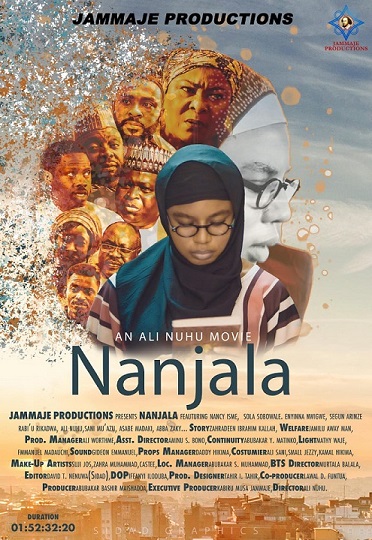
Kannywood/Nollywood film preview: Nanjala

The “Hausa films in English” have, since their debut, been as much praised as they have been criticised. However, while a large section of spectators welcomes the films, many others regard them as a threat to the development of the indigenous language. Others go further to describe them as “non-Kannywood” productions.

However, their initiator and promoter, Malam Kabiru Musa Jammaje, remains undaunted. He is all set to enthral the audience with another Kannywood film in English after the remarkable success of There is a way (2016), This is the way (2017), Light and darkness (2018) and In search of the king (2019).

The soon-to-be-released movie, entitled Nanjala, is the first of its kind in Kannywood. It features the industry’s heavyweights alongside top Nollywood actors like Enyinna Nwigwe, Nancy Isime, Segun Arinze, Sola Sabowale, among others. Moreover, it’s reportedly the most expensive Kannywood movie with a budget worth over N35 million.

The movie was directed by “whizkid” Ali Nuhu, co-produced by Abubakar Bashir Mai-Shadda and titled after its main character, Nanjala. I have only watched its two-minute-long teaser, but I could grasp that the eponymous heroine, Nanjala, is a journalist whose investigative reports would lead to the main conflicts. The film’s themes may include corruption, honesty, women empowerment, the menace of drug abuse, moral decadence, etc. The cinematography is terrific, and the cast seems to give an outstanding performance.

To be right is to describe the film as ‘pan-Nigerian’ due to its production quality, cast, English medium, and the resonance of its message in the country. It’s, of course, promising and will surely appeal to moviegoers from a wide range of backgrounds.

I, therefore, commend the trio of Jammaje, Ali Nuhu and Mai-Shadda for making a Kannywood film with the potential to catapult the overlooked film industry to the international stage. I do hope that it will not disappoint.

Habibu Maaruf Abdu

Kano, Nigeria

habibumaaruf11@gmail.com

27.5.2022

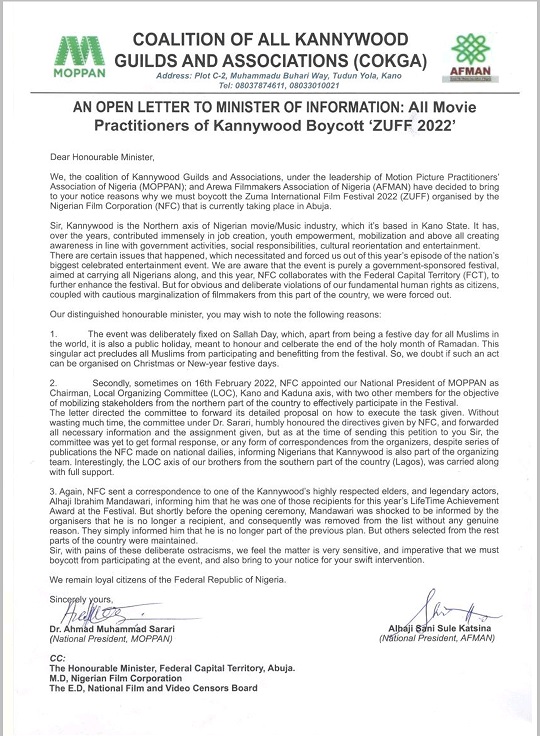
Kannywood boycotts 2022 Zuma Film Festival, petitions organisers

By Ahmad Deedat Zakari

Arewa movie producers, under the umbrella of the Motion Picture Practitioners Association of Nigeria (MOPPAN) and Arewa Filmmakers Association of Nigeria (AFMAN), have urged their members to boycott this year’s Zuma International Film Festival (ZUFF).

The reasons for the decision were stated in an undated open letter addressed to the Minister of Information and Culture, Lai Muhammad and jointly signed by the presidents of MOPPAN and AFMAN, Dr Ahmad Muhammad Sarari and Alhaji Sani Sule Katsina.

According to the two associations, marginalisation and infringement of their fundamental rights are the prevailing reasons that forced them out of participating in the government-sponsored ZUFF Festival. 

“The event was deliberately fixed on ‘Sallah’ day, which, apart from being a festive day for all Muslims in the world, it is also a public holiday meant to honour and celebrate the end of the holy month of ‘Ramadan.’ This singular act precludes all Muslims from participating and benefitting from the festival.”

The release, among other things, concludes that “[W]e doubt if any government agency can organise such national event on Christmas or New-year festive days.”

The coalition also implores the Minister of Information and Culture, Lai Muhammad, to step into the issue and address their grievances.

Nafisat Abdullahi, Naziru Sarkin Waka and our attack-the-messenger-to-discredit-the-message syndrome

By Ishaq Habeeb

I’ve met Nafisa twice, first at Zoo Road, Kano, hanging out with a friend who’s in business with many Kannywood industry people. Second, when I escorted a friend who visited Kano, Nigeria, from Niamey, Niger Republic. He had been pen pals with Nafisa for some time. So they agreed to meet whenever she’s in Kano.

After my initial attempts to dodge being part of making this meeting happen, I grudgingly agreed to link them up. But, aside from that, I don’t know Nafisa enough as an actress to know whether I like her or her movies.

I mostly remember her from the one-time popular song, “Bankwana sai watarana“, sang by Nazifi Asnanic. But following this Almajiranci debate, I already like her as an activist and looking forward to liking her as – hopefully – a good actress.

As for Naziru, I’ve met him several times. Besides being best friends with his childhood friend Rabiu Uba, I’ve had business reasons to visit his T/Fulani residence last year with Usman G. Abubakar and spent time with the singer in his living room. That aside, I am no fan of his mostly-political music. Nothing personal, just not my genre.

Now back to the original reason behind this write-up; the Almajiranci debate. My stand; Nafisat Abdullahi is right, so is Naziru Sarkin Waka. For those of us that know people in the Kannywood industry and have lived in Kano (the headquarters of Almajiranci in the world) long enough to see the horror of Almajiranci at its peak, we are in a better position to say they’re both right.

Victims of inadequate parenting primarily dominate both Kannywood and Almajiranci systems. Therefore, inadequate parenting is the monster we need to kill. Given that, bearing more children than one can adequately cater for is hugely responsible for bad parenting. This fact proves Nafisa and Naziru right.

Conclusively, the major problem lies with the people that make it their life’s calling always to attack messengers to discredit a message that often serves the good of all – however factual and tangible the facts in the message may be.

First, it was Digital Imam, speaking truth to Presidency on the escalating level of insecurity. Then Nafisat, for speaking out against Almajiranci, a menace we all agree needs urgent addressing. Then almost concurrently, Naziru, for speaking out against the prevalent immoralities in Kannywood, which is being perpetrated chiefly by victims of inadequate parenting.

Now, one can only pray, as a people, may we learn to hate our problems more than we love judging who’s reminding us of their presence for us to FIX them.

Ishaq Habeeb wrote from Kano via simplyishaqhabeeb@gmail.com.

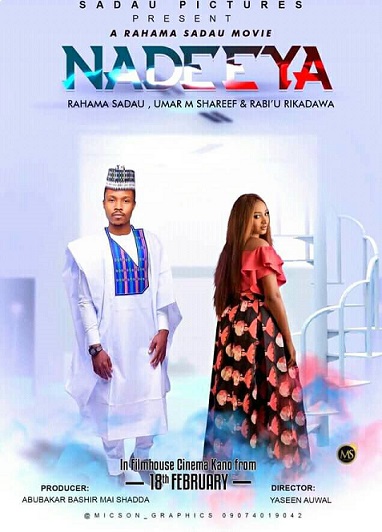
Kannywood movies review: NADEEYA

Director: Yaseen Auwal

Producer: Rahama Sadau and Abubakar Bashir Maishadda

Screenplay: Yakubu M. Kumo

Language: Hausa

Company: Sadau Pictures

Release Date: 18/02/2022

Cast: Rahama Sadau, Umar M. Shareef, Rab’u Rikadawa, Asma’u Sani etc.

After a brief hiatus in Kannywood, superstar Rahama Sadau is back with an eponymous movie NADEEYA. There have been high expectations of the film because of the good reputation of its director, Yaseen Auwal, and the female lead, Rahama Sadau, who also doubled as the producer. It, however, failed to open with a bang due to little publicity as it wasn’t initially made for the big screen.

The film is an issue-based drama about ‘upbringing’. It depicts how some parents spoil their kids, specifically daughters, and the practical difficulties such children face in life. The story revolves around a pampered daughter, Nadeeya (acted by Rahama Sadau), who faces similar challenges after her marriage.

Plot:

On their first day as newlyweds, Nadeeya’s husband (Umar M. Shareef) begins to discover mysterious things about her. She prays badly and can’t correctly perform even a simple ablution, not to speak of the ritual bath. The husband learns further that his bride doesn’t master domestic chores like cooking and housework. She once cooked a pretty heinous meal that nobody could eat. He is, thus, obliged to question her past. Viewers are then shown a series of flashbacks as she recounts her story.

Nadeeya is, since childhood, spoiled rotten by her father (Rabi’u Rikadawa). The father tried hard to get rid of anything that could cause discomfort to his favourite daughter. He had once fought an Islamic school teacher for punishing her and eventually pulled her out of the school. He also divorced her mum for disciplining her. Therefore, she was brought up single-handedly by the impious father with a maid doing everything for her. Nadeeya is now extremely remorseful and ready to change for the better. The story continues…

Critique:

The film is, indeed, hard-hitting and very meaningful. Through the eponymous character, it shows that children’s first learning begins at home, and their personality and morals depend largely on how they are raised. It also reminds of the responsibility of protecting one’s family from the hellfire, as contained in Qur’an (66:6). It reiterates that the responsibility is on both parents and husbands — this is seen in the portrayal of Nadeeya’s husband (Umar M. Shareef).

Nonetheless, despite some scenes being highly overdramatized, the director, Yaseen Auwal, succeeded in handling the serious theme with the utmost gravity. He deserves an accolade for making this topical movie that not only slams indulgent parents but also underlines the need for religious knowledge. Additionally, the film’s locales are beautiful, except for the bride’s room, where we see cracks in the painting. It was also well shot with an audible sound.

Again, the actors all did well. The lead, Rahama Sadau, is no slouch at acting. She melded every action with a fitting gesture, making a brilliant performance throughout the movie. M. Shareef tried to deliver his dialogue. He impressed in the scenes where he recites the Qur’an and where he teaches Nadeeya about Islam—although his chemistry with her didn’t take. However, Rabi’u Rikadawa did excellently as usual.

On the whole, Nadeeya is a well-made movie. I recommend it for those who are tired of Kannywood’s overblown romantic melodramas. Rating 3.5/5.

Habibu Maaruf Abdu wrote from Kano via habibumaaruf11@gmail.com.

The need to sanitise the Nigerian entertainment industry

By Usama Abdullahi

It’s highly frustrating that music is swiftly dominating Nigeria. So many people, especially teenagers, consider and consume music much more than anything. Despite their indecency and vulgarity in most videos, the youths see the musicians and actors as role models. 

One hardly watches a music video that’s free of impurity or indecency. Unfortunately, this is not seen only in the music industry, but it has become the norm in the entertainment industry. Take, for instance, Nollywood. Unsurprisingly, the movies they release every year are mostly not good for the sanity of Nigerian adults, let alone children.

Yet children sit comfortably to watch this with their parents – their so-called responsible parents. The comedy skits are much worse. Women who get featured in those comedy skits are usually inelegant vixens. They derive joy in flashing their nudities before the audience. And the audiences are often vulnerable kids. They are kids who barely think independently, so they learn whatsoever they see. 

What’s more disgusting is the vulgar languages in these skits and movies are not being filtered or edited by the supposed editors. This is proof of willful neglect of the future of young adults. But who do we blame for this? The blame lies with the supposed editors, reckless actors, irresponsible parents, vulnerable children, or the entertainment industry for its fatal disregard for prevailing indecency. I won’t fault anyone for this because society at large is undoubtedly blamable.

I’m writing this because I’m also a victim. I watch some comedy shows when I feel bored sometimes. But what I used to watch in the past few years is quite different from what I watch today. There’s an unfortunate compromise in our entertainment industry. Some contents are not merely nasty, but they are rather invective. The actors use swearwords and vulgar language excessively. For this reason, watching it diminishes the good morals that parents have infused in their children. 

We can see that moral decadence in children’s increasing disrespect and utter preferences for filthy films other than films with educative content. They imitate what they see in these movies, hence the overwhelming rate of juvenile crimes. And they are too quick to download newly released songs or films, but they fail to install PDFs for free books. Moreover, they can mime words from multiple songs, yet they barely memorise a single line from their books. This is why there’s a continuous decline in the education sector.

It didn’t surprise me when I heard a seven-year-old lad miming “Coming”, a song by Naira Marley featuring Busiswa. I can’t deny his talent for miming, but, given his age, the thing is, the song is grossly inappropriate for his hearing. That is it! Arguably, there are a lot of children who have mastered numerous songs. But, you know what, this mere mobile phone has flawed the reputation of many children and corrupted their behaviours.

Do you find it hard to believe me? Please, do create a time of your own and glimpse through TikTok. I bet you can’t believe what your eyes would see. The most important question is, how do we build a better future for the upcoming or unborn generations? With all these “unavoidable” indecencies, can we actualise this vision? 

Although the damages seem too much, still we can lessen it through the help of the National Film and Video Censor Board (NFVCB). Therefore, let’s appeal to the NFVCB to double their effort in seeing that songs with foul lyrics, X-rated movies, video clips and comedies are filtered or banned entirely from cinemas or social media.

Usama Abdullahi wrote from Abuja, Nigeria. He can be reached via usamagayyi@gmail.com

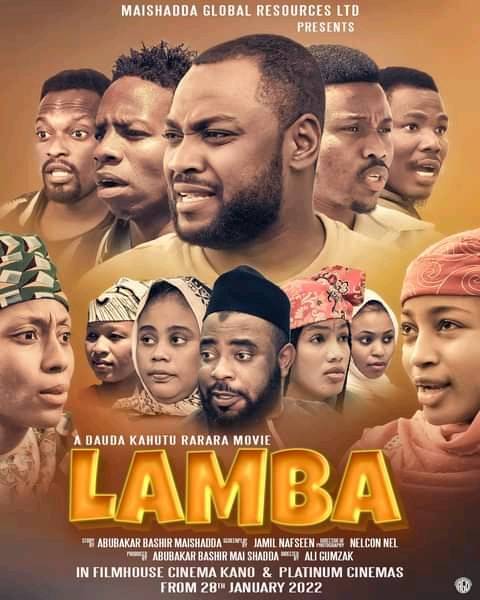
Kannywood Movies Review: “Lamba”

  • Director: Ali Gumzak
  • Producer: Abubakar Bashir Maishadda
  • Screenplay: Jameel Nafseen
  • Language: Hausa
  • Company: Mai-Shadda Global Resources Limited
  • Release Date: 28/01/2022

Mai Shadda Global Resources Limited, a film production company that recently emerged as Kannywood’s powerhouse, has produced many blockbusting comedies with the veteran director, Ali Gumzak. Their last release, Kayi Nayi, was the biggest hit of the previous year. However, as the new year arrived, they came in with another comedy entitled LAMBA.

The film is a social satire set against the backdrop of ‘Audio money’ (a slang term for the fake display of wealth). It tells how some three young men (Adam A. Zango, Umar M. Sharif and Ado Gwanja) flaunt false riches to impress the classy girls they meet on social media. They look for the girls who post their filtered, stylishly snapped pictures on the platforms.

Quite incidentally, the girls, too, are living under false pretences. They rent all the trendy clothes and latest phones they use. They hire everything from a dubious merchant, Salo (Aminu Shareef Momo), at any price. The unveiling of their true identity and what transpired later is shown in brilliantly executed hilarious scenes that get the audience laughing throughout.

The film bears some striking similarities to Makaryaci and Kalen Dangi (both directed by Ali Gumzak in 2017), but this doesn’t make it a clichéd one. It’s, in fact, somewhat of an unconventional comedy for having up to three choreographed song and dance routines. The songs are pretty melodious and well shot. But Zango’s dance in the last one, which has thumping music, impresses the most.

Also, due to the film’s need for multiple actors, the producer (Mai Shadda) didn’t cast his favourites (M. Shareef and Maryam Yahaya) alone. He, this time, featured Adam Zango alongside many others. This is particularly interesting for, until this film, the star (Zango) has not appeared in any big production since Karamin Sani (Dir. Falalu Dorayi, 2020).

Moreover, Ado Gwanja, Aminu Sharif (momo), Maryam Booth, Amal Umar and Aisha Najamu acted in pivotal roles. Dubbing artist-cum-actor, Sultan Abdurrazak and rising starlet Ummi Rahab also play supporting roles along with many new faces.

All the leading cast show great comic timing. Zango is larger than life, and Gwanja amuses with great gusto. M. Shareef shows a vast improvement as an actor. Aisha Najamu shines with her signature look, and the new faces seem promising. The credit should go to the director (Ali Gumzak), who handles them effectively.

In sum, though LAMBA lacks an innovative script, it’s an excellent comedy that succeeds in tickling the funny bone. It will surely entrance you and leave a long-lasting smile on your face. Watch it!

Habibu Ma’aruf Abdu wrote from Kano via habibumaaruf11@gmail.com.

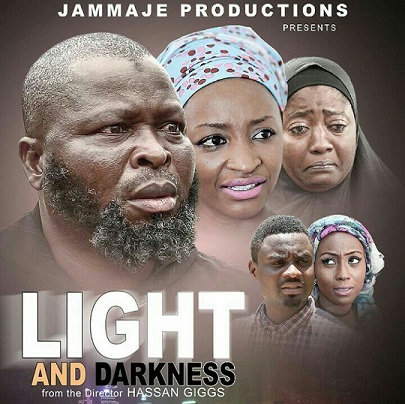
Kannywood movie review: ‘Light and Darkness’

By Saddam Ungogo

Light and Darkness (2018) is one of Kabiru Musa Jammaje’s Kannywood films in English. He is a fantastic filmmaker with ideas, but I always feel it isn’t a good idea to make such films. If it is something worth doing, Ali Nuhu would have made a few, Karan Johar would have made a Bollywood film in English. Instead, however, we saw indigenous films winning prestigious global awards.

At the Oscars, we even have an award category called ‘The Academy Award for Best International Feature Film’ (known as Best Foreign Language Film before 2020). It is given to feature films produced outside the United States with a predominantly non-English dialogue.

Directed by Hassan Giggs, written by Ilyasu Umar Maikudi and co-produced by Kabiru Musa Jammaje and Abubakar Bashir Maishadda, Light and Darkness is a story that revolves around Alhaji Balarabe Maikadara (Rabi’u Rikadawa), who is allergic to western education. The movie was set in an urban Hausa society of the 2000s, and it turned out to be a domestic drama with ‘education’ as its central theme.

Alhaji Maikadara was a well-endowed businessman. He married his second wife, Raliya (Rahma Sadau), with a promise to let her further her education, but after having her under his watch, he transgressed his end of the bargain. He had two grown-up children, Abba (Nuhu Abdullahi) and Basma (Maryam Booth), with his late wife. He chased Basma out of the house when she protested his intention to give her hand out in an arranged marriage. Instead, Basma preferred to go to school.

The film tries to identify the significance of education, paint it as light, parade the remonstrance of ignorance, and sketch it as darkness.

The film has good intentions, but it lacks preparation. Something tells me that the film cast was selected based on who they are or because they could speak English. Stories are supposed to call for actors.

Viewers were rushed through the storytelling, the story was stitched with anxiety, and the dialogues were incompatible with the character profiling.

Jammaje decided to be the line’s director, which I think was a blunder. He assigned uneducated characters to speak big grammar and talk with idiomatic expressions. Perhaps he was trying “to use the opportunity to teach English to viewers”, as he bragged in a Daily Trust interview on January 7, 2017.

Throughout the movie, I asked myself what audience the filmmakers had in mind while putting it together. Staged in an urban setting, written in English and with education (girl-child education included) as its cardinal message, this story was huge. Its target audience should be rural Hausa communities where there is a high level of out-of-school young people and children, where western education is still not condescended. If that is the case, the language used in transmitting this message must have spooked away from the suitable audience of the movie.

This is 2022. The movie was made in 2018. Maybe nobody would even care about this review, even the filmmakers themselves. Jammaje made many movies after this one, including The Right Choice, which his co-producer Maishadda called the “biggest Kannywood project ever in terms of finance”,…costing N35m.

The Right Choice (2020) was worth N35m. It featured top Nigerian stars from both Kannywood and Nollywood industries, such as Sani Mu’azu, Segun Arinze, Sola Sobowale, Nancy E.Isime, Enyinna Nwigwe and Ali Nuhu.

With The Right Choice, Jammaje Production must have learnt that they needed to be more pragmatic and made a complete Nollywood movie. Or, maybe, a Nigerianized film so that Jammaje could teach his beloved English language through his role as he would get educated cinema-goers lining up for his work anywhere around the world.

As for Hausa consumers like me, do not dare bring something like Light and Darkness ever again.

You might be promoting my culture with Light and Darkness, but honestly, you were killing my language!

Saddam Ungogo is a Kanp-based broadcaster and singer. He can be reached via candidsaddam@gmail.com.

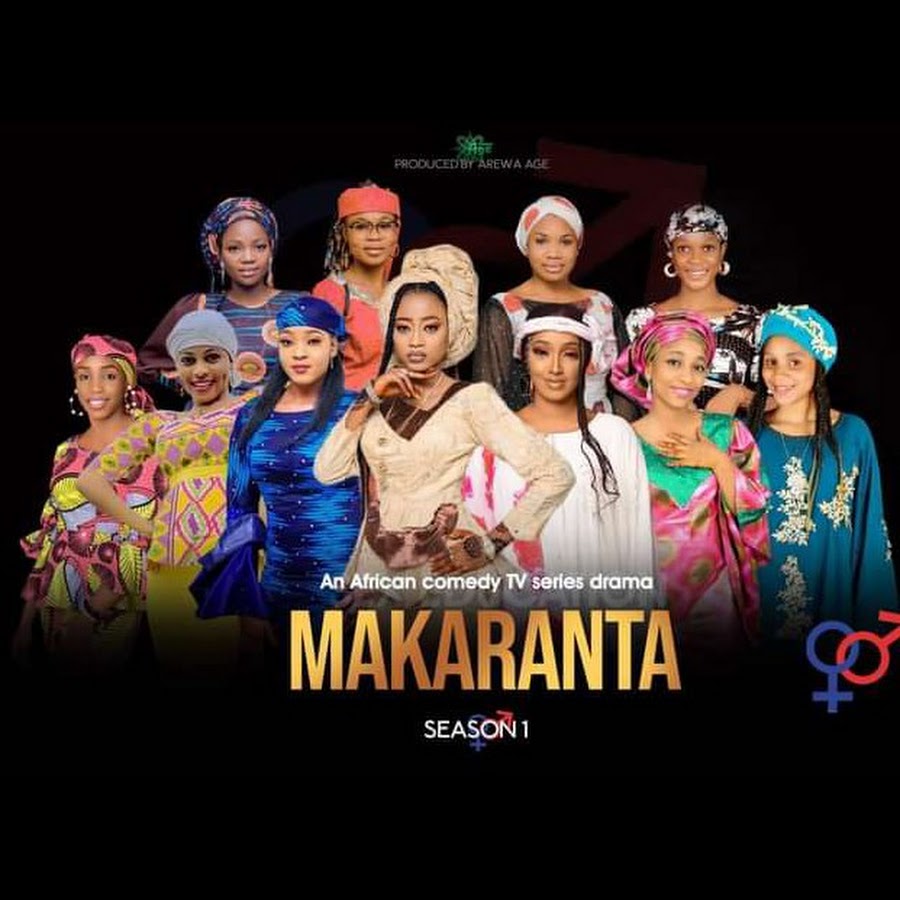
On the racy Hausa film, ‘Makaranta’

By Habibu Maaruf Abdu

Since the middle of the previous week, the trending news on Kannywood has been revolving around a racy film entitled Makaranta. The Kano censorship board declares the film’s director Aminu Nasara wanted for releasing the uncensored film trailer, which embodies obscene content.

The trailer starts with a school setting, and a female voice is heard talking about jima’i (‘sex’) crudely without euphemism. Two female students are then shown conversing in a classroom where one of them advises the other in a vulgar dialogue as follows:

“Banda tsabar sakaci da dolanci kawai kina zaune har ya buɗe jaka ya ɗauki bireziya baki sani ba. Idan kikai wasa da wannan dolancin kina sakin baki wataran sai ya cire miki pant…”

“If not for sheer foolishness, why would you just sit there while he opened a bag and took the bra without you knowing. Unless you are careful, he would, one day, take your panties off…”

The aforementioned are just a few of the many vulgarities in the trailer. So, if the two-minute-long trailer alone is this bad, how do you expect the complete film to be? Males and females are even shown touching one another and licentiously dancing in some scenes!

No doubt, such despicable movies are a threat to the well-being of our society. They can negatively influence viewers, especially the young generation, and dent our beautiful reputation as the Hausa Muslim populace. A film is a reflection of the society where it’s produced. I, therefore, strongly condemn the immoral movie. Making such a film is insolent, and all those involved should be brought to book.

Although the film director is trying to dissociate it from the mainstream Kannywood, his claims are unacceptable because the film is mainly in the Hausa language. Moreover, many of its characters are portrayed as Hausa Muslims (We hear names like Luba, Saudat and Suwaiba). Our society, therefore, has every right to follow it up since it’s something which, they think, could tarnish their image. The director is thus subject to both public outrage and censors punishment. The National Film and Video Censors Board should collaborate with their Kano counterpart to ban this film and impose a total ban on all films of its kind.

I will conclude by commending the efforts of the Kano censorship board in sanitizing Kannywood. Moreover, I call on them to devise more extreme punishment in dealing with the perpetrators of immorality in the industry. This would serve as a deterrent to others.

Habibu Maaruf Abdu wrote via habibumaaruf11@gmail.com.

Kannywood Movie Review: Gari Guda

Director: Sufyan Lawal Kabo

Language: Hausa

Release date: 26-11-2021

Company: Islamic Film Empire

Cast: Musa Lawal, Ibrahim Hassan, Mahmoud Mukhtar, Fatima Lawal, Binta Miko, etc.

Most of the criticisms around Kannywood are rooted in its personnels’ attitude towards filmmaking. They seem to focus on irrelevant, modern love stories, neglecting serious topics. Their films are therefore accused of cultural aberration and promoting moral decadence. However, as the criticisms became louder, a production company, Islamic Film Empire, came to change the narrative with its movie titled Gari Guda.

Set in Northwestern Nigeria, Gari Guda explores social vices like banditry and kidnappings that bedevil the region. It commences with a scene of a bandit attack on a village, where they kidnap many people, including its Chief Imam, and take them to their hideout in Dunguru Forest.

There is Abdul (played by Musa Lawal) on another side. He is a family man who, after losing his job, becomes bankrupt and cannot cater for them. His fruitless search for another job gets him increasingly frustrated with life, and he decides to end it all. He goes far away to Dunguru for the execution but eventually finds himself in the bandits’ camp. However, after hearing his story, their kingpin, Jalo (played by Ibrahim Hassan), asks him to work as their cyber-man.

Would Abdul accept the offer or turn it down? Find out in the cinemas!

Gari Guda is, indeed, a powerful film, not only for dealing with a pressing issue but for doing that effectively. It is shot in suitable locations that perfectly capture Northern Nigeria’s ecology. This makes it a realistic portrayal of the region and its current condition.

The film is a socio-political critique of the Northern political elites. It depicts their abuse of power as the posits that as the primary cause of the terrible mess the region faces. This is suggested when Jalo tells Abdul that he holds an LL.B degree, and his inability to afford “Law School” makes him resort to kidnapping. The intention of Abdul to commit suicide also reiterates the misconducts unemployed citizens could engage in.

The film is, in addition, overtly didactic. Its portrayal of Abdul, who encounters troubles for throwing his parents away, clearly symbolizes the consequence of parental disobedience. There are also many instances where the director incorporates moral teaching into the dialogue. I salute him for the job well done, together with all the cast and crew members.

Nonetheless, the film’s plot progresses too slowly. And while some scenes are lengthy with unnecessary details, some important points are missed. For example, what transpired with the people kidnapped at the beginning remains unknown. The director also fails to strike a balance between education and entertainment. Except for Abdul’s comical father character, there is no comic relief – something to allow the audience to recover from the tensions and excessive gunshots – in the film.

In conclusion, Gari Guda enlightens and educates. It is typical of what you would expect from the “Islamic Film Empire”. Therefore, I recommend it for the serious-minded—rating 3/5.


Reviewer:

Habib Ma’aruf

habibumaaruf11@gmail.com

Kannywood Movie Review: AVENGER

When an action movie has “Revenge” as its theme, the main focus is the “Avenger”. He is, at times, a lone survivor whose parents are brutally murdered, and his efforts to avenge their death often make the intriguing action scenes in such movies. As its title suggests, Avenger, the Kannywood English action film, is also not different. It’s a story of an avenger who vows revenge against the assassins of his family.

Jamal (M.M Haruna) is the last survivor of Alhaji Baffa Yaro’s family. He was in boarding school when his father, a gubernatorial candidate, was assassinated alongside his family members. His deceased father’s friend, Sani Mu’azu, provides refuge for him. Years later, Jamal grew into an Avenger, and Sani Mu’azu (his saviour who also trained him to be one) begins to give him the pictures of those who, according to him, are responsible for the assassination.

However, when the Avenger launches serial killings on them, he learns that they are innocent. Sani Mu’azu is the real antagonist but mischievously pulls the strings behind him. He is even the mastermind of the actual group behind the murder of the Avenger’s family. Avenger, therefore, shifts his target to the real perpetrators.

Having noticed the exposé of his true identity and that he is now the Avenger’s target, Sani Mu’azu hires professional hitmen to haunt the Avenger down and eliminate him. The Avenger’s encounter with them is conveyed in highly dramatic chases and choreographed action sequences. However, everything is not resolved when the film ends, and the phrase “to be continued” pops up on the screen.

Though a rehash of foreign films, Avenger opens on an engaging note. It begins with Sani Mu’azu, Abba El-Mustapha and Tijjani Faraga conspiring to kill the gubernatorial candidate. It then shifts to where the police are investigating the serial killings on prominent personalities by an unknown person, who is later found to be an Avenger, as he leaves similar transcription after each murder. But as the film expands, it slackens. The story proves contradictory. The narrative gets incoherent and somewhat confusing. Some unconnected scenes seem complementary as they are not serially arranged, and there are no proper techniques, not even intertitles, to clarify.

As an action film, its setting is also not fitting. So is the use of costumes and props, which is too poor. The cinematography is generally nothing to write home about. The action sequences are poorly crafted, and the editing is flawed. There are instances where dialogue is repeated, among other defects.

Compared with Kannywood’s previous attempts at action genre, like Aduniya (Dir. G. Galadima, 2014) and Gwaska (Dir. Falalu Dorayi, 2015), Avenger is much impoverished. It copies the storyline of Aduniya, while Gwaska has better production quality and a more effective setting than it has. Moreover, the English dialogue rendition is weaker than Jammaje’sThere is a way (2016)” and co.

Additionally, the portrayal of M.M Haruna as Avenger is unfit. He lacks the charisma of action heroes. The same goes with Ali Nuhu, who is portrayed as the boss of Ishaq Sidi Ishaq. The latter plays the role of the police officer in charge of the murder investigations. However, the reverse could have been better since Ali Nuhu is more agile and popular to make the required impact.

The ending is also outrageous. It shouldn’t have been inconclusive. Movies meant for the big screen shouldn’t be fragmented. But they are in Kannywood. The film in question and the previously released Sarki Goma Zamani Goma are typical examples. The filmmakers should either change or end up losing a large audience.

Finally, with all its negatives that clearly outweigh the positives, Avenger is still a watchable film for the suspense in its first few moments and Ali Nuhu and Sani Mu’azu’s eloquence in delivering English dialogue. I rate it 2/5.


Habibu Maaruf Abdu wrote from Kano. He can be reached via habibumaaruf11@gmail.com.