Education

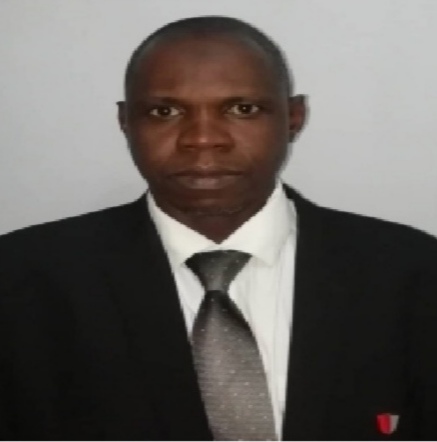
Robots and the future of human labour

By Kabir Musa Ringim

As a graduate of Computer Engineering and holder of MSc Information Technology, I’m skeptical to write about this topic which is a little bit controversial because of the divergent views of the two school of thoughts about the topic, but that will be explained later in the article.

As the world is currently in the information age – also known as the computer age that began in the mid-20th century, characterized by a shift from a traditional industry established by the Industrial Revolution to an economy primarily based upon Information Technology, the biggest challenge now is the way in which robots (bots) have started taking over many jobs previously meant for humans.

While the innovation of technology has greatly improved our day-to-day activities, it has also proven that we no longer need actual human beings to help with many of the jobs of today in the near future, thanks to robotics.

A robot is a machine programmable by a computer capable of carrying out complex actions automatically. According to the Britannica dictionary, a robot is any automatically operated machine that replaces human effort, though it may not resemble human beings in appearance or perform functions in a humanlike manner. By extension, robotics is the engineering discipline dealing with the design, construction, and operation of robots.

As its definition indicates, robots are here to replace humans in workplaces, markets, the army, etc. Though robots are still under development, the history of robots has its origins in the ancient world, during the Industrial Revolution, humans developed the structural engineering capability to control electricity so that machines could be powered with small motors.

Already, machines and robots have started replacing humans in many workplaces like banks, industries, markets, and media houses in Nigeria. Automated Teller Machines (ATMs) gave banks the privilege to employ few tellers, while the internet allow them to have few customer care representatives. Nowadays, you don’t need a hardworking secretary to type your work when you can easily dictate to a computer what you wanted to write and get it printed.

Office workers in public and private institutions have already started feeling the heat. A job that 20 persons can handle in a week can be done by a robot in a day. Governments now give less priority to office workers and more priority to health and education sectors when it comes to employment and recruitment. But it is just a matter of time before this status quo changes because both the education and health sectors will soon start experiencing the tsunami of job loss.

In the near future, school doesn’t have to recruit many teachers when a single tutor from anywhere in the world can teach thousands of students online and have their exams and tests marked by a computer program or bot.

Health institutions will soon require the services of a few health workers, medical doctors, and consultants, since a patient can get a prescription for himself by talking to a robot or chatting with a consultant that renders online services, also surgeries can be performed by robots.

Security outfits will face massive job loss with the development of robot police and soldiers. A robot will be stronger, more loyal, more reliable, and more accurate than humans, in addition to it being a machine, as such, emotionless and immortal. One robot can fight thousands of humans on a war front. Already drones are now more preferred than having an air force officer flying a warplane to enemies’ camps.

Media houses like TV and Radio stations don’t need to employ OAPs, presenters, newscasters, and language translators in a few decades to come, because machines and computer programs can handle their jobs. News editors and program managers will simply work on program contents and news and upload them into a special computer program for presentation, translation, and subsequent use.

Same case with employing sales girls and boys at retail stores, shops, and supermarkets. Who will bother to go shopping physically when people can easily order what they want to buy online and get it delivered to their doorstep? Cleaners, houseboys, office messengers, cooks, labourers will all cease to exist because of robots.

Other jobs that bots will take away from humans include, but are not limited to, telemarketing, automated shipping services, sewer management, tax preparers, photograph processing, data entry work, librarians and library technicians, etc.

But with all that I mentioned above, I’m not in any way trying to spell doom for the next generation of youth that will graduate from schools and start looking for jobs, in a few decades to come. As I have stated from the beginning, there’s a divergent view on the topic. Some people view bots as a weapon to wipe out humans from industries, military, offices, workplaces, etc, while others view it as a great development that will better the lives of humans which is needed to be embraced by all.

For me, humans by nature, since time immemorial, have had survival instincts and no technological development was able to render people jobless. If a job is no longer in existence, humans will always find themselves a better alternative. When industrial machines came into being in the 19th century and replace millions of menial labourers, humans find a way to survive them, the same way robots will be integrated into our daily lives. By the way, it is the very humans that made the machines and the robots not the other way round.

Kabir Musa is the HOD Computer Engineering, Binyaminu Usman Polytechnic, Hadejia, Jigawa State.
In defence of ASUU strike (I)

By Nura Jibo

During my university days in one of Nigeria’s best and leading universities, I was a victim of the Academic Staff Union of Universities (ASUU) strike. As a result, we were stricken academically and made to stay at home for an entire year.

The ASUU-Federal Government face-off continued to linger. We were affected by another two-year strike at different times. Then I wrote a full page in the Daily Trust opinion column of 2 May 2003 titled, “ASUU/FGN Face-Off: Point Blank”.

I don’t really blame ASUU for all the strike actions. Because I know even then, the moribund status of the Nigerian education system had reached its comatose stage. We were given lectures in two of the biggest lecture theatres at my university. And the mammoth student crowd was so overwhelming that one had to sit on the floor to listen to lectures. There was a lack of seats and spaces to patch on and receive lessons. That was nineteen (19) years ago!

Now I don’t want to be lengthy today. Anybody that wants to know the solutions I proffered then could search Google or take time to read my book chapter on Nigeria. It is there on Amazon

To cut the story short, I listened to the haggard-looking and frustrated ASUU President with a sympathetic mind. I saw how Seun of Channels Television tried to balance his reporting with Festus Keyamo’s verbal diarrhoea.

First, anybody watching Keyamo’s take on ASUU knows he is lying! He sounded a pathological one, for that matter. But I don’t blame him because that’s what some Nigerian politicians do to make ends meet! However, as a lawyer and former human rights activist, Keyamo ought to have been careful by minding his language as a custodian of justice.

I am happy the ASUU President debunked and dismissed Keyamo as one of those ‘chop-chop’ guys that rants on government, but after having a lucrative position, they eat and dine from it. And their so-called activism ends there!

Second, Adamu Adamu’s Nigeria’s Federal Ministry of Education is one of the most corrupt ministries in the world. A verifiable proof and evidence of this is vivid when one wants attestation of their academic documents. The entire people in charge of attestation of university documents are all fantastically corrupt. They charge and collect kick-backs from left, right, back, front and centre! And they would tell you there is no actual price for attestation of one’s academic documents.

Very recently, a very shocking incident happened. Someone was kept aside, probably a former staff of the Ministry, that specialises in being a money liaison negotiator between one of the women directors that work in that attestation section in the Ministry and anybody that comes for attestation of documents. That guy (name withheld for now but will be released in my subsequent analysis) is extraordinarily corrupt and charges a considerable amount of money in the name attestation!

I wanted to expose these ills and terrible ineptitudes to Adamu Adamu by intending to painstakingly go and meet him personally at his office the way we used to meet at late Dr Mamud’s Tukur house in Kaduna at Raba Road. But I decided not to because he may ask his secretaries not to usher me in. The rest of this story is a menu for another day. Now let’s come back to ASUU Strike.

As it is, Adamu Adamu has lost respect and the so-called radical reformer he thinks he was. Because for him to preside over an education ministry that is the biggest in Africa and allow corruptible ministerial staff to keep reigning and painting a terrible image of Nigeria in the name of attestation of documents shows a lack of concern and total negligence of holding public office on Adamu’s part!

Therefore, little wonder when he ignores ASUU’s demands because during his struggle days to make both ends meet, he was an ardent ASUU supporter. But now, he has joined the bandwagon of Keyamo’s “Kiya Kiya” in the name of public service!

Third, I respect my university teachers very well. They earn my respect any day. Because despite all odds, they made me who I am educationally (academically), politically, socially, realistically, genuinely, “temeritically”, hopefully, audaciously, respectfully, fearlessly, confrontationally, and above all analytically and scientifically savvy.

Ditto Adamu Adamu and the Keyamo’s of this world!

They were well trained and educated by those university lecturers that they betray today in the name of public office.

To be continued!

Nura Jibo is a Lifetime Member of the West African Research Association (WARA), African Studies Centre, Boston University, United States. He can be reached via jibonura@yahoo.com.

One condition stops FG and ASUU from reaching agreement 

By Uzair Adam Imam 

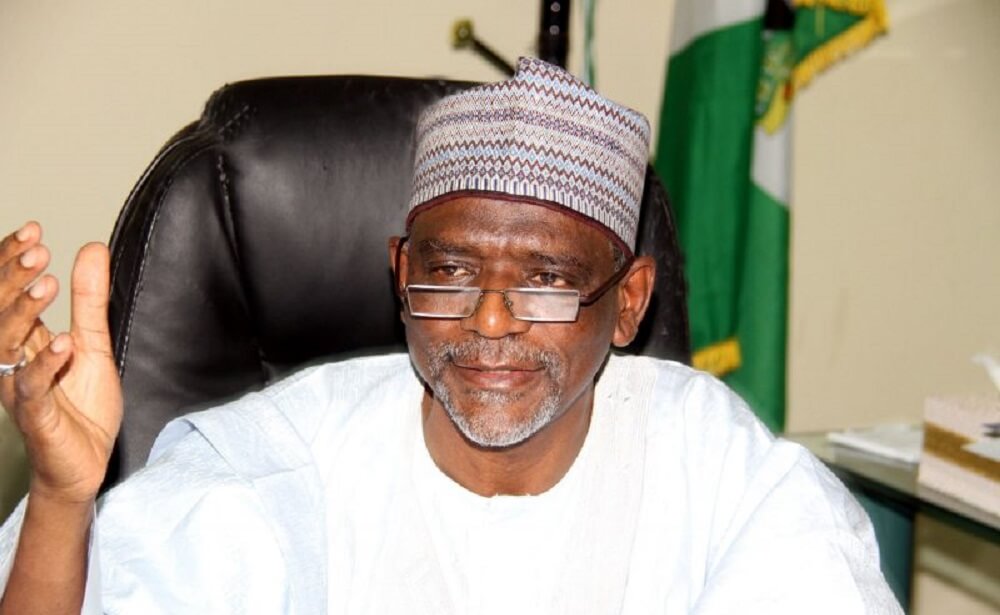
The Minister of Education, Malam Adamu Adamu, said the Federal Government has sorted out issues with the Academic Staff Union of Universities (ASUU), adding that the ‘no-work-no-pay’ policy is the only condition delaying the truce.

The minister said this Thursday at the 47th session of the State House Briefing organised by the Presidential Communications Team in Abuja.

According to him, four of five unions in the tertiary institutions across the country had agreed to call off strike within the next week.

Regarding compensating students for time wasted from the six-month strike, the minister said ASUU  should be held responsible for that.

The minister stated, “the affected students should ‘take ASUU to court’ to get compensated for the time wasted.”

The English teacher who failed kinds of nouns

By Ishaka Mohammed

Sometime in April 2021, an interviewer told me that there were only five kinds of nouns. She went further to reject some of the concepts I used while trying to disagree with her. For example, she claimed that neither ‘uncountable’ nor ‘mass’ could be used while discussing kinds of nouns. Surprisingly, however, she accepted ‘countable’. Before I could say anything further, she had mentioned her qualifications, perhaps to prove her superiority to me. Although I apologised to her, I wished I hadn’t encountered such a drama, thanks to Covid-19. I’ll explain this in the following story.

Due to my observation of many state civil servants, especially teachers, I’m usually afraid of relying on a state government job in Nigeria. Although I’ve applied for some government jobs in Kaduna State, I’ve never thought of depending totally on any (if employed). Besides, it’s highly unwise to rely on a single source of income.

However, as a private school teacher, my Covid-19 lockdown experience made me see one advantage of government jobs. Government workers received their salaries despite being away from work for months. Unfortunately, it was a different story for most of us (especially teachers) in the private sector.

Most schools in Kaduna had been on lockdown even before the federal imposed the same. I thought normalcy would return within a short time, but I was wrong. I had to stay for five months without a salary but not without food. To complement the assistance from some friends and relatives, I did some menial jobs until I decided to post my story on Nairaland. All I needed was a daily income of N500.

About an hour after posting the story, a lady responded and asked me to chat with her via WhatsApp. I wasted no time, and we reached an agreement. She would send snapped or scanned copies of handwritten notes from Ibadan, and I would type them on my phone and send them to her. We agreed on N30 per page, but she usually paid me higher than that. However, the biggest amount of money I received at the time was N1,200, and it took me three days to complete the task. Moreover, it was difficult typing the contents of the photos on the same phone containing them (the images).

With the lockdown experience, I became so much interested in government jobs. So, when the Kaduna State Teachers’ Service Board (KSTSB) advertised teaching vacancies in December 2020, I responded at once. I was shortlisted for a test, and owing to my high score, my hopes were high. So, expectedly, I was invited for an interview.

I prepared well and looked forward to facing the interview panel, but little did I know that I would be asked a question similar to the number of times President Muhammadu Buhari has been shocked. By the way, despite answering the last three questions correctly, the first one had already created friction between a member of the panel and me.

The woman insisted that there were only five kinds of nouns. I immediately disagreed with her and mentioned more than eight. Surprisingly, she accepted ‘countable nouns’ but rejected ‘uncountable nouns’. I quickly drew her attention to the fact that uncountable nouns are also called mass nouns, but my assertion infuriated her. She claimed that she had never come across ‘mass nouns’, and to prove her authority, she had to boast of the number of degrees she had, with the first being in language arts. I kindly said, “I’m sorry, ma.” However, that was like appointing a campaign director after one has already lost an election. I didn’t get the job.

Since then, I’ve consulted many sources to know how many kinds of nouns there are, but I have

yet to get a definite answer. Should you have an answer to that question, please share it with me.

Ishaka Mohammed wrote from Kaduna. He can be reached via ishakamohammed39@gmail.com.

FG/ASUU to resume negotiations as strike enters seventh month

By Muhammad Sabiu

The Academic Staff Union of Universities (ASUU) will resume talks today, over their protracted strike, with representatives of the Federal Government.

The meeting, according to the organization’s president, Professor Emmanuel Osodeke, is meant to discuss on one of the seven topics that ASUU is protesting about and “That’s the issue of renegotiation,” Osodeke said.

The chairman stated this in a Channels Television’s Politics Today yesterday Monday.

It is about “the renegotiation of the 2009 agreement. It’s not just about wages. It has to do with the system. The structure, the autonomy and other issues and how to fund universities.

“The government has reduced it to just salaries alone. But if they had looked at the whole agreement and implemented it, we would not be talking about funding.” Osodeke added

It can be recalled that on February 14, ASUU shut down public universities citing as their reason the Federal Government inability to respect prior agreements that both sides had made in their previous face-offs.

The issues of contention include funding for the revitalization of public institutions, earned academic allowances, the University Transparency Accountability Solution, promotion backlogs, among other grievances.

KASU Acting VC charges students on hardwork, good behaviour

By Sumayyah Auwal Usman

The acting Vice-Chancellor of Kaduna State University (KASU), Kaduna, Professor Abdullahi Musa Ashafa, has advised students of the university to be focused, hardworking and law-abiding in order to graduate in record time and with good grades and character.

Prof. Ashafa gave the advice yesterday while addressing the beneficiaries of the Need-Based and Merit Scholarship Award of Kaduna State Government. He said that though the university had quality academic and non-academic workforce to train them, they must play their part by studying hard, be disciplined and law abiding.

While thanking the Kaduna State Scholarship and Loan Board and the Government of Kaduna State for their consistent support to KASU students, he said students must not only read widely to learn, grow, understand and apply what they have learnt, but must also be prepared to take full advantage of opportunities that might come their way to succeed in every aspect of life.

Recently, the Kaduna State Government under Governor Nasir Ahmad El-Rufa’i awarded the sum of one hundred and fifty eight million five hundred and thirty thousand naira scholarship to best performing students of the university.

The forgotten victims of ASUU strikes

By Dikko Muhammad, PhD

I read the justifiable frustration of many people affected by ASUU strikes, most of them undergraduates with a few months to graduate but were stalled by the strike. Some have already missed the chance to attend law school this year. This is quite unfortunate. It is a waste that saddens every sensible person.

However, there are other victims of the strike who are mainly forgotten. Many people talk as if the strike does not harm ASUU members. They say that ASUU members will get their withheld salaries back at the end of the strike. That’s largely true. But there are other implications for many of these members.

First, the younger ones in the profession — Graduate Assistants and Assistant Lecturers, their progress is truncated by strikes. These are people enrolled in our universities for their master’s and PhDs, respectively. A few of them get the chance to study abroad. Majority study at home. Every strike means an indefinite pause to their studies, careers, promotions etc.

Before you say that the strike is their choice, please understand how ASUU goes to strike: each chapter (or university) will hold a meeting to decide whether to embark on strike or not. Every member present has one vote, whether a Professor or Graduate Assistant. A simple majority carries the day. That means a Graduate Assistant may vote against the strike, but those in favour could win by a single vote. At the national level, the results from the chapters are collated and studied. If there are 100 chapters, the decision of a simple majority will be the final verdict. So if 51 universities vote for the strike against 49, that’s the end.

These strikes inevitably affect the professional development of every academic staff. Some couldn’t start and/or finish masters and PhDs on time. That delay will manifest up to their retirement. Strike halts promotion exercises of many universities. People who aspire to be professors in their forties might be delayed into their fifties despite their conferences, publications, etc.

Thus, the strike is not as viable an action as many people seem to think. The lecturer you insult for being an ASUU member might have voted against the strike from the beginning. They might have been equally affected by the strike in terms of studies or promotion.

And these are people who don’t even talk about their predicament. Instead, they simply suffer in silence.

Dikko Muhammad wrote from Umaru Musa Yar’adua University, Katsina. He can be reached via dikko.muhammad@umyu.edu.ng.

Atiku pledges to end lingering ASUU strike

By Ahmad Deedat Zakari

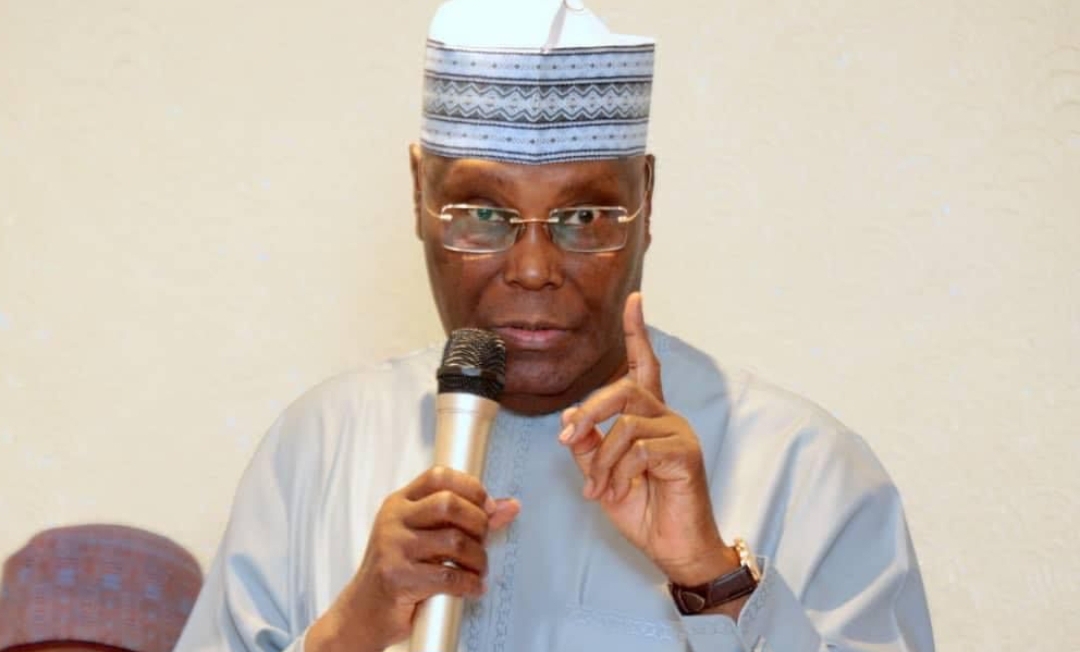
The presidential candidate of the Peoples Democratic Party ( PDP), Atiku Abubakar, has promised to resolve the lingering strike of the Academic Staff Union of Universities (ASUU).

Atiku spoke at the youths programme on “Intergenerational Synergy on Government”, organized by PDP to mark the 2022 International Youth Day celebration in Abuja on Friday, August 12, 2022. 

The former vice president argued that education is a fundamental right which every youth needs for their growth, and he would do the needful when elected president 

“This is because education is fundamental to your growth. It doesn’t matter whether you are in politics, business or any sector. The fundamental right of every youth or every citizen is to be educated.” He said

Atiku criticized the government and boasted that he had invested in education for three decades. He then pledged to work with university authorities to end the strike. 

“I take very strong exception to the strike by ASUU and the government’s inability to resolve the crisis. I have been investing in education for the past thirty years. I pledge I will work with university authorities to end these incessant strikes that are causing unacceptable harm to the ability of our children to get an education.”

ASUU has been on strike since February 14, consequent of which most public universities have been shut down.

21st Century ASUU with no website, social media handles

By Prof. Abdelghaffar Abdelmalik Amoka

Is ASUU aiding misinformation and blackmail? Sometimes in 2020, I tried to get a copy of the 2009 ASUU/FG agreement to refresh my brain on the issue. After searching my ASUU file and could not find a copy, I remembered that I was not in the country in 2009 and, as such, had no copy of the document. I searched the net but could not get comprehensive information on the agreement except the summary published by newspapers. I then had two options left. It is either I get hold of a colleague who was at the congress meeting when copies of the agreement were shared or walk to the branch secretariat to request a copy.

This is the point. If the copy of the agreement is not readily accessible to me because I was away on a study fellowship, how will non-ASUU members, students, and other stakeholders have access to it? You keep getting the question: what do ASUU really want? And you keep explaining it over and over again if you have the patience since we do not have a platform to direct them to.

In a genuine concern, my favourite Human rights activist, Ahmed Isah, popularly known as the ‘Ordinary President’ of the Brekete family, wanted to intervene in the ASUU/FG crisis. Somewhere along the line, he got information that all that is required to end the ASUU strike is N18bn. He took a bold step and initiated a crowdfunding exercise to raise the “N18bn for ASUU to go back to class”. An invitation of the ASUU president to his radio program clarified the issue at stake and that it’s way behind an N18bn issue and that it’s about ” funding the public universities” and “not ASUU”. Atiku’s tweet “let’s fund ASUU” generated serious reactions from ASUU members, including myself.

The other day, Festus Keyamo was talking about N1.2trn on Channels TV that none of us seems to be aware of. I hope the educationist will still educate us on the said N1.2trn. There is also this trending news that a lawyer in Abuja is begging Alhaji Aliko Dangote, Femi Otedola, and the banks’ CEOs to raise N1.1trn to end the ASUU strike. This is how different figures will keep coming out if there is no accessible platform to educate the public.

But why the misinformation? Who is responsible for the misinformation? Is it deliberate? Are we aiding the spread of misinformation as a union?

Universities in the UK were on strike sometime last year and this year, and I wanted to find out about the strike action. I google it, and the webpage of the UK University and College Union (UCU) came up. I got comprehensive information on the strike from the website within a very short time.

Unfortunately, there is no space to get information on ASUU struggles. If you are lucky to be at home while the ASUU president is on Channels TV’s Politics Today or any other TV station, you will get some information on the strike. If you are lucky to be following a passionate ASUU member on Facebook, you may get some information on ASUU struggles from him. Personal efforts.

But if you missed all these and you want to know about ASUU struggles, there is no central information system. You may have to look for an ASUU member to talk to. If the ASUU member is not regular at ASUU meetings, he may not be able to help you as he may not be in possession of copies of the agreements and information on the strike. Our communications are in hard copies.

The last option is to go to the nearest university and visit the ASUU branch office for information. Whoever cannot do that will rely on the information he finds on the street and work with it. Such information may be half true or outright lies. But how do they verify it? New Media is the fastest route to share information, but we have no presence on the net: the union has no website and no official social media handles.

While I was able to get UCU online, in the 21st century, information on ASUU struggles, the agreements with FGN, the MoUs and MoAs signed with Buhari’s government, and the extent of their implementation are not readily available. So, how do we expect the public to follow the trend of events that led to the rollover strike when the information is not readily accessible? Several people have asked how TETFund is the brainchild of ASUU. Even some colleagues don’t know the difference between TETFund and the revitalization (NEEDS Assessment) funds.

Media is very important in any fight. It’s a tool to share the truth and lies. If the truth is not readily accessible, the available lies will be picked. Then, the misinformation will be spread, and people will buy it. Ahmed Isah’s genuine intention is an example of the power of misinformation. ASUU is a union of intellectuals. Among them are journalists, mass communication experts, media consultants, image makers, IT experts, web designers, etc., but the union has no website that anyone can visit and get educated on the history of ASUU struggles and how we got to where we are today.

Dear respected colleagues, If we must win this battle, we need to revisit our communication strategy. The appearance of the President and some chairmen on air and the efforts of some individuals have made some impact, but they are not enough. I recently realized that the union has no position for Publicity Secretary in the executive. We need to have another look at our public engagement strategy. We need to put up a media team and develop a robust and secured webpage that can tell our story without our presence.

To the general public, the strike will be six months by the end of tomorrow. In one news, we were told that President Buhari gave the Minister, Mal. Adamu Adamu, two weeks to solve the problem that has kept students at home for over five months. In another news, they said it was the minister that said he would sort the issue in 2 to 3 weeks. Whichever one is the case, it is over two weeks, and everyone is quiet, and ASUU has rolled over the strike. A government that cares about the education of the people will not be so comfortable keeping university students at home for six months. We hope that the issue is resolved soon so that the lecturers, students, and the university community can get back to their normal life.

The fight for the survival of public education is a collective one. We must save our universities from total collapse. Happy six months anniversary of the 2022 ASUU strike in advance.

©Amoka

Kano poly educates students on entrepreneurial journalism

By Uzair Adam Imam

Department of Mass Communication, Kano State Polytechnic, organised a one-day lecture series to prepare their students about the dynamic nature of 21 century journalism.

The event Thursday had three guest speakers who discussed on the topics; The 21st Century Mass Communication Students by Associate Professor, Mainasara Yakubu Kurfi, Head of Mass Communication Department, Bayero University, Kano.

The remaining two were: Crime and Judicial Reporting by Comrade Abbas Ibrahim, Chairman Nigerian Union of Journalists (NUJ), Kano and Reading: A pathway to Entrepreneurial Journalism by Mal. Badamasi Aliyu.

Speaking after the event, the convener, Malam Aisar Salihu Musa (Aisar Fagge) said, the essence of the event was to prepare students about the new skills of 21st century journalism.

He added that the event would also help the upcoming journalists develop a critical and entrepreneurial mindset which will enable them to excel in their choosen career.

In his words, Aisar stated, “The emergence of new media technologies, the ICT and the user-generated-content have transformed the way news is produced, consumed and distributed. So there is a need for our students to know about these changes in the practice of 21st century journalism.

“Not only that, there is also a need to introduce our students into entrepreneurial journalism, especially in a country where job opportunities are rare; a country with a massive unemployment problem where majority of the youths are roaming the street without job.

“So the students need to know that they can get job for themselves by learning new skills assisted by the internet. Students could be content creaters, content developers, writers, advert practitioners, copywriters, public speakers,” he stated.

In his paper: “Reading: The Pathway to Entrepreneurial Journalism,” Mal. Aliyu said, by reading, you can become whatever you want in life. You can write well, speak good because of reading good books. Knowledge and skills are buried in books. Explore them and be what you want to be. I got 4 million naira as a result of the book I read “How to write a business plan.

The event was graced by the academic and non-academic staff across the Kano Poly schools, lecturers from Bayero University, Kano, Federal University Dutsin-ma, Al-Qalam University, FCE Kano and former students among others.

The Head of Department, Mass Communication, Kano State Polytechnic, Malama Binta Muhammad Lawal, ably represented by one of the lecturers, Malam Salihu Sule Khalid, commended the event.