Month: October 2026

Gunmen Kill Islamic Cleric Sheikh Yahaya Masussuka

By Uzair Adam

Suspected gunmen have killed prominent Islamic cleric Sheikh Yahaya Masussuka at his residence in Dutsin-Ma, Katsina State.

According to Katsina Post, the attack occurred at about 9pm at the entrance to the cleric’s residence, where the assailants reportedly opened fire on him and a friend.

The two victims were subsequently rushed to Dutsin-Ma Hospital for emergency medical attention but were later confirmed dead.

The Daily Reality gathered that details surrounding the attack remained unclear as of the time of filing this report, with no information available about the identities of the assailants or their motive.

The killing has plunged residents of the area into mourning, particularly the cleric’s followers and people who knew him.

JIBWIS Leader Calls for Probe of Viral Video Threatening Attack on Enugu

By Muhammad Ibrahim 

The National Chairman of Jama’atu Izalatil Bid’ah Wa Iqamatis Sunnah (JIBWIS), Sheikh Abdullahi Bala Lau, has called on security agencies to investigate a viral video showing a man in the organisation’s First Aid Group uniform allegedly calling for weapons to attack Enugu on Sunday.

In a statement dated Monday, October 26, 2026, Bala Lau condemned the remarks and urged the Department of State Services (DSS), the Nigeria Police Force and other security agencies to identify those involved and bring anyone found culpable to justice.

He distanced JIBWIS from the statements, stressing that the organisation did not endorse violence or threats against any community. He also warned that wearing its uniform did not necessarily mean the individual was acting with its authorisation.

The cleric said the incident could be an attempt to misrepresent the organisation and damage its reputation, urging authorities to investigate the man’s identity, affiliation and motives.

Bala Lau cited JIBWIS’s recent international conference in Abuja, which brought together Muslim and Christian leaders to promote interfaith dialogue, religious tolerance and peaceful coexistence.

He maintained that the organisation, established about 48 years ago, remained committed to Islamic teachings, education, humanitarian services and peaceful coexistence among people of different religious and ethnic backgrounds.

JTF Troops Rescue Two, Foil Kidnap on Naka–Ahume Road


By Abdullahi Mukhtar Algasgaini

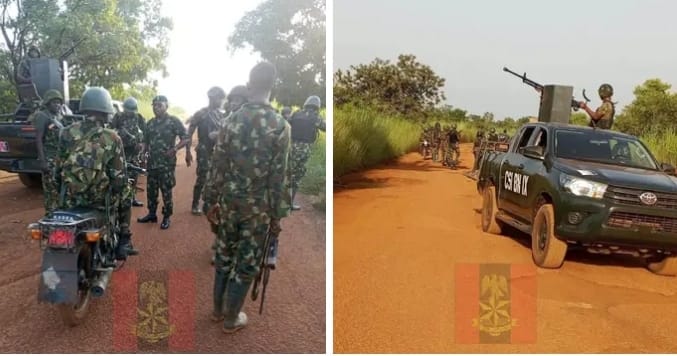
Troops of the Joint Task Force, Operation WHIRL STROKE, foiled a kidnapping attempt and rescued two victims during a fighting patrol along the Naka–Ahume Road in Benue State on 24 October 2026.

According to a statement by Lt Ahmad Zubairu Zubairu, Acting Media Information Officer, HQ JTF Operation WHIRL STROKE, the troops encountered suspected kidnappers armed with dangerous weapons while the suspects were attempting to abduct motorists and other road users. The troops engaged them in a firefight, forcing them to abandon their captives and flee. A pursuit followed, but no further contact was made.

One of the rescued victims, Mrs Mngunengen Ihom, 36, from Ahume, sustained machete wounds during the incident. She was evacuated to Naka General Hospital for medical attention.

The Force Commander, Joint Task Force Operation WHIRL STROKE, and General Officer Commanding, 5 Division, Nigerian Army, Major General Moses Gara, charged troops to sustain aggressive, intelligence-led operations against armed elements threatening residents in the Joint Operations Area. He also urged personnel to strengthen human intelligence gathering to improve early warning and response to security threats.

Major General Gara reassured residents of the Task Force’s continued commitment to restoring peace and security, and encouraged members of the public to provide credible, timely information to security agencies to support ongoing operations.

South African Author Defends Use of AI After Publishing 370 Books in 20 Months

By Sabiu Abdullahi

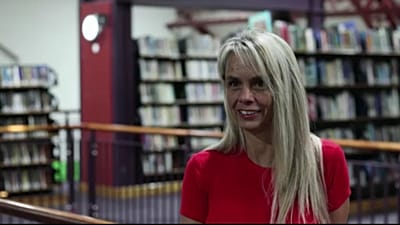
A South African author who has published more than 370 books in about 20 months using artificial intelligence (AI) has defended her writing process amid growing criticism of AI-generated literature.

Coral Hart, a pseudonym adopted to protect her real identity, said she had received tens of thousands of hostile messages and several death threats over her use of AI in producing books.

The author, who is in her 40s, has become a prominent figure in the debate over the role of artificial intelligence in the publishing industry.

Speaking in an interview with Agence France-Presse (AFP), Hart said she decided to speak publicly about her methods because she believes the technology is becoming an established part of publishing and cannot simply be dismissed.

“I chose to be the one to step up and say, these are conversations we need to start having,” she said. “This is here… They’re not going to switch it off or unplug it because a bunch of authors said so.”

Hart had worked in publishing for 14 years before she began using AI to write books around February 2025. She said she had also written several dozen works without the technology.

According to the author, she spent three months learning how to work with different AI models and developing a system capable of generating books based on detailed instructions.

Her process involves creating the story concept, defining the writing style, developing characters and preparing chapter outlines before using AI to generate the manuscript.

She said advances in AI had significantly improved the process, allowing her to move from generating individual paragraphs through repeated prompts to producing an entire book draft in one sequence.

Hart uses different AI models for different tasks, arguing that each has particular strengths and weaknesses in areas such as dialogue, prose, story structure and explicit romantic scenes.

She also acknowledged that AI-generated first drafts often require substantial editing.

Her manuscripts go through further AI-assisted reviews to address continuity problems, incomplete character development, dropped plotlines and weaknesses in the story. A human proofreader then reviews the text, corrects remaining issues and makes additional changes where necessary.

Millions of books sold

Hart said she had published 371 titles, many of them romance novels, and estimated that she had sold more than one million copies across digital, print and audio formats.

She also claimed to have earned more than US$1 million in 2026 so far. One of her novels reportedly reached Amazon’s top 100 bestsellers, although she said many of her titles were developed for specific readerships through extensive market research.

Beyond her own publishing activities, Hart said she had trained several hundred people in her approach and was preparing to launch Authorythm, software designed for authors who use AI.

Despite the controversy, she said she generally discloses her use of AI only when required by a publishing or sales platform.

Hart said she had published under more than 10 other pen names and questioned why her creative process had attracted so much attention now, after years of working in publishing.

Debate over AI-generated literature

Critics have accused Hart of contributing to what is commonly described as “AI slop” — a term used for large volumes of AI-generated content considered low-quality or lacking originality.

However, she argued that commercial performance and readers’ responses should also be considered when assessing the quality of a book.

“Books are selling,” she said, adding that readers who find books unsatisfactory can return them.

The debate has intensified as publishers and literary institutions grapple with questions about originality, authorship, disclosure and the appropriate use of artificial intelligence in creative work.

Hart also referred to the controversy surrounding a novel by Haitian-Canadian writer Thelyson Orelien, which was withdrawn from the shortlist for France’s prestigious Goncourt Prize following allegations of AI use. According to the report, the author’s publisher confirmed the use of AI on October 21, 2026.

Hart questioned whether some readers rejected works because of their actual quality or because they knew AI had been involved in producing them.

“If you need an AI label to hate something, do you hate it, or do you hate AI?” she asked.

Her case highlights a growing divide in the publishing world between those who view AI as a useful writing and editing tool and those concerned about its potential effects on literary originality, professional authors and the value of human creativity.

As AI tools become more capable, the debate is likely to centre increasingly on transparency, editorial responsibility and how readers and publishers define authorship in an industry undergoing rapid technological change.

The Daily Reality

Who Is Zion Suzuki? Japan’s Ghanaian-Rooted Goalkeeper Who Joined Aston Villa

By The Daily Reality

Zion Suzuki, Japan’s first-choice goalkeeper with Ghanaian heritage, has joined English Premier League side Aston Villa after rising through the ranks of Japanese and European football.

Zion Suzuki is a Japanese professional footballer whose career has taken him from the youth ranks of Urawa Red Diamonds in Japan to European football, earning recognition as one of the country’s promising goalkeepers.

Born on August 21, 2002, in Newark, New Jersey, United States, Suzuki has a Japanese mother and a Ghanaian father. Despite his American birthplace and mixed heritage, he represents Japan at international level.

Suzuki began his professional career with Urawa Red Diamonds, one of Japan’s established football clubs. His performances and development eventually opened the door to European football, where he continued to gain experience and improve his goalkeeping skills.

He later joined Belgian club Sint-Truiden, where he gained valuable exposure to European competition before moving to Italian side Parma. His time in Europe helped strengthen his reputation as a goalkeeper capable of competing at a higher level.

In August 2026, Suzuki completed a move to Aston Villa, marking another significant step in his career and bringing him into the English Premier League, one of the most competitive football leagues in the world.

At international level, Suzuki has represented Japan and emerged as an important figure in the national team’s goalkeeping setup. His performances have contributed to his growing profile in Asian football and increased attention on his development in Europe.

His background also makes him a notable figure in discussions about footballers with African heritage representing countries outside the continent. Through his Ghanaian roots and Japanese international career, Suzuki reflects the increasingly diverse backgrounds of players in modern football.

At 24, Suzuki’s move to Aston Villa represents an important opportunity to establish himself in English football, compete at a high level and further develop his reputation on the international stage.

As he begins this new chapter, attention will be on how quickly he adapts to the demands of the Premier League and the role he could play in Aston Villa’s plans.

A Sick Husband, a Wife in Labour and a Midnight Search for Help: One Man’s Ordeal in Bauchi

By The Daily Reality

Shehu Adamu Hanafi’s account of being turned away from three hospital units while seeking emergency care for his wife raises troubling questions about access to maternal healthcare, hospital capacity and the treatment of vulnerable patients.

At a time when most families are asleep, a husband whose wife is in labour should be preoccupied with one thing: ensuring that she and their unborn child receive the medical attention they need to survive.

But for Shehu Adamu Hanafi, the early hours of the night became a desperate search for help, marked by uncertainty, repeated referrals and the fear of what might happen to his wife before she could receive treatment.

In a Facebook post published at night, Hanafi recounted how he struggled to secure medical attention for his wife, whom he described as being in deep labour and suffering from a dislocated hip. He also disclosed that he was sick himself.

What should have been a journey towards safety, he said, turned into an exhausting experience involving multiple hospital facilities in Bauchi State, leaving him frustrated and eventually prompting him to head back towards Jos in the early hours of the morning.

“Jarabawa daga Allah, Allah ka sa mu ci!!!” he wrote in Hausa, meaning, “A trial from Allah; may Allah help us overcome it.”

The opening words captured the anguish of a man confronting a frightening medical emergency while struggling to find a facility willing and able to attend to his wife.

A referral that led to another dead end

According to Hanafi, their ordeal began at Toro General Hospital, where he said medical personnel informed him that the facility could not handle his wife’s condition.

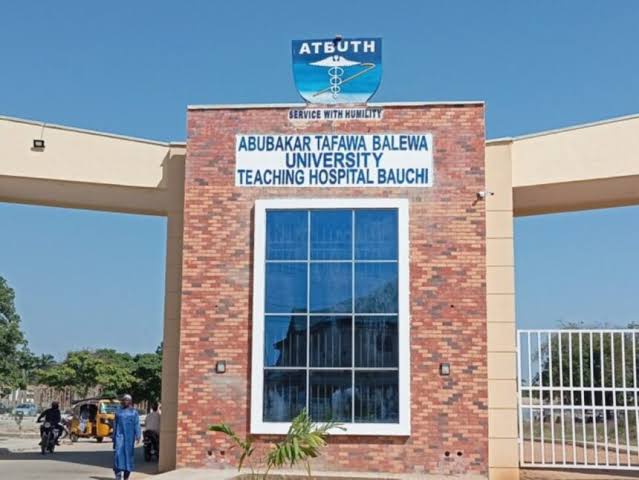
They were subsequently referred to the Abubakar Tafawa Balewa University Teaching Hospital (ATBUTH) in Bauchi.

The journey to Bauchi took them into the early hours of the morning. Hanafi said they arrived at approximately 2 a.m., hoping to receive the specialist attention his wife needed.

Instead, he claimed, they were told that there was no available bed space.

The situation became even more distressing when, according to his account, hospital attendants warned him to leave immediately, cautioning that any complications arising from their decision to remain would be at his own risk.

For a husband already worried about his wife’s condition, the reported response left him searching for another option at a time when every minute seemed important.

With little choice, Hanafi said he proceeded to the Bauchi State Specialist Hospital, hoping that the facility could provide the emergency care they had been unable to obtain elsewhere.

But that attempt, too, reportedly ended in disappointment.

Caught between hospital units

At the State Specialist Hospital, Hanafi said he was informed that the facility did not have the specialist required to manage his wife’s condition.

He was reportedly directed back to ATBUTH, this time to its emergency or trauma unit.

He returned, hoping that the new direction would finally lead to treatment.

According to his account, however, the trauma unit also declined to handle the case, telling him that his wife’s condition did not fall within its area of responsibility and directing him back to the maternity unit.

The repeated referrals left him caught between hospital departments, each directing him elsewhere while he struggled to secure care for his wife.

The account does not establish the clinical assessments made by the medical personnel involved or the precise reasons behind each decision. Nevertheless, it describes a deeply distressing experience for a patient and her husband seeking emergency maternal care in the middle of the night.

For Hanafi, the immediate concern was not navigating hospital procedures but finding somewhere his wife could be attended to.

A desperate call for advice

With the situation unresolved, Hanafi said he contacted a former commissioner of health in Bauchi State, hoping to obtain emergency guidance.

The advice he received, according to his post, was to return to the State Specialist Hospital.

The recommendation brought him back to a facility he had already visited, after he had been directed elsewhere and then sent back again.

By this point, his account reflected the frustration of someone who felt that he had exhausted the available options without finding a clear path to treatment.

He described himself as stranded and frustrated, struggling to understand how he and his wife had found themselves in such a predicament.

“This innocent soul is at it, suffering from the sweet bitter fruits of democracy, I told myself,” he wrote.

The remark conveyed his disappointment with a system he believed had failed him at a moment of exceptional vulnerability.

The decision to return to Jos

By approximately 3:15 a.m., Hanafi said he and his driver decided to return to Jos, explaining that his wife’s condition appeared to be calming down.

The decision came after hours of uncertainty and attempts to obtain medical attention.

He described setting off in the darkness, with the emotional weight of the experience accompanying them on the road.

“We moved in the dark with hearts darkened by fate, galloping on the road,” he wrote, before concluding with the Islamic expression, “HasbunAllah wa ni’imal wakil” — “Allah is sufficient for us, and He is the best disposer of affairs.”

His words conveyed the helplessness of a husband who had sought medical assistance for his wife but said he ultimately had to leave Bauchi without obtaining the care he had been seeking.

His post, however, did not establish whether they subsequently arrived safely in Jos, whether his wife received medical attention there or what the eventual outcome of the pregnancy was. Those questions remain important and require clarification.

Beyond one family’s ordeal

Hanafi’s account raises broader questions about the accessibility of emergency maternal healthcare, particularly at night, when patients may have limited alternatives and urgent medical decisions cannot be postponed indefinitely.

When a patient is referred from one facility to another, effective coordination is essential to ensure that the receiving hospital can assess the patient and determine the appropriate course of treatment.

Bed shortages, limited specialist availability and the division of responsibilities between hospital departments can complicate emergency care. However, the details of this particular case, including the medical circumstances and the reasons for the reported referrals, would need to be established before any definitive conclusions could be drawn about the conduct of the facilities involved.

The central concern remains straightforward: how can patients facing potentially serious complications obtain timely assessment and appropriate care when the first facility they approach cannot manage their condition?

For pregnant women in labour, delays in accessing appropriate medical care can have serious consequences. That is why clear referral arrangements, functioning emergency services and effective communication between healthcare facilities are important elements of a responsive health system.

Hanafi’s account also underscores the vulnerability of patients who must travel between towns in search of treatment, especially when they are already dealing with illness, physical pain and the emotional strain of a medical emergency.

Questions that deserve answers

The allegations in Hanafi’s post warrant clarification from the relevant health authorities and hospital managements.

Did the facilities have available emergency maternity services at the time? What assessments were conducted when his wife arrived? Why were the referrals made, and was there effective coordination between the hospitals involved?

Were alternative arrangements offered to ensure that the patient could obtain timely medical attention if a facility could not manage her condition?

These questions are not merely about assigning blame. They concern the practical workings of emergency healthcare and the safeguards available to patients when a medical situation becomes urgent.

The Daily Reality could not establish from Hanafi’s account alone the hospitals’ official positions, the full clinical circumstances surrounding the case or the eventual outcome for his wife. Responses from the relevant authorities, alongside further details from Hanafi, would help provide a fuller and fairer picture.

A plea behind the pain

At the heart of Hanafi’s account is a husband who says he was ill, a wife experiencing labour and a desperate search for a hospital that could attend to her.

His story is not, by itself, proof of the condition of every hospital in Bauchi State. But it is a deeply concerning account of one family’s reported experience at a moment when access to medical care mattered urgently.

For families confronted with medical emergencies, the expectation is simple: that they will be assessed promptly, informed clearly about their options and directed towards appropriate care without avoidable confusion.

Hanafi’s closing prayer — that Allah should be sufficient for them — reflected the faith with which he confronted the uncertainty of that night.

But a family facing a medical emergency should not have to rely on faith alone while searching for care.

The questions raised by his account deserve answers, and the circumstances surrounding his wife’s ordeal merit a thorough and compassionate investigation.

The ₦5,250 Question

By Usman Abdullahi Koli

Something extraordinary is unfolding on the Nigerian Exchange. A refinery that accumulated nearly two billion dollars in losses during its first two years of commercial operation is now inviting Nigerians to own a piece of the largest single-train industrial complex on the African continent for the price of a modest family grocery run. That is not charity. It is one of the most ambitious attempts to broaden ownership of a strategic Nigerian industrial asset.

Consider what is on the table. Dangote Petroleum Refinery and Petrochemicals FZE is offering 4.1 billion ordinary shares at ₦525 each, with a minimum subscription of ten shares, or ₦5,250. If fully subscribed, the offer raises about ₦2.15 trillion, or $1.63 billion. The company is targeting up to ten million retail investors. Aliko Dangote, who currently controls 87.27 per cent of the company, would retain about 84.34 per cent after a fully subscribed offer. This is not simply a founder cashing out. The refinery is issuing new shares, with proceeds earmarked for growth capital, including the first tranche of a $14.27 billion programme to double refining capacity from 700,000 barrels per day to 1.4 million by 2029.

The financial turnaround behind the offer is striking. The refinery lost about $1.51 billion in 2024 and another $475.8 million in 2025. In the first half of 2026, however, it reported profit after tax of $1.82 billion on revenue of $13.91 billion. Utilisation rose to an average of 83.6 per cent, reaching 700,000 barrels per day in June. Gross refining margins also rose sharply. This is a genuine operational turnaround, not something that should be dismissed simply because the company is now seeking public money. The refinery is also creating strategic value beyond its balance sheet. It is processing Nigerian crude that was previously exported while Nigeria imported refined products at a premium. It has exported jet fuel to international markets and now supplies more than 80 per cent of Nigeria’s domestic petrol demand. Its emergence has altered the country’s position in the regional fuel market and given Nigeria an industrial asset with global relevance.

But the arithmetic demands clear eyes. At ₦525 per share, the offer implies a valuation of roughly ₦65.22 trillion, or about $47.8 billion at the prospectus exchange rate. Some analysts have argued that the valuation is difficult to defend against global refining peers, with one analysis placing fair value considerably below the offer price. That does not make the IPO a bad investment. It means investors are being asked to pay for substantial future performance, not merely today’s earnings. The private placement immediately before the public offer deserves similar scrutiny. Between late June and late July 2026, the refinery sold about three billion ordinary shares to institutional investors at $0.35 per share, raising $2.5 billion. The placement was reportedly oversubscribed. The public offer price was roughly $0.40 per share. There can be legitimate reasons for differences between private and public pricing, including market access, structure and timing. Still, the gap is material enough for a retail investor to ask why institutions with greater negotiating power and access to due diligence paid less.

Debt adds another layer. Total indebtedness stood at $5.67 billion as of June 30, 2026, although net debt to EBITDA was a relatively modest 0.27 times. More important is the expansion bill. The IPO covers only a fraction of the $14.27 billion required to double capacity. The balance will have to come from internal cash flows, debt and potentially additional equity. For an investor buying today, future capital raises therefore matter because they could dilute existing holdings. Taxation is another under-discussed risk. The refinery currently benefits from its free-zone status, although its effective tax rate in the first half was 13.6 per cent. The prospectus indicates that domestic-market profits may become fully taxable from January 2028. If the business moves towards a higher blended tax burden, earnings could fall, and the already demanding valuation would become harder to justify.

Another question is whether the exceptional refining environment of 2026 can last. Geopolitical conflicts have disrupted refining capacity and lifted margins, creating unusually favourable conditions for producers with available capacity. The refinery itself acknowledges that some of its recent performance has benefited from these market disruptions. Investors should therefore distinguish between current profitability and sustainable profitability. A business can be excellent while its current earnings are temporarily exceptional. Yet the most consequential feature of this transaction may not be its valuation. It is its potential effect on the Nigerian capital market. Nigeria now has a much larger population of digitally connected retail investors, and the Dangote offer is deliberately designed to reach them through banks, fintech platforms, mobile money operators and other approved channels. The minimum entry point of ₦5,250 makes ownership accessible to people who could never contemplate buying into a strategic industrial asset through a conventional private placement. The offer opens on September 14 and closes on October 13, with listing expected later in the year.

If it succeeds, the implications could extend far beyond Dangote. It would demonstrate that Nigerian capital markets can mobilise substantial domestic savings for industrial expansion while giving ordinary citizens a stake in productive assets. Other African industrialists would notice. A successful transaction could encourage more companies to consider public ownership rather than keeping strategic assets concentrated among a few investors. But public participation must not be confused with informed investment. The communication around the offer has been powerful, but storytelling is not the same as financial education. The official IPO platform itself warns investors that shares can fall as well as rise and urges them to read the prospectus and seek professional advice where necessary. That warning matters because a ₦5,250 minimum does not make the underlying investment risk-free.

The Saudi Aramco IPO offers a useful comparison. Saudi Arabia successfully mobilised millions of retail investors when it listed a portion of its national oil company in 2019. But the comparison has limits. Aramco entered the market with a long-established earnings record and extraordinary profitability. Dangote Refinery’s transformation is impressive, but its current profitability has a much shorter history. Investors should therefore admire the industrial achievement without allowing admiration to substitute for valuation analysis. It also offers a broader lesson for corporate communication. Every campaign for a transaction of this magnitude should explain not only what investors might gain but what they could lose. The prospectus contains the losses, debt, tax changes, expansion requirements and other risks. The challenge is ensuring that the millions of people being targeted actually understand them. A 25-year-old fintech user in Lagos and a 60-year-old retiree in Kaduna do not necessarily need the same message or the same educational channel.

None of this diminishes the offer’s significance. Dangote deserves credit for attempting to place public ownership at the centre of an African industrial story of this scale. Nigeria has spent decades watching natural resources generate wealth without creating enough broad-based ownership of productive assets. Giving citizens an opportunity to own part of the infrastructure processing the country’s crude is economically meaningful and potentially transformative. But participation is not the same as investment. The person who buys ten shares with money he cannot afford to lose is not making a sound investment simply because the entry price is low. The young professional who borrows to subscribe because he expects the shares to double immediately after listing is not investing on analysis. He is speculating on a narrative.

Another question deserves attention: what happens if the offer is not fully subscribed? The answer should not be treated as a referendum on Dangote’s industrial achievement. Retail investors may simply conclude that the price is too high or that the risks are not adequately compensated. A partial subscription could alter the pace or financing mix of the expansion, but it could also demonstrate something healthy about the market: investors are capable of saying no when the numbers do not convince them. A capital market should reward good businesses without suspending price discipline. Dangote has also spoken about eventually listing the refinery in the United States after expansion. If that happens, the Nigerian retail investor could ultimately own a stake in a company with much wider international visibility. That possibility adds to the long-term attraction, but it should remain a future prospect rather than part of today’s investment case. Investors should buy the business that exists and the prospects reasonably supported by evidence, not a future valuation that may or may not materialise.

The real significance of this IPO is therefore bigger than whether Dangote’s share price rises after listing. It tests whether Nigerians can move from being consumers of large industrial businesses to becoming owners of them. That transition requires more than access. It requires confidence in institutions, credible disclosure, investor education and a market willing to reward both ambition and prudence. If those conditions hold, the Dangote offer could become a landmark in Nigeria’s financial history. If they do not, the country will learn an equally important lesson about the difference between popular participation and responsible ownership. Nigeria needs disciplined participation now. The Securities and Exchange Commission must supervise the market after approval, enforce disclosure rules and guard against manipulation. The Nigerian Exchange must ensure that retail investors receive timely information. The government should resist turning the offer into a political slogan. And investors themselves must accept the responsibility that comes with ownership: read the prospectus, understand the business, assess the price and invest only what they can afford to leave exposed to market risk.

The subscription window opens on September 14 and closes on October 13. Millions of Nigerians will decide whether to buy a stake in one of the country’s most consequential industrial projects. They deserve more than a sales pitch. They deserve to know what they are buying, what they are risking and what assumptions must hold for the investment to work. Dangote has built something extraordinary and has opened the door for Nigerians to own a piece of it. That deserves recognition. But the ₦5,250 question is not simply whether Nigerians can afford to enter. It is whether, at ₦525 a share, the opportunity is worth the risk. That is the question every serious investor should answer before pressing the subscribe button.

Usman Abdullahi Koli wrote via mernoukoli@gmail.com. 

NDLEA Arrests South African Woman with 36.65kg Cocaine at Lagos Airport

By Sabiu Abdullahi

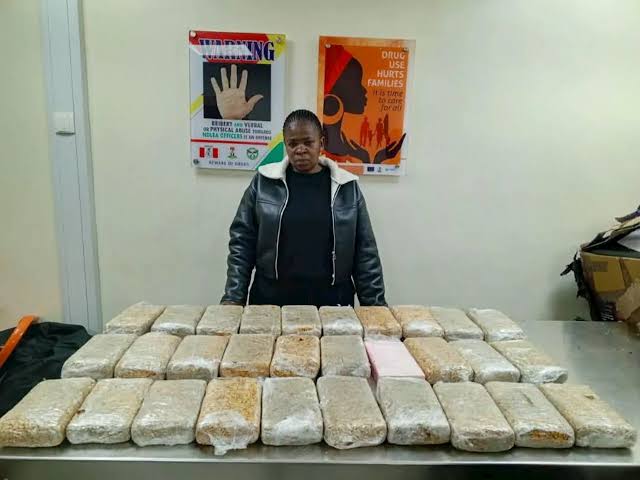
The National Drug Law Enforcement Agency (NDLEA) has arrested a 34-year-old South African woman, Qhina Beauty, with 36.65 kilogrammes of cocaine at the Murtala Muhammed International Airport in Lagos.

The agency also arrested a 62-year-old Nigerian-American woman, Anetor Gloria Ubong, over the alleged importation of 9.45kg of a high-grade cannabis strain known as loud from the United States.

The arrests were disclosed in a statement issued on Sunday by the NDLEA Director of Media and Advocacy, Femi Babafemi, who said the seizures were part of a series of anti-drug operations conducted across several states.

According to the agency, Beauty was arrested on October 7, 2026, at the airport’s departure hall while preparing to board a Qatar Airways flight to South Africa through Doha.

A search of her two travelling bags reportedly uncovered 30 blocks of cocaine weighing 36.65kg. The drugs were concealed with dried pepper, wrapped in cellophane tape and packed into seven separate parcels.

“Qhina was arrested at the departure hall of the Lagos airport on 7th October 2026 while trying to board a Qatar Airways flight to South Africa via Doha. A search of her two travelling bags led to the recovery of 30 blocks of cocaine weighing 36.65kg, laced with dried pepper, wrapped in cellophane tape and packed into seven separate parcels,” Babafemi said.

The NDLEA spokesperson said the suspect told investigators that she arrived in Nigeria on September 30 specifically to collect the consignment. She allegedly claimed that another South African woman recruited her and promised to pay her 20,000 South African rand upon successful delivery.

“During her interview, she told operatives she arrived in Nigeria on 30th September specifically to pick up the consignment. She said she was recruited by another South African lady, who promised her R20,000 on successful delivery. She claimed she was introduced to two other members of the syndicate: one based in the United States and the other a Lagos-based car dealer,” the statement said.

Babafemi added that investigations led to the arrest of a 46-year-old Lagos car dealer, Uchenna Victor Umunnakwe, on October 14 after days of surveillance.

Umunnakwe was reportedly intercepted at Apple Junction, Ago Palace Way, Lagos. According to the agency, he admitted receiving Beauty at the airport, lodging her at Santiago Hotel in Amuwo-Odofin and later moving her to Cynarisso Hotel near the airport ahead of her departure.

Nigerian-American woman arrested with cannabis

In a separate operation, NDLEA operatives arrested Ubong on October 21 after she arrived at the Lagos airport aboard a United Airlines flight from Houston, Texas.

Babafemi said Ubong, a realtor based in Richmond, Texas, who holds Nigerian and United States passports, was found with 18 parcels of loud weighing 9.45kg in two checked-in boxes. The substances were allegedly concealed with gift-wrapping paper.

According to the agency, Ubong claimed that her daughter and the daughter’s future brother-in-law delivered the box to her home in the United States for onward delivery in Nigeria to her daughter’s fiancé, identified as Jibola.

“Ubong, a realtor based in Richmond, Texas, who holds both Nigerian and US passports, was arrested following her arrival on a United Airlines flight from Houston.

“A search of her two checked-in boxes uncovered 18 parcels of loud, a synthetic cannabis weighing 9.45kg, concealed with gift-wrapping paper in a box. She claimed the box was delivered to her home in the US by her daughter and the daughter’s future brother-in-law, for onward delivery in Nigeria to her daughter’s fiancé, Jibola,” Babafemi said.

Drug seizures across several states

Beyond the airport arrests, the NDLEA reported additional seizures and arrests in Lagos, Delta, Kano, Taraba, Niger, Bauchi, Ondo, Edo and Oyo states.

In Lagos, operatives of the agency’s special operations unit arrested 41-year-old Eletu Rasheedat in the Eti-Osa area on October 23. The operation reportedly yielded 5,820 diazepam pills, 780 tramadol tablets, 3.7kg of skunk cannabis and 230.25 litres of skuchies.

In Delta State, a 51-year-old suspect, Peter Ugochukwu, was arrested in Warri with a large quantity of pharmaceutical drugs and suspected illicit substances.

The agency said the items recovered included 29,350 tramadol capsules, 6,620 tablets of tramadol 200mg, 4,116 bottles of codeine syrup, 11,340 Rohypnol tablets, 3,500 diazepam tablets, 300 ampoules of pentazocine injection and 200 ampoules of diazepam injection.

Other substances reportedly recovered from him included tramadol 225mg, Molly and Cocodamol. The suspect was transferred to the NDLEA alongside a white Hummer bus by the Nigeria Police Force in Delta State.

Also in Warri, a 46-year-old physically challenged woman, Helen Samson, was arrested at Enhere Junction on October 19 with 6kg of skunk, according to the agency.

In Oyo State, NDLEA operatives arrested 41-year-old Fajana Dada Oluwaseyi in the Adamasingba area of Ibadan on October 19. The agency alleged that he had previously escaped arrest after officers seized 197.8kg of cannabis from his residence on September 16.

In Kano State, a raid in the Gerawa area on October 22 led to the arrest of 30-year-old Murtala Lawan and the seizure of 159 blocks of cannabis weighing 97.2kg.

In Taraba State, officers arrested 39-year-old Raiyanu Misa at the Lankaviri checkpoint in Yorro Local Government Area on October 23, with 95 blocks of compressed cannabis weighing 60.175kg. On the same day, another suspect was handed over to the agency after being arrested in Dakka Village, Bali Local Government Area, with 112 blocks weighing 81.49kg.

In Niger State, 26-year-old Emmanuel Ekene was arrested along the Sabo-Kainji Road in Borgu Local Government Area on October 19. The NDLEA said 64,000 opioid pills, including tramadol and diazepam, were recovered from him.

In Bauchi State, operatives arrested 45-year-old Jamilu Mustapha, also known as Last Card, in Nasaru town, Ningi Local Government Area, on October 21. The agency reported recovering 379kg of cannabis packed in seven large sacks.

Meanwhile, officers recovered 583kg of abandoned cannabis in 56 bags during a raid on a farm in Board-Ala, Akure South Local Government Area of Ondo State, on October 20.

In Edo State, the agency said two cannabis farms in Ugbada Forest, Uzebba, Owan West Local Government Area, were destroyed on October 18. The farms were estimated to have a potential yield of 2,023.14kg of cannabis. Officers reportedly burnt 450kg of processed cannabis at the site and took another 97kg as exhibits.

The NDLEA also reported the arrest of 42-year-old Mary Edokhai in Ewe community, Owan West, with 35kg of cannabis.

NDLEA chairman commends operatives

The agency’s chairman, Brig. Gen. Mohamed Buba Marwa (retd.), commended officers of the affected commands for their vigilance, professionalism and intelligence-led operations.

Marwa urged NDLEA personnel nationwide to sustain efforts against drug trafficking and substance abuse.

The agency said the operations formed part of its continued efforts to disrupt drug trafficking networks and prevent the distribution of illicit drugs and controlled substances across the country.

NCDC Approves ₦100,000 Weekly Support for People Isolated Over Ebola Outbreak

By Sabiu Abdullahi

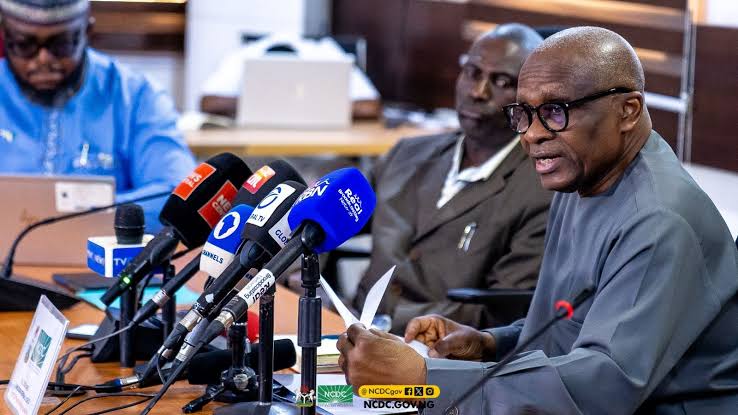
The Nigeria Centre for Disease Control and Prevention (NCDC) has approved an emergency payment of ₦100,000 per week for individuals placed in isolation or quarantine as part of efforts to contain the Ebola outbreak in the Federal Capital Territory (FCT).

The agency’s Director-General, Dr Jide Idris, disclosed this during a press briefing in Abuja on Sunday, October 25, 2026.

According to Idris, the financial support was introduced after some individuals being monitored raised concerns about the cost of feeding, accommodation and providing for their families while in isolation.

“We introduced the payment after some contacts raised concerns about feeding, accommodation and how to take care of their families while under monitoring. The support is to ease their financial burden and encourage them to cooperate with health officials,” Idris said.

He explained that the payment was not part of the initial outbreak response plan but became necessary after the concerns were raised.

“This was not planned for, but it is an emergency. We will continue to review it as we go along,” he said.

The NCDC director-general also urged state governments to make adequate financial and logistical preparations for public health emergencies.

Idris stressed that the responsibility for containing disease outbreaks should not be left to the FCT alone, noting the importance of preparedness and cooperation among state governments.

The emergency support is intended to ease the financial pressure on affected individuals while they comply with isolation and quarantine measures.

Police Arrest School Bus Driver Over Alleged Kidnap, Sexual Assault of 14-Year-Old Student

By Sabiu Abdullahi

The Delta State Police Command has arrested a 28-year-old school bus driver, Onome Ughagha, over the alleged kidnapping and sexual assault of a 14-year-old female student in Sapele.

The suspect was also accused of demanding and collecting ₦503,000 from the victim’s father as ransom before abandoning the girl.

The Police Public Relations Officer, SP Bright Edafe, disclosed this in a statement issued on Sunday.

According to the police, the incident was reported at the Sapele Area Command on Tuesday by the victim’s father, who alleged that the suspect abducted his daughter while she was preparing to leave for school.

The statement said the suspect later contacted the father, demanded ₦503,000 and threatened to kill the girl if the money was not paid.

Following the payment, the victim was reportedly abandoned along Oton Road in Sapele, where she was reunited with her family in a traumatised condition, with indications that she had been sexually assaulted.

Police operatives subsequently launched an investigation, while the victim was taken to a medical facility for examination and treatment.

The police also invited the school’s principal and vice-principal for questioning as investigations continued. The suspect reportedly abandoned the school bus and fled after the incident.

However, acting on intelligence, operatives traced Ughagha to a hideout in the Ajimele area of Sapele, where he was arrested on Friday.

The police said the suspect confessed to his involvement in the crime during preliminary interrogation.

Edafe added that arrangements were underway to transfer him to the State Criminal Investigation Department in Asaba for further investigation.

Meanwhile, the state Commissioner of Police, Samuel Erale, condemned the incident and reaffirmed the command’s commitment to protecting children against violence and exploitation.

The commissioner assured the public that “investigations will be thorough and that anyone found culpable will be brought to justice.”

He also urged school authorities, parents and transport operators to “exercise greater vigilance in safeguarding children,” stressing that the safety of every child entrusted to their care must remain paramount.

The case has renewed attention to the importance of child protection and the need for effective safeguards in school transportation systems.