Month: October 2026

FG Approves ₦70,000 Monthly Transport Allowance for Workers, Begins Minimum Wage Talks

By Sabiu Abdullahi

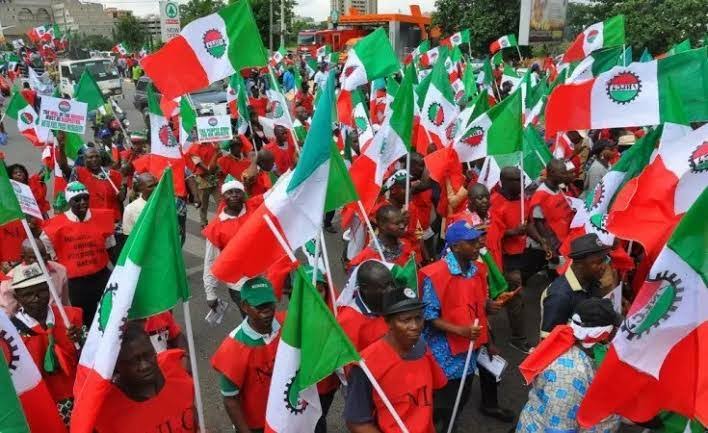
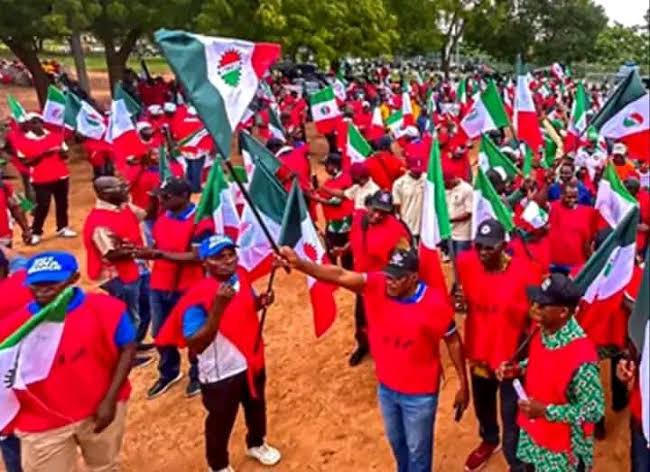
The Federal Government and the Nigeria Labour Congress (NLC) have agreed to begin minimum wage negotiations immediately and approved a ₦70,000 monthly transport allowance for workers for six months, starting in November 2026.

The decisions followed a conciliation meeting between government representatives and NLC leaders convened by the Federal Ministry of Labour and Employment in Abuja on Tuesday.

However, both parties have yet to resolve their disagreement over when a new national minimum wage should take effect.

According to resolutions signed by representatives of the government and organised labour, a Minimum Wage Negotiation Committee will be constituted immediately to commence discussions on workers’ demands.

The agreement comes amid growing pressure from labour unions for measures to ease the rising cost of living and improve workers’ purchasing power.

Under the transport intervention, workers across all levels are expected to receive ₦70,000 monthly for six months, beginning in November. The resolutions, however, did not specify the payment mechanism or whether the intervention would be extended beyond the approved period.

The meeting also addressed outstanding allowances, healthcare workers’ entitlements, tax relief, fuel prices and other welfare concerns.

Government agrees to settle outstanding allowances

The Federal Government agreed to begin paying accumulated peculiar allowances owed to eligible public servants in November 2026, with the arrears to be settled in three equal monthly instalments.

The government also approved the allowances with effect from May 1, 2026.

For health workers, the parties agreed that 19 months of outstanding allowances would be paid within three months, beginning in December 2026.

The meeting further considered outstanding hazard allowances for agricultural officers. According to the resolutions, the Federal Ministry of Agriculture and Food Security had submitted the list of beneficiaries and the associated financial implications to the National Salaries, Incomes and Wages Commission for verification.

On tax relief for workers, the parties agreed to refer the matter to the National Economic Council, noting that taxation is a statutory issue.

However, the resolutions did not indicate that labour’s separate demand for a reduction in petrol prices had been approved.

Other issues discussed included the adjustment of the Consolidated Health Salary Structure (CONHESS) and measures to cushion the economic hardship facing workers.

Pensioners demand outstanding palliatives

Meanwhile, the Federal Parastatals and Private Sector Pensioners Association of Nigeria (FEPPPAN) has urged President Bola Tinubu to direct the payment of three months’ outstanding ₦25,000 subsidy-removal palliatives meant for vulnerable citizens.

The association also called for urgent action on pension harmonisation, the payment of outstanding entitlements and improved access to healthcare for retirees under the Defined Benefit Scheme.

The demands were contained in a communiqué issued after the association’s National Executive Council meeting in Abuja and signed by its President-General, Benjamin Amako, and General Secretary, Franklin Erinle.

FEPPPAN expressed concern over the implementation of pension harmonisation, which it said took effect in January 2026.

It called on the government to release the circular guiding the policy to clarify the role of the Pension Transitional Arrangement Directorate (PTAD) and explain how the exercise would affect pensioners.

The association maintained that pension harmonisation should lead to increased monthly benefits for all pensioners and urged the relevant authorities to explain the policy’s terms, implementation process and implications.

The latest agreements represent steps towards addressing some workers’ welfare concerns, but the dispute over the effective date of a new national minimum wage remains unresolved.

The Daily Reality
Tinubu Orders Manhunt After Gunmen Kill Katsina Cleric, Friend

By Sabiu Abdullahi

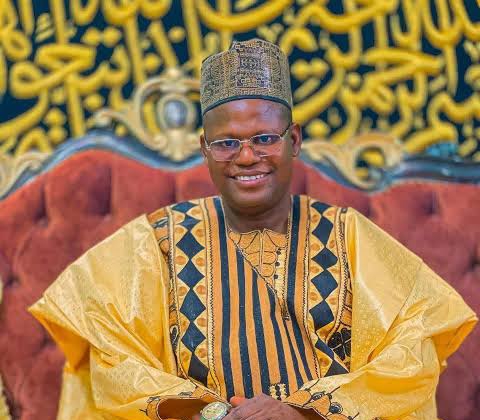
The wife of slain Islamic scholar Sheikh Yahaya Ibrahim Masussuka has recounted how gunmen shot her husband dead outside their residence in Dutsin-Ma, Katsina State, as President Bola Tinubu ordered security agencies to track down the perpetrators.

Hajiya Fatima Masussuka said the attack occurred on Monday evening shortly after her husband left their home to attend a teaching session with his Almajirai, or Islamic pupils.

Speaking to journalists at their residence on Tuesday, Fatima explained that she had accompanied her husband outside before returning indoors after he realised he had forgotten his bag.

“Before I knew what was happening, I heard four gunshots. When I came out, I discovered that he had been shot,” she said.

Describing the deceased as a caring husband, Fatima disclosed that she was his second wife and that they had a daughter together.

Masussuka was killed alongside his friend, Adamu Abubakar, in the attack, which the Katsina State Police Command said was carried out by two armed men riding on a motorcycle.

According to the police, the incident occurred at about 7:30 p.m. on Monday, October 26, in front of the cleric’s residence in Dutsin-Ma Local Government Area.

The victims were rushed to a nearby hospital but were pronounced dead by a medical doctor.

The police said tactical and operational teams had been deployed to the area, while an investigation was underway to identify and arrest the fleeing suspects.

Ansaru reportedly claims responsibility

Meanwhile, the Ansaru terrorist group has reportedly claimed responsibility for the killing in an audio message released on Tuesday.

According to reports, the group accused the cleric of being an infidel and claimed to have carried out the attack at about 8:30 p.m. However, it did not provide verifiable evidence to support its claim.

The Katsina State Police Command said it had not authenticated the reported claim.

The command’s spokesperson, DSP Abubakar Sadiq, said security operatives were investigating the incident and would make further information public when the investigation was concluded.

“We heard of the rumour making the rounds, but we are yet to authenticate the claim. We are on the field, and once we conclude the investigation, we will make it public,” Sadiq said.

Ansaru, which is linked to al-Qaeda, broke away from Boko Haram in 2012 and has operated in parts of north-western Nigeria.

Tinubu, Radda condemn killing

President Tinubu condemned the killings, describing them as heinous acts that violated the sanctity of human life and the values of peace.

In a statement issued on Tuesday by his Special Adviser on Information and Strategy, Bayo Onanuga, the President extended his condolences to the families of the deceased, their followers and the people of Katsina State.

Tinubu directed the Nigeria Police Force and other relevant security agencies to intensify efforts to track down and arrest those responsible for the attack.

Katsina State Governor, Malam Dikko Radda, also mourned the cleric, describing him as an advocate of peaceful coexistence and interfaith harmony.

In a statement issued through his Chief Press Secretary, Ibrahim Mohammed, the governor called for a thorough investigation and urged security agencies to ensure that the perpetrators were brought to justice.

He also appealed to residents to remain calm, cooperate with security agencies and provide credible information that could assist the investigation. He warned against actions capable of heightening tensions or undermining peace.

Cleric previously involved in preaching dispute

Masussuka, popularly known as the “Peace Ambassador,” had previously attracted the attention of the Katsina State Government over his preaching.

Authorities had received complaints alleging that some of his sermons departed from general principles of Islamic law. The cleric had also reportedly complained of insults and threats from members of Jama’atu Izalatil Bidia Wa’ikhamatus Sunna.

The dispute was referred to the Katsina Emirate Council, after which Governor Radda directed the cleric to appear before a committee of Islamic scholars to respond to the allegations.

The circumstances surrounding the dispute and whether it had any connection to the killing have not been established.

Kwankwaso expresses concern

Former Kano State Governor Rabiu Kwankwaso also condemned the killing, expressing concern over attacks on religious scholars and other innocent citizens.

Kwankwaso, who is the vice-presidential candidate of the Nigeria Democratic Congress, said the continued loss of lives to insecurity was unacceptable and called for decisive action to protect citizens and restore peace.

He extended his condolences to the cleric’s family, students, associates and the wider Muslim community.

Dutsin-Ma and several other local government areas in Katsina State have experienced repeated attacks blamed on armed bandits, including kidnappings and killings targeting residents, vigilantes and security personnel.

The police investigation into the killing of Masussuka and Abubakar is ongoing.

The Daily Reality

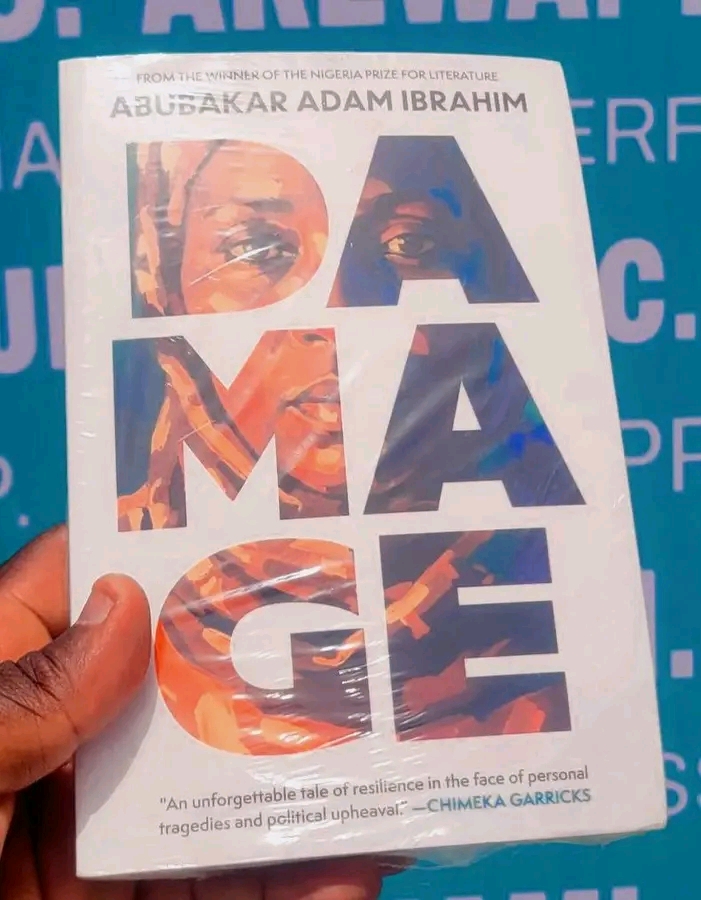
A Review of Abubakar Adam Ibrahim’s “Damage”

By Aliyu Idris


Damage is Abubakar Adam Ibrahim’s third novel and fifth book. It is a social novel written in twenty-two unequal chapters, set in post-colonial Nigeria during the heated military years spanning the last days of General Ibrahim Badamasi Babangida through the General Sani Abacha years, and back to the present day.

It accounts for the life of Rn. Nasrin Amin, a woman who carried a secret pain through decades of dictatorship and brutality. She was sexually assaulted by an army veteran, General Shehu Jarumai, while searching for her husband’s freedom, trying to secure the release of Aliyu Bello from Abacha’s men. She decides to speak out against Jarumai’s tyranny, which wants his secret buried. And when she does, she drags three generations with her.

For almost three decades, we have been told to move on. To forget military brutality, to forget the khaki years, to forget the frightening knocks on the door and abductions at midnight.

In addition, June 12, 1993 was the day Nasrin cast her first vote. She and her heartthrob, Aliyu Bello, thought that the election would change Nigeria. She was voting for herself. For her heart, for a new dawn, for love, for a future, for a country she believed would finally love her back.

Then one brutal night takes it all. That is the heart of Damage. Not the coup, not the annulment, not the years that followed, but what one night does to a woman and her entire clan, and how that wound keeps bleeding for 30 years.

Similarly, it bleeds into the life of her second husband, Bashar, and her children like Mustapha, the rational dreamer, who thinks logic can save a family that runs on secrets, until he meets a wound that logic cannot touch. Suraj, the second child, the awaiting soldier, who wants to become the very thing that broke his mother. Zubaida, the youngest daughter, who stands with her mother in the turbulence.

They are all haunted by one question: Who is this man (Jarumai) who caused their mother’s pain and is the frontrunner of the brutal occurrences that cost the life of their father, Aliyu Bello?

Moreover, the novel explores how our system, power structures, culture, and orientation aid and abet perpetrators. It asks a devastating question: What does justice look like when silence has already stolen so much?

When Nasrin finally waited decades to speak, the country had already moved on. But the memories kept haunting her, while the perpetrator had entirely forgotten her and the incident.

We are a new generation born after June 12, 1993, who think June 12 is just a public holiday. We don’t know or ask how people like Nasrin get justice after memory itself has been damaged.

No wonder Chika Unigwe calls it “a powerful and unforgettable story of love, loss, inherited trauma, and the relentless pursuit of justice.”

And Helon Habila is right to say you dig deep into characters’ motivations like few can. This is far beyond Season of Crimson Blossoms and When We Were Fireflies. This is his most political and most personal book yet.

As the author opined in his Line of Sight column, “The victims are bold and resolute, but the perpetrators don’t even know they are victims too, victims of the power they serve.”

Damage is not just about what was done to Nasrin on that night, or the arrest and detention of her late husband, Aliyu Bello. It is about the experiences of families with military brutalities, what it means to seek revenge, to love, to lose, to feel guilt and conviction. This is not a book about soldiers in power. It is a book about what soldiers left in us.

If Season of Crimson Blossoms was about forbidden love and When We Were Fireflies was about memory, Damage is where Abubakar fuses both concerns into something enormous.

For me, Damage is the novelist’s best work yet because it refuses to let us do what we do best as Nigerians: move on without processing. It is a story about the cost of memory, the inheritance of pain, and, as the blurb says, the fragile hope that love might endure even after everything else is broken.

To sum it up, it is an easy read with many literary tropes. It is a necessary one to read because it reminds us where we came from as a nation. It is for the generation that was brutalised and learned to be silent. For the generation that inherited the silence without knowing why. And for the generation born under democracy, the one now raising kids, the one that thinks it can romanticise military rule because they never lived it.

And in a move that will unsettle many readers, the perpetrators are also damaged. Not innocently damaged by the system they served, by their own avarice, by a military that victimised Nigeria and, in doing so, victimised itself. Just like General Jarumai and Bankole. This is what elevates it beyond a simple trauma narrative.

Aliyu Idris can be reached via aliyuidris063@gmail.com.

DSS Arraigns Suspect Over Alleged Forged Tinubu-Trump Letter

By Abdullahi Mukhtar Algasgaini

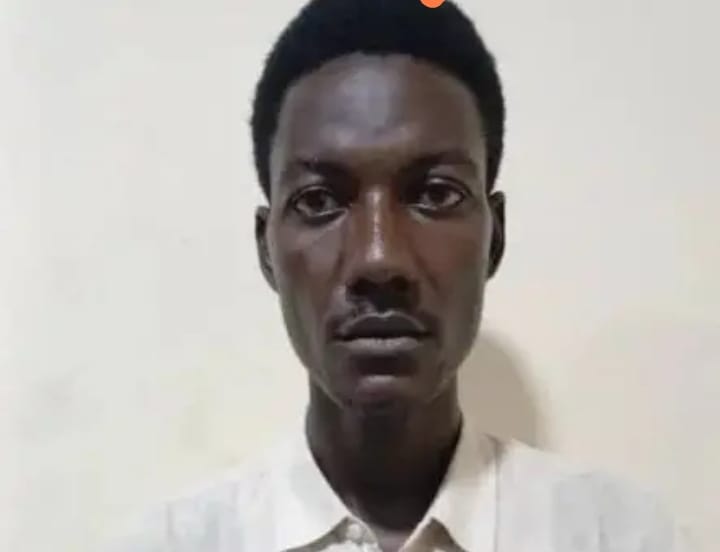
The Department of State Services (DSS) has arraigned Mubarak Abdullahi, popularly known as Sardaunan Samari, in Kaduna over allegations that he circulated a forged letter attributed to President Bola Ahmed Tinubu and purportedly sent to the US President.

Abdullahi faces three counts bordering on cybercrime and defamation. Reports said he was arrested after he posted the letter on Facebook with the caption, “ATIKU IS COMING.”

Punch newspaper reported that it could not independently verify that the suspect is a supporter of Atiku Abubakar. The case is awaiting the commencement of hearing at the Federal High Court in Kaduna.

Court Strikes Out Case Over Alleged Threat to Release Gov Yusuf’s Nude Photos

By Uzair Adam

The Federal High Court in Abuja has struck out a cybercrime case against Sanusi Dankaka, who was accused of threatening to release nude videos and photographs allegedly involving Kano State Governor Abba Kabir Yusuf.

Justice Salim Ibrahim struck out the case on Tuesday after the prosecution counsel, A.Y. Afegbua, applied to withdraw the charges against Dankaka, the sole defendant.

Dankaka’s counsel, Kauna Penzin, did not oppose the application, prompting the judge to strike out the case in a brief ruling.

The development came after Justice Ibrahim had adjourned the matter until December 7 for the commencement of trial, following Dankaka’s plea of not guilty. However, the case was relisted as number 28, the last matter on Tuesday’s cause list.

The News Agency of Nigeria (NAN) reports that the Department of State Services (DSS) arraigned Dankaka on a two-count charge bordering on alleged cybercrime offences.

The charge, marked FHC/ABJ/CR/699/2026, was filed on October 22 by Afegbua and alleged that the offences were committed in October 2026.

In the first count, the DSS accused Dankaka and other persons still at large of attempting to publish malicious content through his Facebook account, “Sanusi Dankaka Yahaya”, in Jos North Local Government Area of Plateau State.

The defendant was alleged to have claimed that he possessed nude videos and photographs of Governor Yusuf and threatened to release them to the public.

The alleged offence was said to contravene Section 27(1)(b) of the Cybercrimes (Prohibition, Prevention, etc.) Act, 2015, as amended, and was punishable under Section 24(1) of the same law.

In the second count, Dankaka and others still at large were accused of publishing content on the same Facebook account claiming that he possessed the alleged videos and photographs of the governor.

According to the DSS, the defendant knew the publication was false but allegedly circulated it to cause annoyance, inconvenience, insult and injury to the governor’s person and reputation.

The agency said the alleged offence was punishable under Section 24(1) of the Cybercrimes Act, as amended.

On the Assassination of Sheikh Yahaya Masussuka

By Muhsin Ibrahim

The tragic trail of political and religious violence in Northern Nigeria has claimed yet another prominent life. It began in 2007 with the gruesome assassinations of Sheikh Ja’afar Mahmud Adam, who was shot dead in Kano while leading dawn prayers, and Sheikh Umar Hamza Dan-Maishiyya in Sokoto. 

Seven years later, in 2014, Sheikh Muhammad Auwal Albani Zaria was murdered in Kaduna State. 

Today, in 2026, the targeted killing of Sheikh Yahaya Masussuka by unknown gunmen in Katsina marks a deeply disturbing escalation. 

In every instance, an influential voice has been violently silenced, leaving a nation burdened with unanswered questions and followers in deep grief and confusion.

This recurring pattern represents a severe threat to public safety and social cohesion across Northern Nigeria. Jubilating over the violent end of an ideological rival is dangerous shortsightedness; no cleric, regardless of popularity or sectarian affiliation, is safe in an environment where lawlessness reigns. A society where religious scholars can be executed with impunity for their identity or teachings is one where human life has been stripped of basic security.

Adding to the gravity of the situation, a video recently surfaced on social media depicting youth in JIBWIS attire issuing threats against Christian communities in Enugu and Jos. While public commentary must remain cautious of conspiratorial thinking, the alignment of this incendiary material with the assassination of Sheikh Masussuka cannot be casually dismissed. The synchronisation suggests a deliberate effort by malicious actors to ignite a broader sectarian conflict across the region.

Security agencies must undertake an immediate, rigorous, and transparent investigation. Broad public confidence in the judicial process can be restored only if those responsible, regardless of status or political influence, are identified and brought to justice.

In the interim, the public must resist the temptation to engage in reckless speculation. Emotional outbursts and unsourced allegations on digital platforms risk repeating past errors. 

Following the 2007 murder of Sheikh Ja’afar, baseless accusations targeted national leaders, state officials, and traditional institutions, ultimately forcing news outlets to issue public retractions for spreading fabricated reports. Unverified claims ruin reputations and risk sparking retributive violence at a time when national calm is required.

We must exercise utmost restraint. Sharing unverified media, amplifying inflammatory rhetoric, or taking the law into one’s hands will only compound the crisis. Sustained development and progress are impossible without security. National stability must remain the primary objective.

May peace prevail in Nigeria, and may the Almighty forgive our deceased loved ones, amin.

Harry Kane, Alexia Putellas Win 2026 Ballon d’Or Awards

By Sabiu Abdullahi

England striker Harry Kane and Spanish midfielder Alexia Putellas have emerged as the winners of the men’s and women’s Ballon d’Or awards at the 2026 ceremony held at the London Palladium in England.

Kane claimed the men’s award, finishing ahead of France captain Kylian Mbappé and Spain’s teenage sensation Lamine Yamal, who placed second and third respectively.

Putellas secured the women’s honour, with Poland’s Ewa Pajor finishing second and Jamaica’s Khadija Shaw taking third place.

The ceremony, which marked the 70th edition of the prestigious football awards, also recognised outstanding performances across several categories, including young players, goalkeepers, coaches and clubs.

Other award winners

According to the published list of winners, the other major honours went to the following recipients:

– Men’s Young Talent of the Year: Lamine Yamal
– Women’s Young Talent of the Year: Vicky López
– Men’s Coach of the Year: Luis de la Fuente
– Women’s Coach of the Year: Pere Romeu
– Men’s Goalkeeper of the Year: Unai Simón
– Women’s Goalkeeper of the Year: Cata Coll
– Men’s Club of the Year: Paris Saint-Germain (PSG)
– Women’s Club of the Year: FC Barcelona Femení
– Sócrates Award: Bukayo Saka
– Men’s Gerd Müller Trophy: Harry Kane
– Women’s Gerd Müller Trophy: Charlyn Corral

Men’s Ballon d’Or top 10

The top 10 positions in the men’s rankings were:

1. Harry Kane
2. Kylian Mbappé
3. Lamine Yamal
4. Rodri
5. Lionel Messi
6. Khvicha Kvaratskhelia
7. Ousmane Dembélé
8. Erling Haaland
9. Michael Olise
10. Fabián Ruiz

Other notable names in the rankings included Jude Bellingham in 11th place, Achraf Hakimi in 13th, Declan Rice in 15th, Vinícius Júnior in 17th and Portuguese midfielder Bruno Fernandes in 27th.

Senegalese forward Sadio Mané also featured in the rankings, sharing 29th place with William Saliba.

Women’s Ballon d’Or top 10

The top 10 positions in the women’s rankings were:

1. Alexia Putellas
2. Ewa Pajor
3. Khadija Shaw
4. Melchie Dumornay
5. Patri Guijarro
6. Caroline Graham Hansen
7. Pernille Harder
8. Claudia Pina
9. Alessia Russo
10. Temwa Chawinga

Other players recognised included Zambia’s Barbra Banda, who finished 18th, and Nigeria-born Malawi international Temwa Chawinga, who placed 10th, according to the published rankings.

The results highlighted the achievements of established stars and emerging talents across men’s and women’s football, with the Ballon d’Or remaining one of the sport’s most prominent individual honours.

The Daily Reality

Bauchi Police Arrest Stepmother, 19-Year-Old Suspect Over Deaths of Two Children

By Sabiu Abdullahi

The Bauchi State Police Command has arrested two suspects in connection with the separate deaths of two children in Alkaleri and Ganjuwa Local Government Areas of the state.

The suspects are Fatima Ibrahim, 23, the stepmother of a boy who died after allegedly drinking a beverage given to him, and Sadiku Musa, 19, who was arrested in connection with the death of a five-year-old girl in Badaromo village.

The police spokesperson, Nafiu Habib, disclosed the arrests in a statement issued on Monday, October 26, 2026.

According to the statement, the first incident occurred on October 16 in Kwaimawa village, where the boy reportedly began vomiting uncontrollably shortly after consuming a drink allegedly given to him by his stepmother.

The child was initially taken to a Primary Health Care Centre in Kwaimawa before being transferred to the Federal Medical Centre, Gombe, for further treatment.

He reportedly battled for his life for eight days before a medical doctor confirmed his death on October 24.

Habib said detectives launched an investigation following a report by the village head of Kwaimawa, leading to the arrest of Fatima Ibrahim, who remains in police custody as investigations continue.

In a separate incident, a five-year-old girl was reported missing by her grandfather on the evening of October 23 in Badaromo village.

The police said residents joined the search for the child, whose body was discovered at about 7 am on October 24 in a small water pit behind the village.

Following the discovery, officers from the Soro Police Division secured the scene and arrested Sadiku Musa, 19, of the same community, in connection with the incident.

Both cases have been transferred to the State Criminal Investigation Department in Bauchi for further investigation.

The Commissioner of Police in the state, Sani-Omolori Aliyu, described the incidents as heartbreaking and inhumane, assuring the bereaved families that the command would pursue justice.

“These are innocent souls. Children who looked up to adults for protection. We will ensure that justice speaks for Habiba and Mubarak,” the commissioner said.

He also commiserated with the families of the deceased and urged parents, guardians and community leaders to pay closer attention to children’s safety.

The police have not announced the outcome of the investigations, and the suspects’ alleged involvement remains subject to the ongoing legal process.

The Daily Reality

FG, Labour Resume Talks as NLC Threatens Nationwide Action Over Fuel Prices, Wages

By Sabiu Abdullahi

The Federal Government and organised labour are scheduled to resume negotiations on Tuesday amid growing tensions over petrol prices, workers’ welfare and demands for an early review of the national minimum wage.

The Nigeria Labour Congress (NLC) and the Trade Union Congress (TUC) are expected to decide their next course of action after the meeting, with the unions warning that nationwide industrial action remains an option if the government fails to make meaningful commitments.

The talks follow an inconclusive meeting on October 22, which ended without an agreement on several outstanding issues affecting workers.

NLC Assistant Secretary-General Chris Onyeka confirmed the planned meeting, saying labour expected the government to respond to demands already submitted rather than restart discussions without concrete proposals.

“We expect them to come with answers to our demands, so that the meeting will not be prolonged,” Onyeka said.

A source within organised labour also told The PUNCH that the government had requested additional time to prepare for the discussions, adding that the unions would determine their next steps after the meeting.

The Federal Ministry of Labour also confirmed that the meeting was scheduled to hold, subject to any changes.

Labour’s demands

The unions are seeking a reduction in petrol prices to levels prevailing when the current minimum wage was signed into law in 2024. They are also demanding tax relief for workers, immediate wage awards and the commencement of negotiations for a new national minimum wage.

Other outstanding issues include the implementation of agreements affecting health-sector employees and the resolution of allowances and other welfare concerns in the public service.

In a joint statement signed by NLC Acting General Secretary Benson Upah and TUC Secretary-General Nuhu Toro, the unions criticised the government delegation at the previous meeting for arriving without the authority to negotiate substantively.

The government subsequently requested an adjournment to allow relevant ministers and heads of departments and agencies to participate in the next session.

The NLC had issued a two-week ultimatum on October 8, which expired on October 22, before extending the deadline to October 27. It warned that its affiliates and state councils should prepare for possible nationwide action if the negotiations failed to produce meaningful results.

Disagreement over minimum wage review

A major point of contention is when negotiations should begin to replace the current ₦70,000 monthly minimum wage introduced in 2024.

The Federal Government maintains that the wage is due for review on June 1, 2027, citing the three-year review cycle provided for under the National Minimum Wage Act, 2019, as amended in 2024.

In a letter dated October 12, the Minister of Labour and Employment, Dr Muhammad Dingyadi, reportedly described an early review as premature and potentially disruptive to industrial relations.

The NLC, however, insists that preparations should begin immediately. In a letter dated October 13, its president, Joe Ajaero, argued that the timetable under the original legislation remained relevant despite the 2024 amendment.

The union has called for the nomination of representatives and the inauguration of a tripartite committee comprising the government, organised labour and employers to begin the process.

The current minimum wage was signed into law by President Bola Tinubu on July 29, 2024, raising the statutory minimum from ₦30,000 to ₦70,000 following prolonged negotiations.

While the government has highlighted the increase, labour argues that rising living costs and the depreciation of the naira have significantly eroded workers’ purchasing power.

Petrol prices and other unresolved issues

Petrol prices remain central to the dispute, with labour arguing that higher fuel costs have increased transportation expenses and contributed to rising prices of food and other essential goods.

The unions are also demanding the implementation of tax relief measures agreed with the government in 2023 and immediate wage awards to cushion workers against economic hardship.

Other concerns include outstanding agreements involving the Joint Health Sector Unions and the Assembly of Healthcare Professionals, as well as demands raised by the Joint Public Service Negotiating Council over peculiar allowances, wage awards and hazard allowances.

The outcome of Tuesday’s negotiations is expected to influence whether organised labour proceeds with industrial action or continues discussions with the government.

Pensioners demand outstanding benefits

Meanwhile, the Federal Parastatals and Private Sector Pensioners Association of Nigeria has called on the Federal Government to pay eligible retirees three months of outstanding fuel-subsidy-removal palliatives, amounting to ₦75,000 per beneficiary.

The association made the demand in a communiqué issued after its National Executive Council meeting in Abuja on October 22. The document was signed by its President-General, Benjamin Maisamari Amako, and General Secretary, Franklin Erinle.

The association also urged the Pension Transitional Arrangement Directorate (PTAD) to clarify the implementation of pension harmonisation, which took effect in January 2026, and make the relevant government circular available to retirees.

It called for a stakeholders’ meeting to address complaints, improve communication and resolve outstanding pension cases.

The association further urged PTAD to ensure that the planned relaunch of its ‘I Am Alive’ verification platform would not disrupt payments to elderly, sick or physically incapacitated pensioners.

It called for clear guidelines, adequate assistance and safeguards to ensure eligible retirees were not excluded because of difficulties with verification.

On healthcare, the association appealed to PTAD and the National Health Insurance Authority to simplify enrolment in the Pensioner Health Insurance Scheme by providing assisted registration, accessible enrolment centres and support for retirees unable to travel because of age, illness or disability.

“No eligible pensioner should be denied access to the scheme because of difficulties with registration, verification or other administrative procedures,” the association said.

It also urged the government to maintain regular pension payments and ensure that retirees received their entitlements without interruption.

The association said transparent pension administration and accessible healthcare were essential to protecting retirees’ dignity and financial security amid rising living costs.

The Daily Reality

EFCC Arrests 14 Chinese Nationals, Nigerian Over Illegal Lithium Processing Plants

By Sabiu Abdullahi

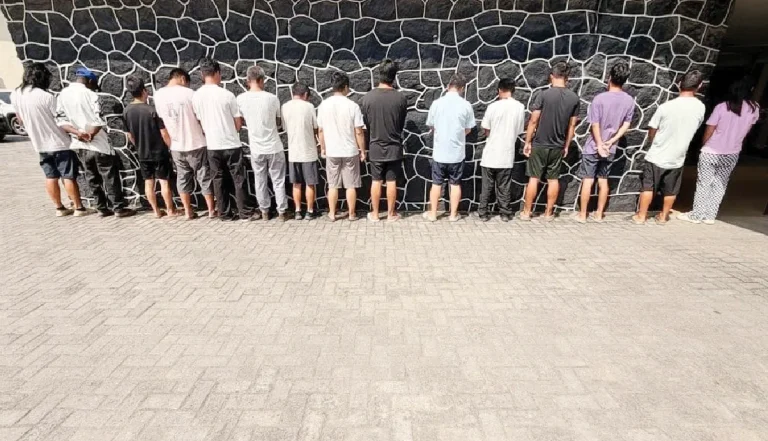
The Economic and Financial Crimes Commission (EFCC) has arrested 14 Chinese nationals and one Nigerian over alleged illegal lithium processing operations at four plants in the Ogere area of Ogun State.

The commission disclosed this in a statement published on its official X account on Monday, October 26, 2026, saying the suspects were apprehended on Friday, October 23, following intelligence gathering and surveillance.

According to the EFCC, its operatives from the Lagos Zonal Directorate 2 raided the four facilities and recovered several items believed to be connected to the operations.

The recovered items included bags of lithium rocks, 18 mobile phones and other mobile devices, four laptop computers, two decoders, a television remote control and a trailer truck.

The commission said investigations were ongoing and that the suspects would be charged in court after the conclusion of the process.

The arrests come amid growing concerns over illegal mineral extraction and processing in Nigeria, particularly involving valuable minerals such as lithium, which is used in batteries and other energy-storage technologies.

Nigeria has sought to attract investment into its solid minerals sector while tackling illegal mining and activities that deprive the government of revenue and undermine regulatory oversight.

In a related development, the EFCC recently arraigned two defendants, Marian Elia, 19, and Izuchukwu Uzoma, 21, over the alleged theft of ₦35.92 million belonging to a woman, Esther Ogbeifun, in Benin City, Edo State.

The commission alleged that the defendants faced a seven-count charge bordering on conspiracy, cybercrime and stealing. It further alleged that Elia, who grew up in the victim’s home, used access to the woman’s phones and banking information to transfer money into an account belonging to Uzoma, her boyfriend.

The allegations in that case remain subject to court proceedings.

In another case involving alleged illegal laboratory operations, authorities in May uncovered a suspected methamphetamine production facility in a forest in Ogun State, with raids also conducted in Lagos. The National Drug Law Enforcement Agency described the operation as the largest clandestine methamphetamine seizure in Nigeria’s history.

The latest arrests underline the continued efforts of law enforcement agencies to investigate suspected illegal industrial and commercial activities across the country.