Month: June 2026

Building Dreams Through Education: University of Abuja and Oma Life Rescue Foundation Move Toward Strategic Partnership

By Leah Nickaf

Education remains one of the strongest tools for transforming lives, yet for many young Nigerians, access to quality education remains a major challenge. In a bold step toward changing this narrative, the University of Abuja recently welcomed the leadership team of Oma Life Rescue Foundation for a strategic engagement centred on the A Million Dream Education Scholarship Project. An initiative designed to give hope and educational opportunities to students across Nigeria.

Representing the Vice-Chancellor of the University of Abuja was the Deputy Vice-Chancellor (Academic), Prof. Rosemary Udiozo, who received the delegation alongside the Registrar, Dr Sambo Muhammad, and the Registrar attached to the Vice-Chancellor’s Office, Dr Michael Idoko.

The meeting highlighted the growing importance of partnerships between academic institutions and humanitarian organisations in addressing educational inequality and empowering the next generation of leaders.

Leading the Oma Life Rescue Foundation team was the Founder and CEO, Amb. (Dr.) Omanibe Ameh-Sanusi, accompanied by Barr. Sambo Murtala, Director of Programs, Mr Paul Yima Butu, Communications Analyst Officer, and Mr Emmanuel Momoh.

Discussions focused on creating a sustainable partnership framework to support the successful implementation of the scholarship project and to extend educational opportunities to deserving students in federal and state primary and secondary schools nationwide.

Beyond being a scholarship initiative, A Million Dream Education Scholarship Project symbolises hope, inclusion, and development. Starting July 27, 2026, it aims to bridge educational gaps for underprivileged children and promote academic excellence among young Nigerians. The initiative also shows Oma Life Rescue Foundation’s growing commitment to social impact and youth empowerment through education.

As conversations about educational reform and accessibility continue across the country, collaborations like this show how institutions and non-profit organisations can work together to drive meaningful change. With the University of Abuja and Oma Life Rescue Foundation aligned on a shared vision, the future looks brighter for countless students whose dreams may soon become reality through the power of education.

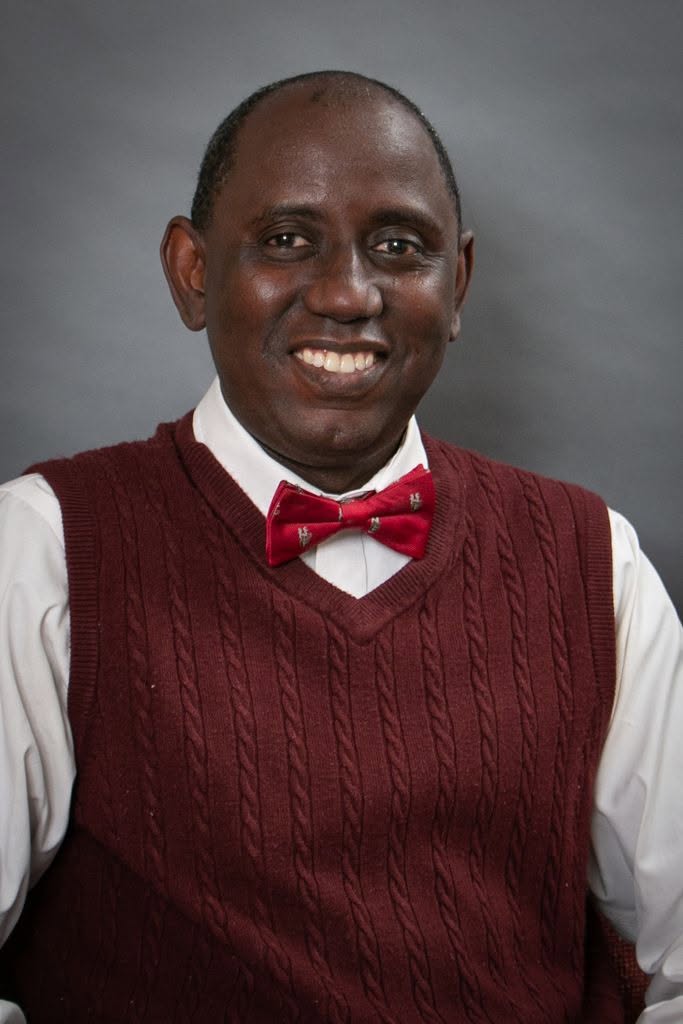
A Tribute to Professors Abdalla Uba Adamu

By Prof. Ibrahim Bello-Kano

Writing any kind of text, narrative, or account of the career or the personal and professional achievements of Prof. Abdallah Uba Adamu is, and always will be, daunting for a number of reasons. One of them is the sheer intellectual energy of the man, his passion for the intellect, which would be hard to describe in a short account. Second, Prof Abdallah has the unusual distinction of being officially bestowed with the title of the “Double Professor”, which means that he has contributed to scholarship in two or more academic fields, namely science education, communication studies, and cultural studies— all three fields have a vast set of scholarly literature and other empirical studies that many may fear to attempt to master in a lifetime.

Thus, it is fair to call Abdallah Uba Adamu a polymath because his scholarly interests and publications have given a new twist to the term “intertextuality”; an academic polyglot because he is versed in the languages of science, education, communication studies, and cultural studies, perhaps even of Administration (since he served as the Vice Chancellor of the Nigerian Open University, where he has left behind the enduring legacy of tertiary education reform, syllabus engineering, and the astute management of money, men, and materials.

The preceding discussion should justify my calling him with the plural “Professors” AU Adamu. My pluralisation of his official, well-earned, and widely recognised by students, peers, and colleagues title of Professor needs to be elevated to a higher order of accolade and meritorious distinction by superlativising it with a transcendental “S”. 

Thus, he alone, at least for the moment, deserves to be described as the “Super Professor” among the professors. 

Adding another “s” to his academic designation is a gesture towards his current status as not just a BUK, University, or National Professor but also as an International Professor par excellence, a Professor with scholarly and academic range worthy of being, and comparable to, the most distinguished professors in the academic world. 

Adamu’s teaching outings in the media or at public lectures are supremely well attended; he’s probably the most-quoted source on media studies, Hausa-Fulani-Muslim cultural film and media studies, and a worthy creator and domesticator of the word/adjective (the) “Islamicate”. 

There is yet another side of this gifted Professor that should be mentioned: he is unusually generous, incredibly empathetic, and a walking example of humility. One cannot see or sense or detect the simplest, the faintest, or the most unconscious sign of academic or cultural arrogance in him. What is more, he is an avid reader, a book enthusiast, and a digital wizard, if not a positively maniacal digitaliser of knowledge production itself. 

Little surprise, then, that Professors AU Adamu has got a magnetic personality: everyone, even the other Professors, want to be “caught” in his passionate discussion of academic and mundane topics. 

In a sense, then, Profs Abdallah has paid his dues to the university system. In his early career, he was the envy of his senior colleagues, who did not help his career advancement; he was the object of many a colleague’s malice. He was also badly misunderstood by his peers, who mistook his enthusiasm or passion for academic excellence for personal arrogance. But, over time, his younger colleagues began to see his merits as a scholar, a compassionate person, as a model for younger colleagues across the university. 

His rising profile as an internationally sought-after scholar and researcher began to take hold in his colleagues’ imaginations. At one time, he offered to present a paper on a cultural studies topic at my department. Some colleagues felt that it was not his “field”, so to speak. I, as the HOD, then was not convinced of the argument. When the paper was presented, everyone could see that the presenter was not of the common mill of people but a deeply learned and imaginative scholar. 

Profossors Adamu is and would always be a worthy presence in any undergraduate or postgraduate teaching circuit. His inaugural lecture drew the largest crowd ever. This walking symbol of hardworking, scholarly acumen, and academic energy is a gift to Kano, his hometown, to BUK, and to the world academic community. 

I wish him continuing good health, more research energy, more scholarly output, and more academic-intellectual sparks.

Ibrahim Bello-Kano can be reached via ibrahimbellokano@gmail.com.

Tinubu Warns Terror Sponsors, Bandits to Surrender or Face State’s Full Force

By Sabiu Abdullahi


President Bola Ahmed Tinubu has issued a stern warning to bandits, kidnappers and sponsors of terrorism across the country, urging them to surrender or face decisive action from the Nigerian government.

The President delivered the warning on Thursday during a nationwide broadcast to commemorate 27 years of uninterrupted democratic rule in Nigeria.

In his Democracy Day address, Tinubu said the government would continue to pursue both military operations and rehabilitation programmes for repentant fighters, but stressed that the opportunity for surrender would not remain available indefinitely.

“To bandits, kidnappers, and sponsors of terror: Surrender or face the full force of the Nigerian State. These windows of surrender will not remain open forever. No mercy will be shown to those who trade in the blood of Nigerians,” he said.

Highlighting security efforts by his administration, the President stated that terror-related fatalities had declined significantly since 2015. He also disclosed that more than 13,000 terrorists were neutralised within the last year, while over 124,000 fighters and their dependents had surrendered through Operation Safe Corridor since 2023.

According to him, security remains a major priority of his government, especially in light of recent kidnappings in Oyo and Borno states.

“Though this year’s mood is dampened by the abduction of our children in Oyo and Borno, we remain hopeful for their safe return. Democracy without security is a mirage,” Tinubu said.

He noted that the government had declared a security emergency, approved the recruitment of more than 50,000 police officers and thousands of military personnel, and allocated N5.41 trillion to defence and security in the 2026 budget.

The President also spoke about recent military gains against insurgents, including operations in Borno State.

“We have moved from training with our allies, the United States, France and other European countries, to precision targeting. In Arege, Borno State, we degraded ISWAP’s command centre,” he stated.

Tinubu called on Nigerians to remain united in the fight against insecurity and warned against ethnic profiling.

“At a time like this, let us not assign blame or point fingers. Crime has no ethnicity. We must stand united and be assured that the enemies of our nation shall soon be history. We will triumph over terror and continue to build a more prosperous nation,” he said.

Beyond security, the President reflected on Nigeria’s democratic journey since the return to civilian rule in 1999. He described June 12 as a defining moment in the nation’s history and paid tribute to individuals who played key roles in the struggle for democracy.

“June 12 occupies a sacred place in our national memory. It represents more than an election; it is a defining chapter in our story,” he said.

The President honoured the late Chief M.K.O. Abiola, Alhaja Kudirat Abiola and several other democracy activists, politicians, journalists and civil society leaders whose sacrifices, he said, helped secure democratic governance in Nigeria.

Tinubu also announced national honours for dozens of pro-democracy figures and disclosed that the Federal Government had approved the revitalisation and renaming of the Institute of Petroleum Studies in Kaduna as the General Shehu Musa Yar’Adua University of Geological Sciences and Engineering Technology.

On the economy, the President defended ongoing reforms introduced by his administration. He said the measures had improved government revenues, strengthened investor confidence and boosted investments across key sectors of the economy.

He acknowledged that many Nigerians still face economic difficulties but assured citizens that his administration remains committed to reducing inflation, creating jobs, improving food production and raising living standards.

“We are moving from uncertainty to stability. The next phase is about accelerating growth and ensuring the benefits are felt in every home, every community, and every region. We believe that Democracy must be felt in the pocket,” he said.

Tinubu also urged young Nigerians to contribute to national development and participate actively in the democratic process.

“To our young people: Nigeria is your home and your future. Build here, code here, work here, and vote here. Every great nation was built by those who stayed to solve problems, not by those who abandoned ship,” he said.

As Ekiti and Osun prepare for upcoming elections, the President called on the Independent National Electoral Commission (INEC), security agencies and political parties to ensure peaceful and credible polls.

He concluded by encouraging Nigerians to remain hopeful despite current challenges.

“Fellow Nigerians, 27 years ago, many doubted democracy would survive here because of our diversity. Today, our diversity sustains our democracy. The road ahead is steep. But June 12 reminds us: Nigerians do not break. We bend, we bleed, but we do not break,” Tinubu said.

Gunmen Attack Mourners in Plateau, Kill One During Funeral Procession

By Sabiu Abdullahi

A funeral procession in Riyom Local Government Area of Plateau State came under attack on Thursday after armed men opened fire on mourners transporting the bodies of two victims killed in an earlier assault, leaving one person dead and several others injured.

The incident was confirmed by the President of the Berom Youth Moulders Association (BYM), Barr. Dalyop Solomon Mwantiri, in a statement issued on Friday.

According to Mwantiri, the violence began on Wednesday night when suspected armed attackers stormed Sol village in the Ta-Hoss District of Riyom LGA and killed two residents.

He identified the victims as Davou Dalyop Patu and Dalyop Zaram.

“These productive members of the community were brutally murdered, plunging the entire Ta-Hoss community and surrounding villages into deep mourning.

Mwantiri explained that the attackers struck again the following morning when mourners were taking the bodies of the deceased to the mortuary at Riyom General Hospital.

According to him, the gunmen ambushed the group and opened fire, killing a man identified as Toma Chuwang and injuring several others.

The BYM president expressed concern over what he described as a resurgence of attacks in Riyom and other parts of Plateau State. He urged security agencies to intensify efforts against armed groups operating in affected communities.

Kebbi University Confirms Death Of Biochemistry Student After Hostel Attack

By Sabiu Abdullahi


The Federal University Birnin Kebbi (FUBK) has confirmed the death of one of its students, Zaharadeen Nuhu, following an attack by suspected criminals at a private hostel in Kalgo Local Government Area of Kebbi State.

Nuhu, a 300-level Biochemistry student, reportedly suffered severe machete wounds during the incident and later died while receiving medical treatment.

The development was announced by the university’s Dean of Student Affairs, Prof. Ibrahim Magawata, in a statement released on Thursday.

According to the university, the deceased student, who was from Niger State, came under attack at his off-campus residence in Kalgo by a group of suspected hoodlums.

“It is with a heavy heart and total submission to the will of Allah that the university management announces the death of our dear student, Zaharadeen Nuhu, a 300-level student of the Department of Biochemistry,” the statement read.

Magawata said the institution had informed the Nigeria Police Force, Kalgo Division, about the incident. He noted that security agencies had commenced investigations aimed at identifying and arresting those behind the attack.

He further disclosed that security patrols had been strengthened in Kalgo and other off-campus communities where students live. The university has also scheduled a meeting with owners of private hostels to discuss measures that could improve safety, including better lighting and the deployment of night guards.

The dean called on students to remain calm and alert. He urged them to refrain from circulating unverified information and to report any suspicious activities to the appropriate security authorities without delay.

He also advised students to avoid unnecessary late-night movements and, when necessary, travel in groups for safety.

The university reiterated its commitment to the protection and welfare of its students. It also extended condolences to the family, friends and fellow students of the deceased.

Nuhu was laid to rest on Thursday after funeral prayers were held at the mosque of the Federal Teaching Hospital in Birnin Kebbi.

Borrowing and National Development: Lessons for Nigeria

By Rahab Abashi

Debt has emerged as one of the most contentious topics in Nigeria today. Public opinion is often divided, as many view borrowing as an inherent evil, while others argue it is a necessary tool for development. 

In my view, borrowing is not inherently detrimental; rather, the crux lies in how these funds are utilised and whether they effectively stimulate national growth.

Many of the world’s most powerful economies operate on significant debt. Global leaders such as the United States, Japan, China, the United Kingdom, France, Germany, India, Italy, Canada, and Brazil all carry substantial national burdens. 

The United States owes over $34 trillion, Japan’s debt exceeds $9 trillion, and China’s stands at more than $14 trillion. Similarly, developed nations like the United Kingdom, France, and Italy owe trillions of dollars. 

Despite these figures, these nations maintain robust economies by channelling borrowed capital into high-impact sectors such as industry, technology, infrastructure, and commerce.

A defining characteristic of these successful nations is their diversified revenue streams. The United States generates wealth through technology, entertainment, finance, and manufacturing. China dominates in production and exports, while Germany is a global leader in engineering and automobiles. 

India, meanwhile, earns significantly from software services and its world-renowned film industry, Bollywood. While these countries borrow, they possess resilient systems that generate the income necessary to service and repay those loans without seriously impacting citizens.

Nigeria’s predicament is notably different due to an over-reliance on a single commodity. Crude oil remains the nation’s primary source of revenue and foreign exchange. 

Consequently, whenever global oil prices fluctuate, the Nigerian economy suffers a direct hit. This volatility highlights the inherent risk of a mono-product economy, particularly for a country with Nigeria’s massive population.

I believe that borrowing itself is not the primary issue. The real challenges are poor management and a lack of economic diversification. If Nigeria secures loans to revitalise electricity, transportation, agriculture, education, and healthcare, debt becomes a catalyst for development. 

However, when borrowed funds are mismanaged or fail to improve the standard of living, debt is understandably perceived as a burden.

Beyond oil, Nigeria possesses several sectors with immense revenue potential. Agriculture is paramount, given our fertile land and large workforce; the country could achieve significant gains from exports of rice, cocoa, cassava, and palm oil. 

Our entertainment industry is expanding rapidly, with Nigerian music, film, comedy, and fashion gaining global acclaim. Technology also offers a bright frontier, as Nigerian youth increasingly excel in digital skills, software development, and innovation.

With this potential left to stagnate, Nigeria must pivot toward developing a multi-sectoral economy. Economically successful nations are rarely dependent on a single source of income. 

Borrowing is a viable strategy provided the capital is invested wisely in productive sectors that drive growth and create jobs. 

If the giant of Africa prioritises investment in agriculture, entertainment, technology, manufacturing, and tourism, it can build a resilient economy and finally break its precarious dependence on oil.

Abashi Rahab is a student of Strategic Communication at Yakubu Gowon University, Abuja.  An intern with IMPR.  She can be reached at: abashirahab@gmail.com.

Gov Yusuf Reshuffles Cabinet, Appoints Ex-APC Spokesman Aruwa as Special Adviser


By Uzair Adam

Kano State Governor, Abba Kabir Yusuf, has approved a wide-ranging reshuffle in his administration, appointing former All Progressives Congress (APC) spokesperson in the state, Ahmed Muhammad Aruwa, as Special Adviser on Publicity.

The appointment, along with several others, was confirmed on Thursday in a statement issued by the Director-General, Media and Publicity at Government House, Kano, Sunusi Bature Dawakin Tofa.

According to the statement, the changes are part of efforts to “strengthen governance structure and enhance service delivery across key sectors.”

Aruwa’s inclusion is notable given his previous role as a prominent opposition voice in Kano politics under the APC.

His new appointment comes alongside other strategic additions to the governor’s advisory team aimed at reinforcing administrative coordination.

Among those also appointed are Bello Nuhu Bello as Special Adviser on Administration in the Governor’s Office,  Buhari Sule Kura on NGOs, and Yahuza Ado Yankaba, who was elevated to Special Adviser on Motor Parks after serving previously as Senior Special Assistant in the same capacity.

Several other advisers were also named to different portfolios as part of the reshuffle.

The government further announced the scrapping of the Special Adviser roles on Domestic Affairs and Liaison Offices (Abuja), with affected officials reassigned to new responsibilities.

Habiba Mustapha Barwa was moved to Special Duties (Women), while Umar Uba Akawu was reassigned to the Cabinet Office (Political). Other adjustments also affected portfolios in administration, information, NGOs, and empowerment.

Governor Yusuf said the restructuring was designed to improve efficiency and better align government operations with his administration’s priorities.

He congratulated the appointees and urged them to justify the confidence placed in them through “commitment, loyalty, and dedicated service” to the people of Kano State.

He also directed all officials affected by the scrapped positions to report to the Secretary to the State Government for further briefing, adding that some of the remaining portfolio assignments would be announced upon his return to the country.

Public Office is for Service, Not Personal Enrichment—Emir Sanusi

By Uzair Adam

The 16th Emir of Kano, Muhammadu Sanusi II, has called on Nigerian professionals and public servants to uphold integrity, shun corruption, and embrace ethical standards in their respective fields.

Sanusi made the remarks on Thursday during the 60th anniversary celebration of the Institute of Chartered Secretaries and Administrators of Nigeria (ICSAN) and the inauguration of its Kano State Chapter.

Speaking at the event, the Emir stressed that financial success can be achieved through legitimate business ventures without resorting to corruption or abuse of public office.

“People can make money without being corrupt. People can make money without breaking the law. People can award contracts without taking bribes. Roads can be built without people making illegal money,” he said.

He maintained that corruption persists when individuals view public offices as avenues for personal enrichment rather than platforms for service.

“If you want to make money, go into business. You don’t go to the civil service to make money. You don’t go into government to make money. You go into government to serve people,” Sanusi stated.

The monarch expressed concern over what he described as a decline in ethical values, discipline, and accountability within public institutions, noting that such challenges have hindered national development.

He recalled the pivotal role once played by permanent secretaries in ensuring continuity, professionalism, and adherence to due process within government ministries.

“There was a reason they were called permanent secretaries. They held ministries together, ensured rules were followed, and often stood firm even against unlawful political instructions,” he said.

According to him, reforms introduced over the years weakened the civil service structure, resulting in the loss of institutional memory and reduced efficiency. He urged a return to professionalism and strong governance practices.

Sanusi further encouraged members of ICSAN to promote ethical leadership not only within the private sector but also across government institutions.

“This institute has a role to play. I hope your members in banks, companies, and ministries will become examples of integrity and lead a return to ethical standards across the country,” he said.

He expressed confidence that corruption-free governance remains attainable if citizens and leaders commit themselves to honesty, discipline, and professionalism.

Tension Rises in Ghana as Protesters Storm MTN Headquarters, Demand Exit of South African Businesses


By Sabiu Abdullahi

Fresh tensions emerged in Ghana on Thursday after demonstrators under the banner of the “South Africa Must Go” campaign marched to the headquarters of MTN Ghana in Accra, demanding the departure of South African businesses from the country.

The protesters gathered in large numbers and moved to the telecommunications company’s head office amid growing anger over recent xenophobic attacks against African migrants in South Africa.

Videos shared on social media showed demonstrators carrying placards and chanting slogans as they approached the MTN Ghana premises in the Ghanaian capital.

The protest forms part of the wider “South Africa Must Go” campaign, which has gained momentum in recent days. Organisers say the movement is a response to reports of xenophobic attacks and killings targeting African migrants in South Africa.

The development comes weeks after Ghana began evacuating some of its citizens from South Africa following renewed tensions linked to anti-foreigner violence.

On May 27, 2026, the first batch of Ghanaian nationals evacuated from South Africa arrived in Accra. The Ghanaian government assured the returnees that they would receive support and would not be treated as refugees.

While welcoming about 300 evacuees, Ghana’s Foreign Affairs Minister, Samuel Okudzeto Ablakwa, said the government had put measures in place to assist those returning home.

“You are not going to arrive in Ghana as if you are orphans,” Ablakwa said. “You arrive, you are a hero’s welcome. The Chief of Staff himself has called me to say that he would love to join me to receive you.”

He also disclosed that senior government officials would be present to receive the returnees.

“And he will be there leading a high-powered government delegation to receive all of you,” he said.

The minister further stated, “You have seen the arrangements that the President has made. We have met and discussed a five-item package that everybody will be entitled to.”

Although he did not provide details of the package, Ablakwa said the government’s response reflected its commitment to protecting and supporting Ghanaian citizens abroad.

“We want to show the world that we cherish our nationals. Our citizens matter to us,” he said.

He also dismissed suggestions that the evacuees should be regarded as displaced persons.

“You are not refugees. You are not some destitutes. Ghana is not some war zone where we cannot take care of our own. Ghana is a place to be,” he added.

The minister praised Ghana’s reputation as a peaceful and welcoming country, noting that many foreigners continue to choose the country as a destination.

“And that’s why many, many foreigners are trooping to Ghana… they always feel at home,” he said.

He assured the returnees that they would continue to be treated with dignity upon their arrival.

“We will accept you as royals,” Ablakwa said.

Tinubu Remains Strong in North-West Ahead of 2027, Says Matawalle

By Sabiu Abdullahi

Minister of State for Defence, Dr. Bello Muhammad Matawalle, has expressed confidence that President Bola Ahmed Tinubu retains strong political support across the North-West and remains on course for victory in the 2027 presidential election.

Matawalle made the remarks in a statement released on Thursday through his Personal Assistant on Media, Ahmad Dan-Wudil.

His comments followed recent discussions about the President’s popularity in parts of the North-West amid concerns over economic challenges and security issues. The debate intensified after a NoiPolls Government Approval Survey reported a 30 per cent approval rating for the Tinubu administration after three years in office.

The African Democratic Congress, ADC, reacted to the survey and argued that the findings reflected growing dissatisfaction with the administration over economic hardship, unemployment and insecurity.

In a statement, ADC spokesman Bolaji Abdullahi said, “The tragedy is that after three years in office, the government can no longer claim that these challenges were inherited.”

Responding to the criticism, Matawalle accused opponents of the administration of ignoring security improvements and development efforts, particularly in the North-West. He said some critics were focusing on isolated security incidents in an attempt to create fear among Nigerians.

According to the minister, the Federal Government has achieved notable success in combating insecurity through a coordinated and intelligence-based approach, especially in Sokoto, Zamfara, Katsina, Kaduna and Kebbi states.

He said the strategy had resulted in the neutralisation of several notorious bandit leaders, the dismantling of criminal camps and the return of relative peace to many communities previously affected by violence.

“The opposition is uncomfortable with the visible progress being recorded in the fight against insecurity and the ongoing developmental strides across the country,” Matawalle said.

The minister praised members of the Armed Forces and other security agencies for their commitment to national security, noting that many personnel had lost their lives while serving the country.

He also pointed to progress in the fight against insurgency in the North-East and efforts to address communal and criminal violence in parts of the North-Central region.

On the economy and development, Matawalle said the administration’s Renewed Hope Agenda was producing positive results in sectors such as infrastructure, agriculture, social investment and economic reform.

He highlighted government projects in Northern Nigeria, including road rehabilitation, agricultural support programmes, food security initiatives, rail and energy developments, as well as empowerment schemes for youths and women.

Matawalle said residents of the region were already seeing the impact of these interventions and would reflect that support at the polls in 2027.

“The people of the region understand the efforts being made to improve their security, livelihoods and overall well-being. They are witnessing the results firsthand,” he said.

The minister maintained that political attacks and misinformation would not overshadow the administration’s achievements. He added that President Tinubu remains focused on governance, national development and improving the welfare of citizens.

Matawalle also urged political leaders to prioritise national interest and support initiatives aimed at strengthening peace, security and development across the country.

He expressed confidence that the achievements recorded under the Renewed Hope Agenda would further boost public support for President Tinubu’s re-election bid in 2027.