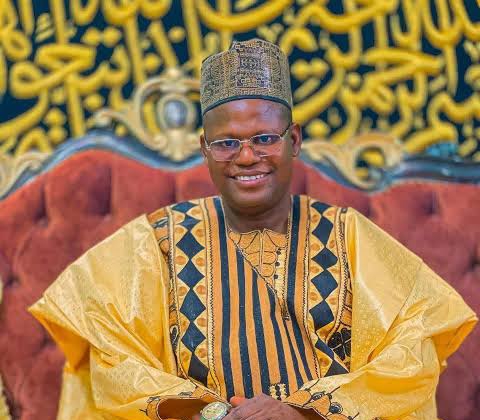
Yahaya Masussuka

Mallam Yahaya Ibrahim Masussuka: The Truth We Owe the Dead

By Abubakar Suleiman 

For a people or a region plagued by insecurity and extremism, it is understandable that peace-loving people would embrace or support anyone who presents themselves as a peace advocate or ambassador. These ambassadors could be atheists, Muslims, Christians, or agnostics. However, there is a fundamental difference between advocating peace and being hell-bent on striking at the very pedestal upon which Islam has stood for centuries. The latter will inevitably come with its own blowback.

The search for peace, rightly so, can be likened to a drowning man holding on to anything that looks like a stick, even if it is a snake. Many found what seemed like a stick in Masussuka. Hadith, the second source of Shari’ah, which comprises accounts of the sayings and actions of Prophet Muhammad (SAW), was dismissed, mocked, misinterpreted, and abused by Masussuka. His treatment of Hadith was not guided by any established scholarly procedures, and this is where Masussuka fell short of intellectual rigour. He became the authority who made or marred a Hadith according to his own whims and caprices.

For the record, he is not the first to subject Hadiths to scholarly scrutiny. Many others have done so, but they followed established procedures. This is what makes Masussuka appear more like a sophist than a scholar. With cheerleaders, both innocent and dishonest, hailing him in their search for peace and their fight against extremism, Masussuka basks even more in his whimsical delusions. Attempts to get him to participate in open intellectual debates have proved abortive.

When the heat in the kitchen became unbearable over his rejection of ALL Hadiths, Masussuka created novel criteria for accepting Hadiths: “It should not contradict the Qur’an, it should not impugn the reputation of the Prophet (SAW), and it should not call for terrorism.” I don’t know of any Islamic cleric or scholar in history who has proposed these criteria. This was entirely his own invention.

Even non-Muslims are well aware of the five pillars of Islam. Yet Masussuka reduced them to three. How the Hadith that explicitly outlines the five pillars of Islam failed to meet the criteria he set for himself is a conundrum he failed to address or reconcile before his unfortunate murder. Hadiths concerning voluntary fasting on Mondays and Thursdays, as well as many well-known Hajj rituals, also fell short of his criteria. He dismissed Islamic jurisprudence with a wave of his hand. He threw the historic martyrdom of Hussain (RA), the grandson of Prophet Muhammad (SAW), into the gutter. He denied history. That denial alone could strike at one of Shi’ism’s most important historical foundations.

Under the umbrella of peace advocacy, Masussuka enjoyed the protection and intellectual endorsement of people who would ordinarily be quick to criticise anyone resorting to unscholarly procedures in other fields of knowledge. He had sound Qur’anic memorisation, a sharp tongue, coherent and incoherent logic, and the ability to explain and translate Arabic words in a didactic manner. He also didn’t spare his interlocutors from name-calling: karuwar kundila, bunsuru da babban riga, jaba mai bakin sharri, etc. Even the foremost compilers of Hadith, Imam Bukhari and Imam Muslim, were not spared his invectives. Shehu Inyass and Ahmad Tijjani also got their fair share of name-calling. That’s the peace ambassador.

In fairness, he called for peaceful coexistence between Muslims and non-Muslims. He spoke out about out-of-school children and parental irresponsibility. On the other hand, he spoke against Hadiths with reckless abandon, devoid of intellectual honesty.

As I have said before, I understand that some intellectuals are genuinely concerned about taming extremism and tendentiousness, as well as ending the romance between religious leaders and politicians because of its ‘overbearing influence’ on governance. Hence, their newfound love for Masussuka.

But hatred or dislike of Hadith or of Sunni scholars should not make you hold a snake and mistake it for a stick. There’s nothing new in what he propagated. He has only regurgitated the past. Tomes were written long ago debunking the kind of logical fallacies he propagated. The democratisation of social media tends to make these arguments appear new, but they are not. To paraphrase Thomas Sowell, one of the most important reasons for studying history is that virtually every stupid idea in vogue today has been tried before and proved disastrous.

One credit you have to give Sunni scholars, however you feel about them, is that they have made themselves available for open debates and have written books to debunk ideologies they consider inimical to theirs. Therefore, intellectuals should endeavour to write books or engage them in open debates on the issues they have with Hadiths. Don’t be a coward like Masussuka, who threw insults and intellectual missiles from afar.

There is no gainsaying that no one deserves to die for holding a contrasting view or subscribing to a non-mainstream ideology, particularly when such a view or ideology poses no threat to social integration. The constituted authority should determine what constitutes a threat to overriding public interests or social stability and act accordingly.

It was with dismay that I received the news of Masussuka’s assassination. I remarked: “A hero has been created by cowards and bloody murderers.” I wish he had lived long enough to be defeated by the truth, or even suffocated by it. His death has also denied us the remarkable spectacle that would have accompanied the intellectual debates he shied away from.

I hope and pray that these murderers are apprehended and made to face the full weight of the law. I fear that, if precedent is anything to go by, his family and students would only be left to lick their wounds and grieve over his loss. But I pray that the Nigerian government proves me wrong this time around.
Tinubu Orders Manhunt After Gunmen Kill Katsina Cleric, Friend

By Sabiu Abdullahi

The wife of slain Islamic scholar Sheikh Yahaya Ibrahim Masussuka has recounted how gunmen shot her husband dead outside their residence in Dutsin-Ma, Katsina State, as President Bola Tinubu ordered security agencies to track down the perpetrators.

Hajiya Fatima Masussuka said the attack occurred on Monday evening shortly after her husband left their home to attend a teaching session with his Almajirai, or Islamic pupils.

Speaking to journalists at their residence on Tuesday, Fatima explained that she had accompanied her husband outside before returning indoors after he realised he had forgotten his bag.

“Before I knew what was happening, I heard four gunshots. When I came out, I discovered that he had been shot,” she said.

Describing the deceased as a caring husband, Fatima disclosed that she was his second wife and that they had a daughter together.

Masussuka was killed alongside his friend, Adamu Abubakar, in the attack, which the Katsina State Police Command said was carried out by two armed men riding on a motorcycle.

According to the police, the incident occurred at about 7:30 p.m. on Monday, October 26, in front of the cleric’s residence in Dutsin-Ma Local Government Area.

The victims were rushed to a nearby hospital but were pronounced dead by a medical doctor.

The police said tactical and operational teams had been deployed to the area, while an investigation was underway to identify and arrest the fleeing suspects.

Ansaru reportedly claims responsibility

Meanwhile, the Ansaru terrorist group has reportedly claimed responsibility for the killing in an audio message released on Tuesday.

According to reports, the group accused the cleric of being an infidel and claimed to have carried out the attack at about 8:30 p.m. However, it did not provide verifiable evidence to support its claim.

The Katsina State Police Command said it had not authenticated the reported claim.

The command’s spokesperson, DSP Abubakar Sadiq, said security operatives were investigating the incident and would make further information public when the investigation was concluded.

“We heard of the rumour making the rounds, but we are yet to authenticate the claim. We are on the field, and once we conclude the investigation, we will make it public,” Sadiq said.

Ansaru, which is linked to al-Qaeda, broke away from Boko Haram in 2012 and has operated in parts of north-western Nigeria.

Tinubu, Radda condemn killing

President Tinubu condemned the killings, describing them as heinous acts that violated the sanctity of human life and the values of peace.

In a statement issued on Tuesday by his Special Adviser on Information and Strategy, Bayo Onanuga, the President extended his condolences to the families of the deceased, their followers and the people of Katsina State.

Tinubu directed the Nigeria Police Force and other relevant security agencies to intensify efforts to track down and arrest those responsible for the attack.

Katsina State Governor, Malam Dikko Radda, also mourned the cleric, describing him as an advocate of peaceful coexistence and interfaith harmony.

In a statement issued through his Chief Press Secretary, Ibrahim Mohammed, the governor called for a thorough investigation and urged security agencies to ensure that the perpetrators were brought to justice.

He also appealed to residents to remain calm, cooperate with security agencies and provide credible information that could assist the investigation. He warned against actions capable of heightening tensions or undermining peace.

Cleric previously involved in preaching dispute

Masussuka, popularly known as the “Peace Ambassador,” had previously attracted the attention of the Katsina State Government over his preaching.

Authorities had received complaints alleging that some of his sermons departed from general principles of Islamic law. The cleric had also reportedly complained of insults and threats from members of Jama’atu Izalatil Bidia Wa’ikhamatus Sunna.

The dispute was referred to the Katsina Emirate Council, after which Governor Radda directed the cleric to appear before a committee of Islamic scholars to respond to the allegations.

The circumstances surrounding the dispute and whether it had any connection to the killing have not been established.

Kwankwaso expresses concern

Former Kano State Governor Rabiu Kwankwaso also condemned the killing, expressing concern over attacks on religious scholars and other innocent citizens.

Kwankwaso, who is the vice-presidential candidate of the Nigeria Democratic Congress, said the continued loss of lives to insecurity was unacceptable and called for decisive action to protect citizens and restore peace.

He extended his condolences to the cleric’s family, students, associates and the wider Muslim community.

Dutsin-Ma and several other local government areas in Katsina State have experienced repeated attacks blamed on armed bandits, including kidnappings and killings targeting residents, vigilantes and security personnel.

The police investigation into the killing of Masussuka and Abubakar is ongoing.

The Daily Reality

On the Assassination of Sheikh Yahaya Masussuka

By Muhsin Ibrahim

The tragic trail of political and religious violence in Northern Nigeria has claimed yet another prominent life. It began in 2007 with the gruesome assassinations of Sheikh Ja’afar Mahmud Adam, who was shot dead in Kano while leading dawn prayers, and Sheikh Umar Hamza Dan-Maishiyya in Sokoto. 

Seven years later, in 2014, Sheikh Muhammad Auwal Albani Zaria was murdered in Kaduna State. 

Today, in 2026, the targeted killing of Sheikh Yahaya Masussuka by unknown gunmen in Katsina marks a deeply disturbing escalation. 

In every instance, an influential voice has been violently silenced, leaving a nation burdened with unanswered questions and followers in deep grief and confusion.

This recurring pattern represents a severe threat to public safety and social cohesion across Northern Nigeria. Jubilating over the violent end of an ideological rival is dangerous shortsightedness; no cleric, regardless of popularity or sectarian affiliation, is safe in an environment where lawlessness reigns. A society where religious scholars can be executed with impunity for their identity or teachings is one where human life has been stripped of basic security.

Adding to the gravity of the situation, a video recently surfaced on social media depicting youth in JIBWIS attire issuing threats against Christian communities in Enugu and Jos. While public commentary must remain cautious of conspiratorial thinking, the alignment of this incendiary material with the assassination of Sheikh Masussuka cannot be casually dismissed. The synchronisation suggests a deliberate effort by malicious actors to ignite a broader sectarian conflict across the region.

Security agencies must undertake an immediate, rigorous, and transparent investigation. Broad public confidence in the judicial process can be restored only if those responsible, regardless of status or political influence, are identified and brought to justice.

In the interim, the public must resist the temptation to engage in reckless speculation. Emotional outbursts and unsourced allegations on digital platforms risk repeating past errors. 

Following the 2007 murder of Sheikh Ja’afar, baseless accusations targeted national leaders, state officials, and traditional institutions, ultimately forcing news outlets to issue public retractions for spreading fabricated reports. Unverified claims ruin reputations and risk sparking retributive violence at a time when national calm is required.

We must exercise utmost restraint. Sharing unverified media, amplifying inflammatory rhetoric, or taking the law into one’s hands will only compound the crisis. Sustained development and progress are impossible without security. National stability must remain the primary objective.

May peace prevail in Nigeria, and may the Almighty forgive our deceased loved ones, amin.

Gunmen Kill Islamic Cleric Sheikh Yahaya Masussuka

By Uzair Adam

Suspected gunmen have killed prominent Islamic cleric Sheikh Yahaya Masussuka at his residence in Dutsin-Ma, Katsina State.

According to Katsina Post, the attack occurred at about 9pm at the entrance to the cleric’s residence, where the assailants reportedly opened fire on him and a friend.

The two victims were subsequently rushed to Dutsin-Ma Hospital for emergency medical attention but were later confirmed dead.

The Daily Reality gathered that details surrounding the attack remained unclear as of the time of filing this report, with no information available about the identities of the assailants or their motive.

The killing has plunged residents of the area into mourning, particularly the cleric’s followers and people who knew him.

Selective Silence: Amnesty International, Arewa Intellectuals, and the tale of two clerics

By Engr. Abubakar Sulaiman

The Amnesty International Nigeria and some Northern Intellectuals were asleep or in a state of limbo when the Kano state government invited Mallam Lawan Shuaibu Triumph to appear before the Shura Committee and defend what some segments of Muslims considered blasphemous or disrespectful. He appeared, defended his statements, and heaven did not fall. He also made it clear that he was open to further discussion or debate.

Waking up from slumber, Amnesty International found its voice only when the ‘anointed’ Yahaya Masussuka (whom some people laughably expect to bring about a ‘revolution’ in mainstream Islam and its preachings) was invited by the Katsina state government to appear before a committee regarding his preachments. That was when they realised someone was about to be stripped of their freedom. The olive branch that wasn’t extended to Mallam Lawal Shuaibu Triumph.

Is it double standards or hypocrisy from the organisation and the so-called intellectuals? It is both. And it is a clever-by-half and calculated attempt to arm-twist a government procedure. But this is a discussion for another day.

That said, I believe state governments should find a way to disengage from organising religious debates. They should enact laws that regulate religious preaching and require JNI or CAN (or any other faith-based body) to license preachers. Whoever has a disagreement or believes a cleric’s preachment is an affront to overriding public interest should approach the court. Based on the enacted laws, the court should determine what constitutes extremism or actions inimical to social stability and thereby de-license a cleric or even sentence them to time in correctional facilities where appropriate.

I think debates on religious ideologies should be organised by faith-based organisations, or anyone who has an axe to grind with another person on religious issues should extend an invitation to a debate. Two Salafi scholars, Shaykh Isa Ali Pantami and the late Shaykh Idris Abdulaziz, extended such an invitation to the Boko Haram leader, the late Muhammad Yusuf, without any state government spearheading or supervising the engagement. Many people later renounced the Boko Haram ideology after listening to that debate. Additionally, Mallam Al-Qasim Hotoro also approached Mallam AbdulJabbar Nasiru Kabara for a debate, though AbdulJabbar used a ‘tactical manoeuvre’ to decline the engagement. The populace will then be the judge of who can present convincing evidence for their beliefs or ideology from such debates.

State governments risk falling into a quagmire if they continue to entertain complaints and organise religious debates without referring them to government-recognised faith-based organisations or a court of competent jurisdiction. It is difficult to digest, given the fear of censorship from our kind of governments, but regulation is key to taming religious hiccups and extreme tendencies while enhancing social integration.

Abubakar writes from Kaduna and can be reached via abusuleiman06@gmail.com.

Fresh Debate Erupts as Katsina Summons Masussuka, Critics Accuse Amnesty International of Selective Outrage, Double Standard

By Sabiu Abdullahi

A new wave of public debate has followed the Katsina State Government’s invitation to Yahaya Masussuka to defend his religious preachings before a committee of scholars, with some analysts accusing Amnesty International and northern intellectuals of inconsistency in their reactions to similar cases.

The development comes after the state government released a statement on November 18 acknowledging that it had received complaints alleging that Masussuka’s teachings “contravenes the general principles of Islamic Law.” Authorities also noted that Masussuka himself had reported threats from members of Jama’atu Izalatil Bid’a.

According to the statement, the government escalated the concerns to the Katsina Emirate Council, where the Emir invited Masussuka and other clerics for discussions and cautioned all parties against preaching that could offend other Muslims. Despite that intervention, the government said tensions persisted. It explained that Governor Dikko Umaru Radda subsequently directed Masussuka to appear before a Committee of Ulamas to defend himself, after which standards for preaching would be set and violations addressed.

While the state urged the public to remain calm, the invitation triggered sharp reactions from Amnesty International and some activists who insist Masussuka’s rights must be protected.

Commentators Challenge Amnesty’s Position

Public commentator Abubakar Suleiman questioned why similar advocacy was absent when Kano authorities invited another cleric, Lawan Shuaibu Triumph, to defend statements some groups considered blasphemous. He said:

“The Amnesty International Nigeria and some Northern Intellectuals were asleep or in a state of limbo when Mallam Lawan Shuaibu Triumph was invited by the Kano state government… He appeared, defended his statements, and heaven did not fall.”

Suleiman argued that Amnesty International only found its voice when the Katsina government invited Masussuka, whom he described as “the ‘anointed’ Yahaya Masussuka (whom some people laughably expect to bring about a ‘revolution’ in mainstream Islam and its preachings).”

He accused the organisation and some northern intellectuals of “double standards or hypocrisy,” calling their intervention “a clever-by-half and calculated attempt to arm-twist a government procedure.”

Suleiman also advised state governments to stay away from organizing doctrinal debates, proposing instead that legislative frameworks and faith-based regulatory bodies like JNI or CAN oversee preaching. He noted that disagreements over religious messages should go before the courts, not government panels. He warned that continued direct intervention by state executives could place them “in a quagmire.”

Khaleel: Masussuka’s Teachings Resemble Maitatsine Doctrine

Another analyst, Ibrahim Khaleel, linked Masussuka’s ideology to historical radical movements. He wrote:

“Yahaya Masussuka’s ideology of Qur’anism is what Maitatsine preached in the 1970s. The only difference is that Masussuka has not picked up arms yet.”

Khaleel described Masussuka’s approach as involving “rejection of Hadith, rejection of mainstream Islamic scholarship, personal interpretation of the Qur’an, provocative sermons of puritanism.”

He argued that the government is right to be wary, especially given what he described as troubling advocacy from international NGOs. He said these organisations “are not friends of our fragile country” and referenced past allegations that they assisted hostile groups.

Khaleel insisted the Katsina government acted responsibly by inviting Masussuka only for a scholarly clarification, stating:

“The government hasn’t done anything more than inviting him to come before a scholarly committee to discuss his beliefs, just to ensure that he doesn’t be the next problem the government will spend a lot of money trying to solve.”

He also questioned the defense of Masussuka’s freedom of expression, asking:

“Wasn’t freedom of speech what has landed us in terrorism today?”

Khaleel urged authorities to regulate unconventional religious teachings to prevent potential crises and declared, “Let the panel discussion proceed.”

Katsina Government Pledges Caution

The Katsina Government, in its press release signed by Director of Press Ibrahim Almu Gafai, said the matter is being “judiciously handled.” It said guidelines for preaching will be issued after the committee concludes its review and that decisive action will follow any violations.

The state further appealed to the public to remain patient as the process unfolds.

Masussuka has not publicly responded to the invitation as of the time of this report.

Katsina State Government summons controversial cleric, Yahaya Masussuka, amid divisive preaching

By Ibrahim Mukhtar

The Katsina State Government has formally invited the Quranist preacher, Yahaya Ibrahim Masussuka, who has recently become well-known, especially on Social Media, to appear before an Ulamas’ committee following complaints that his teachings allegedly breach “the general principles of Islamic law.”

The preacher debunks all prophetic sayings (Hadith) and calls the famous Hadith reporters liars. He later adjusted his stance, saying he agrees with three forms of Hadith and refutes all others. According to Masussuka’s new stand, he agrees with any Hadith on three conditions: 1) If the Hadith didn’t violate anything from the Qur’an; 2) If the Hadith didn’t say anything bad against the Holy Prophet, and or 3) If the Hadith preaches peace. However, some scholars have already labelled his current stance as clever bait to catch gullible, ignorant followers.

Masussuka has preached and discussed controversial issues and dismissed some fundamental issues of the Islamic religion as heresy and disowned all the revered Hadith books of Islam as mere concocted lies.

According to the Katsina State’s Secretary to the State Government, Alhaji Abdullahi Faskari, the government has received petitions from some scholars and concerned citizens regarding the nature and manner in which Masussuka’s preachings and sermons do not align with orthodox interpretations of Islamic jurisprudence.

At the same time, Masussuka himself has filed a complaint, claiming that some members of Jama’atu Izalatul Bid’ah (also known as Izala) have insulted and threatened him.

Although Masussuka has great backing and massive support from some Darika disciples, his heretic preaching still continues to stir controversy as many scholars, even among the Darika, see his teachings, which are based on debunking all prophetic sayings, as being completely un-Islamic.

In a bid to resolve the tension, the matter was referred to the Katsina Emirate Council, where both parties were invited to engage in dialogue. After the discussions, Emir Abdulmuminu Kabir Usman reportedly admonished that no one must preach in a way that offends fellow Muslims.

Following the Emir’s intervention, Governor Dikko Umaru Radda directed that Masussuka defend himself “before a Committee of Ulamas.” The SSG’s office also announced that standards and guidelines for preaching would be developed; anyone found to contravene them may face “appropriate action.”

Authorities have called on the public to remain calm, noting that the process will be handled “judiciously.”

The summoning has drawn mixed reactions from several groups, while many others, especially from the Dariqah and other rights and religious-freedom groups, vow to support the preacher. ICADAR (Impactive Centre for Accountability, Democracy, and Rights) warned that targeting Masussuka, whom they describe as “a preacher known for his peaceful teachings,” could undermine Nigerians’ religious expression.

Similarly, Amnesty International has raised concern over what it describes as a coordinated attempt to silence Masussuka. The group cautioned that shutting down his religious activities might violate his constitutional right to freedom of religion.

Another rights organisation, Ettrah: Voice for Freedom and Human Rights, called on both state and federal governments to protect Masussuka, arguing that calls to question his preaching risk “deepening misunderstanding” and threatening national unity.

On the other hand, some social analysts see the current development as worth pursuing, as many scholars were invited to defend their stands, which were deemed contrary to the general teachings of Islam. Some others view it as sectarian tensions, which, if not managed carefully, could inflame existing tensions between different Islamic groups in Katsina and beyond, particularly between Masussuka’s following and the Izala movement.

Sheikh Masussuka’s invitation by the Katsina State Government to defend his teachings marks a critical moment in northern Nigeria’s debate over religious freedom, state intervention, and sectarian balance. With vocal responses from rights groups and religious leaders alike, the outcome of this committee could resonate far beyond Katsina, touching on broader issues of governance, faith, and coexistence in Nigeria.

Masussuka and the illusion of a faithful society!, by Abdulrahman Abdulhameed

By Abdulrahman Abdulhameed

With the few years I have spent living in Lagos, a city with a visibly strong Muslim community, I have come to understand that Islam here requires continuous teaching and reawakening, especially among the youth. The struggle to uphold Islamic values in Lagos is not just about faith; it is about identity, discipline, and conviction in a society constantly influenced by competing social norms and religious diversity. Many young Muslims, unfortunately, have become lax in their practice due to peer pressure, exposure to alternative lifestyles, and the limited presence of scholars and institutions dedicated to nurturing sound Islamic knowledge.

Despite these challenges, one thing I used to console myself with was the thought that Muslims in Northern Nigeria, my home region, were doing much better in terms of religious consciousness and adherence to Islamic principles. I often believed that while Muslims in the South might be struggling to preserve their Islamic identity amidst pluralism, those in the North had a stronger foundation, firmer faith, and a more disciplined approach to Islamic life.

However, recent developments have shattered that assumption and left me deeply unsettled.

The emergence of one Masussuka on social media, a man preaching the dangerous ideology of the Qur’aniyun (those who reject the Hadith and rely solely on the Qur’an), has opened my eyes to an uncomfortable reality. His teachings, reminiscent of the destructive ideology of Maitatsine, blatantly deny the authority of the Hadith and the traditions of the Prophet (SAW). According to him and his followers, the sayings of the Prophet are fabricated, unnecessary, and irrelevant to the practice of Islam. For them, the Qur’an alone is sufficient, a claim that defies fourteen centuries of Islamic scholarship, understanding, and consensus.

What shocked me even more than his heretical claims is the growing number of Northern Muslims who not only listen to him but also defend and promote him as a reformer and a revolutionary voice of truth. The very society I had thought was deeply rooted in authentic Islamic knowledge is now producing followers who cannot discern truth from falsehood. How can a people so privileged with access to Islamic institutions, scholars, and history fall for such shallow and misguided teachings?

This is not merely a question of ignorance; it is a mirror reflecting a deeper decay, the decay of critical Islamic education, sincerity, and spiritual depth among many northern Muslims. For years, people have mistaken proximity to mosques, Arabic inscriptions, and outward religiosity as evidence of true faith. But now, the rise of Masussuka and the applause he receives expose the emptiness that has long existed beneath that illusion of piety.

Ironically, in the South, where Muslims are fewer and face constant societal pressures from adherents of other faiths, many have developed stronger conviction, deeper understanding, and firmer identity in Islam. Because they have to strive to remain Muslims, they often take the faith more seriously. While they may lack the resources and numbers that the North boasts of, their sincerity and eagerness to learn often surpass those who were born into environments steeped in Islamic culture.

It is a painful paradox: the North, blessed with scholars, Islamic heritage, and institutions, is now breeding confusion and gullibility. The South, struggling against odds, is producing Muslims who, when exposed to sound Islamic knowledge, may practice the faith more sincerely than many of their northern counterparts.

Masussuka’s ideology is therefore not just a threat from an individual but a symptom of a larger sickness, a failure of our educational systems, religious institutions, and community leadership to nurture Muslims who understand why they believe, not just what they believe. The north is becoming the example of what happens when faith becomes culture instead of conviction, when religion becomes identity instead of practice, when people stop questioning falsehood in the name of belonging to the majority.

As painful as it is, perhaps this is a wake-up call. It is time to go back to the basics, to teach Islam as it was revealed and practiced, to remind ourselves that being born into a Muslim family or a Muslim-majority region does not guarantee understanding or faith. The danger Masussuka represents is not just in his words but in the fact that he has found an audience among those who should know better.

And that, truly, is the greatest tragedy.

18th October, 2025.

Against Shaykh Masussuka: A Qur’anic case for the reliability of Hadith

By Ibraheem A. Waziri

About three decades ago, at the beginning of my youthful years, around Bakinruwa, Sabongari, Kaduna, I first encountered the idea of “Qur’an-only” Islam. Shaykh Uthman Dangungu, who had passed through the Izala movement, began to promote it in our neighbourhood mosque near Kasuwan Gwari. He was not the first—Muhammadu Marwa Maitatsine had pushed something similar in Kano State in the 1980s, though in a harsher, less workable form. Since then, my philosophical self has wrestled with such currents—Wahhabism, Shi‘ism, Sufism, Boko Haramism, and more. Each encounter has been a struggle for clarity and stability, for faith, and for cultural continuity in our fragile postcolonial Nigerian modernity.

Now, with Shaykh Yahya Ibrahim Masussuka—my generational peer—reviving the Qur’an-only argument, it seems fitting to reflect again. This time, however, I do not begin from theology alone. I lean on the wear and tear of intellectual toil, and on the reflective gifts of experience—what philosophy, logic, and science have taught me about human beings and the trustworthiness of transmission.

Philosophy has long asked: Can knowledge survive without tradition? Plato, in The Republic, warned that truth severed from the teacher–student chain becomes mere opinion. Aristotle, more grounded, argued that reason itself grows from custom, habit, and inherited practice. If Plato guarded against instability, Aristotle reminded us that even rationality needs a body —a living community —to give it shape.

Modern science adds its own perspective. Research in psychology shows that while humans are prone to bias or fatigue, under structures of accountability and community, they are remarkably capable of fairness and truth-telling. Integrity, in fact, often comes naturally. In other words, people can be trusted, though they must be guided.

The Qur’an itself affirms this. It does not portray humanity as unfit to bear the truth. Instead, it honours our moral agency while calling for systems of verification. “And thus We have made you a just community that you may be witnesses over mankind, and the Messenger a witness over you” (2:143). To be a witness requires the ability to observe, remember, and transmit faithfully. Surah Al-Tawbah (9:122) goes further, encouraging some believers to remain behind, study religion deeply, and teach others. That is nothing less than a Qur’anic endorsement of scholarship—the very task Hadith scholars later undertook.

The Qur’an also acknowledges our dual moral compass— “By the soul and He who proportioned it, and inspired it with its wickedness and righteousness” (91:7–10). Hence, the command in Surah Al-Hujurat (49:6) to verify reports before acting. That balance between trust and scrutiny is the same principle that shaped the science of Hadith.

Even in worldly matters, the Qur’an demonstrates confidence in structured testimony. The long verse of debts in Surah Al-Baqarah (2:282) lays out detailed rules for recording contracts with witnesses. If humans can be entrusted with preserving financial records, surely they can also be tasked with documenting the Prophet’s words—so long as there is a system of accuracy and verification.

This brings us to the heart of the matter. The Qur’an-only stance insists that Hadith is unnecessary. Yet the Qur’an itself says otherwise: “We revealed to you the Reminder so that you may explain to people what was sent down to them” (16:44). The Prophet’s explanatory role is not contained in the Qur’an’s text—it lives in his sayings, actions, and approvals. Surah Al-Ahzab (33:21) refers to him as “an excellent example” for believers. But how would later generations know his example without the Hadith?

Other verses go further: “Whoever obeys the Messenger has obeyed Allah” (4:80); “Whatever the Messenger gives you, take it; and whatever he forbids you, abstain from it” (59:7). These are not time-bound commands. They apply to all Muslims across generations. And they assume access to the Prophet’s guidance—something only Hadith provides.

Seen this way, Hadith is not an intrusion upon the Qur’an but its necessary partner. The Prophet was sent not only to recite but to teach and model. His companions and the generations after them, through discipline and painstaking verification, preserved that model. The Hadith tradition is not perfect—no human endeavour is—but it was forged as a check from within Islamic culture, not imposed from outside. It is part of the Qur’an’s own vision of a community of witnesses.

At its core, then, the debate is not only about scripture but also about how we see human beings. If we assume people are too weak or biased to preserve truth, the Hadith collapses. But if we recognise—as both the Qur’an and science do—that humans, when guided and structured, can be reliable witnesses, Hadith stands on solid ground. The Qur’an-only position misses this deeper point. It mistrusts human agency in a way the Qur’an itself never does.

In Nigeria, where cultural streams converge and clash—Sahelian traditions meeting global influences—the Qur’an-only approach risks severing us from the rich heritage that has sustained Muslim communities through colonialism, civil strife, and modern pressures. My own journey—from that mosque in Kaduna to today—has taught me that certainty lies not in subtraction but in integration: the Qur’an as foundation, illuminated by the Prophet’s Hadith, upheld by our God-given moral agency.

As this debate resurfaces in our time, we would do well to remember: the Qur’an trusts us, commands us, and makes our testimony central to its unfolding. To follow the Qur’an, then, is to follow the Prophet. And to follow the Prophet is impossible without Hadith.

Ultimately, as Surah Al-Baqarah reminds us, we are called to be witnesses. Let us honour that calling by trusting the mechanisms Allah has provided—including Hadith, which brings the Prophet’s example to life for every generation