Women

The rise of women’s indecency on social media

By Abbas Datti

Both Islamic and Hausa traditions instruct women to cover up their bodies and guard against indecency when it comes to dressing. But sadly, in the modern age of social media, the issue of indecent exposure of bodies by women on TikTok, Instagram, Facebook and other social media platforms has become a problematic issue.

It is sad to note that the ease with which social media allows people to post whatever content they wish to share has created and exposed potential Nicki Minajs and Rahama Sadaus living in the comfort zones of our different homes.

While many women use social media platforms to express themselves and market their commodities for trade, some choose to show their bodies for public viewing. One wonders how this Indecent exposure emerged, raising questions about the potential consequences and societal well-being

We must blame Hausa Kannywood actresses and Nollywood celebrities for promoting this indecency to boost their social media handles and gather many more followers. It has now become a usual trend, particularly on TikTok, to see girls of different age brackets dancing and shaking their asse, exposing their naked cleavages, thereby promoting provocative sexual desires in our youths. 

The portrayal of the woman’s body has recently found its way into public spaces through various social media platforms, prompting discussions on one’s reputation and its impacts on younger audiences.

This phenomenon has also sparked discussions on the responsibility of social media platforms to regulate content, with calls for stricter guidelines to maintain a balance between freedom of expression and preventing the normalisation of explicit content.

As conversations evolve, finding common ground that respects individual expression while considering the broader societal impact remains challenging. The digital age demands ongoing regulations about the changing norms and ethics of online behaviour, urging individuals, influencers, and platforms to reflect on their roles in shaping the online landscape.

Abbas Datti writes from Kano via abbasdatti448@gmail.com.

Allow married women to bear their fathers’ names – MURIC 

By Abdurrahman Muhammad

A call has gone to the Federal Government for a reform of Nigerian marriage laws that will allow married women to bear their fathers’ names. Making the call was an Islamic human rights advocacy group, the Muslim Rights Concern (MURIC). 

A statement signed by the group’s director, Professor Ishaq Akintola, on Monday, 18th December 2023, described the current practice whereby married women are forced to bear their husbands’ surnames as gender discriminatory, archaic and oppressive. 

MURIC condemned the current practice for depriving women of their Allah-given fundamental human right to personal and parental identity in marriage. The group advocated the adoption of the women-friendly Islamic practice, which allows married women to bear their fathers’ surnames after marriage. 

The full statement reads:

“Our attention has been drawn to the plight of married Muslim women who are being disallowed by employers from bearing their fathers’ names. This amounts to forceful enslavement, denial of Allah-given fundamental human right to parental identity and wrongful dismissal of loco parentis.

“We condemn the current practice for three major reasons, namely, for generating confusion in the society, for creating a monumental identity crisis among married women and for depriving women of their Allah-given fundamental human right to personal as well as parental identity in marriage.

“Instead of this, we advocate the adoption of the women-friendly Islamic practice which allows married women to bear their fathers’ surnames after marriage. 

“No woman dropped suddenly from the sky, and even if some appear out of nowhere, they must have been born, bred, nurtured, buttered and marmaladed by certain parents before they grew up and matured into womanhood. Their education was also sponsored by their parents at a time when the future husband probably knew nothing about them and spent no kobo on their upbringing and their education.

“It therefore beats logic, fairness and natural justice that a husband appears out of nowhere to commandeer a woman’s parental identity simply by marrying her. Such identity robbery also has its advantages. 

“For instance, women who are educated are forced to advertise change of names to their husbands’ surnames after marriage in order to retain the validity of their documents and properties. It often becomes very difficult and sometimes impossible for married women to be located or to retain old friends due to such a change of name. 

“Those who want to be sincere among married women today will confirm the stress they have gone through from this experience. Islam sets women free from such stress by permitting married women to retain their original family names.

“Contrary to the general claim that Islam discriminates against women, Islamic liberation theology actually teaches respect for the dignity of women in all circumstances. One of such circumstances is the period when women are in wedlock. Whereas Western civilisation robs married women of their original family identity by insisting that they should bear their husbands’ surnames, the Shari’ah allows women to bear their own fathers’ names even after marriage. 

“We therefore invite the Federal Government and other relevant authorities to set the machinery in motion towards allowing married women to bear their fathers’ names. In particular, we charge both houses in the National Assembly, the Senate and the House of Representatives, to introduce the necessary bills that will set Nigerian women free from undue masculine domination.

“This advocacy is not for Muslim women alone. We are certain that Muslim women are not the only ones who feel the pinch. MURIC would love to see every married woman who desires to be identified by her father’s name enabled to do so. Our lawmakers should frame the clauses in such a way that all women can enjoy the freedom to choose between bearing their fathers’ names or their husbands’. It is time to set Nigerian women free. They are the mothers of our society.

“We contend that the whole gamut of women’s liberation struggle boils down to a sham and a mirage until this goal is achieved. A married woman is not a slave. She is not just a dot in social statistics. She has a soul, and that soul yearns for love. She covets to love and be loved, not only by her husband but also by her family and vice versa. Nigeria must not fail her. Parental identity is sacrosanct. Husbands can never replace fathers in matters of parental identity, and that is what the current system compels women to go through. Enough is enough.”

Challenges bedevilling women advocates in Nigeria 

By Laraba Jauro

Women advocates in Nigeria, like other women in the world, encounter numerous challenges in undertaking advocacy, especially in the country’s northern region. The women’s voices are not heard, and want to be heard. And their vulnerability is a high risk in society.

The United Nations declared 1975 through 1985 a “Decade for Women”. Four world conferences on women were held: Mexico City 1975, Copenhagen 1980, Nairobi 1985 and 1995 Beijing. These conferences directed the searchlight on various issues affecting women’s status in society. 

These issues, among others, include Violence against Women, Women’s Rights as Human Rights and Women’s Reproductive Health. It was not until then that the woman’s question entered the political agenda in Nigeria. 

Various national development plans were gender-blind and gave no specific place to gender issues in Nigeria. These Conferences encouraged Nigerian women to come and form their Non-Governmental Organisations (NGOs) to empower themselves.

Being a woman in Nigeria comes with deliberate discrimination, social, religious and economic inequality, misogyny and gender-based violence. Being a woman in Northern Nigeria sometimes comes with the aforementioned challenges.

Northern Nigeria is a diverse region with people from different groups, religions and cultural orientations towards women’s rights.

In an interview with executive Director Zenith of the Girl Child and Women Initiative Support, Aishatu Kabu Damboa, a gender equality activist in Maiduguri, said, according to the United Nations sexual and reproductive health agency, of the 7 million people affected by the insurgency in north-east Nigeria, about 1,750,000 are women and girls of childbearing age who need sexual and reproductive health services.

“Through my foundation, I worked on sensitisation programs on the prevention of SGBV and provision of re-washable menstrual sanitary pads at camps for internally displaced persons in Maiduguri. She is also actively working to support adolescent girls in IDP camps by providing access to vocational skills.”

She added that women and girls in Borno state, like any other place in Africa, deal with poverty, rape, domestic violence and gender discrimination, and there is a need to raise their voices for government to take necessary action.

She said being a woman advocate in Borno state and anywhere in the north is full of threats, insults and rejection. When men, and even some women, hear you mentioning equality for women and girls, they think you are starting a war with men. 

Threats of physical violence, name-calling, trolling and online abuse come with the territory. The abuse used to hurt me, but then I understood that here in the community where I came from, it is not the norm for women to be outspoken.

Women in politics or who hold public office are called prostitutes. But she isn’t letting it get to her or stopping her from her mission of educating women and ensuring a gender-balanced society. I strongly believe in education. Our people must be educated; it is the long-term plan to change things.

However, she believes education is the key to lifting women and girls out of poverty. She said women are breaking the culture of silence, unlike their forebears who kept it to themselves and died in silence. 

Being vocal about women’s rights on a public platform as a young Northern Muslim woman has a challenge in northern Nigeria. She also advised the government to ensure women representatives on every issue in Borno state. People should understand their aim and stop harassing women advocates in northern Nigeria at large. 

Laraba Jauro wrote from the Department of Mass Communication, University of Maiduguri.

Working women in Islamic perspective: Prohibitory or permissibility

By Omar Muaz

As commonly understood by many people that a working woman only means one that goes outside her matrimonial home or her parents’ house to earn a living [in most cases a salary or an income] isn’t but, as rightly put in different ways by Amina Adamu, in her paper “Balancing the Home and Work: Tales of Working Women” one who has attained a certain level of education and use it as an opportunity to secure jobs. Or the one who earns a living inside her home by engaging in in-door businesses such as fish farming, tailoring, poultry, and even selling clothes and kitchen equipment, or lastly, one who earns a living within the confinement of her house by using their children to hawk and sell for them. Whichever one takes as a definition of a working woman, it’s fine and okay.

I have read many articles claiming modernism to be the root of working women. However, history has it that in traditional African society, women work as much as men [or even more] to sustain the family. They do house chores and look after children and even the man himself — besides cooking for the family, the women wash the man’s clothes and keep his room and the whole house tidy. In addition to all, as affirmed in The Journal of the Islamization of Knowledge and Contemporary Issues, Vol. 1, they go to the farm and cultivate crops to supplement the feeding and economic sustenance of the family. 

By the coming of Islam — a religion that propagates women’s seclusion based on the Quranic provision in Suratul Al-ahzāb, verse 33 “And abide in your houses and do not display yourselves as [was] the display of the times of ignorance.” and some authentic traditions of Rasūl, prophet Muhammad (PBUH) — to Nigeria in the eleventh century (Clerke and Lindern, 1984), women, more especially in the Northern part of the country, were restricted from going out unnecessarily which includes going to farm. They then concentrated on their roles as mothers while the men accepted and carried out their religious responsibilities of providing the basic needs for their family until the introduction of Western education [read: conventional education] to Nigeria in the 19th century.

The early 70s witnessed a large enrolment of girls into conventional schools, which started affecting the status quo of the family system, with women starting to work as civil and public workers in various organisations and parastatals at the attainment of conventional schools. Moreso, the spread of globalisation through the Western media led to the very foundation of the family, which includes respect, love, and trust for each other to start playing the second fiddle. 

From the 90s up to the end of the last century, 20th, many Islamic families subscribed to the global village by connecting the satellite dish to their homes and, of course, the internet. Probably, due to the impact of the Structural Adjustment Programme (SAP) — an ambitious structural adjustment program which was adopted in June 1986 as a result of initial reforms including substantial increases in domestic petroleum prices that were announced in the 1986 budget — in the 80s, the man no longer care and provide the basic facilities needed in their homes. Thus, the man lost his pride and respect as the breadwinner both from the wife and the children. Hence, women were left with the only alternative, which was finding means of supplementing the family income, even outside their homes (Emeagwali in El-Sohli & Mabro, 1994).

It’s worth noting from the above paragraphs women were traditionally working before the advent of Islam, more especially in Northern Nigeria, which abolished the practice with the world turning into a conventional one. Women work to supplement the family income with reasons, of course, varying. There are many women that work, despite their husbands or parents being rich, because they feel bored sitting at home. This category consists of almost 10% of the working Northern Nigerian women. Others go out to work to earn a living, while others, at the death of their husbands, provide shelter for their children. In addition to the mentioned categories, some work to serve humanity in governmental and Non-governmental organisations (NGOs).

Some Muslim husbands and parents, based on one of these cases, allow their wives and daughters to work while others, basing their argument on the Islamic concept of seclusion, keep their women at home. Now, the question is on the concept of women’s seclusion from in Islamic perspective. What is it? Women seclusion is a term referring to various practices designed to protect women from men in traditional Muslim societies, including confining women to the company of other women and close male relatives in their home or in separate female living quarters, veiling, self-effacing mannerisms, and the separation of men and women in public places.

According to the International Institute of Islamic Thought Nigeria Office’s journal, Al-Ijtihād, the issue of women’s seclusion in the Nigerian context, as has been identified, includes (1) complete seclusion — an opinion championed by traditionalists and fundamentalists who strongly believe that women’s role is exclusively restricted to her home only and therefore any other role outside her matrimonial home is forbidden. (2) partial seclusion — that women are allowed to go out when there’s need to go, such as hospital and visiting sick relatives and even attending Islamiyya schools, and (3) voluntary seclusion is seen as a more symbolic seclusion rather than physical.

The third, unlike the complete seclusion which was built on the widely circulated “myth” in some years back, at least in the Hausaland, that a woman has only three outings in her lifetime — that of her being delivered from her mother’s womb, going out to her husband house [being married], and then lastly taken to her grave —, is propagated by those in favour of women going out to work outside her matrimonial homes or parents’ houses and encouraged women who have attained conventional education to work in the civil service and other parastatals.

The existence of these divergent views, even during the lifetime of Usman Ɗan Fodio, triggered him to write a book “Kitabul Irshadul Ikhwān” in which he stated twelve instances where women are allowed to go out in Shari’a: going out in search of knowledge, participating in religious war [Jihād] where there’s need for their assistance, attending congregational prayers in mosques, attending Juma’at prayer, attending Eid prayer, attending prayer for rain [Salatul Istisqa], attending prayer for the dead [Salatul Janaza], going to pilgrimage, going to the court of law to sue or to be sued, visiting their parents and relatives, attending wedding ceremony [especially escorting the bride to her house because Aisha (RA) was reported to have done that] and buying and selling things especially when they don’t have someone to do it on their behalf.

In addition to the above-mentioned twelve occasions where women are allowed to go out, going out to teach isn’t in exclusion. There are instances — according to the prophetic ahādith, which were reported by Abu Dāwud, Ahmad and Imam Hakim — where women went out to teach even the wives of the prophet Muhammad (PBUH). The case of Shafa’a Bint Abda is a glaring example when the prophet (PBUH) not only recommended her for teaching His wife, Hafsa (RA), how to write but advised her to teach the wife how to cure rashes and bugs [Rukhyatul Namla]. Thus, Imam Ghazali, among many other Islamic scholars, emphasised the importance of women’s education, especially in the field of Medicine and Mathematics, with the essence of them specialising in these areas to cure sick Muslims and to teach Muslim children.

It can be concluded that women — even though they are fragile and weak because of them being created from a “crooked rib” of a man — among them are those who are blessed with the strength and energy to participate in even manual labour and, thus, they are not completely restricted, Islamically, to work as related above.

However, in order to have equilibrium in terms of matrimonial stability of the home on one hand and the woman’s pursuit for economic stability on the other, there should be an understanding between the two spouses [which is the man who is the head of the family and the woman under the umbrella and control of the man]. It’s recommendable that a working woman should fear Allah (SWT) in her mind wherever she goes and, when going out, should dress properly according to the dictates of the Shariah.

Allahu A’alam [ Allah knows the best].

Omar Muaz wrote via muazuumar45@gmail.com.

Unravelling the mystery of hormonal imbalance

By Ummusalma Farouq Sambo

Hormonal imbalance is a nightmare for many women. Being unspoken by society and an enigma to most women is why I am writing this piece.


Many marriages/relationships are affected by the concurrent hormonal imbalance in women. The lack of knowledge from men on the topic leads to lots of misunderstanding about us women. I believe we can solve this problem by teaching women what is wrong with their bodies and enlightening men about how some women are created.

Let’s start by knowing what hormones are in a simple human context.

Hormones are chemical messengers produced by various glands in the body. They are released into the bloodstream and travel to different body parts to regulate and control multiple functions. They are crucial in coordinating processes like growth, metabolism, reproduction, and mood. They act as signals, transmitting information between different organs and tissues to help maintain balance and harmony within the body.

However, maintaining hormonal balance is no easy feat. Our bodies are like a complex ecosystem, and even the slightest disruption can throw these delicate hormones into disarray. Stress, poor lifestyle choices, and certain medical conditions can all wreak havoc on this delicate equilibrium, leading to hormonal imbalances and a host of unwelcome symptoms.

Symptoms Of Hormonal Imbalance

Living with hormonal imbalance is like navigating a maze of unexpected twists and turns. As a woman, I know firsthand the impact it can have on our lives. Let’s look at the signs that can help us unravel the mystery of hormonal imbalance.

  1. Rollercoaster of Emotions: Imagine waking up overwhelmed by sadness, only to burst into tears moments later. Hormonal imbalance can unleash a rollercoaster of emotions, leaving you feeling irritable, anxious, or inexplicably down. These emotional ups and downs can disrupt your relationships, work, and well-being.
  2. Mysterious Weight Fluctuations: Have you ever diligently followed a healthy diet yet struggled to lose weight? Hormonal imbalance may be at play. It can wreak havoc on our metabolism, leading to unexplained weight gain or difficulty losing weight, no matter how hard we try.
  3. Battle of the Breakouts: Acne isn’t just a teenage problem. Hormonal imbalances can trigger frustrating breakouts, even in our adult years. Those pesky pimples that seem to appear out of nowhere? They could be a red flag indicating that our hormones are out of whack.
  4. Energy Dips and Fatigue: Feeling like you’re constantly running on empty? Hormonal imbalance can drain your energy levels, leaving you feeling fatigued and exhausted. Staying focused and productive becomes a daily struggle; even the simplest tasks can feel like climbing Mount Everest.
  5. Menstrual Mayhem: Our monthly cycle can offer valuable insights into our hormonal health. Irregular periods missed periods, frequent periods, stopped periods, heavy flows, or excruciating cramps might indicate that our hormones are imbalanced. These disruptions bring physical discomfort and disrupt our plans and routines.
  6. Sleepless Nights: Tossing and turning, unable to find that elusive state of blissful slumber? Hormonal imbalance can wreak havoc on our sleep patterns, leaving us staring at the ceiling in frustration. It becomes a vicious cycle where lack of sleep further exacerbates hormonal imbalances.
  7. Vaginal dryness and itching
  8. Hyperpigmentation of the skin
  9. Puffy face
  10. Decreased or increased heart rate
  11. Weakened muscles
  12. Pain in the muscles, tenderness, and stiffness
  13. Pain and swelling in the joints
  14. Depression
  15. Infertility
  16. Anxiety or irritability
  17. Purple stretch marks

Causes and Contributing Factors of hormonal imbalance

Throughout different stages of life, hormonal changes play a significant role in our bodies. Puberty, pregnancy, perimenopause, and menopause are all periods when our hormones fluctuate, potentially leading to imbalances. These natural transitions can sometimes throw our delicate hormonal equilibrium off track, causing different symptoms.

But it’s not just natural life events that affect our hormones. Our environment and lifestyle choices also play a vital role. The relentless stress of modern life, poor diet, and lack of exercise can all contribute to hormonal imbalances. Stress, in particular, can disrupt the delicate dance of hormones in our bodies, throwing them out of whack and causing confusion on our physical and emotional well-being.

In addition to external factors, underlying medical conditions can disrupt hormonal balance. Polycystic ovary syndrome (PCOS), thyroid disorders, and insulin resistance can all contribute to imbalances. These conditions require careful attention and management to restore hormonal harmony.

Other factors that can cause hormonal imbalances are

  • Pregnancy
  • Breastfeeding
  • Primary ovarian insufficiency
  • Hypogonadism
  • Cushing syndrome
  • Benign or cancerous tumours
  • Eating disorders
  • Stress
  • Hormone therapy
  • Thyroiditis
  • Congenital adrenal hyperplasia
  • Medications
  • Cancer treatments 

Seeking Balance and Restoration

I’ve discovered that a holistic approach is vital when restoring hormonal balance. It’s not just about popping a pill or relying solely on medical interventions; it’s about embracing a lifestyle that supports my overall well-being. Let me share with you some strategies I’ve found helpful on my journey:

  1. Nourishing my body with a balanced diet: I’ve come to appreciate the power of food in nurturing my hormones. Incorporating whole foods, like colourful fruits and vegetables, lean proteins, and healthy fats, has made a remarkable difference. I’ve also minimised processed foods and refined sugars, which can disrupt hormonal harmony.
  2. Moving my body regularly: Exercise has become my secret weapon in regulating hormones and reducing stress. Whether it’s a walk, a yoga session, or a gym, finding activities I enjoy has made incorporating movement into my daily routine easier.
  3. Prioritizing quality sleep: I used to underestimate the importance of sleep, but now I recognise its profound impact on my hormonal health. Creating a calming bedtime routine, minimising exposure to screens before bed and ensuring a comfortable sleep environment help me achieve more restful nights and wake up refreshed.
  4. Managing stress effectively: Stress can cause unwanted problems with our hormones, so finding healthy coping mechanisms has been crucial. I’ve explored various stress management techniques, such as meditation, deep breathing exercises, writing, and spending time in nature. These practices have helped me find balance and reduce the adverse effects of stress on my hormonal well-being.
  5. Embracing self-care rituals: Taking time for myself has become a non-negotiable part of my routine. Whether indulging in a relaxing bath, enjoying a good book, practising mindfulness, or engaging in creative hobbies, these self-care routines have provided a much-needed sanctuary in my busy life and supported my hormonal balance.

While lifestyle changes have been impactful, it’s essential to acknowledge that sometimes medical interventions are necessary. Consultation with healthcare professionals, such as doctors or endocrinologists, can provide further guidance and options tailored to your specific hormonal needs.

Remember, seeking balance and restoration is a personal journey, and what works for me may be different for you. The key is to listen to your body, be patient with yourself, and make gradual changes that align with your goals and values. Embrace your power in taking control of your hormonal health and nurturing your overall well-being.

Empowering Women and Promoting Awareness

We have to prioritise our health as women. We must prioritise our health and well-being, including taking care of our hormonal health. I can’t stress enough how important it is to listen to our bodies and pay attention to any changes or symptoms we may be experiencing. Whether it’s irregular periods, mood swings, or unexplained weight gain, these signs could be indicators of hormonal imbalance. By proactively seeking help when needed, we empower ourselves to regain control over our bodies and overall health.

Knowledge is power when it comes to hormonal imbalance. Knowledge truly is power. Educating ourselves about the intricacies of our hormones, the factors that can disrupt their balance, and the potential impact on our well-being allows us to make informed decisions. We can debunk myths, challenge misconceptions, and advocate for our health by staying informed. Let’s empower ourselves with knowledge and spread awareness among our friends, family, and communities so that no woman feels alone in her journey to understand and manage hormonal imbalance.

You are not alone. Dealing with hormonal imbalance can sometimes feel overwhelming, but remember. You are not alone. Building a support network can be incredibly empowering. Reach out to trusted friends, family members, or even online communities where you can connect with other women going through similar experiences. Sharing your challenges, seeking advice, and supporting others can create a strong sense of solidarity and help you navigate this journey confidently. Together, we can uplift and inspire one another to embrace self-care and take control of our hormonal health.

For our men, patience and understanding of how a woman’s body is created will help you to understand us much better. On days that we don’t feel like talking or laughing, we understand we are fighting an unknown battle and that only your love will help suppress our pains.

Ummusalma Farouq Sambo wrote from Kano. She can be contacted via salmerhsambo@gmail.com.

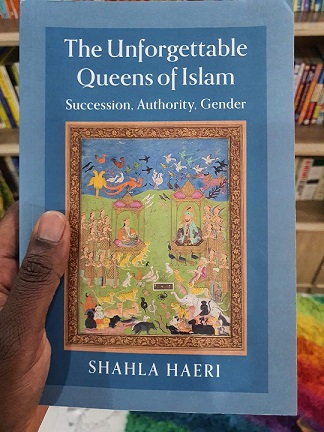
Book Review: The Unforgettable Queens of Islam

By Dr Shamsuddeen Sani

It’s very easy to ignore this book. Underrate it even. I found myself rereading it for many days, given the enormous importance of the topic, especially in the contemporary discourse in Muslim-majority countries about woman’s leadership. Being a recent publication in 2020, and although the author didn’t explicitly state it, it appears to be building to improve upon earlier work by the late Moroccan feminist writer and sociologist Fatima Mernessi with her book, The Forgotten Queens of Islam.

Shahla Haeri embarks on a journey of gendering the historical narrative of sovereignty and political authority in the Muslim world, shedding light on the lives of Muslim women leaders who defied the norms of dynastic and political power to rise as sovereigns in their deeply patriarchal societies.

The author’s usage of the term “queen” is not meant to be taken literally for all six prominent figures discussed in the book but rather to signify their immensely influential leadership roles during their respective eras. While recognising the significant impact of numerous women in Islamic history who exerted influence behind the scenes, Haeri emphasises those women who stood at the forefront of the political machinery, actively engaging with the structures of authority and power.

She doesn’t just relay the historical milestones of these great women in historical Islam but brings in a fresh perspective on how we look at the concept of women’s leadership in the Islamic tradition. The author situates women rulers’ rise to power within three interrelated domains: kinship and marriage, patriarchal rules of succession, and individual women’s charisma and popular appeal.

This book prompts deep contemplation on patriarchy within the pre-modern normative Islamic tradition. But one needs to be careful because the author appears to be overly problematising patriarchy in some instances significantly beyond what we consider as would have been normal in pre-modern Islam. She did allude, however, to the critical role of men in women ascending to positions of political authority. 

Structurally, this book has a Preface and Introduction and is broken into three main parts with two body chapters. Part I, Sacred Sources of Authority: The Qurʾan and the Hadith, lays the background for her accounts, with a deep examination of the primary sources of the Qurʾan and hadith, through the Qurʾanic story of the Queen of Sheba and the biography of the Sayyida Aisha (RA). Haeri relays the Quranic account of the dramatic encounter between King Solomon and the Queen of Sheba, popularly known as Bilqis. Drawing primarily from Tha’alabi and al-Tabari, the book cross-examines the sovereignty of Bilqis and connects the Quranic revelations with what she believes was the exegetes’ medieval patriarchal reconstructions.

Part II of the book is about Medieval Queens: Dynasty and Descent. In Chapter 3, the book explores the leadership life of the long reign of the Ismaili Shiite Yemeni queen. It examines Queen Arwa’s fascinating political acumen and how she survived the political and power succession tussle dealing with the 3 Fatimid caliphs of Cairo. Chapter 4 examines the short sovereign rule of the only female sultan of the 13th century Delhi Sultanate, Razia Sultan: ‘Queen of the World Bilqis-i Jihan. 

The 3rd part of the book, which explores the contemporary Queens and examines the institutionalisation of succession, provides an in-depth look at Benazir Bhutto and Megawati Sukarnoputri but will not spoil more here for the interesting details in the book.

Haeri concludes this work of ethnohistory which is deeply personal as she peppers in the concept of the “paradox of patriarchy,” which refers to the historical tradition of power succession among men, particularly fathers and sons, or even brothers, whose family ties legitimise the customary transfer of power. She quickly alludes that the relationship between fathers and sons can be a source of tension and rivalry, where they may fear, resent, or even seek to eliminate each other. In contrast, father-daughter relationships tend to be more personally fulfilling and have fewer political consequences for the father. The preference of patriarchs for their daughters is not only driven by self-preservation but also by their recognition of their daughters’ talents and political astuteness.

Dr Shamsuddeen Sani wrote from Kano. He can be reached via deensani@yahoo.com.

Afflictions and Stitches

By Zee Aslam

The door slammed open to reveal a heart-touching moment of a mother struggling to discover her breath as she aimed to bring another life into the world. The birth of a baby is one of the world’s most wondrous and hazardous moments. 

Childbirth is a challenge, but it is undoubtedly one of life’s most rewarding events. As painful and fearsome as it may seem, the mother has this wonderful emotion overwhelming her as she awaits the arrival of her bundle of joy. 

Being a mother comes with lots of sacrifices. Your body figure will be altered, re-moulded, and your brain becomes addled as you are being re-programmed right from the womb swelling with pride down to experiencing the pain of labour. 

Pregnancy is exciting and scary all at the same time. Some days feel like a breeze, while others are just plain hard. However, the long nights with no sleep and mood swings are all worth it. 

Despite all the doctors, nurses, and loved ones in the room during childbirth, it is all about you, your body, and your child. It’s an incredible experience. It’s like uncovering a superpower you never realised you had. 

As she gasped for air while pushing out the baby, she looked around her and reminisced on the decision she took months back, which she never regretted once but still harboured doubts and fears. “What would become of this baby?” She asked herself. 

The cry of her little one signalled the beginning of a new life. She looked keenly as the nurse cleaned up her baby and placed him on her, wrapped in boundless passion. 

The aftermath of her decision just began. At night and when the hospital staff were distracted by an emergency, she stealthily sneaked out and walked miles away to a place where an orphanage was situated before dropping off the baby at the foot of a gate and then knocking at it. 

An elderly woman came out and was attracted to the baby’s cries. She stood halfway, staring at the innocent boy before she reduced her height and picked him up inside. The mother watching from afar, only wiped off tears as they streamed down her face. “That was the best she could do for her baby”. 

She travelled down memory lane to the path where some unknown men abducted, defiled and abused her. Then she thought she only paid the price of being an orphan roaming on the street, but now she knows better. 

Her life took a new turn and brought her to face its realities, she has just given away her soul and a piece of her heart to a total stranger, but she rests assured that her boy will grow up amidst other kids and be a better person. 

She calmly dragged her feet out of that street to what she called home and picked up the remnant from her shattered life, yearning to stitch them back together. 

If she could turn back the hands of time, she would. 

But since it’s beyond her control, she will only move on with her life and keep praying for the best to unfold into a piece. 

Transactional Relationship: The bitter truth

By Usama Abdullahi 

Our car got stuck in poky traffic when I was heading home after visiting our ailing mother at the National Hospital Abuja last night. The motion was really slow, and that instantly made me feel bored. Also, a young lady was sitting close to me, making annoying phone calls and eating popcorn. I looked at everybody in the car, and they were all engrossed in their smartphones except the driver, who remained focused while driving. So I brought out my phone, rushed to my gallery and played a Hollywood clip. That’s how I decided to kill my boredom.

While watching the clip on my phone, the young lady sitting next to me tapped me on the shoulder – indicating that she needed to talk to me. I felt her tapping but hesitated to turn until she tapped me again. 

This time I turned and stared at her curiously. She then asked if what I was watching was interesting. “Oh, yeah. It’s an interesting clip. Would you love to see it?” I asked. “Ah, no. I thought it was a movie”, she responded. After learning that what I was watching was just a clip and not a movie, she continued to make her phone calls. She’s holding an iPhone. Even though I didn’t see her face clearly, I could attest to her gorgeousness through the softness of her voice.

She was happily on the phone with her boyfriend when one of her broke guys called. Unluckily for him, she didn’t hang the call to attend to his call until she was done talking to the rich boyfriend. She didn’t even greet him when she finally picked up the broke guy’s call. Instead, she began to yell at him for not sending the money he had promised her the other day. I keenly listened to them till the very end. Mind you; I wasn’t eavesdropping because she put the phone on speaker. So, I did hear every single bit of their heated phone conversations.

I was disgusted by what she said to the broke guy. I pitifully imagined myself in his shoes. Although I’m hopeful that I will never be entangled in such a type of unavailing relationship, I felt and still feel for the poor guy.

This encounter has taught me a bitter lesson: how transactional relationships have become these days. Today, only a handful of women love their men unconditionally. Instead, most of them love their men because of their monetary status. I’m not saying that money doesn’t play a significant role in relationships. Of course, it does, but it’s saddening how some women have reduced relationships to lucrative businesses where they earn big money without even investing a dime.

And it’s equally saddening that some men, too, only entertain sexual relationships. This is why we are fast losing our modesty as a society. Any relationship sorely built on material gain is doomed to fail. Loyalty and patience are the most important things that usually keep a relationship going. Money cannot possibly keep your relationship afloat, but loyalty and patience can.

Usama Abdullahi writes from Abuja and can be reached via usamagayyi@gmail.com.

Women who sacrifice for other’s education

By Hajara Jaoji

Kudos to my paternal uncle (a family man) who cared for ten of us, including my mom, after our dad died in 2010. He ensured we had a sound, good life as if our late father were on earth. 

This story is about me, a young beautiful, under thirty years old single intelligent lady. I am the third in my family, with two older brothers, two younger brothers and four younger sisters.  I graduated from university and finished my youth service in 2020. I got a temporary job appointment (still on it) before,  during,  and after my youth service.

I used to help and take care of my siblings. Regarding education, I helped my eldest brother pay his professional exam fees. I also help my immediate older brother in pursuing his education at university. In addition, I covered all the expenses for the two junior brothers in their secondary school days. One is now a student at Aminu Kano College of Legal Studies (second year); the youngest brother recently graduated from secondary school and is looking forward to securing admission into the university for him. 

For the sisters, I took over my immediate younger sister’s expenses from my uncle. She’s a student at Bayero University, Kano (BUK). The other junior sister recently got admission to the School of Hygiene, Kano, while the two younger ones are secondary school students, and I still care for them all. 

Maturity is not by age but rather by the number of responsibilities one is able to shoulder. The best investment in life is to invest in human beings. I would rather walk around with old clothes and an old-fashioned phone, knowing that my siblings are busy getting qualitative education (modern and religious).

I  pray that God will increase my heart and bless my income so that I will help other non-blood-related orphaned children worldwide.

Hajara can be contacted via hajaraibrahimjaoji2019@gmail.com.

The rise of misandry to promote gynocentric agenda

By Abdullahi Yusuf

The agitation for gender equality could be dated back to the beginning of the 18th century when Mary Wollstonecraft wrote her book titled A vindication of the right of woman, in which she argues for women’s right to education. The issue rose to cosmopolitan through the 18th and 19th centuries when women from different parts of the world began to advocate for gender equality and fight against any act they considered as oppression against women by their opposite gender. They aggressively campaign against patriarchy – admonish it and call for its total abolition.

The central themes of most of their campaigns, as they usually proclaim, are centred around fighting against gender stereotypes and gender-based violence. And also seek equal opportunities as men, and women’s education, among others. They perceived women as being oppressed since the inception of humanity.

But unfortunately, the moral justification of this ideology puts men at a disadvantage. They consistently receive backlash as a predicament of these struggles. Those ardent advocates always consider men as oppressors, narcissists, egoists and self-centred, which causes all the misfortunes in women’s lives. This makes women that are adamant about this ideology highly androgynous.

Androphobia has become part of the ideology per se because most of those promoting it display one aspect of man-hating or the other. The radical ones among them tend to even distance themselves from any intersexual relationship due to their adamant stand on ideology. Do women who do not believe in this ideology have anything to lose? Why are many women against this ideology, and some even consider it evil?

According to major religious beliefs and scientific views about creation, almost all living things are created in pairs (i.e. male and female). The disparity is primarily because of reproduction. Therefore, females alone cannot reproduce without their male counterparts. Contemporarily, in this technologically advanced world, there are certain procedures that some women adopt to conceive without the physical involvement of men in the process. Still, regardless, man has to contribute in one way or the other along the way. That’s in the case of reproduction alone.

Human beings are created with inadequacies. Men tend to be physically stronger than women and can cope with the stressors of life more than women. Women, on the other hand, are meant to be more compassionate than men. They can better take care of the responsibilities of others without being stressed. That is why they tend to play a more significant role in the upbringing of children. Coming together of man and woman to form a family has never been a mistake, but rather to fill up the inadequacies of one another and form a society where morality is respected.

Unfortunately, marriage is the first institution destroyed by those promoting gynocentrism. That is why there is a high increase in the rate of single mothers in the developed world, negatively affecting the upbringing of children and victimising women by increasing the level of their responsibility to the children. Broken homes are mostly a predicament because of this ideology that usually renders many men homeless and distances them from their children.

Suicide among men has been on the rise, caused mainly by judgement issues by family courts in developed countries. The legal system has been tempered to favour women in matrimonial cases, which promotes gynocentrism. Men are being oppressed and victimised worldwide, but sadly, nobody talks about it.

Many rape cases where men were held responsible are just false accusations from women to get revenge for what might have occurred between them. Severally, men have been traumatised mentally over allegations of rape cases against them that have not happened. Men face a series of domestic violence. Many men were sexually molested during their childhood by elderly women, which perverted them in their old age. Men are being oppressed on several occasions by women, but nobody is standing for men, and nobody is advocating for men’s rights.

The equality that promotes gynocentrism advocate is subject to women’s superiority. You’ll be tagged as a misogynist when you talk to them about equality that will strike a balance between men and women.

Injustice can be found everywhere, across gender, race, tribe, etc. There’s no monopoly when it comes to justice or injustice. Anybody can oppress and can be oppressed. Therefore, try to be objective in your approach when calling for equality or justice. Nobody will deny you the right to advocate for your rights, but don’t be unjust in trying to find justice. Know your position in society and respect your social obligations and that of others.

Abdullahi Yusuf is a 400-level student of Health Education at Bayero University Kano. He can be reached via abdoolphd@gmail.com.