US

Russia sends humanitarian aid to Iran amid war with US, Israel

Russia has delivered humanitarian assistance to Iran as tensions continue in the Middle East during the ongoing conflict involving the United States and Israel.

The development emerged from a statement shared by the Russian Embassy in Kenya through its official X account. The embassy indicated that Russia had become “the first country to send humanitarian aid to Iran” since the crisis intensified.

According to the statement, an aircraft transported medical materials meant to reach Iranian authorities through a neighbouring country. The embassy explained that the supplies were first delivered to Azerbaijan for onward transfer.

“An Il-76 aircraft delivered more than 13 tons of medical supplies to Azerbaijan which will assist in transferring it to the Iranian authorities,” the post said.

The embassy described the shipment as “first aid & medical supplies” intended to support civilians in Iran during the current conflict.

The humanitarian move follows earlier diplomatic engagement between Moscow and Tehran. Russian President Vladimir Putin recently sent a message to Iran’s new supreme leader, Mojtaba Khamenei, after his emergence as the country’s leader.

In a message released by the Kremlin and cited by Al Jazeera, Putin congratulated Khamenei and expressed confidence in his leadership at a time of mounting international pressure on Iran.

The Kremlin stated that the Russian president commended Khamenei’s potential to lead the country and referred to the legacy of his father. Putin said he believed the new leader would maintain the direction previously set for Iran.

Putin also said he was confident Khamenei would continue his father’s work “with honour” and unite the Iranian ⁠people “in the face of ⁠severe trials”.

He used the message to reiterate Russia’s close ties with Iran. Putin said Moscow would maintain its partnership with Tehran and added that he wished to “confirm unwavering support for Tehran ‌and solidarity with our Iranian friends.”

The Kremlin statement came at a time when hostilities between Iran and the United States-Israel alliance continue to raise global concern.

Russia and Iran have strengthened cooperation in recent years. Their partnership covers areas such as energy, security coordination and diplomatic engagement on international matters.

The aid delivery also follows a decision by the United States to ease restrictions on Iran’s oil exports. Washington said the measure aimed to reduce pressure on global crude oil prices amid disruptions linked to the Middle East conflict.

Iran’s strategic mastery: Why Tehran is poised to emerge victorious in the war against Israel and the US

By Dr. Umar Musa Kallah

As the US-Israeli war against Iran enters its second week, the initial narrative of a rapid Western triumph has collapsed. What began with coordinated strikes on Iranian leadership and infrastructure has instead unleashed a sophisticated Iranian counter-campaign rooted in decades of preparation, control of global chokepoints, and asymmetric warfare. Verifiable maritime data, energy market reports, and military analyses confirm that Iran is not merely holding ground, it is systematically eroding the economic foundations of American power and its Gulf allies.

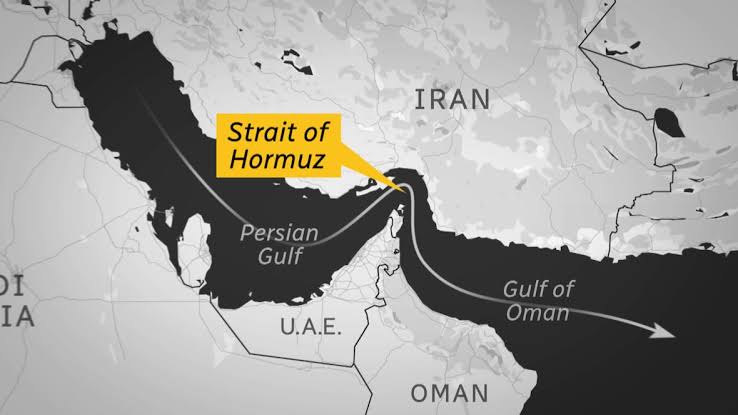
The closure of the Strait of Hormuz stands as Iran’s most potent immediate weapon. Since Iran’s declaration and attacks on transiting vessels in early March 2026, shipping traffic has effectively halted, with oil and LNG flows, representing roughly 20% of global trade is severely disrupted. Global crude prices have spiked, insurance markets have pulled coverage, and Asian importers face acute shortages. This is no bluff: tanker tracking and satellite imagery show near-total cessation of commercial traffic, directly strangling revenues for US-aligned Gulf states.

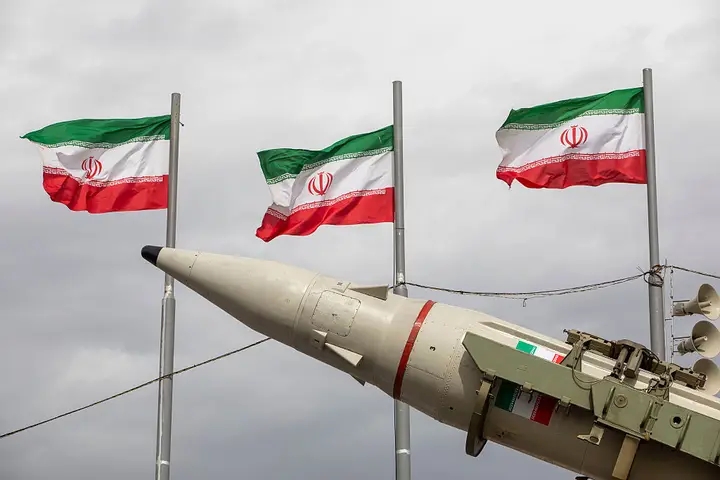
Tehran has complemented this blockade with hundreds of ballistic missiles and drones targeting US military installations and infrastructure across Bahrain, Qatar, Kuwait, the UAE, and Saudi Arabia. Strikes have damaged communication systems, radar sites, and air bases, including the US Fifth Fleet headquarters and Al Udeid Air Base. The cost asymmetry is telling: cheap Iranian drones and missiles exhaust multimillion-dollar Western interceptors at a pace that cannot be sustained indefinitely.

Iran has also struck desalination plants and power infrastructure critical to Gulf freshwater supplies. With over 90% of drinking water in several Gulf nations dependent on energy-intensive desalination, these targeted hits are creating humanitarian pressure and accelerating economic paralysis. By weaponizing both energy exports and water security, Tehran is holding civilian populations and regional economies hostage.

This economic siege directly undermines the Gulf sovereign wealth funds that have bankrolled much of America’s AI boom. Saudi Arabia’s Public Investment Fund and Abu Dhabi’s Mubadala have channeled tens of billions into US tech, data centers, and AI ventures. With oil revenues frozen, airspace closed, and infrastructure under fire, these funds are already curtailing new commitments to American projects. The resulting capital drought threatens Silicon Valley valuations and risks triggering a broader stock-market correction, a strategic blow at the heart of US technological supremacy.

None of this is improvised. Iran has spent decades building precisely this capacity: an estimated pre-war arsenal of thousands of ballistic missiles, mass-produced drones, and resilient proxy networks designed for attrition warfare. Its high-ranking scientists and engineers have indigenously advanced these systems through reverse-engineering and innovation, often drawing on historical technological exchanges. Battle-hardened IRGC commanders , seasoned warlords operating with decentralized command, coordinate the response, while a population of over 90 million, tempered by generations of sanctions and pressure, demonstrates profound civilizational resilience and refusal to surrender easily.

This internal steel is coupled with broader strategic depth from longstanding partnerships. Russia, China, North Korea, and Pakistan have provided diplomatic condemnation of the US-Israeli aggression, alongside decades of technological collaboration in missiles, drones, and defense systems that now equip Iran to endure. While direct military intervention has been limited, these ties  combined with Iran’s own preparations will ensure sustained resistance that outlasts Western political will and munitions stockpiles.

The world now faces Tehran’s calculated endgame: choking global energy arteries, disrupting vital water supplies, and redirecting Gulf capital away from American innovation. Every day of blockade, every intercepted drone salvo, and every sign of Iranian societal cohesion deepens the strain on Washington and its partners. Iran did not stumble into this conflict; it prepared for it across a lifetime of strategic patience. As oil prices climb, water crises intensify, AI investments falter, and resilient Iranian forces continue to dictate the tempo, the balance of power is shifting decisively.

The verifiable data from shipping trackers, strike assessments, and resilience analyses  is clear: Iran is not on the defensive. It is leveraging geography, technology, alliances, and unbreakable national will to hold the world ransom. Tehran is on course to prevail.

Dr Umar Musa Kallah, a writer and community advocate, can be reached via yakubunasirukhalid@gmail.com.

US military refueling aircraft crashes in Western Iraq

By Sabiu Abdullahi

A United States military refueling aircraft has crashed in western Iraq, the US Central Command confirmed on Thursday, saying the incident involved another aircraft but was not caused by hostile or friendly fire.

In a statement, the command said rescue operations were underway after the KC-135 refueling aircraft went down during a mission. It added that the second aircraft involved in the incident landed safely.

“The incident occurred in friendly airspace during Operation Epic Fury,” the statement said, referring to the military operation name for the US campaign against Iran.

A US official who spoke on the condition of anonymity said the second aircraft was also a KC-135. The official added that up to six service members were on board the aircraft that crashed.

Meanwhile, the Islamic Resistance in Iraq, a coalition of Iran-backed armed groups, claimed responsibility for bringing down the aircraft.

In a statement, the group said it had shot down the KC-135 aircraft “in defense of our country’s sovereignty and airspace”.

The KC-135 tanker aircraft was produced by Boeing in the 1950s and early 1960s. It has remained a key part of the US military’s aerial refueling fleet. The aircraft allows combat planes to continue missions without the need to land for fuel.

The latest incident comes as fighting continues between the United States, Israel, and Iran. Since the US and Israel began strikes on Iran on February 28, seven American troops have been killed.

Reuters reported earlier this week that up to 150 US troops have been wounded in the conflict.

On the same day as the crash, two US sailors were also injured after a fire broke out aboard the USS Gerald Ford. Officials said the fire was not related to combat.

Overall, the war has claimed more than 2,000 lives so far, including nearly 700 people in Lebanon.

Pentagon under pressure over deadly strike on Iranian girls’ school

By Sabiu Abdullahi

The United States military is examining reports that outdated intelligence may have led to a missile strike that hit a girls’ school in southern Iran, an attack that reportedly killed about 170 children and 14 teachers.

Iranian state media said the strike occurred on Feb. 28 in the city of Minab. The school is located close to an Iranian naval base. The incident has drawn strong condemnation from several countries and international observers.

According to a report, investigators found fragments of an American-made Tomahawk missile at the scene. Officials familiar with the inquiry told the New York Times that the US Central Command generated the strike coordinates using old information obtained from the Defence Intelligence Agency.

The sources explained that the data used for the operation had not been updated before the strike took place. They added that investigators are still trying to determine why the information was not verified again before the missile was launched. They also noted that the inquiry is still at an early stage.

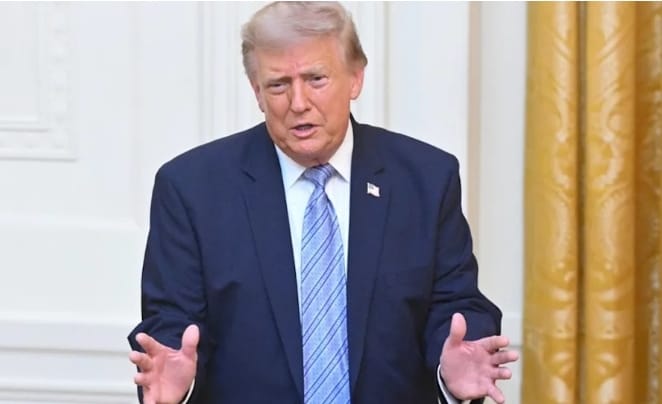
US President Donald Trump initially suggested that Iran might have been responsible for the attack. Speaking on Saturday, he said he believed Iran carried out the strike “based on what I’ve seen”.

However, two days later he appeared less certain. He said the attack could have been carried out by “Iran or somebody else”. He also described the Tomahawk missile as “very generic” and “sold to other countries”. He added: “I just don’t know enough about it.”

Iran is not believed to possess Tomahawk missiles. Apart from the United States, the weapon is also used by Britain, Australia and the Netherlands.

Meanwhile, Republican Senator John Kennedy, a close ally of Mr Trump, apologised for the incident on Monday. He described the strike as a serious mistake.

He said: “Other countries do that sort of thing intentionally, like Russia. We would never do that intentionally.

“I think the department is investigating it now, and I’m sorry. I’m just so sorry it happened.”

The development came amid reports that US Defence Secretary Pete Hegseth had recently dismissed staff members responsible for reducing civilian casualties before the strike occurred.

Reports said Mr Hegseth significantly reduced the workforce of the Civilian Protection Centre of Excellence. The agency was created under former defence secretary Lloyd Austin to prevent and investigate harm to civilians during military operations.

Although the centre cannot be abolished because it was established by an act of Congress, about 90 per cent of its staff have been removed, according to Politico.

The unit responsible for monitoring civilian casualties at the US Central Command, which oversees military operations in the Middle East, has also been reduced. Its staff dropped from ten personnel to just one.

Mr Hegseth has also introduced major changes to policies inside the Pentagon. He argues that several existing rules weaken the military’s effectiveness.

In a speech last September, he said: “We untie the hands of our warfighters to intimidate, demoralise, hunt and kill the enemies of our country.

“No more politically correct and overbearing rules of engagement, just common sense, maximum lethality and authority for warfighters.”

Amnesty International condemns DSS arrest, detention of X user for allegedly criticising US, Israel amidst Middle East war

By Sabiu Abdullahi

Amnesty International has criticised the detention of Sani Waspapping by the Department of State Services (DSS), describing the arrest as arbitrary and calling on Nigerian authorities to respect the rule of law.

Waspapping was arrested in Kaduna on Friday. He has remained in DSS custody since then. Reports indicate that he has not been granted access to his family members or legal representatives.

Many observers believe the arrest may be connected to posts he made on social media about the ongoing war in the Middle East.

According to available information, Waspapping is the second person detained by the DSS in connection with discussions about the current Middle East crisis.

Some social media users have also expressed the view that his arrest may be linked to his criticism of the United States and Israel as well as posts seen as supportive of Iran.

However, authorities have not publicly confirmed that this was the reason for his detention.

Amnesty International also urged Nigerian authorities to follow due process in handling the case.

“The Nigerian authorities must abide by the rule of law at all times — including in the case of Sani Waspapping. He must be provided with prompt access to family and adequate legal assistance, charge him to court or release him from detention immediately.”

Iran claims American soldiers captured, US denies report

A senior Iranian security official, Ali Larijani, has alleged that Iranian forces captured several American soldiers. However, the United States military has rejected the claim and described it as false.

Larijani made the claim on Saturday in a post on X. He accused Washington of attempting to conceal the alleged incident.

“It has been reported to me that several American soldiers have been taken prisoner. But the Americans claim that they have been killed in action,” Larijani wrote.

He also insisted that the truth would eventually emerge. “Despite their futile efforts, the truth is not something they can hide for too long.”

The United States Central Command (CENTCOM) quickly dismissed the allegation. A spokesperson for the command told Al Jazeera that no American soldiers had been captured.

“The Iranian regime’s claims of capturing American soldiers are yet another example of its lies and deceptions,” the spokesman said.

The exchange of claims and denials comes at a time of heightened tensions in the Middle East. The situation worsened after joint air strikes carried out by the United States and Israel on Iran on February 28. Reports indicate that the attacks killed more than 1,000 people. Those reported dead include Iran’s Supreme Leader Ali Khamenei, over 150 schoolgirls and several senior military officials.

The conflict has increased instability across the region. Tehran has also carried out retaliatory attacks on locations linked to the United States in several parts of the Middle East.

Italy will honour US base agreements but won’t join war, says PM Meloni

By Sabiu Abdullahi

Italian Prime Minister Giorgia Meloni has stated that her country will continue to respect existing agreements that allow the United States to use military bases located in Italy.

However, she stressed that Italy has no intention of taking part in the ongoing war involving Iran.

Meloni spoke on Thursday during an interview on an RTL radio programme. She said the Italian government had not received any request from the United States to use its bases for military action against Iran.

“Today we have no such request and I want to say that we are not at war and we do not want to enter a war,” she said.

The prime minister explained that the agreements between Italy and the United States date back to 1954. According to her, these arrangements permit certain logistical activities and operations that do not involve direct combat.

“These are technical authorisations when we are clearly talking about logistics and so-called non-kinetic operations – simply put, operations that do not involve bombing,” she said.

Meloni also noted that if Washington later seeks approval to use Italian bases for combat operations, the government would first consult the country’s parliament before making any decision.

She expressed concern about the growing tension in the Middle East and warned that the conflict could widen. According to her, the situation carries “a risk of escalation that could have unpredictable consequences.”

Italy, alongside the United Kingdom, France and Germany, is also considering sending defensive assistance to countries in the Gulf region. Meloni said the step is intended to protect tens of thousands of Italian citizens living there, as well as about 2,000 Italian troops stationed in the region.

The Italian leader described the Gulf area as important to global energy supply and warned that the ongoing crisis could affect Italy’s economy.

She said the government was monitoring energy costs and food prices. Authorities, she added, would take action to prevent companies from taking advantage of the situation by raising prices unfairly.

The current tensions began after the United States and Israel launched a major military offensive against Iran last Saturday. Reports indicate that at least 926 people have been killed, including Iran’s Supreme Leader Ali Khamenei and several senior military officials.

Iran has responded with missile and drone attacks targeting Israel as well as Gulf states that host United States military assets.

Cristiano Ronaldo leaves Saudi Arabia for Spain amid rising tensions in Riyadh

By Sabiu Abdullahi

Portuguese football star Cristiano Ronaldo has reportedly departed Saudi Arabia for Madrid, Spain, as security concerns mount in the region following recent military action involving the United States and Israel.

Ronaldo, who serves as captain and forward for Al-Nassr FC, left Riyadh late at night aboard his £61million ($81million) Bombardier Global Express 6500 private jet. The UK Daily Mail disclosed the development on Tuesday.

His relocation followed coordinated strikes carried out by the United States and Israel in Iran on February 28, 2026. The operation reportedly led to the deaths of several senior Iranian figures. Iranian state media announced on March 1 that Supreme Leader Ali Khamenei had been killed. Authorities declared 40 days of mourning and introduced a seven-day public holiday.

The security situation in the Gulf region deteriorated after two drones hit the United States Embassy in Riyadh overnight.

The Saudi Ministry of Defence said, “A limited fire broke out at the United States Embassy in Riyadh after it was hit by two drones,” adding that the strike caused “minor material damage.”

According to the Daily Mail, “Riyadh, where Ronaldo lives with his partner Georgina Rodriguez and their five children, has been affected by attacks linked to the regional conflict.”

Flight tracking service Flightradar24 reported that the aircraft “departed Riyadh at 8:00 pm and arrived in Madrid at almost 1:00 am, flying a path over Egypt and the Mediterranean.”

Ronaldo’s exit occurred as Washington intensified security steps across the Middle East in response to the unfolding crisis. The U.S. Department of State announced temporary closures of embassies and the suspension of consular services in several countries due to heightened safety concerns tied to the expanding Iran conflict.

In Saudi Arabia, the U.S. Embassy in Riyadh halted both routine and emergency services across its missions in Riyadh, Jeddah and Dhahran.

In neighbouring Iraq, nonemergency American government personnel received orders to exit the country. U.S. staff also faced restrictions from using Baghdad’s international airport.

Kuwait recorded deadly incidents involving American forces. Six soldiers lost their lives, and three fighter jets crashed in what the U.S. military described as an “apparent friendly fire” episode.

The unfolding developments have heightened uncertainty across the region, with governments implementing precautionary measures as tensions persist.

Iran clarifies it is at war ith US, Israel, not Gulf nations

By Sabiu Abdullahi

Iran has clarified that it is engaged in conflict with the United States and Israel, not with any countries in the Gulf region.

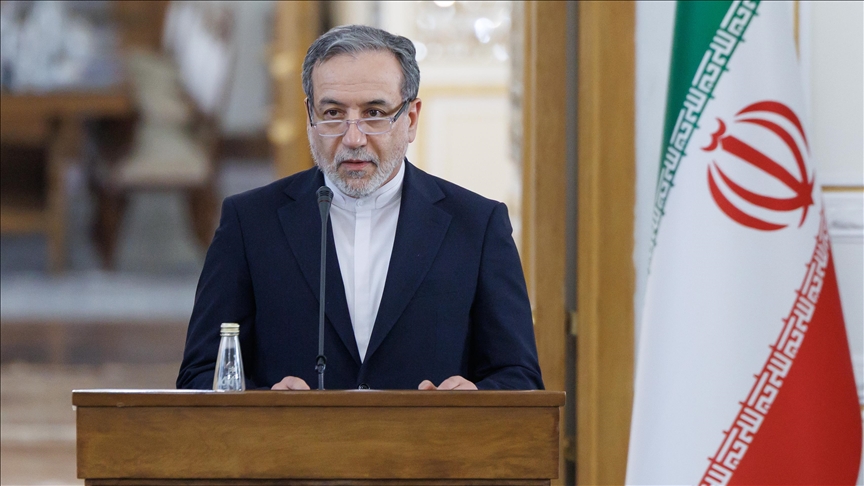
Speaking on Monday, Iranian Foreign Minister Seyed Abbas Araghchi said, “We’re not attacking our neighbours, we’re attacking US military bases. US soldiers fleeing to hotels will not prevent them from being targeted.” His remarks come amid ongoing US and Israeli strikes on Iranian positions, and retaliatory Iranian attacks on American and Israeli interests in the Middle East.

Al Jazeera reports that Iran accused the US of “betraying diplomacy” by launching attacks during ongoing negotiations. Araghchi also urged Gulf nations to pressure Washington to halt its military actions against Iran.

The Iranian minister emphasized that US military installations, including those located within Gulf countries, and facilities housing American troops, are considered legitimate targets.

For the third day in a row, loud explosions were reported in Dubai, UAE, and Qatar as Iran continues to respond to US and Israeli attacks. Bloomberg notes that both the UAE and Qatar have been quietly appealing to international allies to encourage President Trump to pursue a diplomatic solution instead of extending the conflict.

Qatar warned that ongoing disruptions to regional shipping could further drive up global natural gas prices. The country also announced that it intercepted two Iranian fighter planes, along with missiles and drones, which had entered its airspace. Gulf nations have pledged to continue defending their territories.

Meanwhile, the conflict between Israel and Hezbollah continues to escalate as both sides exchange attacks.

US marines fired at protesters during Karachi Consulate breach: Reuters

United States Marines opened fire during last weekend’s assault on the US consulate in Karachi, according to a report by Reuters that cited two American officials.

The report represents the first confirmation that Marines discharged weapons as protesters forced their way into the diplomatic compound.

The officials told Reuters that it remains uncertain whether any of the rounds fired by the Marines hit or killed members of the crowd. They also said they could not confirm if additional shots were fired by other personnel assigned to guard the facility, including private security contractors and local police officers.

At least 10 people lost their lives during the unrest, after demonstrators broke through the outer wall of the consulate complex.

A spokesman for the provincial government, Sukhdev Assardas Hemnani, stated that “security” personnel had opened fire. He did not clarify which security force was responsible.