US

Iran Players Honour Schoolgirls Killed By US/Israel Airstrike Before Friendly With Nigeria

By Sabiu Abdullahi

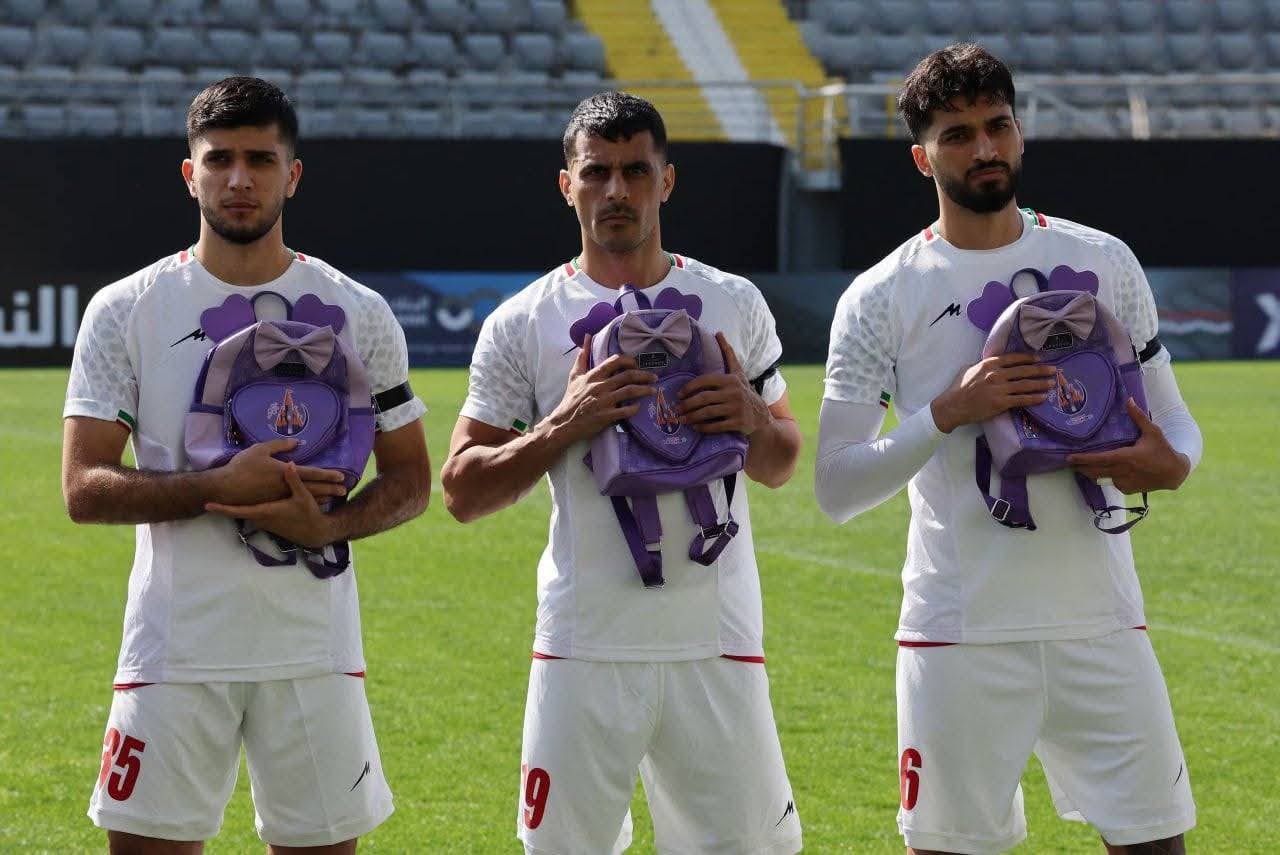
Members of Iran’s national football team staged a solemn tribute to schoolgirls who lost their lives in an airstrike amid the country’s ongoing conflict with the United States and Israel.

The gesture took place on Friday before an international friendly match against Nigeria at the Mardan Titanic Sports Complex in Antalya. Iranian players entered the pitch carrying school bags to symbolise the children killed in the attack.

The tribute followed a deadly incident on February 28, when a US/Israel missile struck Shajareh Tayyebeh Primary School in Minab, located in Hormozgan province. Authorities in Tehran reported that more than 175 people, including pupils and teachers, died in the bombing.

The attack marked the start of a broader conflict that has since claimed over 2,000 lives. The situation also forced Iran to pull out of the upcoming FIFA World Cup, which is scheduled to be hosted by the United States, Mexico and Canada.

In the match itself, Nigeria’s Super Eagles secured a 2-1 victory over Iran. Moses Simon and Akor Adams scored the goals for Nigeria.

Nigeria is expected to face Jordan in its next game on Tuesday. Iran will take on Costa Rica in its final fixture of the international window.

UN Security Council to Hold Talks Over Iran War Friday

By Anwar Usman

The United Nation Security Council will hold closed-door consultations on Friday to discuss strikes on Iran at Moscow’s request, Russian state media reported, as the Middle East war nears its second month.

Iran has come under near-daily bombardment since US-Israeli strikes on February 28 triggered the war, which has since widened to large parts of the region.

According to state news agency TASS, spokesman for Russia’s envoy to the United Nations, Evgeny Uspensky, said “The Russian Federation has requested closed-door consultations with the UN Security Council due to the ongoing strikes on civilian infrastructure in Iran, including educational and healthcare facilities.”

A strike on the first day of the war hit a school in the southern Iranian city of Minab, killing more than 160 children, according to authorities.

Reports from the US military investigation by The New York Times indicated that a US Tomahawk cruise missile had hit the school due to a targeting mistake.

The United States, which holds the Security Council presidency this month, scheduled the meeting for 10:00 am in New York (1400 GMT), according to TASS.

The US-Israeli military campaign has targeted Iranian leadership, missile sites and military infrastructure, prompting a large-scale Iranian retaliation across the Gulf and the effective closure of the crucial Strait of Hormuz, through which a fifth of global crude and liquefied natural gas passes during peacetime.

AFP reports that, the UN Human Rights Council will hold a separate meeting on Friday in Geneva focused on the deadly school strike.

Iran Rejects U.S. Ceasefire Proposal, Sets Conditions For Ending War

By Sabiu Abdullahi

Iran has turned down a ceasefire proposal from the United States, stressing that the ongoing conflict will only end based on its own terms and after certain conditions are satisfied.

In a statement released through the Consulate General of the Islamic Republic of Iran in Mumbai, the country outlined its position on the war. It said any ceasefire must come with clear commitments. These include an end to hostilities, payment of war damages, and recognition of its authority over the Strait of Hormuz.

A senior political-security official, cited in the statement, made it clear that Tehran would not accept any timeline imposed by the United States.

“Iran will end the war at a time of its own choosing and only if the conditions it has set are fulfilled. It will not allow Trump to determine the timing of the war’s end,” the official said.

The statement also disclosed that the United States had reached out through diplomatic channels with proposals for talks. However, Iran rejected the move and described it as misleading. It claimed the approach contradicts what it called a U.S. setback on the battlefield.

“Iran has evaluated these proposals… and considers them a deception aimed at escalating tensions,” the source added.

Tehran accused Washington of using negotiations in the past as a cover for military action. It insisted that any future agreement must include a “complete end to aggression and acts of assassination,” along with guarantees to prevent a repeat of the conflict. It also called for compensation for damages caused by the war.

In addition, Iran demanded a ceasefire that would apply across the region, including all allied groups. It also reaffirmed its “natural and legal right” to sovereignty over the Strait of Hormuz, a key global oil route.

“Iran has informed all mediators acting in good faith that a ceasefire will only take place once its conditions are accepted; until then, no negotiations will be conducted,” the statement said.

This development is expected to heighten tensions between Tehran and Washington. It follows earlier remarks by former U.S. President Donald Trump, who suggested that discussions were ongoing and that Iran was open to reaching an agreement.

Iranian officials have repeatedly denied such claims. Military spokesman Ebrahim Zolfaqari had earlier dismissed the U.S. position and stated that no direct negotiations were taking place.

Despite increasing calls from the international community for calm, both sides have maintained firm positions. Missile exchanges and airstrikes have continued across several fronts, prolonging the conflict.

Switzerland Suspends Arms Exports To US Over Iran War

Switzerland has halted the approval of licences for weapons exports to the United States due to the ongoing conflict involving Iran, citing its policy of neutrality.

The Swiss government announced the decision on Friday. It said the measure would remain in place for the duration of the war.

“The export of war materiel to countries involved ⁠in the international armed conflict with Iran cannot be authorised for the duration of the conflict,” the government said.

“Exports of war materiel to the USA ‌cannot currently be authorised,” it added.

The development comes as the US-Israel war on Iran approaches its third week. The conflict has worsened the humanitarian situation across the Middle East and pushed global energy prices higher.

Swiss authorities have also shut their airspace to US military flights connected to the war. Last weekend, officials rejected two requests from the US for overflight linked to Iran operations, although three others were approved.

Switzerland’s neutrality law guides decisions on arms transfers. A federal act adopted in 1996 requires export licences for military equipment. The law is based on respect for human rights and the country’s neutral stance.

Since the war began on February 28, Switzerland said it has not issued any new export licences to the United States.

The government noted that it has not granted definitive licences for arms exports to Israel for several years. The same position applies to Iran.

Existing licences issued to the US will now undergo periodic review by a panel of experts. The group will assess whether further action is needed under neutrality rules.

Officials also confirmed that exports of dual-use goods and certain military items will face regular checks.

“A restrictive approach is already in place with regard to Israel,” the government said.

Data from Swiss authorities show that the United States was the second-largest buyer of Swiss arms last year. The total value of exports stood at $119 million.

Switzerland has taken similar steps in the past. It blocked the transfer of Swiss-made weapons to Ukraine after Russia’s invasion in 2022. It also imposed restrictions on flights and arms exports during the US-led Iraq war in 2003, although those measures were later lifted.

Switzerland Suspends Arms Exports To US Over Iran War

Switzerland has halted the approval of licences for weapons exports to the United States due to the ongoing conflict involving Iran, citing its policy of neutrality.

The Swiss government announced the decision on Friday. It said the measure would remain in place for the duration of the war.

“The export of war materiel to countries involved ⁠in the international armed conflict with Iran cannot be authorised for the duration of the conflict,” the government said.

“Exports of war materiel to the USA ‌cannot currently be authorised,” it added.

The development comes as the US-Israel war on Iran approaches its third week. The conflict has worsened the humanitarian situation across the Middle East and pushed global energy prices higher.

Swiss authorities have also shut their airspace to US military flights connected to the war. Last weekend, officials rejected two requests from the US for overflight linked to Iran operations, although three others were approved.

Switzerland’s neutrality law guides decisions on arms transfers. A federal act adopted in 1996 requires export licences for military equipment. The law is based on respect for human rights and the country’s neutral stance.

Since the war began on February 28, Switzerland said it has not issued any new export licences to the United States.

The government noted that it has not granted definitive licences for arms exports to Israel for several years. The same position applies to Iran.

Existing licences issued to the US will now undergo periodic review by a panel of experts. The group will assess whether further action is needed under neutrality rules.

Officials also confirmed that exports of dual-use goods and certain military items will face regular checks.

“A restrictive approach is already in place with regard to Israel,” the government said.

Data from Swiss authorities show that the United States was the second-largest buyer of Swiss arms last year. The total value of exports stood at $119 million.

Switzerland has taken similar steps in the past. It blocked the transfer of Swiss-made weapons to Ukraine after Russia’s invasion in 2022. It also imposed restrictions on flights and arms exports during the US-led Iraq war in 2003, although those measures were later lifted.

US Intel Chief Says Iran Posed No Nuclear Threat At Time Of Strikes

By Sabiu Abdullahi

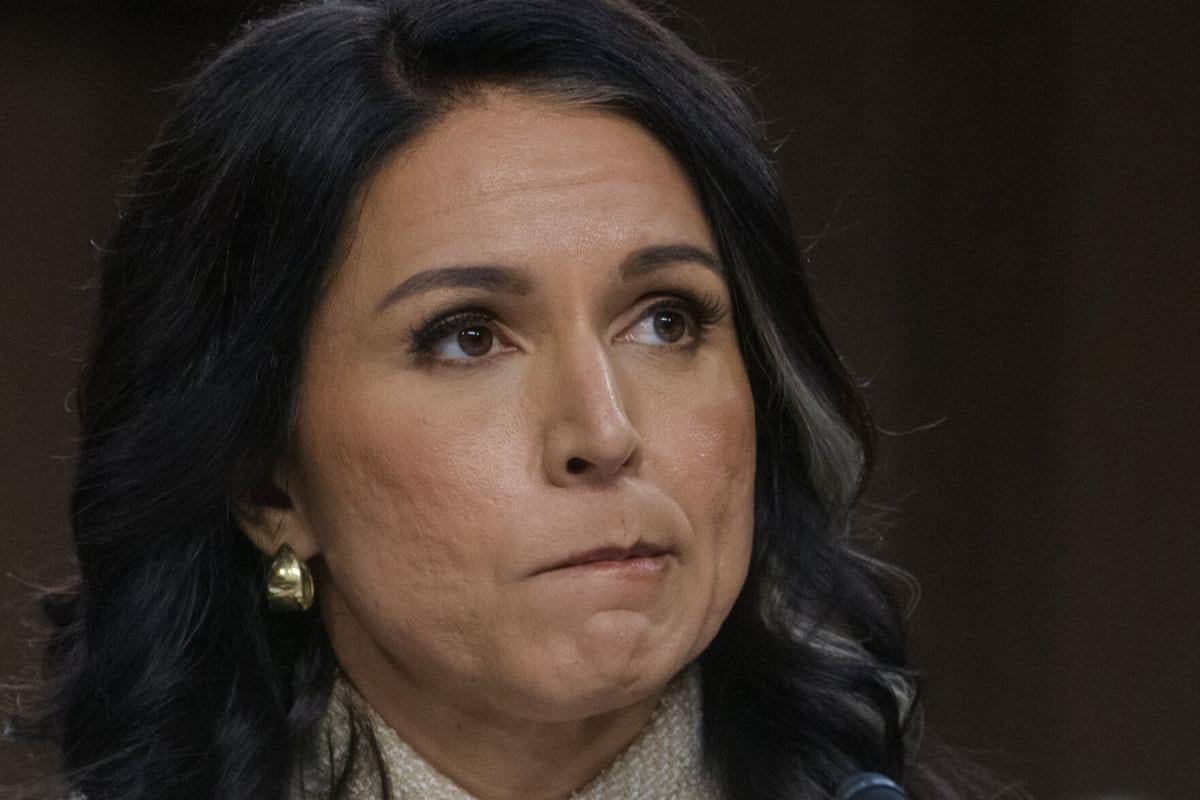
The United States Director of National Intelligence, Tulsi Gabbard, has stated that Iran did not present an active nuclear threat at the time American forces carried out strikes on the country.

Her position challenges a key reason advanced by former President Donald Trump for the military action. Mr Trump had cited what he described as an imminent danger from Iran.

In written testimony submitted to the Senate intelligence committee, Ms Gabbard said Iran had not taken steps to rebuild its nuclear programme after it was damaged in a joint US-Israeli operation in June 2025.

“As a result of Operation Midnight Hammer, Iran’s nuclear enrichment program was obliterated. There have been no efforts since then to try to rebuild their enrichment capability,” Ms Gabbard said in the testimony to the Senate intelligence committee.

However, she did not include this conclusion in her oral presentation to lawmakers. When questioned by a Democratic senator, she explained that time constraints prevented her from presenting the full contents of her written submission. She did not dispute the findings.

Mr Trump has repeatedly defended the strikes, insisting they were necessary due to an “imminent threat” from Iran. After the operation in June 2025, he said US forces had “obliterated” Iranian nuclear facilities. He later claimed the country was only weeks away from producing a nuclear weapon.

Many analysts have disagreed with that assessment. Their views also contrast with ongoing diplomatic efforts aimed at restoring a nuclear agreement with Tehran.

During her remarks to senators, Ms Gabbard acknowledged that recent attacks had significantly weakened Iran. She referenced major developments, including the killing of former supreme leader Ali Khamenei. Despite this, she maintained that the country’s government structures were still functioning.

Earlier in her political career as a congresswoman, Ms Gabbard had opposed military action against Iran.

Meanwhile, Joe Kent, a senior aide to Ms Gabbard, resigned earlier this week. He argued there was no “imminent threat” from Iran. Mr Kent, who previously served as a counterterrorism director, alleged that he and other officials were not given the opportunity to present their concerns to Mr Trump.

Mr Trump dismissed the criticism. He said he had always considered Mr Kent “weak on security” and added that individuals who did not see Iran as a threat had no place in his administration.

Reports on Thursday indicated that the FBI has opened an investigation into Mr Kent over claims that he disclosed classified information.

In an interview with commentator Tucker Carlson, Mr Kent said key officials were excluded from the decision-making process that led to the strikes.

“A good deal of key decision makers were not allowed to come and express their opinion to the president,” he told Mr Carlson.

“There wasn’t a robust debate,” he said in the interview.

He also supported Ms Gabbard’s earlier assessment on Iran’s nuclear capability.

“No. They weren’t three weeks ago when this started, and they weren’t in June either,” he said, referring to claims that Iran was close to building nuclear weapons.

Mr Kent further alleged that Israeli Prime Minister Benjamin Netanyahu and other officials lobbied Mr Trump directly, often relying on information that had not been verified by US intelligence.

“When we would hear what they were saying, it didn’t reflect intelligence channels,” Mr Kent said.

He also recounted a conversation with conservative activist Charlie Kirk before his death, stating: “He looked me in the eye and said, ‘Joe, stop us from getting into a war with Iran’.”

Mr Kent went on to suggest, without providing evidence, that Israel may have been involved in Mr Kirk’s death. His remarks, along with claims about an “Israeli lobby” influencing US policy, have attracted criticism from several groups who described the statements as anti-Semitic.

Iran Confirms Death Of Top Security Official Ali Larijani In Alleged Israeli Strike

Iranian state media has announced the death of Ali Larijani, the Secretary of Iran’s Supreme National Security Council, following reported Israeli air attacks carried out overnight.

The confirmation came after Israel’s Defence Minister, Israel Katz, stated that Larijani and Basij commander Gholamreza Soleimani were killed during the strikes.

In a statement issued by his office, Katz alleged that both men lost their lives in the operation.

“I have just been updated by the Chief of Staff that Larijani, Secretary of the Supreme National Security Council, and the head of the Basij — Iran’s central repression apparatus — (Soleimani), were eliminated last night,” Katz claimed in a statement released by his ministry.

Earlier reports from Israeli media indicated that Larijani was the intended target of the overnight assault.

The development marks a significant escalation in tensions between Iran and Israel, as both sides continue to exchange accusations over ongoing military actions.

Trump Slams Counterterrorism Chief After Resignation, Calls Him ‘Weak On Security’

By Sabiu Abdullahi

President Donald Trump has responded to the resignation of Joseph Kent, Director of the United States National Counterterrorism Center, following controversy linked to U.S. military action against Iran.

Trump spoke on the development during an interview with Fox News, where he shared his views on Kent’s position on national security and the ongoing conflict involving Iran.

He claimed that he had long held concerns about Kent’s approach. “I always thought he was weak on security. Very weak on security. I didn’t know him well. But I thought he seemed like a pretty nice guy. But when I read his statement, I realised that it’s a good thing he’s out because he said Iran was not a threat,” Trump said in a video released by Fox News on Tuesday.

Kent stepped down earlier the same day. His resignation followed criticism of the war in Iran and questions about the reasons behind the military engagement.

In a letter addressed to the president, Kent stated that his decision came after careful consideration. “After much reflection, I have decided to resign from my position as Director of the National Counterterrorism Center, effective today,” he wrote.

He explained that he could not align himself with the administration’s current foreign policy, especially its military actions. “I cannot in good conscience support the ongoing war in Iran. Iran posed no imminent threat to our nation, and it is clear that we started this war due to pressure from Israel and its powerful American lobby,” he stated.

Kent added that his views were based on principles he believed had guided previous policies. “I support the values and the foreign policies that you campaigned on in 2016, 2020, 2024, which you enacted in your first term. Until June of 2025, you understood that the wars in the Middle East were a trap that robbed America of the precious lives of our patriots and depleted the wealth and prosperity of our nation,” he said.

He also criticised what he described as the role of external influence and media narratives. Kent said “high-ranking Israeli officials and influential members of the American media” promoted misinformation that “wholly undermined your America First platform and sowed pro-war sentiments” encouraging military action.

The former counterterrorism chief warned that U.S. leaders may have been misled about the level of threat posed by Iran. “This echo chamber was used to deceive you into believing that Iran posed an imminent threat to the United States, and that should you strike now, there was a clear path to a swift victory. This was a lie,” he said.

Reflecting on his personal experience, Kent pointed to the cost of war. “As a veteran who deployed to combat 11 times and as a Gold Star husband who lost my beloved wife Shannon in a war manufactured by Israel, I cannot support sending the next generation off to fight and die in a war that serves no benefit to the American people nor justifies the cost of American lives,” he said.

He concluded his message with a call for a policy rethink. “I pray that you will reflect upon what we are doing in Iran, and who we are doing it for. The time for bold action is now. You can reverse course and chart a new path for our nation, or you can allow us to slip further toward decline and chaos. You hold the cards,” he wrote.

Kent ended his letter on a note of appreciation for his time in office. “It was an honor to serve in your administration and to serve our great nation.”

Greece, Germany reject military role as Iran signals prolonged war with Israel, U.S.

By Sabiu Abdullahi

Several European countries have stepped back from any direct military role in the deepening Middle East crisis, as Iran indicated it is ready for a prolonged confrontation with Israel and the United States.

The German government made it clear that it will not join any military effort to secure the Strait of Hormuz while the conflict persists. A government spokesperson stressed that the ongoing war involving Iran is not linked to the North Atlantic Treaty Organization (NATO).

“As long as this war continues, there will be no participation, not even in any effort to keep the Strait of Hormuz open by military means,” the spokesperson said as quoted by Al Jazeera.

Greece has taken a similar position. Government spokesman Pavlos Marinakis stated that Athens will not be involved in any military operation in the strategic waterway despite rising regional tensions.

The Strait of Hormuz remains a critical global shipping route. A large share of the world’s oil supply passes through it. Concerns have grown over possible disruptions as the conflict intensifies.

In the United Kingdom, Prime Minister Keir Starmer said Britain would avoid being pulled into a wider regional conflict. His remarks followed a warning by former U.S. President Donald Trump, who said NATO’s future could be affected if allied countries fail to offer military support.

Starmer said the UK is focused on safeguarding its citizens in the Middle East. He added that Britain will also take steps to protect its national interests and support its allies.

“We will not allow ourselves to be drawn into a broader conflict,” he said.

He also noted that the UK would continue to pursue diplomatic efforts aimed at restoring stability in the region.

Meanwhile, Iran’s Foreign Minister Abbas Araghchi said Tehran is prepared to sustain the confrontation for as long as necessary. He spoke during a weekly briefing at the foreign ministry.

“I think by now they have learned a good lesson and understood what kind of nation they are dealing with, one that does not hesitate to defend itself and is ready to continue the war wherever it may lead,” he said.

Araghchi added that the Strait of Hormuz is effectively restricted for countries Iran considers hostile.

“From our perspective, the strait is open, but it is closed to our enemies — those who carried out this aggression against us and their allies,” he said.

He also accused the United States and Israel of triggering the crisis by demanding Iran’s “unconditional surrender,” a condition Tehran has rejected.

The latest developments point to growing divisions among global powers. While some European nations are avoiding deeper involvement, Iran has maintained that it is ready to press on with the confrontation if the situation continues.

Russia sends humanitarian aid to Iran amid war with US, Israel

Russia has delivered humanitarian assistance to Iran as tensions continue in the Middle East during the ongoing conflict involving the United States and Israel.

The development emerged from a statement shared by the Russian Embassy in Kenya through its official X account. The embassy indicated that Russia had become “the first country to send humanitarian aid to Iran” since the crisis intensified.

According to the statement, an aircraft transported medical materials meant to reach Iranian authorities through a neighbouring country. The embassy explained that the supplies were first delivered to Azerbaijan for onward transfer.

“An Il-76 aircraft delivered more than 13 tons of medical supplies to Azerbaijan which will assist in transferring it to the Iranian authorities,” the post said.

The embassy described the shipment as “first aid & medical supplies” intended to support civilians in Iran during the current conflict.

The humanitarian move follows earlier diplomatic engagement between Moscow and Tehran. Russian President Vladimir Putin recently sent a message to Iran’s new supreme leader, Mojtaba Khamenei, after his emergence as the country’s leader.

In a message released by the Kremlin and cited by Al Jazeera, Putin congratulated Khamenei and expressed confidence in his leadership at a time of mounting international pressure on Iran.

The Kremlin stated that the Russian president commended Khamenei’s potential to lead the country and referred to the legacy of his father. Putin said he believed the new leader would maintain the direction previously set for Iran.

Putin also said he was confident Khamenei would continue his father’s work “with honour” and unite the Iranian ⁠people “in the face of ⁠severe trials”.

He used the message to reiterate Russia’s close ties with Iran. Putin said Moscow would maintain its partnership with Tehran and added that he wished to “confirm unwavering support for Tehran ‌and solidarity with our Iranian friends.”

The Kremlin statement came at a time when hostilities between Iran and the United States-Israel alliance continue to raise global concern.

Russia and Iran have strengthened cooperation in recent years. Their partnership covers areas such as energy, security coordination and diplomatic engagement on international matters.

The aid delivery also follows a decision by the United States to ease restrictions on Iran’s oil exports. Washington said the measure aimed to reduce pressure on global crude oil prices amid disruptions linked to the Middle East conflict.