University Education

Of Professors in the Ivory Tower: Inner Rumblings

By A. A. Bukar

Let me preface this with the caveat and confession that part of the reason I recently slow down hobnobbing with professors is my increasing abhorrence of this culture of excessive bootlicking and kowtowing that is creeping into academia and eroding the ideals of independent thought, spirit of free inquiry and detachment that hitherto characterise intellectual discourse. The radical critique of issues and events for the betterment of humanity and irradiating the society is slowly taking a wing, supplanted with overt politicisation of minor issues (and even non-issues). Today, young academics, like myself, are becoming increasingly afraid to express even simple admiration of who they consider as the IDEAL TYPE among their teachers and mentors in academia because of “interpretations”. For this, you can even be reported to the enemy of such a scholar to possibly victimise you “sabida ai yaron wane ne! Ku kyale shi, ai zai zo defence, ai za’ a kawo papers dinsa for assessment”. And on and on. Such pettiness and vendetta. Hence, many – out there – see  Nigerian academics as the worst enemies of themselves and are happy with how FG is dealing with them.

Little wonder whether this culture is obtainable in other parts of the world. Departments are compartmentalised into cliques and camps a la political parties in the larger society. Professors are becoming like emirs fortified by sycophants, making them unnecessarily snobbish and covetous of flattery. PhDs are deliberately delayed or tactically killed because a candidate does not BELONG. A blind eye is turned to obvious wrongs, mediocrity, and crass injustice because “our oga” is INVOLVED. Entitlements and privileges (especially of the younger ones) are stampeded to settle SCORES.

A friend sent me a Jumaat goodwill message, a quotation from Rumi which reads: “Listen to silence; it has so much to say”. How many PhD/MSc candidates do you know writhing in silent pain of frustration? Prof sirs and mas: listen to our silences and that shy smile that says “ba komai sir”. When I was an undergrad, I once overheard my teacher, Dr Gausu, talking about one of his colleagues in Economics, Business or Accounting (I can’t remember exactly) who’d become agoraphobic and almost schizophrenic because of PhD manhandling from a senior colleague. Of course, then I was too inexperienced to understand the heck that was about. They sarcastically even refer to the initials as “Pull Him Down”.

Whether this augurs well for generation, production and dissemination of ideas and knowledge typical of the Ivory Tower, I leave it to your imagination.

For these and more, many ideal intellectuals are on the lookout for escape windows from the suffocating atmosphere of poverty and frustrations taking over academia like a thick cloud on the horizon. Many are “diversifying”, hence diverting their attention from the absolute commitment ideal scholarship demands. Others are increasingly becoming nonchalant – that I-don’t-care attitude of: “if the department or unit fuels the generator set, fine, otherwise I teach the SPSS or Word Processing on the whiteboard”. Elsewhere blackboard. So Nigerian hospitals are not alone; medical practitioners are just a cohort.

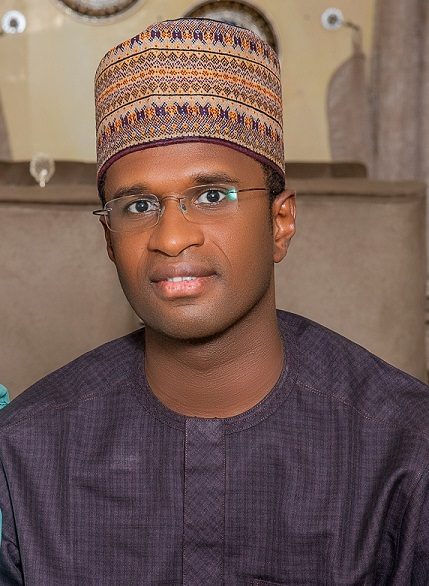
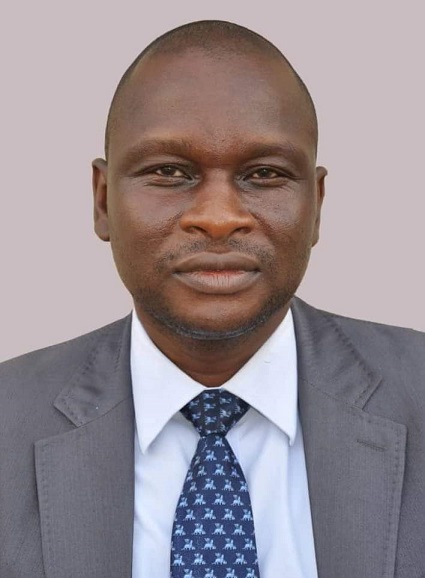
Despite all odds, I love being at the University. It is a place where I feel I naturally belong. And our campuses are still dotted with the IDEAL TYPE (just as there are IDLE TYPES who do not “profess” any knowledge) that constantly bring back to one’s memory my favourite: Edward Said. Critically engaging. Highly unassuming – like Mazrui. Passionate about nourishing the mind; concerned with the public good and Humanity as a whole. People who will unconsciously make you feel you are far from arriving without making you feel embarrassed. I have recently met and enormously admire one such intellectual is Professor Abubakar Mu’azu of the Mass Communication department, UNIMAID.

Interpret this one too the way you like. Report me anywhere. Land me into trouble. I no longer care. But Allah knows whether this is coming from the bottom of my heart or elsewhere. Such as an attempt to curry favour.

After all, what use is admiring people if you cannot tell them or others you do? Or should we hold on till they are no more? Wouldn’t that serve as a token of encouragement to maintain the course and tempo against all odds?

I have earmarked a few other similar intellectuals I will write about in due course on this space. I will unburden my heart about people I feel positively towards. Yes, I will specify those who fit my definition of the ideal intellectual. Part of this is, of course, honesty. Wallahi, no matter how engaging you are, you are out of the equation once it comes to the light you are dubious and too self-centred. If you’re extorting money or sex from your vulnerable students, you cannot be my model. But again, I am not looking out for an angel.

Back to the subject, I have met with Prof Muazu only a few times. One was when he came as an external examiner to my thesis in April 2018 and some months earlier as an accreditation team member for the college I taught in Yobe state. The last, some weeks back. Each, he left me with nothing but admiration and deep respect.

When I phoned my referee and supervisor at undergrad, late Prof Maikaba, to congratulate him on his last promotion, he typically enquired about the progress of my thesis. I told him then, “I was done with viva yesterday and effecting corrections now”. Curiously, he returned with a finder about the examiner. When I replied that it was Mu’azu, he said: “kace an sha aiki”. Toh Bukar. PhD beckons. You can’t wait, especially for one in this business. He admonished me as usual; I giggled, thanked and said my goodbye.

I don’t know whether it’s appropriate to reveal this too. Some hours before the viva voce, my supervisor, Dr Binta Kasim Mohammed, called alerting me “to prepare very well. Because the external examiner brought is extremely thorough and critical”. Sir, you are appreciated and held in high esteem not only by nonentities like us but also by your colleagues. But my assessment of you from afar is that: these things matter little to you (if at all) – out of humility.

From both you and the late Maikaba, I graduated with distinction. But each time we met, you left me feeling inadequate, making me wonder ‘when will I arrive?’. Parts of this are the books you recommend, which I never read, or know not exist. But somewhere in WHERE I STAND, Sheikh Gumi has opined along this line that knowledge is such enigmatic that the more you learn, the more you realise that you know very little. I wonder whether you feel something similar sometimes. Yes, despite the accomplishments. In just your last visit, you recommended, as the situation warranted, many texts. Among these are Peter Winch’s THE IDEA OF A SOCIAL SCIENCE AND ITS RELATION WITH PHILOSOPHY. Then the POSITIVIST DISPUTE IN GERMAN SOCIOLOGY. The latter is such a rare collection – in fact, my first time to meet Adorno, Habermas and Karl Popper in one place. Both books remind me of similar stuff I read from the staple of Claude Ake and Yusuf Bala Usman of blessed memory.

In this vein of characteristic modesty, you specifically asked me to read Ben Bagdikian’s MEDIA MONOPOLY after the viva voce in order to steel my argument on the influence of profit drive in media content production. A copy of my thesis still carries your adorable handwriting suggesting the title and other points. But little wonder you never drew my attention to the fact that you have written extensively on media in peacebuilding until my curiosity took me to the internet and a bookshop where I stumbled CONFLICT MANAGEMENT AND THE MEDIA IN NIGERIA  – a book coedited by you and Gani Yoroms. This was despite your awareness that my thesis is squarely about this matter of controversy. Quite recessive indeed.

With the crisis engulfing Nigerian Universities (the worst I have ever seen) and academics running helter-skelter for greener pasture, I equally wonder what becomes of the academia after the few of you that remain out of passion pass on to something else or the inevitable great beyond. And especially if this maddening ill-treatment continues from the federal government. Allah Ya kiyaye, amin.


Bukar teaches Mass Communication & Journalism at Ahmadu Bello University, Zaria.

M.D. Aminu: A transition from academia to consultancy

By Ahmadu Shehu, PhD.

Recently, my friend Dr Mohammed Dahiru Aminu took a step further in realizing his promised greatness. He joins PricewaterhouseCoopers (PwC) as Manager in Sustainability and Climate Change consulting. PwC is one of the ‘big four’ accounting/management consulting firms and the world’s second-largest professional services networks, operating in 157 countries with over 742 locations. The annual revenue generation of the company is around $42.4 billion, which is greater than Nigeria’s annual budget.

Dahiru, as he is known and called by persons close to him, was born in Yola to Dr Aminu Raji’s family, a descendant of Modibbo Raji—one of the most prominent 19th-century Islamic scholars in northern Nigeria and the most important scholar in the Fombina emirate. Dahiru earned a bachelor’s degree in geology from the University of Maiduguri and a master’s degree in petroleum engineering from London South Bank University. In addition, he holds a PhD in carbon capture and storage from Cranfield University.

Upon completing his master’s degree, Dahiru launched a career in academia as an Assistant Lecturer at the Modibbo Adamawa University of Technology before moving to the American University of Nigeria as an Assistant Professor of Petroleum Chemistry. Brief as it may seem, Dahiru’s academic career is a story of success. He is amongst the world’s first generation of PhDs in the emerging carbon capture and storage area and has produced consequential papers in the leading journals in that discipline. One of his papers, entitled “A review of developments in carbon dioxide storage”, published in Applied Energy—a leading journal within Energy and Environmental Science—is arguably the broadest published paper in the open literature on any aspect of carbon dioxide storage. Other contributors to the article were Professor Vasilije Manovic and Dr Syed Ali Nabavi of Cranfield University, and Dr Christopher A. Rochelle of the British Geological Survey, Keyworth, Nottingham, UK.

Because of the paper’s relevance within the field, it won an award as one of the most cited papers ever published in Applied Energy since the journal’s inception in 1975. The award was announced at the International Conference on Applied Energy (ICAE) in 2020, which was scheduled to hold in Bangkok (Thailand), but due to the Covid-19 pandemic, the event was held in a virtual conference in December 2020.

Similarly, all chapters of Dahiru’s thesis, completed under a research program entitled “Carbon Dioxide Storage in the UK Southern North Sea: Experimental and Numerical Analysis”, were published in leading scientific journals as the International Journal of Greenhouse Gas Control and Heliyon.

Dahiru has also been actively involved in community service and is a member of several advisory boards, councils, and committees. He is a member of the Roster of Experts of the United Nations Framework Convention on Climate Change (UNFCCC), Bonn, Germany; and serves as member and secretary of the Working Group on Solid Waste Management for implementation of the Nigeria Climate Change Response Programme (NCCRP), Federal Ministry of Environment, Abuja; amongst others.

Although Dahiru’s scholarly achievements in academia were remarkable, nonetheless, those of us who know him have always felt that the academic career path was a transitional phase. His expertise would be better harnessed for the more public good in the private or policy sectors, where he could apply his training and knowledge in a more instrumental setting. This move should also offer him greater visibility and voice in meaningful African conversations around sustainability and climate change.

Beyond academia, Dahiru’s profile reaches into the arena of public commentary and public service. He is one of Nigeria’s prolific and influential young public intellectuals. His writings and talks on national issues and sharp analyses and prognoses of Nigeria’s economic and developmental challenges are as informed as they are illuminating. He publishes opinion pieces in Nigeria’s leading online and traditional newspapers. He is also a visible and strident voice in Nigeria’s vibrant cyberspace. As Dahiru joins the world of consulting, where he will work on finding solutions to the problems posed by climate change as one of humanity’s greatest challenges, he will undoubtedly deploy his expertise and experience in a more hands-on approach, now more than ever.

Dr Ahmadu Shehu holds a PhD in Linguistics and writes from Yola, the Adamawa state capital. He can be reached on ahmadsheehu@gmail.com

NAPTAN rejects teacher-service elongation, stipends for students

By Uzair Adam Imam

The National Association of Parents/Teachers of Nigeria (NAPTAN) has rejected the federal government policies on education, particularly the elongation of service years and payment of stipends to students reading education in higher institutions.

The association added that the government should implement the minimum wage of N30,000 to workers first, which is considered more important than the stipends.

Recently, the Minister of Education, Adamu Adamu, announced the payment of N75,000 per semester for every student of public universities studying education programmes and N50,000 for students of colleges of education.

Dr Ekundayo Ademola, the National Publicity Secretary of NAPTAN, made the information available to reporters on Sunday, warning the federal government of Nigeria not to politicize education.

However, Ademola described the new policy of salary scale for teachers and the elongation of years of service from 60 to 65 years as a Greek gift.

He added that the promise made by the federal government is nothing but deceit: “We think that the promise by the government that has refused to diligently implement N30 minimum wage to increase salary for teachers is nothing but deceit.

“If one may ask, how many states are, in truth paying N30,000 Minimum Wage to workers? Asking the state to start paying with a special scale to teachers, when minimum wage of N30,000 is not dutifully given to them, will lead to industrial unrest.

“We demand that federal government and states should pay N30,000 minimum wage to teachers first before considering special scale for teachers.”

“Elongation of service year from 60 to 65 years is also odd, in a situation the country is presently is. Many educated graduates are seeking unemployment. Keeping those that are supposed to rest in service till 65 is nothing but a misplaced priority. Instead of doing that, FG and states must gear efforts towards timely payment of retirement benefits to teachers. If that is done, many of them will prefer to go on retirement even before reaching 60 years, knowing full well that their benefits would be paid.

“We also consider payment of N75, 000 and N50,000 to students reading education in University and NCE as ill-conceived and quite uncalled for. This amount is even bigger than the minimum wage. Before coming up with this idea, is the FG aware that the number of students studying education-related courses is in multiple thousand?

“Also, after being paid in school, do we have job placements waiting for them? Is there a plan for several unemployed graduates and NCE holders that read education-related courses? Many Nigerians that had passed through the Npower programme and worked in schools, are now back on the streets looking for jobs.”

The association also called upon the government to have a special package for teachers working in the rural areas that are facing security challenges.

“We also advise the government to have a special package for teachers working in the rural areas and areas facing security challenges.”

Nigeria at 61: A giant with challenging crises amid opportunities

By Terhemba Wuam, PhD

As Nigeria marks its 61st anniversary of independence, its citizens are stuck in general anomie of despondency. This is due to general insecurity in the country, rising unemployment and high cost of living.

It is also an age of anxiety, with many measures of Nigeria’s socio-economic progress painting a picture of a nation in great distress. Nigeria’s economy has been stagnant, growing at less than 1% cumulatively during the past six years, far below population growth of 2.6%. It also has about 40% of the population of about 200 million living below the poverty line.

The country is equally beset by security and political challenges. Boko Haram insurgents still operate in the North-East. In the North-West, bandits are overwhelming the security forces. In North-Central Nigeria, deadly clashes between farmers and herders continue. And separatist and irredentist agitations resonate in the South-East and the South-West of the country.

Despite these problems, Nigeria has made substantial socio-economic progress, at least since 1999 when it returned to democracy after decades of military rule. It is also a country with huge resources that have yet to be fully tapped. The biggest of these is Nigeria’s educated citizens. The country had a literate population of less than 5% at independence. Now, more than 60% of the population is literate. Also, enrolment into tertiary education keeps increasing.

The past 60 years
A review of the past six decades shows that the Fourth Republic, which took off in 1999, has been Nigeria’s golden era in terms of economic and social indicators. This reality is, however, a difficult one to present to the millions of unemployed who are out of work and struggling to cope with inflationary pressures on food and other basic livelihood requirements.

Since 1999, Nigeria’s economy has grown more than sevenfold. A big chunk of this is explained by the rebasing of the economy in 2014. It was found that the economy was 60% bigger than previous estimates.

Before 2014, Nigeria had been using the 1990 prices and the composition of the economy to determine its size. Yet, a lot had changed since then. For example, telecommunications had grown substantially with the introduction of mobile telephony. Nollywood, Nigeria’s movie industry, has also expanded and morphed into a more professionally organised and run sector.

Nigeria moved from lower-income to lower-middle-income status, based on national income per head of population, during the Fourth Republic. That’s based on World Bank rankings. Other countries in this category include Algeria, Egypt, Kenya, Tunisia, India, Iran and Ukraine.

Economic difficulties
Nigeria’s economic difficulties started in the mid-2010s. Nigeria’s economic fortunes are closely aligned with oil prices which showed a sharp decline between 2014 and 2016.

The World Bank has described the 70% drop during that period as one of the three biggest declines since World War II, and the longest lasting since the supply-driven collapse of 1986.

In response, Nigeria’s economy, which had recorded an average growth rate of 6.68% between 1999 and 2015, has plunged in and out of negative figures since 2016. Within this period, it entered recession twice. Cumulative growth since 2016 has averaged below 1%.

Nigeria has taken steps to reduce its reliance on oil. These measures include the revival of the agricultural sector as well as reducing government reliance on oil revenues by tax revenue from other sources. These have yet to pay off. And the COVID-19 pandemic has aggravated the economic downturn, plunging more people into unemployment and poverty.

Nigeria’s government has invested in agriculture and has articulated economic programmes for other sectors, progress has been hampered by inflationary pressures, low oil prices and a weak currency. The government’s inability to arrest the security crises in several states has also affected agricultural productivity. Other factors include the government’s inability to articulate a clear economic agenda for the country. In addition, its monetary and fiscal policies favouring dual exchange rates, and restrictions on foreign trade through border closures have limited recovery and growth.

A national call to action
Nigeria requires a national leadership with the understanding and capability to set the tone and direction for national growth and development. This must incorporate all citizens, irrespective of ethnic or geopolitical affiliations in a grand vision of collective dynamic growth.

A lack of such political leadership denies the country the possibility of meaningful growth and critical citizenry.

Nigeria remains a country of great potential. Her fountain of possibilities can be found in its growing population of educated citizens. The population of the educated at this very moment in the country’s history is at the threshold or point of national acceleration. An example is the country’s burgeoning tech ecosystem largely driven by young people. It is at a point conterminous with those of the Asian Tigers before their rapid transformation to the developed world and high-income status.

All the fundamentals are indicative of a country at the point of a great leap forward, the role of an enlightened and well-educated population is crucial to that process.

Despite limitations in the education sector, Nigeria has more than 190 universities, the largest university and tertiary education sector in Africa. The country churns out millions of graduates annually, creating the most educated workforce on the continent.

This growth represents both a challenge and an opportunity. It will be a challenge and a huge economic burden if productive opportunities are not found for their engagement. Gainfully employed, these educated millions can be harnessed to drive Nigeria’s economic growth, thus promoting social stability.

Political leadership
Nigeria challenge is not that its political leadership has been corrupt, but that it has had limited ability to govern the country effectively. Nigeria needs a modern political administration where the state is not about maintenance of the status quo and the mere allocation of existing economic values for project and self-aggrandisement.

The state should be reoriented and directed purposely towards a more expansive interpretation with a focus on rapid economic growth and the provision of public goods that empower citizens to become meaningful actors in the overall positive transformation of their society.

Such purposeful action by the national leadership, who must be clearly reformist, is required to alter the trajectory of poor economic growth. It is also required to foster sustained productivity gains in the country’s economy to generate growth to average 6%-10% annually. Such growth is what will enable Nigeria to triple and possibly quadruple its economy within the next 10-15 years in a repeat of the first 20 years of the Fourth Republic.

Inevitably, a growing economy represents the best pathway toward addressing many of the social and economic challenges Nigeria now faces in its seventh decade of independence.

Dr Terhemba Wuam can be reached via terhembawuam@yahoo.com.

ABU Distance Learning Center scored best in Nigeria

By Ibrahiym A. El-Caleel

The National Universities Commission (NUC) has scored Ahmadu Bello University Distance Learning Center as the best in Nigeria.

NUC conducted a Quality Assurance Assessment Visit to Nigerian university distance learning centres. Eight among the centres were rated “Very Viable” with a percentage score of at least 80%, as follows:

Ahmadu Bello University Distance Learning Center- 94.9%

University of Lagos Distance Learning Institute- 93.1%

University of Ibadan Distance Learning Center- 93.0%

Joseph Ayo Babalola University Center for Distance Learning- 92.7%

Lagos State University Open and Distance Learning and Research Institute- 89%

Ladoke Akintola University of Technology Open and Distance Learning Center- 88.7%

University of Nigeria Nsukka Center for Distance and e-Learning- 85%

Modibbo Adama University of Technology Yola Center for Distance Learning- 83.5%

University of Maiduguri and Obafemi Awolowo University were both rated “Viable”, scoring 78.1% and 75.3%, respectively.

University of Abuja Center for Distance Learning and Continuing Education was rated “Not Viable”, with a score of 50.3%.

There are only 12 approved distance learning centres across the country, as obtained by The Daily Reality from the NUC website. The 12th accredited program is the Federal University of Technology Minna Center for Open Distance and e-Learning.

Nigerian universities established distance learning centres to obtain degrees from NUC-approved universities without a physical presence on campus. Due to flexibility, the programmes are gaining more acceptability over the years by students who might be inconvenient to be in physical contact with the schools.

Dear NECO registrar, removing English as admission criterion can be costly

By Ishaka Mohammed

Dear Professor Ibrahim Dantani Wushishi, we are aware that you have reached the pinnacle of your career as a Nigerian academic. That means you must have directly interacted with an overwhelming number of Nigerian students. We also know that you specialise in education. Therefore, you should know better than many of us the pros and cons of educational policies.

As the current registrar of the National Examinations Council (NECO), you think that the Federal Government of Nigeria should consider removing credit passes in English language and mathematics as criteria for admission to Nigeria’s higher institutions. This is further proof that you know Nigerian students and how difficult it is to pass these subjects in their Senior School Certificate Examinations (SSCE).

Similar to your suggestion, the current registrar of the Joint Admission and Matriculation Board (JAMB), Professor Is-haq Oloyede, once advocated that a credit grade be removed as an admission criterion for the arts and humanities in polytechnics and colleges of education. I subscribe to his submission.

However, considering the status of the English language in the 21st century and the fact that it’s our official language, I think it’s costly to abolish a credit grade in the subject (English language) as a criterion for admission into our tertiary institutions.

It’s glaring that despite the presence of this criterion which forces many of us to learn the language, we’re far from attaining true proficiency.

Prof., if you seek a paragon of “nobody is perfect”, just pay attention to how we (Nigerians) use the English language, starting from this write-up. Even the highly educated are prone to uttering or writing wrong English expressions. Concerning this claim, many people argue that no one is above mistakes, but I say that mistakes aren’t the same as errors. When one’s use of a wrong expression results from one’s unawareness of the correct pattern, that’s an error.

Sir, I think a few examples will suffice. Many Nigerian graduates wish to further their studies abroad, specifically in the United States and the United Kingdom, but their proficiency level hinders them in the English language. Each of the two main internationally recognised English language proficiency tests is difficult for most Nigerians to pass. Those who have sat for the tests or accessed their past questions can attest to my claim. Even an excellent Nigerian graduate needs intensive coaching to pass the Test Of English as a Foreign Language (TOEFL) or the International English Language Testing Systems (IELTS).

Prof., if making English errors were a criminal offence, we would be in jail. But, of course, that’s if judges aren’t guilty as well.

Sir, it’s a known fact that exposure to news media content boosts one’s language proficiency. Although the reverse isn’t totally the case in our country, consumers of Nigerian media content had better be wary of heavily relying on their (the media’s) expressions. Other authorities, including dictionaries, should be consulted as frequently as possible.

Let me buttress the above point. Since 1961, the Nigerian Guild of Editors has been a network of experienced journalists who have attained editors’ positions in their respective organisations. Ordinarily, one would assume that every member of the network possesses an unquestionable mastery of the English language. But, no, this isn’t the case. Some of the past presidents of the guild have repeatedly published wrong English expressions not as mistakes but as errors. One of such expressions is “Buhari felicitates with”. I’m sure the president has media aides, two of whom have presided over the affairs of the Nigerian Guild of Editors in the past.

In a similar vein, many of the federal ministry of education documents aren’t free of English errors, neither are those from our schools.

The above instances speak volumes about our deficiency in our lingua franca. Being aware of this situation, isn’t it advisable that we adopt measures to encourage us to learn the English language? Will it then be wise to abolish existing measures? 

I believe in the saying that where there’s a will, there’s a way. Our determination to secure admission to tertiary institutions makes us learn English more than we would ordinarily do. The more we practise, the better we’re highly likely to become. Frequency and expertise have a significant relationship.

Therefore, Prof., let’s maintain a credit grade in English as a criterion for admission to our higher institutions.

Ishaka Mohammed writes from Kaduna. He can be reached via ishakamohammed39@gmail.com.

The University System and the academic ranking that I know

By Abdelghaffar Amoka Abdelmalik 

We (Nigerians) are a very interesting set of people. God truly took his time to specially create us. In most cases, we look at issues with emotions and live by the moment. For every discussion, especially if it’s on a controversial issue, we choose the side to support based on the personality involved and our loyalty at that moment. We pose to know everything and as online expert commentators on all issues.

A widely publicized questionable promotion by a Nigerian university was observed a few days back that created heated discussions where individuals that have got no idea on how universities work and can’t differentiate between Assistant Professor and Associate Professor were trying hard to defend the questionable act by the university. Some attempted to give a religious colouration because an Islamic Scholar is involved. A popular online public commentator was so sure that the promotion to the rank of what he called a “full professor” has no specific criteria. That, universities can confer professorship to anyone they so wish. Really? By the way, there is no rank called “full-professor” in any Nigerian university.

Let me share my opinion having spent the last 16 years in academia on tenure appointment at Ahmadu Bello University (ABU), Zaria. 5 of these years were spent in Europe; 2 years as a Postdoc at NTNU Trondheim, and 3 years for PhD/Part-time teaching assistant at Leicester. While I was at Leicester for graduation in July 2012, my second PhD supervisor hosted me in his house at Market Harborough. During our conversation, I asked him about the criteria to get the position of a Lecturer at Leicester and other universities in the UK and he said PhD with 5 journal articles in reputable journals. I asked about Professors and he smiled and responded that it is about how much money your innovative ideas can bring to the university. Professors are the lifeline of the universities in the UK as they are relied upon to attract grants/funds to the university. He added that you can be just Lecturer or Senior Lecturer till retirement if you can’t attract enough grants to earn a promotion.

Dear Nigerians, Professorial rank is not an honorary rank. Not in the British university system and not in any university in Nigeria. There are criteria to get to the rank. Search online, and you will find the promotion criteria/guidelines for several universities around the world. There is a strict guideline for promotion to the rank of Professor or any other rank in all the universities around the world. For Nigeria, I find the university of Ilorin promotion guidelines very interesting. It is a progressive and result-oriented promotion guideline. The guideline if implemented judiciously will place the university in a scholarly database visible to the world of research. I am hoping that other universities in Nigeria will adopt something similar.

For some universities in Nigeria, to be qualified to be promoted to the rank of Professor, you must have published a minimum of 15 journal articles in “non-predatory” journals, have 7 conference proceeding/conference papers, be involved in community service, have supervised at least 2 PhD students, involved in teaching and research for at least 3 years after the last promotion to the rank of Reader (Associate Professor), etc.

Meanwhile, before you get to that highest university rank, a fresh PhD with 3 journal publications and 2 conference papers may be employed as Lecturer II or Lecturer I. You are expected to teach for the next 3 years, research within that year and publish a total of 6 journal papers and 4 conference proceedings/papers to be promoted to the rank Senior Lecturer.

As Senior Lecturer, you are expected to be involved in postgraduate and undergraduate teaching and supervision for 3 years, supervise at least 1 PhD student, published a total of 10 journal papers and 5 conference proceedings/papers, engage in community service to be qualified for a promotion to the rank of a Reader (Associate Professor). And from there to the rank of Professor after satisfying the minimum condition stated above.

Every Nigerian public university is established with an Act of the National Assembly. They are independent of each other. They have their respective Governing Councils that steer their activities. Some academics rise faster by moving from one university to another. But for you to move from one university to another, you must secure a fresh appointment at the university you want to move to. You can then transfer your service from the old to the new public university in Nigeria. That is how it works.

The point to note is that a university cannot offer a promotion to an academic in another university. A non-faculty member and without employment history cannot be offered a promotion in any university except NUC has approved a rank called “Honorary Professor” for politicians.

Dr Isa Ali Ibrahim (aka Sheikh Pantami) was a lecturer at ATBU Bauchi from 2004 to January 2014 according to his ResearchGate profile. He proceeded on study leave in 2010 to Robert Gordon University, Scotland for his PhD. Immediately after his PhD in January 2014, he got an appointment as an Assistant Professor at the Islamic University of Medina. Some said his rank at the Saudi University was Associate Professor. But I doubt if any serious university will employ a fresh PhD as Associate Professor. He spent 2 years 7 months at the Saudi university before he terminated his contract to pick up the political appointment at NITDA in 2016. 

Meanwhile, it is not certain if he absconded from ATBU to pick up the Saudi job or ATBU has no bond for their PhD scholars that went on study fellowship. He left Saudi Arabia to pick up the appointment with the government in 2016. He has worked as DG and is now a minister for the past 5 years. He seems to have no link with any university over the last 5 years and specifically no employment history with FUTO. But only to see the advertorial from Zamfara state governor on a national daily congratulating the Sheikh for his promotion to the rank of “Full Professor” in 2021 by the Council or Senate of the University. He was said to have published 160 papers. Papers that could not be found on the database of scholarly articles.

The advertorial raised questions and discussions started. From his history in academia, he seems not to possess the requirement for the said new rank. He is not involved in teaching and research for the last 5 years. Meanwhile, as a Minister of the Federal Republic, he can’t even take up another Federal government job except he resigns. If FUTO actually needed him for whatever reason, they could have hired him as a Visiting Professor, which is a part-time job and it is allowed. They can then offer him the position of Professor when he is done with his political appointment as long as he is willing to live, teach, do research, and supervise postgraduate students at FUTO. 

During the discussion, some irrelevant points were raised. It is to note that during the time of Aristotle, Albert Einstein, Marie Curie, and up till Wole Soyinka’s period, you can be a Professor without a PhD. But that is not the case now. For now, you can’t be a Professor (aside Medical Consultants) without a PhD. There is an ongoing discussion on the need for Medical Consultants to have a PhD to become Professors. People are quick to mention Dr Bala Usman even though he was not relevant in the discussion. The highly respected critic was qualified to be a Professor but chose not to be a Professor for personal reasons. 

Yes, we have issues of irregularities in the appointment and promotion in some of our universities and we hope that the Governing Councils of the respective universities can put an end to that someday as we work towards regaining the lost glory. But this questionable promotion at FUTO of a PhD with 2 years 7 months post-PhD teaching and research experience and 3 visible materials on Scopus and without employment history in the university, seems to be part of such irregularities.

Dear University managers, we have a responsibility to protect the university system and the ranks which are reserved for only those in the university that have worked for it and merited it in accordance with the university guidelines. We should not let it go the way of honorary degrees that are allegedly being purchased by politicians that are hungry for titles. 
ASUU has over the years worked very hard for the Autonomy of the universities, especially the federal universities, to shield them from political interference that is crippling the university system in Nigeria. We are still struggling with the principle of university autonomy even with the existence of the Autonomy Act. Let’s not give room for the interference to take new dimensions. We all need to rise against the irregular appointment and promotions like this so that it will not become a norm like honorary doctorate that is allegedly sold to politicians.

Dear Sheikh Pantami, you are a highly respected Islamic Scholar that I want to believe is not looking for titles. Titles can’t add value to your personality and what you stand for. It has no value for the hereafter. You have recorded notable achievements as a Cleric and as DG of NITDA and the Minister of Communications. It is obvious you have a love for academics. Just be patient and finish your assignment as the Minister. You can then join us in Bauchi or Owerri to mentor the next generation of cyber security experts, and you will rise to become a highly decorated Professor.

Dear Executive Secretary of NUC, I hope you will read this piece and take appropriate action to protect the little integrity left in our universities.

Abdelghaffar Amoka Abdelmalik writes from Zaria and can be reached through aaabdelmalik@gmail.com.

Dr Pantami, silence is not golden

By Ibrahiym A. El-Caleel

Saner climes aren’t saner climes for nothing. They seem to have broader perspectives on life. They acknowledge success wherever it is and not getting unnecessarily fixated on just one thing. 

In Nigeria and several African countries, academic qualifications and honorary titles are seen as the only testimonial to weigh your level of intellect, level of exposure, degree of societal awareness and overall social image. So, if you want to be seen as a “rare gem” and the next human being to have sense since Plato, then you must accumulate as many academic qualifications as possible and have titles. 

Several people laughed at my comment elsewhere on Africans and their love for titles. I reminded us that the official name of the former Gambian President was, His Excellency Sheikh Professor Alhaji Dr Yahya Abdul-Aziz Awal Jemus Junkung Jammeh Naasiru Deen Babili Mansa. You may please count the number of titles there. If you are a meticulous fellow like the academics, you would want to follow each of these titles to see how Yahya Jammeh got them. In most of the titles, you’ll see that they are either honorary or just self-assigned. 

The truth is, you don’t need all those titles before you can become an effective President. At the same time, across saner climes, America’s President was simply “Barack Obama”; UK’s Prime Minister was simply “Theresa May”; Turkish Prime Minister was simply “Recep Erdogan”. Yet all these countries were doing far better than the country whose president accumulated more titles than his name. 

Do not get me wrong. If you have titles, please feel free to assemble them before your name at birth. It is said that titles are adornments. If you have terms, flaunt them to everyone’s eyes! If you don’t have them, work hard to get them and then exhibit them. But do not get so obsessed with titles and attach them to your name; then, when it is time for verification, it will seem as if people are just envious of you or hate you. People want to verify things that aren’t so clear to them. It is in the spirit of filtering contents before they go into history. The unborn generation deserves to read truthful content. We owe them that. 

With all this Dr Pantami’s issue going on, I continuously kept visiting his official Facebook page to see what he might have to say. But, unfortunately, there was nothing there to read on the issue. 

As an academic, professorial chair is the pinnacle of your career. How would someone attain such great success and not be overwhelmed with joy to the extent of announcing it to us, his lovers and admirers? Isn’t such a promotion what we should celebrate with our loved one? Don’t we deserve to be let aware from the horse’s mouth? Do we deserve to be let in the hands of “envious academics” and polemicists who churn out narratives and counter-narratives as the clock ticks? 

I think lovers and fans deserve better treatment. With the level of energy dissipated, silence is not golden. The silence is graduating to the approval of the professorial appointment or promotion or whatnot. 

On the one hand, if the professorial appointment is genuine and legit, Dr Isa Pantami will only clarify the inconsistencies on his number of peer-reviewed papers and the number of years spent in active service. Whatever it is that the Federal University of Technology, Owerri (FUTO) used as a legit fulcrum to promote him, that is just what he will explain, and the world will have to live with it. 

On the other hand, if the promotion is just the sensationalism of overzealous fans, then Dr Isa Pantami only needs to clarify so to ask the public to disregard it. Because his silence would imply an integrity defect which is bad for his image first as a reputable Islamic scholar and second, as a distinguished compatriot of the Federal Republic of Nigeria. 


Ibrahiym A. El-Caleel writes from Zaria and can be reached via caleel2009@gmail.com.

Popular Nigerian university dismisses lecturer over ‘sexual misconduct’

By Muhammad Sabiu

Authorities of the Obafemi Awolowo University (OAU), Ile-Ife, have dismissed a senior lecture, Adebayo Mosobalaje, from the institution over alleged sexual misconduct.

The senior lecturer was from the Department of English in the Faculty of Arts.

The dismissal was announced in a statement by the university’s public relations officer, Abiodun Olarewaju.

Mr Olarewaju said, “In its avowed determination to rid the University of any form of sexual intimidation, harassment and, or coercion, the Governing Council of Obafemi Awolowo University, Ile-Ife, has dismissed another lecturer who was found guilty of sexual demeanour against a female student.

“The decision to dismiss Dr. Adebayo Mosobalaje of the Department of English Language in the Faculty of Arts was taken by the University Council at its last sitting on Tuesday, September 7th, 2021.

“Having exhaustively deliberated on the report of the Joint Committee of Council and Senate, which investigated the case of sexual harassment against Mosobalaje, the University Council, unambiguously declared its zero tolerance to sexual harassment in any form or guise and, accordingly, applied the appropriate University sanctions for such an offence as contained in the University regulation.”

This is not the first time the OAU got enmeshed in the scandal of sexual misconduct between lecturers and students.

In 2018, a professor of accounting at the institution, Richard Akindele, was also found to have been involved in a sex-for-marks scandal, which got him fired from the institution.

Prof. Akindele demanded five-round sex from a student before he would pass her in a course he took. 

The news went viral after the student exposed him through their recordings in the course of their engagement.

Since 2018 when the story of sexual harassment allegations against a professor of accounting at the university’s Faculty of Administration, Richard Akindele, went viral, the institution has regularly been in the news for similar reasons.

Akindele, who the university dismissed, was also found guilty and sentenced to two years imprisonment following his prosecution by the Independent Corrupt Practices and Other Related Offences Commission (ICPC). He has since been released.

There is also the unresolved case of a lecturer of International Relations, Bisi Olaleye, and another at the school’s Centre for Distance Learning, Monday Omo-Etan.

China’s Reward of Enlightenment: A lesson for Nigeria

By Najib Ahmad, PhD.

Beyond doubt, you may have by now discerned that nearly everything you are using in your households, offices, and places of worship were made-in-China. A few weeks ago, I had a conversion with my friend and confidant, who told me that this China-made domination is manifested worldwide, even in Europe, where he lives. Hence, he no longer blames Nigeria for clinging to China-made products.

On another occasion, some German professors visited our research group (in China) two years ago. During lunch, one humorously told my former program supervisor that he thought even his shirt was made-in-China. We all laughed and continued eating. Unless you don’t know Germany, the European economic powerhouse, and the history of its industrialisation, this will startle you. Indeed, Germany is still technically capable and well industrialised, but Chinese products are ubiquitous there.

The question you may ask is: How did China achieve all this? I guess you are curious to have an insight into their progress. And how they catch up – sometimes even overtake or compete – with the most industrially advanced countries whose supremacy in this area was matchless within a short time? Their quest for financial power started ages ago, after the country’s opening-up in the 1970s by the then leader, Deng Xiaoping, otherwise known as the principal architect of China’s reform and significant foreign policy changes.

A former Emeritus Professor of Social Sciences at Harvard, Ezra F. Vogel, described the leader in his book, Deng Xiaoping and the Transformation of China, as the “man who most influenced China’s modern trajectory.” The central idea of his reform plans was nothing extraterrestrial. He only ensured that the ordinary Chinese population was enlightened (or educated) to the level they could create their path in a lifetime. He also superbly promoted China from “an agrarian society to the industrial powerhouse” (or manufacturing hub of the world). Beyond the shadow of a doubt, his projections have prospered in making China where it is today. The most important resolution was massive enlightenment. These resolutions have markedly shaped the trajectory of his policies to where they are today.

Provision of adequate and essential reading, writing, and good numeracy skills was the quintessence of the primary phase in their development journey. Thus, presently, you hardly encounter an older person who can neither read nor write or consider using a calculator for basic arithmetic summation (remarkable, right?). Although some reports show a few others are illiterates, especially in villages, it is a small percentage compared to the over a billion people who can. Moreover, there are all-women-operated shopping centres as the reform structure targeted women to prepare them for exceptional jobs. Many women work in hospitals now, especially in women-related matters.

The government of China sponsored children of low-income farmers and city workers to study in elite American and European universities. Some of these students specialised in sciences, applied sciences, technology, and other critical areas for China’s development. This scheme shaped the education development in China. At the same time, some of them remained in their newfound home. Today, five out of ten research papers from the European and American universities will have Chinese-sounding names. They are also in many places working on state-of-the-art science and technology. This was part of the product of the policies made on education about a century ago.

Many others joined various newly founded public universities and colleges all over China to teach and train young students. According to Statista, as of 2019, China has the largest education system globally, with 2688 public universities and colleges, a mixture of central (or federal), provincial (or state), and local government-owned institutions. Out of these institutions, 1,423 are higher vocational colleges. According to reports from the Chinese Ministry of Education, privately owned vocational colleges reached about 300 in 2021. Yet, they looked for more to provide jobs and ultimately boost the country’s economy.

In retrospect, you can see that China’s quest for economic supremacy started with excellent policies favouring education. It continues to this day. New policies were implemented and sustained in educating the society, for example, policies like a free nine-year compulsory quality education for primary and junior secondary schools.

Again, one of China’s leading, perhaps secret, ingredients for unprecedented technological developments is its total commitment to vocational education training at all levels. Vocational colleges (higher institutions) and vocational schools (secondary schools) have undoubtedly contributed to the record economic growth in China. They are the fundamental and out of sight driver and catalyst of their economy. They have produced craftspersons with skills that supported the country in job specialisations such as electrician, mechanic, computer technician, carpenter, tailor, beautician, chef, welder, fabricator, product designer, bus driver, and electric train driver, among others.

The government’s commitment to funding and sustaining vocational training schools have vastly invigorated the manufacturing capacity you see in China today. Subsequently, most foreign brands like Apple, Unilever, Nike, Zara, Mercedes-Benz, General Motors, and many more produce China-made products. The availability of highly-skilled workforce is another reason those brands go to China, among other benefits. Unfortunately, time and space will not permit me to mention them here. However, the reward of sound policies on enlightenment to a society and its propensity is ostensibly enormous. And above all, the government has significantly reduced poverty among its people and improved their livelihoods.

We can learn from the above that enlightening everyone, at least, to the level that they can read and write and get numeracy skills, even if it is in their native language. So doing is vital for the prosperity of society and the country at large. Sometimes, not everyone could have profound education. Suppose everyone you meet in the market, other places in Nigeria could read and write in their native languages. Undoubtedly, our growth and development as a society would be in a better direction than our current condition. Lack of these skills for everybody contributes to our lack of progress, absence of skilled workers, failure of industries, among other ills bedevilling our societies in Nigeria.

As the government is founding new universities year-round, they should consider establishing vocational colleges. As I see these days, the National University Commission (NUC) issue license to many private universities nationwide. Individuals can similarly step in to establish private vocational training colleges. It is not always that everything rests on the shoulder of the government. We need to take these few but critical steps to reset the collective societal future of Nigeria. Implementing them could set a new stage for self-directed youths equipped with the required skills to assist Nigeria’s economic growth, particularly at one of the worst phases of the country’s financial crisis, thanks to the coronavirus pandemic and poor governance.

Dr Najib Ahmad is a Postdoctoral Researcher at Shandong University, China. He can be contacted via namuhammad03@gmail.com.