Tinubu

President Tinubu orders security overhaul, declares “enough Is enough” on killings

By Abdullahi Mukhtar Algasgaini

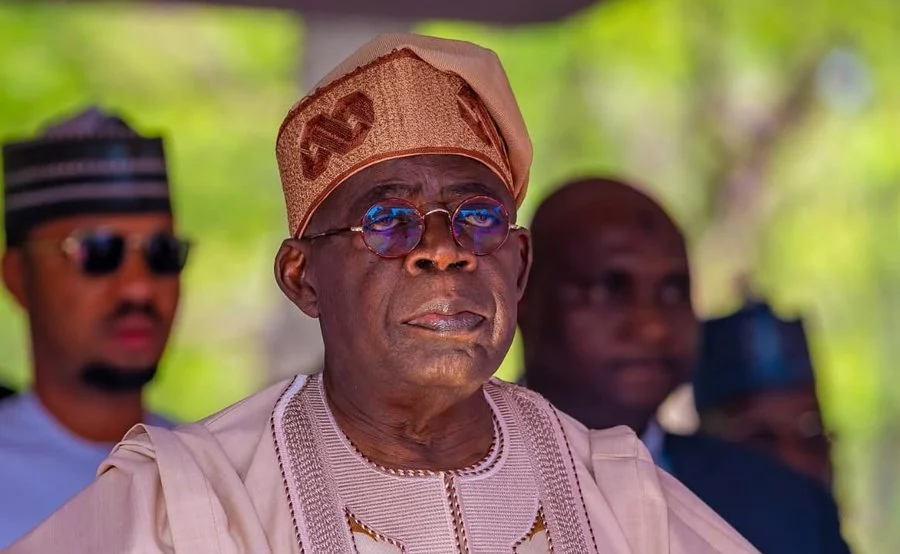
President Bola Tinubu has directed an immediate review of Nigeria’s security strategy.

He also demanded urgent action to halt the rising violence in Borno, Benue, Plateau, and Kwara states.

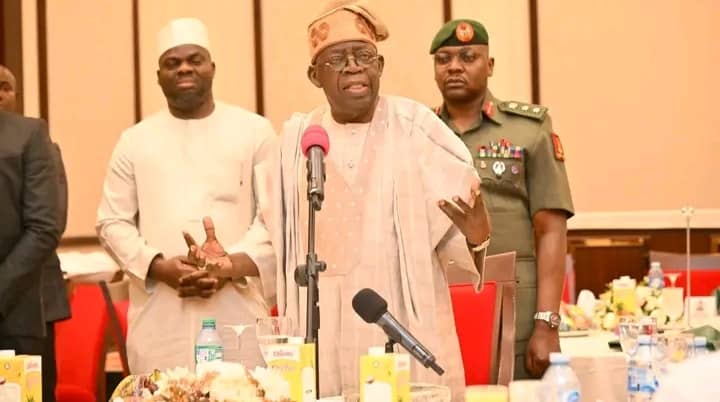
During a two-hour meeting with security chiefs at the State House in Abuja, the President condemned the killings of innocent Nigerians, declaring, “Enough is enough.”

The National Security Adviser (NSA), Nuhu Ribadu, disclosed that the President ordered a fresh approach to tackling insecurity, emphasizing collaboration with state governments and local authorities.

Ribadu stated that Tinubu, who had been monitoring the situation during his recent foreign trips, insisted on tougher measures to restore peace.

“The President is deeply concerned and has directed enhanced coordination with governors and local councils to address communal conflicts,” Ribadu said.

Security chiefs, including military and intelligence heads, attended the meeting, where they briefed Tinubu on recent attacks, casualties, and ongoing operations.

The NSA noted that insurgents often target vulnerable communities with explosives, stressing the need for proactive measures.

Tinubu’s directive comes amid escalating violence in parts of the North and Middle Belt, with citizens demanding decisive action against insecurity.

President Tinubu returns to Nigeria after 19-day private trip to Europe

By Abdullahi Mukhtar Algasgaini

President Bola Ahmed Tinubu returned to Nigeria on Monday night after a 19-day private visit to Europe, where he stayed in Paris and London.

Initially, the presidency stated that the trip would last two weeks, but the extended stay raised concerns among Nigerians.

Upon his arrival at the Nnamdi Azikiwe International Airport in Abuja, President Tinubu was welcomed by top government officials, including Secretary to the Government of the Federation George Akume, Chief of Staff Femi Gbajabiamila, National Security Adviser Nuhu Ribadu, FCT Minister Nyesom Wike, and Defence Minister Bello Matawalle.

The president had traveled to Paris on April 2, 2025, before proceeding to London, where he continued handling official duties remotely.

However, his absence drew criticism from opposition leaders, including Atiku Abubakar of the PDP and Peter Obi of the Labour Party, who argued that the president should not have left the country amid worsening security challenges.

The Presidency dismissed rumors that Tinubu traveled for medical reasons, insisting it was a private visit.

Tinubu’s assault on Rivers and Democracy: which state will be next?

Abdulhamid Abdullahi Aliyu

With a single stroke, President Bola Ahmed Tinubu has upended Nigeria’s constitutional order, suspending Rivers State Governor Siminalayi Fubara, his deputy, and the state legislature under the guise of a state of emergency.

This unprecedented and legally questionable move raises urgent questions: Has Nigeria’s democracy just been hijacked? If a sitting president can summarily remove elected state officials without due process, what stops Abuja from toppling any governor who falls out of favor?

The political crisis in Rivers has been simmering for months, with intense factional battles within the People’s Democratic Party (PDP) leading to threats of impeachment against the governor. But was the situation truly dire enough to warrant a presidential intervention of this magnitude?

Under Section 305 of the 1999 Constitution, a state of emergency can only be declared in cases of war, imminent danger of invasion, total breakdown of public order, or natural disasters. Even then, such a declaration requires National Assembly approval.

More importantly, the Constitution does not grant the President the power to suspend a sitting governor, deputy governor, or members of the state legislature.

By single-handedly ousting a duly elected state government and replacing it with a military figure, Tinubu has overstepped his constitutional bounds, effectively staging what many legal experts are calling a “constitutional coup.”

If this move is allowed to stand, it raises a troubling question: which state is next? Today, it is Rivers; tomorrow, it could be any other state where the President or ruling party faces political opposition. The implications are chilling—no governor, regardless of electoral mandate, would be safe from federal interference.

Would this have happened in Lagos or Kano? Would a northern state be subjected to such federal strong-arming? The answer is clear. Rivers, an oil-rich and politically volatile state, is an attractive target.

But what happens when this dangerous game of executive overreach extends beyond Rivers? If Tinubu can remove Fubara this easily, then Nigeria’s entire federal structure is under threat.

Beyond the political chaos, a more pressing question emerges: Is this really about governance, or is it about controlling Rivers’ oil wealth? History has shown the federal government’s keen interest in oil-producing states—from the militarization of the Niger Delta under past administrations to the strategic placement of federal loyalists in key oil-rich states.

The pattern is all too familiar. Could this move be less about political stability and more about tightening Abuja’s grip on Rivers’ vast economic resources?

With the Constitution clearly violated, all eyes now turn to the judiciary. Will the Supreme Court rise to the occasion and declare this move unconstitutional? Or will the courts bow to political pressure, allowing a dangerous precedent to take root?

The judiciary must recognize that this is not just about Rivers—it is about safeguarding Nigeria’s fragile democracy from the creeping shadows of authoritarianism. If this unconstitutional takeover is not reversed, no state governor in Nigeria will ever govern with full confidence in their electoral mandate again.

Since the return to civil rule in 1999, Governor Siminalayi Fubara is now the third sitting governor to be suspended by a Nigerian President under a democratic setting. In 2004, former President Olusegun Obasanjo suspended Plateau State Governor Joshua Dariye and the State Assembly over ethno-religious violence in Jos and other parts of the state, appointing Maj. Gen. Chris Alli (rtd.) to take charge.

Two years later, Obasanjo removed Ekiti State Governor Ayo Fayose and his deputy over political crises and impeachment controversies, installing Brig. Gen. Tunji Olurin (rtd.) as the new head of the state.

In 2013, President Goodluck Jonathan declared a state of emergency in Borno, Yobe, and Adamawa States in response to Boko Haram’s escalating insurgency. However, unlike his predecessors, Jonathan did not suspend the sitting governors; instead, he allowed state governments to continue operating alongside increased federal military intervention.

Now, in 2025, Tinubu has declared a state of emergency in Rivers State, citing political crisis and governance breakdown. But his move goes even further—suspending Governor Fubara, his deputy, and all members of the House of Assembly for six months.

While past interventions were carried out under Section 305 of the 1999 Constitution, the legality and necessity of removing elected officials have always been controversial. The Constitution outlines a clear procedure for declaring a state of emergency: the President must issue a proclamation, publish it in the official Gazette, and submit it to the National Assembly for approval.

Yet, in Rivers, Tinubu has acted unilaterally, preempting legislative approval and exceeding constitutional limits by removing elected officials.

As these events unfold, one thing is certain—2027 is shaping up to be a defining moment for Nigeria’s democracy. Will the courts uphold the rule of law, or will this be remembered as the moment Nigeria’s democracy took a dangerous turn?

The Nigerian people, civil society, and democratic institutions must resist this unconstitutional move by all legitimate means. If left unchecked, this will mark the moment when the line between democracy and dictatorship in Nigeria blurred beyond recognition.

Abdulhamid Abdullahi Aliyu- an NYSC serving corps member, writes from Center for Crisis Communication (CCC) in Abuja.

“Stop playing God, Nigeria is too delicate” – Tunde Bakare warns Tinubu

By Abdullahi Mukhtar Algasgaini

Pastor Tunde Bakare, a former presidential aspirant of the All Progressives Congress (APC), has raised concerns over Nigeria’s current state after accusing President Bola Tinubu of overstepping democratic boundaries and undermining the legislature.

Speaking during his State of the Nation address at the Citadel Global Community Church (CGCC) in Lagos on Sunday, Bakare criticized Tinubu’s leadership, stating that Nigeria is heading in the wrong direction.

“Mr. President, Nigeria is too delicate for this kind of politics,” Bakare said. “If this state capture was what you meant by ’emii lo kan,’ it is an anti-climax that can only be counterproductive in the end.”

The cleric condemned the National Assembly for allegedly acting as an extension of the executive, citing recent controversial actions, including the approval of a state of emergency in Rivers State and the suspension of Senator Natasha Akpoti-Uduaghan.

“This National Assembly has proven to be the most spineless in our recent history, rubber-stamping the whims of the presidency,” Bakare declared.

He accused lawmakers of violating the principle of separation of powers, turning the legislature into “the 48th member of the president’s cabinet.”

Bakare urged Tinubu to reflect on the dangers of unchecked power, warning, “No man is wise enough nor good enough to be trusted with unlimited power. Please, stop playing God.”

His remarks come amid growing tensions over governance and legislative independence under the Tinubu administration.

US court orders FBI, DEA to release records linked to Tinubu

By Uzair Adam

A United States District Court in Washington, D.C., has directed the Federal Bureau of Investigation (FBI) and the Drug Enforcement Administration (DEA) to release information concerning Nigerian President Bola Ahmed Tinubu.

The decision was delivered on Tuesday by Judge Beryl Howell, who ruled in favour of Aaron Greenspan, an American activist pushing for public disclosure of documents relating to alleged investigations involving Tinubu and one Abiodun Agbele.

According to Premium Times, Judge Howell dismissed the argument by the agencies that withholding the documents was necessary, describing it as “neither logical nor plausible.”

Greenspan had filed the suit under the Freedom of Information Act (FOIA), arguing that the FBI and DEA violated the law by refusing to release the requested documents within the timeframe stipulated by the Act.

He alleged that the records relate to previous federal investigations into the Nigerian leader and his associate.

In 1993, Tinubu reportedly forfeited $460,000 to the U.S. government after law enforcement linked the funds to suspected proceeds of narcotics trafficking.

This issue resurfaced during the 2023 presidential election legal battle when opposition candidates Atiku Abubakar and Peter Obi questioned his eligibility.

However, the Presidential Election Petition Court upheld Tinubu’s victory.

Judge Howell ruled that the FBI and DEA’s use of ‘Glomar’ responses — which neither confirm nor deny the existence of records — was improper.

The court found that the agencies failed to justify their decision under FOIA exemptions and acknowledged that both Tinubu and Agbele had been subjects of prior investigations.

The judge added that the plaintiff successfully demonstrated that the agencies had already publicly acknowledged relevant information, thereby waiving their right to withhold it.

The ruling marks a partial victory for Greenspan, setting the stage for the possible release of sensitive documents tied to a decades-old controversy involving Nigeria’s current president.

FG screens ex-govs, politicians for ambassadorial roles

By Abdullahi Mukhtar Algasgaini

The Federal Government has begun screening nominees for ambassadorial appointments to fill vacancies across Nigeria’s 76 embassies and 22 high commissions.

Former Southeast governors Ifeanyi Ugwuanyi (Enugu) and Okezie Ikpeazu (Abia), as well as ex-lawmaker Shehu Sani and former presidential aide Reno Omokri, are among those screened, according to sources.

Others include former Lagos Deputy Governor Femi Pedro and ex-Aviation Minister Femi Fani-Kayode, who have reportedly been cleared.

Nominees were directed to undergo security checks by the DSS and submit personal records.

The appointments come nearly two years after President Bola Tinubu recalled all ambassadors in 2023.

Foreign Affairs Minister Yusuf Tuggar had earlier cited funding delays, but with screenings ongoing, an official list of diplomats is expected soon.

President Tinubu pays tribute to late Bauchi cleric, Dr. Idris Abdulaziz

President Bola Ahmed Tinubu has paid tribute to renowned Islamic scholar, Dr Idris Abdulaziz Dutsen Tanshi, who died in the early hours of Friday at the age of 68.

In his condolence message, President Tinubu described the late cleric as a dedicated teacher of Islamic principles who shaped the lives of millions of young people and devout Muslims.

He acknowledged Dr Abdulaziz’s role in resisting the growth of violent extremism, particularly during the early stages of the Boko Haram crisis.

“The cleric contributed to moulding millions of youths and other Muslim faithful on the tenets of Islam,” he noted.

The President also praised the late scholar’s strong voice in calling for discipline and honesty within the society.

“The Muslim faithful would greatly miss the cleric’s trenchant voice, calling for moral rectitude and probity,” he added.

President Tinubu prayed for Dr Abdulaziz’s soul and urged his family and followers to take comfort in the scholar’s enduring legacy.

FG declares public holidays for Eid-el-Fitr

By Uzair Adam

The Federal Government has declared Monday, March 31, and Tuesday, April 1, as public holidays to celebrate Eid-el-Fitr.

The Minister of Interior, Olubunmi Tunji-Ojo, announced this in a statement on Wednesday through the ministry’s Permanent Secretary, Magdalene Ajani.

He congratulated Muslims across the country on the successful completion of Ramadan and urged them to uphold the values of self-discipline, compassion, generosity, and peace.

He emphasized the importance of love, forgiveness, and solidarity in fostering a harmonious society.

Tunji-Ojo also called on Nigerians to use the occasion to pray for peace, stability, and national prosperity.

He expressed hope that the Eid celebration would strengthen unity and cooperation across religious and ethnic divides.

The minister further encouraged citizens to celebrate responsibly and extend kindness to the less privileged, reflecting the true essence of Ramadan and Eid.

“On behalf of the Federal Government, he extended heartfelt Eid Mubarak wishes to all Muslim faithful and prayed that the blessings of the season bring happiness, success, and fulfillment to everyone,” the statement read.

Tinubu’s intervention in Rivers crisis was to avert anarchy—Presidency

By Uzair Adam

The Presidency has refuted allegations that the suspension of Governor Siminalayi Fubara and other political figures in Rivers State was a power grab, asserting that President Bola Ahmed Tinubu took action to prevent the state from plunging into chaos.

In a statement on Sunday, Special Adviser to the President on Information and Strategy, Bayo Onanuga, explained that the intervention was necessary to restore stability, arguing that waiting for a complete breakdown of governance would have been reckless.

The political turmoil in Rivers State, fueled by a power struggle between Governor Fubara and State House of Assembly members loyal to FCT Minister Nyesom Wike, had paralyzed governance.

Despite Supreme Court rulings affirming constitutional authority, tensions persisted. Intelligence reports, according to the Presidency, indicated that militants in the creeks were prepared to attack critical oil infrastructure, threatening national economic security.

“Had President Tinubu failed to act, Rivers State could have descended into violence, with lawmakers and vital oil facilities at risk. Schools and hospitals would have shut down, investors would have fled, and the economic consequences would have been severe,” the statement read.

By March 18, the Presidency said, the crisis had escalated beyond political negotiations, making intervention unavoidable. Critics have described the suspension of Governor Fubara and others as undemocratic, but the Presidency insists it was a temporary measure to reset governance, not an attempt to seize power.

“This is not a power grab,” the statement noted.

“The intervention is temporary, aimed at stabilizing governance. The six-month suspension is designed to de-escalate tensions and restore order.”

The Presidency also accused some critics of hypocrisy, noting that many who condemned the President’s decision remained silent on Fubara’s alleged refusal to cooperate with the legislature.

“Democracy cannot function in lawlessness—anarchy is its enemy,” Onanuga stated.

Citing Section 305 of the Nigerian Constitution, which grants the President the power to act in times of crisis, the statement referenced past emergency rule measures in Plateau and Borno States as precedents for Tinubu’s decision.

“The President swore an oath to safeguard national stability. Rivers State is a vital economic hub, and any political disruption in its oil sector has nationwide consequences,” it added.

With the appointment of Vice Admiral Ibok Ibas (Rtd.) as the Administrator of Rivers State, efforts are already underway to restore peace and governance. One of his first steps was engaging traditional leaders to find lasting solutions.

The Presidency assured Nigerians that the emergency measures would be lifted once normalcy returns, allowing elected officials to resume their duties.

Defending Tinubu’s decision, the statement quoted philosopher Edmund Burke: “The only thing necessary for evil to triumph is for good men to do nothing.”

Northern elders forum condemns suspension of Rivers governor, calls for reversal

By Abdullahi Mukhtar Algasgaini

The Northern Elders Forum (NEF) has strongly opposed the suspension of Rivers State Governor, Siminalayi Fubara, and members of the State House of Assembly by President Bola Tinubu.

It also urged for an immediate reversal of the decision.

In a statement issued by the Forum’s spokesperson, Professor Abubakar Jika Jiddere, the group expressed deep concern over the political unrest in Rivers State, calling it an unwarranted action that does not meet the constitutional requirements for declaring a state of emergency.

The NEF argued that the situation in Rivers State does not meet any of the conditions outlined in Section 305 of the 1999 Constitution (as amended), which includes war, imminent invasion, breakdown of public order, or clear and present danger.

The group accused the federal government of using the suspension to pursue personal and political interests, rather than to uphold democracy and public order.

The Forum has called on President Tinubu to lift the suspension of the governor, deputy governor, and members of the state assembly to restore democratic governance in the state.

In addition to the developments in Rivers State, the NEF also raised concerns over escalating political tensions in Kano, particularly regarding the traditional institution of the Kano Emirate.

The group warned that unresolved political disputes in Kano could lead to greater instability if not addressed promptly and fairly.

The Northern Elders Forum has urged the federal government to take fair and lasting actions to prevent further political crises and maintain peace and order across the country.