TikTok

TikTok and selling immorality to consumers on the internet

By Yahuza Abdulkadir

A source culled from Wikipedia says that TikTok, known in China as Douyin, is a video-focused social networking service owned by Chinese company ByteDance Ltd. It hosts a variety of short-form user videos, from genres like pranks, stunts, tricks, jokes, dance, and entertainment with durations from 15 seconds to three minutes. TikTok is an international version of Douyin, released initially in the Chinese market in September 2016.

However, I was not a user of TikTok until a few weeks back when a friend gave me the hint to start using the app to promote my art by creating short videos of spoken word poetry. And then, I came to learn young people use the platform to showcase their talents in comedy, singing, dancing and other forms of entertainment through creating short videos and sharing them across a community of users.

However, after launching my account, I felt it was boring for people like me to find comfort there. The only person I was able to follow was Alhan Islam because I am interested in what she does. After a few days, I could no longer log in to the app again.

As of January 2022, out of the 4.8 billion social media users globally, TikTok has 1 billion active users, earning a spot in the six most famous social media platforms. Cloudfare’s 2021 Year In Review puts TikTok as the most famous website in 2021, surpassing even Google. Tiktok net worth is $50 billion in 2020 and now nearly $75 billion in 2022. Despite the nature of content promoted on the platform, one may want to know that so many individuals earn huge amounts of money through their videos’ engagements.

According to Forbes Magazine, a 17-year-old American social media personality and dancer, Charli D’Amelio, the most followed video-creator on the platform, earned $17.5 million in 2021, making her the highest-paid TikToker of the year.

I read many articles on Facebook and other blogs where people lament the platform to be a weapon for killing the young women in this generation. They said most of the videos created by users promote indecency and immorality. But recently, I found out that it’s not only in Nigeria that such content is being promoted; it’s almost everywhere globally. This made some countries take legal action on the matter. Countries like Pakistan has imposed and lifted four bans on TikTok, tagging the platform to be responsible for promoting immoral, obscene and vulgar content.

Bangladesh government also involved itself in the war against pornography to save children and adults from moral and social degradation by blocking the platform’s internet access. TikTok was also temporarily banned in Indonesia in the year 2018. The Indonesian government said the platform has a lot of harmful content to children.

In 2020, the platform was also banned by the Indian government to protect the data and privacy of its citizens from threats that have to do with national security, and they tagged the platform responsible for promoting inappropriate content. As a result, the platform lost 167 million users in the country. What would surprise you is that even China has banned the use of this platform.

This shows that the Nigerian government can also ban TikTok if it wants to. Do you think it’s not possible? I think it’s possible if we look at the “Twitter ban saga.” Unless the government thinks the use of this platform has no consequence on their side. If that’s the case, we need to go back to our homes and solve the problem. As people would say, “Charity begins at home.”

We shall all know that social media platforms are there to serve a purpose, and if it turns out that we tend to lose our good morals and forget where we came from by joining the trends and “feel among syndrome” – showing the world how indecent we are, then we have deceived nobody but us. So I think good characters matters the most.

Furthermore, it’s disheartening to see the young women in the Arewa community selling their body parts on cyberspace, not only on TikTok. This occurs almost on every social media platform. It’s a massive disappointment to our cultures and values. Whatever one might engage in, they should know “the internet never forgets.”

Yahuza Abdulkadir wrote from yahuzaabdulkadir50@gmail.com.

Positive and negative influences of cyberspace amongst today’s generation

By Mai-Nasara Muawiya Uzairu

It’s crystal clear that everything that exists on the Earth has a reason(s) for its existence. This is the reason behind our being here. We are now in an age where everything is computerised. Without social media, people would have to continue to live like in the Stone Age without knowing how the world rolls and how things change interchangeably. In my opinion, social media has a vast number of both the positive impacts it creates and the negativity it causes. Although it depends on how one holds and utilises it, the choice solely depends on the social media person.

Many people have recorded successes and achieved their dreams via social media, while others’ remain unfulfilled and stagnant. Social media affects and changes people’s minds about destructive behaviours or otherwise. On the other hand, it sends countless lives to their graves unprepared. Congratulations to those folks for whom social media becomes the reason for their smiles and achievements. May they continue to benefit from the dividends of social media. Best wishes in advance to the future ones who may stir social media with goodness. May they, too, achieve more than today’s beneficiaries achieved, amin. Hard luck to those for whom the reverse is the case.

You are not too late to change the dice rolling with solid hope and unflinching determinations. Many people believe in social media and take it as a means of chatting only with family and friends (FAF) and a means of becoming a nuisance to other people. It is fascinating that whichever group one chooses to belong to will definitely meet people of his ilk or even those who are pretty better than them in that regard. It consists of and explores everything depending on which one decides to choose. I advise you not to be among those who take social media for granted.

Learn, relearn from those great minds, and share your knowledge, experience, and skills with your friends. I call your attention not to share fake news on social platforms. It would be best to share only genuine and beneficial info with your friends, as fake news spreads faster than today’s dreaded virus of todayCOVID-19. Ride your tongue with care; it has a potent venom far better than that of a snake. Mind yourself what you write, share, like, react and comment. Steer clear of unnecessary arguments. Above all, never be addicted to social media impulsively. Manage your time judiciously.

Social media plays a significant role in sharing the development and advancement of today’s generation. Through it, many people make investments and become business tycoons and academic experts, particularly smartly witty ones. Moreover, it helps many connect with their customers and clients from far and distant environments. Without social media, many amongst our business tycoons would not have become what they are today, let alone be known around the world. These include Bill Gates, Otedola Warren Buffet, and Aliko Dangote. All and sundry know these great minds in business circles through cyberspace and their products exclusively. In this regard, we can unanimously say that social media plays a vital role in marketing and economic buoyancy for many of our successful business moguls.

Social media eases and simplifies most things that seem complex. Many people from far distant places have become as familiar and intimate as those with blood consanguinities. We, the generation of social media users, need to use it wisely to avoid hatching rotten eggs among the future generation. We need guidance and parameters to set our activities straight by our great minds who scaled through in life. Our manners need to be replicated for better growth and attainment of better opportunities in this twenty-first, digital century loaded with brouhaha and challenges. Had social media been fully sanitised and sensitised, I am sure the future would have been productive. But, alas! All around us, one can see how the havoc wreaked by people is floating and sinking in a massive wave.

To say a naked and plain truth, children who are yet to reach puberty should be banned from using social media. It is usually the causative factor of their rudeness and moral decadence in society. It is better not to have a child at all than to give a community a notorious child that could threaten the good habits observed by people. Many under-aged children learn to watch pornographic pictures and videos via these platforms.

Fornication, homosexuality and lesbianism could only be eradicated or diminished among our youths by enforcing laws and orders on how social media shall be used. Most parents are lackadaisical in peeping the ins and outs of their children on social media; some are only good at giving birth but very poor in giving moral standards to their children. Children’s phones need to be checked up frequently and unceremoniously. Parents should check to know the children’s friends because bad companies produce harmful products. Friends are the central processors in changing the behaviours of today’s generation, particularly females whose lives are at a zenith than that of males. By so doing, most social vices could reduce to the barest minimum or even be completely wiped away. 

Mai-Nasara Muawiya Uzairu wrote via newmainasara016@gmail.com.

On the rise of social media catfishing

By Nazir Muhammad

Have you ever met someone online with a false identity or been in love with a total stranger, believing he’s real and found out otherwise? That’s a catfish!

As social media (SM) globalised the world, catfishing is scrambling like a bushfire. It happens daily on Facebook, Twitter, Instagram, TikTok and other social media platforms.

The word “catfish” refers to a person who set up an account with a false identity (Name, Photos, Address, Occupation) SM for fraudulent, deceptive and other malicious purposes.

Social media experts explain that catfishing varies in nature, depending on the target goals. Some pretend to be businessmen to rip off people’s money. Others are merely playing around, toying with people’s emotions for fun because they are lonely, bored or mentally sick. Then, of course, there are also sexual offenders, kidnappers, and rapists, among others.

The vast majority of catfish victims are youths and teenagers. Perhaps, their facileness to fall in love with online friends is the reason. For decades, there are bunches of girls and boys blindly dating people old enough to be their fathers or mothers. Consequently, millions of people are trapped in job scams – losing their hard-earned funds. Often, girls get kidnapped, raped or heartbroken the same way.

A report gathered by Reuters on March 22, 2021, reveals that Facebook took down 1.3 billion fake accounts. However, notwithstanding the efforts, catfishing remains incessant. According to a recent online survey conducted by an American website, one out of four women (23 per cent) admitted that they had catfished someone. In contrast, one out of three males (38 per cent) also fessed up similarly. In addition to these reports, another statistic said that about 73% of people online use photos of someone else rather than actual pictures of themselves. No less than 10% of all online dating profiles are scammers. 

Shocked? Alas, it is true and daily business for the culprits -the only way to shield yourself is to be circumspect with online friends.

It is not a one-day job, if not impossible, to get rid of all catfishes online, but you can cover up yourself by getting adequate cyber awareness. However, having eagle eyes to spot the doers will also help. 

Often, a catfish could be easily discerned whilst desperately trying to be too friendly and familiar to their target – denying the face-to-face meeting, or refusing a video call could be a significant clue.

Furthermore, to verify a person’s identity, meet in person or make a video call/Skype; monitor people they interact with online and unrelentingly download his photo and verify it via Google image search to confirm whether it appears somewhere else.

FYI: No matter how close you are with your online bae/fiancee, concede to meet only in the daytime and on busy places or streets. Shun hotels and uncrowded areas for your safety. 

Nazir Muhammad writes from Gombe, Gombe State. He can be reached via nazzhubby@gmail.com.

Pakistan bans TikTok for “immoral content”

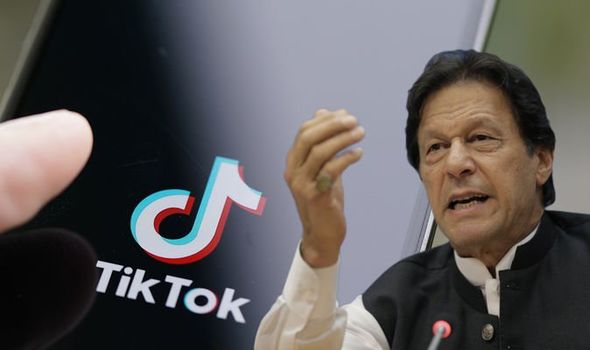
Pakistan Telecommunications Authority has, again, on Wednesday banned the popular video-sharing platform TikTok for the “continuous presence of inappropriate content on the platform and its failure to take such content down”.

Pakistan banned the platform for the same reason the first time in October 2020. However, TikTok assured the authorities that it would take measures to censor the contents deemed inappropriate. Days later, the ban was lifted.

Pakistan, an Islamic Republic and seen as conservative by many, blocked the app for the second and third time based on complaints from its citizens and under its Prevention of Electronic Crimes Act 2016. This current ban is reportedly the fourth. However, India blocked the app for reportedly political-cum-diplomatic reasons.

In Nigeria, a social commentator, Muhammad Ubale Kiru, recently criticised the app for promoting “immorality” among northern Nigerian youth. A post he wrote on Facebook went viral in the region’s cyberspace. In reaction to Kiru’s post, several people called on the Nigerian government to ban the Chinese-origin app.