Super Eagles

Now the real business begins at the AFCON

By Aliyu Yakubu Yusuf

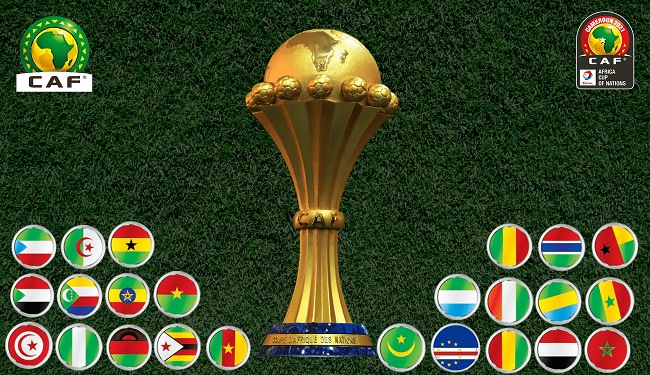
The group stages have come and gone at the ongoing AFCON in Cameroon, with Algeria and Ghana being the biggest casualties. For the 2-time winners Algeria, it was nothing short of a travesty that they failed to qualify from their pool. After all, they were on a 33 game unbeaten streak before the tournament. They were also odds-on favourite to go all the way. And to be fair, they crafted more than enough chances to win their opening two games against Sierra Leone and Equatorial Guinea before they met their waterloo against Ivory Coast. But unfortunately, their tournament can best be summarized as a combination of poor finishing, complacency and rotten luck.

As for the 4-time champions Ghana, the least said, the better. They played some of the most dreadful football in the tournament. Add this to their ill-discipline, and you have the Ghanaians knocked out in the first hurdle. That they couldn’t defeat the debutant Comoros is a damning indictment of the once-proud footballing nation.

Now that the group stages are over, the margin for errors is entirely gone. Our own Super Eagles have been the team of the tournament so far, but that counts for nothing if we fail to get the job done in the subsequent tournament rounds. Our reward for winning three out of three games is a tantalizing tie against former champions Tunisia, who have largely underwhelmed in the tournament. On the evidence of what has been seen so far, bookmakers would have Nigeria as the firm favourite to advance to the quarter-finals; and rightly so. However, I earnestly pray that our fantastic showing does not get our players and coaching staff complacent. The winner takes all nature of knockout rounds makes it an unforgiving business. It only takes an avoidable error by a player or a coach for a team to book the next flight home. Besides, the Tunisians are no pushovers. On the contrary, they have the experience and the pedigree to cause an upset.

Often, a team performs wonderfully at the group stages only to be undone by their heralded opponents. I always remember the 2002/2003 UEFA Champions League quarter-finals in which Juventus sent Barcelona parking. At the time, Barcelona got 16 points from the second group and had won a total of 11 out of 12 group stage games (there were two group stages then, in case you were wondering), and Juventus managed to crawl their way out of the second group with 7 points. When they were paired against Barcelona, many football fans and pundits regarded it as a foregone conclusion. Against all odds, Juventus not only defeated the seemingly unbeatable Barca, but they went all the way to the final, where AC Milan narrowly defeated them via penalty shootouts. The biggest lesson I have learned from that encounter is that as long as a team is still standing, it stands a chance to win a tournament. I hope our players think the same way.

The round of 16 fixtures has drawn up the path to the trophy, with Nigeria, Senegal, Mali and Tunisia as the biggest teams on the same half of the draw and Egypt, Morocco, Cameroon and Ivory Coast on the other half. If (not when) we overcome Tunisia, we are scheduled to play the winner of Burkina Faso and Gabon. And if we win that tie, we would be facing one of Senegal, Cape Verde, Mali and Equatorial Guinea before the final showdown at Yaoundé. So here’s wishing the Super Eagles all the good luck in the world.

Aliyu is a lecturer at the Department of English and Literary Studies, Bayero University, Kano. He can be reached via aliyuyy@gmail.com.

Buhari congratulates Super Eagles on three AFCON wins

By Ahmad Deedat Zakari

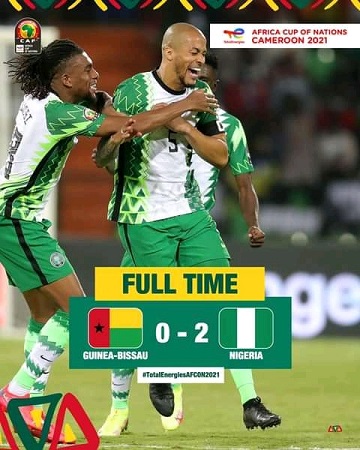
President Muhammadu Buhari congratulates Super Eagles on their brilliant wins against Egypt, Sudan and Guinea Bissau at the ongoing African Cup of Nations in Cameroon.

The President took to his verified Facebook account to commend the victories of the Super Eagles and urged them to maintain the zeal in making Nigeria proud.

The President posted, “Congratulations to our Super Eagles on winning all their three games and advancing to the second round of the AFCON in grand style. “

The President also advised the players to be good ambassadors of their country on and off the pitch.

He also noted that Nigerians are looking forward to Super Eagles bringing the cup home and assured them of his unflinching support.

He wrote, “They are assured of my unflinching support as they soar like the Eagles that they are to write yet another brilliant chapter of the unfolding story of Nigerian football”

Five reasons why northerners are not ‘well represented’ in Super Eagles

By Aliyu Yakubu Yusuf

In the not too distant past, there was a widespread belief that footballers of northern Nigerian (read: Hausa-Muslims) extraction are serially marginalised when it comes to a call-up to the Super Eagles. Due to the proliferation of viewing centres in the North that has brought a relative exposure to European football and the easy access to internet-powered mobile phones, most northerners have realised that there was a plot against players from the region. The ongoing African Cup of Nations in Cameroon has somehow brought the debate about whether the North, with its vast landmass and way larger population, is criminally under-represented in the Super Eagles. I don’t believe in any conspiracy theory as far as this argument is concerned. Here is why.

1. Unlike in the South, football is regarded as, first and foremost, a hobby in the North and not a trade or a career. As a result, many talented northern players lack the ambition to push themselves to the limit, to build football as their way of living. For example, some of his close friends testified that former Kano Pillars player, Ahmed Garba Yaro-Yaro, failed to settle at the German Club, Borussia Dortmund, because he couldn’t withstand the cold weather in the European city, among other reasons. That was a player who had the chance not only to make millions but also make a name for himself at the Super Eagles set up. Instead, he blew the opportunity and shortly returned to Kano Pillars via a Tunisian Club, Esperance. Imagine an Igbo or a Yoruba getting this once-in-a-lifetime opportunity.

2. Culture and religion also discourage our football players. In most quarters in the North, top-level European football, the utmost dream of all footballers worldwide, is seen as a strictly Euro-Christian tradition. Most parents would rather have their children become petty traders in Kano, Kaduna or Abuja than millionaire footballers in London so as not to have their culture and religion contaminated by the infidel westerners. In fact, the few football players that take the game seriously and attempt to reach the highest level of local football (the Nigerian Premier League) are often seen as wayward, low-IQ fellows who couldn’t make it in school and therefore resort to football.

3. Historical factors also play against the North. Just like western education, football was brought here by the Europeans and has taken a firm root in the South before the North. Because of their connection to their former European clubs, some Nigerian ex-footballers convince the clubs to establish football academies. The location of these academies is, more often than not, the South. Chelsea, Arsenal, Bayern Munich, Barcelona and Real Madrid all have football academies in Abuja, Lagos and a few southern cities but none in the North. The ex-Super Eagles’ golden boy, Nwankwo Kanu, has an academy in his native Owerri. I wonder whether we can say the same about the likes of Garba Lawal and Tijjani Babangida. Lagos alone has more than ten football academies, while the whole 13 states of the ‘core’ north have zero, with Kwara state as the only northern state with a football academy. If we genuinely want to compete with the South, we need football academies in the North. These academies employ agents that look for young players, recruit them, train them and open doors for them to pursue a career in top-level football. And because of historical factors, most football agents and scouts of European clubs seem to look for talents in the South rather than the North.

4. All around the South are former footballers who succeeded in the game and, therefore, serve as mentors and role models for aspiring young players. You quickly draw inspiration when you have a practical example right in front of you. A player from Delta state, for example, would look no further than Okocha, Keshi and Oruma, to know that he, too, can follow their enviable footsteps. Some of these ex-players use their networks of relationships to send young players for trial in some European clubs. However, the story is entirely different here.

5. All countries, including Argentina, Brazil and Uruguay, essentially select players who ply their trade in European football. Apart from the economic aspects, Europe is where football is played at its most competitive level. If you select Nigerian-based players primarily, they would be schooled by the likes of Salah, Aubameyang and Mane, who are more experienced in the game. Now, compared to the South, how many northern players can we mention who play football in Europe? I challenge everyone here to mention just ten prominent northerners in European football.

For these reasons, I don’t believe the Nigerian national team is rigged against us. As it stands, we are not doing enough to be selected for the national team. If our young players give it a better go, we have the potential to equal the South in that regard. I find it amusing that while most things are done on a quota system basis, football players are chosen purely on merit. Perhaps that is why it is the single most crucial thing that unifies Nigerians across diverse ethnic, religious and regional leanings. If we can begin to choose our leaders on merit (not quota system), I believe the country stands a better chance to progress.

Aliyu is a lecturer at the Department of English and Literary Studies, Bayero University, Kano. He can be reached via aliyuyy@gmail.com.

AFCON: The gigantic tournament

By Abdulrazak Iliyasu Sansani 


I had initially not titled this article “AFCON: The gigantic tournament” not because I had less respect for it hitherto. “I’ve heard that so often, that there’s no international break until March,” Jurgen Klopp said. “In January, there’s a little tournament in Africa, I just want to say, and I think Asia is playing games, too – South America as well. Great, can’t wait!” But I have done so now primarily to respond to the purported disregard, misinformation, or rather outright disrespect directed at the most prestigious football tournament in Africa, which Jurgen Klopp’s comment on the African Cup of Nations seems to convey, as less relevant.  I have tremendous respect for Klopp, one of the finest tacticians in football. I can’t certainly say he meant to disrespect the AFCON, though, this doesn’t stop me from tackling what is gradually gaining credence in Europe whether glaringly or subtly: the scanty regard for AFCON. 

I had once written an article titled the Pinnacle of African football and the quest for glory. It would have been published ahead of the last edition of AFCON in Egypt. However, it was never published. The said title aptly captured how I view African football. I believe this is how the vast majority of African football fanatics regard it. And no amount of disrespect, misunderstanding, red herrings, or disinformation could alter that. 

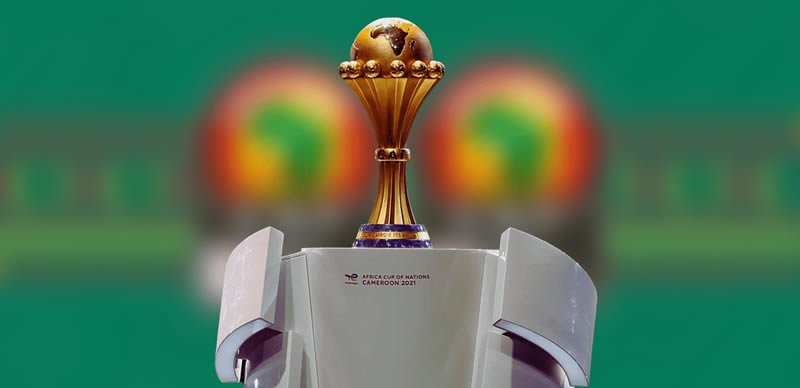
The biggest event in African football commences on 9th January,  with five times Champions Cameroon taking on Burkina Faso in Olembe Stadium in Yaounde. It is the curtain-raiser for the most important tournament in African football. The 2021 Africa Cup of Nations, known as the Total 2021 Africa Cup of Nations, is the 33rd edition of the Africa Cup of Nations, the tournament will be hosted by Cameroon, the Champions of the 31st edition. The competition was held in June/July in the previous edition, which Algeria won. 

But this edition has been moved back to January/February. Cameroon were to host the last edition, only for them to be stripped of the hosting right in  November 2018 mainly for three reasons: Anglophone crisis, delays in the delivery of critical infrastructure, and the Boko Haram crisis. This edition of the AFCON has come with numerous challenges even before it starts. Strong opposition has come from many angles centred on the timing of the AFCON. Confederation of African Football (CAF) has reverted back to AFCON’s traditional calendar, as against the normal Summer calendar used in major international competitions like the World Cup and European Football competition, though the former is set to be played in November this year, unlike the prior editions. 

The bulk of the opposition to the timing of the AFCON has understandably come from European clubs, who have a lot to lose by having some of their key players miss some features for the duration of the AFCON. These have made many clubs to devise means to keep their players against the wishes of the players or in collaboration with the players. This has allegedly seen some of the clubs going out of their ways to engage in unethical practices in order to keep their players from playing for their countries. We heard former Super Eagles player, John Ogu made startling revelations about his manager asking him to fake injuries in order to prevent him from playing for the Nigerian national team, ‘not even surprised at the situation of the foreign managers or clubs not wanting their players to go represent their country in tournaments,’ Ogu tweeted.

‘One certain manager in Portugal asked [that] I tell the coach of Eagles then that I was injured so as not to go for a friendly game.

‘After I left, went back to the club, he stopped playing me, and this was prior to the World Cup coming that year. I made mentioned it here and many out here said I was lying and so on. Una don see how them be now?’

Ogu, who eventually missed out on the 2014 tournament, has been without a club in 2020, as reported by Goal.com Africa.

‘I missed out on that World Cup list,’ he continued. “The evil part of it was when the list came out and he found out I wasn’t invited, man, walk up to me and asked I call the manager to list me and that if he wants, he can start me in the last game in the league.” ‘I was shocked how evil one can be.’  You could see the length some of these clubs could go. It is absurd, gratuitous, unacceptable, and a blatant disregard for African football and Africa in general. 

European Club Association wrote FIFA, stating why they might not release players for AFCON: health, the welfare of players, and the timing of the AFCON. The ECA further accused African football affiliated associations of failing to “properly implement protocols with worrying degrees of negligence.” The ECA said they would release African players for the forthcoming 2021 African Cup of Nations only when national football associations in Africa meet certain stringent conditions. At its meeting of December 2, 2021, the ECA in an official letter to FIFA Deputy Secretary-General Matthias Grafstrom and the Confederation of African Football (CAF), made their position known, especially with the raging Omicron variant of Covid_19. The ECA mandated FIFA and CAF to ensure necessary precautions are in place to protect players and club interests ahead of the tournament.

I have to concede that there are vital issues to iron out in the timing of the AFCON and the ECA are entitled to protect their interests. So also are CAF and its member associations. CAF will be unfair to its affiliated associations if it remains adamant on the current calendar merely to prove a point that it has sufficient grounds. However, all these don’t give the ECA the impetus let alone the justification to insult African football. Going forward there should be a clearly defined means, concessions, and major decisions must be made by all stakeholders for a mutually beneficial solution.

I know certainly that if it were the other way round: The backlash from the European press, clubs, and fans would have been deafening. A Series of sanctions would have been in place on those clubs from FIFA. CAF, FIFA, and all stakeholders should treat this matter thoroughly with a view to finding a lasting solution that has the players, the fans, and everyone in mind. Above all, a workable remedy that upholds the dignity of Africans and aids the development of the beautiful game should be rigorously pursued. 


Abdulrazak Iliyasu Sansani Writes from Turaki B, Jalingo, Taraba State and can be contacted via abdulrazaksansani93@gmail.com.
Finally, the Super Eagles joined the party

By Aliyu Yakubu Yusuf

Compared to its more illustrious continental equivalents, the African Cup of Nations (AFCON) receives far little media fanfare. With its scheduling in the winter when European football is well underway, the AFCON has been a pain in the ass for many a European club. And the actions on the pitch so far have elicited little excitement among watching fans. Goals have been at a premium, with just nine goals scored in the opening eight games in the tournament, making it a ratio of just over a goal a game.

The Super Eagles of Nigeria took on the Pharaohs of Egypt in a much-anticipated clash of African football titans. With Mohamed Salah at his mesmerizing best for his club, Liverpool and Nigeria having to play without two of its most in-form forwards, Victor Osimhen and Emmanuel Dennis, who are unavailable for various reasons, many pundits and bookmakers earmarked Egypt as the favourite. However, the Eagles didn’t read the script. As soon as the match kicked off, the Nigerians asserted themselves and dominated the early exchanges. However, they were made to wait until the 30th minute of the game before they got the deserved breakthrough.

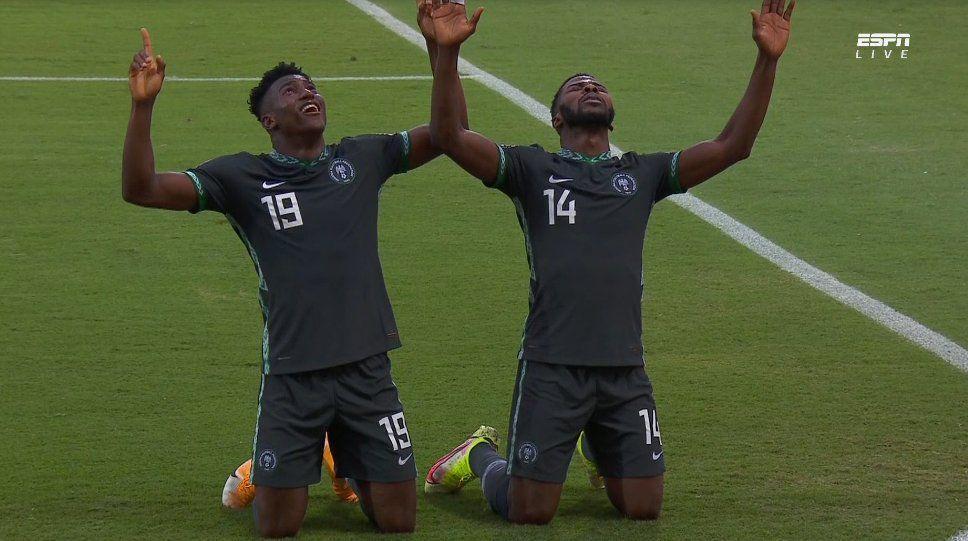
Moses Simon, who was a menace for the Egyptian defence all first-half long, left the Egyptian full-back, Tawfik, for dead before putting in a teasing cross that Hegazy partly cleared. The ball fell nicely to Joe Aribo, who directed the ball to Kelechi Iheanacho, who fired an unstoppable missile into the Egyptian net to send thousand Nigerians who crossed the border to Garoua to watch the game into rapture. That was to prove the game’s only goal that turned into a topsy-turvy affair in the second half.

If the Super Eagles were great in the first half, they were effective in the second. The Pharaohs improved massively in the second half. However, the Nigerians fashioned many gilt-edged chances on the break. With a little more composure in front of the goal, the Super Eagles would have won by at least three clear goals. But, assisted by the evergreen Wilfred Ndidi and the silky Joe Aribo at the middle of the park, the Nigerian defence line comprised Ola Aina, Troos-Ekong, Kenneth Omeruo and Zaidu Sunusi successfully managed the unenviable task of keeping Mohamed Salah at bay.

Credit must go to the coach Agustin Eguavon who made his debut today. The Super Eagles had been a shamble for long stretches at the end of Gernot Rohr’s tenure. If this match is anything to go by, the future looks promising for the Super Eagles. Of course, as a traditional footballing powerhouse in the continent, Nigeria goes to any AFCON tournament as one of the favourites. However, it is still early days, and there are better teams in this tournament than the Pharaohs. So, I think Nigeria has an outside chance to go over the finish line.  

Aliyu is a lecturer at the Department of English and Literary Studies, Bayero University, Kano. He can be reached via aliyuyy@gmail.com.

AFCON 2021: Nigeria at home in Garoua – Residents

By our Reporter who is in Garoua


Hours ahead of Nigeria’s Group D opener against the Pharaohs of Egypt, many residents of Garoua have expressed their support for the Super Eagles and vowed to cheer the Nigerian national team to victory. 


After a grand opening ceremony, the twice-postponed Africa Cup of Nations finally kicked off on Sunday in Yaounde. The opening match ended with the hosts, Cameroon, beating Burkina Faso 2:1 to lead Group A.


Nigeria, playing in Group D alongside Egypt, Sudan and Guinea-Bissau, will get into action Tuesday evening against the Mohamed Salah-led Egyptians. All Group D matches will be played at the Roumde Adjia Stadium in Garoua.


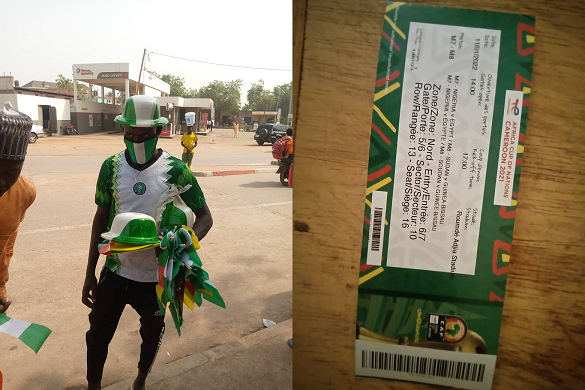
Thousands of Super Eagles fans have stormed the Northern Cameroon town “to offer their maximum support” for Nigeria’s national team “to emerge victorious”. While many arrived by air, fans mostly from northern Nigerian states crossed the land and water borders between Nigeria and Cameroon through Adamawa state.


Garoua, a predominantly Fulani Muslim town, is wearing a new look with all major roads and streets adorned in Cameroon flags alongside flags of other participating countries. Nigerian flags can be sighted in many different locations, including on cars and motorbikes, signalling the level of support the Super Eagles have among Cameroonians as well as Nigerians residing in the country.


Many residents interviewed by TDR throw their weight behind the Super Eagles in the promising encounter against the North African opponents “in the spirit of good neighbourliness”, they said. 


“Though I like Salah (Liverpool star who is expected to lead the Egyptian onslaught against Nigeria), I will support Nigeria. When they play against Cameroon, I will support my country”, said a uniformed Cameroonian man who chose to remain anonymous. His position was echoed by Adamu (27) and Usman, a Cameroon-based Chadian.


This reporter caught up Tuesday morning with a group of vuvuzela blowing Cameroonian youths along one of the busiest roads in Garoua. “Nigeria is at home”, the over-excited youths told TDR as they chanted and waved Nigeria’s flag.


Meanwhile, the sale of tickets is ongoing at various locations in Garoua ahead of the crucial Group D tie expected to record a massive attendance.

Why are northern players always absent or underdogs in the Nigerian national team?

By Salisu Uba Kofar-Wambai

It is very mind-blowing to view a national football team that ideally suppose to possess the quality of national outlook looking so sectional and tribal. Unfortunately, for quite a long time, the Nigerian football national team has been dominated by only what we called “southern players” at almost every level.

One will wonder why the utmost and utterly lopsidedness? After all, with its advantages, thanks to its vast population over the South, northern Nigeria has the upper hand to have more visibility in such national assignments. However, the reverse is always the case. Is that signifying that the northern folks lack interest in sports, especially football? Or does it mean that the North is consciously hiding its light under a bushel? NO! 

If one wakes up at dawn in northern cities and towns, the young, agile athletes are often the first people to meet exercising to their respective football pitches.

Moreover, the geographical advantage in terms of the landmass, with all the potentialities of its flatness, accurate for football arena and pitches against terrain nature and scarcity of southern land is another pointer that ought to have shot north ahead.

It is an indisputable fact that if you take around northern states, you will invariably discover that numerous football clubs are established in several places in the region. You will find players who can match the skills and talents of Messi, Ronaldo, Zidane, Figos, but all – or most – go nowhere. They mostly played in their small villages and ended up uncelebrated.

In Kano alone, the heart of the North, there are more than thousands of clubs playing in different levels and capacities. The Sports Ministry is, year-in-year-out, organising leagues for these clubs from league A to Z. These clubs produce young talents that can play at every level of football worldwide.

With globalisation and communication technologies taking centre stage of our lives, if one goes to viewing centres, where foreign leagues matches are shown, the story and impression one will get is that football has become part and parcel of our youths’ routine. It’s now popular culture. Football is always the topic of discussion on the lips of northern youth. Therefore, the football obsession comes in both ways – theoretical and practical, respectively. But why northern players are almost absent or underdogs in the national team?

And again, with football now going lucrative venture that quickly shoots up people to billionaire charts, with the abject poverty bedevilling the north and youth joblessness, sports can do a lot towards alleviating these monsters if taken significantly.

The central question is why many a time Kano clubs are the favourites and always win all Nigerian secondary schools? I think the appropriate answers to these questions are:

The North should embrace sports as a way of livelihood like its southern counterparts and encourage its youth to put in their best. The North should also give them support in terms of mentorship, send people of interest, read coaching courses, and, of course, financial assistance. Our well-to-do and government should facilitate our talents to get contracts in Europe through agents that secure clubs for players.

Our soccer administrators should make it compulsory for every coach vested with the responsibility of forming teams, especially in the under-17 and under-20, to always go round Nigeria for the players’ selection process. In most cases, those coaches sit back in their regions, select players from the South because they have already stereotyped northerners as worthless in that respective. And it is mostly the players of these levels that graduate into senior national teams levels and secure lucrative contracts to play in the prestigious leagues of Europe.

Northern youth should also try to go off weeds smoking; it is unfortunate to see a talented footballer and later find out that he’s a weed smoker. Most of them end up without achieving anything for obvious reasons. They should equally try to finish their secondary schools and be ready to go anywhere to play and show their resilience.

And above all, parents should pray for the guidance of their kids.

By doing this, I think the North will avoid the situation we are currently experiencing where northerners are a dot in the circle in the team of players representing Nigeria in the ongoing Olympics games in Japan.

Salisu Uba Kofar-Wambai is a PhD student at the Department of Mass Communication, Bayero University, Kano. He can be reached via salisunews@gmail.com.