Southern Nigeria

A letter to my Fulani brothers and sisters

By Abdallah Jalo Abba

Dear Fulanis, I am writing this fully aware that this might never get to the Fulani herders journeying in forests. That is why I’m precisely writing in English instead of Fulfulde, hoping the educated amongst us will accept my message and join hands as we push to help our nomadic brothers.

Rest assured, I know we like to talk about nomadic cattle herding in glowing nostalgic terms. Still, over the years, this practice has only exposed our nomadic brothers and sisters to agony and a harsh lifestyle in their attempt to live an impossible 17th-century life in the 21st century. Sincerely, this isn’t bravery but naivety. 

Nomadism harms our Fulani cousins more than anyone. I won’t talk about the needless loss of lives this archaic practice has caused since almost everyone is aware of that. I will instead concentrate on the health and socio-economic dangers this primitive practice has brought to our brothers.

As I write this, more than two million of our tribespeople are illiterates and do not own a house due to their lifestyle. However, this isn’t surprising since a nomad cannot own a home or go to school if he’s always on a perpetual journey from Borno to Enugu.

Hitherto, our nomadic brothers die of snakebites, infectious diseases and fever. They live in the rain and under the scorching sun and naturally cannot vote during elections. They sleep out in open areas or in rare situations in thatched makeshift accommodation (for the lucky among them), both of which expose them to tsetse flies and mosquitoes. When they get sick, they lack access to medical care like you and I, thereby risking losing their lives because of their chosen lifestyle.

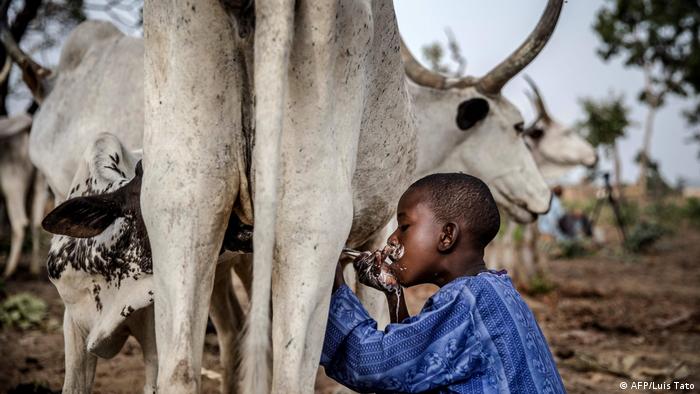
The nomads drink from polluted water sources contaminated with human faeces; the raw milk they drink carries dangerous bacteria, leading to food poisoning. In addition, they get respiratory diseases because of the dust they inhale while travelling in bushes and unfairly get extorted from security agencies.

Their children are born and raised under impoverished circumstances. They get driven from one place to another by fellow humans or natural forces. Often, this results in the loss of their lives or that of members of their family and/or their cattle.

Selfishly, sedentary Fulanis who live in cities and enjoy housing, electricity, decent water and healthcare like myself are the proponents of nomadic cattle-herding today. How convenient.

So, this same Town-Fulanis who send their kids to school want children of nomads as young as seven years old to continue chasing cows from Sokoto to Enugu and get paid N6000 every month. I know some of you may think this is mere exploitation, but I know slavery whenever I see it.

Obviously, nomadic cattle-herding in Nigeria is impossible. A country with a fast-growing population dependent on farm produce for sustenance cannot accommodate this practice because of the pressure on land and other resources.

A cattle route followed by a herd moving from Northern Nigeria to the South during the dry season is already filled with farmlands come rainy season, making it impossible for the same pack to return to the North via the same route. The problems are too many.

Indeed, it is northern states that have land for cattle grazing. So, it’s astonishing that our brothers choose to travel south where they’re desperately hated and where land is relatively scarce in search of greener pasture they already have in abundance in the North.

Undoubtedly, the land is the most precious of commodities, and land is what the North has and what the South lacks.

Borno state with a surface area of (70,898Km. Sq.) is 11 times the size of Abia state (6,320km. Sq). Niger state with a land area of (76,363km Sq) is 22 times the size of Lagos (3,345 km. Sq). 

The entirety of Ondo state and its forest reserves that Governor Akeredolu has been losing sleep over is only (15,500 Km. Sq), meaning you can remove four Ondo states and four Lagos states in one Niger state. In fact, the entire southeast boasts of only (41,440Km. Sq).

So, can anyone calmly explain to me why cattle herding is more viable in Ondo and not Niger or Borno states? 

This nomadic lifestyle has only brought hardship and suffering, turning our cousins into cheap and easily disposable labour, which has left them in extreme poverty of millennial dimensions and with no access to decent water, electricity, housing and healthcare.

Against this backdrop, the privileged and educated amongst us should advocate for the settlement of nomads, so they and their children can also attend school, watch TV, sleep in a conducive environment like ours and generally achieve economic emancipation. 

Doing that will improve literacy and reduce disease burden among our cousins, thereby freeing up more land to farmers and generally solving the problem of farmer-herder conflicts permanently.

When we do all that,  children of the retired nomads will become doctors in our Medical Centers, Engineers in our factories and lawyers that’ll represent us when people from other social groups seek to malign our loved ones or us.

Like it or not, we cannot disconnect ourselves from the advancement of the 21st century and peacefully coexist with people of this age. So, the earlier we abolish this archaic and primitive practice of chasing cows from pillar to post, the better for everyone – and more so for our landless tribe members.

Abdallah Jalo Abba is a Fulani and Engineer from Yola. He sent this article via hammedadam2@gmail.com.

Is the Nigerian public still divided over 2023?

By Kabiru Danguguwa

January 15, 1966, was the beginning of ethnopolitical division in Nigeria, followed by a civil war a year later. One may argue that colonialists initiated this division when they amalgamated the two, perhaps unrelated, protectorates for easy administration and exploitation in 1914. This manifested in the political parties formed on ethnic lines as a prerequisite for self-rule. Whatever the genesis of our division might be, January 15 1966, has been instrumental.

Different regimes have made several attempts, perhaps in vain, to create unity in diversity to address the above issue. Unfortunately, our democracy has not been a solution either. In a book chapter published in 2018, I argued that Nigeria’s democracy had recorded only one achievement. That’s the sustenance of “democratic rule” since 1999 without the return of the military. This is an outstanding achievement indeed. Thus, I conceptualised Nigeria’s democracy as an electoral democracy.

One of the most critical steps in electoral democracy is the transfer of power from the military to civilians, which happened in Nigeria in 1999. The remaining significant features are conducting elections as provided by the constitution and governing citizens with at least some concern of the process of law. From 1999 to 2019, we witnessed six general elections every four years as the constitution demands. The government also, to some extent, care about the citizens. Political science students may agree that we are operating above a facade democracy and, of course, below the liberal democracy found in the West. Put simply, unlike some countries in Africa and Latin America; we keep our military in the barracks and other places they constitutionally belong.

On the other side of the coin, the 23-year old Nigeria’s democracy is full of conundrums. The democracy is so illiberal that some citizens think of going back to the colonial era or the least, returning to military dictatorship. We often celebrate former military heads of state, especially when comparing them with civilian leaders. We almost unanimously prefer the military personalities of the people that ruled as military heads of state to their characters as civilian leaders. What is wrong with our democracy?

As 2023 approaches, just like the previous general elections, Nigerians are being divided over the choices of political parties and candidates that will govern the county. Several divisions emerged; some have been with us since the 1960s, while others were recently created. The North-South division might have come to stay. Southwest-Southeast has also been there for decades. There’s also Igbo versus the rest of Nigeria, mainly connected to January 15, 1966, and the Civil War.

There are at least two recently created or popularised divisions: Yoruba versus the rest of Nigeria and Yoruba versus the North. The duo, especially the former, is connected to the alleged concentration of the present government’s efforts on the welfare and well-being of Lagos and Lagosians.

Other popular divisions are APC-PDP and intra-political party rivalry between camps and political groups. I don’t believe in the religious division, for there are many Christians in the North and numerous Muslims in the South. There is Nigerian youth versus old-timers rift.

Political trends show that Northern Nigeria is more united politically. The North showcased its unity in 2015 when Boko Haram was on the verge of crippling socio-economic activities in the region. Out of optimism, people hated the regime of the day in favour of a Northern candidate. Forgive my conceptualisation of the North to include those who see themselves as Northerners.

There is a need for another unity as the region faces another severe problem mightier than pre-2015 general elections. In 2023, we must gear our unity using our strengths to present candidates who can deliver irrespective of their backgrounds and political parties. The South has never, since 1999, been united, but Yorubas have been. Look at how Southwest (Lagos), with Vice President, has been benefiting from this administration at the expense of the entire country. I firmly believe that we should only be united, not too ambitious. They say “politics is a game of numbers”, and we have the “numbers”.

Kabiru Ibrahim Danguguwa lectures at the Department of History and International Studies, Yusuf Maitama Sule University, Kano. He can be reached via kabiru.ibrahim87@gmail.com.

Who will save the Nigerian donkeys?

By Aliyu Nuhu

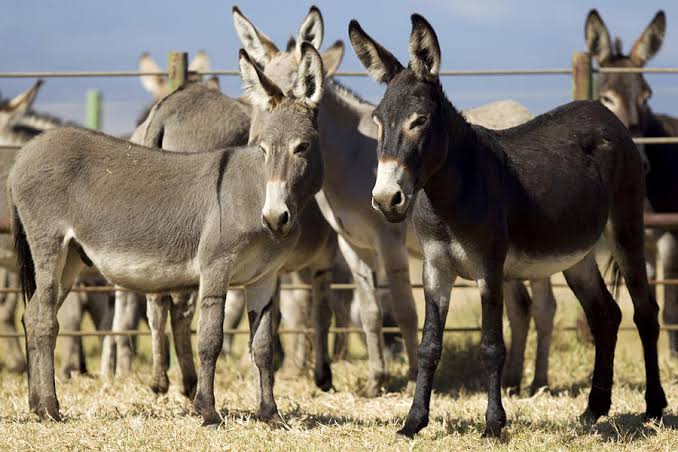
It is indeed a horrible time for the Nigerian donkeys. Each day about 5000 donkeys leave the Maigatari market in Jigawa State to the East, where they are consumed as meat by many households.

That is just one statistics from Jigawa State alone. Some 15000 donkeys also passed from North East and the Niger Republic to the South East, mostly Agbor, Anambra, Onitsha, Enugu and Abakalaki, to meet a similar fate.

Now it seems the donkeys are in for bigger trouble as the Chinese have also developed an appetite, particularly for their meat and skin. As a result, demand for donkeys has tripled over a short period. Meanwhile, the donkey is not bred in Nigeria on an industrial scale, and it is an animal that does not multiply with its very slow birth rate.

It is terrible enough to consume the gentle beast locally but worse to see it exported to China. Then who will save the donkey?

States in the North should legislate against the trading of donkeys for export to other parts of the federation. Already the price of a donkey that used to be between 8000-10000 naira has hit 35000 naira, making it well above the means of the local farmers who use it as rural means of transport.

The Federal Government must urgently place a ban on the exportation of donkeys and their by-products to the outside world, for now, China.

Aliyu Nuhu is a popular social commentator. He lives in Abuja, Nigeria.

Designing a New Nigeria: On governance and cultural considerations

By A.F. Sesay

When we talk of politicians, we speak about them like aliens or spirits from the evil forest. People came with their own beliefs, attitudes, approaches to life, and different perspectives on divine justice and the torture in Hell. We talk of them like we do of cold, callous people whose race is bent on inflicting the greatest damage possible on the human race. But wait…who are these politicians?

Let’s keep the answer in the brain and move on to something urgent: the design of governance experience. Do we see this as something we all could do better? Should leaders and followers look at governance from the lens of user experience design? I think they should!

If every product, starting from the Constitution to the Curriculum, was designed with the people they will affect in mind. I am sure the outcomes would be different. Hardly anybody is going to look at the current Constitution and Curriculum and say: Yes, these were designed with empathy, love and responsiveness to the needs of the citizens.

If the guy who presses the button at the Electricity House has the empathy to think that somebody is going out of business with every touch of the red button, a baby is dying in the hospital, an investor is packing his bag to leave Nigeria for good, a boy is missing vital lessons because he can no longer cope with doing his assignment in the dark, a family is exposing their lives to carbon monoxide generated by generators and so on.  If he had ever approached his work like a user experience designer, many problems could have been solved by now.

If the northerner or southerner stealing from the public treasury realizes that with every kobo stolen, a citizen dies and that this corruption-induced death is agnostic of region, religion or tribe, we wouldn’t need an Economic and Financial Crimes Commission (EFCC). Likewise, if every contractor realized that every badly-designed road is a graveyard for his fellow citizens, then potholes will become history.

If every Nigerian who had the opportunity to lead ten people or more or even less realized that these micro leadership tasks are a microcosm of the overall leadership output of the nation, then the nation’s leaders will be as upright as we want them. Suppose every employer knew that every right violated is the beginning of bad governance. In that case, the next commander-in-chief will make it a personal duty to provide the enabling ground for every citizen to thrive.


When every day becomes a reminder of the responsibility we all have as leaders in our various capacities, we will witness the birth of the ‘beautyful ones’ (apologies to Armah). There will be thoughtful and resourceful leaders in every cranny on the road to building a great nation.  


If every young person on Twitter and Facebook knew that every tweet or post could potentially destroy a life, fake news would be reduced to the barest minimum, even if it looks like a “catching cruise”. If every journalist knew that every fake report opens bigger wounds and increases the pain point of his readers, then nobody would invest millions in fact-checking. As a result, we all would have had less cause to verify the news and have fewer regrets for sharing harmful and divisive content.

We will be mentally ready to ask the right questions when we start seeing this all as a design problem and not just some issues caused by aliens or foreign species. And let’s know that INEC cannot give us what culture has deprived us of.

While scratching the surface for the past 60 years has given some temporary relief, the question of how far have we come and how many more years can we afford this mediocrity in governance here and across the continent?


We have ousted leaders we hate too much. We have brought in our tribesmen and “starmen” to power and opened doors to stupendous wealth for kinsmen. But in truth, the problems have compounded. So, it’s not an election problem; it’s culture, design and system that we have to work on.

Talking alone won’t win us good leaders. In the same vein, we can’t insult the elected into good governance. They have to want to. And the only way that happens is vision and a culture that makes it difficult for people to be bad at the top.

At the mention of Nigeria, everybody becomes an expert. But most of these experts only hit the surface, compounding the problem with false claims, unverified and alternative truths, faulty assumptions, stereotypes, bigotry, and received “wisdom”.

We have got to wake up and smell the coffee. There is a design problem out here. Until we are heavy on researching root causes and being genuinely interested in knowing all the whys of the problem, until we see ourselves beyond the just-a-citizen mindsets to the mindset of restless inventors, these problems are only growing bigger and more complex regardless of who is at the top.

We have to build a research culture and replace that with false assumptions and stereotypes. Until we see the governance products of today as collective input of everybody who played a role, no matter how little, until the people in power (from Local Government to Federal Government)  create a mechanism to capture feedback and continual improvement regularly, we will still have to come to these basics many years later.

Go to the archives and read headlines of the 70s and 80s and compare them to today’s headlines. You will observe a pattern that will shock you. In short, the design process is faulty, but we are finding it difficult to rethink the process because thinking itself will require an effort that we are not yet ready for.

A.F. Sesay sent this article via amarasesay.amir@gmail.com.

Five reasons why northerners are not ‘well represented’ in Super Eagles

By Aliyu Yakubu Yusuf

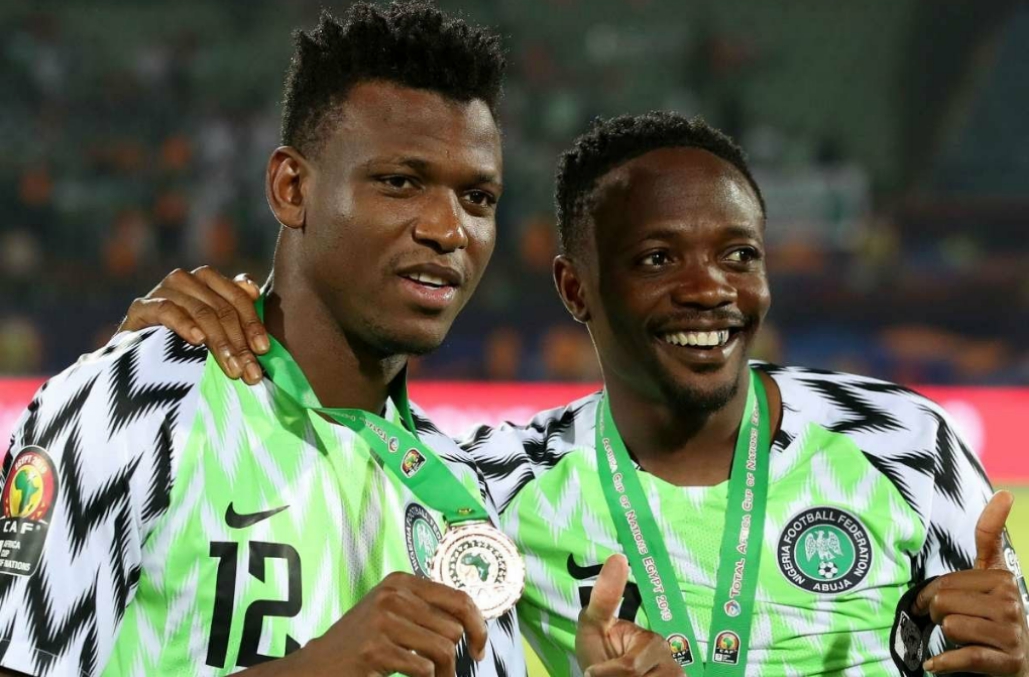
In the not too distant past, there was a widespread belief that footballers of northern Nigerian (read: Hausa-Muslims) extraction are serially marginalised when it comes to a call-up to the Super Eagles. Due to the proliferation of viewing centres in the North that has brought a relative exposure to European football and the easy access to internet-powered mobile phones, most northerners have realised that there was a plot against players from the region. The ongoing African Cup of Nations in Cameroon has somehow brought the debate about whether the North, with its vast landmass and way larger population, is criminally under-represented in the Super Eagles. I don’t believe in any conspiracy theory as far as this argument is concerned. Here is why.

1. Unlike in the South, football is regarded as, first and foremost, a hobby in the North and not a trade or a career. As a result, many talented northern players lack the ambition to push themselves to the limit, to build football as their way of living. For example, some of his close friends testified that former Kano Pillars player, Ahmed Garba Yaro-Yaro, failed to settle at the German Club, Borussia Dortmund, because he couldn’t withstand the cold weather in the European city, among other reasons. That was a player who had the chance not only to make millions but also make a name for himself at the Super Eagles set up. Instead, he blew the opportunity and shortly returned to Kano Pillars via a Tunisian Club, Esperance. Imagine an Igbo or a Yoruba getting this once-in-a-lifetime opportunity.

2. Culture and religion also discourage our football players. In most quarters in the North, top-level European football, the utmost dream of all footballers worldwide, is seen as a strictly Euro-Christian tradition. Most parents would rather have their children become petty traders in Kano, Kaduna or Abuja than millionaire footballers in London so as not to have their culture and religion contaminated by the infidel westerners. In fact, the few football players that take the game seriously and attempt to reach the highest level of local football (the Nigerian Premier League) are often seen as wayward, low-IQ fellows who couldn’t make it in school and therefore resort to football.

3. Historical factors also play against the North. Just like western education, football was brought here by the Europeans and has taken a firm root in the South before the North. Because of their connection to their former European clubs, some Nigerian ex-footballers convince the clubs to establish football academies. The location of these academies is, more often than not, the South. Chelsea, Arsenal, Bayern Munich, Barcelona and Real Madrid all have football academies in Abuja, Lagos and a few southern cities but none in the North. The ex-Super Eagles’ golden boy, Nwankwo Kanu, has an academy in his native Owerri. I wonder whether we can say the same about the likes of Garba Lawal and Tijjani Babangida. Lagos alone has more than ten football academies, while the whole 13 states of the ‘core’ north have zero, with Kwara state as the only northern state with a football academy. If we genuinely want to compete with the South, we need football academies in the North. These academies employ agents that look for young players, recruit them, train them and open doors for them to pursue a career in top-level football. And because of historical factors, most football agents and scouts of European clubs seem to look for talents in the South rather than the North.

4. All around the South are former footballers who succeeded in the game and, therefore, serve as mentors and role models for aspiring young players. You quickly draw inspiration when you have a practical example right in front of you. A player from Delta state, for example, would look no further than Okocha, Keshi and Oruma, to know that he, too, can follow their enviable footsteps. Some of these ex-players use their networks of relationships to send young players for trial in some European clubs. However, the story is entirely different here.

5. All countries, including Argentina, Brazil and Uruguay, essentially select players who ply their trade in European football. Apart from the economic aspects, Europe is where football is played at its most competitive level. If you select Nigerian-based players primarily, they would be schooled by the likes of Salah, Aubameyang and Mane, who are more experienced in the game. Now, compared to the South, how many northern players can we mention who play football in Europe? I challenge everyone here to mention just ten prominent northerners in European football.

For these reasons, I don’t believe the Nigerian national team is rigged against us. As it stands, we are not doing enough to be selected for the national team. If our young players give it a better go, we have the potential to equal the South in that regard. I find it amusing that while most things are done on a quota system basis, football players are chosen purely on merit. Perhaps that is why it is the single most crucial thing that unifies Nigerians across diverse ethnic, religious and regional leanings. If we can begin to choose our leaders on merit (not quota system), I believe the country stands a better chance to progress.

Aliyu is a lecturer at the Department of English and Literary Studies, Bayero University, Kano. He can be reached via aliyuyy@gmail.com.

Towards achieving unity in Nigeria

By Lawi Auwal Yusuf

The amalgamation of the protectorates in 1914 predetermined a united state for multiple precolonial chiefdoms. Highly diverse Nigeria featured by a rainbow of cultures is deeply fractioned along ethnic and religious lines.

Imperial misrule left a bad legacy for national unity. Regional devolution caused intense tussles among regional forces over the powerful central authority, which was the basis for post-independence sectarian disputes.

Thus, six-year-old Nigeria witnessed a catastrophic separatist war that took the lives of many heroes. Since the aftermath of the bloodletting, the country has been bedevilled with lingering ethno-nationalisms coupled with regular fatal brawls between the tribes. This was due to extreme polarization and segregation of the heterogeneous groups with no sense of togetherness, community cohesion and dovishness. 

Deeply ingrained tensions have been the order of the day. Igbos accuse Northerners of their grief and impeding their chances of realising the apex power. The Northerners equally see the Igbos as power maniacs. Yorubas feel discontented with the status quo, while minorities have the impression of a roughshod ride over them.

Tribal and religious absolutism are awful threats as multiculturalism has failed, and communities have become ever more fragmented. Patriotism has eroded, and Nigerians are less tied by the bond of nationality. They are no longer one united people and do not regard themselves as national brothers with a sense of shared identity. Hence, there is an absence of the desired unity in diversity, tolerance and integration.

Politicians must develop the impulse and genuine commitment to national unity. They must believe that this is a dire task that transcends beyond cultural exhibitions, festivities or even wearing traditional attires of host communities during political rallies. Instead, it requires solid whims, sacrifice and effective policies.

Technocrats are required to accomplish this task efficiently. They must design policies that ensure equitable treatment of the ethnocultural groups alongside the creation of space for all the divergent voices to be heard. Everybody must have a say in society. Moreover, they must devise ways to live together harmoniously, without prejudice or malice.

Integration is so effective in ensuring peaceful coexistence between fractious groups. Therefore, increased contact across the nation should be emphasised, and Nigerians should increasingly intermingle with one another. This will allow people to live closer to one another, work amicably, and ensure that relations remain peaceful. Therefore, disputes will vanish obstinately.

This can only be realised if there is an honour for individual cultural preferences in public life. All institutions must make special provisions for all Nigerians’ choices and cultural needs. So, everybody will develop a worthy stake in the social order. Policies must be put in place to accommodate the values, diet, dressing, spiritual convictions, and practices respectably.

We need to facilitate multilingualism by encouraging people to learn several native languages. Speaking one another’s languages diminishes suspicion, tensions and conflict. This will also build trust, honour and understanding across all cultures.

Social exclusion creates deficient opportunities for disadvantaged/minority groups suggesting that they don’t have equal rights. As a result, they are treated as second class citizens, hindering cohesion and egalitarianism featured by social inclusion and pluralism. Moreover, it leads to distress to the abandoned groups, which poses a persistent threat of disharmony. However, institutions must make efforts to meet the needs of all communities and not tilt towards the needs of a particular section.

Regrettably, the tribes have distorted perceptions of each other. Malevolence aggravates because of misleading histories and myths falsifying the reality and typically portraying others as diabolic. They hold malicious convictions and stereotype each other based on their previously treated beliefs. Any trivial provocation warrants the impression and becomes a basis for vengeance. The exasperation of hostilities by IPOB, ESN, Afenifere and others are clear examples.

It is needful to enact a statute outlawing attitudes of these tribes calling one another with derogatory or slur names that denigrate or demonise others. Ethnicities hardly unite if they are abusing one another.

The present mass idleness must be evaded alongside the creation of decent jobs. Graduates happen to be jobless long after they have left school. Similarly, numerous unknowledgeable youths remain redundant. Ethnic and religious skirmishes intensify every day due to hardships encountered by youths in their efforts to have a lawful means of subsistence. Many of them have the requisite skills and qualifications but found them not helpful in securing employment. They have fallen victim to anxieties, delays, and disparagement and developed a strong feeling of despair, oppression, and unfairness. Hence, they engage in crimes or sectional clashes to counter the injustice and avoid the distress of poverty.

With such dissimilarities in all parts of society, tolerance is indispensable if Nigerians want to live in peace. The capacity to live in a plural society will secure a harmonious future for multiethnic Nigeria. However, Martin Luther King Jr. once said to Americans at the peak of racial segregation that “we must learn to live together as brothers or perish together as fools.”

Lawi Auwal Yusuf wrote from Kano, Nigeria. He can be reached via laymaikanawa@gmail.com.

The cow does not need oil

Ahmadu Shehu, PhD.

It is true that the large chunk of Nigeria’s export comes from oil and that Nigeria depends to a great extent on this commodity for economic survival. However, this situation results from economic laziness – one of the many curses that came with crude oil to our country.

Pre-oil era, Nigeria was faring better, leading in many aspects of social and economic endeavours, especially agriculture and technical skills. This diversity of resources made our economy very resilient. Those were the days when Nigeria was a role model to the developing world.

Speaking of livestock and animal husbandry in today’s Nigeria leads to misleading insinuations that some supremacist ethnic group domiciled in the bush wants to hijack the “southern-oil-money” to rear cows.

These claims are not only wrong, but their makers are also pathetically ignorant of national and global economics. The fact is that, all over the world, animal husbandry is mainly economic and not ethnic, religious or regional. It is a matter of income, survival and sustenance. Data from butcheries, ternaries, restaurants, etc., in Enugu, Lagos and Port Harcourt can confirm this.

However, I do not squarely blame the proponents of these narratives for their lack of understanding of the fundamental economic outlook of this country. Instead, I assume that this kind of utter ignorance is also one of the curses caused by crude oil in Nigeria. Just as it killed all other viable sectors of our economy and transformed our political leadership into a set of docile, sit-and-wait set of people, it has succeeded in destroying our intellectual discourse. Today, all socio-economic conversations are viewed from the narrow prism of petrodollars.

Thus, our socio-economic and political conversation is now bereft of ideas and far from our social realities. It is sad to see many people failing to appreciate the glaring fact that six decades after the discovery of oil at commercial quantity, this country did not only fail to develop but has moved backwards in all indices of human and social development.

The topmost hierarchy of political leaders, policymakers, and civil society has failed to learn one simple, practical truth: our country’s strength, resilience, and prosperity are not in oil. They are right there under our feet and noses, at the backyards, waiting forever to be harnessed and utilised. Nigeria can take a cue from our mates, ala Malaysia, Indonesia, Brazil, India, etc.

Now, back to the “oil-money” narrative. Are herders and cattle breeders asking for “oil money”? No. In fact, herders do not care – or are not interested in crude oil in Nigeria.  Secondly, those of us advocating for the development of the livestock sector do so for the economic advancement of Nigeria, in general, and not just the herders, or “Fulani”, as would say the bigots.

For one, agriculture (livestock and crop) is the largest contributor to Nigeria’s economic growth. It contributes 40% of economic activities, employing over 60% of our country’s population – that is, one hundred and sixty million Nigerians.

You may think that the livestock sector is economically barren and that governments and other sectors of the economy do not benefit from it. You may even argue that only the “malams/awusas” benefit from the economic resources in this sector. But, you are dangerously mistaken, and I will show you why.

In Nigeria today, livestock is a multibillion-dollar business sector. Estimates by the Federal Ministry of Agriculture show that each year, Nigeria produces (and consumes) at least 18.4 million cattle, 43.4 million sheep, 76 million goats, 180 million poultry birds, among other things. Multiply these numbers to any amount of years and see the contribution of the livestock to the Nigerian economy.

For demonstration, let’s assume each of the 18.4 million heads of cattle is valued at $200 only. What you get is a staggering 6 billion dollars – three trillion naira per year – i.e. about ¼ of the country’s annual budget.

My experience in cattle businesses tells me that governments at all levels make a minimum of 10% direct revenue on each cattle, ranging from the market, local government, state, transportation, etc., levies that trail the cattle market chain.

But, this is just for cattle. These numbers multiply exponentially when other varieties of livestock come into the equation. Now, consider additional extended revenues on factories and sub-sectors that rely solely on livestock, such as leather, meat, and dairy.

While doing the maths, please remember that these raw and food materials serve Nigeria, one of the largest markets in the world, the most populous African country and the largest economy on the continent. Thus, the economic resources and taxations derived from this sector are massive!

Therefore, the question that naturally follows this arithmetic is: How much is Nigeria’s budget for the development of this sector and the millions of people it employs? 

As Nigerians, we are aware of the 12% derivation to the so-called oil-bearing states at the expense of other equal federating units. The basis for this disparity is to enhance the development of the immediate oil-bearing communities.

Similarly, a large chunk of the oil income is reinvested in the oil and gas industry development. Businesses and individuals in this industry benefit tremendously from these incentives and investments.

On the contrary, the Nigerian budgetary allocations for agriculture, particularly the livestock sector, have been very meagre and far below the lowest AU benchmark of 10%. For instance, from 2015, the allocations for agriculture have been below 2% of the budget, receiving a paltry N160 billion (1.37%) in 2020.

Obviously, this is far from commensurate to the economic and financial contributions of the sector in Nigeria’s GDP. It also negatively affects the lives of the majority of Nigerians whose livelihoods depend on agriculture.

While the government’s spending on agriculture is pathetic, the situation is even worse in the livestock sub-sector. For instance, under “promotion and development of animal production and husbandry value chain”, the 2020 budget proposes only N546, 156, 792 for the whole livestock sub-sector. Note that this amount was not budgeted for just cattle, sheep, or poultry but Nigeria’s entire livestock value chain. And that is just a proposal, not actual spending.

This, given the resources, financial and material contributions of the sector, is an insult on the human senses of any keen observer. Moreover, juxtaposing this estimate to that of the crop value chain makes the economic injustice against livestock producers even more glaring.

Therefore, it appears that livestock production and development are grossly marginalised across all three tiers of government and even within the agricultural sector. I had hypothesised elsewhere that this disparity is one of the major causes of the setbacks in Nigeria’s efforts at agricultural development.

Now, in this socio-economic reality, the governments and other Nigerians outside the economic chain of livestock anticipate a quick, sufficient, and even elegant modern livestock breeding system in Nigeria.

Worse still, the government expects these people who suffer from this severe lack of financial support, access to social development and political representation to be absolutely immune to the social consequences of this economic inequality and injustice.

This, without fear of contradiction, is an impossible mission. For, we have learned from the works of the philosopher-king, Emir Muhammad Sanusi II, that every economic situation bequeaths social reaction(s), as humans are not only social but also “economic animals”.

The points derived from the previous discussion are that herders and livestock breeders do not need oil or its by-products to grow livestock. They do not also ask for money accrued from the oil and gas industry to be invested in developing the sector.

What the livestock needs – which is legitimate and necessary – is the reinvestment of a fair portion of the wealth it creates back into the sector and the social development of the herding communities.

By and large, herders are not asking for “oil money” because the cow does not need oil to prosper. We are only saying that the money accrued from the livestock sector – a small portion of our contribution to the nation’s economic basket – be reinvested into the very sector that produces it as is done for other salient sectors of the economy. Full stop!

Dr Ahmadu Shehu is a herdsman and academic. He can be reached via ahmadsheehu@gmail.com.

Yoruba Muslims in Yorubaland: Revisiting interfaith dailogue and religious tolerance

Perhaps, it was the Mathew Effect that made Professor Kpareogi’s recent article on the plight of the Yoruba Muslims in their own lands so famous that it generated so much response as if, until the piece was made public, nobody was aware that Yoruba Muslims, who were in the majority in the Southwest, have been under powerful religious subjugation by the Yoruba Christians.

But even a casual observer will not fail to notice the recurring crisis across the Yoruba land over the use of Hijab by Muslim female children in the schools. Some of these sartorial choice crises trended long enough to attract the attention of everyone while some have to be settled at the courts. The infamous ruling by an Ikeja high court that because Christians would feel less righteous in the presence of Hijab wearing children, Muslim children should not wear Hijab to their schools, is still fresh in our memories. Delivering the judgement on 17th October 2014, Justice Modupe Onyearbor declared that “The non-Hijab wearing students will feel inferior to those who are putting on Hijab.” The judge, therefore, banned the use of Hijab for Muslim girls till an Appeal Court put aside that judgement.

The sartorial choice struggle is, perhaps, the most glaring among the many struggles being fought by the embattled Muslim majority in the region, this is mainly due to publicity it is generating and the will to resist the subjugation by the new generation of Muslims who firmly believed in self-determination. The case of Barrister Firdaus Amata who refused to jettison her constitutional right on December 12, 2017, an action for which she was denied entry into the International Conference Centre by the Body of Benchers, highlighted one of such struggles.

Apart from the Hijab struggle, the most glaring inequality the Muslims are struggling with is the fact that despite being the majority in the region, not a single Islamic court exists in the whole region. They are forced to either take their cases to the imposed Christian common law courts or Customary courts. This is more worrisome given that Islamic courts existed in Yorubaland long before the arrival of the colonial armies who abolished them and imposed their own courts. Islamic courts existed since 1842 in that region, according to MURIC.

Even the Yoruba Muslim’s peaceful move to introduce sharia courts in Yorubaland through constitutional means was fiercely tamed by the Christians in that region. On May 27 this year, the Pentecostal Fellowship of Nigeria (PFN) was eloquent in its submission that the introduction of Shariah Law in the South West should be ignored by the Senate.

Nothing highlighted how the Muslims in Yorubaland are struggling to free themselves from Christian subjugation than the declaration by some Muslim groups that they are not in support of the Oduduwa Republic as they will face persecution if actualized. This belied the widely believed notion that the Yorubas are homogenous and that religion plays a second or third role in their lives. It proves that for a long time, the Muslim majority were silenced into submission out of fear of “social ostracism”. Their passiveness was fully exploited by Christians and misunderstood by northerners.

Now that the passiveness is giving way to the rising tide of Islamic awareness in the region, things are getting clearer that the hyped religious tolerance in that region was indeed the domination of Christians over Muslims.
Ironically, this is coming just as some voices are maintaining a hyperbolic but erroneous assumption that the North is the den of religious intolerance even as facts are contradicting them.

Sheikh Nuru Khalid is among those who seemed to have fallen for this fallacy recently. In his clamour for Interfaith Dialogue, he recently claimed, among other things, that Interfaith Dialogue was necessary now given the bad light in which the terrorist organizations, like Boko Haram, are painting Islam and the high level of religious intolerance in the North.

If the Sheikh is right on Interfaith Dialogue’s effect on religious intolerance, he is very wrong on the Boko Haram claim. He is also very wrong in his charge that Muslims are to be blamed for religious intolerance in the region. Because of all the religious crises in this part of the nation, over ninety per cent were NOT caused by Muslims; they were just defending themselves.

Therefore, to insinuate that Muslims are to blame for religious intolerance in the country is insidious even if said in good faith, because it is a BIG lie.

It is flabbergasting to assume that had there been an Interfaith Dialogue, Boko Haram wouldn’t have happened, because among the reasons the terrorists have for fighting is what they called the systematic downplaying of religious teachings in order to please non-Muslims.

It is evident that both the terrorists and the Sheikh have agreed on the same erroneous definition of Interfaith Dialogue. Both seemed to give Interfaith Dialogue the definition of Syncretism. Many people speak about syncretism while they think they are discussing Interfaith Dialogue.

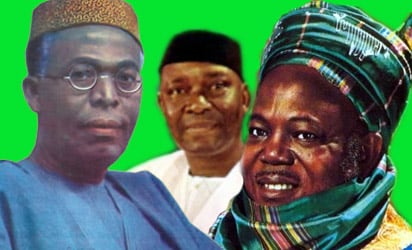
To differentiate between the two terms, just take the stands of late Nnamdi Azikiwe who said “We must forget our differences”, and that of late Sir Ahmadu Bello (Sardaunan Sokoto) who replied, “No, let’s understand our differences…” What Azikiwe said is syncretism while the stand of Sardauna connotes Interfaith Dialogue.

I don’t think anyone who knows that Muslims are the majority of the victims of Boko Haram or understood their mission will honestly insist that an Interfaith Dialogue would have been an antidote to their aggression.

Finally, while I am not saying (the Muslim) North is totally devoid of religious intolerance (this depends on your definition of the term), it is not true that we are the purveyors of intolerance, rather, we are at the receiving end of religious intolerance. This could be discussed in another piece.

Muhammad Mahmood writes from Kano.

Kannywood star laments rejection of Hausa films by southern cinemas

By Muhammad Sabiu

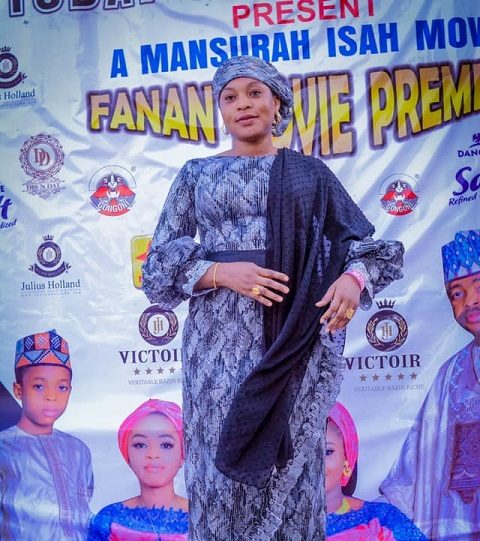
A famous Kannywood producer and former actress, Mansurah Isah, took to her social media accounts to lament how some southern Nigerian cinemas rejected the Hausa films.

She further complained about the government’s reluctance to support the films produced by the Kano-based Hausa film industry, Kannywood, and the inability to make the films as popular as those produced in other film industries in Nigeria.

Speaking in a 56-second video, she strongly questioned why Hausa movies are not popular all over Nigeria, except in just a section of the country, which, according to her, should not be like this.

“What did we Hausa producers do in Nigeria that our Hausa movies cannot be shown in cinemas all over Nigeria? But Yoruba movies will be all over; Igbo movies all over. Nigerian movies, too, are all over. So why is that we Hausa producers all left behind,” she questioned.

Though she didn’t mention anybody’s or agency’s name, Mansurah further solicited assistance, which she said should be by patronising films produced by the Kannywood film industry.

“Let us be assisted. You should make regulations. Display your language. Display your culture. You should love us. Make our films to be watched all over Nigeria. An English movie would be brought and shown in Kano, but a Hausa film wouldn’t be taken to Lagos and be displayed there. What is the reason?

Tacitly addressing people in power, she said, “We are the ones who support you. We neither insult nor defame you but we are still not developed. So what do you want us to do?

“I beg you in the name of God to help us and come up with regulations that will make Hausa films to be consumed everywhere in Nigeria.”

Kannywood is embattled with many tough challenges relating to cultural and religious issues, clichéd film content, monopoly of megastars, internal crises, among other problems critics and experts point out.

Masurah produced Fanan, a film whose songs have been trending on social media for several months. It recently showed in cinemas in Kano.

Zoning or merit: what path Nigeria?

By Abdulrazak Iliyasu Sansani


Nigeria, the most populous African country: endowed, cerebral, and should have been one of the most promising countries in the world has democracy as its form of government.

This has not always been the case for a country that will be celebrating her 61st anniversary as an independent country on October 1, 2021. Nigeria’s path to Independence was rather long,  laced with procrastination, and unlike most of her fellow African countries. Some of them getting Independence earlier than Nigeria, even when Nigeria was more prepared to handle the travails of life in a newly independent country.

Some of the founding fathers of Nigeria, especially from the northern part of the country had a hand in how this panned out. So many accounts point to the fact that they did all that to protect the interests of our compatriots from the north, who were lagging behind in education, what is referred to as western education, especially in northern Nigeria to differentiate it from the Islamic education, which the north was already well established as a region, with the Kanem Bornu empire having a documented history of more than a millennium in Islamic scholarship.

Thus, some of the founding fathers thought that having independence at one point in time would have affected their region in managing the affairs of an independent state. They worked and took their time in preparation for having what it took to run self-government, which in the end delayed our independence from colonial rule. I hold no brief for any of them despite the fact that I will always have utmost esteem for all of our founding fathers’ because of their contributions to our dear country.

Six decades after Independence. We have tested disparate forms of government and systems. In these periods, Nigeria has seen what it means to be under any of these. It has taken us a long time to settle for what we today practise: democracy. Having experienced many civilians and military regimes in Nigeria. This civilian, democratic dispensation has lasted longer than any in our quest for true nationhood.

When on May 29, 1999, Chief Olusegun Aremu Obasanjo mounted the podium to take the most sacred oath of office, as the President and Commander-in-chief of the Nigerian armed forces. It was not only in fulfilment of the legitimate aspirations of Nigeria for a sound democratic country but also the inherent freedoms, respect for rule of law, justice, and all ensuing benefits of living in a country where a much-revered document, the constitution explicitly guaranteed all rights that preserve as well as uphold the dignity of all citizens irrespective of faith, region, gender, age, social status, etc.

22 years afterwards we are yet to decide on even the most salient of issues, which deciding who governs the country forms a big part of it at any given time. Since the zoning lexicon was introduced in the 2nd republic by the iconic Dr K.O Mbadiwe, zoning has taken centre stage throughout. Becoming more prominent by every electioneering even when it has been assumed erroneously to become less crucial. In fact, zoning in Nigeria is like the proverbial cat with nine lives that has refused to die.

Zoning of positions has taken an integral place in the political office sharing formula prior to elections and endorsements among political power cycle whether subtly or glaringly. It has reached a point where zoning has almost become a norm. Even though, it is not enshrined in our constitution or clearly stated in the constitution of any of the major political parties in Nigeria to the best of my knowledge. But there seems to be an unwritten rule vividly engraved in the minds of most of the major political actors, followers, average politicians, political pundits, etc. It is a stark reality that there is a gentleman agreement that drives agitation for zoning in the political sphere of Nigeria. This has continued to lead the quest for power at all levels: regions, zones, states, local governments, districts, wards, villages, etc.

Yet, we have failed as a nation to give zoning the priority it deserves in our political discourse. As far as Nigeria is concerned, we are living in self-denial as regards zoning. Zoning is abhorred, cherished, and even discussed when political interests are at stake on many occasions without the pure intent of the interest of the masses at heart. Examples abound in many states of Nigeria where people could study and comprehend zoning. I will dwell more on the presidency, which today is the focal point of strong proponents of zoning who have resolved to ride on the back of it to the Aso Rock Presidential Villa, the Nigerian President’s official workplace and residence.

‘The Forum reiterates its commitment to the politics of equity, fairness and unanimously agrees that the presidency of Nigeria be rotated between Southern and Northern Nigeria and resolved that the next president of Nigeria should emerge from the Southern Region,’ said in a communique issued at the conclusion of the meeting of governors of Southern Nigeria at the Lagos State Government  House, Ikeja, Lagos State, on Monday, July 5, 2021, Nigeria.

While the same journey to the coveted  Aso rock villa has invited the wrath of the sudden champions of merit over zoning, or any political consideration, the problem is that one doesn’t just grasp anything when zoning is the topic of discussion. For the same proponents of zoning today who believe it is the flawless solution to our difficult decision of the leadership of our country at any given time, most of them were the people who were absolutely against it and clearly asserted that it impedes our progress as a country. They believed only the best deserved to lead this country.

‘The Forum observed that some Northern States Governors had earlier expressed views for a power-shift to three Geo-Political Zone in the South with a view to promoting unity and peace in the Nation. Notwithstanding their comments, the Forum unanimously condemn the statement by the Southern Governors Forum that the Presidency must go to the South. The statement is quite contradictory with the provision of the Constitution of the Federal Republic of Nigeria (1999) as amended that the elected President shall:- score the majority votes; score at least 25% of the votes cast in 2/3 States of the Federation. In the case of run-up simple majority win the election,’ one of the resolutions of the Northern States Governors’ Forum meeting with Northern Emirs and Chiefs held on Monday, September 27, 2021, in Kaduna.

Today, the views remain astoundingly the same but the majority of those who shared them have seamlessly changed positions from Arewa Consultative Forum (ACF) is a political and cultural association of leaders in Northern Nigeria, which has sizeable influence in the political scene. Afenifere pan Yoruba socio-political group. Ohanaeze Ndigbo is the apex Igbo socio-political group. Northern Elders Forum, Southern Governors forum, an avalanche of powerful politicians from all over the country, and just recently Northern Governors Forum followed suit, etc.

When former President Goodluck Ebele Jonathan succeeded his boss, late President Umaru Musa Yar’adua I could vividly recall the north was against his candidacy, especially the  PDP chieftains from the north who said it was the north’s tenure. I recounted the national press is awash with news that concentrated on the candidacy of the then occupant of the Presidential Villa, Dr Goodluck Jonathan. I remembered one of the popular songs then, which was urging him to contest. ‘Run, Goodluck, Run,’ which the amazon Onyeka Onwenu MFR recorded and released in 2011 in support of the former President’s electioneering.

Most of the people who are ardent supporters of zoning today are from the south and they were blatantly against it then and had the unconstitutionality of zoning as their chief reason. Of course, because it didn’t favour them. While those who are mostly antagonistic about it today, are amazingly from the north and have similar motives like those, who were against it then, certainly because it doesn’t favour them too now.

 As it is President Muhammadu Buhari who hails from Katsina State, the northern part of the country finishing his last tenure. Should the next President come from the south, we would be back to this same situation in eight years time, if the needful is not done now. That is if we don’t make zoning constitutional now. We have to tackle this issue once and for all.  If we fail to do it now, the northern and southern parts of Nigeria will simply change stance without any shame let alone remorse whenever it suits them. What country do we want to bequeath to our children and the future generations indeed, that is if we survive all these self-defeating and self-destruction onslaughts against the country?  We must ponder on these things.

It must be noted some of these organisations I have mentioned above are not directly political in nature while others are.  But they all have joined this discussion with all vigour, tenacity, and everything they have. This obviously shows that the issue of zoning in Nigeria has transcended political membership and affiliations. It has gone far beyond that.

Take the two different governors fora whose members come from different parties namely: the leading, All Progressives Congress, the main opposition party, People’s Democratic Party, and the All Progressives Grand Alliance. This speaks volumes for anyone to understand that zoning is what should be thoroughly discussed. For it is what the politicians talk about all the time and reject it only when others are to benefit from it. It is laughable,  worrisome, and unfortunate. But it is the most consistent thing about zoning I have painstakingly observed over the years in Nigeria. Take your time, follow, observe, and study Nigerian politics with an emphasis on zoning you would arrive at my point. Nigerians must not shy away from discussing zoning. We have to talk over it with a view to finding lasting solutions.

Over the years, I have constantly advocated for merit over zoning. I have remained consistent on that with copious evidence. But I think there is a need for acceptance of a little change or even outright in my position with the benefit of insight.  Time and again the idea of zoning remains constant in Nigeria, while politicians decide what the masses support more often than not without the people having a clue that they are being sacrificed on the altar of self-serving political goals.

Yes, to be fair to them there are quite a number of politicians who are genuinely interested in the sincere and fair sharing of power at all tiers of government. This is a huge reason for us to push forward for a critical discourse that treats this matter frankly with the ultimate goal of eventually completing this seeming personal jigsaw that has refused to fall in place or more correctly we haven’t done much as Nigerians as regards to this.

‘As I ponder on today’s event, I remember with great euphoria that one striking beauty of democracy is the glamour and solidity of majority rule in which the greater number of the people participate in the decision-making process of the system. Hence, de-emphasizing majority rule is a strong negation of democracy and an attempt to deprive the society of that unalienable privilege. However, there is also, the other side of the coin in this discourse…’ because the classical democracy oversimplified its essence to the exaltation of the tyranny of the majority and to the chagrin of the oppressed minority. Thus it is the effort to diminish the tyranny of the majority that people came up with various ideas of which consensus democracy and zoning of political power, etc. are part of.

‘Nigeria’s multi-faceted problems can be encapsulated into economic, cultural, religious and political, but I am of the opinion, that if we can be able to get our politics right, the others will follow suit, this is because, no Nation can be able to achieve meaningful national development if the polity is corrosive, structurally imbalanced and defective, no matter the amount of abundant resources at its disposal,’ Senator (DR.) Ben Ndi Obi CON said, in a seminar organised in 2017 on zoning in Anambra State, Nigeria by Anambra State council of traditional rulers.

Nigerians have to comprehend the peculiarities of their country. It is a unique, complex, diverse, sharply divided along ethnic and religious lines country. If you are a Nigerian full aware of these and all the consequences of these, how best do you advocate that we address this? Do you think after seeing this issue arising over and over again that the best way is to remain static and gloomily speculate that things will change on their own?  This is apparently not the best route to take.

Nigerian lawmakers must make new laws or enact ones that will make zoning constitutional until we hopefully reach a point where Nigerians comprehend that only the best or those we believe to be the best based on their proven records of excellence service regardless of region, faith, gender, etc deserve to lead us. I pray that time comes in our lifetime. I hope we all match prayers with great efforts to see it through.

For now, we must address this issue based on the urgency, the state of our polity, and our realities permit. I propose that zoning be institutionalised in Nigeria. This should be made by amending the Nigerian constitution to incorporate zoning into it. But this idea should experiment within some specific years. There should be a well-defined scope of the zoning. I suggest it should be first among regions and then geo-political zones. Regions here means the north and south. Geo-Political zones here represent the northeast, the north-central, the north-west, the south-east, south south, and south-west.

 Everyone must be carried along if we must close loopholes that politicians exploit. What is good for the north should definitely be good for the south. What is bad for the north should surely be bad for the south vice versa. If this country should thrive, we must eschew all sentiments and pursue causes that aid the whole country. We must have mutual respect, understanding, and love for one another. It doesn’t help any of us being acrimonious.

So many Nigerians may not agree with what I proposed. As I earlier stated, I was not a supporter of zoning. I still prefer merit to it. But in a country like Nigeria with the level of ethnic tensions, misunderstanding, mistrust, mischief, polarisation, evil machinations, etc: it is for the best that we make sacrifices, test new ideas, or old ones we have shied away from in our aim to get a workable solution for the country we all love.

Nigeria needs an accommodating, more inclusive, and better polity that gives room for everyone, even if it means getting it turn-by-turn. With time, we could reach the level where Nigerians will decide that we do away with zoning. Our level of understanding, maturity and development will warrant that one day. Policies, legislation, laws, and whatever are there for the purpose and time they best serve. Once they are no longer fashionable, they don’t address issues they were made in the first place to; amendments or new ones outrightly will be employed.

 Nothing is too complicated, overly strenuous, inconceivable, or even impossible to explore in the quest of building that truly great nation that will be the envy of other nations and a clear example of the incredible success that could be achieved when we get it right. I work and I long for the day we will get it right as a nation. Happy 61st Independence anniversary Nigeria. God bless Nigeria.

Abdulrazak Iliyasu Sansani wrote from Turaki B, Jalingo, Taraba State. He can be reached via abdulrazaksansani93@gmail.com.