Social Media

FACT-CHECK: How true is the claim that 90% of Northerners are not on social media? 

By Muhammed-Bello Buhari

Claim: Atiku, Nigeria’s former Vice President and the Peoples Democratic Party presidential candidate, Atiku Abubakar, claimed that 90 per cent of northerners are not on social media while responding to a question in an exclusive pre-recorded interview on Arise TV aired on Friday, July 22.

Atiku made the claim, suggesting that the Labour Party cannot make inroads in northern Nigeria. He played down the possibility of Labour Party’s presidential candidate, Peter Obi, causing an upset to his presidential ambition during the next year’s general elections.

His words:

“It is very difficult to expect a miracle to happen simply because Peter Obi is in the Labour Party. After all, they were saying through social media [that] they had more than one million votes in Osun state.

“But how many voters turned for the Labour Party? And then again, mark you; you’re talking about social media. In the north, 90 per cent of our people are not tuned to social media.”

With this claim, social media was awash with all sorts of counterclaims. Nigerians on Facebook and Twitter knocked the former vice president out for his comment, alleging that such a claim is untrue.

Verification:

According to the Digital Report 2021 by Datareportal—one of the world’s most trusted sources of social media data, insights and trends—the number of social media users in Nigeria was equivalent to 15.8% of the total population (208.8 million) in January 2021. This means there were 33.00 million social media users in Nigeria in January 2021.

This same report recorded the total population of the northern region to be 128.17 million. This is also in line with the National Bureau of Statistics figures on Nigeria’s demographics, using data from the National Population Commission.

So assuming that the divide of the social media users in Nigeria between the south and the north is 50-50. i.e. of the 33 million users, 16.5 million are northerners. This means that of the 128.17 northerners, only 12.9 per cent are on social media, representing 87.1 per cent are not on social media.

And given the apparent disparities in internet usage between the north and south due to market size, urbanization, economic development, income, telephone density and employment, which are the major contributory factors to the divide as reported in the research conducted on the digital divide in Nigeria, there’s at least a 60-40 percentage divide between the south and north in terms of internet and social media usage.

As such, 40 per cent of Nigeria’s 33 million social media users is 13.2 million. This means that of the 128.17 northerners, only 10 per cent are on social media, which also means that 90 per cent are not on social media.

Verdict: Atiku’s claim that 90 per cent of northerners are not on social media is backed up by data. Findings have shown that only 10 per cent of northerners are on social media. Therefore, the claim is valid.

Muhammed-Bello Buhari is a freelance fact-checker based in Kaduna and can be reached via embbuhari@gmail.com.

Young man reportedly dies after donating kidney to ailing mother

By Ahmad Deedat Zakari

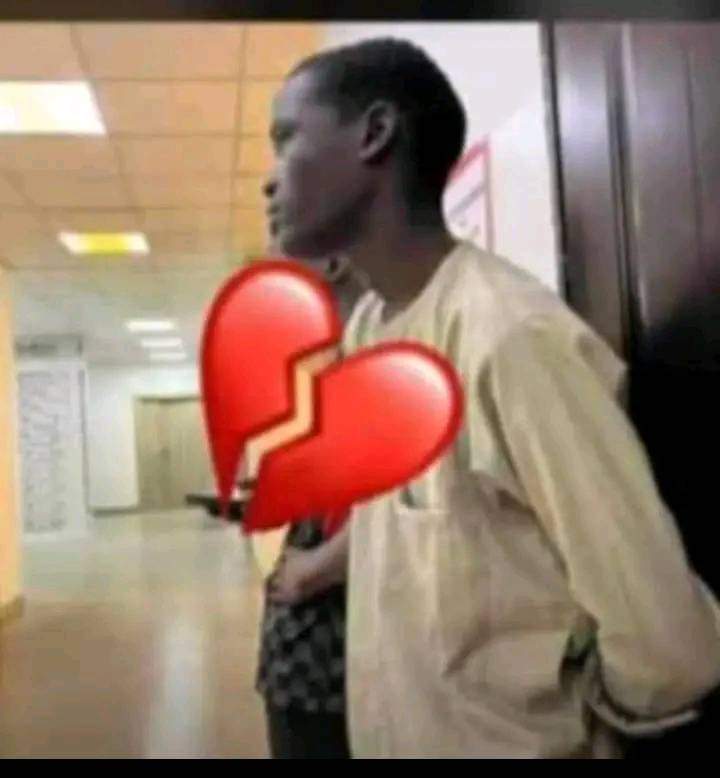
A young man reportedly passed away after donating kidney to his ailing mother who needed a transplant.

According to Ahmed Muntaqa, who announced the young man’s demise on Facebook, the mother is doing well after the transplant but the young man died.

“This young man died shortly after donating kidney to his mother. What a heart touching death. 💔💔The mother survived the surgery and she’s alive as we speak now. May the soul of this gentleman rest in peace and may Jannatul Firdaus be his last abode..” Muntaqa wrote on Facebook.

The identity of the donor who is now reportedly dead is sketchy at the time of fielding this report, however, many have taken to their social media account to pray for the dead donor and commend the wonderful gesture.

Baffa Sanusi, a lawyer who shared Muntaqa’s post prayed that God should give people the strength to take care of their parents.

“Ya Allah give us the strength to take care of our parents, like they took care of us when we were little,” Sanusi wrote.

Arewa Media Problem: Three major fundamentals

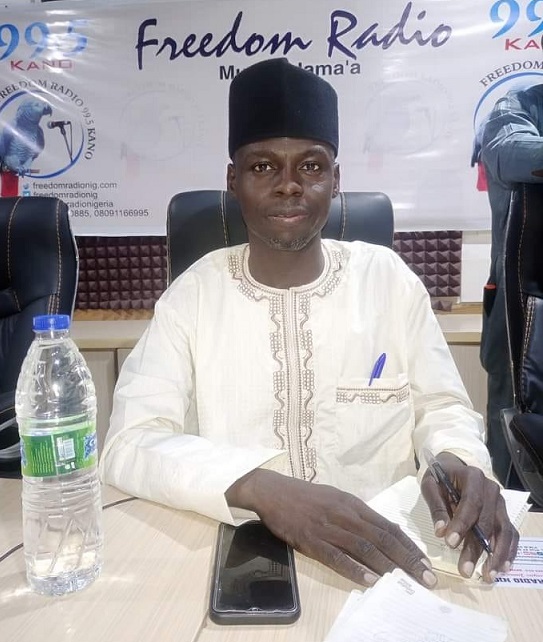
By Tijjani Muhammad Musa

Our primary problems in Northern Nigeria (Arewa) as far as the media landscape is concerned are a lack of support and patronage for our own media outlets, shallow-mindedness of our Arewa celebrities and self-centeredness of our social media influencers. Let me briefly explain these.

When a media outlet is floated, whether physically or online, many of our intelligentsia would choose to ignore it and refuse to contribute to its development, survival or sustenance. Some even find it offensive to see their writings featured on such platforms. So how can you imagine them making any effort towards reaching more people via such channels with their brilliant ideas?

This lack of encouragement by the intellectual elites of the Arewa region eventually quashes the zeal of the owners of the medium. So they end up laying their medium to rest, and nobody bothers to ask them why.

Next, our Arewa celebrities are primarily uneducated, digitally unsophisticated or advanced in thinking enough to realize the importance of their newfound status.

Instead of leveraging their popularity to drive home the concerns and aspirations of their people, their region and religion across the country or even globally, most of them just let the star status get into their heads. Thus, they end up as an ill wind that blows nobody good.

Finally, our Social Media influencers, most of them except for a minute few, are more or less acting like local champions, without any focus on using their influence to change the mindset of their followers.

These so-called influencers are constantly striving to create and upload content that only keeps the fire of attention from their followers burning, thereby getting them more and more Likes, comments, and emotes.

Very few among the influencers bother to target being a voice of the masses they represent. In contrast, their voices could be heard echoing the primary issues that concern their embattled region on a national and global scale so that something is done about it.

And they also would refuse to echo and make a trend of burning matters that affect their people, region and religion. A typical example is the acquisition of PVC for the 2023 elections. Have you seen any Arewa Social Media influencers making it a topic of importance? Almost none!

That attitude is unlike that of their counterparts across the divide and globe, who would each lend their support and credence to any trending topic of local, state, regional, national and global concern. Create and add their voices to any other SMI’s effort, so it assumes a loudness nobody can ignore.

Ours would instead choose to write or talk about what will keep their fans entertained, no matter how mundane that is.

Tijjani Muhammad Musa, alias Poetic Tee, is the Chairman of the Association of Nigerian Authors (ANA) Kano Chapter. He can be reached via mmtijjani@gmail.com.

2023: CITAD launches hate speech monitoring team

By Muhammad Aminu

The Center for Information Technology and Development (CITAD) has launched a hate speech monitoring team to monitor and record politically inclined cases of hate speech on social media as the 2023 general elections approach.

In a press briefing in Kano, the head of monitoring team, Malam Hamza Ibrahim, said the team would provide database for incidents of hate speech in Nigeria.

Mal. Ibrahim noted that monitors were trained to monitor utterances in both English and the Nigerian languages on the Nigerian political process leading to the 2023 election.

“The essence of the monitoring is to record instances of hate speech and sensitise stakeholders about them and devise strategies to counter them,” he said.

According to him, hate speech on social media when left uncountered could impede unity and diversity of Nigeria as a country.

He cautioned political actors to avoid engaging in hate speech in their electioneering as many elected political actors engaged in it during the 2019 elections.

“In 2019, politicians used hate speech for political gain and incited violence. Government elected officials used hate speech.

“Politicians need to be cautioned. We advised that as we approach the 2023 election, politicians’ utterances should be free from inciting violence and hate speech.”

He called on scial media influencers, bloggers and the media to support in countering hate speech which he described as “a cancer that must be eliminated.”

He regretted that youths were mostly used hence targeting the youths in CITAD’s intervention against the menace of hate speech.

He further revealed that June 18 was set aside by the United Nations to observe countering of hate speech. That signifies the serious attention it’s getting because of its roles in conflicts that could lead to loss of lives and displacement.

“It’s timely recognition by the UN because many lives were lost due to conflicts induced by hate speech,” he noted.

The team unveiled a publication titled “Extinguishing Hate Speech: Roles for Politicians, Religious and Community Leaders” to help guide key stakeholders to ensure peaceful election in 2013.

“It is based on researches across Nigeria with recommendation for political, religious and community leaders on how prevent and tackle hate speech,” he concluded.

In another development, CITAD converged a roundtable on the draft code of practice released by the National Information Technology and Development Agency (NITDA) to guide operations of major social media platforms in Nigeria.

Experts argued that while some parts of the codes were needed to checkmate the excesses of the giant tech, others were aimed at stifling freedom of speech and expression.

They called on Nigerians to have their inputs before the draft codes were operationalized in the country.

Bauchi polytechnic suspends staff for supporting Tinubu on social media 

By Muhammad Sabiu

Raliya Kashim, a senior staff member of the Bauchi State-owned Abubakar Tatari Ali Polytechnic, has been suspended by the institution’s management for supporting All Progressive Congress (APC) presidential candidate Asiwaju Bola Tinubu.

Maimako Baraya, a spokesman for the polytechnic, signed the letter announcing the suspension.

The main opposition, the Peoples’s Democratic Party (PDP), is in charge of Bauchi State.

Kashim works as the polytechnic’s deputy general manager of consulting services.

She was aware of the state’s public service law prohibiting civil servants from participating in party politics, according to Mr Baraya’s letter.

Baraya was quoted to have said in the letter, “The employee recently posted videos containing campaign materials of the presidential and the governorship candidates of the All Progressives Congress (APC), which is a clear violation of the code of ethics for public servants.”

“We wish to assure the general public that there would be no sacred cow, and it will never be intimidated by the activities of political jobbers, fifth columnists and enemies of the state.”

SPECIAL REPORT: Arewa women and cyberbullying

By Uzair Adam Imam 

Cyberbullying against women is one of the lingering issues women face across social media spaces over time.

The menacing issue, however, has now escalated to become a global problem affecting women emotionally and chasing them away from online spaces.

The Daily Reality interviewed some women about the hazard. They recounted that the kind of messages they received from men were disgusting. 

The women decried that most of these disgusting messages often demand nude pictures or videos and propose love, irrespective of one’s marital status. 

This issue is most common on Twitter, Facebook, Instagram and WhatsApp, among other social media platforms. 

Zahra Madaki, one of the women interviewed, complained that social media is never an exciting place for women to go as cyberbullying exacerbates daily.

She stated, “Social media platforms such as Facebook and Instagram are very annoying nowadays. That’s why I decided to stop using them.

“Everyone is after love affairs. So, anyone will keep proposing for love as they see you online. It’s so annoying,” Madaki complained. 

On request for sex, pornography

According to Aisha Jibril, not her real name, women are victims of all naughty things on social media platforms today. 

She complained that some men request sex, and nude pictures or videos, as you begin to chat with them. The development, she said, distresses many women.

She stated, “there was a time someone on Facebook asked me if I ever watched pornography. I was shocked because, at that time, I didn’t know the meaning of the word. 

“I had to ask my elder sister what the meaning of the word was. Before I could respond to his earlier message, this man sent me a porn movie. 

“I shivered with fear that my phone nearly fell on the floor. I was terrified. I had never before that time had such an experience. I hardly slept that night,” Aisha said. 

Another source, Khadijat Muhammad Bah, also decried the menace, blaming men for being irresponsible in their relations with girls.

Bah said, “we ladies are seeing and reading all kinds of rubbish. Some men out there send nude pictures and always request nude photos.

“Some would insult and curse because you refuse to give them your contact. Some of them just want sex. 

“One day, I posted my picture on my story, and one guy said, ‘wow, those lips are for me’. And that was one reason that always stopped me from putting my picture on my story,” she lamented. 

According to a source who preferred not to be named, her sister once met someone on Facebook. Their relationship started as a friendship before the guy finally asked for sex, which later led to their breakup.

She said, “the guy kept pleading with her to come to his apartment. But she refused. We were surprised at how shameless this guy was.”

Someone keeps on disturbing me – Housewife

A housewife who spoke to The Daily Reality complained that someone kept disturbing her on social media.

The woman said she told the guy to stop chatting with her because she was married, but the guy turned a blind eye. 

She said, “This man started adding me to some irresponsible dating groups on WhatsApp. But, I thank God that through the help of my brother, we solved the issue and blocked the son of bitch afterwards.”

Another housewife complained that some men that chatted her up used to send her some porn photos, but she deleted them instantly.

She added, “these guys chat and comment on our posts anyhow. They tend to forget about our marital status. They forget that our spouses and relatives also see our online activity and would be sad to see such naughty and irresponsible comments under our posts. 

Cyberbullying: An unfortunate reality in dear need of mitigation

Dr Rukayya Aliyu, a senior lecturer at Bayero University, Kano, urged the technology firms that build these sites to act and make online spaces safe for women. 

Aliyu described the menace of cyberbullying as an “unfortunate incidence” in dire need of mitigation.

She stated, “Cyberbullying is an unfortunate incidence, but unfortunately, it is challenging to overcome because it happens on social media platforms, which are free and uncensored. 

“However, it can be managed to some extent with measures from the sites themselves, which can only be minimal.  The reality is regulation by the government might not be effective considering the lapses in regulating traditional media, to which the government has better control and access. 

Women ought to be responsible and mindful of their online activity 

Dr Rukayya also urged women to be mindful of what they post on social media platforms to avoid insults and indecent comments. 

She said, “on my take as a woman, it’s displeasing, but then fellow women should understand that most abuses come as reactions to our post and engagement with the platforms. Therefore, we should be responsible in our dealings and always be conscious that whatever goes on on any internet-connected platform is no longer personal. People have a right to their opinions. 

“If we don’t want to be abused or bullied, we ought to be responsible and mindful of our digital or cyber identities. However, we shouldn’t rule out that no matter how ‘decent’ or responsible our social engagements are, there are people who will still castigate, blackmail, abuse and bully us. 

“So before engaging, we ought to be conscious of the implications and be ready to surmount them through confidence and steadfastness in what we do,” Dr Rukayya added.

Social media giants fail women, Ofcom warns

By Ahmad Deedat Zakari

An investigation by the United Kingdom media regulatory agency, Ofcom, has shown that women are more prone to online attacks than men. 

According to the study, women are wearier of their online presence and prone to discriminatory, hateful and trolling content. They also feel less able to have a voice and share opinions online than their male counterpart. 

Ofcom then calls for technology firms that build sites and apps used by millions of people in the UK to act and make online space safer for women and girls.

Also, according to the study, women from minority ethnic backgrounds are more likely to be affected by their painful online experiences. 

“The message from women who go online is loud and clear. They are less confident about their personal online safety, and feel the negative effects of harmful content like trolling more deeply.

“We urge tech companies to take women’s online safety concerns seriously and place people’s safety at the heart of their services. That includes listening to feedback from users when they design their services and the algorithms that serve up content,” says Dame Melanie Dawes, Ofcom’s Chief Executive.

Politics: The game of interest

By Muhammad Umar

This is the beginning of my participation in politics to the fullest, especially on social media. I am gradually learning one or two things from both the recorded victories and failures in some instances. I believe it’s unarguably a fact that, in it (politics), you either be on the winning or losing sides.

In times of political victory, you become so excited as if the happiness will never end. Likewise, failure makes you feel uncomfortable or like nothing is enjoyable to you in the entire world. You become frustrated. Some can even get out of their senses and do something regrettable without awareness.

Thus, some lessons I have so far learned are: 

1. Be careful of what you say, write and post on social media because it might one day come back and haunt you. Make sure whatever you write doesn’t involve insulting/harsh words and terms that can downgrade your integrity in the eyes of your followers and friends in struggle. 

2. Learn to be patient in whatever situation you find yourself in. Sometimes you might be provoked by the commentary of some people (your opponents). Be conscious of your wordings while responding to them in times like that. Though it’s not any comment worth your attention, you can neglect some of them to allow peace to reign. 

3. Choose whom to follow and associate with while participating in political activities. This could include your political mentors, guardians and other friends in struggle. Because sometimes, you could meet somebody who can help you, i.e. someone who can be a reason for you to become somebody in life. But if you choose the wrong person, they can be a disaster for you and your political carrier.

Please, be politically wise and active in all the activities that could bring changes to your (our) societies.

Regards!

Muhammad Umar wrote via muhammadumardanmasani@gmail.com.

Man intoxicates, rapes Facebook friend, vows to release nude pictures 

By Uzair Adam Imam 

The police in Ogun State have arrested a 25-year-old man, Ebenezer Adeshina, for raping and intimidating a 16-year-old Facebook friend.

Adeshina allegedly invited the victim to his house, where he had intoxicated and raped her.

After having raped the girl, Adeshina also took the victim’s nude pictures and started threatening to make them public if the girl refused to give him the sum of N50,000.

The girl confided in the police that she met the guy on Facebook last year, and since then, they have been chatting with each other. 

She said because her phone got spoilt, the suspect called her with a promise to give her N30,000 for the phone’s repair.

However, no sooner had the girl arrived at his house than the suspect offered her a drugged drink which she took and became unconscious, after which the rape followed. 

The police spokesman in the state, Abimbola Oyeyemi, said Monday that the suspect was arrested following a report by the victim at Owode Egbado Division.

The statement read in part: “After having sex with her in the state of unconsciousness, the suspect took her nude pictures and started threatening to upload them on social media if she didn’t pay him the sum of N50,000.”

Stop religious altercation, use social media to learn practical skills

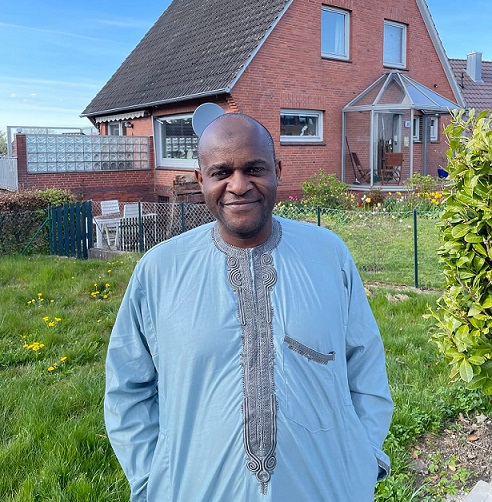
By Aminu Mohammed

In the last few weeks, I have keenly observed discussions about bestie, comrade and recently altercation over interfaith dialogue by our youths on various Social media platforms, particularly Facebook. The debates seem amusing, even though the one on interfaith has generated more altercation between some Islamic scholars and their followers, leading to personal abuse. I am not against people using social media to crack jokes and have fun, but it will show a lack of seriousness when people waste time on meaningless arguments.

I shudder in disbelief, wondering if something is wrong with our youth. I still recall that just a few weeks ago, a Kaduna-bound train was attacked, with many people killed while scores are still in captivity. Yet, we have seemingly forgotten about them. Instead, we dissipate energy on trivial issues. Have we done enough by putting pressure on the government to rescue our brothers and sisters in captivity?

What about using social media to pressure our governments in the region to evacuate Almajiris off the streets and end such child abuse. What about encouraging our brothers to exhibit tolerance towards other sects rather than altercations?

We have many issues at hand, and we can use social media to compel the government to do our bidding. Still, we are more comfortable arguing over trivial matters and abusing those who do not believe in our ideology. Our Islamic scholars seem not to see the urgent need through their sermons to pressure the government to tackle poverty and Almajiri syndrome in the North.

Social media is a gold mine that has provided many opportunities for personal development and skill acquisition for career advancement. But are we utilising the massive opportunities in social media to improve our lives? Are we learning new skills every day to change our narrative and move to the next level? These are questions that we should be asking ourselves.

Many people worldwide are utilising the vast opportunities made available by social media to enhance their lives, acquire new knowledge and boost their income. I still recall a post made by Dr Muhsin Ibrahim on his Facebook page, lamenting how many graduates cannot use basic email to send letters or apply for jobs. One can acquire this knowledge by spending a few hours on YouTube, but our youth will rather spend hours on Facebook attacking one another over frivolities. Frankly, obtaining mere certificates is not enough in the current era. Practical skill is what differentiates between graduate A and graduate B.

Living in Germany in the last few years has exposed me to the notion that a certificate is not enough but practical skills that can help one deliver on the job. I have seen people finish graduate programmes here and struggle to get a job until they learn practical digital skills online.

In the last few months, I have observed that some people got jobs after learning digital skills for six months or more such as web development, app development, digital marking, and programming, among others. This is despite the fact that they completed their degree at the university here – in Germany. The reality is that companies are only interested in knowing if you have the practical skills to deliver on the job and not a simple certificate.

It is pertinent to note that some forward-thinking youths in the Southern part of Nigeria work remotely for international companies due to the acquisition of digital skills. Thanks to their skill, they live in Nigeria and still earn money in foreign currency.

I have decided to devote much time this year to acquiring digital skills for personal development and suggest that to whoever is interested. I will not hesitate to reiterate that our youth in Arewa should embrace digital skills to escape poverty. With your mobile phone, you can learn practical skills free online. There are various mediums to learn digital skills for free such as Google garage, Udacity, Udemy, Coursera, among others. In fact, I am currently learning a digital skill on Coursera.

Please, my brothers and sisters, I believe we can change the narrative. Our region is bedevilled by mass poverty because of the attitude and mindset of our people. An untrained mind will create and recreate poverty irrespective of the available opportunities. So, stop wasting your data on frivolities. Instead, use it judiciously for something meaningful.

Of course, not everyone will be interested in digital skills, but there are other vocational skills you can still learn by watching YouTube videos. For example, people learn how to bake cakes, cook, and do many things by watching videos on YouTube.

Likewise, you can improve your Islamic knowledge by reading good articles and books on various Islamic websites online rather than using social media negatively. The time is now for us to do the right thing and find a way to improve our lives and that of our families. May Almighty Allah accept our supplication in this month of Ramadan.

Aminu Mohammed is at the school of Sustainability, Christian- Albrechts- Universität zu Kiel, Schleswig Holstein, Germany. He can be reached via gravity23n@gmail.com.