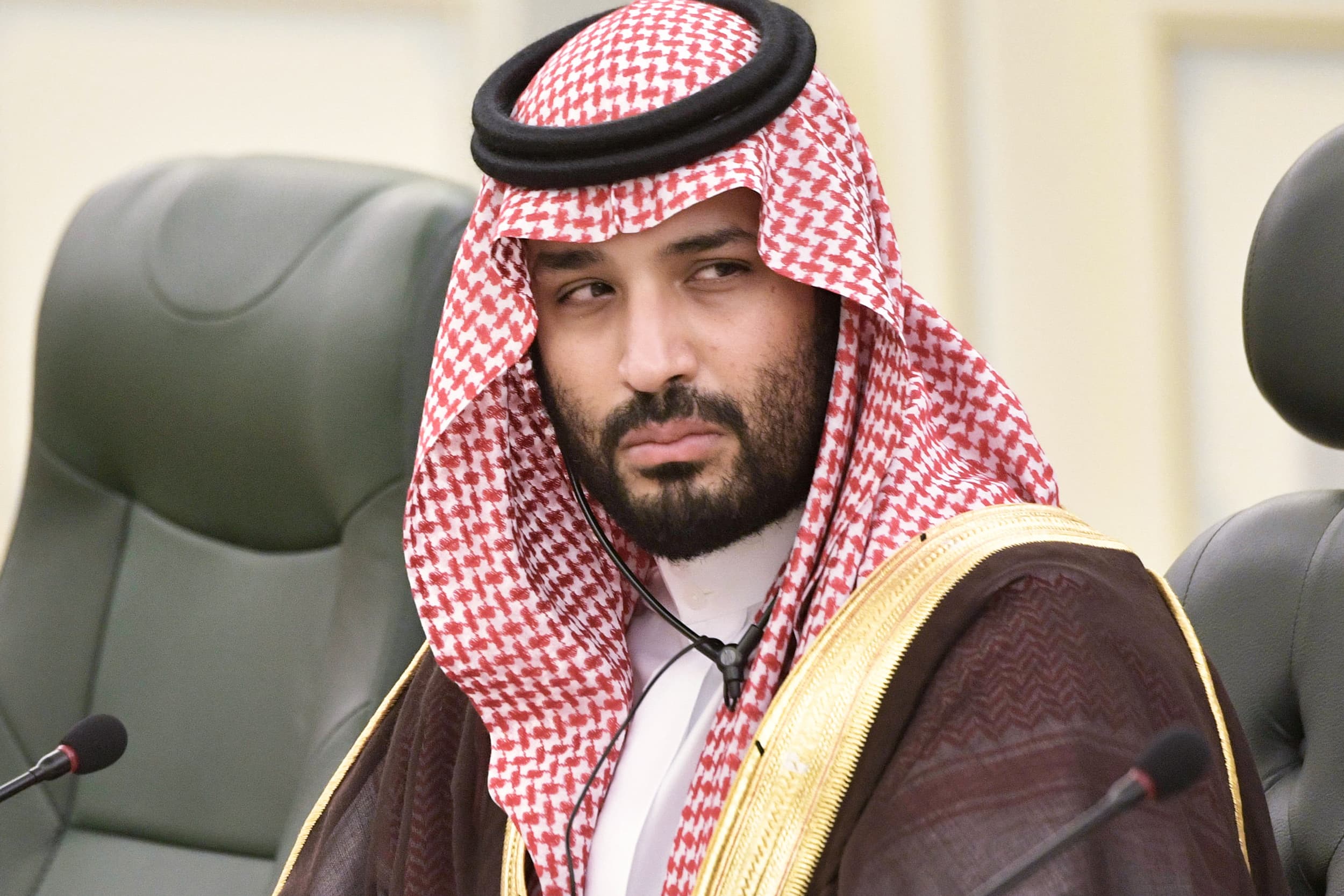
Saudi Arabia

Saudi military foils three ballistic missiles attack, blames Houthis

Aljazeera News agency reported that the authorities in Saudi Arabia say they have intercepted three ballistic missiles targeting the country’s oil-rich eastern region as well as the cities of Najran and Jazan in the south.

There was no immediate claim of responsibility for Saturday’s attacks, but the Saudi-led coalition fighting the Houthis in Yemen blamed the Iran-aligned rebel group. There were no reports of casualties.

A source familiar with the matter told the Reuters news agency that the missile aimed at the eastern region was intercepted over the city of Dammam.

Shrapnel from the missile scattered over the Dammam Suburb neighbourhood, injuring two Saudi children, while 14 homes suffered light damages, the official SPA news agency said, citing a statement by the defence ministry. Earlier, the coalition also reported the interception of three explosive-laden drones headed towards Saudi Arabia.

The attacks come four days after a drone hit Abha International Airport in the south, wounding eight people and damaging a civilian plane.

Yemen’s Houthis regularly launch drones and missiles into the kingdom, including aerial attacks aimed at Saudi oil installations. An attack in September 2019 on two Saudi Aramco plants in the east temporarily knocked out half the country’s oil production.

A source familiar with the matter told Reuters there was no impact on facilities belonging to state-controlled oil giant Aramco on Saturday and that the attack happened outside of Aramco facilities.

“The Ministry of Defense will take the necessary and deterrent measures to protect its lands and capabilities, and stop such hostile and cross-border attacks to protect civilians, in accordance with international humanitarian law,” the ministry said in a statement according to SPA.

The Saudi-led military coalition intervened in Yemen in 2015, backing forces of the deposed government of President Abd-Rabbu Mansour Hadi fighting the Houthis.

The grinding conflict has claimed tens of thousands of lives and displaced millions, resulting in what the United Nations calls the world’s worst humanitarian crisis.

While the UN is pushing for an end to the war, the Houthis have demanded the reopening of Sanaa airport, closed under a Saudi blockade since 2016, before any ceasefire or negotiations.

Nigerian doctors in diaspora: Brain drain or money drain?

By Khadijah Tijani

I have read many reactions to the recent trend of young and vibrant Nigerian doctors leaving the country for greener pastures. I also saw the interview with the minister who said the doctors are free to go because “we already have too many of them”. Some people even blamed these “selfish” doctors for refusing to stay after benefitting from “ridiculously cheap” medical education, blah, blah.

Oh well… Maybe I missed it, but I don’t know if anyone has talked about what these doctors are paying in exchange for their right to leave. Where these funds are going is another question begging for clear answers. 

For you to get a new passport or renew an old one, you need to pay something between 35k and 70k depending on the number of pages and the validity period. But you also need to tip some officers so that your passport can be issued on time.

Some universities do not issue your final certificate until years after graduation. Transcripts are not available online. You need to travel down from wherever you are and go to your university to make a request. If you are lucky, you will get it after several weeks. And yes, they will also charge you a not-so-little administrative fee for that.

Suppose you are asked to send a source-verified copy of your credentials to a regulatory body, for example, Saudi Council for Health Specialties. In that case, you need to pay up to 30k for each document to be verified and additional fees for courier services. Moreover, since many universities still don’t have functional emails or reachable phone numbers, you still have to travel down to get it done or pay someone to do it for you.

Talking of regulatory bodies, they also want to be sure that you are a good doctor and have never been in trouble while practising in Nigeria. So, they will ask you to submit a certificate of good standing, which goes for 66k. Some will also ask for detailed medical checks and police clearance certificates – more expenses. You have to pay for the medicals even if it’s where you currently work. 

When you are done with all that, and you finally move out of the country, you will still get yearly reminders to pay your dues to remain a licenced doctor in Nigeria. Of course, some people stop paying, but I know many doctors who still send their 10 to 20k annually. They even mandated us to pay 40k contributions towards the new NMA building last year.

Every university and medical college have their respective association of alumni in the diaspora. They contribute millions of naira to their alma mater each year. In addition, they send expensive machines to help in-patient care and loads of materials to aid in medical teaching. Unfortunately, some of these supplies might become sabotaged by the killjoys within the institutions if there is no direct supervision and maintenance. 

I have not even mentioned the off-record funds you have to send to family and friends back home every month. Or the huge amount of money that doctors have invested in small to large businesses in the country. Or the free medical and surgical services many have provided to the people whenever they come home on vacations. Or the big hospitals many have established to create employment for the people, among other things.

I am worried about the brain drain, but I am also concerned about the people who do not understand the pain of an average doctor who wants to leave. They think it is easy to wake up one morning and jump on the next flight. And oh! Flight ticket and all the hurdles you need to pass through before you cross the border… Phew! 

Since they think we are too many and can be exported like cash crops, we also need to ask them where the money from the foreign exchange is going. Are they building more hospitals or renovating the old ones? Are they providing enough medical supplies to work with? Are they paying the salaries of the few or “just enough” doctors left behind? 

We need answers, please.

Khadijah Tijani is a medical doctor, she writes from Ibadan, and she can be reached be through Askodoctorkt@gmail.com or @AskDoctorKT.

We are all guilty of the state of the nation

By Abdelghaffar Amoka Abdelmalik

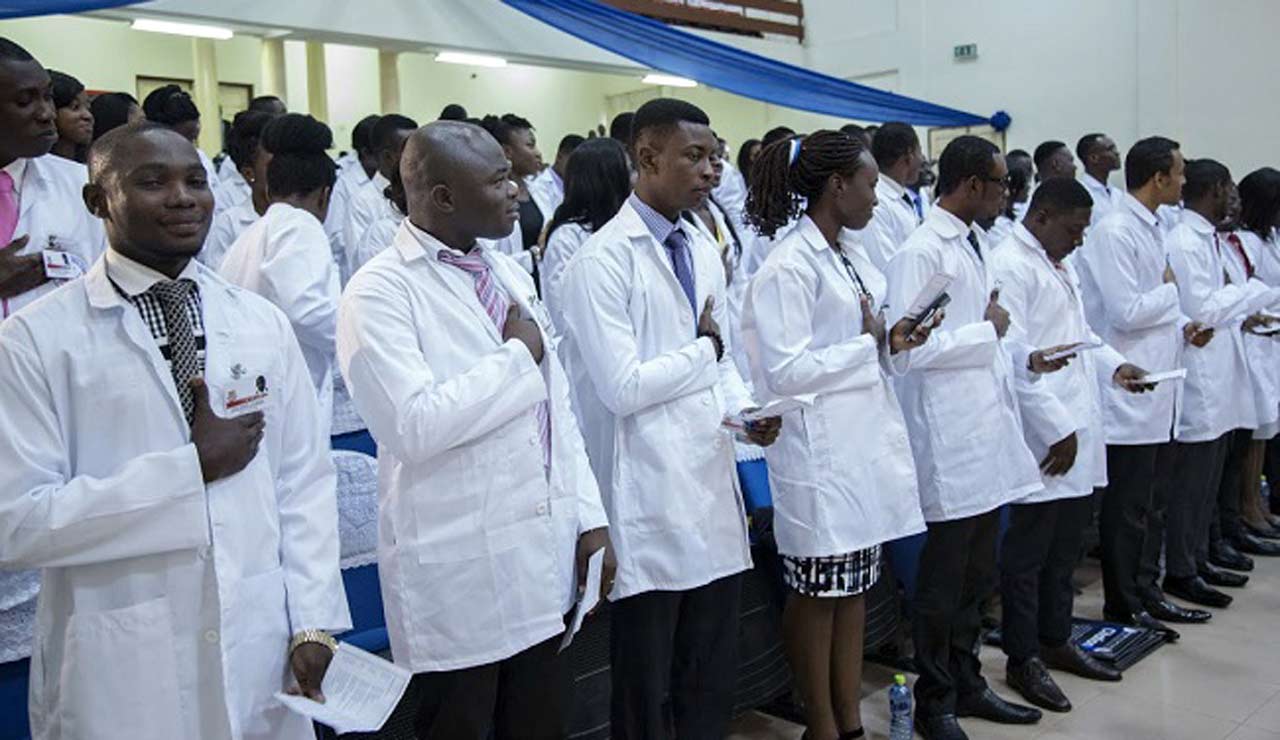
The trending news/video of the over 500 doctors that turned up in Abuja at the Saudi health ministry organised recruitment meeting to pick Nigerian doctors for work in Saudi Arabia reminded me of a comment by a Nigerian Professor in a university in the UK sometime in 2008 or so. There was a discussion on the management of PTDF oversee scholarship scheme, the scholars in the UK, their future, Nigeria, and capacity building. He said Nigeria is perhaps the only country in the world that spends a lot of money to train scholars and doesn’t care what becomes of the scholars after the training.

This scenario is common to all the scholars funded with government money. We send scholars to the UK and other countries under PTDF, TETFund,  NEEDS Assessment, NITTDA, etc., and we do not care if they return home or not. As a matter of fact, there is no provision at the home institutions to utilise the knowledge acquired by the scholars during the training on their return. It’s like you were trained for yourself and not for the system. Those who return are not better than they were before they left as no laboratory to train others. They most times become more frustrated.

Then, how do you expect a system that makes no provision for scholars sent abroad for training to make provision for those we managed to train at home? This is the case with our Medical Doctors moving to other countries to practice. Even though we do not have enough medical personnel, medical doctors sometimes find it challenging to get a job as Consultants after their residency. So, why they should not move to the UK, Canada, Dubai, Saudi Arabia, etc., to practice?

We need to deal with the lack of respect and value for our universities, professionals, and intellectuals. It worsened when our leaders abandoned our institutions while taking their families abroad for education and medical care. They are not even ashamed to post their graduation pictures on social media and shamelessly requesting us to celebrate with them. I thought COVID-19 and the lockdown would teach us lessons, especially our leaders, but it seems we have not learned any lesson from experience.

I read a comment sometime back that during the slave trade, our people were forced into slavery, but if it is now, Nigerians will give themselves up to be taken away. They believe that whatever the challenges are in those countries, it will still be better than Nigeria.

The gathering of over 500 professionals (Consultants and Resident Doctors), both Muslims and Christians, for a recruitment exercise to Saudi Arabia called for sober reflection and not throwing insults. These guys do not care about the Shariah law and the stories of racism in Saudi Arabia from those that have worked there. They just want to leave. So we need to sit down and reflect and ask ourselves questions. What future do we want to create for Nigeria and Nigerians?

Our leaders don’t believe in the country. They instead take our money to London, Dubai, and Saudi Arabia, etc., to secure the life of their family members. They patronise medical care in first-class state-of-the-art hospitals established by the leaders of those countries since they can’t make our health sector desirable. And they are not ashamed of that as leaders. On the contrary, they travel for medical tourism with pride and class.

You will not blame our doctors who were trained nearly for free in our “ASUU Strike” public universities by our “ill-equipped” professors to move to London, Canada, Dubai, Saudi Arabia, etc., to help those countries treat our politicians. But, of course, they want a better life too, and they will be paid better there. So, why should they be ashamed of running away when our leaders are not? Why should they endure and MILT (manage it like that) when our leaders aren’t prepared to MANAGE our hospitals and schools LIKE THAT for their kids?

It is unfair to expect the people to be patriotic when the leaders are not — and don’t even seem to believe that Nigeria can work. The president, Vice President, the Governor, the Senators, others that are supposed to make our schools work have their kids in schools in the UK. The president and other political leaders that are supposed to make our hospitals work receive medical care in the UK, Dubai, Saudi Arabia, etc. How will they make a system they don’t patronise to work? They will just think the system is OK for us as they are, and we can MILT.

Come to think of it. How can our doctors be on strike and hospitals shut for patients for over three weeks? It is not surprising. After all, they allowed the ASUU strike to last for nine months and public universities closed for that nine months. They would not have let that happen if they and their immediate families patronised the system that was and is on strike.

The leaders don’t believe that the country can be fixed, and the led also don’t believe the country can work. So let all of us just run away, even to Niger, Cotonou, Rwanda, etc., and let Nigeria fix itself before we return.  

While I am in solidarity with our Medical Doctors on strike, I only wish that the strike is not just about salaries and allowance but also on the proper funding of the healthcare sector so that we can have hospitals similar to the ones they patronise in the UK, Dubai, and Saudi Arabia.

The question now is: Do you want Nigeria to work? Just be the change that you desire—both the leaders and the led.

Meanwhile, the Punch newspaper has reported that the organisers have suspended Saudi Arabia recruitment as DSS disperses doctors, arrests journalists. Is that the way to fix the problem?

It is relieving that despite the ASUU strikes, the breaks, and all the insults on lecturers, our graduate doctors can still pass International examinations and are qualified to work in the UK, Canada, Dubai, and Saudi Arabia. To God be the Glory.

Kudos to our “ill-equipped” professors who have helped train this Nigerian workforce from 100 Level till graduation for the UK, Canada, Saudi Arabia, Dubai, etc.

Maybe I need to run too. Meanwhile, I am still thinking of the country to run to. 

Abdelghaffar Amoka Abdelmalik writes from zaria can be reached via aaabdelmalik@gmail.com.

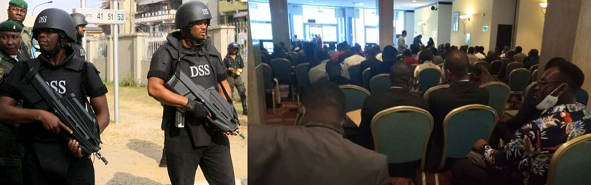
DSS disrupts Saudi Arabia’s job interview in Abuja, disperses doctors, nabs journalist

Men of the Department of State Services Thursday stormed Sheraton Hotels in Abuja, where the Saudi Ministry of Health was interviewing doctors for recruitment.

The DSS operatives arrived at the interview venue, dispersed the medical doctors and arrested Marcus Fatunde, a journalist that works with the International Centre for Investigative Reporting.

However, the journalist was later released, and the interview exercise has been suspended.

Most of the doctors at the interview venue were either unemployed or poorly paid.

Doctors in Nigeria have on several occasions embarked upon industrial action due to bad working conditions and underpayment.

Saudi Crown Prince MBS’ clampdown on clerics continues

The 35-year-old Saudi Crown Prince Mohammed Bin Salam, alias MBS, initiates more radical changes in the kingdom hitherto known for its conservatism and strict adherence to Sharia.

In addition to barring loudspeakers from amplifying prayers and sermons at mosques and turning down the volume during calls to prayer, the Saudi government announced that shops, restaurants and other enterprises do not have to close anymore during prayer times. A government was reported to have declared that “Those days of inconvenience are now over.”

The MBS initiated liberalisations continue to reverberate around the kingdom while dissents are silenced.

According to two Saudi human rights groups, “When a little-known religious leader penned an online article criticising the decision by the Ministry of Islamic Affairs, he was arrested, and his once-active Twitter account went silent.”

It is also reported that the government fired “many” Imams for not following an official directive to preach against the Muslim Brotherhood, which MBS-led Saudi Arabia has designated as a terrorist group.

A year ago, the government stripped the religious police of their powers to arrest people. Around the same time, women were granted the right to attend sporting events while removing gender segregation at restaurants, other events.

Sarah Dadouch of The Washington Post concludes thus, “Mohammed is rewriting the longtime power-sharing arrangement between the ruling family and the clerical establishment — a partnership that created the kingdom. Islam has remained a cornerstone of Saudi identity; the kingdom is the birthplace of the religion and hosts its two holiest sites in Mecca and Medina. The king’s official title is the custodian of the two holy mosques.

In some quarters, fears abound that the fabric of the kingdom is now 4unravelling. But those fears are rarely shared anymore, lest there be more arrests.”

Sheikh Zarbaan Al-Gamidi is dead

By Ibrahim Siraj

A renowned Islamic scholar and Chief Imam of the historic Qubaa Mosque in Medina, Sheikh Muhammad bin Abdallah Zarbaan Al-Gamidi has been reported dead. He died Friday, according to sources familiar with the development.

Sheikh Zarbaan was a teacher, mentor and father figure to all Nigerian graduates of the prestigious Islamic University of Medina. He was instrumental in the admission of hundreds of Nigerian students into the prestigious University through the Daura intensive training he coordinated for several years since the inception of the programme in Nigeria.

Prominent among Sheikh Zarbaan’s students are the late Sheikh Ja’afar Mahmud Adam, Drs Muhammad Rabi’u Umar, Bashir Aliyu Umar, Abubakar Muhammad Sani, Ibrahim Ilyas, Ibrahim Jalo Jalingo, Isa Suleiman, Muslim Ibrahim, Sheikh Abdulwahab Abdullah, Professors Mansur Sokoto and Abdallah Saleh Pakistan, to mention but a few.

He will be remembered for his special attachment to his Nigerian students, whom he mentored up to his final moment on earth. Every year, he would call some of them during the annual Ramadan Tafsir to pass a message of goodwill and encouragement.

He recently donated his entire book collection for the benefit of Nigerian scholars. The books were received through Dr Abubakar Muhammad Sani and will be kept in a library in Dutse for access by the public.

He was a friend to many prominent Nigerian scholars and philanthropists such as late Sheikh Aminuddeen Abubakar, late Halifa Sheikh Isyaku Rabiu and Alhaji Aminu Dantata. May Allah have mercy on him and make Aljanna his final abode, amin.

Saudi Arabia: Conservative versus Western values

By Salisu Yusuf

Since becoming the crown prince and de facto leader in 2017, Prince Mohammed bn Salman (known as MBS) is stirring controversies in Saudi Arabia and making the country a battleground between the conservative Sunni and trendy Western values.

Immediately after assuming power, MBS declared that the return of ‘moderate Islam’ was key to his plans. MBS’s declaration is an affront to Islam because his statement gives credit to Western media, which categorises Muslim adherents as either ‘moderate Muslim’ or ‘Islamic extremism.’ Such labels are derogatory and indictment; to label somebody as either moderate or extremist Muslim is to say that extremism is an extension of Islam. Moreover, MBS’s statement is a subtle backing to America retaining Guantanamo Bay Camp, where many innocent Muslims are being held without a trial and tortured. 

In 2018, MBS lifted a ban on women drivers. Saudi, being the last country in the world where such provision existed. Many, including Muslims, commanded the move as there’s no available Qur’anic injunction or Hadith that prohibits doing so. However, shortly before the ban was lifted, many women rights activists who campaigned against the ban were rounded up and imprisoned.

Bn Salman is seen by many as a power monger. For example, he was seen in 2017 shortly after becoming the crown prince with the former crown prince, Mohammed bn Nayef, the former pledging allegiance. Bn Nayef is King Salman’s nephew. He’s, therefore, MBS’s cousin. Bn Nayef was seen kneeling and kissing his older cousin’s hand, a gesture disapproved in Sunni Islam.

Saudi annual billion-dollar US arms deal is making Saudi Arabia a laughing stock. Former US President Trump supports Saudi because of the deal, and on the other hand, US moral and financial unconditional support to Israel is a source of concern.

The latest controversy is the mosque speaker restrictions. The Saudi government asks Imams and Muezzin to lower their speakers to a third of their maximum volumes during calls to prayer and during the prayer itself. 

Opponents criticise the restrictions, saying cafes and restaurants could be heard blaring loud music all over the country. Authorities had earlier said they placed the restrictions because parents complained that the speakers disrupt their children while asleep. Even though modern means of a call to prayer, the outrageous number of mosques and airing the prayer itself could be contestable if they’re brought under strict Islamic legal spotlight, some see MBS’s attempt to give some consolation measures to Western nationals living in the Kingdom.

Prince MBS has stepped up his opposition to freedom of expression, arresting and jailing many critics. Some have paid the heavy price with their lives, like the US-based journalist Jamal Khashoggi who was extrajudicially killed in the Saudi Consulate in Istanbul. Many members of the ruling family were also arrested and imprisoned. They could only be released after paying the state some huge amounts of money, which authorities claimed was payback for alleged corrupt practices. In the past, substantial freedom of expression was allowed, especially on issues of check and balance.

Brazenly, Saudi Arabia has recently signed a 10-year professional wrestling contest show with an American World Wrestling Entertainment Company (WWE). So today, you can go to a stadium in either Jeddah or Riyadh and watch wrestling contests; Royal Rumble, Super Showdown, etc., are a daily occurrence as is seen in Texas, New York, and other cities in America.

Moreover, Hajj has been suspended since last year. The first time a Hajj was suspended since the creation of the Saudi Kingdom in 1932. Many Muslims criticise the move after watching the mammoth crowd that graced the 2020 Euro final played this month (July) at Wembley stadium. Over 60,000 spectators watched the final. Prior to kickup, thousands of Italian and English fans were shown walking en route to Wembley, overlooking the so-called Covid-19 protocols. If Europe, the epicentre of the coronavirus, could gather such huge crowds, they asked, why the international Muslim community could not be allowed to go to Hajj?

As Prince Mohammed bn Salman consolidates power and his father gets older, only time will tell for how long and which of the two contrasting values will win the battle in Saudi Arabia’s mainly Sunni, conservative community.

Hajj 2021 sermon to be aired in Hausa, 9 other languages

By Muhammad Sabiu

The Kingdom of Saudi Arabia (KSA) has announced that the sermon for this year’s Hajj would be broadcast in 10 languages, including Hausa, one of the major languages in the West African region.

This was contained in a short social media update on a popular English page, Haramain Sharifain, which releases important information courtesy of the Two Holy Mosques in KSA.

The other languages are English, Malay, Urdu, Persian, French, Mandarin, Turkish, Russian, and Bengali.

This was not a new move as part of the effort to contain the spread of the COVID-19 and minimise the number of pilgrims. Like the previous year, the chairman of the General Affairs of the Grand Mosque and the Prophet’s Mosque, Sheikh Dr Abdul Rahman bin Abdulaziz Al Sudais, indicates that the decision was to do the same this year.

The inclusion of the Hausa language on the list may be connected with the increasing number of language speakers. In Ethnologue’s 2018 report, Hausa is the 11th most spoken language in the world. Therefore, this and the fact that most Hausa people are Muslims could be why Saudi authorities chose to include it on the list for the sermon to reach a broader audience.