Russia

Nigeria Civil War: Conspiracies and interest of the World Powers

By Tijjani Hassan

War is a business of interest. Like the Russian invasion of Ukraine over the fear of western domination of the geopolitics of the defunct Soviet Union, Nigeria had her fair share of international politicking of how the superpowers wrestle for relevance in the post-World War II era, climaxing into the Nigerian-Biafran Civil war of secession.

As Chinua Achebe summarily spelt out in his book There was a Country, Harold Wilson, the PM of Britain, maintained a firm stance about one of the Queen’s priced colonies. The UK would not support the breaking away of Nigeria in the guise of secession. That would mean challenging their preplanned neocolonialism programme.

The BBC’s Rick fountain, in a story on Monday, January 3, 2000, titled “Secret papers reveals Biafra intrigue,” shows how Britain would and currently was more interested in her oil holding than a “united Nigeria”. The Cold War would see Britain and the Soviet Union wrestling for supplying the largest cache of ammunition to General Yakubu Gowon-led Federal government.

Russia, part of the former USSR, took a step further by sending MiG fighters and technical assistance to Nigeria. Moscow later expanded her bilateral relation with Nigeria with an eye on the Ajaokuta Steel Company. As a result, a $120 million contract was signed in 1969. However, the Steel Company, situated in present-day Kogi State, North Central Nigeria, remained a testament to the elephant project without producing steel for the manufacturing needs of Nigeria to date. 

The UK was, however, much concerned about France’s secret antics.

France, the other big player in the dark colonial days in Africa, was secretly shipping weapons and ammunition to the Biafran enclave through their former colony of Ivory Coast and Gabon. Moreover, France has always been sceptical of Nigeria’s growing domination and influence over the Paris Francophone clients in the West Africa Subregion. The Size of Nigeria is intimidating to her French neighbours of Cameroon, Niger, Chad, Benin Republic, and others in the geography of the West Africa sub-region.

The Caribbean Island of Haiti was the first to make a rush in granting full diplomatic relations with the breakaway Biafra Republic in 1969. That means a little to Nigeria anyways. It was, however, a moment of celebration in Biafra as it rekindled the hope for the sovereign Biafra Republic. 

France, who openly claimed to be neutral in her initial response to the crisis, issued a statement from the Council of Ministers in July 1968 sympathizing over the heart-trembling development in the heartland of Biafra. It was orchestrated by Charles de Gaulle, the French President who led Paris’s resistance against the Nazis in World War II.

Like the UK, it was about resource control. Paris has already hatched a plan for her multinational corporation, Elf Aquitaine, to become later the primary explorer of the crude oil deposit in West Africa. Nigeria’s oil in the old Eastern region would be the spoil of war.

While the war ragged, the United States of America openly looked elsewhere, neither supporting Nigeria nor Biafra. Instead, they advocated for a united “One Nigeria”. President Lyndon Johnson toed the line of Britain until Richard Nixon. Upon his assumption of office, President Nixon called on the Nigerian Military Forces to cease hostility to ease the suffering in Biafra.

The Portuguese were much more clever as they paved the way for Lt. Col. Emeka Odumegwu Ojukwu to land Biafran planes in Sao Tome, a Portuguese colony. The agreement was, however, shrouded in secrecy.

The Chinese were not left out of the Civil war politics in Nigeria. Although Biafra got most of her weapons from the black market and produced a few locally, China later provided military equipment to the breaking away part of Nigeria.

African leaders were not left out too. Despite the organization of Africa Unity (OAU)’s efforts to reconcile Gowon and Ojukwu, Julius Nyerere of Tanzania, on April 13, 1968, openly declared Dar-es-Salaam’s recognition of the Republic of Biafra. Tanzania was the first African country to take this overt stance. Gabon, Ivory Coast and Zambia would later follow the footsteps of Tanzania.

In sum, it was more about international politics and the desire to have a share of Nigeria’s resources in colossal oil deposits. As a result, western powers contributed less towards ending the Civil War, which ended in 1970.

Tijani Hassan A. wrote from Kano, Nigeria. He can be reached via tijanihassan2020@gmail.com.

Russia-Ukraine War: British PM honours Ukraine’s President

By Ahmad Deedat Zakari

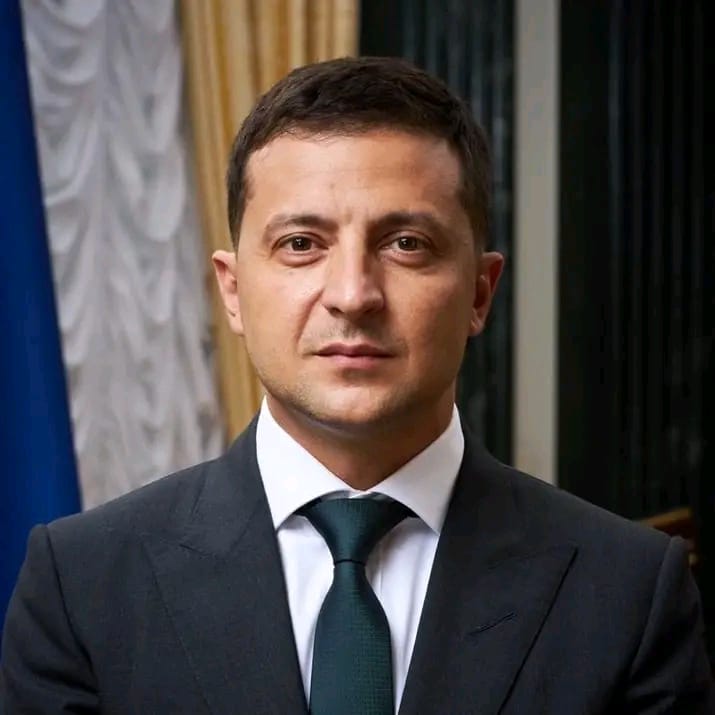
British Prime Minister, Boris Johnson, has honoured Ukraine’s President, Volodymr Zelnesky, with the Winston Churchill Leadership Award.

This was disclosed in the UK Prime Minister’s verified Facebook page on Tuesday, July 26, 2022.

“Today Prime Minister Boris Johnson presented President Zelenskyy with the Winston Churchill Leadership Award for incredible courage, defiance and dignity in the face of Putin’s barbaric invasion. ” The post reads.

The Prime Minister also said the UK would always stand with Ukraine.

On February 24, the world woke up to Russia’s invasion of Ukraine, which has thrown the two countries into war.

Between citizen and parachute journalism 

By Abdullahi A. Maiwada

“‘Parachute Journalism’ trivialize and sensationalize events that are more complex than a 30-second clip can capture” – Thomas L. McPhail.

However, this era of social media has made citizen journalists more dangerous than parachute journalists. While practitioners of the former are utterly ignorant about the basic principles of the profession, the latter is about placing journalists into an area to report on stories with little knowledge or experience. Lack of knowledge and tight deadlines often result in inaccurate or distorted news reports, especially during breaking news. 

While citizen journalists lack the fundamentals of news judgement, one cannot neglect their relevance in the business of news reportage. In some cases, the traditional media rely on citizen journalists for updates about issues in the form of eyewitness reports. 

The above implies that both parachute journalism and citizen journalism are interrelated at specific points. In most cases, their characteristics can be catastrophic and misleading instead of informing and educating. 

Even though I am not a fan of CNN, my recent update about the strategies by the new CEO Chris Licht making frantic efforts to redefine the usage of breaking news is a step in the right direction. “Moving away from alarming news distributing styles”, he said.

Both citizen journalists and mainstream media have fallen into the trap of fake news and hate speech precipitated by digital media. This is to satisfy the urge to take the lead in breaking the news.

In the word of my journalism lecturer Dr Kola Adesina “no time to think syndrome”. The outcome is having limited know-how to strike a balance between speed and accuracy. Thanks to convergence which created a blurry line between mainstream and digital media.

The primary reason we dish out content is to inform and not disinform, misinform and mal-inform. Why can’t we think twice and have a sober reflection before writing or talking? We should endeavour always to put a round egg in a round peg to avoid misleading society towards the direction of Rwanda. 

Influential media effect theories are still relevant in the digital age. The hypodermic needle/bullet, agenda-setting theories and the likes play a critical role in shaping the perception of the gullible and media illiterates who form the majority in our society. 

I have encountered a colleague who changed his perception of Russia based on an American movie. We have so many of them out there.

Finally, I will end my piece with the saying of our beloved Prophet (SAW). “Whoever believes in Allah and the day judgment should utter what is righteous or keep mute”. Gbam!!!

Abdullahi A. Maiwada is a superintendent of Customs attached to the Public Relations Unit, Nigeria Customs Service Headquarters, Abuja.

Russian courts fine Tiktok and Meta for not removing LGBTQ+ content

Newsbriefs

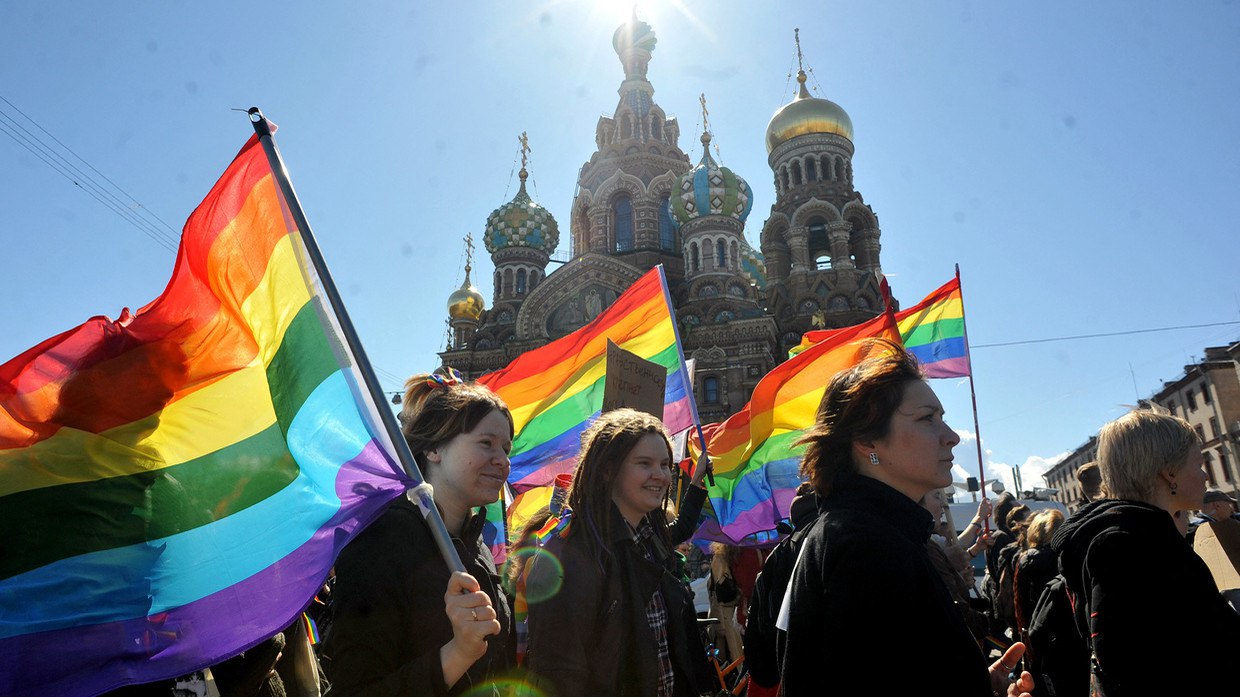
Russian courts have fined TikTok and Meta for failing to delete LGBTQ+ content. Meta was fined 4mn rubles by a court in Moscow. The US tech giant had failed to remove content that ‘promoted LGBTQ+ rights’, ruled the judges. 

TikTok was also fined 2mn rubles in another trial for a similar violation. LGBTQ+ advocacy, such as gay pride marches, and the pride flag, are banned in Russia.

Racism: Poland at it again

By Usama Abdullahi

I didn’t want to talk about this. But my mind is sick of it and wants me to spell it out. My piece centres on racism today. It’s something that most of us are barely familiar with. Yes, most of us, who haven’t travelled to the white world, know next to nothing about it. Some of us might not know that this ill-treatment against black people exists. While others, like me, do hear and read about it either on television or in newspapers. 

As a kid, I knew nothing about racism. Neither did I ever acknowledge its existence. It is because I was too young to understand what that meant. I used to think that the whites were superior humans that accord us, the blacks, some respect. But, contrary to my little kiddish thoughts about the whites, a vile or an irresponsible white man loathes this glowing dark skin. This blessed skin that wrestles all sorts of skin threats or irritation, someone from the other part of the world has aversions for it. 

This skin that withstands the sun’s heat, someone who’s driven by hatred for the faultless black men, considers it hell. I came across the word Ku Klux Klan at 12. At the time, I had Longman Dictionary with me. I would carry it wherever I go. So when I first took a glimpse at the then unfamiliar word, I paused for a while. Afterwards, I proceeded to read its meaning till the end. I couldn’t believe it at first. 

True. I couldn’t believe that there used to be a secret society during the 20th century which supported white supremacy in the Americas. This outlawed secret society fights the blacks and drives them out of the United States despite being legal citizens. I’m glad that this fraternal group is now defunct. But the problem is that racism is feathering again. It is fast dominating the white world. Some of them, the racists who have no respect for individual differences, honour its stay. They see nothing wrong when a black person gets badly treated because of his skin.

Sadly, we are entangled in a world that supports baseless animosities toward the people we share different views, faith or race with. The world we dwell in is a respecter of evil. We live to dine at the expense of our oppressed brothers from other parts of the universe. We see skin colour as a barrier to our unity and coexistence. Hence we look at each other with intense disgust. Unknowingly, this racism kills our hope to live a meaningful life.

Last year, we were hit by the tragic news of an African-American man who had his fate crushed in the hands of a cruel white policeman. The news filled up the media until it captured public attention. Concerned black folks, particularly the deceased’s bereaved family, went through hell as a result. As a result, many people took their outrages to the streets, protesting against racism with the hashtag, “Black lives matter”. And they were assured of drastic measures to prevent such by the American government.

Considering America’s quick intervention on the matter, we thought the issue of racism was laid to eternal rest, but it, like Lazarus, has been resurrected. We saw the uproar and slighting comments which trailed the media over the failure of Bukayo Saka, Marcus Rashford and Jadon Sancho to score during the penalty kick of the Euro 2020 final. We also saw the unusual treatment against Zouma over a minor offence on his cat, costing him millions of dollars. And, unfortunately, Poland is at it again.

It’s sad to watch how the blacks were denied entry into the train conveying people from the war-ravaged Ukraine to Poland. Despite the threats they face, the racial prejudice in these racist morons prevails and has got to the point of favouring the Ukrainians over Africans or blacks – as if they aren’t all humans in need of urgent aid. Racism is a disease that bites deep into our hearts. It is also a barricade that holds back our progress as humans. So, It’s high time we stopped promoting racial discrimination.

Usama Abdullahi wrote from Abuja, Nigeria. He can be reached via usamagayyi@gmail.com.

Russia’s invasion: Ukraine is not the target

By Sulaiman Badamasi (Mahir)

Russia of today is not the same as Russia yesterday. Russia used to be the Soviet Union, a superpower that sometimes acted with the West. The war of 1973, when the Zionists wanted both sides of the conflict taken to a draw and in 1954when Russia (Soviet Union) transferred the Crimean Oblast to Ukraine have said it all. Now, it is a post-Soviet Union Russia who toiled when the Soviet Union sagged, but within the breath-span of twenty-something years has grown now to a grandeur position.

The Western world has been ruling over humankind for the past 300 years or more, changing regimes worldwide, especially in the south and central America, which the famous Monroe Doctrine described as “America’s Backyard”. The West has been changing regimes after regimes all over the region. But have we ever asked why they have never changed the regime in Venezuela? America has done everything it could to change the Venezuelan government but to no avail because this can only be achieved through military intervention, and any move of such would mean facing Russia. They do not want to confront Russia. NOBODY WANT TO FACE RUSSIA because Russia is not Libya, Yemen, Somalia, Palestine, and of course, not Iraq.

What seemed to have convinced the world further to accept Russia’s predatory position was the tremendously dangerous step it took to intervene in Syria. This could have led to a nuclear war. Russia also took the world by surprise in 2014 when it took over or took back(?) Crimea in just two weeks. It seems like Russia is defeating the West in silence and stylishly repositioning itself back to the Soviet Union’s throne.

For the West to reduce the margin, it swiftly paid back with a regime change in Ukraine in 2014 in what was termed as “The Revolution of Dignity”, which saw the impeachment/replacement of the then Ukrainian (of course Russian loyalist) elected president, Viktor Yanukovych, and Petro Poroshenko (pro-West) became the president, who immediately began with leading the Russo-Ukrainian war in February 2014.

After three months, he forbade any cooperation with Russia in the military sphere and later signed the “Ukraine–European Union Association Agreement in June 2014.” Five months later, in president Poroshenko’s speech to the new parliament in November 2014, Poroshenko stated, “we’ve decided to return to the course of NATO integration” because “the nonalignment status of Ukraine proclaimed in 2010 couldn’t guarantee our security and territorial integrity”. Russia perceived all these, coupled with the ouster of Viktor Yanukovych, as a series of threats right at its closest border.  

Why does Russia detest/is against/is afraid of Ukraine’s alignment with NATO?

If Ukraine becomes a NATO member state, then Russia would have NATO on its very border, which means it will have its military bases a few distances away from Russian borders, where missiles could hit Moscow in minutes. Hence Russia does not seem to accept this security option. It could be said that Russia does not want to invade Ukraine because a full invasion MIGHT provoke a military response from the West (only time could tell, though). But certainly, all parties involved (Russia, Ukraine, and the West) hope the chaos ends through diplomatic means rather than war. Maybe Russia has a military strike as the only option for now?

Territorial control and elimination of perceived possible dangers around borders have become a norm or a widely practised approach by states nations. Let us digest in the following to shade more light:

Cuban Missile Crisis/Missile Scare: when the Soviet Union started installing nuclear missiles in Cuba in 1961 after reaching an agreement with Fidel Castro of Cuba, the Kennedy administration decided that this was too big a security threat to be contained. They put a “quarantine” (a station where weaponry logistics were searched) so that no nuclear missile could be shipped and demanded that all missiles in Cuba be taken back to the Soviet Union.

Syria and Israel: with Russia and Iran as Syrian friends and Israel sitting just 569.17 kilometres away from the Syrian border, it is not a surprise if Israel and her friends (America, Saudi, and Turkey) feel threatened or expect that the worst happens from Israel’s neighbourhood. The military campaign that aimed at toppling the Russia and Iran backed Assad’s government by the Saudi, Turkish and American backed rebel group, which began in March 2011 as an anti-government protest and later escalated to a full-scale war, could be understood as an effort to eliminate an enemy’s friend whose territory can be used to attack an immediate neighbour. Could America and Saudi afford to lose Israel?

Muslim Brotherhood and Israel: when Mohammed Morsi (may Allah have mercy on him) was sworn in as the first democratically elected president of Egypt on 30th June 2012, he expressed dissatisfaction with the country’s 1979 policy which declared that it stands as a mediator between Israel and Palestine and determined to reset his country’s orientation to one of active support, not for a ‘self-governing authority and ‘autonomy’ in the West Bank and Gaza Strip, but the attainment of an independent sovereign Palestinian state with Jerusalem as its capital and the right of the Palestinian refugees to return.

In Morsi’s one year in office before his removal through a coup d’etat, he ordered the Egyptian authorities to open the Rafah Crossing, the only gateway that connects Palestinians to the outside world. This means Palestinians can travel any time without really passing through strict measures imposed on them by the Israeli government, and different kinds of support could reach them without obstacles. Trade began to flourish between Palestine and Egypt. The Israeli siege on the Palestinian land was eased. He became the first Egyptian president to declare rejection of Israel’s assault on Palestine since 1979. Israel and her friends felt threatened by the closest neighbour, and the result was his forceful ouster, imprisonment, the unjust killing of his supporters. The coup that ended Morsi’s regime has not been justified yet. Why was it done then? To eliminate a nearby perceived enemy.

Saudi and Houthi: the Houthi rebel group, which champions Yemen’s Zaidi Shia followers, took over Sana’a in 2014 and forced the then Yemeni president, Abdurrabbu Mansur Hadi, in March 2015, to flee the country. To many people, “a rebel group has taken over Yemen,” yet to Saudi and her allies, “Iran has succeeded in extending its proxy-war/proxy influence to the Saudi border.” There is no need to emphasise that implication on Saudi, thanks to the firing of ballistic missiles to Saudi Arabia and UAE. Swiftly came a fierce joint reaction from Saudi-led coalition of eight(?) countries with logistics and intelligence support from America and France with Iran backing the Houthi rebels leading to the ongoing multilateral civil war.

Turkey and ISIS in Iraq: another interesting episode in the quest to defy near-border threats is having Turkey, a NATO member-state, fighting ISIS in Syria while ignoring the danger that the same ISIS poses in Iraq. Turkey has so far chosen to sit out the war to allow ISIS to fight the Kurdish militia group in Iraq. Turkey considers the Kurdish militia who craves a breakup to carve out its own country, Kurdistan, a more harmful enemy. Kurdistan encompasses southeastern Turkey (Northern Kurdistan), northern Iraq (Southern Kurdistan), northwestern Iran (Eastern Kurdistan), and northern Syria (Western Kurdistan). Some definitions also include parts of southern Transcaucasia. Certain Kurdish nationalist organisations seek to create an independent nation-state consisting of some or all of these areas with a Kurdish majority, while others campaign for greater autonomy within the existing national boundaries. Do you see? The same struggle to protect territorial integrity is seen at its peak here.

Iraq invasion and Iran: this is the same reason that encouraged Iran’s interest in Iraq after the US and its allies removed and killed Saddam Hussein. Despite having a not-so-friendly relationship with the West, Iran was in total support of the strike against Iraq (Saddam) in March 2003 when the US, under Gorge W. Bush, led a coalition of the UK, Poland, and Australia to invade Iraq.

This has remained part of history for centuries and means that Russia is not necessarily fighting Ukraine as Ukraine but trying to send a clear signal to whoever wants to near her border in any form of disguise.

Will the war be taken further? I do not think Russia could be smart enough to launch a full-scale war yet. However, if it continues, there is a slim chance of having NATO respond militarily, which could further lead to an unimaginable end. It is to the world’s knowledge that if external forces intervene to support Ukraine, it could mean facing Russia, China, North Korea, Serbia, Iran, Syria, Venezuela, Belarus, etc.

Are we about to witness another World War? We pray for the best.

Sulaiman Badamasi (Mahir) sent this article via sulaimanmahir@gmail.com.

Just In: Violence erupts in Ukraine’s second-largest city

By Muhammad Sabiu

As Russian troops entered Ukraine’s second-largest city, Kharkiv, street violence erupted.

According to Synehubov, the head of the Kharkiv Regional State Administration, residents of the eastern city should stay in shelters and avoid travelling as Russian vehicles invaded Kharkiv on Sunday.

He was quoted as saying, “The Russian enemy’s vehicles advanced into the city of Kharkiv. Including the central part of the city. Warning! Do not leave your shelters!” Governor Synyehubov said in a Facebook post Sunday.

“The Armed Forces of Ukraine are eliminating the enemy. Civilians are asked not to go out in the streets.”

For the previous three days, Ukrainian forces have been able to keep Russian troops out of the city, but Synehubov claims that this has suddenly changed, with the battle taking place in the city’s core.

Ukraine-Russia crisis: What should Nigeria do?

By Salisu Uba Kofar-Wambai

Nigeria’s foreign policy of nonalignment is on the right track. Thus, I commend how we keep mute and only call for peace in this ongoing face-off and altercation between Ukraine (backed by Western powers) and almighty Russia under President Putin.

Nevertheless, any attempt to side with one of the warring parties can be a big blow to the international relations prowess we have been displaying over decades. History had it that Russia supported Nigeria during the Biafra civil war. Reportedly, Malam Aminu Kano served as a bridge and intermediary embodiment between the Nigerian government and Russia in arms purchase, which positively impacted winning that war.

Aminu Kano’s Communist stance captivated Russia. Therefore, he successfully had that bilateral thing with them. It was a critical moment for Nigeria when France was solidly behind Biafrans.

However, even our much-talked-about project expected to shoot Nigeria into the league of technologically oriented countries – Ajakuota Steel project – was Russian technology. As a result, many of our technocrats were and continue to be trained in Russia.

Despite the shift in our foreign policy from the East to the West and now to Asia, Russia still maintains fantastic and fine bilateral relations with Nigeria. So supporting Ukraine to please Western powers will not do us better.

We better keep to our callings for peace and leverage primarily on this soaring of oil prices in the international oil market, evacuate Nigerians caught up there. We shall continue to run with the hare and hunt with the hounds.

Salisu Kofar-Wambai wrote from Kano. He can be reached via salisunews@gmail.com.

Russia to support Nigeria fight terrorism

By Uzair Adam Imam

The Russian president, Vladimir Putin, has promised Nigeria his support in fighting terrorism and countering religious extremism.

Receiving the Nigerian Ambassador to Russia, Professor Abdullahi Y. Shehu, the president gave his words.

President Putin made the assurance to Nigeria adding that a “very promising expansion on substantive dialogue on topical issues related to maintaining stability in the world hydrocarbon markets, combating terrorism and countering religious extremism.”

He stated that Russia was open to mutually beneficial partnership with all countries without exception.

Putin declared that “Russia is ready for multifaceted interfaces for mutual interests with the countries that their new envoys have come to represent in Russia.”

Afghanistan: Superpowers’ invasion and history of resistance

By Aminu Rabiu Kano


The history of Afghanistan is one characterized by epic tragedy. The narrative of the “Afghan problem” has been diverse, with each actor telling their side of the story in a bid to justify their action or inaction as the case may be. A poor, landlocked Afghanistan is one of the few countries in the world which events happening in and around it have been dominating the headlines for decades. Both the mainstream and social media are obsessed with happenings in the country. Indeed, even the layman on the street is more or less interested in the Afghan problem to the extent that virtually everyone can say one or two things about it. The question that follows, therefore, is, why is the world interested in happenings in Afghanistan? In other words, why are developments in Afghanistan capable of generating reactions around the world? Also, why have the superpowers in history found it necessary to invade Afghanistan?


To answer the above questions, we must begin by establishing the geopolitical relevance of Afghanistan on the world map. Afghanistan is doubtlessly strategically located. It is at the crossroads of Central and South Asia. It borders Pakistan, China, Iran, Turkmenistan, Tajikistan and Uzbekistan. It is predominantly mountainous and inhabited by approximately 32 million people – nearly 45% of whom speak the Pashtun language. Moreover, the Afghan population is primarily Muslim. This reason, coupled with the fact that it borders Iran, Afghanistan is sometimes seen as a part of the “Wider Middle East.”


From the list of the countries bordering Afghanistan, one will realize the geographical importance of Afghanistan in the international political environment. Of the five countries that bordered it, Iran and China stand out. However, Uzbekistan, Tajikistan and Turkmenistan had been part of the former Soviet Union that fell apart in the 1990s. This implies that Afghanistan has been a neighbour to glorious powers both in the past and present.


Therefore, it was invaded severally by several empires across ages due to its essential, strategic location. For example, Alexander The Great of the Macedonian empire invaded Afghanistan in 330 BC as part of the war against Persia. Alexander saw that he could only get the Persian empire subdued by invading Afghanistan. Similarly, foreign powers such as the Persian Empires, the Mongol Empire led by Khan Ghengis, the Mughal Empire, the Timurid Empire, the Rashidun Caliphate, and the Sikh Empire conquered Afghanistan.


Little wonder, Afghanistan, even in the modern era, grappled with yet other rounds of invasions, but this time around by the “superpowers”. The superpowers being the USA and the USSR. During the cold war, these superpowers used Afghanistan, among other countries, to test their military, economic and political powers. It all started when, in April 1978, the People Democratic Party of Afghanistan overthrew the Afghanistan government. Nur Muhammad Taraki, secretary of the PDPA, became president of Afghanistan. But Taraki’s government was communist in orientation and enacted some policies that were not well received by the masses. Thus, the masses hated government, and, as a result, Taraki was overthrown by Hafizullah Amin in September 1979. Despite the change of government from Taraki to Amin, opposition to communist rule continued even under Amin. In December 1979, Amin was shot and replaced by Babrak Kamal, who was in exile in Moscow. Kamal’s government heavily relied on the Soviet military for support and protection against his vast opponents.


Opposition to the communist government continued, which prompted the USSR to invade Afghanistan, deploying more than 50,000 soldiers. This occupation was even met by fierce resistance by Afghans, who have joined the Mujahedeen – a guerilla movement that proclaimed to be fighting anti-Islamic forces in Muslim lands. The Mujahedeen would later be referred to as the “Taliban”. The Taliban was formed by Mullah Muhammad Umar, who recruited young Muslim students from Afghanistan and neighbouring Pakistan to fight the Soviet Military. Over the next ten years, hundreds of thousands of lives were lost. In the end, the Soviet military was forced to withdraw from Afghanistan.


However, the mujahedeen (or the Taliban, if you like) did not fight the war alone: they were heavily supported, armed and financed by the USA, Saudi Arabia and Pakistan. USA was mainly instrumental in its support to the Taliban because it feared that if the USSR succeeded in occupying Afghanistan, its national interests would be threatened. In fact, the US’s intervention was informed by the need to resist the advance of what former President Reagan called the “evil vampire”. Then, the two superpowers – the USA and USSR – were in the heat of the cold war. Therefore, the US saw that if the Soviet Union succeeded in implanting communist rule in Afghanistan, the domino theory would materialize. This means that the USSR would also succeed in spreading communist ideology into those countries neighbouring Afghanistan. Most Fundamentally, by gaining the control of the Middle East, the USSR would determine oil and gas supply to the US and its allies in the West. This meant that the Soviets could do great harm to the US economy and those of its allies by cutting off the oil supply since oil was a vital product so crucial that military and industrial operations heavily depended on it.


After the withdrawal of the Soviet military from Afghanistan, the Taliban formed an Islamic government. Osama Bin Laden – a Saudi citizen – was instrumental in fighting the Soviet army. As the son of a rich and influential citizen in Saudi Arabia, Osama contributed substantial financial resources to the Afghanistan war that lasted for ten years. He later formed Al-Qaeda, which was said to be a terrorist movement determined to liberate the Muslim land from Western influence. On 11 September 2001, 4 aeroplanes were hijacked by, allegedly, the Al-Qaeda. Two were flown to the Twin Towers housing the World Trade Centre, one flown to the Pentagon and the other to Pennsylvania. As a result, more than 5000 people lost their lives, and critical government infrastructures were destroyed.


The US was quick to blame Osama’s Al-Qaeda for the tragic 9/11 event. The US President George Bush soon declared war on terror. The war was first on Afghanistan, which led to the overthrow of the Taliban government. After that, the American forces established a democratic government with its foundation in and allegiance to American imperialism. However, after 20 years of occupation, the Taliban expediently returned to power when the US forces willingly decided to withdraw from Afghanistan.


From the foregoing, three lessons can be learned. One, Afghans have a genetic history of resistance to foreign domination. Second, Afghanistan is a strategic country that played an important part in the Great Game power struggles for centuries. Finally, it is evident from the above that Afghanistan’s series of invasions was no end in itself, but a means to an end. Put it more succinctly, Afghanistan is a gateway for foreign powers. Its invasion would allow the superpowers to dominate the Asian continent, including the oil-rich Arab world. Overall, Afghanistan, despite its myriad of aggression by foreign superpowers, is still in existence. It survives!


Aminu Rabiu Kano is a political and public affairs analyst. He can be reached via 08062669232.