PwD

How Nigerian Deaf Student Experienced Real Inclusion at University of Cape Town

By Myolisi Gophe

When meningitis robbed him of his hearing at the age of eight, many believed Ibrahim Tukur’s future had been written off. His teachers could no longer reach him. Friends drifted away. Some mocked him. Even his father, convinced there was no future for a deaf child, withdrew him from school.

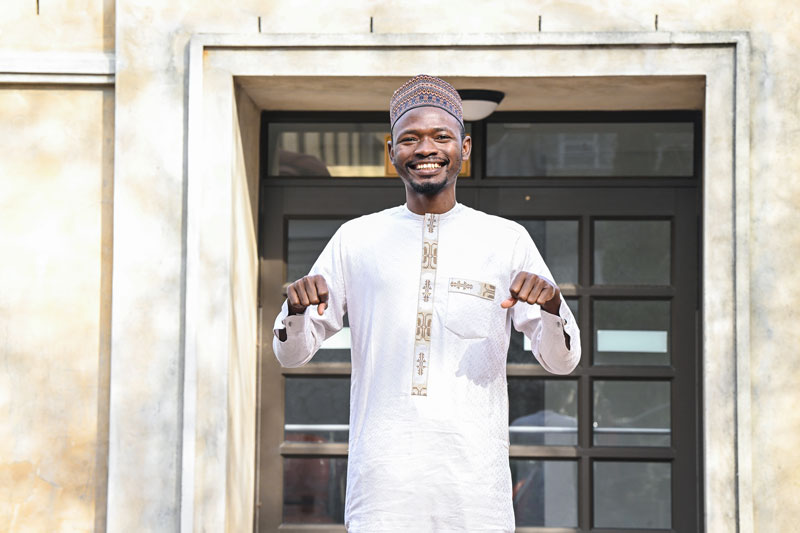
Today, that same boy is pursuing a Master of Philosophy (MPhil) in Disability Studies at the University of Cape Town’s (UCT) Department of Rehabilitation and Health Sciences as the first Deaf Mandela Rhodes Scholar – one of Africa’s most prestigious leadership scholarships – and is using his experiences to advocate for a more inclusive society.

For Tukur, who hails from Nigeria, his journey is not simply one of overcoming adversity – it is proof that when barriers are removed and opportunities are created, people with disabilities can thrive.

“Receiving the scholarship was one of the happiest moments of my life,” he said. “It reminded me that our disabilities do not determine our success.”

Growing up in Ingawa, a small town in Nigeria’s Katsina State, life changed overnight when meningitis left him Deaf.

Unable to follow lessons in mainstream classrooms, he experienced a sharp decline in academic performance.

“My life drastically changed,” he recalled. “I could no longer understand what my teachers were teaching.”

The social isolation that followed was equally devastating.

“I lost most of my friends, who avoided me because of my deafness, as if it were a curse.”

Believing there was little hope for his son’s future, his father removed him from school.

But fate intervened.

A relative encouraged his father to enrol him at the Government School for the Deaf in Malumfashi, a residential school where sign language was the primary means of communication.

The impact was immediate.

“For the first time since losing my hearing, I learned in an environment where everyone communicated through sign language. Gradually, I regained my confidence, rediscovered my love for learning, and began to believe in myself again.”

That experience sparked a lifelong commitment to ensuring other Deaf children would not face the same barriers.

He went on to earn a degree in Special Education from Bayero University in Kano before enrolling at UCT to deepen his understanding of disability inclusion and advocacy.

Today, he serves as the head teacher at Dambo Tukur School for the Deaf and he also co-founded the Thrive Disability Initiative, a non-governmental organisation (NGO) dedicated to empowering persons with disabilities through education, employment, and entrepreneurship.

Finding inclusion at UCT

Although he had spent years advocating for disability rights, arriving at UCT introduced him to a level of inclusion he had never previously experienced.

“I have never experienced what real inclusion was like until I came to UCT,” he said.

When he struggled to find accommodation upon arrival, staff at UCT’s Disability Service stepped in immediately, helping secure accessible accommodation at Obz Square in Observatory and installing assistive technologies in his room.

Initially, he worried he might be inconveniencing others.

“I realised that inclusion is not about doing someone a favour. It is about removing barriers so everyone can participate equally.”

Another turning point came when his South African Sign Language interpreter connected him with members of the Western Cape Deaf community.

“Through them, I found friendship, belonging and a sense of home.”

Those experiences reinforced his belief that leadership begins by creating spaces where everyone feels seen, valued and included.

The importance of leadership

The Mandela Rhodes Scholarship recognises more than academic excellence. It seeks young leaders committed to reconciliation, entrepreneurship and social impact.

For him, leadership has always been measured by how many lives are impacted, rather than what titles people have.

Among his proudest achievements is advocating for the establishment of Dambo Tukur School for the Deaf back home, which now provides quality education to more than 50 Deaf children who previously had little or no access to schooling.

He has also organised mentorship programmes for Deaf learners, trained government workers in sign language to improve communication with Deaf citizens and coordinated vocational skills programmes that have enabled many unemployed Deaf adults to become financially independent.

One of his biggest challenges came while campaigning for the school.

Government officials initially resisted the proposal because of misconceptions about Deaf people.

Rather than allowing disagreement to create division, he chose dialogue.

“By continuing to engage respectfully and demonstrating the importance of inclusive education, we eventually secured approval and established the school.”

He believes those experiences embody the leadership values championed by the Mandela Rhodes Foundation.

Overcoming invisible barriers

His own university experience also revealed the everyday obstacles Deaf students continue to face.

As an undergraduate, before his journey with UCT, he completed his degree without the support of a sign language interpreter.

Instead, he relied on lecture notes, handouts, and hours of independent study to compensate for the information he could not access in class.

“There were moments when I questioned whether I truly belonged at university and whether I could succeed in a system that was not designed with Deaf students in mind.”

Despite those challenges, he graduated with an Upper Second Class pass (an average score between 60% and 69% across his university courses).

The experience shaped his conviction that disability itself is not the greatest obstacle.

“Inaccessible environments create the greatest barriers to success.”

As someone who has lived the realities of exclusion, he believes universities have an important role to play in changing society.

He would like to see disability studies integrated across disciplines so that graduates in every field understand disability rights, accessibility, and inclusive communication.

He also advocates for stronger support services, including timely access to sign language interpreters, assistive technologies and accessible learning materials.

Financial support for students with disabilities, particularly those from disadvantaged backgrounds, is equally important.

Long-term vision

His long-term vision is ambitious: over the next decade, he hopes to empower at least 500 people with disabilities through education, leadership development and entrepreneurship.

The Mandela Rhodes Scholarship, he said, provides more than financial support.

“It gives me the knowledge, networks and leadership experience to achieve these goals.”

Looking back on his journey, he hopes his story inspires other Deaf learners to believe in themselves.

“Do not allow society’s expectations to define your future,” he said.

“There will be obstacles, and there may be moments when people underestimate your abilities, but your deafness does not determine your intelligence, your talent or your potential.”

His message is simple but powerful.

“If a boy who was once withdrawn from school because people believed he had no future could become a Mandela Rhodes Scholar and study at one of Africa’s leading universities, then you should never doubt what is possible for your own life.

“Dream boldly, persevere through challenges, and remember that you deserve to learn, to lead and thrive just like everyone else.”


Editor’s Note: The article was first published on the Cape Town University news website here: How a Deaf student experienced real inclusion at UCT.

Disability is not a license to bed

Street begging is often wrongly associated with disability. When someone loses a leg, an arm, their sight, or any part of their body, many assume that the next step is to become a street beggar — as though it’s prescribed. This harmful stereotype is one of the reasons PWDs are widely known for begging.

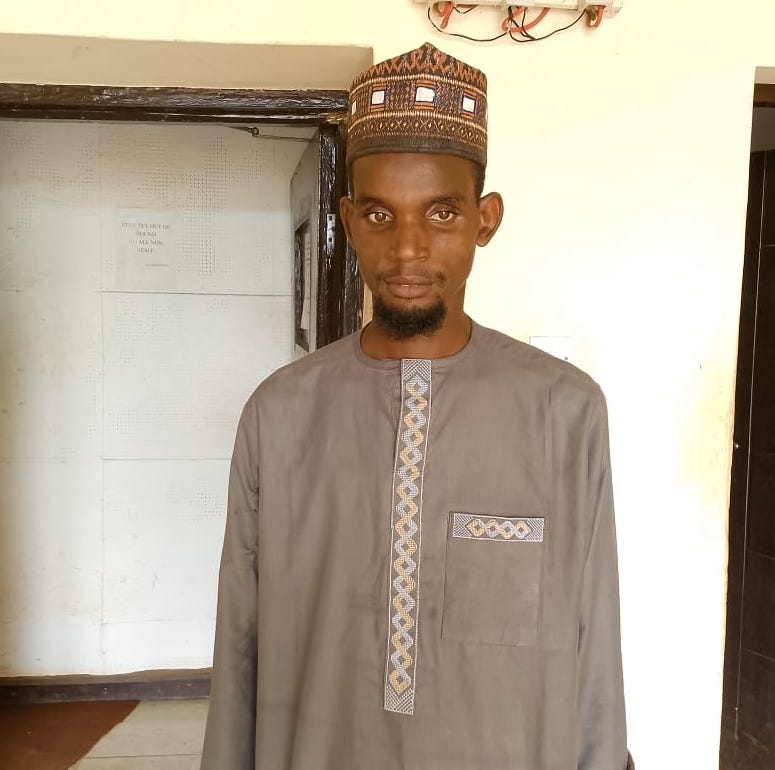
I have personally experienced this bias before. It happened when I got out of a tricycle that had pulled up at Kabuga Underway. I was unfamiliar with the area and trying to find my way to Bayero University, Kano (New Site). I approached a passerby and handed him a scrap of paper on which I had written:

“Assalamu Alaykum. Please, where can I get a tricycle to the BUK New Site?”

The man was around thirty to thirty-three years old. He had a neatly trimmed beard, wore a stylish sky-blue shirt paired with dark jeans, and black shoes.

To my surprise, he refused to collect the paper. Instead, he reached into his pocket and brought out a one-hundred-naira note and offered it to me. I was stunned and disappointed.

I declined the money and insisted that he read the paper. Reluctantly, he took it, read it, and then immediately apologised. He directed me to the place where I could find a tricycle to BUK.

I didn’t hold it against him. I understood. He had likely encountered deaf individuals who were begging with a solicitation note on the streets and had generalised.

But this is precisely why I strongly condemn street begging. Disability should never be an excuse for begging. PWDs should not be reduced to beggars simply because of their condition. We must challenge this narrative.

Instead, society should actively support PWDs. Disabilities can indeed limit one’s ability to perform certain tasks. But that doesn’t mean we are incapable. Those who are uneducated should be empowered with vocational skills to start small businesses. Those who are educated should be given equal opportunities for employment.

The real problem is not disability. It is the lack of support, education, and inclusion. Street begging is not a destiny for PWDs. With the proper support, we can live independently, contribute meaningfully to society, and break this damaging stereotype.

Ibrahim Tukur is a Disability Rights and Inclusion Advocate. He can be reached via email at: inventorngw@gmail.com.

Reps propose quota seats for women, PWDs in constitution review

By Abdullahi Mukhtar Algasgaini

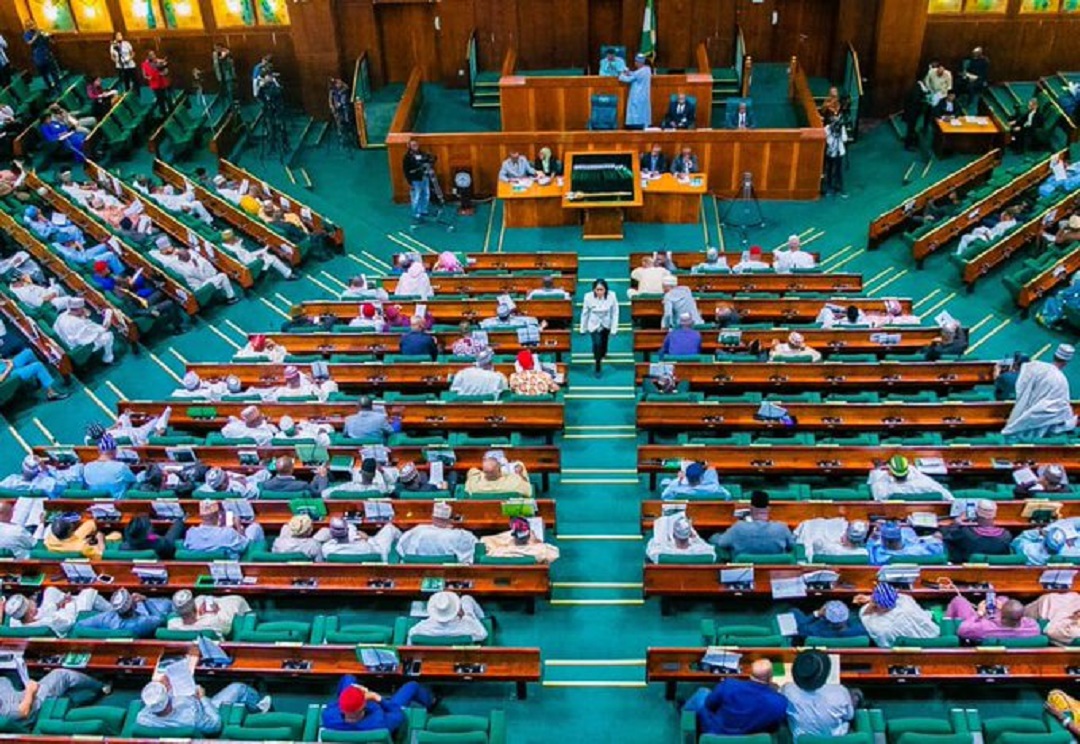
In a significant move towards inclusive governance, the House of Representatives is proposing the creation of 82 reserved seats in the National Assembly specifically for women and Persons with Disabilities (PWDs) as part of the ongoing constitutional amendment process.

Speaker of the House, Rt. Hon. Tajudeen Abbas, announced the proposal on Tuesday during the 2nd Legislative Open Week in Abuja.

The plan allocates 55 reserved seats within the House of Representatives and 27 in the Senate.

Under the proposal, 10% of National Assembly seats would be reserved for women and 5% for PWDs.

Abbas stated that the reserved seats for women would be filled through direct elections on separate ballots.

Seats reserved for PWDs would be filled via nominations from accredited advocacy organisations, also through direct elections.

He framed the reform as essential to correct “decades of gender imbalance,” highlighting the stark underrepresentation of women since independence.

“At independence, women held less than 1% of seats. Today, it has barely moved,” Abbas noted, pointing to countries like Rwanda and Senegal as examples where quotas have significantly boosted women’s representation.

The proposal is among 109 constitutional amendment bills currently under consideration by the House.

Other key areas of reform include elections, judicial processes, and fiscal accountability.

Speaker Abbas also provided an overview of the 10th Assembly’s legislative output, revealing that 2,263 bills have been introduced so far, with 55 already signed into law.

Notable enacted legislation includes the Student Loan Act and the amended Electricity Act.

On public engagement, Abbas reported that the House has received 621 citizen petitions.

Of these, 24 have been resolved, 30 dismissed, and 567 remain under consideration.

Senate President Godswill Akpabio, who also addressed the Open Week, commended the House’s legislative strides and pledged the Senate’s support for collaborative efforts.

He announced plans for a joint National Assembly Open Week and expressed concern over the high turnover rate of legislators, which he said negatively impacts institutional memory.

Former Speakers Yakubu Dogara and Patricia Ette urged current lawmakers to deepen public engagement and uphold accountability.

Speaker Abbas concluded by assuring that the 10th House remains committed to “inclusive and responsive lawmaking” and strengthening collaboration with the executive branch to deliver results for Nigerians.

It’s exactly 16 years since I joined the deaf community

By Ibrahim Abdullahi

Tuesday, December 3rd, 2024, commemorates the 32nd International Day of Persons with Disabilities celebration worldwide.

On this very special day, several celebrations of the International Day for Persons with Disabilities will take place in different parts of the world, making it a worldwide event. 

However, for others, it is a historic occasion. This may be the first time they celebrate the day; this could be because they have recently joined the community of people with disabilities due to illness, accident, or other reasons.

 Many thanks to former Nigerian President Muhammad Buhari and the individuals involved in the tireless and backbreaking efforts to pass and implement the Disability Bill into Law 2018, which has never been in Nigeria’s history since its independence.

I want to remind us that DISABILITY is not a curse or disease. It is a condition that can be rehabilitated depending on the type of disability one is struggling with. There is always ability in disability. We should not be discouraged!

Thanks to those who, in some way, took time to celebrate with us and the good people of Nigeria and Africa in general for witnessing this special day with us. 

The world stands still for us to salute our courage and fortitude to triumph over challenges we overcame and the ones coming our way. The world celebrates our abilities despite our disabilities.

We live in a world where change has become a constant basis of our individual and collective societies. In this advanced technological modern period, technological wonders appear at regular intervals, and our lives as members of particular societies regarding persons with disabilities are clearly different from those of those without disabilities. This requires inclusion to reshape our community. 

Ending discrimination, injustice, and humiliation against people with disabilities is essential. We should embrace diversity in all its forms. Tolerance and accepting our differences are important; we must be recognized as humans. Let us unite to improve our society, Nigeria. Some scholars say that everyone is disabled in one way or another, and I agree. 

Happy International Day of Persons with Disability, everyone. 

Ibrahim Abdullahi can be contacted via ibrahimbsw23@gmail.com.

For PWDs in Nigeria to live a fulfilled life

By Fatimat Ibrahim Abedoh,

In 2022, Crystal Asige, a visually impaired woman, was nominated to the 4th Senate in Kenya’s 13th Parliament to represent people with disabilities and special interest groups. Picked by the Orange Democratic Party (ODM), she was sworn in alongside 66 other Senators on September 8, 2022. 

Despite her disability, Asige was seen for her potential and allowed to thrive, becoming a role model for many in similar circumstances. She has been excelling ever since. In contrast, Nigeria has a significant population of about 35 million people with disabilities, yet they are still mistreated, shunned, and disregarded. 

No public space, transit system, or infrastructure in Nigeria is designed with PWDs in mind, reflecting the height of their struggles. It is no secret that life in Nigeria is challenging, but for PWDs, it is twice as difficult.

PWDs in Nigeria face numerous challenges and barriers to full inclusion and participation in society, issues that are not discussed enough. Individuals, private organisations, and public institutions are often unwelcoming, making it difficult for PWDs to thrive in all aspects of life. 

This lack of accessibility constrains their potential and strips them of the platform to live and contribute meaningfully to society—whether in education, politics, employment, or social activities.

Their fundamental human rights are severely violated, as being disabled often equates to being treated as less than human. This is why many PWDs resort to begging for survival. But they need more than a pity party; they deserve respect and inclusion.

Recently, a PWD faced discrimination at an eatery. Adebola Daniel, son of former Ogun State Governor Gbenga Daniel, recounted his humiliating experience at the KFC outlet in the Murtala Muhammed Airport via his X handle (@DebolaDaniel). A wheelchair user, Daniel described the incident as the worst public humiliation he had ever faced. 

He explained that due to the out-of-service lift to the airport lounge, he decided to wait at the KFC outlet with his wife and three brothers. However, this simple choice turned into a “colossal mistake,” as he put it.

His tweets partly read: “Being disabled often rolls over my spirit, leaving behind a trail of shattered dignity and forgotten humanity. Nowhere more so than in Nigeria. To be disabled in Nigeria is to be undesirable, unwelcome, and unaccepted… Today, I faced the worst sort of public humiliation that I have ever experienced. To think that this happened at an international brand, KFC, at an international airport – Murtala Muhammed Airport, Lagos – is unthinkable.”

Daniel’s case gained public attention, mainly because of his family background, prompting the Federal Airports Authority of Nigeria (FAAN) to shut down the outlet and demand an apology. But what about the millions of other PWDs who have faced similar or worse situations? Who listens to them, and who takes action on their behalf?

Since Asige entered the Senate in Kenya, she has been able to sponsor three bills that the Kenyan government has enforced, all tailored to the interests and welfare of persons with disabilities. These are the Persons with Disabilities Bill 2023, the Kenyan Sign Language Bill 2023, and the Startup Bill 2022. 

She continues to work in the interest of Kenyan youths and those across Africa. In Nigeria, former President Muhammadu Buhari passed the Discrimination Against Persons with Disabilities (Prohibition) Act into law in 2018. Yet, six years later, it has not been fully implemented.

Adequate funding for education, assistive technology, and other essential resources for PWDs is urgently needed. Nigeria practices representative democracy, and PWDs deserve to be heard, seen and listened to. They need representation in the Senate or the House of Representatives to amplify their voices. 

PWDs are capable of much more than their disabilities, and no one can represent them better than one of their own.

Fatimat Ibrahim Abedoh is a fellow at PR Nigeria’s Young Communication Fellowship.

Mainstreaming marginalised groups in Nigeria’s identification system

By Muhammad Mikail

The World Bank Group’s Identification for Development (ID4D) initiative estimated that 1 billion people were without an officially recognised means of identification (ID), and the majority are women. This problem is particularly acute in Low—and Medium-Income Countries (LMICs), where the 2017 Global Findex survey estimates that 44 per cent of women do not have an ID compared to 28 per cent of men (World Bank Gender Gap Report 2021).

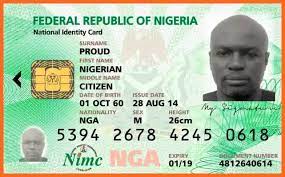
In Nigeria, different studies and surveys have identified many challenges and barriers as the cause of the low National Identification Number (NIN) enrolment by women, children, Persons with Disabilities (PWDs), and other marginalised groups. These groups experience challenges in obtaining ID due to the distance to travel for registration, transport costs, long wait times, and multiple visits. 

Some of the identified barriers to enrolling for the NIN for women, children, and PWDs have emanated from social norms about gender roles that allocate certain household work, responsibilities, and childcare to women, exacerbating their time constraints. Most often, women needing permission from husbands and fathers can be a huge barrier for many, especially in environments where knowledge and awareness about IDs are limited. 

Also, poor facilities combined with long wait times are particularly hard for elderly people, pregnant and nursing mothers, and persons with disabilities. These barriers to registration are even greater for pastoralists and IDPs who are less aware of pertinent registration information such as location, time, and necessary supporting documentation.

Many IDPs have low trust in the government, while people living in camps are further away from service access points. Pastoralists and migrant fisherfolk and farmers also typically have less engagement with the government and are less likely to have IDs, though this varies significantly by region. Women from these communities are likely doubly disadvantaged by their gender and their pastoral identity. Women with disabilities and internally displaced women are also likely to face additional barriers and greater exclusion from society than women without disabilities or women who have not been displaced (World Bank Gender Gap Report 2021)

The United Nations High Commission for Refugees (UNHCR) in July 2023 revealed that Nigeria has over 3 million Internally Displaced Persons (IDPs), about 2 million returnees, and 100 thousand refugees/asylum seekers from 41 countries, with the majority from the Democratic Republic of Congo, Niger, Central Africa Republic, Cameroon, Syria, Turkey, Mali, and 34 other countries. Also documented by UNHCR are over 300,000 Nigerian refugees registered in Cameroon, Chad, and Niger. 

These individuals may have difficulty accessing basic rights such as banking, telephone, education, healthcare, employment, and freedom of movement and may face a lifetime of obstacles and exclusion without access to the National Identification Number (NIN). Aside from creating a huge gap in the database in terms of inclusivity and spread, this leaves behind a very huge number of unidentified underserved persons with the risk of being excluded from government services, restriction in movements, and lack of access to healthcare. It also creates a clog in the federal government’s attempt to commit to the sustainable development goals of providing identities for everyone and “leaving no one behind.”  When you have millions of unidentified persons outside of your country’s identity database, it means your economic planning will fall short and by extension, Nigeria’s socio-economic development will suffer.

In recognition of these challenges and in commitment to achieving universal access to ID and closing the gaps, the Government of Nigeria commissioned a strategic roadmap in 2018 as part of the country’s Economic Recovery and Growth Plan (ERGP) as its overall strategy to drive the country’s economic development. Several reforms were contained in the roadmap. Principally, the country was to adopt the ecosystem approach to NIN enrolment that involved Civil Society Organizations (CSOs), ministries, departments and agencies of government, licensed enrolment partners, international Non-Governmental Organisations, and all relevant stakeholders in the ID space.  

Also, the National Identity Management Commission is working with the Nigeria Digital Identification for Development Project (NDID4D) with support from the World Bank, the French Development Agency (AFD), and the European Investment Bank (EIB) in implementing a series of sustainable and innovative reforms. The goal is to remove all current challenges and difficulties that people face in enrolling for IDs, fostering a robust, seamless, and more inclusive enrolment system where ID is provided for everyone, and no one is left behind.  

As a result, the NDID4D Project established collaboration with the National Commission for Refugees, Migrants, and Internally Displaced Persons (NCFRMI) and their international counterpart, the United Nations High Commission for Refugees (UNHCR). This is aimed at addressing these challenges and removing barriers these vulnerable individuals may face to obtaining the NIN needed to facilitate their rehabilitation, reintegration, and resettlement into society. 

As part of the collaboration, the NCFRMI has agreed to activate its enrolment licence previously issued by NIMC to participate as an enrolment partner targeting refugees, migrants and IDPs in 5 states where there are large clusters of these vulnerable groups. The states are Adamawa, Taraba, Benue, Cross-River, and Akwa-Ibom. Although refugees also live in cities including Lagos, Ijebu, Abuja, Kano, and urban areas in other States, the selected 5 states host the majority of these vulnerable populations and will, therefore, serve as a starting point for this enrolment. 

With support from UNHCR, the refugee commission is planning to procure 6 enrolment devices and nominate 20 of its staff as enrolment agents to support this endeavour. On its part, the NIMC, with support from the NDID4D Project, will onboard these enrolment devices and train all licensed enrolment partners to be deployed to the various states and locations to carry out the enrolment. The NIMC, in collaboration with the NDID4D Project, is fashioning ways to clear the backlog of enrolment fees owed to enrolment partners and has also developed a robust business model to incentivise all partners, particularly those who will be conducting enrolment in remote and hard-to-reach communities and locations.  

In ensuring that the fundamental right of every Nigerian to a verifiable identity is secured, the National Identity Management Commission needs to work overtime in introducing innovative reforms in line with global best practices. Engagements and consultations with critical stakeholders on the amendment of the NIMC Act to ensure it is in consonance with the current digital realities and ease integration with other foundational ID agencies like the NPC should be sustained. Efforts need to be geared to working tirelessly on upgrading the enrolment software and ensuring training and retraining of all licensed enrolment partners on interacting effectively with the people, global best practices in customer service and grievance handling. 

In the same vein, national awareness and information campaigns that use multiple channels inclusive of both conventional and new media to reach diverse groups in raising awareness about NIN enrolment, including information on where and how to enrol, what is required to enrol, and—especially—why enrolling is important for everyone, not just women, children and PWDs should be commissioned. This should be done while equally engaging traditional, community and local leaders especially male leaders, to proactively promote women’s and girl’s registration.

The recent collaboration between the NIMC and the National Social Safety Net Project to extend to streamline enrolment of the poorest of the poor in the national social register while ensuring those on the register are both issued a valid NIN and are captured into the National ID database is a strategic move that deserves commendation.

Enrolment centres and registration points should be located close to communities to reduce travel costs and time, enhance access to ID and adopt culturally appropriate policies to encourage and prioritise enrolment for women and girls and marginalised groups. This may involve Mobile registration centres to bring the enrolment process closer to the people in the rural/hard-reach areas.

The recent workshop held in Abuja to validate the NIMC’s disability inclusion policy represents a critical step forward in ensuring that the National Identity Management System is inclusive and accessible to all citizens, particularly persons with disabilities. Collaboration with the National Commission for Persons with Disability should be sustained.

In the same vein, digital identity can also enhance security and privacy. With robust authentication mechanisms in place and monitored by the Nigeria Data Protection Commission, individuals can rest assured that their personal information is protected from unauthorised access. This is particularly germane in an era and country like ours where data breaches, phishing and identity theft are on a steady rise. This can help bridge the digital divide by enabling greater secured access to services for all citizens and empowering marginalised communities to fully participate in the digital economy

Conclusively, the National Identity Management Commission (NIMC) faces an arduous task of showing Nigerians the value of having a NIN and its relevance in accessing critical services used by both women and men while ensuring non-possession of the ID does not exclude people from services. These will not only help in allaying the fears and resolving the complaints of aggrieved Nigerians and potential enrollees, but they will also help the NIMC win back the trust of the Nation. 

Muhammad Mikail writes from Abuja and can be reached via muhammadnmikail.mm@gmail.com.

Children’s Day: A call to action for parents to educate children with disabilities

By Ibrahim Tukur

As we celebrate Children’s Day, I want to use this opportunity to remind all parents of the importance of sending their children with disabilities to school.

Education is a powerful tool for transformation. When children with disabilities are educated, they have the opportunity to grow up and become socially and economically valuable members of society. Education empowers them with the knowledge and skills to navigate life’s challenges and contribute meaningfully to their communities.

The consequences of not sending children with disabilities to school can be severe. Without education, these children are at a higher risk of growing up in ignorance, which can lead to a life of dependence, poverty, and unemployment. Many may resort to street begging as a means of survival. This not only affects their quality of life but also perpetuates a cycle of poverty and social exclusion.

Education provides children with disabilities the tools they need to escape the cycle of poverty. It opens doors to better job opportunities and higher incomes, allowing them to become self-sufficient and financially independent. Educated individuals are better equipped to make informed decisions, solve problems, and advocate for themselves, fostering independence crucial for their personal development and dignity. 

Additionally, education helps children with disabilities integrate into society, reducing stigma and discrimination and promoting understanding and acceptance within the community.

By ensuring that children with disabilities attend school, we are investing in a future where everyone has the chance to succeed, regardless of their abilities. Let’s work together to break down barriers and create an inclusive environment where every child can thrive.

On this Children’s Day, let us reaffirm our commitment to educating all children, including those with disabilities. Our collective responsibility is to ensure they receive the education they deserve, paving the way for a brighter and more inclusive future.

Borno govt employs 15 disabled people, commends their resilience

 By Uzair Adam Imam  

The Borno State Government has employed 15 people with disability who have undergone formal educational system. 

The new employees were said to have obtained bachelor’s degree certificates, NCEs, diplomas, and vocational training certificates. 

The state governor, Babagana Umara Zulum, was disclosed to have approved their employment with effect from May 1, 2024. 

The governor commended their efforts for not being lazy, and despite their disability, they decided to pursue education. 

He directed Commissioner of Education Lawan Abba Wakilbe to review the activities of all the blind schools in Borno State in order to train more people with disability. 

Zulum also ordered the Ministry of Education to work out modalities for introducing the teaching of special education courses at the College of Education Bama. 

Borno State Branch Chairman Nigerian Association of the Blind, Mohammed Mustapha, expressed gratitude to Governor Zulum for approving employment for his members.