Obasanjo

Obasanjo’s Son Backs Tinubu’s 2027 Re-Election Bid

By Sabiu Abdullahi

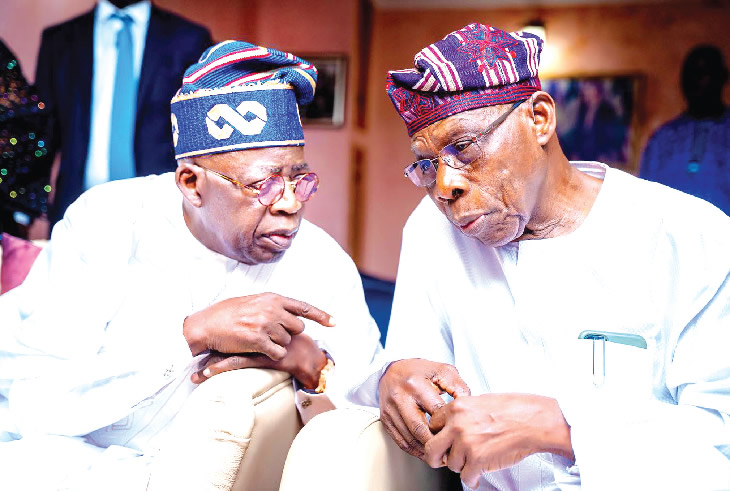
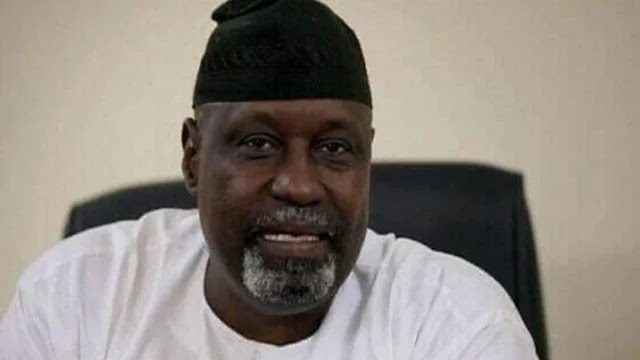
Olujuwon Obasanjo, son of former President Olusegun Obasanjo, has declared support for President Bola Tinubu’s re-election in 2027 after joining the PBAT Door-to-Door Movement as Special Adviser on Political Affairs.

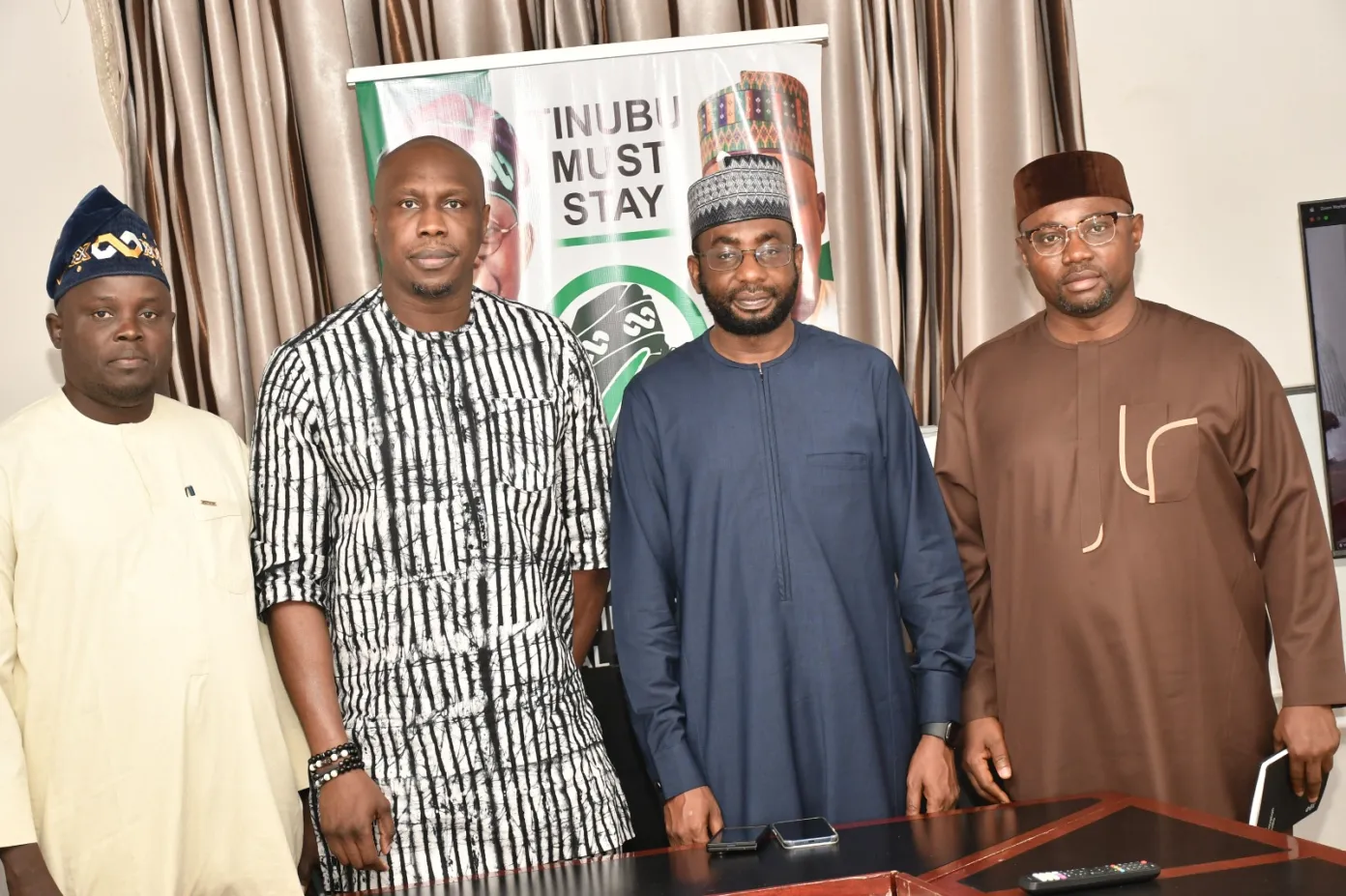
Olujuwon announced his position on Wednesday during a visit to the movement’s headquarters in Abuja, where he was received by its National Coordinator, Sunday Asuku.

He described his appointment as an honour and commended the group for its grassroots mobilisation, community engagement and efforts to promote the activities of the Tinubu administration.

According to him, he had followed the movement’s activities for some time and was impressed by its work, expressing readiness to contribute to its objectives and the President’s second-term ambition.

“President Tinubu has started on a good note, making it necessary for Nigerians, particularly young people, to join hands to sustain the ongoing reforms and ensure continuity in governance,” he said.

Olujuwon also cited salary payments, infrastructure development and investment opportunities as areas where he believed the country had recorded progress, arguing that the gains should be sustained.

He expressed confidence that continued support for Tinubu would enable the administration to consolidate its achievements and deliver more benefits to Nigerians.

The former President’s son further disclosed that he had been a member of the All Progressives Congress since 2014.

He noted that members of his family were free to hold different political views and pursue their interests without hostility.

Welcoming him to the movement, Asuku described Olujuwon as an experienced political figure whose background in leadership and governance would strengthen the organisation’s mobilisation activities.

He expressed confidence that the new appointee would use his political experience to advance the movement’s objectives across the country.

Olujuwon’s declaration comes as political groups and parties intensify activities and grassroots mobilisation ahead of the 2027 general election.

The Daily Reality
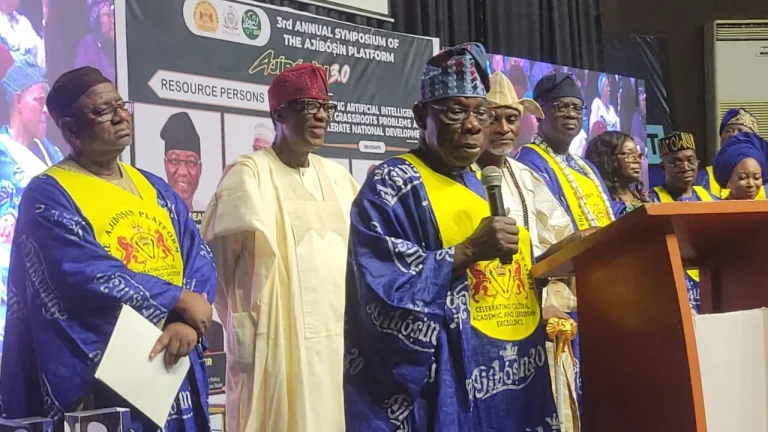
Debt Worse Than Leprosy, Obasanjo Tells Tinubu, Warns of Burden on Future Generations

By Sabiu Abdullahi

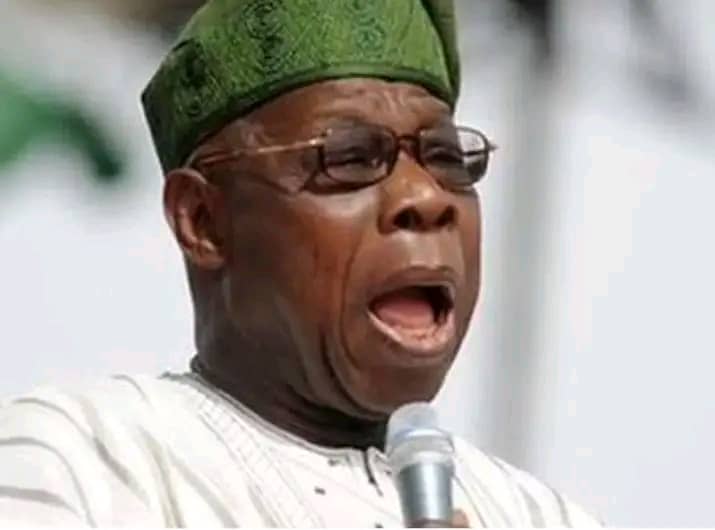
Former President Olusegun Obasanjo has criticised President Bola Tinubu’s defence of government borrowing, describing excessive debt as more damaging than leprosy because its consequences can affect generations yet unborn.

Obasanjo made the remarks on Friday at the third Ajibosin Annual Symposium, held at the amphitheatre of the Olusegun Obasanjo Presidential Library in Abeokuta, Ogun State.

The symposium was themed, “Leveraging Artificial Intelligence to Solve Grassroots Problems and Accelerate National Development.”

Tinubu had recently argued that borrowing was not leprosy, maintaining that his administration was prepared to work hard to repay whatever loans it obtained.

However, Obasanjo dismissed the argument, questioning the country’s growing debt burden and the ability of its leaders to manage the economy.

The former President, who secured a $30 billion Paris Club debt relief for Nigeria during his administration from 1999 to 2007, argued that while leprosy affects an individual, excessive borrowing places the future of entire generations at risk.

“For anybody to say debt is no leprosy is absolute nonsense. Debt is worse than leprosy, because leprosy destroys only one person. Debt destroys generations,” he said.

Obasanjo faults dependence on World Bank, IMF

The former President also criticised the policies of the World Bank and the International Monetary Fund (IMF), arguing that their recommendations were not necessarily designed to advance Nigeria’s development interests.

He questioned why African countries were discouraged from subsidising agriculture while developed countries continued to support their own agricultural sectors.

Obasanjo said Nigeria should develop policies based on its peculiar economic realities rather than blindly adopting recommendations from international financial institutions.

He also expressed concern over what he described as excessive reliance on foreign economic prescriptions, warning that such dependence could undermine the country’s ability to determine its development priorities.

Raises concern over naira depreciation

Obasanjo further lamented the depreciation of the naira, comparing its value against the US dollar when he started his farming business about 47 years ago with its current exchange rate.

He recalled that the naira was stronger than the dollar at the time, questioning how the country had reached a situation where the exchange rate was around ₦1,500 to the dollar.

“What has Nigeria done in 47 years that we now have N1,500 naira to the dollar? What have we done?” he asked.

He also challenged Nigerian leaders to demonstrate their understanding of the country’s economic problems through practical solutions.

Warns against foreign control of artificial intelligence

Obasanjo also cautioned Nigeria and other African countries against adopting artificial intelligence without understanding its implications and ensuring sufficient local control over the technology.

He argued that innovations developed by powerful foreign countries could be exploited against nations that lacked the capacity to regulate and control them.

“I don’t know too much technically about AI. But I know that anything that is not in your control can be abused against you,” he said.

The former President urged Nigeria to determine how artificial intelligence could serve its development priorities instead of allowing foreign interests to dictate the country’s technological direction.

Africa warned against another form of exploitation

Also speaking at the symposium, historian and political commentator, Dr Umar Ardo, warned that Africa could face another form of economic exploitation through artificial intelligence if it failed to control its data, technological infrastructure and intellectual property.

Ardo acknowledged the potential of AI to transform economies and support national development but cautioned that adopting the technology without local ownership and adequate safeguards could reinforce existing economic inequalities.

He traced Africa’s history of economic exploitation from the transatlantic slave trade and colonialism to the post-independence period, arguing that the continent had repeatedly supplied valuable resources while foreign interests controlled the technologies and captured much of the economic benefits.

According to him, the pattern continues today, with African countries exporting raw materials while importing finished products and depending heavily on foreign technology and expertise.

He cited Nigeria’s continued dependence on imported refined petroleum products despite being a major crude oil producer, as well as the reliance of cocoa-producing countries on foreign manufacturers for finished chocolate products.

Ardo warned that data generated from African citizens, businesses, hospitals, farms, languages and public institutions could become another valuable resource extracted and controlled by foreign companies.

He argued that although artificial intelligence presents significant opportunities, Africa must establish ownership of its data and technological infrastructure to benefit fully from the emerging digital economy.

The Daily Reality

Obasanjo Accuses Tinubu’s Reforms Of Worsening Poverty In Nigeria

By Sabiu Abdullahi

Former President Olusegun Obasanjo has criticised President Bola Tinubu’s economic reforms, arguing that the sharp depreciation of the naira has significantly reduced Nigerians’ purchasing power and worsened poverty.

Obasanjo made the remarks on Wednesday at the Financial Times Africa Summit 2026 in London, United Kingdom, where he faulted the administration’s decision to devalue the naira in 2023.

He argued that the currency’s decline had impoverished Nigerians, citing the movement of the exchange rate from about N500 to the dollar to N1,500.

The former president said, “We do not live in isolation as a country. We interact with the rest of the world. And overnight, you devalue the currency by 300 per cent. The naira went from N500 to a dollar to N1,500 to a dollar. What that meant was that every Nigerian is made poor by 300 per cent.”

Obasanjo said the situation had made Nigeria “the poverty capital of the world,” referring to the country’s large population of people living in poverty.

“You cannot say to me that that is good for Nigeria. You cannot say to me that that is good for us in any sense,” he noted.

He also questioned calls for the Tinubu administration to be given more time to implement its economic policies, saying he had yet to see meaningful improvement in the economy.

“For the economy, I don’t see anything getting better. What policies are you seeing through? You impoverish your people, and you want to see impoverishment through?” he remarked.

Obasanjo further maintained that the policies introduced by the administration were “not in the best interest of Nigerians,” adding, “Nobody can deny that.”

On petrol subsidy removal, the former president acknowledged the importance of fuel to economic activities but argued that corruption associated with the subsidy system should have been addressed first.

He said a country facing severe economic difficulties must “curb corruption, wastefulness and unnecessary luxury and produce.”

Figures cited in the report show that before the Central Bank of Nigeria unified the exchange-rate windows on June 14, 2023, the official naira-to-dollar rate stood at approximately N460.80. By October 19, the official rate had weakened to about N1,333.54, while the currency reached a low of approximately N1,607.05 in early May 2025.

Meanwhile, the National Bureau of Statistics reported that headline inflation fell to 14.63 per cent in September from 20.98 per cent a year earlier. Food inflation, however, stood at 19.59 per cent, while Nigeria’s real Gross Domestic Product grew by 4.43 per cent in the second quarter.

Finance Minister and Coordinating Minister of the Economy Taiwo Oyedele said on August 19 that the removal of the petrol subsidy saved the government N15.8 trillion between June 2023 and December 2025.

Efforts to obtain the Presidency’s response to Obasanjo’s criticism were unsuccessful, as Bayo Onanuga, the President’s Special Adviser on Information and Strategy, could not be reached.

Farouq Aliyu Says He Rejected N250m Bribe Over Obasanjo’s Third-Term Bid

By Sabiu Abdullahi

Former House of Representatives Minority Leader, Farouq Aliyu, has alleged that he was offered N250 million to support former President Olusegun Obasanjo’s controversial bid for a third term in office.

Aliyu made the claim during an appearance on the Naija Unfiltered podcast, published on YouTube on Friday.

The former lawmaker said the third-term agenda was genuine, despite Obasanjo’s repeated denials that he ever sought to extend his presidency beyond the constitutionally permitted two terms.

Obasanjo served as Nigeria’s president between 1999 and 2007. In May 2006, the National Assembly rejected a constitutional amendment bill that would have paved the way for him to seek a third consecutive term.

Obasanjo again denied pursuing such an ambition in September 2025, saying he would have known how to pursue it if he had wanted another term.

However, Aliyu said he was approached during the period of the third-term controversy after Nuhu Ribadu, who was then chairman of the Economic and Financial Crimes Commission (EFCC), asked him to travel to Abuja for a meeting with Obasanjo.

According to him, he initially declined Ribadu’s request but later agreed to meet the former president.

Aliyu said he made it clear during the meeting that he believed the third-term proposal would not succeed.

He further alleged that he was later offered N250 million by an unnamed individual whom Ribadu had directed him to meet.

The former lawmaker also claimed that other prominent politicians were offered substantial sums to support the proposal.

He said Aminu Masari, who was Speaker of the House of Representatives at the time, rejected an alleged N400 million offer, while Abdul Ningi, who served as majority leader, was also offered the same amount.

Aliyu said lawmakers considered less influential were allegedly offered at least N50 million.

“Third term agenda was real. In fact, 250 million was given to me. I did not take it,” he said.

“Masari, who was the speaker then, 400 million was offered. He did not take it. Abdul Ningi, the majority leader, 400 million naira was offered to him. He did not take it.

“N50 million was dashed to small fries. They paid minimum of N50 million.”

Aliyu also credited late former President Muhammadu Buhari, former Vice-President Atiku Abubakar and George Akume, who was Secretary to the Government of the Federation, with playing significant roles in efforts that ultimately stopped the third-term proposal.

The 2006 constitutional amendment attempt failed to secure the required legislative approval, effectively ending the bid to alter the constitutional term limit at the time.

President Tinubu celebrates Obasanjo at 88, hails his leadership, statesmanship

By Abdullahi Mukhtar Algasgaini

In a heartfelt tribute, President Bola Tinubu has honored former President Olusegun Obasanjo on his 88th birthday, celebrating the elder statesman’s remarkable contributions to Nigeria’s development and his enduring role in the nation’s history.

President Tinubu reflected on Obasanjo’s pivotal moments in Nigeria’s journey, from receiving the instrument of surrender that ended the civil war in 1970 to leading the country as both a military head of state and a civilian president.

He praised Obasanjo’s selfless commitment to national unity, peace, and progress, as well as his critical reforms that shaped the lives of many Nigerians.

Beyond his time in office, Tinubu acknowledged Obasanjo’s continued influence as a global peace advocate and conflict resolution expert, highlighting his dedication to Pan-Africanism and good governance.

He also noted Obasanjo’s occasional controversial interventions, which have often served as a check on leadership and shaped public policies.President Tinubu expressed gratitude for Obasanjo’s immense contributions to Nigeria and Africa, praying for his continued strength and wisdom.

On behalf of the Nigerian government and its people, he extended warm congratulations to the former president, wishing him a happy 88th birthday.

“May the nation and Africa continue to benefit from your wisdom and knowledge,” He concluded.

Obasanjo reveals how anti-corruption agencies helped Nigeria achieve debt relief

By Uzair Adam

Former President Olusegun Obasanjo has shared the strategies he employed to secure significant debt relief for Nigeria during his administration from 1999 to 2007.

Among these strategies was the establishment of the Independent Corrupt Practices and Other Related Offences Commission (ICPC) and the Economic and Financial Crimes Commission (EFCC).

Obasanjo explained that upon taking office, Nigeria was burdened by a debt of about $36 billion, with annual servicing costs of $3.5 billion, while the nation’s reserves were just $3.7 billion.

He reiterated the need for debt relief, expressing concern over the economic toll of continuously paying interest and penalties without reducing the principal debt.

In discussions with international lenders, Obasanjo presented a transparent plan, promising that funds saved from debt forgiveness would be used for development.

The creation of the ICPC and EFCC demonstrated his administration’s commitment to fighting corruption and increasing accountability.

These efforts helped convince creditors of Nigeria’s readiness for reform, leading to eventual debt forgiveness.

Reflecting on Nigeria’s current state, Obasanjo expressed disappointment over perceived declines in ethical leadership and economic planning, warning that without genuine reforms, further debt relief may remain unattainable.

He added that responsible governance is important to avoid a repeat of past financial struggles.

Obasanjo criticizes Tinubu’s approach to fuel subsidy removal

By Uzair Adam

Former President Olusegun Obasanjo has criticized the manner in which President Bola Tinubu’s administration removed the fuel subsidy in 2023.

In an interview with the Financial Times, Obasanjo argued that the government should have implemented certain measures before taking such a drastic step.

Obasanjo emphasized that the sudden removal of the subsidy led to a significant rise in petrol prices, from about N200 to over N600 per litre.

He noted that the subsidy, which was declared “gone” by Tinubu during his inaugural address on May 29, 2023, has now effectively been reintroduced due to inflation.

“There’s a lot of work that needs to be done. Not just wake up one morning and say you removed the subsidy. Because of inflation, the subsidy that we have removed is not gone. It has come back,” Obasanjo stated.

He further highlighted the need for investor confidence in Nigeria, stating, “You have to go from a transactional economy to a transformational economy.”

The Daily Reality reports that among the demands of the ongoing nationwide protest is the reinstatement of the fuel subsidy.

However, in a recent broadcast, President Tinubu dismissed the possibility of bringing back the subsidy.

He described the decision to remove it as painful but essential, stating that it had been a “noose around the economic jugular of our nation” and had stifled economic growth and progress.

Obasanjo denies involvement in $6bn hydropower project

By Ahmad Deedat Zakari

Nigeria’s former president, Olusegun Obasanjo, has denied any involvement in the $6bn hydropower contract awarded to Sunrise Power and Transmission Ltd in 2003.

Obasanjo challenged Olu Agunloye, the former minister of power and steel, to tell Nigerians where he derived the authority to award a $6 billion contract to Sunrise Power and Transmission Ltd in respect of the Mambila Hydropower Project in 2003.

Sunrise Power is currently in arbitration with Nigeria at the International Chamber of Commerce (ICC), Paris, France, over an alleged breach of contract by the federal government.

In the first arbitration, Sunrise is asking for a compensation of $2.3 billion, claiming it had spent millions of dollars on financial and legal consultants before the contract was jettisoned.

In the second one, the company is asking for a $400 million settlement being the terms of the agreement it entered with the federal government in 2020 to end the arbitration.

Nigeria is fighting the claims on the grounds that Agunloye, who suspiciously awarded the contract one week to the end of his tenure as power minister in 2003, acted illegally.

In an interview with The Cable during the weekend, Obasanjo denied authorising Agunloye to commit Nigeria to the $6 billion “build, operate and transfer” contract.

“When I was president, no minister had the power to approve more than N25 million without express presidential consent. It was impossible for Agunloye to commit my government to a $6 billion project without my permission and I did not give him any permission,” Obasanjo disclosed in the interview with The Cable.

Obasanjo challenged Agunloye to explain where he got the power and authority.

“If a commission of inquiry is set up today to investigate the matter, I am ready to testify. I do not even need to testify because all the records are there. I never approved it,” Obasanjo said.

“When he presented his memo to the federal executive council (on May 21, 2003), I was surprised because he had previously discussed it with me and I had told him to jettison the idea, that I had other ideas on how the power sector would be restructured and funded.

“I told him as much at the council meeting and directed him to step down the memo. I find it surprising that Agunloye is now claiming he acted on behalf of Nigeria. If I knew he issued such a letter to Sunrise, I would have sacked him as minister during my second term. He would not have spent a day longer in office.”

The former president also said Leno Adesanya, the promoter of Sunrise Power, ran away from Nigeria when he was president.

“I would have jailed him if he was in the country because of the things I knew about him. After I left office, he returned and I saw him. I told him that he was lucky I was no longer president. Otherwise, I would have jailed him,” He told The Cable.