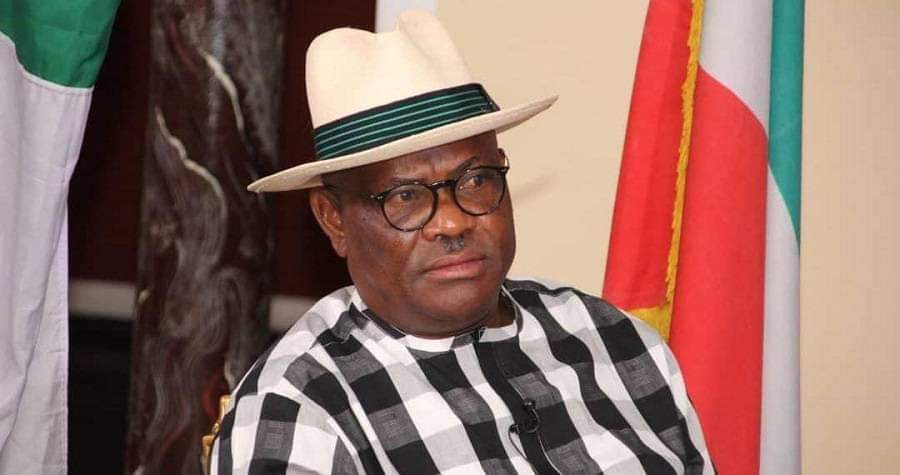
Nyesom Wike

Kwankwaso condemns state of emergency in Rivers State

By Hadiza Abdulkadir

Following a prolonged silence and social media appeals urging NNPP chieftain and former governor of Kano State, Rabi’u Musa Kwankwaso, to address the ongoing political situation in Nigeria, Kwankwaso issued a statement to the press through his social media accounts.

Kwankwaso strongly criticized President Bola Tinubu’s recent declaration of a state of emergency in Rivers State. The proclamation includes the suspension of Governor Similayi Fubara and all elected state legislators, a move Kwankwaso deems unconstitutional and dangerous for Nigeria’s democracy.

Reflecting on past political lessons, he expressed concern over the National Assembly’s rapid ratification of the president’s decision, calling it a deviation from proper legislative procedures. “This 10th Assembly has become more rubberstamp than any of its predecessors,” he stated.

Kwankwaso also condemned the involvement of military leadership in a civilian power structure, warning that such actions could lead to chaos and erode public trust in democratic institutions. He emphasized the risks of permitting military influence over civilian governance, recalling the need to keep military forces away from political power.

As the situation unfolds, the implications for democracy in Rivers State and across Nigeria remain uncertain, highlighting the necessity for political and judicial bodies to uphold the rule of law.

Legal experts condemn Rivers State emergency declaration as unconstitutional

By Hadiza Abdulkadir

The federal government’s declaration of a state of emergency in Rivers State has sparked widespread criticism, with legal experts and political analysts condemning the move as unconstitutional and politically motivated.

Prominent legal practitioner Abba Hikima, Esq. argues that President Bola Tinubu lacks the legal authority to suspend a democratically elected governor, deputy governor, and the members of the State House of Assembly. He insists that both Nigerian law and judicial precedents explicitly prohibit such actions.

“There’s nothing in the law or practice of proclamation of a state of emergency in Nigeria that empowers the president to suspend elected officials. Several judicial precedents outrightly prohibit this, and the president is not unaware,” Hikima said.

He further lamented a growing trend in Nigeria where those in authority deliberately violate the law to weaken their opponents. According to him, victims of such unconstitutional acts are often forced into long and uncertain legal battles, with little hope of enforcing favorable judgments.

State of Emergency Justification Questioned

Hikima also questioned the rationale behind declaring a state of emergency in Rivers, arguing that the conditions required for such a measure have not been met.

“There is no actual breakdown of law and public order in Rivers State that necessitates extraordinary federal intervention. Several states in Northern Nigeria currently face worse security challenges, yet the president has not declared a state of emergency there,” he said.

While clarifying that he is not advocating for emergency rule in any part of the country, Hikima described the Rivers case as unfair, unwarranted, and driven by political motives rather than genuine security concerns.

Violation of Democratic Principles

The lawyer also criticized the appointment of a sole administrator to oversee the state’s affairs, pointing out that the president himself admitted that no government can function without all three arms.

“By appointing a sole administrator who will act as both lawmaker and executor, the president has contradicted his own statement. This move goes against the spirit of Nigeria’s legal and political system,” Hikima added.

Under a state of emergency, the federal government assumes temporary control over certain state functions, which could include deploying security forces, restricting rights such as movement and assembly, imposing curfews, or directing state resources toward security operations. However, Hikima warns that this latest declaration sets a dangerous precedent for Nigeria’s democracy.

National Assembly Urged to Resist Approval

With the National Assembly in session, Hikima has called on lawmakers to reject what he describes as a “brazen constitutional overreach.”

“The National Assembly has the power to prevent this embarrassment. The state of emergency can only come into effect after being approved by both houses with a two-thirds majority. Lawmakers have 48 hours to stand against this unconstitutional action,” he said.

As debate rages over the legality and necessity of the state of emergency in Rivers State, all eyes are now on the National Assembly to determine the next course of action.

Wike revokes PDP’s new secretariat land over unpaid dues

By Uzair Adam 

The Minister of the Federal Capital Territory (FCT), Nyesom Wike, has revoked the land allocated for the new National Secretariat of the Peoples Democratic Party (PDP) in Abuja’s Central Business District.  

The Daily Reality reports that the 12-story building, which has remained uncompleted for two decades, was initially estimated to cost N16 billion when construction began in 2008. 

Despite raising over N62 billion through fundraisers and electoral activities, the project remains unfinished.  

A letter confirming the revocation, signed by the Director of Land Administration, Chijoke Nwankwoeze, on behalf of the minister, was addressed to the PDP National Chairman. 

Dated March 13, 2025, the letter cited the party’s failure to pay annual ground rents for 20 years—spanning from January 1, 2006, to January 1, 2025—as the reason for the decision.  

The letter referenced several public notices issued by the FCT Administration since 2023, urging allottees to clear outstanding dues on their properties. 

It also cited Section 28, Subsection 5 (a) and (b) of the Land Use Act, which grants the government the authority to revoke land over breaches of the terms of occupancy.  

With the revocation now in effect, the land has reverted to the FCT Administration, which plans to take immediate possession. As of the time of filing this report, PDP had yet to issue an official response.

FCT doctors declare three-day warning strike over unpaid salaries, welfare issues

By Uzair Adam 

The Association of Resident Doctors (ARD), Federal Capital Territory Administration (FCTA), has initiated a three-day warning strike in protest of unpaid salaries, allowances, and other unresolved issues. 

The Daily Reality leaned that the strike has disrupted services at government hospitals across Abuja.

In a press briefing held on Wednesday in Abuja, Dr. George Ebong, President of ARD FCTA, explained that the strike followed the expiration of a three-week ultimatum issued last year. 

He lamented the neglect of healthcare workers’ welfare and hospitals in the nation’s capital.

Ebong called for urgent intervention from the Minister of the Federal Capital Territory, Nyesom Wike, to prevent an indefinite closure of hospitals in the region. 

He emphasized that the decision to go on strike was reached after a Congress held by ARD FCTA members on Tuesday.

The strike, which covers all government hospitals in Abuja, from Wuse to Asokoro, Maitama, Kubwa, Zuba, Kwali, Abaji, Nyanya, and others, follows months of unresolved demands. 

The doctors had earlier engaged in multiple dialogues with the authorities but saw no meaningful action, even after the government requested two additional weeks to address their grievances.

“We gave the government a three-week ultimatum to meet our demands, and after meeting them and discussing several times, nothing was done. Not even the minimum things. We expected the government to pay for the six months of unpaid arrears,” Ebong stated.

He criticized the neglect faced by doctors in Abuja, referring to them as “abandoned projects” and highlighting the urgent need for action to prevent the collapse of the healthcare system.

In December, ARD FCTA had warned of a possible shutdown if their demands were not met, with the current strike representing a call for immediate resolution. 

The association has warned that if their issues remain unaddressed after the three-day strike, they will consider an indefinite strike.

The full communique, also released at the press briefing, detailed the various concerns of the association, including unpaid salaries, delays in the Medical Residency Training Fund (MRTF), unfulfilled accoutrement allowances, unpaid hazard allowances, and the lack of necessary hospital equipment. 

The communiqué also stressed the shortage of manpower in the healthcare sector, with many doctors leaving the country due to poor working conditions and lack of support. 

It concluded with a plea for the government to act swiftly to avoid further deterioration of the healthcare system in Abuja.

Wike confirmed as minister

By Muhammadu Sabiu 

The Nigerian Senate on Monday confirmed the immediate ex-governor of Rivers State, Nyesom Wike, as a minister. 

Wike, after reeling out his Curriculum Vitae and achievements, noted that his passion for Nigeria propelled him to accept the ministerial offer. 

He was quoted as saying, “I accepted the offer to serve as a minister because of my passion to serve Nigeria.” 

During the screening, the lawmaker representing River State, represented by Senator Barinada Mpigi (PDP, Rivers Southeast), said that he was the best in the state. 

He said, “His Excellency former Governor Nyesom Wike is our best in Rivers State. He is our leader and role model. 

As of the time of filing this report, there was no information about the ministry Mr. Wike is expected to lead.

Buhari pilloried for blaming governors of looting LGs allocations

By Uzair Adam Imam

There have been sharp retorts since the presidency’s claim on Thursday that pronounced the state governors as corrupt.

The governors continue to distance themselves from the laid down accusation, challenging the presidency to identify the governors involved in the process.

Barely 24 hours after governor Nayesom Wike of Rivers and his Benue State counterpart, Samuel Ortom criticised President Buhari over the allegation of corruption against governors, Governor Ifeanyi Okowa of Delta State also distanced himself from the allegation.

The President, while speaking about the height of corruption in the country at an event hosted for members of the Senior Executive Course 44 (2022) of the National Institute for Policy and Strategic Studies (NIPSS), Kuru, blamed the governors for looting the local governments’ allocation.

Buhari said the ugly behaviour by the governors also encourages corruption at the local government level, thereby inhibiting development at the grassroots.

But reacting to what Buhari said, Okowa, who spoke through his Chief Press Secretary, Olisa Ifeajika, said it was unfortunate for the president to have made such a “blanket statement.”

He said: “I want to say that Mr President, as one who has all the information about issues in the country, knows the governors who fall into that category of the so-called ‘thieves’ he was referring to.

“We all know that our own Governor, Dr Ifeanyi Okowa, does not belong there. He was one of the first governors, if not the first, to embrace local government autonomy when it was agreed on just like he did with the judiciary and the legislature.

“He went as far as getting legislation to grant autonomy to the legislature and the judiciary. He allowed them to run autonomously. And, for a man, who allowed these organs of government to have autonomy, he cannot have anything to do with funds belonging to the local governments.

“I repeat that the government of Dr Ifeanyi Okowa, every month, augments the finances of local governments in the state with more than N300 million to make sure they are able to pay their salaries and stay afloat.

“He does that religiously monthly; so, for a man who does that, how can he be among those who steal local government money?

“Our governor is not part of it. You are also aware that the government of Sen. Ifeanyi Okowa recently released N5 billion for pension arrears; N2.5 billion of that was a grant to the local government for payment of pensions.

“It is a grant to the local government; they are not going to pay. The governor did that because the local governments have to fund their activities, pay their teachers and healthcare workers.”

Can Atiku crack the Wike’s puzzle? (II)

By Tordue Simon Targema

Secondly, there is the notion of power shift to the South which is shared even among Southern politicians that are not positively disposed to Wike. Indeed, all political stakeholders in the party are unanimous in their conviction that power should shift to the South, as President Muhammadu Buhari is completing a second term, an uninterrupted eight-years Northern presidency come 2023.

This conviction has earned what many in the South would have ordinarily termed ‘Wike’s unnecessary self-centred nagging and ranting’ some form of legitimacy, giving him strong strength to bargain on the negotiation table. Worthy of note is the fact that even though Atiku dreads this negotiation table like a house infested with leprosy, he has no option than to face it, and fillers from the discussions so far indicate that the standard bearer is not finding it funny yielding to the demands of his ego-centric demigod of a rival.

What are the Issues on the Negotiation Table By-the-Way? Fillers from the negotiation table indicate that Wike clearly wants to show Atiku that he is not a force to relegate in the opposition party that he strive hard to sustain from 2015 to date when most party big-wigs including Atiku deserted it for the APC and other political formations. From what is in the public domain so far, few things stand out from Wike’s litany demands.

First and foremost, Atiku must do just one term and return the presidency to the South by the next election season, i.e. 2027. Secondly, Ayu must resign as the National Chairman of the PDP and a new chairperson for the party should emerge from the South West to balance the power structure in the party. Thirdly, Wike will install key ministers in Atiku’s cabinet, etc.

Of course, these are not by any means, too difficult conditions to meet if the standard bearer is determined to unite his house and put forth a formidable campaign team to challenge the ruling APC and other emerging opposition parties. After all, politics is all about concessions.

Already, His Excellency Atiku Abubakar has made his intention to run for just a single term known to the general public, even as such promises hardly hold water in politics if previous experiences in the country’s political landscape are worthy to go by. This is the more reason why Wike requires a concrete commitment to that effect, not just a promissory note that would likely bounce in the bank of equity when the time to cash it is due.

The third condition too is not too difficult to meet, considering that Wike is considered a big name in the party in his zone and likely to pull substantial votes for Atiku in the South. Lest we forget that the ‘Obi-dient’ movement and Tinubu’s effect are critical factors that would collapse whatever structure Atiku has in the South but for the support of strong party pillars in the region like Wike.

Indeed, Atiku needs a formidable team in the South, and no amount of concessions in terms of political appointments will be too big to woo the right people on board, his campaign train. Perhaps, the biggest hurdle right at the moment is for Ayu to accept to resign. As at the last minute, the third-republican political juggernaut is still holding unto his mandate, solidly. In fact, with an air of confidence like one who is firmly in charge, he describes those calling for his resignation from the party’s top seat as ‘small children’ who should not be taken seriously.

Indeed, this boast followed a vote of confidence passed on him by members of the party’s National Working Committee in Abuja, recently which Wike simply dismissed as the same path that Ayu’s predecessor, Prince Uche Secondus followed in his inglorious exit from the party’s top seat. Indeed, all indications point to Ayu’s eventual resignation in no distant time. It is in line with this expectation which seems the only sure path for a likely truce that the Board of Trustees Chairman of the party, Senator Walid Jibrin resigned his position in Abuja recently as a move towards uniting the party.

At the moment, calls for Ayu’s exit have reached advanced stage as all is set for formal commencement of campaigns later in the month. In a South-West stakeholders meeting of the party at Ibadan, Governor Seyi Makinde, one of the key members of the Wike’s camp reiterated their position that Ayu must go.

Makinde described the need to reshuffle leadership positions in the party as the party’s demonstration of commitment towards restructuring which has been its mantra since 2019; although Atiku dismissed this premise and maintained that even if Ayu resigns, a northerner is constitutionally most likely to take over as the party’s henchman given the provision of the party’s constitution.

A power shift in the party, Atiku explained, is only possible in the event of a constitutional review of the party’s constitution which is not likely in the current circumstances. In the meantime, Ayu jets off to Europe on vacation.

Meanwhile, several questions bug the curious mind as follows: is this trip a tactical move to pave the way for peaceful transition in absentia? Is Ayu working on his transition notes to hand over to a new party chairman upon return from vacation in line with the demands of Wike’s camp?

Is His Excellency Atiku Abubakar willing to sacrifice Ayu and broker a truce with Wike, or he is ready to call off Wike’s bluff and dare the consequences? By-the-way, does he has adequate time right at the moment to fully contemplate his options before formal commencement of campaigns later in the month?

The composition of the campaign team with Wike’s camp relegated to the background is a pointer to this line of thought. But if previous experience is anything to go by, then His Excellency Atiku Abubakar is threading on a treacherous ground.

Recall the revolution in the PDP that led to the emergence of the new-PDP which eventually joined forces with the APC in 2014, thereby forming a formidable opposition party that sent the PDP to the debris in 2015 general elections. Apparently, this history is about to repeat itself with the Wike’s puzzle. Coincidently, Just like2015, the current travail of the party starts from Rivers State.

One is, thus, curious to pose: is history repeating itself in the PDP camp? Can the Wike factor cost Atiku the price that former President Goodluck Jonathan paid in 2015 for ignoring Governor Chibuike Rotimi Amaechi? Wike’s puzzle is certainly a hard one for Atiku to crack, and until he is able to crack it successfully, it remains a clog in the wheel of what seems his final shot at Nigeria’s top job.

How best he cracks this puzzle and steers the party to victory remains to be seen, as other political movements are restlessly cashing into the crack in the party to consolidate their holds on the South-South zone which, hitherto, was PDP’s stronghold.

Tordue Simon Targema writes from the Department of Journalism and Media Studies, Taraba State University, Jalingo. Email: torduesimon@gmail.com

Can Atiku crack the Wike’s puzzle? (I)

By Tordue Simon Targema

The Rivers State Governor, Ezenwo Nyesom Wike’s puzzle is proving extremely difficult to crack by the presidential flag bearer of the People’s Democratic Party (PDP), His Excellency Alhaji Atiku Abubakar.

Like the proverbial lizard on the edge of the water jar, Wike has proven to be Atiku’s biggest dilemma in his current presidential bid. The options before him are weighty: to ignore Wike and put up with the consequences given the latter’s influence in the leading opposition party and seaming control over the party’s structure especially in the South-South geopolitical zone; or give in to his weighty concessions as an act of either compromise or cowardice and subjugation to the whims and ego of an emerging emperor in the party’s fold.

These are certainly weighty options, serious enough to cost an ambitious aspirant- desirous of occupying Nigeria’s topmost seat as a crowning moment of his age-long political career- his precious sleep.

As events in the aftermath of the party’s presidential primaries continue to unfold, Wike has emerged the most sought-after political bride in Nigeria. Just last month, he was entangled in a series of meetings in London with the three topmost aspirants- Bola Ahmad Tinubu of the All Progressives Congress (APC), Peter Obi of the Labour Party (LP) and his arch political rival, Atiku Abubakar of the PDP who is at the centre of the whole palaver.

The meetings were graced by household names in Nigeria’s political arena such as former President Olusegun Obasanjo, incumbent governors and several other political stakeholders. Prior to these marathon meetings in London, his Port-Harcourt residence had suddenly turned to a venue of political pilgrimage by Nigerian presidential hopefuls and their emissaries.

Apparently, Wike’s grudge seem like one massaging his personal ego after suffering a resounding defeat in a keenly contested jostle for the main opposition party’s flag. This explains why he has not hidden his rift with the party’s National Chairman, Senator Iorchia Ayu.

A day after the primary election, when Wike was busy nursing the agonizing wounds of the defeat, Ayu was caught on camera- flanked by His Excellency Atiku Abubakar- showering praises on Governor Aminu Waziri Tambuwal of Sokoto State as the “hero of the convention”. Of course, Tambuwal’s abrupt withdrawal at the last minute in support of Atiku was, no doubt, influential to the latter’s victory; a move that Wike interpreted as a well-orchestrated conspiracy, laced with ethno-regional bigotry to edge him out of the race and scuttle his ambition of occupying the country’s top seat.

From that moment, he made his instant decision- and publicly so- that Ayu must go as the preeminent condition for peace to reign in the party. However, subsequent developments have further deepened the crisis in the party and made it messier for the party in general, and Atiku Abubakar in particular, to handle.

For instance, having lost the flag, one would have expected that as the first runner up, Atiku would compensate Wike with the vice presidential slot to run a joint ticket, or at least, give him the benefit to nominate a protégée to run as a move towards reconciliation.

Incidentally, having won the ticket from the North, the vice presidential slot automatically was expected to come from the South, and as the leading figure of the party in the region, all eyes were on Wike for the vice presidential slot. Atiku’s snubbing of Wike for the Delta State Governor, Ifeanyi Okowa is clearly understood by many political analysts.

Everyone would prefer a calm, cooperative and more introverted vice to a lousy, boisterous, loquacious, egoistic and power-drunk demigod who is so full of himself and intoxicated with self-invested powers and a sense of relevance that defies all principles of logic. Yes, this is my personal opinion about the person of Governor Wike, but I am sure many would share the same opinion about him, and it is likely the foremost reason why His Excellency, Atiku Abubakar snubbed him without a second thought to the damning consequences to his campaign.

Yes, Wike would have been a difficult candidate to sell especially in the Northern region where his controversial position on states control of the Value Added Tax (VAT) that Rivers State has the lion share, restructuring and other controversial national issues lurking the Nigerian federation leave him with more enemies than friends.

Yet, others dislike him for being excessively assertive and domineering, dictatorial in his approach to handling complicated political situations and crude in his dealings with delicate political matters without minding hurting sensitivities and stepping on toes. All these understandably culminated into Atiku’s eventual preference of Okowa, who is more subtle- if one is careful of using diplomatic- in his political approach as a co-flag bearer.

But having made his choice- barring all consequences, the effects are right here with him, and have, at the moment, overwhelmed the leading opposition party. How best His Excellency Atiku Abubakar and his party navigate the challenges confronting it and form a formidable all-inclusive campaign team remains to be seen, as efforts to woo Wike and his allies back to the fold have always hit brick walls.

Already, the presidential campaign team is set with Governor Emmanuel Udom of Akwa Ibom State- Wike’s neighbour- as the Chairman and Governor Tambuwal of Sokoto State as the Director General. Key members of the Wike’s camp such as governors Seyi Makinde of Oyo State, Samuel Ortom of Benue State, Okezie Ikpeazu of Abia State and Wike himself are sandwiched in the list as members, with the exception of Makinde who is named the Vice Chairman (South).

The big question to ask at this point is: will these governors throw their weight behind the campaign as they should, given the prevailing state of affairs? Perhaps, some historical illusions would be in order to put things into perspective. One is tempted to infer that the complications that confront the PDP at the moment are capable of repeating the ugly 2015 nightmare.

Yes, Wike is a force to reckon with. It is to his credit that he sustained the PDP in states where it was nose-diving to oblivion. His macho in odd-hour elections such as Edo, Osun and Anambra among a host of other states confer on him, the prestige in the party that is second to none among his fellow governors. It is no wonder that they rally around him in his moment of great travails.

To be continued

Tordue Simon Targema writes from the Department of Journalism and Media Studies, Taraba State University, Jalingo. Email: torduesimon@gmail.com

Between Atiku, Wike and the PDP

By Zayyad I. Muhammad

The 2023 presidential elections present the Peoples Democratic Party (PDP) with a golden opportunity to wrestle power from the ruling All Progressive Congress (APC). However, the PDP faces a daunting challenge in how to utilize this opportunity. To do this, the PDP needs to present a common interest from the party’s wide, and sometimes, varying interests so as to secure for the party, sufficient internal and external support during the elections.

PDP got its calculations right. The All Progressives Congress (APC) picked its presidential candidate from the South, especially the Southwest – Asiwaju Ahmed Bola Tinubu, is APC’s presidential candidate.

The emergence of Alhaji Atiku Abubakar as the presidential candidate for the main opposition party – (PDP) was a product of three things. The party has settled for someone who has the national outlook; the party wants to outwit the ruling All Progressive Congress ( APC) in one of the latter’s strongholds — the North, and lastly, the party needs a strong war-chest for the 2023 presidential elections.

Atiku’s emergence was smooth, despite the political intrigues that occurred before and during the presidential primaries. The selection of Ifeanyi Okowa as Atiku’s running mate had appeared also a smooth one. But two weeks after, it is causing dangerous stirs in the PDP camp that had appeared united, initially after the primaries. Former Governor Ayo Fayose scratched the ‘ old-wound’ of the call for a southern presidential candidate, Governor Samuel Ortom of Benue state is fuming, while  Governor  Nyesom Wike’s camp is causing more ‘commotion’ within the party by threatening the much-needed unity in the party. 

To be nominated or selected as a Vice Presidential candidate, the person must bring something to the table — votes, a daring war chest, well-established political structures, or influence in the political party.

Had Atiku picked Wike, the PDP would have appeared to opt for someone that will bring a massive war-chest and “home votes”. At the same time, the PDP would appear to have succumbed to pressure and tried to calm ‘a bull in a china shop’.

The APC, on the other hand, would have been happy, if Wike had emerged as the PDP vice presidential candidate. Firstly, it would have ‘balanced’ its controversial Muslim-Muslim ticket. Secondly, the APC would have used Wike’s candidacy to consolidate its votes in one of its strongholds — the North. In the 2019 presidential elections, the APC used Peter Obi’s Vice Presidential candidacy to de-market the PDP in the north. Peter Obi’s deportation of northerners was massively used against him. Like Peter Obi, Wike doesn’t have longtime friends, political associates or structures in the north, to defend him. However, to be fair to Wike, during the campaign for the PDP presidential primaries, he was able to tour the country, thus making some new networks and contacts. Furthermore, if Atiku had picked Wike, the former would have had to work extra hard in the north, because Wike will be a good recipe for APC’s strategy in the North. With Wike as VP, those people who are unhappy with APC or have not decided, may not want to thumbprint a ballot paper with a “Wike.”

The selection of Governor Ifeanyi Okowa as Atiku’s running mate is a product of PDP’s strategy to consolidate its footings in its strongholds — the Southeast and the South-South while not jeopardizing its attempt to strike the APC in the North. Okowa is controversy-free and the North will not have any issue with him.

Any person in Governor Nyesom Wike’s shoes will certainly feel hurt and demeaned — he has been a pillar in the PDP when the party was ‘deserted’ and he’s among the very bigwigs that have never left the PDP to another party. Furthermore, Mr. Wike polled 16 votes to defeat Mr. Okowa who scored three votes in a shadow election by a committee set up by the PDP to pick a running mate as reported by many media houses in the country. Moreover, whether one likes or dislikes Wike, for sure, he has something to offer the PDP.

That window created by Atiku for the PDP to setup a committee to select for him the Vice Presidential candidate, was an error on Atiku, so to say. The selection of a running mate is the absolute right of the flagbearer. Since Atiku already had someone in his mind, that committee was unnecessary. Though, it appears it was an honest attempt to bring everybody on board in making or taking a decision.

When it comes to elections, every political party has its own strategy. Had Atiku accepted the choice of the ‘VP Selection Committee’, it would have been the first time in the history of Nigerian politics, that a political party will solely determine the VP candidate for its presidential candidate. Though the PDP said, it was Atiku that requested the party to recommend to him, a VP. Atiku has the final say!

Atiku Abubakar is a master in negotiations, give and take and reaching out to people, including adversaries. Atiku should sit down with Wike, one-on-one, to resolve all the issues. It’s politics. It’s all about winning!

Zayyad I. Muhammad writes from Abuja, Nigeria. He can be reached via; 08036070980 or zaymohd@yahoo.com.

Ganduje to Wike: You will lose 2023 presidential election

By Muhammadu Sabiu

Governor Abdullahi Ganduje of Kano State has predicted that Nyesom Wike of Rivers State will lose the presidency in 2023.

Wike, according to Ganduje, would be a good loser because he is courageous.

He made the remarks while receiving the presidential candidate from the Peoples Democratic Party, PDP, in Kano.

Ganduje said, “So, you have come to see your brothers and sisters. Good. You are aspiring for the president of the Federal Republic of Nigeria. We see your efforts.

“And at the end of it, you’d lose, but you’ll be a good loser. I appreciate good losers because they have courage. And since you are doing it peacefully, you’ll live long to fight again. I congratulate you, Mr ‘Wise’ Wike. Thank you, and God bless.”

Recall that the Rivers State governor has recently shown his aspiration to govern Nigeria in 2023, noting that he stands a good opportunity to clinch power from the All Progressives Congress, APC.