Northern Nigeria

VAT: Between common sense and critical observation

By MA Iliasu

The chart showing the performance of Nigerian State governments in internal revenue generation has done its part in unveiling the mixed performances of the state economies. As expected, the public reactions, which to me are warranted, carry both the weight of reason and emotion. And maybe for the first time in the history of the Nigerian political economy debates aren’t taken over by regionalism and ethnic jingoism. Instead, it seems that consciousness has succumbed after realising how laziness and incompetence have been fairly distributed among both the northern and southern ruling classes, governors mainly.

Having learnt the flow of sentiments from the day the revenue rankings were released to date, I conclude that the discussions around Internally Generated Revenue (IGR) and Value Added Tax (VAT) are more skewed toward the search for self-actualisation rather than exclusive state independence. For which I’m hoping to be correct. Because if I’m wrong, that’ll mean most of the commentaries are not more than unwarranted emotional outbursts on how the economy really works.

Critical observation will tell that states like Kano are painfully underachieving. Possibly because the government ignores countless taxable entities and many other revenue streams, or it doesn’t care to investigate the conduct of the revenue agencies, it’s very self inclusive. For it’s a fact that the government source massive revenue not only from taxation but from the sales of valuable assets, among others.

On the other hand, without even mentioning Lagos that no economy has come close to compete with, you’ve Kaduna and Rivers states. The economies that can quickly be agreed to be of similar strength if not inferior to Kano’s. Yet with the astronomical difference in IGR. The defining factor in that dilemma lies in their respective self-actualisation and economic competence. The same can be said on the other high-earning states against their low-earning counterparts. And where that’s concerned, questions are right to be asked on why should a state enjoy a sizable share of other state’s hard work when in itself it’s in a unique position to contribute as much if not more.

The way I see it, that’s where the conversation becomes critical. The high-earners think every state should enjoy as it earns. While the low-earners think the economic union should not be dissolved because they’re geographically and industrially rigged by nature. The indigenes of high-earners agree with their state’s notion. As do that of low-earners who think isolating their state expenditure with its earned revenue will awake them from the shameless slumber and make them more creative. The important of all is, does the economy work that way?

To begin with, governors who believe nature hinders their income stream must know that geography in an economic context is either an advantage or a symbol of unique opportunity. For example, it’s a fact that Lagos and Rivers, as the custodians of Nigerian ports, have found it easy, therefore, advantageous to source revenue. But it’s the same with Jigawa, that’s strategically positioned to be a massive tech-hub and schooling environment across Sahara, Yobe that’s agriculturally equipped to grow the most unique seeds and Delta that’s attracted to the non-fossils industry. Therefore, using nature as an excuse is beyond lazy.

Nevertheless, no matter what any state does to achieve economic supremacy, one state must earn more than another. Thus, one state must record a deficit in trade with another. It’s a simple law of nature that’s very sensitive in economic policy, especially in accounting internal trade.

For instance, it makes sense that Kano, the largest textiles market and importer in Africa, pays more to Lagos and Rivers, who are the custodians of ports than it receives. Likewise, if Kano, as the distributor of the shipment, receives more from Bauchi, a retailer, than it pays. The same line of argument can be asserted to the states that own what other states need more than it needs from them. And so, recording deficit by the paying state is inevitable because needs and economies of scale can never be the same.

Due to that vivid notion, the famous British economist John Maynard Keynes argued that economies must be bound together to solve the inevitable rigidities that’ll be caused by the unavoidable deficit bred by such economic interdependence. According to Keynes, crises can be redemptive and non-redemptive crises. The redemptive crisis is the type of crisis that’s capable of becoming its own medicine. In short, any problem that can paradoxically become its own solution qualifies as redemptive. While the non-redemptive crisis is the type of crisis that can’t solve itself.

For example, the ever prophetic General Theory explained how a trade-off exists between inflation and unemployment. That’s to say, by compromising inflation, unemployment often rises, which give rise to another wave of cyclical negativity. Meanwhile, inflation can be risked to reduce the level of unemployment. And the lower level of unemployment means higher employment which can help eliminate inflation. That way, inflation has laid the very foundation of its demise. The very redemptive crisis that Keynes had explained concisely.

The phenomenon with our state economies is that the internal trade between those respective states records deficit in the books of payers and surplus in the books of the receivers. The receivers are often the highest-earning in the ranking of VAT, while the payers are mostly the low ranking. And the intriguing dilemma is that where deficit and surplus are concerned, a serious tension occurs to the market flexibility that’ll need cohesive effort by those states to be released. And if they’re isolated from one another by warranting each state only to enjoy as it earns, it won’t be possible.

It’s like two siblings in a family of three. The older is a farmer who therefore is discharged with buying food and consumables. While the younger is an engineer, who’s charged with water and electricity bills. It was agreed that none should interfere with any’s responsibility. Interestingly a period of bumper harvest keeps taking place for the older. But sadly, the younger hasn’t been able to secure a job. Food has been available. But no water and electricity. The family eats, but it reaches the level where there’s neither the water to boil the food nor the electricity to power the oven. The bathrooms are inept too. Their mother becomes worried. Things begin to fall apart because the house has gone insane, and a family meeting gets summoned. A tension of similar magnitude will happen if state economies are left to their own mercy.

Firstly, in an economic context, Nigeria is a single-family because the states are bound by a single currency and enjoy free trade with one another. Secondly, the states must collectively pay for one another’s incapabilities like beloved siblings because they live within the same family. The flaw of one can devastate the situation of the other. Just like what happened when the above younger sibling couldn’t secure a job while the older enjoyed bumper harvests. Thirdly, all that has been mentioned doesn’t need to be accepted or agreed upon but must be complied with, whether one side is lazy or hardworking because it poses a direct threat to the economic stability of Nigeria. Moreover, it’s compensation for inflicting deficit in the event of a trade, which was why the US and its dollar have been more stable than Europe and its Euro; all because the same currency binds them.

It’s from that, therefore, that I learnt when Gov. Wike of Rivers suggested exclusive state supremacy on VAT, he was totally ignoring or ignorant of how the remittances among those states become what enables the highest-ranking states to record the surplus that they’re boasting about. It’s simple logic. As the lowest in the ranking, Bayelsa State is isolated with its small Internally Generated Revenue (IGR), its purchasing power would decline severely. And state’s purchasing power is the consumer’s purchasing power. If it drops, it’ll mean no buyers for the available commodities in the Bayelsa market, which will hinder restocking from the industries in Lagos and Anambra. When it persists, the commodity market will die. Deflation will strike, and consequently, the investment will disappear. Small enterprises will become bankrupt.

Trade deficit goes hand in hand with governments that are also in deficit. If an economic crisis occurs within any among the economies that are bound by the same currency, the fall in demand will trickle down to the deficit economies. Once the crisis began, whether in a surplus state or not, it would inevitably soon reach both the surplus and deficit states. Even if it arrived in the form of a slight downturn, some debtors would be made to feel that they were carrying too much debt. Keen to reduce their exposure, they would cut spending. But since, at the level of the national economy, society’s overall demand is the sum of private and public expenditure, when a large segment of the business community tries to reduce debt (by cutting expenditure), overall demand declines, sales drop, businesses close their doors, unemployment rises, and prices fall. As prices fall, consumers decide to wait for them to fall further before buying costly items. A vicious debt-deflation cycle thus takes hold.

Now that’s the question the Nigerian state economies must sit down and ask themselves; is this where we want to go?

From what we’ve learnt, recycling mechanisms are necessary to avoid the bubble from bursting. Likewise, it’ll be absurd to allow lazy economies to keep enjoying off the hard work of others. The best response, in my opinion, is to set a minimum threshold, one that each state must abide by. An evaluation of the state’s income streams must be made so that no state should source less than it should. Gubernatorial candidates must adequately explain henceforth how they intend to fund ambitious capital and recurrent projects. Both to the voters and intellectuals. Because the days of off-head projections are over. The truth is Nigeria is broke. And most states are lazy. While cutting them off will destroy the economy as a whole. The room for politicians who dreamt of becoming governors when they’re young is no longer there. What’s there is a capacity for difference makers. Policymaking bodies can no longer be filled with empty-headed pot-belly carrying nepotists. Trained economists must be engaged. For now, everything is up to the central authority; we shall see if it’ll tame the situation or sink the economy further.


MA Iliasu writes from Kano State. He can be reached via his email muhada102@gmail.com.

Nomadic Education: panacea for banditry

By Tajuddeen Ahmad Tijjani

As long as ignorance becomes the norm, insecurity, instability, lawlessness, and all sorts of violence will continue to erode, escalate, and nibble in every nook and cranny of Nigeria. According to statistics, the country has spent 6 trillion Naira on defence over the last ten years, with no end in sight. 

If a small fraction of this enormous sum of money had been spent on training the young people in the forest, the result would have been positive, with greater output and revenue for the country. Likewise, if herders were taught to raise cattle like Brazilians, Americans, and the rest of the industrialised world, the result would have been productive enough to cover the country’s domestic demands while increasing our foreign reserve.

Multiple flaws in the country’s administrative system and social values appear to be the source of these archaic sorts of violence. The federal government seems to have lost effective control over the North-West, particularly in relation to bandits and cattle rustlers, who have become more militarised and destructive in their operations, which have destroyed a significant portion of the economy and resulted in the deaths of an untold number of people with impunity. Lack of knowledge and cultural orientation are the causes of many forms of violence and insecurity. Education is the key to showcasing the human psyche’s behaviour pattern.

In fact, the vicious cycle of violence perpetrated by these hoodlums, murderers, and godless animals stands condemned by all well-meaning Nigerians. However, this shouldn’t allow us to forget that they are Nigerians who deserve a better life with the expectation of contributing their quarter to the country’s development. Unfortunately, they are brainwashed to take up arms against the state. Positive outcomes would have been much more likely if they had received adequate education.

These pastoralists are within our communities. It baffles me that ballot boxes reach them during elections, but they are hardly seen where Western and Islamic education is being taught. Perhaps they are considered second class citizens, but their ignorance has affected everyone in Nigeria. Only when they are well-informed educationally they can rationalise reasonably and be softhearted people who find it hard to deny any boon, whether it be for a friend or stranger or just general feelings towards humanity. 

Lastly, I would like to appeal to the government to consider educating these folks to reintegrate them into society. Thus, the hostility they have towards the Nigerian populace would indeed vanish, and innovations would emerge that could be of immense benefit to not only our country but the ‘world’ in general.

 Tajuddeen Ahmad Tijjani writes from Galadima Mahmud Street, kasuwar-Kaji Azare, Bauchi state.

IGR, VAT controversies: a bright future for northern Nigeria

By Muhammad Sagir Bauchi

Adam Smith, in “Wealth of Nations”, while discussing what he tagged as “Canon of Taxation”, outlines some principles he describes as “Principles of Good Taxation”. These principles include fairness, certainty, convenience and efficiency. By the principle of fairness, he meant that the taxpayer’s condition should be considered before enforcing tax on him; this is in addition to the ability of the taxpayer to pay the tax. By certainty, the taxpayer should be informed on why he needs to pay his tax and how such taxes are levied on him. By the convenience, he refers to how the taxpayer finds the process of paying the tax as easy as it is. The final principle of efficiency described how the tax payment should have no negative effect on the distribution of resources in the economy.

In a short story, a man came to someone and asked him, “what should I be giving you every day?” He replied: “Sand”. So, as requested, whenever he meets that person, he picks up sand on the ground and hands it over to him. 

One day, that man came to him to collect the sand, but he looked at him abruptly and said, “Why can’t you bend down and fetch it by yourself? Why should I be giving you what you can have if you work hard?”

Recently, there has been an uproar between Federal Inland Revenue Services (FIRS) and Ekiti State Government. As a result, the state government came up with a law regulating Value Added Tax (VAT) collection. With the new law, the Ekiti state government will have absolute power to utilise the VAT generated from that state instead of the usual remittance to the Federation Account! Ab initio, a State high court granted an order to the Ekiti government to move on with their new VAT policy since they have already enacted a law to that effect. Still, a move by the FIRS through the Appeal Court blocked Ekiti State Government from putting the law into effect.

In the beginning, the will to challenge the Federal Government on VAT collection by the states was spearheaded by a single state. Still, by looking at the fruition that may come out from the success of such a legal battle, some states from the South-South joined Ekiti in the suit, thereby sending their representative to the Appellate Court.

Before going further, we need to understand what VAT refers to; for that, we will shed more light on the desperation and motives of these states to have the right to deduct VAT within the economy of their states.

According to FIRS, VAT is “a consumption tax paid when goods are purchased and services rendered“  to this, “all goods produced within or imported into the country are taxable except those specifically exempted by the VAT act”.The authorities responsible for the deduction of the VAT are; indigenous companies with non-resident companies within the country; government ministries, statutory bodies and other agencies of government; and companies operating in the oil and gas sector. These are the statutory bodies saddled with the responsibility of deducting the VAT in Nigeria.

From 2016-2020, Nigeria recorded more than five trillion naira from VAT deduction, but surprising, about three point nine trillion of that amount came from Ekiti and Lagos State. And as usual, the whole amount was shared between the three tiers of government with some amount given to the FIRS for its VAT deduction services! Naturally, human beings are similar to those two people mentioned that one gives sand and the other received, which at the end one expressed tiredness. 

Sentiment aside, it is hard to imagine how a state or region would work diligently harnessing such a hefty amount, in which, in the end, it will be shared with others that contributed little out of it.

Before discovering oil in commercial quantity, the Northern Region of Nigeria was the main contributor to GDP growth, which means that the agricultural sector was the primary source of foreign exchange to the country. But today, despite the contribution of agriculture to the GDP, Northern States rely primarily on what is given from the federation account. Today, it is no longer a secret that only some few Northern states can stand on their own to pay their workers salaries and wages, fulfil their financial commitments, not to mention financing their annual budgets. Most of them would go broke and insolvent if the federal government decided to withhold their monthly allocation for a single month!

To some analysts, the action of Ekiti and Lagos State Governments is nothing but a display of absolute selfishness. Still, to me, it is nothing but expressing their worth and importance to their counterparts.

Amidst this VAT controversy, a new statistical report on Internally Generated Revenue (IGR) of the 36 states of the federation for the fiscal year of 2020 was released. Lagos State is topping the list with about 418bn, Rivers with 117bn and Delta as the third. The report stated that only two Northern States are among the top 10 states with highest IGR, that’s Kaduna and Kano State. And it is not surprising since Kano is the commercial hub of the North. But, surprisingly, even the commercial nerve of the North is generating less IGR than Kaduna. Are commercial activities taking place in Kaduna greater than that of Kano? This shows that there’s transparency and accountability in Kaduna state more than that of Kano.

If one analyses that IGR statistical report and the five-year VAT table, he will weep for the sorry state of the northern states! And the implications of the possible ruling favouring those two states (Ekiti and Lagos) by the Appellate Court against the federal tier, then not only the northern states, but the remaining 34 states would find themselves in deep economic crises.

Then, what should the Northern policymakers do to improve their IGR and move away from dependence on monthly federal allocation?

I foresee a bright future for the northern states out of this development if only their policymakers pursue policies with a serious positive impact on the income of its majority (who are peasant farmers) other than policies that could only favour the wealthy and those in the government. For instance, if the agricultural sector will be given proper attention, thereby coming up with policies that could boost commercial farming through accessibility to quick/soft agro related loans, hybrid seeds with the ability to stand these ever-changing climatic conditions, mechanised farming equipment, setting up subsidised agro-allied chemical industries in the region, provision of good accessible roads connecting all the remote areas, all year round farming and a fair export zones, with these, its unemployed youths will surely seize that opportunity and venture into agro-businesses without looking up to the government for job opportunities in the government sector. But imagine an agricultural intervention program meant to cushion farmers difficulties is deeply flawed in I don’t care attitude of government officials, deliberate delays and nepotism, in the end, such interventions may not meet the majority of farmers on time!

Other regions in Nigeria cannot feed themselves without the support of the Northern farmers. So, why should we be panicking when they try to withhold their money? Why can’t the North stand up and bring out those opportunities? 

Despite the insecurity in almost all parts of the Northern region, one fact that can never be denied is that the area is blessed with arable land, enough for cultivating in dry and rainy seasons. Therefore, adequate farming inputs and machinery should be provided, either in loans or at a subsidised rate by the Northern states governments.

Curbing insecurity is another point that all the governors of the 19 northern states should work hand-in-hand to achieve.

Senators, Representatives and States Assembly members should focus on things that harmonise them with their governors to formulate policies that will boost their states IGR, rather than engage in their usual political war, which deprives millions of citizens of opportunities that may bring development to their livelihood and the region at large.

The impact of Small and Medium Enterprises (SMEs) in boasting every economy can never be neglected in every sound economy. But in northern Nigeria, those SMEs are either forced to shut down due to unfriendly tax policies or poor environment to carry out their activities. So, those SMEs should be given more reason to be alive than to seize to exist, thereby granting them soft loans with zero interest or a low interest rate and a friendly environment to carry out their activities.

Most of those states with high IGR have different means of gathering or sourcing revenue within their states. But in the North, both the tax collectors and taxpayers are not up to their responsibility. Therefore, a transparent and professional agency should be enacted in every state with the sole aim of creating awareness on the importance of paying tax, why they should be taxed and the transparent manner in which their tax is utilised.

Lastly, the principle of fairness, certainty, convenience and efficiency should be put into practice to generate more tax to boost IGR for those states.

Sagir writes from Bauchi State and can be reached via ibrahimsagir1227@gmail.com and 07019718681.

Family members contribute to bad attitude of youths

By Garba Sidi

Attitudes are fundamental to understanding social perceptions because they strongly influence our perception of people we meet, the people we live with, the groups we join or avoid, and colleagues in our various communities. In addition, attitudes are essential in organising information about other people. Thus, as we interact with different individuals, objects or situations from time to time and in different environments, we tend to form specific attitudes just as others form attitudes about us.

As psychologists said, our attitudes are formed firstly from family, society and schools. These three places are where children shape their attitudes, either negative or positive. Children will not pass without family, so that means the family is the first chain for shaping a child’s attitude. Whatever role the family play is how their children will grow and develop cognitively.

Family combine parents, sisters and brothers in nuclear family and grandfather, grandmother and uncles are included in the extended family. Each one of those members has a role to play in shaping a child attitude positively and negatively. Family is like a tree; any branch and leaf have a role in contributing to the survival of that tree. Failure of one branch or leaf will cause damage to the entire tree. That’s how the wrong role of one member will cause an unwanted attitude to the children of that family.

Sadly, nowadays family ignore their responsibility and substitute it with hatred, showing concerns to only biological sons and daughters. Even some parents leave their sons and daughters to live like sheep without shepherds. This careless behaviour that emerges today is hazardous, and it’s the central foundation of the problems we indulged in today.

Unfortunately, frustration is what leads the majority of children to form all these kinds of undesirable attitudes. Some children find themselves in a family full of challenges like hatred toward the mother by one’s stepmother, father not taking responsibility for his children, etc.

All these will lead a child to form unwanted behaviour after indulged in frustration. No doubt, our society is ravaged by kidnappers, sexual immorality, drunkenness and armed robbery. Children lack a sense of duty with lofty aspirations of becoming rich overnight to fulfil their needs. They engage in cultism and occultism, a fastest ritual way of getting rich and are subjected to unbearable pains and suffering.

May Allah save us, amin.

Garba Sidi can be reached at sidihadejia@yahoo.com.

KTSG’s Public Opprobrium: English is not the problem

By Ahmad Ganga

The recent executive order signed by Katsina State Government (KTSG) is filled with grammatical and typographical errors that critics can never overlook, even though English is not the problem. Instead, the problem lies in constituting members of the executive council tasked with governance delivery. Virtually, almost every politician in the North despises having competent people within their domain who can question their decision and ask for clarification for every policy made. That’s why lowbrows make a list of cabinet members: SAs, EAs, PAs, Secs, etc.

Being His Excellency, Governor of Katsina State, a former Speaker House of Representatives and an experienced administrator, the errors wouldn’t have happened —if the politicians in this State didn’t present their puppeteers while constituting cabinet. Competency and skills should be a yardstick in the process, instead of connection. The Executive Governor is not alone in this. Secretary to State Government, Dr Mustapha Inuwa, was in academia for long before he set his feet into politics. Tell me why critics would not descend on KTSG for committing such public opprobrium?!

Let me tell you a story. When the news of my Principal’s house stormed media, I came across a post he made himself wherein he showcased the house on the internet. I asked him why he did it, and he told me that his guard said to him that some people, assumed to be journalists, came snapping the house and asking people about the person of Honourable Member who’s President Buhari’s nephew. So, instead of letting the journalists break the news and twist it the way it suits them, he broke the news himself. 

Let me go back to the initial topic. Suppose the elected and appointed officials gave room for competency, like asking for inputs from their aides and secretaries on every policy before releasing them to the public. In that case, they could avoid such errors. As I say in the headline, English is not the problem. Every one of the elected and appointed politicians is looking for someone who always says YES to whatever.

Considering the consequences that followed this executive order, I suggest that His Excellency give room for competency to reign in his cabinet to control the damage done so far since he was sworn in as the Executive Governor of Katsina State.

Ahmad Ganga can be contacted via ahmadganga66@gmail.com.

For the good of the North

By Abubakar Isah Baba

The misrepresentation of northern Nigeria ranges from distorting and falsifying reality, profiling, underreporting, and not reporting about the region by media outlets owned and controlled by others. Apparent and alarming as this is, it has been going on for a long time. This requires no evidence or justification; it is a growing trend, especially when the country propagates alienation over harmony. But who cares? Even those who have the responsibility to do so are busily aggrandising their powers.

But how long it will take the sick region to learn from this great proverb: Until the lion has a historian, the story of the hunt will always favour the hunter. The North was painted black with negative phrases, tales of violence, poverty, unemployment, irresponsible marriages, out-of-school children and whatnot as if there were no other positive realities.

John Campbell attests to the above mischaracterisation in his book, Nigeria: Dancing on the Brink, that “The Nigerian media, mostly headquartered in the Southern part of the country, is routinely insensitive and simplistic in its reportage about Northern Nigeria. And it is the Nigerian media that colors the too-often superficial Western view of the North.” This has a significant effect on the economic decline in the North as no investor will invest in the region that is dangerous, volatile and unpromising.

Apart from the traditional cores of mass communication, which include informing, educating, and entertaining, it is also used for propaganda to gain support or sympathy from the public or authority. EndSARS saga is an indicator of the power of propaganda, for it taught the north a lesson that “Dokin mai baki ya fi gudu” – the South has a much louder voice. Please don’t confuse my lamenting with Afghanistanism (a term used in journalism to describe journalists who shun the problem of their community but go extra-mile in condemning others), far from it. I suggest North should define itself and tell its version of the story; represent itself properly as bias in the news is often backgrounded. Others could not define us nor report us properly. 

Traditional rulers, political leaders, scholars, and concerned people in Northern Nigeria should speedily and strategically address this problem of bad press and misrepresentation of the North through investing in the media and utilising it for the good of their people. With Daily Nigerian, Sahelian Times, Nigerian Tracker and recently The Daily Reality (TDR), we need to see more outlets so we can ship our information without thinking about sinking. Recently, TDR’s publications have changed the North’s fate. Remember CBN and the reopening of the NIRSAL site, Netflix and the Kannywood, etc.

Abubakar Isah Baba writes from Kano. He can be reached via abubakarisahbaba01@gmail.com.

Where will Buhari retire to?

By Ahmadu Shehu, PhD

Since The Daily Reality has become the darling medium through which northern elites are called to task, I would instruct them to extend a short message to President Muhammad Buhari this weekend. Although Nigerians are used to the deafening silence of this administration to most of our perils and concerns, the president needs to be reminded of a few disturbing, foreseeable facts.

Let me first state that the people of this country, especially his brothers and sisters in the north, can’t wait to see the end of his rule. His ethnic group, the Hausa-Fulani, have carried his cross for too long. For over a decade, they gave their lives, wealth and resources for his candidature, and for seven years, they bore the blames, stereotypes and animosities for his presidency. What is their gain? An avoidable but seemingly inevitable genocide. If the president does not know, I will tell him that the people of this region are tired! They are no longer looking for what he can do for or to them. They are only anxious to survive the remaining days.   

I want the president to observe a few things. First, all Nigerian leaders lucky to have left the Villa alive went back to their hometowns after their tenures. For instance, Shehu Shagari, who was overthrown by then General Muhammadu Buhari, moved permanently to Shagari, securing a serene, fruitful life after that. While in retirement, Shagari remained relevant and served in various traditional positions within the Sokoto Caliphate. His love for his people, his engagements with his roots throughout his career, his pride in his people and culture and constant, persistent and proud leaning to his region endeared people to him even after his tenure. That love held him physically and psychologically intact, made him relevant and happy all through his old age.  

General Ibrahim Badamasi Babangida, who succeeded Gen. Buhari, retired to Minna, his birthplace from where he and his wife established great organizations that engendered socio-economic development. As a result, Babangida’s home became a centre of excellence in Minna metropolis, and people trooped to his doors for all kinds of support and favours.

General Abdussalami Abubakar became the Head of State after the death in office of Gen. Sani Abacha. Abdussalam followed the footsteps of his predecessors and retired in Minna, his hometown. This was possible for the two Generals only because of their good to their people and region. To date, Niger and indeed the North-Central are thankful for their service as Heads of State. They gained relevance and recorded developmental strides hitherto impossible without the emergence of their worthy sons.   

Then came Olusegun Obasanjo, who returned to power for the second time. After eight years in office, Obasanjo moved to Otta – not even Akure – to start a new life as a statesman. While Yar’adua died in office, his successor, President Goodluck Ebele Jonathan, immediately vacated Asorock for Otuoke, his birth village and assumed his gentle duty as the breadwinner of his people and region. Jonathan has was devilishly maligned as the enemy of the north, the clueless president of the country. But he ensured that the Niger Delta amnesty program succeeded, for he was conscious of life after office in the creeks. He, therefore, begot for himself and his people a place to live in peace. 

Here at home, the breadwinner of Adamawa state, former vice president, Alhaji Atiku Abubakar, ensured that the state’s economic strength is sustained. He established institutions, provided hundreds of thousands of employments, empowered businesses and established banks for entrepreneurs and start-ups. Atiku Abubakar built his retirement home in Jada and moved his business headquarters to the state. He ensured that human development services, such as education, healthcare, media and IT industries only obtainable in the cultural West are brought home to the doorsteps of his compatriots. Thus, he was able to stay at home and proceed with his political career gracefully.  

But with all the situations in the northwest, especially Katsina – his home state – and Kaduna – his preferred haven, where does President Buhari intend to retire and spend the rest of his life? For one, at 80, Buhari will be the oldest Nigerian president to leave office and probably the sickest at that weak point of human life. That is the moment he needs people the most and will undoubtedly go through the most painful retrospections of his administration’s actions and inactions. Then, he would face realities – poverty, inhumanity, misery, deprivation, etc. – that have become the norm on Nigerian streets. At that point, Buhari would need Nigerians, and Nigerians would not need him for anything.

The excoriating economic disaster in Buhari’s northwestern region today has not been seen in a long time. Thousands of people are homeless, hopeless and desperate for food and shelter. In Daura, for instance, hundreds of thousands of youth are unemployed. At the same time, his close relatives and families have bought over most farms and grazing lands around the emirate, extending the wicked hands of poverty to more people than ever. As it stands, hundreds of thousands of people are fleeing this region for safety, as kidnapping and banditry have overtaken citizens’ daily lives. Worse still, the president’s disposition and sheer lack of concern on anything “north” make it impossible for him to enjoy his cult-like mob that kept his military retirement years afloat.

Sadly, there is no going to be Buhari the messiah, Buhari Maigaskiya or Buhari jagoran talakawa. There will be only one Buhari in the world: the one who became president and failed to help his people. The one that has disappointed his most loyal supporters; the messiah that couldn’t save his people from hunger, deprivation and poverty. The Buhari who oversaw the worst economic period of his country. That Maigaskiya supervised the most criminal and cruellest regimes of corruption. The one that promised heaven but gave hell. How life looks for someone at that age in this condition will be very interesting to see.

Dr Ahmadu Shehu is a nomad cum herdsman, an Assistant Professor at the American University of Nigeria, Yola, and is passionate about the Nigerian project. You can reach him at ahmadsheehu@yahoo.com.

JUST IN: Kaduna releases fresh resumption dates for schools

By Sumayyah Auwal Ishaq

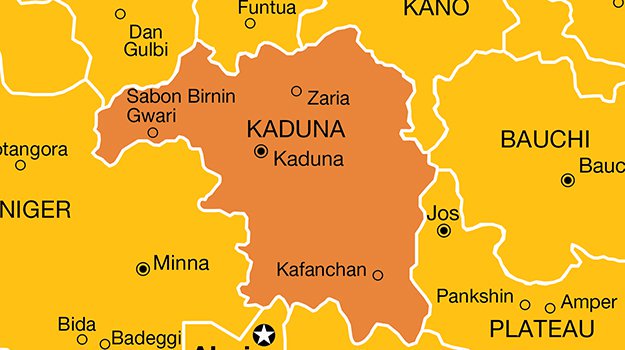
The Government of Kaduna State has announced a new resumption date for its schools after months of disruption in the school calendar due to insecurity ravaging the state.

The state’s commissioner for education, Shehu Makarfi, disclosed this while participating in a virtual workshop organised by the Education Writers’ Association of Nigeria. According to him, students of the state are expected to resume on Sunday, September 12, 2021.

However, the commissioner said rather than resuming for the third term that was aborted in the state, the schools will resume the first term for the 2021/2022 academic calendar.

Reminiscence of 7th September Jos Crisis

By Mohammad DonHussy

Tuesday was exactly 20 years since the breakdown of peace among communities and the beginning of the so-called ethno-religious conflict in Jos. Since then, thousands of innocent lives have been mercilessly killed, properties worth billions of naira destroyed, and hatred has been deeply entrenched, more than ever before, in the minds of the younger generation; vengeance has become a mantra on their lips. Thus, 7th September was a dreadful day that shouldn’t have repeated itself. But, unfortunately, it became the beginning of an era of chaos, conflicts and incessant killings.

Two things led to these horrible events. Firstly, religious leaders from both sides of the aisle did much to spawn the conflict either by abstaining from condemnation and reprimanding their audiences or fanning the flame with hate preachings. Secondly, and more morally reprehensible, politicians agreeably encourage the clash by not stepping up to quell the prerequisites that lead to the unrest. As a result, the conflicts have become a potent political weapon exploited by the elite to either consolidate power or amass luxury. Thus, the masses became pawns who reap the harmful consequences of the seed they never sow.

The crises have been heaped around many myths—that the conflict is an ethno-religious conflict is not only a hoax but an absurd claim that seeks to cast an illusion on the minds of the masses. Again, that Hausa-Fulanis have any grand plan to take over the helm of affairs in Plateau State is false. And, conversely, that the Christians are collectively responsible for the destruction of Jos Main Market, which plunged the Hausa’s into economic hardship, is equally false.

Few cabal members engineer these unfounded narratives to swerve the attention of the masses from demanding accountability from their incompetent leaders and have paved the way for kleptomaniacs and opportunists to reach up and embezzle our funds. To understand this better, reflect on what Samuel Ortom, the governor of Benue State, said, and I quote, “As Jesus died on the cross for Christians, I am prepared to die for Benue people.” The same person has now refused to pay civil servants their salaries and remain negligent on development and infrastructure. Scenarios similar to this are countless. By the way, Shari’a was once exploited by northern governors to mislead gullible Muslims. So it is more about vested political interests and amassing of wealth than faith or ethnicity.

Luckily, the panacea to this menace is within reach of the masses; all they need is the necessary introspection to grasp the problem for what it is: class warfare. And it’s also to resist the temptation of acquiescing in the vile tactics of divide and rule. If one scrutinises the conflicts, the masses, not elites, are constantly the victims of the mayhem. What sort of a people will be so adamant about inflicting such untold suffering to each other?

Does the killing of fellow humans strengthen anyone’s determination or make anyone’s life better? Why then the insanity and the insensitivity towards each other while those vultures are relentlessly sucking the masses and plundering the state’s treasury? The masses must understand that they share a common enemy, whether Christians or Muslims and that their enemies are within their respective faith or ethnic group. Regardless of any differences, the elite are hellbent on enriching themselves; neither their children nor closed ones participate directly in any conflict for whatever reason.

It is time for the masses to reflect on their actions, grasp reality and tolerate one other. The series of events that unfolded from the onset of the first crisis to today have caused indescribable suffering to the people of Plateau. It has slowed development and clogged prosperity. However, peace has no alternative, and tolerance is the only rational covenant.

Mohammad DonHussy writes from Jos. He can be reached via donhussy95@gmail.com.

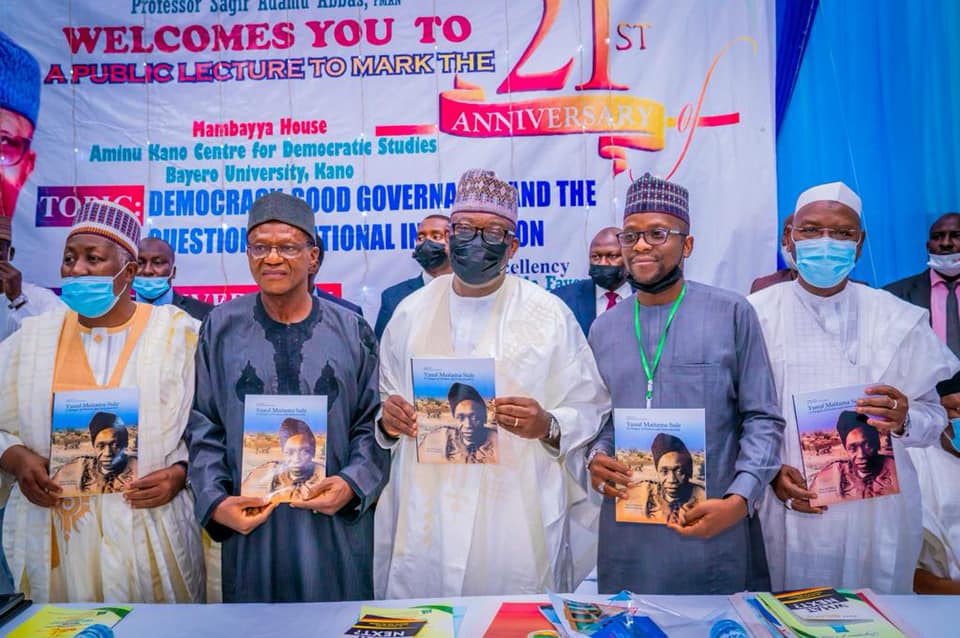
BUK promotes Dr Sani Rijiyar Lemo, Dr Umar Sani Fagge, others to professorial chairs

By Muhammad Sulaiman

In recognition of their significant contribution to scholarship, research and development at the Faculty of Arts and Islamic Studies (FAIS), the governing council of Bayero University, Kano (BUK) has approved the promotion of Dr Sani Umar R/Lemo, Dr Umar Sani Fagge, others, to the coveted professorial positions.

The following faculty members have been promoted to full professor status: Shehu Ahmad (Arabic), Aminu Lawal Auta (Nigerian Languages), Usman Sani Abbas (Islamic Studies), Sani Ayagi ( Islamic Studies) and Umar Abdulkadir (Islamic Studies).

Furthermore, the following have been promoted to associate professor status: Umar Sani Rijyar Lemo (Islamic Studies), Aliyu Harun (Islamic Studies), Nura Sani (Islamic Studies), Isa Yusuf Chamo (Linguistics), Aishatu Umar (English), Tijjani M. Naniya (History), Muhammad Wada (History), Umma Aminu Inuwa (Nigerian Languages), Maryam Mansur Yola (Nigerian Languages), Halima Abdulkadir Dangambo (Nigerian Languages), Ahmad Salisu (Arabic), Matabuli Shehu Kabara (Arabic) and Umar Sani Fagge (Arabic).

More members from other faculties have been equally promoted based on their value of excellence in teaching and scholarship, and service to BUK. However, as of during filing this report, the lists were still incomplete.