Northern Nigeria

Neglectful parenting in contemporary society

By Hadiza Abdullahi

Many parents do not care to deliver their responsibilities, leading to different social problems in Nigeria and the world. In layman’s terms, parental negligence can be seen as the failure or inability of parents to fulfil their parental responsibilities of providing the proper and adequate care and attention to their children.

The child-parent relationship is supposed to be affectionate, harmonious, supportive, and productive, but this relationship is becoming conflicting, unsupportive, destructive and agonizing due to certain factors. For example, some parents may be emotionally unsupportive to their children yet provide all their basic needs, i.e. food, clothing and shelter, while some are not supportive.

A study conducted on improper parenting and parental negligence by Dr Manzoor Hussain pointed out that good parenting quality depends on several factors. They include; the mature personality of the parents, which is an essential element of good quality parenting, stable and intimate marital relationship, as well as the form of the pregnancy, i.e. planned or not, as planned pregnancy implies better preparation to be a parent.

On the other hand, a broken home is believed to be the primary factor that contributes enormously to the issue of neglectful parenting, as children from such families are usually brought up by either their biological parent or a step-parent. These children often undergo different sorts of challenges, trauma and agonies from the step-parents, particularly stepmothers, who do not like having a stepchild under their custody. 

A typical example is the case of two minor Almajiris, an eight-year-old Habu and his six-year-old younger brother Tanko (not real names), whose parents got separated and had to live with their father and his new wife. Although the father is financially stable and could cater for their basic needs and education, he refused to do so due to the influence of their stepmother, who rejected them. As a result, the innocent boys left the house, roaming the street as Almajiris.

Research has indicated that couples’ desperation toward becoming a parent also promotes this issue. Some couples, especially the rural residents, who consider the number of children as pride, are only interested in giving birth to as many children as possible without having any adequate plan for their wellbeing. Instead, they exploit the children by engaging them in different forms of child labour such as domestic chores, street hawking, street begging or even working as house helps, all in the name of sourcing for income. The World Health Organization (WHO) regards it as child abuse. This exposes children to dangers when they mingle with bad people who may negatively influence and/or harm them.

These children quickly go astray because their parents are not around to watch and caution their wrong behaviours. Hence most of them end up going into drug abuse, prostitution or even being recruited into terrorist groups, among other crimes.

Hajiya Salamatu Yaqub, a housewife and a mother, lamented that the absence of adequate face-to-face interaction (which is an essential principle for a good parent-child relationship, in which both children and their parents understand each other’s needs, views, emotions, and brings about strong and growing intimacy between them) contributes immensely to this problem.

Similarly, Malama Maryam, another mother, expressed her grief over how some so-called civilized and educated Nigerian parents, especially young mothers, adopt an improper way of parenting. They focus more on their jobs, education, and other forms of businesses instead of the primary role of every traditional Nigerian parent, specifically mothers who are supposed to put the welfare of their families ahead of anything else. However, some abandon these responsibilities altogether while some entrust the responsibilities to nannies and other house helps, who may not be morally upright and talk more of instilling moral values in children.

A teenager (who refused to be named) and a victim of neglectful parenting said, “being neglected by your own parent is the worst and most traumatizing experience of every child”. She further disclosed how she and her siblings went through a lot due to this issue. Even though their parents took proper care of all their basic needs, they are always absent to watch over them, support them emotionally and caution them. She added, “we miss our parents badly and do a lot of things we should not do and mingle with people we would not have been mingling with supposing our parents are around”.

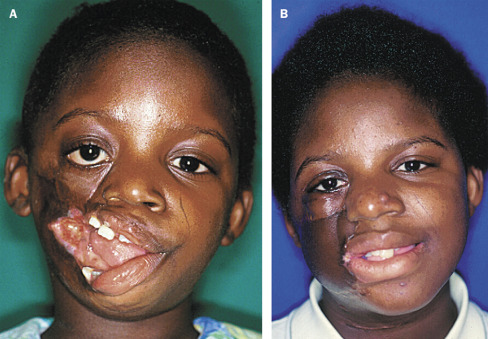
Children with intellectual, psychological, emotional and developmental disabilities are especially vulnerable to being forced into child labour and are more likely to face threats of violence and abuse. These children— especially girls—are often victims of trafficking, prostitution, domestic enslavement, forced marriage and other forms of abuse. In addition, some children who have physical and visual disabilities, visible congenital disabilities, or disfigurement are forced by traffickers to beg. In extreme cases, traffickers intentionally disfigure children to exploit them through forced begging. 

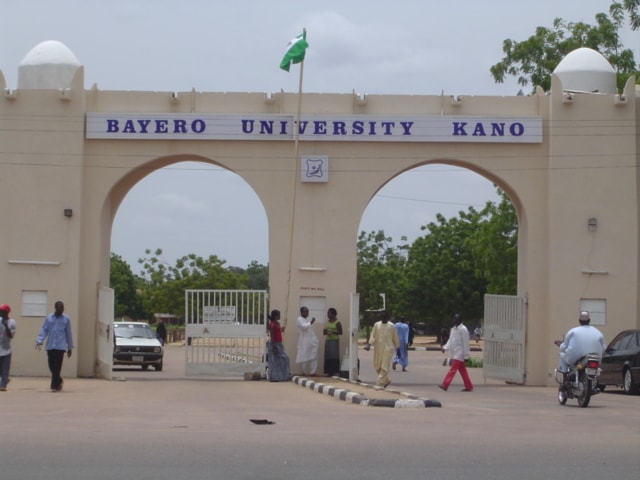
Yusuf Muhammad Daura, a student at the Department of Special Education, Bayero University, Kano, described parents who take advantage of their children’s physical disabilities and refuse to work hard, instead using them as a source of income, as irresponsible and self-centred. He added that when interviewed, most of these children seen on the street begging or hawking explained how they were forced into it and if they were to have an opportunity of living a normal life, they would be more than happy to join their mates in going to school.

However, it is understood that some children undergo neglectful parenting not because the parents or guardians are not around to support them emotionally or failed to provide for their basic needs. It’s, instead, due to their inability to home train and discipline the children properly.

The implications of parental negligence are many. They include a lack of mutual understanding and affection between parents and their children; children’s needs also weaken the close bond that is supposed to exist between their parents and their children. In addition, the children may feel the parent are worthless since they cannot cater for them, which might make them disrespect or hate the parents.

Research indicates that children who lack proper parenting behave aggressively and violently and perform poorly in academic activities. When interviewed, Mr Yahuza Abdullahi, a primary school teacher, confirmed that most children going through improper parenting perform poorly in academics and recreational activities as they do not have the extra support they need, such as helping them with their home works and getting the necessary learning materials.

Therefore, it is paramount that couples must be physically, psychologically and financially ready before they venture into the demanding task of parenting. As someone planning to have a child, prepare for your children or unborn children on how you intend to take adequate care of them. Make provisions for their basic needs, i.e. food, clothing, shelter, education and proper medical care. Also, provide a conducive environment to protect and keep them safe while instilling sound morals and values in them and having a plan on how you intend to caution and correct them whenever they are wrong. 

Also, the government has a critical role in tackling this menace because, as citizens of Nigeria, these children have fundamental rights that the government must protect. Thus, the government should have the full authority to punish any parent or guardian caught abusing or neglecting their parental responsibilities. 

Hadiza Abdullahi, Department of Mass Communication, Bayero University, Kano.

Insecurity: A bomb capable of blowing into civil unrest in Northern Nigeria

By Abdullāhi Muhammad

Sadly, the issue of insecurity is becoming somewhat politicised. The danger lurking behind this, however, is alarmingly disarming. The problem is multifaceted. While some criminals do so to make end meets, many indulge in crime due to conflict of interest. Be that as it may, the government’s inadequate measures to tackle security is a lurking bomb capable of blowing into civil unrest.

In a documentary by BBC in Zamfara, Fulani Bandits frequently invade villages, abduct inhabitants and slaughter anybody who resists. They also raid roads, shoot passengers and drag drivers out of their cars. In a somewhat passionate yet disarming effrontery, Fulani Bandits have gone beyond the camera reach as they film each other, showing obsession with guns and frequent drug-taking.

Speaking to one of the bandits’ warlords, Ado Alero, BBC reported that Alero considers his action to be a means to attract the government’s attention. Alero is one of the most feared warlords in Zamfara, whose behest police had put the bounty of 5 million Naira considering his rule in a recent massacre. He was recently turbaned in one of the bandits’ villages.

In another interview with one of the leading bandits’ commanders who led an attack and abduction of nearly 300 school girls in one government girls’ secondary school in Jengebe, Abu Sani confirmed to BBC that they had collected 60 million from the government to release them. They used the money to buy more riffles. Abu Sani said they did that to destabilise the government and keep her from intervening in the parrying. In another attack launched by the bandits, more than 200 people, including women and children, were reportedly killed. Further, they threatened to kill 120 Hausas at the behest of any single Fulani lost to Hausas.

This follows the sorry state the Fulani had been subjected to. They were abandoned, extorted and apprehended for so long. Their cattle were also rustled. They’re made worthless; no hospitals, no schools, and nobody cares to listen to their cries. Thereupon, they take guns to protect themselves.

In response, the Hausa, on the other hand, organised vigilante militias who went on a rampage and attacked Fulani Hamlets, killing any Fulani their eyes could meet.

Hassan Dan Tawaye (Hassan the rebel), a Fulani, who was reported to have first brought AK-47 to Zamfara, explained to a BBC correspondent that each side of the warring parties was at fault. When bandits attacked the Hausa community, Hausa militias were quick in reprisal and, in the process, killed many innocent lives. 

Hassan Dan Tawaye, having laid down his guns to pursue peace, has returned to armed conflict. Hassan said they could not endure the levity of getting killed and were tired of waiting for the government to intervene. Therefore they have taken guns.

At this point, the Zamfara state government is in a dilemma and forced to negotiate with the bandits. However, Abu Sani said that each side benefited from the insurrection. He further noted that the polity’s increased insecurity politicised the problem. Things deteriorate because any of the parties, from top to bottom, needs money.

Dishearteningly, while Northwestern Nigeria is on fire, governments both at the federal and state level are becoming insensitive and lack the audacity to tackle the menace adequately. This has led to the bandits getting more enamoured and the victims being pesticide. The worst is how the state government asked the citizenry to buy guns so that they could depend on themselves. However, this is not the answer to the situation on the ground and would not provide the garment possible enough to stampede insecurity within the polity.

On the other hand, it’s interesting how the National Assembly’s impetus to impeach the president over the long-endure insecurity issue in the nation. The National Assembly had on Wednesday given the president six weeks ultimatum to resolve the issue of insecurity in the country or risk impeachment. This has relieved the citizens but is not good enough to suppress their fears of the criminals who sworn hell-bent on countering peace in all ramifications and bringing the nation to its knees.

It’s indeed of great concern and fear to see the centuries-old, good relationship between Hausas and Fulanis deteriorating. We, therefore, urge the government to deploy numerous tactics to tackle the insecurity issue in northwestern Nigeria and other parts of the country. More military bases should be built in and across various states with insecurity problems, and there should be sufficient military equipment for proper and successful operations. Finally, both sides should be demanded to lay down arms, concede for peace, and reconcile a trust.

May Allah bring back peace in Zamfara, Northwestern Nigeria and Nigeria in general, Amin.

Abdullāhi Muhammad lives in Azare, Bauchi state, and can be reached via abdullahimuhammadyalwa02@gmail.com.

Kwankwaso/Obi ticket – A nice combination nobody should have thought about

By Muhammad Sulaiman Abdullahi, PhD

Many good things should have happened to Nigeria, but such good things were and are still averted by Nigerians who feel threatened by others. Our collective psyches teach us to be myopic and to lack reason. These make us promote selfishness, ethnic chauvinism or even other material gains at the expense of the best public interest.

Now that Kwankwaso/Obi ticket has been ethnically killed, I am happy that it didn’t come to fruition. It would have been disastrous to the nation as Peter Obi supporters are turning into something else. Now that it didn’t happen, it left some issues to ponder, especially on our reasoning that it shouldn’t have even been thought of in the first place. It left us with no hope as to the politicians we see, who are a sort of “young” blood, compared to those whose actual age, patriotism, source of wealth and health status are all not certain.

All of us in the North, without a doubt, believe that Dr Rabiu Musa Kwankwaso is far better than Obi. They are not comparable in whatever capacity, from academic credentials to practical experience, national spread, political platform and even patriotism. However, one irony about the ticket was that the way Northerners believe in Kwankwaso is similar to how South Easterners believe that Obi is better. They think that Obi is the only answer. In their bid to justify that, they reduced Kwankwaso to pieces, saying he was over-ambitious. This is where they woefully failed. This was what made the thought of bringing the ticket even more worrisome.

Obi’s supporters shouldn’t be blamed, as the country is programmed this way. People only know and promote people they are so much close to, naturally. What will happen if this natural knowledge is mixed with bitter secessionists’ sentiments and arrogance that beclouded their thought of anything if not theirs?

There are some reasons why Kwankwaso shouldn’t have even thought of Obi. Perhaps Kwankwaso did that out of nationalism and as another way of garnering support from the other end. Still, one thing Kwankwaso failed to realize was that Obi’s candidature was no longer his own. It has long been hijacked by a fake Christiandom, Obidients/OBiafrans and other disgruntled politicians from the other end. First, however, let’s consider some points here.

The way Nigeria is, a country with such a vivid religious divide, with Muslims as the majority and Christians with a significant number, the Christians must feel offended if they do not feature as number two, if not number one in the country. In this case, someone may say that democracy is, to some extent, a hoax. If not, why shouldn’t the majority carry the board all the time? But in Nigeria’s situation, Christians are many, and they would feel somehow alienated by the APC’s Muslim/Muslim ticket.

Therefore, it will be a miscalculation for anyone to ask Obi to deputize instead of being the lead. Christians may not take it lightly. They have already fought the Muslim/Muslim ticket and failed, and now the only option left for some of them shouldn’t be tempted or played with. Therefore, looking at it from this angle, it was a terrible idea right from the beginning. Reuben Abati confirmed this in an interview when he opined that, during one of their talks about Kwankwaso/Obi, he asked one question! And the answer to that question, given to him by the NNPP representatives, convinced him that the Kwankwanso/Obi arrangement was dead on arrival.

He asked them, is it fair that after a Northener – and maybe a Muslim – finishes his eight-year tenure, another Northerner will rule again immediately? He said the Kwankwanso/NNPP representatives responded that that is not an issue to worry about. This is their point of reasoning which should be understood.

Another point is regional affiliation. This doesn’t give much, but many Southerners may prefer to have someone healthier than Bola Tinubu, not minding his religion the way the Northerners do. Here, Obi as the lead may be more appealing to them.

On the other hand, there is an issue of the Igbo presidency. Igbo politicians have been too stubborn, divisive and too regional in their approaches to national discourse. They always create problems for themselves, of which Obi’s candidature is part. You can’t disown your country, engage in a series of treasonable felonies, condone crimes, support terrorism against your nation, and then think you would be trusted.

The idea of rallying behind Obi as the only source of salvation is another mistake made by the Igbos. It will make them more stubborn or more alienated. If Obi fails – which will likely happen, some of those overzealous OBiafrans who now threaten all who talk against Obi will surely be more stubborn and restless. And the mainstream politicians would put them aside as they know they are inconsequential.

Now that the ticket has been killed, most commentators agree that it wouldn’t change anything even if it had happened. The real fight is seen to be between the two giants. Now both camps should sheath their swords and forge ahead.

Kwankwaso and his supporters should continue to aim high. Merging with anyone among the two major parties cannot produce a result, and going alone is not the solution. Madugu and his team should think within and outside the box and develop a real solution.

As for Obi’s real supporters, the real Obidients, they should learn tolerance and know that Nigeria is not Imo, Abia or Enugu. Two states’ votes in the North can equal the total number of states in the South-East region. This is based on the latest voter statistics released by the Independent National Electoral Commission (INEC), which shows that the North has more voters registered in the continuous voter registration that ended last Sunday.

Therefore, these OBidients, including the OBiafrans, should be more civil, tolerant and open-minded. They should interact well with others, show decorum in their manners, and not allow the OBiafrans to lead them.

Dr Muhammad can be reached via @muhammadunfagge (Twitter) or email: muhammadunfagge@yahoo.com.

As climate change responds with terrifying brutalities…

By Nura Jibo

A year ago, I analysed climate disaster scenarios that happened within one week, which affected the entire world virtually. I then narrowed and streamlined my analysis by including some flood flashpoints in Nigeria, including Hadejia, Ringim and Auyo in Jigawa State.

Some office sit-tight professors, including one architect who resided in the UK for a long time, responded to my take with archaic and obsolete climate data. They vehemently descended on my double-decker analysis like wounded lions! But I forgive them because lots of them have lost touch and are never up-to-date with what is happening in the climate change world.

Moreover, some hardly attend UN-COPs or even care to read or research how climate dynamics and their attendant consequences affect Mother Earth. Instead, theirs is to sit in the office, review old literature(s) (emphasis mine), and take a vantage from there. They often think this can make them appear original.

Now it is the beginning of the first week in August 2022. And the news, videos and photos that were and are sent to me on a daily basis vindicated my flood projection(s) in certain Nigerian states such as Jigawa.

For example, a childhood friend from Hadejia (name withheld) sent me a picture of a flooded market segment in Hadejia. He then said, “Nura, kaga abin nan fa daka fada akan Hadejia ina ga zai zama gaskiya“. Meaning: Nura, it appears that what you said about Hadejia(referring to my assertion on flooding in Hadejia) will be true.

I then laughed it off and let go!

The rest now lies on the residents and inhabitants of that town. They either decide to move to the highlands along Malam Madori Road and expand Hadejia along that axis, or they should continue to live with their thinking and be lost in oblivion.

Nonetheless, I sincerely commiserate with the victims of this first phase of the flood. May Allah help their situations in this country with hopeless, very unserious and dangerous politicians and political leaders.

Nura Jibo wrote via jibonura@yahoo.com.

Bauchi plans security outfit to tackle insecurity

By Muhammad Aminu

Bauchi State Governor, Bala Mohammed, disclosed that the state had finished preparation that would enable it to establish state-owned security outfit to tackle banditry and other crimes.

Mohammed said this when he paid a condolence visit to the family of a 75-year-old Jauro Katu Mai Dakkuna who was killed by bandits while kidnapped in Shafa community of Alkaleri Local Government Area.

According to him, the State is making arrangement to recruit over 2000 youths that will man the security outfit across the 20 LGAs of the state to safeguard lives and properties.

The Governor alleged that the bandits that operated in the area have local collaborators.

“There was no how somebody from somewhere in Zamfara would visit that secluded place of Shafa hamlet to kill somebody unless he has an informer and collaborator. As the security agencies have always said, such thing could not happen without collaboration with some obnoxious elements within us.

“We have to fear God in all our dealings, we have already requested the two district heads to make sure they become circumspect, to look inward because we too were looking so that they can arrest all these issues of compromise, information being given to the bandits.

“Reports reaching me the day before was some locals were supplying foodstuff to the bandits in the forests, so we are aware of such retrogressive tendencies, there are some few dissident security operatives that are compromising with the bandits.

“So, we are requesting the commissioner of police and the brigade commandant to effect a change or redeployment of the guards here who have over stayed in their duty posts to have been conniving with the bandits,” he said.

He assured residents that a feedback mechanism will be put in place to improve the security situation.

“We are establishing a system of feedback, and I had some people within us are even feeding the bandits in their secluded places by giving them grains and flour to feed, that is the report I got, and we are going to take measures against such people wherever they are and no matter how close they are to us,” he stressed.

The Governor advised the people to give the government information through their local authorities such as the LG chairman, councilors, district, village and ward heads for prompt action to prevent any breakdown of law and order.

Insecurity: President Buhari and other governors should learn from Bello

By Ahmad Deedat Zakari

It is no longer news that the security situation in the country is pathetic and worrisome. Even the blind can see that the country is held to ransom by forces that challenge the state’s monopoly of violence. It is appalling that governments at various levels have failed in their primary objective of protecting the lives and properties of citizens. Terrorism and other atrocious crimes are being perpetuated wantonly and daily.

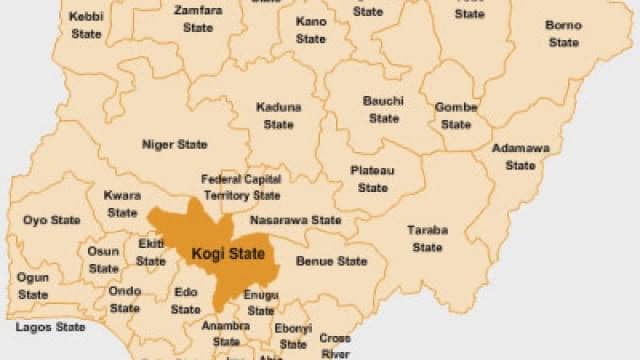
However, the Kogi State Governor, Alhaji Yahya Bello, is doing something different and commendable. In a Nigeria stuck with a replete of security challenges, Bello seems to be a shining example worthy of emulation by the president and his brother governors. This explains the relative peace we enjoy in Kogi, although it shares borders with about ten states in the country. Even while the country’s capital is under siege by terrorists and bandits, the same can not be said of Kogi State, which is about two hours drive from Abuja. 

Other state governors have to learn that as chief security officers of their states, the responsibility of protecting the lives and properties of people in their state falls on their shoulders. As much as collaboration is necessary between the states and the federal government on internal security issues, there is apparent incompetence of the highest order on the side of President Muhammadu Buhari.

For example, whenever there is a security challenge in Kogi State, the governor actively engages locals and traditional rulers in the area of the security breach to proffer solutions. This has proved effective in curtailing crimes. Although every state has its peculiar security problem, it is high time the governors realized this and came up with creative solutions like Bello is doing. 

Although many Nigerians have realized President Buhari is a grand failure, it would still do the country immense good if the president adopts Bello’s carrot and stick approach to security. Bello queries and suspends government officials and traditional rulers complicit in security infractions.

Bello similarly rewards the officials who do the needful in forestalling attacks and maintaining peace. But, sadly, the president only expresses shocks and issues empty threats that are never backed with actions. He honestly needs to learn from Bello, his political son and acclaimed mentee.

Ahmad Deedat Zakari wrote from Kogi State via ahmadzakari111@gmail.com.

Climate Change: Flood washes away farms, destructs lives, properties in Jigawa

By Aisar Fagge

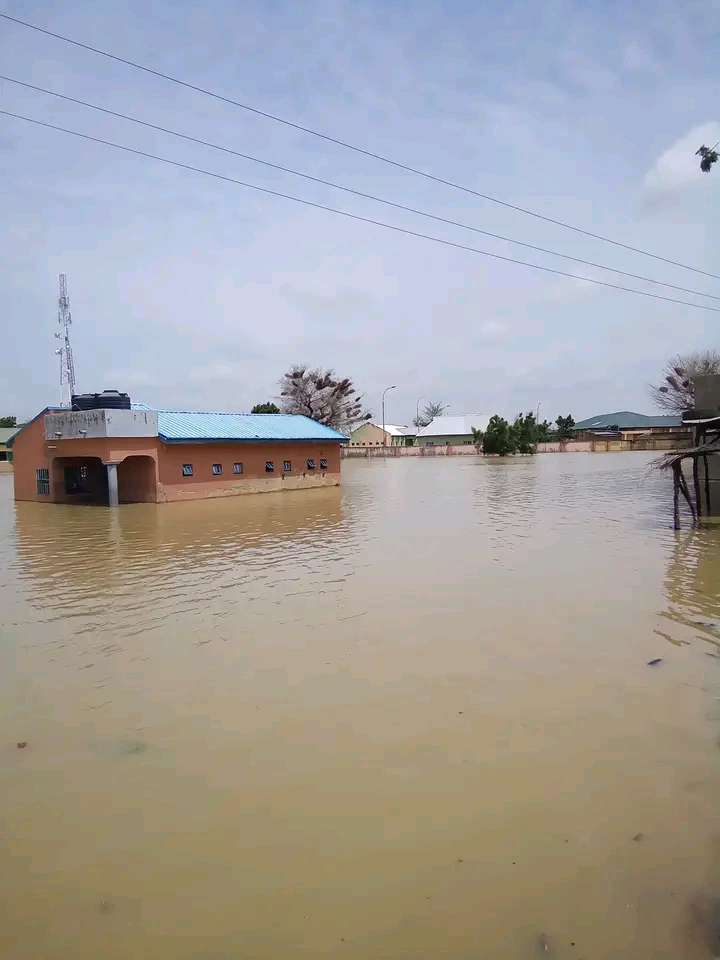
The heavy downpour has wreaked havoc in Jigawa communities, leading to the destruction of many houses, shops and prosperities worth millions of naira in the areas.

The rain that started Monday night, 1st August 2022, lasted for hours and had claimed the lives of yet to be identified a number of people, especially small kids.

The Daily Reality gathered that the communities affected included; Hadejia, Kafin Hausa, Kiri-Kasamma and some parts of Garun-Gabas, Tandanu and Bulangu of Jigawa state, respectively.

Our reporter gathered that the flood has also washed away many farms in the communities, and the development that the residents decried has struck terror in them.

Climate change that leads to flooding is one of the serious challenges rocking many countries, which affects people’s lives and health in various ways.

Victims of flooding

In another similar situation, a morning downpour in Bajoga town of Funakaye Local Government Area of Gombe State had claimed the lives of people and destructed houses and shops in the community.

Climate change: More floods in Nigeria

Experts have foresighted that there would be more floods in Nigeria in the next two months because of climate change.

The Director General/Chief Executive Officer of the Nigerian Meteorological Agency (NiMet), Prof Mansur Bako Matazu, has warned Nigerians to brace up for more rains in the next two months.

Mu’azu disclosed this on Channels Television’s Sunrise Daily programme on Monday, August 2nd, 2022, while speaking on flooding wreaking havoc across Nigeria in recent weeks.

However, Mu’azu also lamented that Nigerians keep cutting down trees and dumping refuses in drainage channels.

He added that the NiMeT CEO organisation had issued several advisories about flooding earlier, to which Nigerians failed to adhere.

In his words, Matazu said: “There will be increased rainfall intensity in the next two months or so. This is the most active period – July, August and September. We are going to see more floods.”

NEMA: 233 LGs in 32 states prone to flooding

No fewer than 233 local government areas in 32 states and the Federal Capital Territory have been predicted to experience flooding in 2022.

Flooded street

The Director-General, National Emergency Management Agency, Mr Mustapha Ahmed, raised the alarm Tuesday in Abuja.

Ahmed, who said the discovery was a result of the 2022 Seasonal Climate Prediction, stated, “Efforts must be made to mitigate and respond effectively to flooding.”

Book Review: ‘Economic Diversification in Nigeria: The Politics of Building a Post-Oil Economy’

By Abdulhaleem Ishaq Ringim

Economic Diversification in Nigeria by Zainab Usman is an in-depth analysis of Nigeria’s political economy that presents an apt delineation of the interplay of politics, institutions and policymaking in the process of economic development. Zainab’s is an attempt at instituting a diagnostic exercise to identify(beyond prevailing conventional narratives) major impediments to sustained development.

By repudiating ‘resource course’ and ‘backward neopatrimonilaism’ as the causal roots of Nigeria’s economic underperformance, the book presents a thesis that centres on challenges to economic diversification in resource-rich countries as the major impediment to economic transformation and development.

The author did a great job at identifying pathways to achieving economic transformation and establishing the state’s role in guiding the process but argued that the efficacy of the state’s guiding interventions remains a function of its institutional capacity which in turn depends on its political character.

Hence, to deconstruct Nigeria’s peculiar political character and its implications for economic transformation, the book deployed carefully designed frameworks for the analyses. Central among these analytical templates is the political settlement framework, which defines the influence of the distribution of political power on policymaking for development.

Per Zainab’s model, economic transformation, especially in resource-rich countries like Nigeria, depends on a kind of political settlement that distributes power among elite formations to ensure the emergence of a stable political coalition. This is why even while Nigeria has witnessed periods of semi-steady economic growth in her national life, such has never been adequate enough to usher in sustained development.

As an “Intermediate” State, Nigeria’s breed of political settlement is characterized by the formation of unstable political coalitions and cyclical political crises (especially in political transition periods). This has ensured that the country is always in crisis management. And the resulting policy and reform orientation has always assumed a manner that prioritizes short-term macroeconomic stabilization over long-term structural economic transformation.

The author, however, believes that such a political configuration is not immune to change. She explained that certain “critical junctures” determine whether a prevailing political configuration will change or persist. At these junctures, elites are constrained to take certain policy actions. And the economic outcomes of such policy actions depend on whether the assumed policy direction takes a stabilization or transformational orientation.

Using this framework, the author analyzed two subnationals, Lagos and Kano, to demonstrate the complex interplay of politics and policymaking and its influence on economic outcomes. The analyses mainly focused on critical junctures for both states and the resulting policy orientation and outcomes in relation to their contrasting political settlements. Lagos presented itself as a model for economic transformation while Kano a microcosm of Nigeria as it is.

The book concluded with recommendations on how Nigeria’s political settlement can be balanced by institutionalizing “zoning” as a power-sharing agreement, adopting a shared vision for transformation, and addressing market failures while emphasizing the imperative of building a post-oil economy. I find the book very interesting. It presents thought-provoking arguments and indeed updates our mental models on the challenges of economic diversification in Nigeria’s context.

Not that I agree with every postulation. In fact, I can’t entirely agree with the relegation of culture as an outcome of economic development rather than a determinant. Culture precedes economic activities(not to talk of development) in global historical trends, so I believe it cannot be an outcome of what it fundamentally precedes as far as existence is concerned.

As I posited some weeks back (linked), I belong to the school of thought that considers culture as a significant determinant of economic development alongside geography and climate. However, I believe culture itself is a product of nature, geography, climate and the environment.

I believe that at every point in human history, the culture of any people is determined and constituted by a combination of the powerful and inter-generationally persistent ‘cultural legacies’ the people have inherited over time (mostly developed in response to geographical and climatic determinants) and the cultural aspects developed as a result of the influence of [mostly unpleasant] environmental changes and the need to adapt to them.

Hence, I believe nature, geography, climate, and environmental changes determine the cultural compatibility and disposition(positive or negative) of any people towards development. Therefore, I have not seen enough reason to forgo Varoufakis, Gladwell and others on geographical and cultural determinism regarding economic development.

Nonetheless, the book is a masterpiece!

Insecurity: Kogi governor suspends traditional ruler, queries LGA chairman

By Ahmad Deedat Zakari

Kogi State Governor, Alhaji Yahya Bello, has ordered the suspension of a traditional ruler and queried the Chairman of Ajaokuta Local Government Area of the state because of insecurity

This was disclosed in a statement signed by the governor’s spokesperson, Onogwu Muhammad, on Sunday, July 31, 2022.

The Spokesperson said :

” Kogi State Governor Yahaya Bello has directed the suspension of the Ohi of Eganyi and Chairman, Ajaokuta Traditional Area Council, HRH Alhaji Musa Isah Achuja with immediate effect after an investigation that led to his arrest and detention by the security agency.”

Mr Muhammad added that the Chairman of Ajaokuta Local Government, Hon Mustapha Aka’aba has also been queried and asked to respond within 24 hours.

Mr Muhammad, in explaining the reason for the governor’s disciplinary action, also stated that: 

“The governor’s directive against the affected persons is in connection with the recent security breach in the area, which led to the untimely deaths of some security personnel on their legitimate engagements of maintaining law and orders. 

The governor strongly warned other traditional rulers across the state who may have connections in one way or the other with criminal elements in their domains to desist forthwith, saying that his administration will deal ruthlessly with anybody who romances with criminal elements, no matter how highly placed they are.”

On the emerging narratives of Hausa/Fulani animus in the Northwest

By Dr Raji Bello

The past few years have witnessed a gradual emergence of references in public commentary and social media to a potential or actual rupture of relations between Hausa and Fulani groups in the Northwest geopolitical zone of Nigeria. Prior to this, the two groups had enjoyed a largely harmonious relationship for much of their history which was only punctuated during the period of the establishment of the Sokoto Caliphate.

Since Nigeria came into being at the turn of the 20th century, conflict between the two groups was limited to occasional farmer/herder disputes. While the region has distinct Hausa (majority) and Fulani (minority) communities in the rural areas, the urban centres tend to have mostly mixed populations united by the Hausa language and Islam, which eliminates the possibility of ethnic conflict.

The idea of Hausa/Fulani antagonism began to emerge several years ago in the commentaries of individuals from outside the North like Femi Fani-Kayode and Nnamdi Kanu who relished in promoting it as a potential tool for undermining northern hegemony, as they saw it. But recent developments in the Northwest like the emirship succession in Kano and Zazzau, and the violent conflict between rural Fulani and Hausa vigilante groups as well as the wave of banditry against local communities by Fulani elements has created narratives of Hausa/Fulani conflict among northerners themselves.

As we acknowledge this new reality, it is also important to recognise that there are two strands of these narratives out there and the motives of those who articulate each of them are different. I will group them into non-extremist and extremist narratives.

Non-extremist narratives

These are propagated by ordinary Hausa citizens who are concerned by what they see as the continued suppression of Hausa identity and prestige as well as threats to the security of Hausa communities in parts of the Northwest as a result of banditry. They hold an unfavourable view of the existence of exclusively Fulani traditional ruling dynasties in Hausa-dominated emirates like Kano, Katsina, and Zazzau which were established when the Sokoto Caliphate came into being over 200 years ago. They object to the references that are often made to the Fulani heritage of the emirs (although I believe that this is not done out of ethnic chauvinism but because of a need for historical accuracy). These are concerns that the state governments in the Northwest can engage, with a view to introducing reforms that would assuage negative feelings and lead to a more harmonious society.

Traditional institutions play a vital role in preserving our heritage but for some segments of society, they may also be permanent reminders of an unpalatable past. It is the responsibility of modern day governments to ensure that they strike a balance between the two i.e. preserving heritage while not alienating some segments of society.

Reforms could be introduced that would formally recognise and integrate the legacies of the pre-Caliphate Hausa emirs. Like a contributor Aliyu Ammani has suggested in a Daily Trust article, Hausa ruling houses could be included as contenders during succession to the emirships; our governors are fond of creating new emirates where they didn’t exist before and therefore, they should not find it difficult to create new ruling houses within the existing emirates. The Sokoto state government may also consider elevating the status of the Sarkin Gobir of Sabon Birni – the ancient Hausa kingdom of Gobir being the epicentre of the Sokoto Jihad.

Governments have a duty to recognise and preserve heritage holistically; the heritage of some segments of society should not be elevated over those of others in a post-Caliphate and post-colonial nation state. This is a recipe for entrenching communal tension and possible conflict. The Northwest governments should collectively nip these emerging issues in the bud and not allow them to fester and grow into major problems in the future.

I expect some readers to either say that these suggestions are too radical or that they will be impossible to implement. I’m used to hearing this from reform-shy Nigerians who like things to remain just as they are even when the existing situation is pushing us towards the edge of the cliff.

The second cause for concern is, of course, the ongoing wave of banditry against local Hausa communities in many parts of the Northwest in which Fulani elements are major actors. However, this is not primarily an ethnic conflict; if communities that have lived in peace for generations are now locked in violent conflict we need to scratch below the surface to find the actual causes.

The banditry is a symptom of the failure of governance at various levels. Even a report commissioned by the Zamfara state government (the MD Abubakar-led committee) has alluded to that by indicting former governors, top government officials, traditional rulers and members of the security services. There are chronic issues with agricultural land management, law enforcement capacity, corruption and maladministration by local officials and traditional rulers.

The lack of a long term plan by successive federal and state governments for transitioning nomadic pastoralists to modern and sustainable livelihoods is itself an evidence of leadership failure. While people are entitled to show concern about the apparent ethnic divide in the conflict, it is clear that it is not fundamentally an ethnic one.

Extremist narratives

These are deeply inciting and apocalyptic portrayals of the state of Hausa/Fulani relations in the Northwest which are propagated on the internet by people with no apparent desire for peaceful co-existence. Their aim seems to be to incite a major upheaval in order to undermine the fabric of society. They are a faceless mix of anarchists, genocide entrepreneurs and probably, people with a religious agenda. They often start their narratives by depicting the arrival of the Fulani in Hausa land hundreds of years ago as an invasion, then portray Usman Danfodio as the original Fulani bandit leader before dwelling on their favourite topic of interrogating the validity of Hausa-Fulani as a descriptive term for a segment of the population of the Northwest. They hide behind a veneer of seductive Hausa ethnic nationalism but their true agenda is to engineer maximum disruption in the Northwest which they hope would serve their interests.

There is a YouTube site and a Facebook page dedicated to the project (yes, it does appear to be a well-funded project) and I have viewed a few of their videos. Some of the voices on the videos bear distinct Nigerien accents (with French-influenced pronunciations) and some of their messages give a hint that they are non-Muslim Hausas. One of the voices called for unity among Hausa people of all faiths – Muslim, Christian and pagan to confront the Fulani threat, as they saw it. From my knowledge of northern Nigerians, it is very unlikely that a Hausa Muslim Nigerian would call for unity between Hausa Muslims and Hausa pagans considering how paganism is viewed in Islam. A Hausa individual who makes this call is likely to be a non-Muslim. And if those behind the extremist messages on the internet are non-Muslim Hausas, the question arises about whether they are working for a religious agenda or not. By saying “non-Muslim Hausas” I’m not necessarily alluding to the Hausa Christian community; there are also a small but assertive number of Hausa atheists and modern day pagans who are not necessarily enamoured of the prevailing order in Northwest society. If anyone feels that I’m being alarmist here, they should visit the YouTube channel of Jaruma Hausa Tv and listen to the messages themselves.

Conclusion

Authorities in the Northwest need to face the new reality of tension and misgivings between the hitherto harmonious communities of Hausa and Fulani. There are issues that are germane (the exclusivist Caliphate traditional dynasties in some of the Northwest emirates and the ongoing banditry) behind the new unease in ethnic relations which need to be actively addressed, in order to re-establish harmony. But it should also be recognised that not all those who are currently pushing narratives of Hausa/Fulani conflict or Hausa nationalism on the internet are working for peaceful co-existence. Some of them are merely exploiting contemporary issues in the Northwest to achieve their own dark agenda.