Northern Nigeria

Can we see people beyond their looks?

By Aisha Musa Auyo

Perhaps the only group of people that see women beyond their looks are the blind. They judge us based on our character and attitude and, with time, our intellect and intelligence.

I often get judged based on my looks, which pisses me off. It took time, patience, and convincing to come to terms with the reality that people will always judge one by his looks. I want us to ponder that our looks have nothing to do with our intelligence and demeanour.

Personality psychologists have argued that physical appearance is a significant factor in personality development because people form opinions by what they see in a person physically and respond to that person accordingly. In turn, people tend to fulfil the expectations they believe others have for them. 

For example, short people are said to be too aggressive or demand too much respect, or tall people are foolish. And in our society, it’s believed that rich people are evil and will go to hell, while poor people are good people. So they say, “Ku ci a nan, ma ci a can”, meaning “You enjoy this life, and we – the poor – will enjoy in the hereafter”. 

Other common myths that align personality with looks are: slim girls tend to be arrogant and lack patience, while chubby girls are easygoing and humble. Looking good and dressing well makes you arrogant automatically, or driving an expensive car is a showoff. 

Please, let’s study people before we pass judgement, as people’s behaviour evolves with time, education and experiences (these are what make and shape us) regardless of their physical traits. Let’s not allow people’s expectations or comments to shape our thinking. I know it’s easier said than done, but can we try?

I can remember some years back when I went to write a Senior Secondary School entrance aptitude test. After greeting the panels, one of them said, “Miss, I hope you have something to bring to the table beside your good looks. I was 13 years then, and his rhetorical question sent a doubt in my mind that I may not pass the exams. It took convincing myself that if I couldn’t do it, I wouldn’t be illegally adopted as a mercenary for someone else, implying that if I had allowed his comment get me, I might probably fail the exams. This is an example of how people’s expectations shape our thinking.

After the general exams, we were to go for another test, this time one by one with the examiners. I was given a mathematics exercise to solve fractions and square roots. God helped me solve that equation in less than a minute, and the judges were awed. It happened that I was the first one to solve that particular question since they started the test that very day. That man asked me again, which school are you attending? To him, it must be the school that is good, not me. 

A similar incident happened recently during my PhD coursework. I was doing statistics tutorials for my cluster, and the news spread that a tutorial was going on. Some groups of women decided to join. As they entered the class and saw me at the board with a marker, one of the women said, “so there’s a brain inside that fine face”. 

I retorted. My brain is finer than my face, in my mind, of course, as this woman is old enough to be my mom. But this time around, I didn’t let her statement intimidate me. All thanks to age and experience. I just pretended not to hear and continued with the class: If I’d allowed that to get through me and said what came to my mind aloud, it would prove that slim ladies are arrogant.

These cases should sound like compliments, but they’re an insult. Why do people believe that beauty and brains are mutually exclusive? What does our look have to do with our brain? My best friend, the best in mathematics in our class, is one of the most beautiful people I’ve met. She’s a civil engineer now.

My other best friend, a tall, fair, beautiful Fulani lady, is now a medical doctor. I have also met short people who are soft-hearted and humble. I’ve met wealthy people who are down-to-earth, simple and have a kind heart. I’ve met not so good looking people who are also not so brilliant but have strength in kindness, empathy, and excellent marketing skills. 

Each person has strengths, so also weaknesses. For example, a blind person may have superpowers that someone with eyes may not. I’ve seen disabled people do things with their only leg or hand that are humanly impossible. 

This debate of physical traits and how they manifest in our personality is beyond human comprehension, for it involves genetics, life experiences, grit, tenacity, and willpower. This unending nature-nurture debate could only be laid to rest if we agree that these matters are beyond us.

Nigeria: Understanding flood and the outbreak of infectious diseases

By Adam Mustapha, PhD

Floods are natural disasters that occur globally, destroying lives and property, especially in developing countries like ours. As a natural disaster, it is caused by climate changes and human activities which distort the balance of environment, hosts and pathogens. Factors such as high sea level rise, urbanization, destruction of river banks, and deforestation increase the risk of flood disasters.

Flood results in the disturbance of the epidemiological triangle; environment, host and infectious agent, and as such, it could result in the emergence of new agents or re-emergence of infectious agents that previously existed. Therefore, the potential outbreak of infectious diseases is a matter of great concern, and urgent intervention is needed to break the chains of transmission.

Flood is known to increase the global burden of various infectious diseases, mortality, social and economic disruptions and displacement of people, which can result in both physical and psychological trauma. Of great concern is how flood causes the outbreaks of infectious diseases, as germs can easily be transported and contaminate drinking water sources, which will provide a conducive environment for the completion of the vector life cycle.

Like other developing countries, flooding has become an annual event in Nigeria, and many towns and cities are vulnerable and susceptible to it. This year, the Nigerian meteorological agency (NiMet) warned some states that they were at high risk of flooding in its yearly prediction of rainfall. Therefore, it was unsurprising that flooding hit many such states, states like Jigawa and Yobe have significantly been hit. In contrast, others such as Borno, Adamawa, Gombe, Kebbi, Kano, Kaduna, Lagos, Kogi, Niger, Delta, Rivers, Zamfara, Taraba, Ogun, Osun, Ondo, some parts of Ekiti, Edo and FCT are affected from moderately to low levels.

Flooding can cause waterborne diseases such as cholera, non-specific diarrhoea, typhoid and viral diarrhoea caused by Rotavirus. These diseases are known to peak after flooding as the pathogens such as bacteria, viruses, and parasites can be transported. In addition, the crowded nature of displacement camps can potentially result in and aggravate the outbreak of respiratory diseases.

The crowded nature of displacement camps can potentially result in the outbreak of respiratory diseases of different etiological agents. Wastewater is a breeding ground and carrier of infectious diseases. For instance, wastewater has the potential of spreading viruses, as they are known to be good-chance takers of a flood, which take days after flooding to meet their incubation cycle. Viral diarrheal diseases, such as hepatitis A and E, vector-borne viral diseases such as Yellow fever, and many others are also some diseases that could potentially spread after the flood.

The genome of some viruses, such as SARS-CoV-2, are known to be detected in community wastewater and this call for concern as it can be disseminated during a flood. Another agent to worry about due to flood is Naegleria fowleri, a brain-eating amoeba causing primary amoebic meningoencephalitis (PAM). As water level and temperature rise, such a situation could fuel the growth of the agent. Environmental contribution to the development of infectious diseases is a significant public health concern that should not be ignored. Antibiotic-resistant bacteria and antibiotic-resistant genes are quickly disseminated in environmental wastewater, which could be further transported into the water system, which calls for concern.

Furthermore, the vector-borne disease can occur as a result of a flood because the development cycles of vectors are provided. For instance, mosquito-borne diseases such as malaria and West-Nile fever tend to increase after floods. Rodent-borne diseases also expand during flooding because the flood increases contact between rodents and humans, resulting in outbreaks of such diseases. Common rodent-borne infectious agents due to flooding include Leptospirosis, Hantavirus pulmonary syndrome, Hemorrhagic fever with renal syndrome etc.

Health interventions

 First, public health measures are essential in preventing infectious diseases due to floods. Therefore, preventive measures should be taken before, during and after the flooding.

Second, the provision of crucial intervention. The critical intervention is an active early warning system that can alert governments to prepare for possible outbreaks and send signals for evacuation of people at risk.

Third, the activation of rapid emergency response is also a necessity. This includes the provision of basic materials and health care services.

Fourth, after the flood, the activation of an effective surveillance method is mandatory for the early detection of an outbreak.

The key intervention is active early warning systems which can alert governments to prepare for possible outbreaks and send signals for evacuation of people at risk. At this stage, all stakeholders and the public must act on time. However, compliance is low due to a lack of an alert system or people refusing to abide by the warning system. Furthermore, risk assessment is needed to ensure that no basic amenities are disrupted due to floods.

Moreover, there is a need for vector control after the flood to break the chains of transmission. There is a need for collaboration among all public health stakeholders. Public enlightenment and outreaches are equally essential intervention measures.

Finally, provisions of clean water, sanitation and hygiene after the flooding to prevent infectious disease outbreaks are also very significant.

Adam Mustapha, PhD, is a clinical and medical microbiologist. He wrote from the Department of Microbiology, University of Maiduguri, via adadmustapha@unimaid.edu.ng.

A perspective on the resurgence of interest in Hausa identity on social media

By Aliyu A. Ammani

Those following happenings in social media could not have missed the debates and controversies generated by the rise in tribal identity consciousness among the Hausa in Nigeria. Identity among the Hausa has been suppressed by the mischievous use of the tag “Bamaguje”, masked by “Hausa-Fulani” and “Arewa” labels, and tacitly put into question over the years. Many people see in this increasing consciousness a threat to the coexistence between the Hausa and the Fulani, two tribes living together for centuries in Hausaland.

A series of conspiracy theories are churned to explain the genesis of this resurgence on social media, most of which sound somewhat ridiculous. The conspiracy theorists appeared not to see the wood for the trees. There are two primary reasons behind the resurgence of interest in Hausa identity in Nigeria today.

First, the Bororo Fulani banditry in mainstream Hausaland on populations that are essentially Hausa, and its attendant destruction of lives and properties, maiming, looting, raping of women, kidnapping for ransom etc. Thousands of towns and villages across Hausaland have been sacked. Communities of free law-abiding citizens are forced back to the dark age of slavery; abled-bodied men are attacked and abducted, sometimes right inside mosques on Fridays. The perpetrators of these heinous crimes are always willing to tell the world they are Fulani, fighting for Fulani against the Hausa. The reader can hear from the Horse’s Mouth in the following audio-visual documentaries available on YouTube: (i) BBC Africa Eye Documentary “The Bandit Warlords of Zamfara”, (ii) Trust TV’s “Nigeria’s Banditry ‘The Inside Story” and. (iii) video coverage of Dr Ahmad Gumi’s meeting with Zamfara Bandits at Shinkafi.

Second, and most importantly, the attitude of city-dwelling Fulani, including some notable traditional and religious leaders in Hausaland, in the face of Bororo banditry. Instead of publicly dissociating themselves from the atrocities or publicly declaring that terrorists like Bello Turji, Dogo Gide and Ado Aleru do not represent the Fulani, they seem more comfortable fabricating excuses for the bandits in tongue-in-cheek statements.

The leaders say, “their cattle were rustled”, “traditional cattle routes were blocked by new farmlands and settlements”, “the Fulani are not in it alone, there are other tribes including the Hausa aiding and supporting them”, and “the governments neglect the Fulani, …” etc. Not a single traditional ruler in mainstream Hausaland came out to publicly take an impartial stand, as did the emir of Muri. Even Miyetti Allah, the Fulani association that is always quick to cry blue murder whenever the interest of the Bororo appeared threatened, appeared to lose its voice. Thus, projecting an impression that while Bororo Fulani are busy terrorising and destroying Hausa populations and settlements, city Fulani are busy manufacturing and propagating excuses and justifications for the atrocities.

Can one sincerely justify banditry or rebellion by Fulani in Hausaland, a land that is practically a Fulani territory? The most important traditional rulers in Hausaland are Fulani. The key political figures and public officials in Hausaland are Fulani. The most notable Islamic clerics and religious leaders are Fulani. Even in Hausa settlements outside Hausaland, the heads of the communities, known as “Sarakunan Hausawa” (singl. Sarkin Hausawa) majority are Fulani. Therefore, the Fulani should be the last to rebel in Hausaland!

The Hausa, hitherto feeling that he has ‘his back covered’ by the Fulani, feels betrayed. With the scales falling off his eyes, he began to see the writing on the wall: “You are on your own”. This ignites the process that sparked the chain of reactions that we now see on social media as the resurgence of interest in Hausa identity, what others see as the dissociation of Hausawa from the Fulani.

There is indeed the tendency that a reawakening of identity consciousness among the Hausa is capable of igniting an equal spark in Fulani identity among the almost “hausanised” Fulani in Hausaland. This could lead to an upsurge in identity politics among both groups, leading to extremism where elements from both tribes could begin to see and interpret processes and events on a “we versus them’ basis. Traces of such extremism are already visible. However, the possibility of such a tendency should not be reason enough to deny the Hausa of their rights to tribal identity, association and aspirations for the simple reason that other Nigerian tribes have been enjoying such rights without posing any threat to their coexistence with other tribes in Nigeria.

The upsurge in Hausa identity revival has started and cannot be stifled or halted. The genie is already out of the bottle. The question that begs an answer is, “which way forward”? The way forward is not in the identification and clamping down on the persons or group managing pro-Hausa identity revival social media handles as is being suggested by some Islamic clerics across Northern Nigeria. This is more likely to compound rather than solve the problem.

The solution is for the ‘organised Fulani front’ to confront and respectfully address the fears of the Hausa people (of a conspiracy to annihilate them). They should also give them their assurance and publicly dissociate the Fulani from the activities of terrorists like Bello Turji & Co, and commence the process of rebuilding mutual trust and respect between the Hausa and Fulani.

Aliyu A. Ammani wrote via aaammani@yahoo.co.uk fromU/Shanu, Kaduna, Nigeria.

Kogi man launches social media platform, seeks local endorsement

By Ishaka Mohammed

A 37-year-old man from Kogi State, Yusuf Shuaib, has launched a social media platform to bridge the gap between Nigerians and owners of social media companies.

The platform, named Ayema Social, was completed in June 2022, but the application was officially launched in September.

Yusuf holds a bachelor’s degree in Islamic Studies from Prince Abubakar Audu University (PAAU) (formerly Kogi State University), Anyigba, Kogi State. He started his technology journey during his service year in Kano in 2009 when he enrolled in an information technology diploma.

In a chat with The Daily Reality, Yusuf revealed that he wanted to do something to change the popular belief that Islamic studies graduates can only become teachers or lecturers. However, his interest in becoming a developer had barely sparked off until after observing the role of social media in the 2015 general elections. 

Concerning the number of users so far, Yusuf said Ayema Social had recorded over 260 users within its two weeks of launch. “It was made public earlier this month [September] after being subjected to a series of tests for over two months, and our target is a minimum of a million users by December, God willing,” he said.

He also revealed that the application had been endorsed by some dignitaries, including the member representing Ankpa/Olamaboro/Omala Federal Constituency, Honourable Abdullahi Ibrahim (Halims); the executive director of special projects at Nisa Premier Hospital, Abuja, Mr Tijjani Baba; and a senior officer of the Nigerian Air Force, Group Captain Ishaka Yakubu.

The founder, however, disclosed that only Android phones support the application version at the moment as he is still sourcing money to work towards making it accessible to users of Apple phones and iPads.

Regarding the security of users, Yusuf told The Daily Reality that the platform, which is named after his mother, Ayema, is bound by extant law global standards for data security and confidentiality, adding that the company is also in technical support partnerships with both Rayjoh Global Resources and Logical Address Limited.

Ayema Social shares many features with Facebook, and users can opt for either the website www.ayema.ng or its Android application version available on Google Play Store.

Zamfara PDP reacts to court’s decision that nullifies state gubernatorial primaries

By Uzair Adam Imam

The Zamfara State Peoples Democratic Party (PDP) has reacted to the Federal High Court decision that nullified the state gubernatorial primary election, which produced Alh. Dauda Lawal as its flag bearer in the forthcoming general election.

The Daily Reality reported Friday that the court, preceded by Justice Aminu, has invalidated the PDP’s primary election and ordered that a fresh primary election must be conducted to ensure just and fairness.

Alh. Ibrahim Shehu Gusau, a former federal lawmaker, who contested against Dare in the primary election, took the case to the court seeking justice, adding that there had been many irregularities in the election.

However, reacting in a statement by the state it secretary, Faruk Ahmad, the party said we “wish to acknowledge the Federal High Court Gusau Judgement which ruled that, the Primary election conducted by our noble party is null and ordered for fresh primaries.

“We in the PDP are known to be law-abiding and grassroots politicians who respect and believe in the supremacy of law and the constitution of the Federal Republic of Nigeria and that of our party as well as the guidelines enshrined to guide us in the party affairs.

“As defendant in suit failed by some of our aggrieved members concerning the Governorship primary election which produced Dr Dauda Lawal as the flag bearer of the PDP in Zamfara State, we received the court’s decision in good faith, and a team of our lawyers are studying the judgment with a view to coming up with the next line of action within the ambit of the law.

“The PDP in Zamfara state did well in conducting the primary election in a well manner for fairness and justice, but the Federal High Court, Gusau, after intense debates, ruled against our party and other defendants in the suit.

“Meanwhile, we remain committed and determined to reclaim Zamfara State and bring it back to life and make it work again for the betterment of our people who are now living under abject tension, restlessness, fairness, hunger and other atrocities. We shall (Insha Allah) cross these hurdles and ensure the solid unity of our members.

“Our decision as regards the judgment will be made available after our lawyers conclude the study of the judgment and present to us their recommendations which the PDP leadership will decide on.

“We are therefore calling on our members to be calm and remind resolute in ensuring the success of the PDP in Zamfara State and county in General. We employ you to continue giving support and cooperation to party leaders at all levels,” the statement added.

Scores killed in ISWAP, B/Haram rival clash in Borno

By Uzair Adam Imam

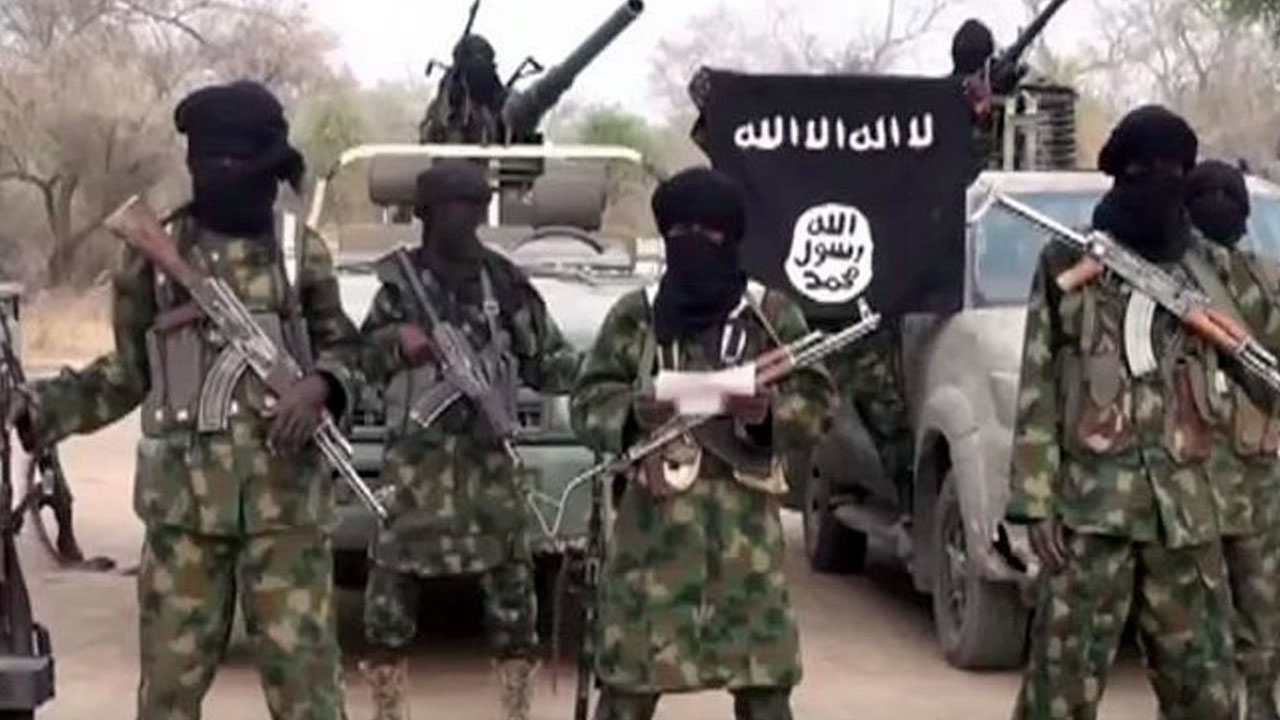
A rival battle broke out between the late Abubakar Shekau’s Boko Haram faction and Islamic State West Africa Province (ISWAP) militants.

The Thursday incident also led to the killing of notorious commander Kundu and several other fighters at Dikwa and Bama local government areas of Borno State.

Reports disclosed that Kundu and his team members were on a robbery mission when ISWAP stormed them on six motorcycles, conveying three fighters on each, carrying deadly machine guns.

A security analyst and a counter-insurgency in Lake Chad, Zagazola Makama, confirmed the fight.

He said, “A heavy fight ensued between the terrorists resulting to dozens of casualties on the side of the Boko Haram terrorists, while few ISWAP terrorists were wounded.

“The Boko Haram terrorists took to their heels, leaving their motorcycles to the ISWAP terrorists.”

Train Attack: Mamu’s arrest won’t halt efforts to recue remaining victims – FG

By Uzair Adam Imam

The Federal Government of Nigeria, today Thursday, has said that the family of Kaduna-Abuja train victims should be at ease as the arrest of Tukur Mamu will not halt the efforts to rescue those in captivity.

The Minister of Police Affairs, Mohammed Maigari Dingiyadi, disclosed this in Abuja after the NSC meeting presided over by President Muhammadu Buhari at the Council Chambers.

The Daily Reality reported how more than 60 passengers were abducted when terrorists attacked the train conveying them from Abuja to Kaduna. However, today marks exactly 186 days after their abduction and 23 of the victims are still in captivity while others, on the hand, who regained their freedom, were said to have allegedly paid N100 million as ransom.

The Daily Reality also reported that the bandits negotiator was first arrested in Egypt on the orders of the federal government of Nigeria on Wednesday, September 7, 2022.

He was later brought back to Nigeria where he was, again, arrested by the Department of State Services (DSS).

Our reporters learned that the train victims have not communicated with their families since Mamu’s arrest.

Tukur Mamu finances terrorism, DSS tells court

By Ahmad Deedat Zakari

The Department of State Services, DSS, said its preliminary investigation has established that the Desert Herald publisher, Tukur Mamu, sponsors terrorism. 

This was made known by the DSS through its lawyer, Ahmed Magaji, in an affidavit supporting a motion before the Federal High Court, FHC, in Abuja on Tuesday.

According to the DSS, Mamu was on his way to a meeting with foreign terrorists when he was arrested by Interpol last week. They also disclosed that he is a logistics manager of both local and foreign terror organizations. 

The presiding Justice, Evelyn Maha, has granted the motion sought to detain Mamu for 60 days in order to allow unhindered investigation.

The Daily Reality had reported that Mamu was arrested in Cairo while on his way to the Kingdom of Saudi Arabia alongside his wives.

NNWS elects new executives

By Khalid Imam

The Northern Nigerian Writers’ Summit (NNWS) elects new Executive officers to pilot its affairs for a two year term.

The election held at Katsina State Secretariat Conference Hall on 11st September, 2022 was conducted by a Four Man Electoral Committee under the able leadership of Professor Idris Amali, the DVC Admin., Federal University, Lafia. Professor Albishak, MON and Professor Yusuf Adamu served as Members with Zahradeen Ibrahim Kalla, former Treasurer of NNWS serving as the Secretary. At the end of the Congress, members of NNWS in attendance voted in new officials.

Those elected and their portfolios included Dr. Bashir Abu Sabe as the new Chairman, Isyaku Bala Ibrahim as Vice Chairman, Khalid Imam as the General Secretary, while Isma’ila Bala is to serve as the Ass. Gen. Sec..

Other included the Financial Secretary, Dr. Shamsudeen Bello, Treasurer, Abubakar Zukogi, PRO North Central
Tim Cuttings, PRO North West, Dr. Murtala Uba Mohammed, PRO North East, Legal Adviser
Ogbe Benson Aduojo Esq., Auditor Fatima Bello and an Ex-Officio, Auwal Gata

Soon after taking oath of office, swiftly administered by the reelected Legal Adviser, the reelected Chairman, Dr. Bashir Abu Sabe delivered a brief acceptance speech in which he thanked call members for their votes of confidence and giving him new mandate. He also appealed to all new Executives to put all hands on deck for them to reinvigorate the association. He concluded by calling on all members and other stakeholders to support him to provide the desired leadership the association needs to attain greater hight.

The election coming on the second day of the Two Day Conference and the first Arewa Literary Awards the NNWS organized. Thereafter what followed immediately was the illuminating papers presentation by carefully selected literary scholars and some writers from different regions of the North with papers presented in Fulfulde, Hausa, Nupe and Tiv indigenous languages.Prior to that, the Keynote Address was presented by Professor Saleh Abdu, former DVC, Federal University, Kashere after the conference was declared officially openned by His Excellency, Right Honourable Aminu Bello Masari who was ably represented by Honorable Abdulkarim Sirika, the Commissioner of Information, Culture and Home Affairs.

The unveiling of “Tulu: A Multilingual Anthology of Northern Nigerian New Writings” was the hallmark of events held on the opening day of the Two Day Conference on Northern Nigerian Indigenous Literatures and Languages themed: ‘ Indigenous Literatures and Languages as Vehicle for Taming Insecurity in Northern Nigeria”.

A powerful delegation of NNWS led by Professor Idris Amali were warming received by His Excellency, the Right Honourable Aminu Bello Masari, the Governor of Katsina State at his residence.

On Day Two, participants toured some fascinating historic sites in Katsina and the Daura Emir’s Palace.

Fund Raising: Kebbi govt donates N100m to Hisbah

By Uzair Adam Imam

Kebbi State Government has donated N100 million to the state Hisbah Committee to strengthen its activities of promoting moral values and tackling social ills.

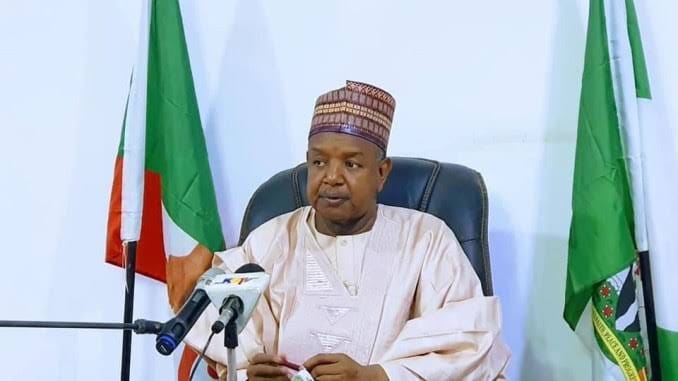
The donation was made known by the state governor, Atiku Bagudu, at a fund raising event to mark twenty years anniversary of the committee on Sunday.

The Daily Reality reporters gathered that the committee, whose doggedness was commended by all, was hoping to raise N120 million for its service.

The Minister of Justice and Attorney-General of the Federation, Abubakar Malami (SAN) acknowledged the performance of the committee.

The minister made a donation of N5 million to the Hisbah committee while the state APC gubernatorial candidate, Dr Nasir Idris, donated N500,000.

Many people who have commended Kebbi State Government believed that this gesture is worth emulating to strengthen the activity of the Hisbah in other states.