Nigeria

Bauchi State sets January 4 for full reopening of schools

By Sabiu Abdullahi

The Bauchi State Government has fixed Sunday, January 4, 2026, as the date for the resumption of all Basic, Senior Secondary and Tertiary Institutions across the state after an extended closure.

The announcement was contained in a statement issued by Jalaludeen Usman, ANIPR, Information and Public Relations Officer of the Ministry of Education.

He explained that the decision followed “extensive discussions with key stakeholders including School Principals, Managers of the Education Sector in the State and owners of Private Schools among others,” which led to a collective agreement.

Governor Bala Abdulkadir Mohammed subsequently approved the reopening.

The ministry said examinations that could not hold before the closure “will now be conducted within the first week of resumption,” while normal academic activities will continue afterwards.

The statement also revealed that “approval has been granted for the immediate re-opening of the three (3) Federal Government Unity Colleges as directed by the Federal Ministry of Education.”

Officials noted that the earlier shutdown was based on “advise received from security agencies relying on available information and following a spate of untoward incidences in schools across the country.”

However, the government said the situation has improved, which informed the decision to reopen all institutions.

Parents and guardians have been directed to return their children and wards to school without delay.

The government reassured the public that “additional security measures are being put in place to ensure the safety of students, teaching and non-teaching staff in the various schools and higher institutions in the state.”

Rector Cares Foundation wins Top Climate Award at AFFIF 2025

By Hadiza Abdulkadir

Rector Cares Foundation’s documentary “Dying for Water” has won the Award of Excellence for Best Film on Climate Change at the Africa Film for Impact Festival (AFFIF) 2025, earning widespread recognition for its powerful portrayal of water poverty in rural Nigeria. 

Screened at the festival’s 4th edition, held from October 29–31 at Silverbird Cinemas, Yar’Adua Centre in Abuja, the film tells the story of Fatsuma, a mother grieving the loss of her child who drowned in an unsafe community well, and highlights the daily struggles faced by women and children relying on hazardous water sources. 

Founder and executive producer Onyedikachi Erete described the honour as a validation of the Foundation’s mission. “This victory validates our mission to ignite conversations about water poverty and the crucial role of WASH in fostering sustainable development,” he said. 

Directed by Omoregie Osakpolor and co-produced by Stephanie Ohumu, the documentary forms part of Rector Cares Foundation’s ongoing efforts to raise awareness of climate-driven water crises and strengthen collaborations with organisations working in water provision and technology. 

MPAC accuses US delegation of sectarian bias during Nigeria visit

By Muhammad Abubakar

The Muslim Public Affairs Centre (MPAC) has condemned what it describes as the “sectarian and deeply troubling” conduct of a recent United States congressional delegation to Nigeria.

In a statement issued by its Executive Chairman, Disu Kamor, MPAC faulted the visit of Congressman Riley Moore, who publicly emphasised meetings with Christian and traditional leaders during the trip, including bishops in Benue State and a Tiv traditional ruler. Moore, a vocal proponent of the claim of a “Christian genocide” in Nigeria, said on his X account that he came “in the name of the Lord” and held discussions on alleged Fulani-led attacks.

MPAC argued that the delegation’s failure to engage the leadership of the Nigerian Muslim community—particularly the Nigerian Supreme Council for Islamic Affairs (NSCIA)—was a deliberate snub rather than a scheduling issue. It accused the U.S. team of avoiding Muslim victims and communities affected by violence and warned that such selective engagement risked reinforcing “extreme voices and anti-Muslim narratives” within U.S. policy circles.

The organisation said the pattern of “selective listening, selective engagement, and selective outrage” threatens Nigeria’s delicate interfaith balance. It called on international partners, especially the United States, to demonstrate neutrality and ensure that foreign policy on Nigeria is not shaped by religious lobbies or sectarian biases.

MPAC reaffirmed its commitment to justice and peaceful coexistence, urging Nigerians to question why key Muslim institutions and victims were excluded from the delegation’s itinerary.

Governor Adeleke formally declares joining Accord Party

By Sabiu Abdullahi

Osun State Governor, Ademola Adeleke, has officially announced that he will contest the 2026 governorship election under the Accord Party.

The declaration took place on Tuesday at the Banquet Hall of the Government House in Osogbo.

National and state leaders of the party were present at the event.

Adeleke disclosed that he joined the Accord Party on November 6, 2025, after holding extensive consultations with political stakeholders and community leaders across the state.

A statement issued by his spokesperson, Olawale Rasheed, noted that the governor had explained to stakeholders why the political shift became necessary.

According to Adeleke, he chose the Accord Party because its ideology reflects the priorities of his administration.

“We opted for the Accord Party because its mission of welfarism aligns with our passionate focus on citizens’ and workers’ welfare,” he said.

The governor welcomed party figures to the Government House and called for unity as political activities ahead of the 2026 election continue to build momentum.

“We are united in progress and good intentions for the good people of Osun State and Nigeria at large,” he stated.

Adeleke encouraged party members to remain focused and work together for success, stressing the importance of leadership that carries all groups along.

He added that his experience in the party so far has strengthened his belief in its values.

“The focus on people’s welfare should always be at the heart of public leadership. The primary essence of government is the welfare and well-being of the people,” he noted.

Adeleke reaffirmed that his government will continue to design programmes that improve the lives of residents and place citizens’ welfare at the centre of governance.

He described the Accord Party as the platform that will drive the state’s political direction ahead of next year’s election.

He also urged residents across Osun West, Osun East and Osun Central to support the party.

“From Igbomina to Ijeshaland, Ifeland, Osogbo, Iwoland, Modakeke, Gbongan, Igbajo, Ikire, Ikirun, Ede and beyond, this is our party, our new platform for victory come August next year,” he declared.

Adeleke ended his remarks by formally announcing his decision.“In accordance with the will of our stakeholders and in deep respect for the wishes of Osun people, I hereby declare for the Accord Party,” he announced.

NSCDC intercepts truck carrying 21 underage children in Kogi

By Anwar Usman

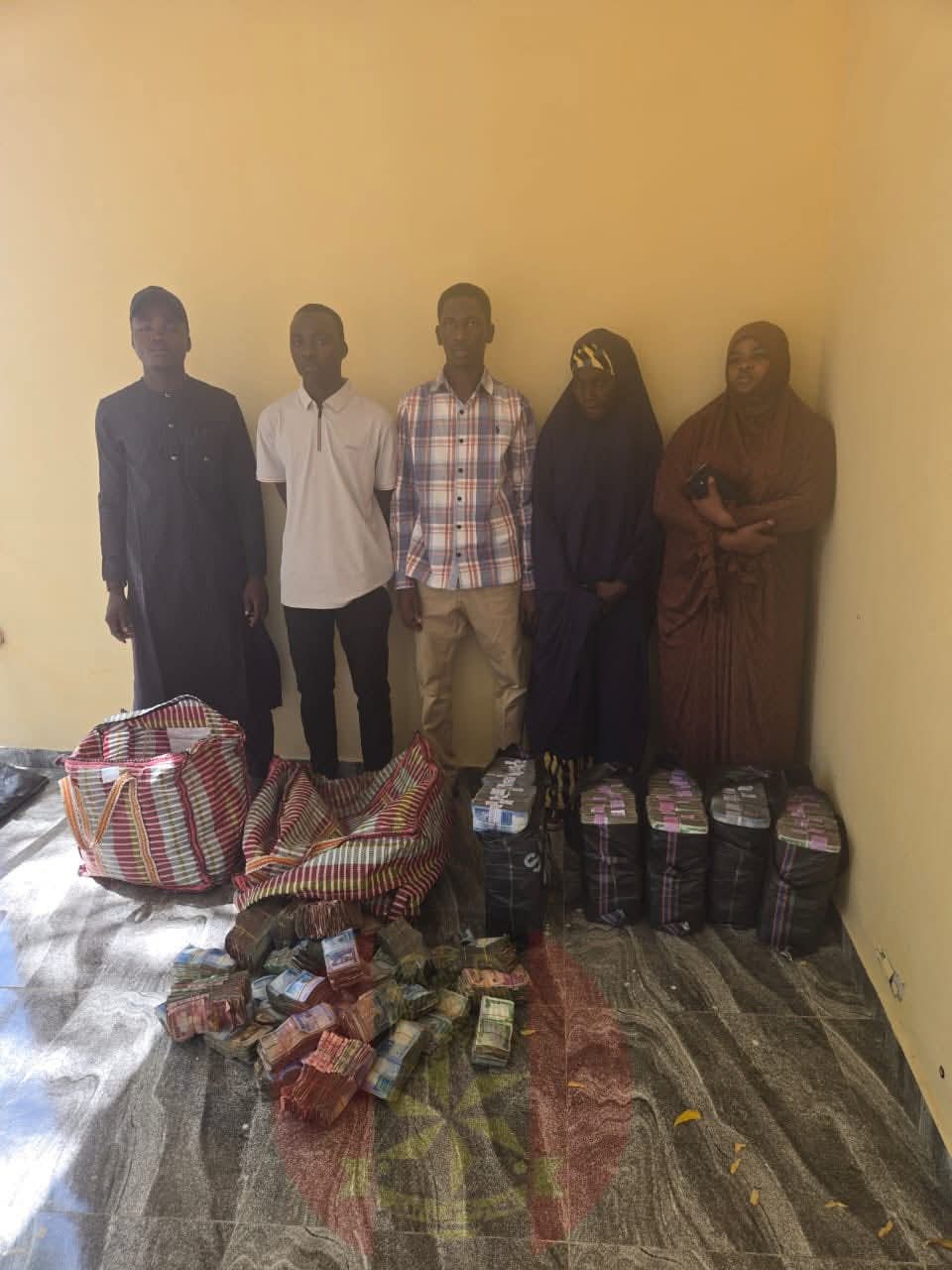
The Kogi State Government has said security operatives have intercepted a group of underage children trafficked into the state in what is suspected to be a covert recruitment attempt for banditry training.

This was revealed in a statement issued on Tuesday by the Commissioner for Information and Communication, Kingsley Fanwo.

“At about 1500hrs on December 5, 2025, eagle-eyed security operatives of the National Security and Civil Defence Corps (NSCDC) in Yagba Area Command, in collaboration with other security agencies in Isanlu, acting on credible intelligence from community hunters, intercepted a truck conveying 21 children aged between six and 17 years into Kogi State,” the commissioner stated.

The commissioner stated that investigations revealed that the children were trafficked from different northern states suspiciously by adults who could not provide legitimate justification for their movement.

“Several suspects linked to the trafficking operation have been arrested, including individuals who claimed they were transporting the children to establish an informal ‘Islamic school’ within Yagba East,” the statement further revealed.

Fanwo also added that, further arrests were carried out as security operatives intensified effort and surveillance in the area, uncovering additional persons allegedly connected to the movement of the minors.

“Some of the suspects were also found with items raising significant security concerns,” he said, adding that the rescued children had been transferred to the NSCDC State Command in Lokoja for detailed investigation and proper profiling of all persons involved.

He also assured that “upon completion of profiling and verification, the children will be handed over to their respective state governments for further investigation and eventual reintegration with their families.”

The commissioner, however, said all individuals found guilty in the trafficking operation would be prosecuted in accordance with Kogi State’s child trafficking and child rights protection laws.

ES inspects newly revitalised NERDC Press

By Sabiu Abdullahi

The Executive Secretary of the Nigerian Educational Research and Development Council (NERDC), Prof. Salisu Shehu, has inspected the fully refurbished NERDC Press located at the Council’s South West Zonal Office in Jibowu, Lagos.

The press had been inactive for several years. Prof. Shehu had visited the zonal office on 10 May 2025, and he pledged to bring the non-functional printing facility back to life to improve its productivity.In early September 2025, the Council began the refurbishment work in fulfilment of that promise.

At the start of the repairs, the Press Manager, Mrs. Precious Iweha, praised the Executive Secretary for approving the intervention, explaining that “we have commenced work on the generator set and are currently servicing the Sord Z machine, Polar cutter machine, and one of the Gestener machines”.

She added that “we are grateful for ES approval of the repairs and servicing of the Printing Press. This initiative will ensure that the Council’s investments in plants, machinery, and infrastructure, will yield optimal results”.

After the completion of the project, the Executive Secretary visited the facility on Thursday, 4 December 2025, to assess the work done.

He expressed satisfaction with the progress recorded in his first year in office and gave an assurance that the revitalised press would be put to full use in line with its intended purpose.

The Head of the South West Zonal Office, Mr. Babatope Oloruntoba, and Mrs. Iweha commended the Executive Secretary for the achievement.

They described the successful revamp of the press as a significant milestone for both the NERDC Press and the Council as a whole.

Tax reform, content creators and the rest of us

By Isyaka Laminu Badamasi

It is becoming glaring that the Federal Government is taking Nigerians for granted. A few months back, we were all here condemning the new tax reform introduced by the APC administration led by President Bola Ahmed Tinubu, a reform whose implications will be deeply felt by Nigerians, especially the downtrodden.

Though some analysts and experts argue that the new tax reform is the right step, particularly for an economy whose revenue depends almost 70% on crude oil, my little contribution to the debate is not to analyse the reform or weigh its positive and negative impacts on our well-being. Rather, it is to raise a few critical questions arising from my thoughts on the matter at hand.

My concern is specifically about content creators who were engaged to sensitise Nigerians on the new bill—a development that sparked another debate, one that again exposed our disunity as a people and our lack of seriousness about matters of national importance and those inimical to our well-being. Nigerians, especially Northerners, instead of examining the bill and preparing for constructive criticism, began complaining that none of the selected content creators was from the core North. As if having a core Northern content creator in the sensitisation team would somehow change or reduce the taxes that will eventually be imposed on core Northerners.

With or without any sensitisation or awareness campaign, the new tax reform has come to stay. Regardless of how people accept or reject it, it will be implemented as planned. The content creators engaged by the government may not even understand the policy themselves, let alone be able to sensitise the public properly.

For me, therefore, this entire conversation about the “selection of content creators” is unnecessary. To my understanding, it was technically designed to divert Nigerians’ attention. Instead of focusing on constructive criticism of this inhumane policy, we have been pushed into arguing over who should be involved, when, and how—a distraction that does not help an already fragmented country.

Let us not forget that we are in 2025, in the 21st century—111 years as an amalgamated entity and 65 years as an independent nation, with more than two and a half decades of an uninterrupted democratic dispensation. It is high time we appreciate our togetherness despite the odds and chart a path toward unity. This is especially crucial at this moment, when we are facing serious and multidimensional security challenges, particularly here in the North, ravaged by bandits, insurgents, and kidnappers, with pockets of ethnic and religious conflicts here and there. Do we so easily forget that Nigeria was once declared a “country of particular concern” by the US President, Donald Trump?

It is important for policymakers and implementers to avoid introducing issues that, instead of fostering peaceful coexistence, end up dividing us. Meanwhile, those in positions of authority continue siphoning our meagre resources—resources that have failed to address our critical challenges in health, education, security, and other essential sectors.

On the issue of not engaging or selecting content creators from the core North for this “all-important” sensitisation campaign, the situation is both baffling and questionable. It is strange that the PR unit of the FIRS/FGN did not consider the three major languages—Hausa, Igbo, and Yoruba—alongside English, our official language, as part of their information-dissemination strategy. However, it is still not too late to make corrections.

Whatever the reasons may be, Nigerians—regardless of region or religion—should prepare themselves, as the policy will take effect come January 2026.

Isyaka Laminu Badamasi wrote via makwalla82@gmail.com.

Tinubu praises military for halting coup in Benin

By Abdullahi Mukhtar Algasgaini

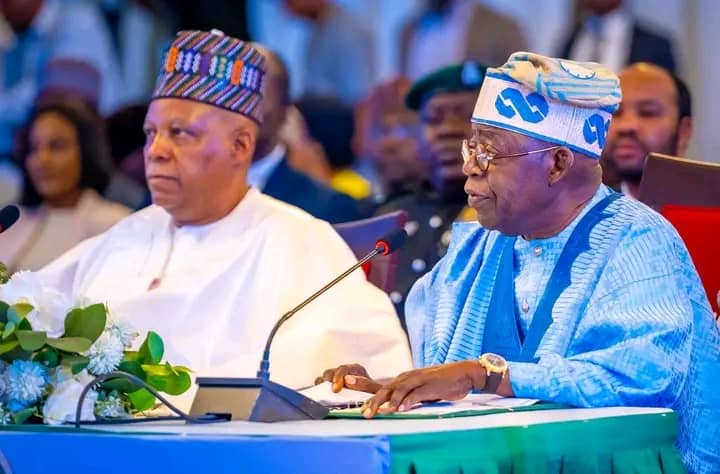
President Bola Ahmed Tinubu has praised Nigeria’s military for swiftly intervening to protect democracy in the Republic of Benin following an attempted coup on Sunday.

The action came at the formal request of the Beninese government, which faced an uprising led by Colonel Pascal Tigri.

The coup plotters seized the national broadcaster, announced the overthrow of President Patrice Talon, and suspended democratic institutions.

Acting on two urgent requests from Benin’s Foreign Ministry, President Tinubu, as Commander-in-Chief, authorized the deployment of Nigerian Air Force fighter jets.

The jets entered Beninese airspace to help dislodge the plotters from the TV station and a military camp where they had regrouped.

Nigeria also deployed ground forces to support the protection of constitutional order.

Nigeria’s Chief of Defence Staff, General Olufemi Oluyede, confirmed that all requests were fulfilled, with Nigerian forces now on the ground in Benin under Beninese command authority.

After loyalist forces, assisted by Nigeria, regained control and restored constitutional order, President Tinubu commended the armed forces.

He stated they had acted within the ECOWAS Protocol on Democracy and Good Governance, helping to stabilize a neighboring country and upholding democratic values.

“Today, the Nigerian armed forces stood gallantly as a defender and protector of constitutional order,” Tinubu said. “Nigeria stands firmly with the government and people of the Republic of Benin.”

Arewa Community Germany disowns Berlin “Hausa International Protest,” warns against divisive messaging

By Muhammad Sulaiman

The Arewa Community Germany has formally disassociated itself from a video circulating online about a so-called “Hausa International Protest” organised by Hausa Tsantsa Development Association, staged in Berlin.

In a letter addressed to Nigeria’s Consul General in Frankfurt, Ambassador Yakubu A. Dadu, the group said it had no role in organising or endorsing the demonstration and warned that the protest’s message conflicts with its core values.

The association, represented by Alhaji Tijani Garba, Dr. Ummah Aliyu Musa and Buhari Abubakar, stressed that it was founded on the principle of unity among all northern Nigerian peoples. It noted that Hausa, Fulani, Kanuri, Tiv, Nupe and other groups share a common heritage, adding that the organisation “does not draw lines” between northerners and will not support any activity that promotes ethnic profiling or elevates one group above another.

According to the statement, the Berlin protest risks fueling division and misunderstanding among Arewa communities in the diaspora, where the group says cohesion is especially important. The association reaffirmed its focus on cooperation, peaceful engagement and presenting a positive image of Northerners living in Germany.

The Arewa Community Germany also cautioned the public against linking its name to the protest, emphasising that any event involving the association will be announced through its official channels.

The group concluded by reaffirming its stance on harmony, mutual respect and a united Arewa identity.

FG launches 119 learning centres to boost education for Almajiri, out-of-school children

By Uzair Adam

The Federal Government has established 119 learning centres nationwide to improve access to foundational education for Almajiri learners and out-of-school children.

The development was disclosed by Nura Muhammad, Spokesperson for the National Commission for Almajiri and Out-of-School Children Education (NCAOOSCE), during an interview with journalists in Abuja on Sunday.

Muhammad explained that the centres operate under two models: some enhance existing Almajiri schools with structured literacy and numeracy classes, while others focus exclusively on out-of-school children using the Accelerated Basic Education Programme (ABEP) curriculum.

He noted that this approach allows learners to complete foundational education in a shorter time frame.

The spokesperson also announced the successful development of a National Policy on Almajiri Education, spearheaded by the Minister of Education, Dr. Tunji Alausa, ensuring that Almajiri learners will no longer be classified as out-of-school children.

He added that Almajiri schools will now receive the same support and funding as conventional schools.

In strengthening its nationwide presence, Muhammad said the Commission now has offices in all states within 28 months of its establishment.

It has also launched a ward-to-ward advocacy campaign in seven pilot states – Kano, Jigawa, Yobe, Borno, Lagos, Ogun, and Cross River – to engage parents, traditional rulers, religious leaders, civil society groups, and children on the importance of regulated education and school enrolment.

“Lagos, Cross River, Ogun, and Yobe have successfully covered all wards, and the public response has been very encouraging. The remaining pilot states are making substantial progress, and the model will ultimately be scaled nationwide,” he added.

The spokesperson emphasized that these reforms align with the Commission’s enabling Act, assented to by the President in May 2023.

The mandate includes reforming the centuries-old Almajiri system through literacy, numeracy, and skills acquisition, while enrolling millions of out-of-school children into formal and non-formal education pathways.

Muhammad said that upon assuming office, Executive Secretary Muhammad Idris conducted consultations with key stakeholders, including the Sultan of Sokoto, the CAN President, the Oba of Lagos, the Shehu of Borno, the Ooni of Ife, and the Olubadan.

These consultations culminated in two Abuja retreats organized with the Office of the National Security Adviser, producing the NCAOOSCE Strategic Plan (2025-2035) to guide reforms over the next decade.

Among the Commission’s flagship programs is the Tinubu Legacy Skills Training Institute, designed to equip Almajiri youths with both religious knowledge and vocational skills.

At the Kaduna campus, 200 learners completed a nine-month intensive training program covering Arabic and English literacy, Qur’anic interpretation, and vocational skills such as POP design, plumbing, agriculture, tiling, solar installation, GSM repair, and ICT.

Trainees followed the National Board for Arabic and Islamic Studies (NBAIS) curriculum, sat for examinations, and are now awaiting results.

A second branch in Ibadan is currently training 150 girls using the ABEP curriculum, combining foundational education with vocational skills. Upon completion, the girls will be eligible to continue formal education.

“These initiatives reflect the Tinubu administration’s commitment to reform the Almajiri system and ensure that no child is left behind. From expanded learning centres to community advocacy and skills development, the Commission is laying a foundation that will shape Nigeria’s education landscape for years to come,” Muhammad said.