Nigeria

[OPINION]: 12 months in office: How Prof. Salisu Shehu is steering NERDC forward

By Anas Abbas

When Professor Salisu Shehu assumed office as Secretary-General of the Nigerian Educational Research and Development Council (NERDC) twelve months ago, expectations were naturally high. His background spanning academia, public service, and university administration suggested a leader well-versed in both theory and practice. One year on, those expectations are steadily taking shape in policy actions and institutional reforms.

Born in Tafawa Balewa, Bauchi State, Professor Shehu’s career journey reflects a deep and consistent engagement with education. From advising former Bauchi State Governor Isa Yuguda on education matters to serving as Vice Chancellor of Al-Istiqama University, Sumaila, his professional life has been shaped by classrooms, policy chambers, and research institutions. That experience would soon inform his approach at NERDC.

Upon assuming office, one of his first priorities was the internal part. Professor Shehu believed that effective national reform could not emerge from a divided institution. He therefore placed strong emphasis on building harmony and mutual understanding among staff members. In his view, a research and development council can only thrive when its workforce operates as a cohesive unit, driven by shared purpose rather than fragmented interests.

Yet, beyond institutional culture, curriculum reform remains the centerpiece of his leadership. For years, the national Teacher’s Guide had been limited to junior secondary schools, leaving a noticeable gap at the senior secondary level. Under Professor Shehu’s stewardship, the guide underwent a comprehensive review by subject experts and was subsequently expanded to cover senior secondary education a landmark achievement for the Council. With the support of the Minister of Education, the updated Teacher’s Guide has now been implemented nationwide, marking one of NERDC’s most significant interventions in recent times.

Professor Shehu’s vision, however, extends beyond a single reform. He argues that education systems must evolve in step with a rapidly changing world. To this end, he has proposed a quarterly review and update of Nigeria’s national curriculum an ambitious but strategic move aimed at ensuring Nigerian students remain competitive with their counterparts in developed economies.

In the same forward-looking spirit, the Secretary-General has drawn attention to the growing influence of artificial intelligence in global education. As AI increasingly shapes teaching methods, learning content, and assessment models, he maintains that Nigeria cannot afford to lag behind. NERDC, he says, has begun exploring ways to integrate artificial intelligence into curriculum planning and design, signaling a decisive shift toward future-ready education.

Another critical area under his watch is the long-standing debate on mother-tongue instruction in early education. While Professor Shehu supports the policy in principle, he is equally clear about the need for caution. According to him, successful implementation requires proper groundwork, particularly through structured “train-the-trainer” programmes to equip teachers with the necessary skills before nationwide rollout.

Despite the technical demands of policy reform and institutional leadership, Professor Shehu consistently returns to a simple but powerful message especially for young Nigerians. Education, he believes, remains the most reliable pathway to personal growth and national development. His call to the youth is direct and unwavering: embrace learning, build capacity, and prepare for a future shaped by knowledge and innovation.

As he enters his second year at the helm of NERDC, the direction of his leadership is becoming increasingly clear. Reform the tools, update the knowledge base, embrace emerging technologies, and equip the next generation for a world already in motion. For Professor Salisu Shehu, the task of shaping Nigeria’s educational future has only just begun.

Anas Abbas is a final year student of mass communication, Bayero University, Kano.

Journalists should treat emergency reporting as life-saving, not sensationalism—Media expert

By Uzair Adam

Journalists have been urged to treat emergency reporting as a life-saving public service, given the powerful role of the media in shaping public understanding and behaviour during health crises.

The call was made at a two-day Emergency Risk Communication workshop for journalists organised by the Kano State Centre for Disease Control (KNCDC) with support from the FCDO–Lafiya Programme, aimed at strengthening ethical and responsible health reporting during public health emergencies.

Delivering a session on Emergency Reporting and Ethical Guidelines for Public Safety during Health Crises, media expert and editor with The Daily Reality Newspaper, Malam Aisar Salihu Musa, said information often spreads faster than disease during outbreaks, stressing that the way journalists report emergencies can either reduce harm or fuel fear and panic.

“Where trust is strong, public health succeeds. Where trust is weak, fear becomes the real outbreak,” he said, noting that trust remains the most valuable currency during health emergencies.

He explained that journalists serve as information gatekeepers, with a responsibility to verify reports that could affect public health outcomes and to collaborate closely with health authorities in sharing credible information.

According to him, emergency reporting presents ethical challenges, including balancing urgency with accuracy, avoiding sensational headlines, and protecting the dignity and privacy of patients and their families.

Musa urged journalists to communicate risk clearly and proportionately, translate medical terms into simple language, and always include practical steps the public can take to protect themselves.

“Words can either save lives or cause harm,” he said, adding that responsible, transparent and empathetic journalism strengthens public trust and supports effective public health response.

He concluded by calling on journalists to see themselves as partners in public health, committed to countering misinformation, promoting preventive behaviours and reporting emergencies in ways that protect lives and strengthen society.

ICPC confirms receipt of Dangote’s petition against NMDPRA chief

By Sabiu Abdullahi

The Independent Corrupt Practices and Other Related Offences Commission has confirmed the receipt of a petition filed by the Chairman of Dangote Group, Alhaji Aliko Dangote, against the Chief Executive Officer of the Nigerian Midstream and Downstream Petroleum Regulatory Authority, Alhaji Farouk Ahmed.

In a media release issued on Tuesday, December 16, 2025, by the Commission’s spokesperson, John Okor Odey, the anti-graft agency disclosed that the petition was formally submitted through Dangote’s legal representative.

The Commission stated, “The Independent Corrupt Practices and Other Related Offences Commission (ICPC) writes to confirm that it received a formal petition today Tuesday 16th December, 2025 from Alhaji Aliko Dangote through his lawyer. The petition is against the CEO of the NMDPRA, Alhaji Farouk Ahmed.”

The ICPC assured the public that the allegations contained in the petition would be subjected to due process.

According to the statement, “The ICPC wishes to state that the petition will be duly investigated.”

The confirmation follows recent public attention generated by allegations made by Dangote against the leadership of the NMDPRA, which have sparked debates and reactions across the country.

Ex-CJN Ibrahim Tanko Muhammad passes away in Saudi Arabia

By Sabiu Abdullahi

Former Chief Justice of Nigeria, Justice Ibrahim Tanko Muhammad (retd.), has died at a hospital in Saudi Arabia.

“Ex-CJN Tanko Muhammad is dead. He passed away this morning at a Saudi Arabian Hospital,” a source said.

His death was later confirmed in a condolence message released by the Nigerian Association of Muslim Law Students (NAMLAS), National Headquarters, Abuja, dated December 16, 2025.

The statement, titled “NAMLAS Condolence Message on the Passing of Hon. Justice Ibrahim Tanko Muhammad, GCON, Former Chief Justice of Nigeria,” described the former CJN’s death as a significant loss to Nigeria.

“Indeed, to Allah we belong and to Him we shall return,” the statement read.

“The Nigeria Association of Muslim Law Students (NAMLAS), National Headquarters, Abuja, receives with profound sorrow the news of the passing of Honourable Justice Ibrahim Tanko Muhammad, GCON, former Chief Justice of Nigeria. His demise is a monumental loss to the Nigerian judiciary, the legal profession, the Muslim Ummah, and the nation at large.”

According to NAMLAS, Justice Muhammad earned respect during his time on the Bench and was known as “a towering figure of integrity, humility, and unwavering commitment to justice.”

The association stated that throughout his judicial career, the former CJN “exemplified the highest ideals of the Bench—fairness, courage, and fidelity to the rule of law.”

NMDPRA chief accused of spending millions on children’s foreign education

By Abdullahi Mukhtar Algasgaini

A serious allegation has been made against Engr. Farouk Ahmed, the Chief Executive of the Nigerian Midstream and Downstream Petroleum Regulatory Authority (NMDPRA).

He is accused of spending over $5 million on the foreign secondary and tertiary education of his four children in Switzerland.

According to the allegation, the estimated cost for each child’s secondary education—covering annual tuition, air tickets, and upkeep—is $200,000. Over six years, this amounts to $1,200,000 per child.

For all four children, the total secondary education expense is estimated at $4,800,000.

Furthermore, an additional $210,000 was reportedly spent in 2025 for the MBA education of one of his children, Faisal. This brings the approximate total for tuition and upkeep across all children to around $5,000,000.

The statement, signed by Alliko Dangote, emphasizes that “facts don’t lie” and raises critical questions about the source of these funds.

It contrasts the enormous expenditure with the plight of many parents in Engr. Ahmed’s home state of Sokoto, who are said to struggle to afford school fees as low as ₦10,000 for their own children and wards.

The core demand of the allegation is transparency: “Nigerians deserve to know the source(s) of these sums of money paid by a public officer.”

Alleged N2.2bn fraud: Court orders Ngige to remain in Kuje Prison until December 18

By Sabiu Abdullahi

A High Court of the Federal Capital Territory sitting at Gwarimpa, Abuja, has ordered that former Minister of Labour, Dr Chris Ngige, remain in custody at the Kuje Correctional Centre until December 18.

Justice Maryam Aliyu Hassan gave the order on Monday, directing that Ngige be kept in prison pending the determination of his bail application.

The court took arguments from both parties on the bail request before issuing the remand order. Justice Hassan fixed December 18 as the date to deliver a ruling on the application.

Counsel to the former minister, Patrick Ikwueto, SAN, urged the court to grant bail, citing health concerns. He assured the court that Ngige would not evade trial or interfere with witnesses if released.

In response, the Economic and Financial Crimes Commission, EFCC, opposed the request. The anti-graft agency was represented by Sylvanus Tahir, SAN, who described Ngige as a flight risk.

Tahir informed the court that the EFCC had earlier granted Ngige administrative bail and allowed him to travel abroad for medical treatment. He said the former minister failed to report back to the Commission after the trip.

He also stated that the international passport released to Ngige to facilitate the travel had not been returned. According to him, it was only after Ngige was re-arrested that he claimed the passport was lost.

The senior lawyer argued that the claim of a missing passport was an afterthought and urged the court not to accept it.

Ngige was last Friday arraigned on an eight-count charge related to alleged corrupt practices.

No work, no pay: A threat that solves nothing

By Muhammad Umar Shehu

Once again, the federal government is threatening the Academic Staff Union of Universities (ASUU) with its usual tactic, no work, no pay. It’s the same tired strategy used by previous administrations whenever the union pushes for the full implementation of agreements that were voluntarily signed. But history has shown that this policy does not resolve issues; it only increases mistrust, diminishes morale, and further weakens our universities.

During President Muhammadu Buhari’s administration, the no-work-no-pay policy was enforced after the 2022 ASUU strike, which lasted eight months. Lecturers were unpaid despite the government’s failure to fulfil promises that caused the strike. Buhari’s approach focused on punishment rather than dialogue, leading to resentment and strained relations with academics. The key issues- poor funding, unpaid allowances, and decayed infrastructure- remain unresolved.

Education is not like any other sector. ASUU is not just another pressure group that you can intimidate or silence with threats. This is a body of intellectuals, people whose weapon is knowledge and whose struggle is for national development. You can’t use the same tactics that might work on transport unions or political protesters on an organisation built on principles, history, and intellectual resistance.

Globally, similar unions in countries such as South Africa, the United Kingdom, and even the United States have stood their ground when governments have failed to meet academic demands. In 2016, for instance, the South African “Fees Must Fall” movement forced the government to rethink its policies and increase education funding. In the UK, university staff have repeatedly gone on strike over pay and working conditions, yet the government has had to return to the negotiating table rather than threaten them. These examples show that dialogue and respect for agreements are the only sustainable paths, not coercion.

In Nigeria’s own history, ASUU has endured decades of intimidation and threats. From the military era to the present democratic dispensation, their fight has remained consistent to protect public universities from total collapse. They have been banned, unbanned, and blacklisted, yet they stay because they represent something more profound than just salary negotiations. They represent the conscience of our educational system.

The government’s repeated use of the “no work, no pay” policy is not just short-sighted; it is a confession of leadership failure. Instead of fixing the root causes of the strikes, those in power prefer to silence those who expose their neglect. The result is what we see today: poor learning conditions, brain drain, and a generation of students whose academic lives are constantly interrupted.

It’s time the government understood that ASUU’s strength lies in its moral ground. Their struggle is not for personal gain but for the survival of education in Nigeria. Threats won’t work; intimidation won’t help. Only commitment, dialogue, and respect for signed agreements will bring peace to our universities.

If we truly want to equip our education system for the poor and the future, we must stop treating teachers as enemies and start treating them as partners. A nation that punishes those who fight for education has already given up on its future.

Muhammad Umar Shehu wrote from Gombe and can be reached viaumarmuhammadshehu2@gmail.com.

On the national health financing dialogue

By Oladoja M.O

The Ministry of Health convened a timely, critical, and necessary gathering earlier last month: the National Health Financing Dialogue. A gathering with so much relevance and significance to address the almost comatose state of the Nigerian health sector. Reflecting on all said during the “dialogue,” there are just many thoughts creeping in here and there, which I feel compelled to just put up here for public consumption, and hopefully get across to the rightful authority to pick one or two important things. 

The dialogue, as noted earlier, was undeniably timely. I was not disappointed at all at various thematic areas buttressed on, ranging from health financing, health out-of-pocket spending (OOP) reduction, call for increment of the Basic Health Care Provision Fund (BHCPF), accountability and budgeting, over reliance on external health funding, insufficient resources as needed in the health sector, the need for proper, timely data to guide government decisions, the role of the media, and civil society organization in health sector, and holding government accountable, inclusivity of citizens in the budgeting process, budget execution, status of LG autonomy, the gap between research and policy making, establishment of proper framework for mental health in Nigeria, amongst many other things the dialogue rallied around. Reiteratively, all of these are core and vital to ensuring a positive paradigm for the national health sector state and to delivering on the interests of the citizen at large. Indeed, it was a worthwhile and insightful meeting. 

Though we still have quite a long way to go, I cannot help but acknowledge the works of the government of today on how far we’ve come in policies, increased allocation, investment in facilities, equipment, and a healthy workforce as regards health, captured in my work “Tinubu’s Healthcare Reforms: A Turning Point or Déjà Vu?”. During the course of the dialogue, a lot of observations kept creeping in, questions, suggestions, which there was not enough time to even express.

On observation

(1) We are unprepared to solve the country’s health problems, especially the issue of LG autonomy. The government focuses on superficial solutions instead of addressing root causes. LG autonomy is treated lightly compared to its importance. Primary care, which, if improved quickly, could significantly boost our health status. Unfortunately, the government is unable to do so. When I talk about autonomy, I mean actual, constitutionally granted autonomy, not superficial gestures like the Supreme Court’s jamboree. My writings, “LG: The Employed Man with no Office” and “Federalism and the Paradigm of Healthcare Accessibility,” elaborate on my views on this. The primary health issue affects p

(2) Make us talk truth, behind the blinking good intentions, health-related matters are often used for political publicity rather than long-term structural impact. Hence, many government interventions in healthcare are politically motivated rather than development-driven. 

(3) Still on the LG thing, I am more than disappointed at the way and manner in which the ALGON representatives at the dialogue spoke. What do you mean that you, as a stakeholder, come to such a stage to complain like every other person?? Basically, no form of cognitively presented way forward or suggestion, just another “we are being victimised” rhetoric. So Shameful! I was expecting them to flare up, demand something meaningful, but chai! My expectations were shattered. I thought they would speak about actual autonomy, driven by the constitution, not some half-baked, almost non-enforceable liberation.

In fact, the LG people present were just disappointed. We are talking about how to mobilise money, generate revenue for development, generate more liquidity to fund health, fund infrastructure, and none of them could make a meaningful comment on how funds can be generated rather than “if the autonomy sets in, we will ensure that all the allocation from the FG will be fully maximised.” As cool as that sounds, it was just another “we cannot do anything aside from what the FG says” kinda statement, and it only made me feel like this autonomy thing sef fit be another set-up… God abeg…. 

(4) On the role of media, it is crucial to even lean towards the perspective that the media is a culprit for where we are. Unfortunately, many media outlets and media handles are so fixated on just saying something, rather than saying something correct, and something from a knowledgeable stance, which to me, is even more dangerous than no information at all. Notably, the media are failing to pass information effectively. Especially the way they handle headlines. It is unfortunate, but it is the reality of our Nigerian populace that we have less of a reading habit. Hence, it is easy just to pick a headline, usually different from the content of the post, and run with it. Which is causing more harm to available information in the media space? Careless or sensational headlines have the potential to mislead the public, especially regarding sensitive policies such as those related to health. The issue of meaningless government secrecy is another thing I observed… and much more the issue of partisanship in politics by various media platforms and handling is another very obvious issue, causing every bit of information, especially unfinished policies or updates that are still in the pipeline, to be twisted for “political goals.” 

(5) In research, I observed that independent researchers and young passionate individuals in public health are often ignored, not encouraged, nor recognised, despite the need for data provision to help the government in setting priorities on health, and assisting in policy-making. 

(6) There’s just little or no innovative lawmaking pursued to fix systemic problems, especially wasteful constituency projects.

(7) Also, there seems to be too much focus on “there’s limited of…” What happened to the effective and efficient usage of the ones available?? Both in resources and in data.

And upon all the gbogbo atotonu of the dialogue, I was able to curate some suggestions which might be found useful;

(1) One of the major highlighted themes of the dialogue is the need for health insurance. It cannot be overemphasised that the importance of awareness still needs to be emphasised, especially to get the informal sector on board, because even among the small number of health insurance adopters, the major participants are those in the formal sector, with government employment. This awareness is not just something that will be around; “there is health insurance, and it is good for you.” But down to explaining various packages and what they cover, which can help guide expectations, correct misconceptions, and promote positive word-of-mouth about health insurance.

To meet up the ambiguous target of 40 million by 2030 and get more people from the informal sector onboard, I think a referral model (like those used in Ponzi schemes or digital marketing) could be adopted, making Civil servants primarily to act as “agents of change” or in this case, referral ambassadors, with promise of small tokens as reward for each successful referral. Because these civil servants are friends of people in communities, and even in places where government jingles and banners cannot reach, they help propagate.  No matter how we put it, the mouth-to-mouth campaign remains a powerful promotional strategy.

Another strategy is to tie health insurance enrolment to certain civic entry points, such as marriage registration. It can be mandated as part of the requirement to be submitted to the registry, where intending couples must show evidence of insurance. Procedural inefficiencies and bottlenecks should be removed to improve efficiency and ease the process, because I believe they are part of what discourages enrollees. Because even some who are already on health insurance coverage sometimes, because of long processes, delays, and stress, abandon the health insurance thing and pay out-of-pocket to get “sharp sharp” attention to their need. These negative experiences contribute to negative user feedback, and it spreads faster to non-users, worsening perceptions of health insurance enrollment.

(2) Though it may feel morally vexing, I suggest that health subsidies be tied to individual health behaviours. Those with risky lifestyles (alcohol, smoking) could face different treatment costs compared to people with unavoidable illnesses or accidents. This could encourage preventive lifestyles and behavioural change.

(3) On constituency projects, motorcycles, tricycles, food items… even outreaches) seems wasteful. I would suggest that a ban be placed, or at least regulations be given to what exactly these funds can be used to do… but then, who are those to impose that ban or restrictions, other than the actual people guilty of the bad behaviour? By direct analysis, these funds can be used to build facilities instead… whether school, or even hospitals, in this regard, left to the management of an independent body to be used efficiently and be used productively to generate money, money that can even be enough to run the operations and cover costs on its own, at least, and since the focus is to be able to generate liquidity to operationalize the facilities, the cost would be meager. They should not be free but rather run like a private entity to promote productivity. The billions lavishly spent on those meaningless things, if used in this manner, will result in more than 5–10 facilities at the senatorial district level or at whatever level of representation. Imagine if this number of facilities joined what we have??

(4) On the failure of some states in meeting their counterpart funding for BHCPF, they should not receive interventions from the FG. FG should publicly announce those states, carry the citizens along, and allow them to hold such state(s) accountable. There’s not enough funding. Therefore, the one we have must be spent in a way that is strictly tied to value and commitment.

(5) It is my suggestion that stronger media regulation be deployed to curb the spread of harmful and incorrect information (such as more dangerous than no information). And there should be a regulation/restriction on every journalist’s participation in politics. The place of media is quite sensitive, and they must remain sterile and neutral. Involvement in politics should be punishable by a ban on practising. This will give credibility to the profession and what their position is in the process of building a better state of the nation.

(6) On mobilisation of funds for health, I would suggest that the FG create something like a Health Bond, similar to commercial papers, to mobilise funds for health.

(7) Research should be given all the support it may ask for. A nation without accurate data is one with a lack of radar for progress… and I think one of the ways the government can support young, enthusiastic researchers (especially to gather young brains who are ready to help the government generate actual data for purpose of health policy and priorities) is to create access to platforms to show their works, something like a journal. We all know how much publications mean to researchers, and for young fellas like that, it can boost morale, knowing that their work is not wasted and is seen, whether it is to publish for free or at a very subsidised cost.

Lastly, I have been, and I remain, an advocate for the proper integration of the traditional health care system into the general healthcare system in Nigeria, especially at the grassroots level (Primary Health Care). My advocacy and thoughts are captured in some of my writings on Blueprint and HealthDigest. Health is people; people are culture. Nothing screams culture more than the traditional health care system. We cannot only tech-chase ourselves into a proper healthcare system in Nigeria.

Yes, technology is excellent, and AI is great, but the actual health burden we face requires that we not focus solely on these technologies. To me, I ask: why are we running? There’s a system that has been in place all this time; it should not be ignored. Many big economies have this included. The place of this traditional health system is beyond just provision of care (because, yes, a lot needs to be moderated). Still, these people can be brought in as agents, and their already established, patronised platforms can be used to promote government activities. Yes, they can assist in care provision. In fact, they have to. Knowledge of healing from generation to generation should not be neglected or allowed to die out.

Oladoja M.O writes from Abuja and can be reached at: mayokunmark@gmail.com.

Army chief urges new soldiers to uphold loyalty, discipline as 3,439 graduate

By Abdullahi Mukhtar Algasgaini

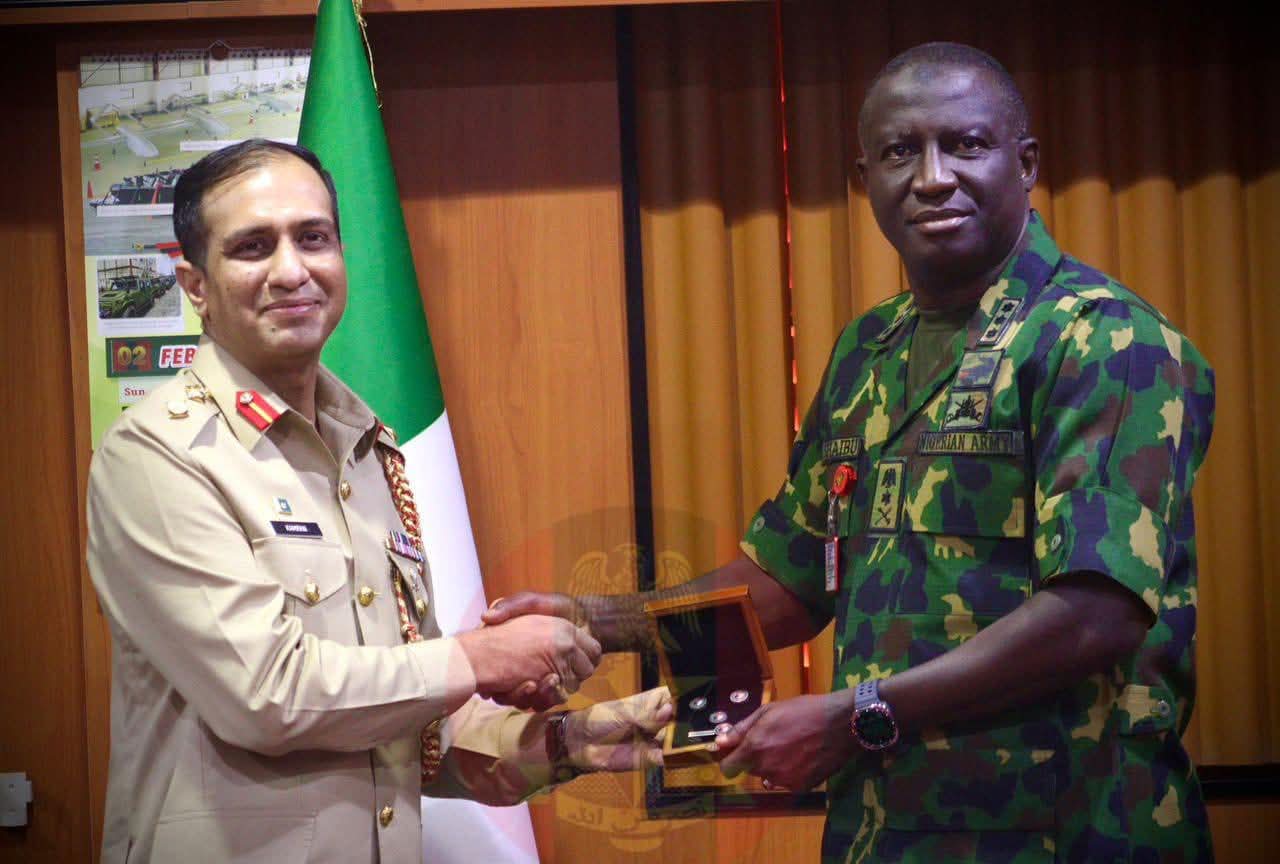
The Nigerian Army has formally inducted 3,439 new soldiers, following their graduation from the Depot Nigerian Army in Zaria.The Chief of Army Staff, Lieutenant General Waidi Shaibu, charged the recruits of the 89 Regular Intake to uphold the highest standards of loyalty, discipline, and professionalism.

He stated this today as the Reviewing Officer at their Passing Out Parade, marking the end of six months of intensive training.

Addressing the new soldiers, General Shaibu said their induction boosts the Army’s manpower and reinforces its commitment to national security amid emerging threats.

“Your successful training reflects hard work, dedication, and discipline. You are now entrusted with the sacred duty of safeguarding the territorial integrity of our nation,” the Army Chief said.

He reminded them of the Oath of Allegiance they took, urging them to avoid any act that could tarnish the image of the Army or the nation.

He also stressed the importance of maintaining discipline, integrity, and respect for human rights in all operations.

The COAS commended the Depot Nigerian Army for its historic role in producing soldiers since 1924, assuring continued support for the institution.

He also expressed gratitude to President Bola Tinubu, the Emir of Zazzau, the Kaduna State Governor, and security agencies for their support to the Nigerian Army.

FCCPC expands probe into alleged exploitative domestic airfares

By Uzair Adam

The Federal Competition and Consumer Protection Commission (FCCPC) has commenced an expanded investigation into the pricing structures behind what it described as unusually high airfares charged by some airlines on domestic routes.

The Commission disclosed this in a statement issued on Friday in Abuja by its Director of Corporate Affairs, Mr Ondaje Ijagwu, noting that the move followed growing public concerns over possible coordinated manipulation or exploitation in airline ticket pricing.

Ijagwu said complaints had intensified in recent days, particularly as the festive season approached, with passengers raising concerns over sharp fare increases on routes within the South-East and South-South regions of the country.

He added that operators servicing the affected routes are the focus of the ongoing inquiry.

According to him, the investigation aims to determine whether any airline has violated provisions of the Federal Competition and Consumer Protection Act, stressing that appropriate enforcement measures would be applied where infractions are established.

He explained that Air Peace has instituted a court action seeking to restrain the Commission from examining its pricing mechanisms, following the FCCPC’s earlier decision to look into its pricing model after widespread public complaints.

However, he clarified that the expanded investigation is proceeding without prejudice to the pending court case.

Ijagwu quoted the Executive Vice Chairman of the FCCPC, Mr Tunji Bello, as reaffirming the Commission’s commitment to protecting consumers and ensuring fair competition in the aviation sector.

“The Commission will not hesitate to act where evidence shows that consumer welfare or market competitiveness is being undermined,” Bello said.

“For the avoidance of doubt, we are not a price control board, but the FCCP Act 2018 empowers us to prevent the exploitation of consumers.”

He added that whenever the Commission receives petitions or uncovers credible evidence of unfair practices, it would take decisive action to safeguard Nigerian consumers.

Bello further stated that, in view of the arbitrary spikes in airfares reported by passengers, the FCCPC is extending its review to examine pricing patterns, the justification for the increases, and any practices capable of distorting fair competition in the market.

He assured that the Commission would continue to keep the public informed as investigations into the aviation industry progress.