Nigeria

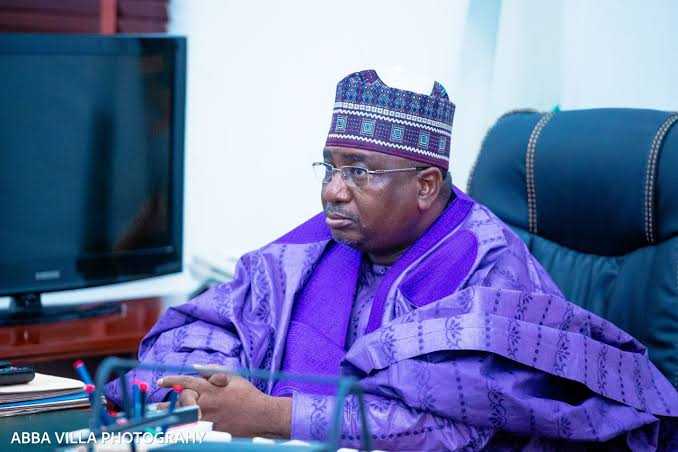
Ugandan university honours NERDC executive secretary, Prof. Salisu Shehu

By Uzair Adam

The Islamic University in Uganda (IUIU), Mbale Campus, has honoured the Executive Secretary of the Nigerian Educational Research and Development Council (NERDC), Professor Salisu Shehu, in recognition of his contributions to the advancement of education across the African continent.

The Daily Reality reports that the honour was conferred during the institution’s 34th Graduation Ceremony, held at its Mbale Campus, attended by university officials, graduating students, and invited guests.

At the event, the Rector of the university, Associate Professor Ismail Simbwa Gyagenda, presented Professor Shehu with a plaque inscribed: “Your continued support spices our corporate growth”.

Professor Gyagenda acknowledged his role in supporting the university’s academic development and institutional progress.

Professor Shehu, a seasoned educationist and academic administrator, currently heads NERDC, Nigeria’s statutory body charged with curriculum development, educational research, and the coordination of national education standards.

In this capacity, he has been involved in initiatives aimed at strengthening curriculum delivery and promoting collaboration among educational institutions within and outside Nigeria.

The recognition by the Ugandan university reflects Professor Shehu’s engagement with higher education institutions across Africa and underscores the growing importance of cross-border academic cooperation in addressing shared educational challenges on the continent.

Recalled Indomie Vegetable Flavour not available in Nigeria — NAFDAC

By Sabiu Abdullahi

The National Agency for Food and Drug Administration and Control has assured Nigerians that the Indomie Noodles Vegetable Flavour recently recalled in France is neither produced in Nigeria nor sold in the country.

The clarification followed widespread public concern after reports circulated online about the recall of the product by the French authority, Rappel Conso of France, over the presence of undeclared allergens, namely milk and eggs.

In a statement issued on Sunday and signed by the Director-General of NAFDAC, Prof. Mojisola Adeyeye, the agency confirmed that the affected product did not originate from Nigeria and is not registered for sale in the Nigerian market. It added that surveillance had been activated nationwide to ensure the product does not find its way into the country.

The statement read, “The management of the National Agency for Food and Drug Administration and Control (NAFDAC) is aware of the recall of Indomie Noodles Vegetable Flavour by the French authority (Rappel Conso of France) on account of the presence of undeclared allergens, specifically milk and eggs, which may pose significant health risks to consumers with allergies or intolerances.”

NAFDAC explained that the agency had taken precautionary steps as a regulatory body to prevent any possible entry of the recalled product into Nigeria.

“In light of this development, NAFDAC has undertaken some proactive measures as a responsive regulator by ensuring increased vigilance actions to guard against the possible entry of the recalled product into Nigeria,” the statement added.

The agency disclosed that its officers across the country had received directives to remain alert and seize the product if discovered anywhere within their jurisdictions.

“Surveillance has been directed across all zones and states, and zonal directors and state coordinators have been mandated to mop up the product if found within their jurisdictions,” it stated.

NAFDAC further stressed that the specific Indomie Noodles Vegetable Flavour involved in the recall is not authorised for sale in Nigeria.

“The public is hereby informed that the Indomie Noodles Vegetable Flavour in question is not registered with the National Agency for Food and Drug Administration and Control (NAFDAC) for sale in Nigeria,” the agency said.

It also pointed out that noodles remain on the Federal Government’s Import Prohibition List, a factor that limits the possibility of the affected product entering the Nigerian market.

Democracy vs. Military Rule: No contest

By Abdullahi Muhammad Yalwa

Sometimes, intellectual masturbation makes people say despicable things. That’s how they say foolish things without actually knowing. If not intellectual premature ejaculation, what else would possibly make an educated person compare democracy with military rule? You can’t compare the two at all. In fact, it’s an insult to real thinking to mix them up without a strong reason as to why and how.

Yes, Nigerians are frustrated with democracy because we’ve suffered under it. Presumably, every Gen Zer born from 1999 to date has suffered, or is suffering, from the discontents of democracy. Corruption, poverty, and bad leaders all strangulate our growth. As such, it’s easy for someone who never lived through military rule — or never thoroughly read about it — to think it was better. Nevertheless, it’s inexcusable to make that comparison in the 21st century. With all the history and information one click away. This is lazy thinking.

Nigeria’s story explains the tension between Democracy and Autocracy. Since independence in 1960, Nigerians have swung between dreams of democracy and military high-handedness. The First Republic, which started in 1963, collapsed into coups by 1966. Then came 30 years of mostly military rule, with a short democratic break from 1979 to 1983.

Within this duration, Gowon fought the Biafran war from 1967 to 1970, which resulted in millions of deaths and the fangs of deadly hunger almost flung Nigeria into an abyss. After Gowon, Buhari came in the 80s with his “War Against Indiscipline” rhetoric. Though some changes were recorded only minimally, his government, too, was a failed experiment. Then, Babangida followed his coup and ruled Nigeria through military rule for almost 10 years. His scandalous cancellation of the 1993 election brought General Abacha, who also killed activists in a cold-blooded manner, abducted critics, and censured opposition. Under Abacha, Nigeria became a global pariah, an outcast because of misrule, corruption, and human rights abuses. So, the soldiers promised order but delivered fear, theft, and failure. Beyond the Gun tirade, a lot of them proved to be nothing but unscrupulous, self-centred, and avaricious.

When democracy returned in 1999, it wasn’t perfect — but it was progress. From Obasanjo to Yar’Adua, Jonathan, Buhari, and now Tinubu, we’ve seen peaceful transitions. That alone is a miracle compared to the blood and chaos of coups, which are primarily scathing and scary.

Democracy works and is better than military rule because it gives people a voice. Under democracy, leaders are elected. The constitution limits their powers, and Citizens can question, join them, or change the government. Nigeria’s record is full of incidents in which the people removed the government despite its resistance. Elections since 1999 have been taking place, even though with low turnout and many flaws.

Furthermore, democracy still allows movements and protests like that of #EndSARS in 2020. As such, people can protest against abuse without the nation collapsing. That’s democracy in action.

Equally, in a democracy, the law stands above all. Rights like speech, movement, and association are still protected despite shortcomings. The media and civic groups expose scandals and corruption. Dan Bello is our standard example here. Leaders feel pressure because they can be voted out. They are still afraid of the people’s might. Similarly, growth comes from debate, not decree. Policies get tested and refined before execution. Sometimes they are reversed after execution because of pressure. All these are happening because of the grace of Democracy.

Now, compare that with military rule. Under soldiers, power is seized by guns, not ballots. A few officers give orders. No dialogue, no accountability, only decrees that replace laws. The constitution goes silent. Many of its parts got scraped and unscripted. Rights become suspended, or mere names on papers. Dissent under the military is punished with the barrels of guns. Abacha’s regime proved it — hidden trials, executions, silence. Thus, there is no right to protest, no matter the height of injustice.

Nevertheless, some people may say the military will bring discipline, build roads, and promote infrastructure. But all of that without justice is short-term. Order without fairness is not peace; it’s fear, which eventually erupts into chaos in disguise. 

We have tested the military. And the reflex is there in history for the discerning minds. Under the generals, Nigeria’s economy sank, institutions died, and corruption deepened. Stability built on fear never lasts. Once soldiers take power, they rarely leave it peacefully. Hence, there is no rotation of government. You only get stuck with whatever you’ve got.

Although Democracy has its flaws, issues like bad elections, corruption, and insecurity remain rampant in our country; nevertheless, it is by far a better option. At least, it gives us freedom to protest, options for dialogue, and hope in change. By contrast, military rule gives us nothing but fear, silence, and graves.

The worst democracy is still better than the best dictatorship. Democracy lets us correct our mistakes. Military rule buries them.

So, all these comparisons and happiness over the aborted coup against Tinubu is nothing but nostalgia from frustrated people who refused to learn better. Democracy is not Nigeria’s problem. Nigeria’s main issue is bad leadership. If only we’d vote for responsible leaders, they’d fix the system, without destroying it. They’d strengthen our votes. Protect our rights. Hold leaders accountable. All these would happen only when democracy grows. Thus, democracy grows, Nigeria grows.

No gun can build what the people can build together.

Abdullahi Muhammad Yalwa, a Law graduate based in Azare, Bauchi State, can be reached at abdullahimuhammadyalwa02@gmail.com.

Bauchi to shut major roads ahead of Tinubu’s visit

By Anwar Usman

The Bauchi State Government has announced its plans to temporarily close and divert of some major roads within the metropolis ahead of President Bola Tinubu’s condolence visit to the state.

The government said the President is expected in Bauchi to commiserate with the family and followers of the late renowned Islamic scholar, Sheikh Dahiru Usman Bauchi.

This was disclosed in a statement issued late Friday by the Special Adviser on Media and Publicity to the Governor, Mukhtar Gidado.

According to the statement, the affected riads include major roads leading to the Sheikh Dahiru Baushi’s mosque and other strategic locations, which will be closed or diverted between 1pm and 6pm on Saturday for security and traffic control purposes.

Gidado explained that the measures were adopted to ensure the safety of people in the State and the smooth conduct of the presidential engagement.

“The public is hereby notified that some major routes leading to the Sheikh’s mosque and other key locations will be temporarily closed or diverted from 1pm to 6pm for traffic control and security reasons.

“These measures are purely for safety and effective traffic management during the President’s visit,” the statement read.

He urged residents of the state to plan their movements accordingly, obey traffic instructions, avoid restricted areas during the period and cooperate fully with security agencies deployed across the state.

The government also appealed to residents to conduct themselves peacefully and responsibly during the visit.

Recall that, the Special Adviser to the President on Information and Strategy, Bayo Onanuga, on Friday announced that Tinubu would depart Abuja on Saturday for a three-state visit to Borno, Bauchi and Lagos states.

President Tinubu embarks on tri-state tour, holidays in Lagos

By Abdullahi Mukhtar Algasgaini

President Bola Ahmed Tinubu will begin a three-state visit tomorrow, Saturday, before settling in Lagos for the end-of-year holidays.

His journey will first take him to Maiduguri, Borno State, where he will commission projects executed by Governor Babagana Zulum in collaboration with the Federal Government. During his stay, the President will also attend the wedding of Sadeeq Sheriff, son of former Borno Governor Senator Ali Modu Sheriff, to Hadiza Kam Salem.

The President will then travel to Bauchi State on a condolence visit. He will pay his respects to the state government and the family of the late revered Muslim cleric, Sheikh Dahiru Bauchi, leader of the Tijjaniyya Muslim Brotherhood, who passed away on November 27.

Following the visit to Bauchi, President Tinubu will proceed to Lagos, where he is scheduled to spend the Christmas and New Year holidays.

His itinerary in Lagos includes several engagements, notably as the Special Guest of Honour at the Eyo Festival on December 27.

The event, to be held at Tafawa Balewa Square, will pay tribute to notable personalities, including the President’s late mother, Alhaja Abibatu Mogaji, as well as former Lagos State Governors Alhaji Lateef Jakande and Chief Michael Otedola.

Detained Nigerian soldiers arrive in Ghana after release by Burkina Faso

By Sabiu Abdullahi

Nigerian soldiers who were earlier held by authorities in Burkina Faso have arrived at an Air Force base in Accra, Ghana, as arrangements continue for their onward movement to Portugal.

The Director of Public Relations and Information of the Nigerian Air Force, Air Commodore Ehimen Ejodame, confirmed the development in a statement released on Friday in Abuja.

According to Ejodame, the Nigerian Air Force C-130 aircraft was already scheduled to travel to Portugal for depot maintenance, with stopovers planned in Banjul and Casablanca. He added that the aircraft and its crew remained in good condition.

“The Nigerian Air Force, NAF, has confirmed that its C-130 aircraft, which made a precautionary landing in Bobo-Dioulasso, Burkina Faso, has safely arrived in Accra, Ghana, ahead of its onward journey to Portugal,” Ejodame said.

He reassured Nigerians that safety standards were fully observed throughout the incident.

“We will continue to operate to the highest standards of safety and professionalism. We thank Nigerians for their concern and support during the precautionary event,” Ejodame said.

The soldiers were detained after the aircraft made a forced landing in Burkina Faso, which led to their temporary holding by the ruling junta in the Sahel country.

Burkina Faso has since released the Nigerian Air Force aircraft along with 11 personnel, bringing the incident to a close as the crew proceeds with its planned mission.

PDP crisis: INEC explains decision to convene feuding factions

By Sabiu Abdullahi

The Independent National Electoral Commission, INEC, has explained why it invited the two rival factions of the Peoples Democratic Party, PDP, to a meeting amid the leadership dispute within the party.

The Commission stepped into the internal crisis after summoning representatives of both camps to its national headquarters in Abuja on Friday. The intervention followed growing tension within the opposition party.

INEC Chairman, Prof. Joash Amupitan, said the decision became necessary after the electoral body received contradictory letters from the factions involved in the dispute. He noted that the conflicting communications made it important for the Commission to hear directly from all sides.

According to Amupitan, the meeting was intended to provide a platform for dialogue and clarity ahead of future electoral activities.

“We felt that by rubbing minds together, it’ll be a good opportunity for us to forge the way forward concerning the elections,” Amupitan said.

He also stressed that INEC remains guided strictly by existing laws in carrying out its duties.

“Actually, INEC sits on the tripod of three legal regimes, the Constitution, the Electoral Act and the regulations that have been made,” he said.

Amupitan further assured that the Commission would act within the limits of the law in addressing the situation.

“So we are determined to ensure that we follow the provisions of the various laws, the Constitution, and the regulations that we have made.”

The PDP has been grappling with internal disagreements, which have raised concerns about its preparedness for forthcoming elections. INEC’s move is seen as an effort to ensure order and compliance with electoral regulations as political activities intensify nationwide.

Nigeria, Iran reaffirm commitment to deepen bilateral relations

By Maryam Ahmad

Nigeria and the Islamic Republic of Iran have reaffirmed their commitment to strengthening bilateral relations, with renewed focus on trade, investment, energy cooperation, and multilateral engagement.

The commitment was restated during a high-level meeting held on 17 December 2025 in Abuja, where the Permanent Secretary of the Ministry of Foreign Affairs, Ambassador Dunoma Umar Ahmed, PhD, received the Ambassador of the Islamic Republic of Iran to Nigeria, His Excellency Gholamreza Raja.

The meeting marked one of Ambassador Raja’s first formal engagements following the presentation of his Letters of Credence to President Bola Ahmed Tinubu. Both sides emphasised the importance of sustained diplomatic dialogue and collaboration in areas of mutual interest.

They also expressed readiness to explore new opportunities that would further strengthen ties between the two countries and contribute to regional and global cooperation.

New chiefs nominated for Nigeria’s oil regulatory bodies

By Abdullahi Mukhtar Algasgaini

President Bola Tinubu has asked the Senate to confirm new leaders for Nigeria’s two key petroleum regulatory agencies following the resignations of their previous heads.

The President nominated Oritsemeyiwa Amanorisewo Eyesan as Chief Executive Officer of the Nigerian Upstream Petroleum Regulatory Commission (NUPRC) and Engineer Saidu Aliyu Mohammed as CEO of the Nigerian Midstream and Downstream Petroleum Regulatory Authority (NMDPRA).

This move comes after Engineers Farouk Ahmed and Gbenga Komolafe, who were appointed by former President Muhammadu Buhari in 2021, stepped down from their posts at the NMDPRA and NUPRC respectively.

The nominees bring extensive industry experience. Eyesan, an Economics graduate from the University of Benin, had a 33-year career at the NNPC, culminating in the role of Executive Vice President, Upstream.

Engineer Saidu Aliyu Mohammed, a Chemical Engineering graduate from Ahmadu Bello University, has held several high-profile positions, including Managing Director of the Kaduna Refining and Petrochemical Company and the Nigerian Gas Company.

He was also pivotal in major gas infrastructure projects like the Ajaokuta–Kaduna–Kano (AKK) Gas Pipeline.

[OPINION]: Life after NYSC: Navigating Nigeria’s tough labour market

By Usman M. Shehu

One of the most unsettling thoughts for any corper is the harsh reality of the Nigerian labour market. I know this firsthand—I’m in Batch C Stream 2, due for my Passing Out Parade (POP) on 18th December 2025. Finishing service brings not just doubt, but real anxiety and fear: fear of losing the monthly allowance (allowee), and the daunting task of distributing your curriculum vitae (CV)—via email or in person—to companies, agencies, and contacts.

The dynamics of the job market have shifted dramatically. It’s no longer just about what you know (your skill set), but increasingly about who you know (your connections). This is driven in part by the sheer volume of graduates entering the market each year. Take my field, geology, for example: it’s not one of the most competitive courses, yet about 80 students graduated in my class alone, with degrees ranging from first class and second class upper (2:1) to second class lower and third class. This pattern repeats across faculties from sciences and engineering to humanities. When you do the math, thousands of graduates flood the market annually, far exceeding the combined absorption capacity of the public and private sectors.

This oversupply is a major reason why many graduates and even their guardians rely on connections to secure jobs. It’s an affront to the merit-based ideals of our educational system and a key factor behind the declining efficiency in the public sector. When nepotism and connections trump competence, institutions suffer. The civil service is already crumbling under this weight, as we see today. Fixing it remains a hot topic in public discourse, but the goal should be clear: employment public or private must prioritise what you know over who you know.

Another major challenge is the age barrier. Since 2009, the NYSC certificate prominently displays your date of birth to prevent age falsification. This makes it harder for anyone over 28 years whether due to late entry into university or academic delays to get interviews or even apply. Most job portals and advertisements specify strict requirements: age limits, degree class, skills, and years of experience. Often, if you’re above the age threshold, you can’t even access the application portal. These restrictions hit hardest in white collar jobs.

The Way Forward: Despite these systemic hurdles, individual agency matters. To move forward, we must be enterprising and proactive: work hard, strategically build in-demand skills (like digital marketing, data analysis, coding, or entrepreneurship), and stay humble while relentlessly pursuing opportunities whether through networking, job hunting, or starting your own business.

That said, this moment isn’t entirely bleak. We’re excited about the transition and earning our certificates. It opens doors to jobs that require NYSC completion. And if we take these steps seriously upskilling, staying resilient, and thinking creatively we won’t just be employable; we’ll become highly sought-after prospects.Happy POP to my fellow corpers, Batch C Stream 2 2025! Let’s step into this next chapter ready. For by failing to plan, we are planning to fail.

Usman M. Shehu writes from Kano State, Nigeria.