Nigeria

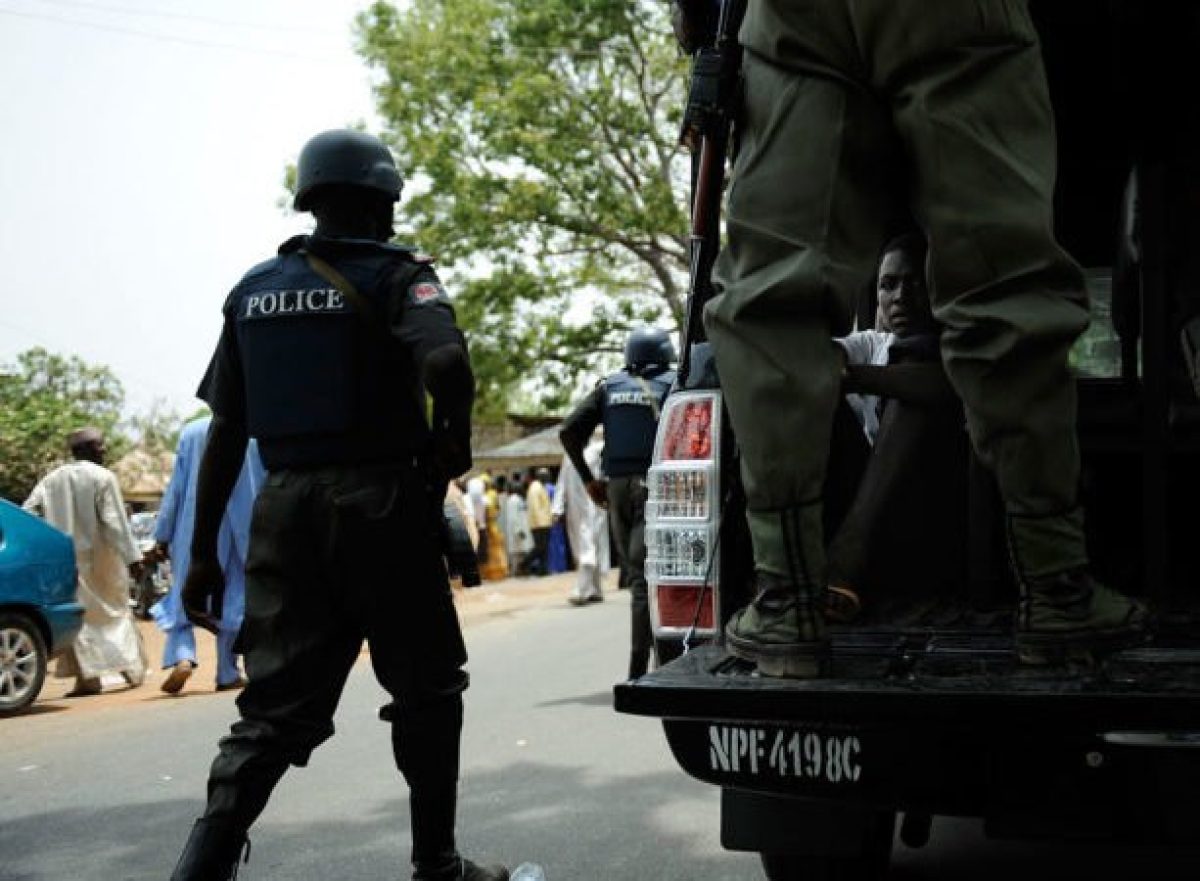
PSC, NPF begin recruitment of 50,000 constables

By Anwar Usman

The Police Service Commission, in collaboration with the Nigeria Police Force, has announced the commencement of the recruitment of 50,000 police constables, as approved by President Bola Tinubu.

The recruitment process, according to the PSC, is in line with the President’s order to strengthen community policing, improve internal security and boost manpower within the police.

Recall that, on November 26, 2025, President Bola Tinubu declared a nationwide security emergency, ordering the Nigerian Police and Armed Forces to recruit additional personnel to tackle rising insecurity across the country.

The Head of Protocol and Public Affairs, Torty Kalu, in a statement on Thursday, said the Commission’s recruitment portal would open to eligible Nigerians from December 15, 2025, to January 25, 2026.

The statement in part read, “The PSC, in collaboration with the NPF is pleased to announce the commencement of recruitment of 50,000 Police Constables into the Nigeria Police Force, as directed by President Bola Tinubu. Following this Presidential directive aimed at strengthening community policing, enhancing internal security and expanding the manpower base of the Nigeria Police Force, the Commission has approved the opening of the recruitment portal for applications from eligible Nigerians.

“For the General Duty cadre, applicants are required to possess GCE Ordinary Level, SSCE/NECO or equivalent qualifications with at least five credits, including English Language and Mathematics, in no more than two sittings.

“Applicants for the Specialists cadre must possess a minimum of four credits, including English and Mathematics, also in no more than two sittings, and must have at least three years of experience and relevant trade test certifications.”

He added that “Candidates for General Duty must be between 18 and 25 years old, while those applying as Specialists must be between 18 and 28 years old. General Duty applicants must also meet minimum height requirements of 1.67m for men and 1.64m for women. All applications are to be submitted online via the portal.”

[OPINION]: Nigerian youths: Beyond sycophancy to running for office

By Usman M. Shehu

Do not wait until the conditions are perfect to begin. Beginning makes the conditions perfect.— Alan Cohen

It is unfortunate that Nigerian youths are preoccupied with PR and brown-nosing politicians on social media, mistaking sycophancy for loyalty or mentorship. Not only that, but we are comfortable scrolling TikTok, posting pictures on Instagram, and debating at what age we should start paying attention to the state of the nation, let alone running for office. Why are the youths indifferent to our sick polity that is rotten from the core? Why are they comfortable staying on the fence and serving as spectators instead of actors? Why do our youths somehow believe that they are the leaders of tomorrow and not of today?

Though it is the norm that young people, while growing up, usually learn from the older generation, what is there to learn from our current crop of terrible politicians who hold our nation by the jugular? They hide under the guise of “politics is a dirty game.” The old guard have the money, the influence, and the networks; what is lacking or in decline are vision, energy, and perhaps conscience and discipline—attributes that are essential for good leadership. Unfortunately, what they have will not be willingly given, and what the youths need often seems lacking or absent.

The joy of the youths when the Not Too Young to Run Act was passed by the National Assembly and signed into law on 31 May 2018 by President Buhari quickly dissipated when they realised that reality is different from what is written on paper or in Senate resolutions. It does not surmount all the barriers. Money continues to dominate our polity. Only a few youths can afford party nomination forms; the cost of contesting is so enormous that even the smallest elective office is far beyond the reach of most young people. Political parties prefer candidates who can fund them. These challenges are reinforced by the illusion that youths are inexperienced, impatient, and unprepared for leadership.

But then I often ask myself: do we have what it takes to lead, especially now that we are bedevilled with so many crises? It is like a person afflicted with multiple diseases—these include an identity crisis, the collapse of leadership from top to bottom, and a sick civil society. Fixing these issues is daunting even for experienced and seasoned leaders, let alone those still learning the ropes. It will only be possible through self-education, mentorship, and massive orientation and mobilisation. As Usman Sarki, Daily Trust columnist, rightly put it: “A new generation of rational leaders must arise from the ranks of men and women unafraid to confront entrenched interests, guided by data, driven by conscience and inspired by service.” A corrupt youth cannot be good for the health of our Federal Republic. Only youths of integrity can enhance the good health of our community.

Youths must acquire relevant skills such as adaptability and emotional intelligence, educate themselves, and build strong networks. For youths to be taken seriously, they must be sober, visionary, disciplined, and driven. Before we hold others accountable, we must start with ourselves. With the desire for change and disillusionment with the status quo, youths can become actors, seize power, and replace some of the politicians who treat power as if it has no expiry date—which is why they often disappear from the spotlight without warning.

In a nation where political power is seen as conquest and humility as weakness rather than virtue, the youths must be brave and courageous in asking for power or running for office. We must sketch a realistic roadmap and hold a vision of rescuing our polity that is being dragged down the drain. With the election season only inches away, the time to act is now.

Usman M. Shehu wrote in from Bauchi State and he can be reached via usmanmujtabashehu@gmail.com.

Strict law enforcement would jail most Nigerians – ICPC

By Abdullahi Mukhtar Algasgaini

The Independent Corrupt Practices and Other Related Offences Commission (ICPC) has stated that corruption in Nigeria is so widespread that fully applying the law would imprison a vast majority of the population.

ICPC’s Resident Anti-Corruption Commissioner for Kaduna State, Mr. Sakaba Ishaku, issued the stark warning at a workshop on local government accountability in Kaduna on Wednesday.

“If the laws were to be applied to the letter, about 80 percent of the people you see walking the street freely will be in jail,” Ishaku declared.

He described corruption as “endemic and deeply entrenched,” driven by weak institutions and a lack of accountability, which diverts public resources and stalls development.

The commissioner challenged local government chairmen who leave office without visible achievements, questioning their legitimacy.

He also called for harsher penalties for graft, stating that current punishments are merely “a slap on the wrist.”

Echoing the concerns, the Kaduna State Commissioner for Local Government, Sadiq Mamman Legas, highlighted how public attitude compounds the problem.

He revealed that communities vandalized and stole from transformers after the state spent billions repairing rural electrification projects.

Both officials called for stronger public enlightenment and community ownership of assets to combat the deep-seated crisis.

Sultan warns NIREC risks irrelevance without honest leadership

By Uzair Adam

The Sultan of Sokoto and Co-Chair of the Nigeria Inter-Religious Council (NIREC), HRH Abubakar Sa’ad III, on Wednesday warned that the Council risks losing relevance unless religious leaders embrace sincerity, accountability and genuine engagement.

His remarks came as the Christian Association of Nigeria (CAN) renewed calls for stronger government action on insecurity, while the Federal Government dismissed global claims of religious persecution in the country.

These exchanges took place at NIREC’s Second Tri-Annual Meeting in Abuja, where the Sultan, CAN President Archbishop Daniel Okoh, and Secretary to the Government of the Federation (SGF), Senator George Akume, delivered some of their most direct assessments of Nigeria’s security challenges and interfaith relations.

Speaking candidly, the Sultan said NIREC had drifted from its founding vision, stressing the need to confront internal contradictions that undermine its credibility.

He lamented that some religious leaders preach unity during meetings but make divisive statements outside, a pattern he said weakens interfaith harmony.

“We sit down and say good things to one another, knowing God owns everything. Yet when we leave this room, we begin to say negative things. Are we really honest with ourselves?” he asked.

He urged the Council to decide whether to continue with its current approach, undergo reforms, or return fully to its founding principles. He also commended Cardinal John Onaiyekan for his consistency and sincerity since NIREC’s early days.

The Sultan noted that many members fail to communicate NIREC’s resolutions to their communities, leaving the public unaware of decisions that could reduce tension.

He emphasised that dialogue—rather than force—remains the surest path to peace.

Turning to security, CAN President Archbishop Okoh warned that Nigeria faces a dangerous phase of violence marked by mass abductions, banditry and extremist attacks.

“The daily loss of innocent lives is alarming and heartbreaking. Communities are being deserted and citizens are fearful,” he said.

While acknowledging existing government efforts, he urged President Bola Ahmed Tinubu to strengthen responses proportionate to the scale of the crisis. He also stressed that faith institutions remain vital to peacebuilding due to their grassroots influence.

He insisted that justice must underpin peace: “Those who perpetrate or finance violence must be held accountable, and victims must be supported.”

In his remarks, SGF Senator George Akume rejected global claims that Nigeria is experiencing religious genocide, arguing that such narratives misrepresent the country’s complex security issues. He noted that both Christian and Muslim communities have suffered devastating attacks.

He announced plans for a US–Nigeria Joint Working Group on Security, where religious leaders will contribute to policy discussions.Akume urged delegates to speak frankly and work in unity, saying: “Let us collectively silence the merchants of hatred and disunity.”

The meeting ended with a consensus that Nigeria’s fragile peace requires renewed honesty, deeper collaboration and a united moral front between religious leaders and the government.

Tinubu reiterates plan to withdraw Police officers from VIPs

By Anwar Usman

President Bola Tinubu on Wednesday said the directive to redeploy police officers working with VIPs, VVIPs and ministers was not negotiable urging all ministers to ensure immediate compliance.

This was revealed in a statement issued by the Presidential spokesperson, Bayo Onanuga.The president while speaking at the opening of the Federal Executive in Abuja warned all relevant stakeholders against non-compliance.

He noted that, “Police officers were trained to protect the lives and properties of citizens, particularly the most vulnerable in society not the protection of VIPs” adding that, the NCDC are trained for VIP protection, and they are armed too.

He also ordered the minister of interior Olubunmi Tunji-Ojo, for the immediate replacement of police officers by the civil defense corps.

“We face security challenges of kidnapping, banditry and terrorism. We need all forces utilized. I know some people are exposed; we will make exceptions. The Civil defense is very much around,” the president stated.

Tinubu directed the National Security Adviser, Nuhu Ribadu, Minister of Police Affairs, Sen. Ibrahim Gaidam and the Inspector General of Police to follow up on the implementation of the order.

The President also urged the Vice President Kashim Shettima, who is the chairman of the National Economic Council (NEC) to further sensitise governors and other stakeholders on the implementation of the reforms on ranching.

Bauchi State sets January 4 for full reopening of schools

By Sabiu Abdullahi

The Bauchi State Government has fixed Sunday, January 4, 2026, as the date for the resumption of all Basic, Senior Secondary and Tertiary Institutions across the state after an extended closure.

The announcement was contained in a statement issued by Jalaludeen Usman, ANIPR, Information and Public Relations Officer of the Ministry of Education.

He explained that the decision followed “extensive discussions with key stakeholders including School Principals, Managers of the Education Sector in the State and owners of Private Schools among others,” which led to a collective agreement.

Governor Bala Abdulkadir Mohammed subsequently approved the reopening.

The ministry said examinations that could not hold before the closure “will now be conducted within the first week of resumption,” while normal academic activities will continue afterwards.

The statement also revealed that “approval has been granted for the immediate re-opening of the three (3) Federal Government Unity Colleges as directed by the Federal Ministry of Education.”

Officials noted that the earlier shutdown was based on “advise received from security agencies relying on available information and following a spate of untoward incidences in schools across the country.”

However, the government said the situation has improved, which informed the decision to reopen all institutions.

Parents and guardians have been directed to return their children and wards to school without delay.

The government reassured the public that “additional security measures are being put in place to ensure the safety of students, teaching and non-teaching staff in the various schools and higher institutions in the state.”

Rector Cares Foundation wins Top Climate Award at AFFIF 2025

By Hadiza Abdulkadir

Rector Cares Foundation’s documentary “Dying for Water” has won the Award of Excellence for Best Film on Climate Change at the Africa Film for Impact Festival (AFFIF) 2025, earning widespread recognition for its powerful portrayal of water poverty in rural Nigeria. 

Screened at the festival’s 4th edition, held from October 29–31 at Silverbird Cinemas, Yar’Adua Centre in Abuja, the film tells the story of Fatsuma, a mother grieving the loss of her child who drowned in an unsafe community well, and highlights the daily struggles faced by women and children relying on hazardous water sources. 

Founder and executive producer Onyedikachi Erete described the honour as a validation of the Foundation’s mission. “This victory validates our mission to ignite conversations about water poverty and the crucial role of WASH in fostering sustainable development,” he said. 

Directed by Omoregie Osakpolor and co-produced by Stephanie Ohumu, the documentary forms part of Rector Cares Foundation’s ongoing efforts to raise awareness of climate-driven water crises and strengthen collaborations with organisations working in water provision and technology. 

MPAC accuses US delegation of sectarian bias during Nigeria visit

By Muhammad Abubakar

The Muslim Public Affairs Centre (MPAC) has condemned what it describes as the “sectarian and deeply troubling” conduct of a recent United States congressional delegation to Nigeria.

In a statement issued by its Executive Chairman, Disu Kamor, MPAC faulted the visit of Congressman Riley Moore, who publicly emphasised meetings with Christian and traditional leaders during the trip, including bishops in Benue State and a Tiv traditional ruler. Moore, a vocal proponent of the claim of a “Christian genocide” in Nigeria, said on his X account that he came “in the name of the Lord” and held discussions on alleged Fulani-led attacks.

MPAC argued that the delegation’s failure to engage the leadership of the Nigerian Muslim community—particularly the Nigerian Supreme Council for Islamic Affairs (NSCIA)—was a deliberate snub rather than a scheduling issue. It accused the U.S. team of avoiding Muslim victims and communities affected by violence and warned that such selective engagement risked reinforcing “extreme voices and anti-Muslim narratives” within U.S. policy circles.

The organisation said the pattern of “selective listening, selective engagement, and selective outrage” threatens Nigeria’s delicate interfaith balance. It called on international partners, especially the United States, to demonstrate neutrality and ensure that foreign policy on Nigeria is not shaped by religious lobbies or sectarian biases.

MPAC reaffirmed its commitment to justice and peaceful coexistence, urging Nigerians to question why key Muslim institutions and victims were excluded from the delegation’s itinerary.

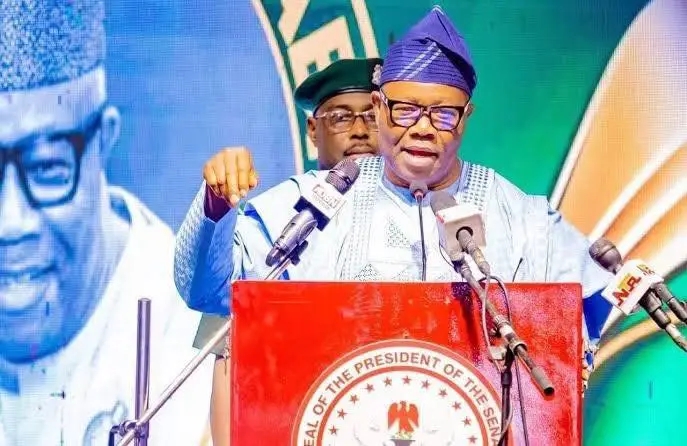
Governor Adeleke formally declares joining Accord Party

By Sabiu Abdullahi

Osun State Governor, Ademola Adeleke, has officially announced that he will contest the 2026 governorship election under the Accord Party.

The declaration took place on Tuesday at the Banquet Hall of the Government House in Osogbo.

National and state leaders of the party were present at the event.

Adeleke disclosed that he joined the Accord Party on November 6, 2025, after holding extensive consultations with political stakeholders and community leaders across the state.

A statement issued by his spokesperson, Olawale Rasheed, noted that the governor had explained to stakeholders why the political shift became necessary.

According to Adeleke, he chose the Accord Party because its ideology reflects the priorities of his administration.

“We opted for the Accord Party because its mission of welfarism aligns with our passionate focus on citizens’ and workers’ welfare,” he said.

The governor welcomed party figures to the Government House and called for unity as political activities ahead of the 2026 election continue to build momentum.

“We are united in progress and good intentions for the good people of Osun State and Nigeria at large,” he stated.

Adeleke encouraged party members to remain focused and work together for success, stressing the importance of leadership that carries all groups along.

He added that his experience in the party so far has strengthened his belief in its values.

“The focus on people’s welfare should always be at the heart of public leadership. The primary essence of government is the welfare and well-being of the people,” he noted.

Adeleke reaffirmed that his government will continue to design programmes that improve the lives of residents and place citizens’ welfare at the centre of governance.

He described the Accord Party as the platform that will drive the state’s political direction ahead of next year’s election.

He also urged residents across Osun West, Osun East and Osun Central to support the party.

“From Igbomina to Ijeshaland, Ifeland, Osogbo, Iwoland, Modakeke, Gbongan, Igbajo, Ikire, Ikirun, Ede and beyond, this is our party, our new platform for victory come August next year,” he declared.

Adeleke ended his remarks by formally announcing his decision.“In accordance with the will of our stakeholders and in deep respect for the wishes of Osun people, I hereby declare for the Accord Party,” he announced.

NSCDC intercepts truck carrying 21 underage children in Kogi

By Anwar Usman

The Kogi State Government has said security operatives have intercepted a group of underage children trafficked into the state in what is suspected to be a covert recruitment attempt for banditry training.

This was revealed in a statement issued on Tuesday by the Commissioner for Information and Communication, Kingsley Fanwo.

“At about 1500hrs on December 5, 2025, eagle-eyed security operatives of the National Security and Civil Defence Corps (NSCDC) in Yagba Area Command, in collaboration with other security agencies in Isanlu, acting on credible intelligence from community hunters, intercepted a truck conveying 21 children aged between six and 17 years into Kogi State,” the commissioner stated.

The commissioner stated that investigations revealed that the children were trafficked from different northern states suspiciously by adults who could not provide legitimate justification for their movement.

“Several suspects linked to the trafficking operation have been arrested, including individuals who claimed they were transporting the children to establish an informal ‘Islamic school’ within Yagba East,” the statement further revealed.

Fanwo also added that, further arrests were carried out as security operatives intensified effort and surveillance in the area, uncovering additional persons allegedly connected to the movement of the minors.

“Some of the suspects were also found with items raising significant security concerns,” he said, adding that the rescued children had been transferred to the NSCDC State Command in Lokoja for detailed investigation and proper profiling of all persons involved.

He also assured that “upon completion of profiling and verification, the children will be handed over to their respective state governments for further investigation and eventual reintegration with their families.”

The commissioner, however, said all individuals found guilty in the trafficking operation would be prosecuted in accordance with Kogi State’s child trafficking and child rights protection laws.