Nigeria

TETFund 2022: Research Grants targets N10bn

By Hussaina Sufyan Ahmad

The Tertiary Education Trust Fund (TETFund) has announced its target to raise the annual allocation to the National Research Fund (NRF) from N8.5 billion in 2021 to N10 billion in 2022, during a virtual meeting on the marking of the International Open Access Week October which holds October 25th – 31st, Nairobi, Kenya.

TETFund executive secretary, Professor Suleiman Bogoro, stated this for the theme “Democratisation of Higher Education in Nigeria through Open Access.” A meeting co-hosted by the Fund and the Training Centre in Communication, Nairobi.

According to the TETFund boss, following the agency’s proposal, the Board of Trustees’ had in 2019 graciously approved N5 billion for NRF, which was raised to N7.5 billion in 2020 and N8.5 billion in 2021.

“Over the last two and half years now, we have raised funds available for research. There are two categories; institution-based and National Research Fund.

“The institution based has a ceiling of N3,600 US dollars and it is mainly for basic research while the higher ceiling grant of about 92 – 93,000 US dollars is the National Research Fund aimed at promoting applied research. To this extent, in 2019 I made it a case to the Board of Trustees of TETFund to increase the threshold.”

“It used to be a kind of seed money. Seed money of N4 billion for eight years but from the year 2019 to last year and this year, 2021, we have increased it to N5 billion annually. Last year we increased it from N5 billion to N7.5 billion and this year it is N8.5 billion; and we are hoping in 2022 it will move to N 10 billion.”

Rethinking the NYSC redeployment and service in absentia

By Bilyamin Abdulmumin

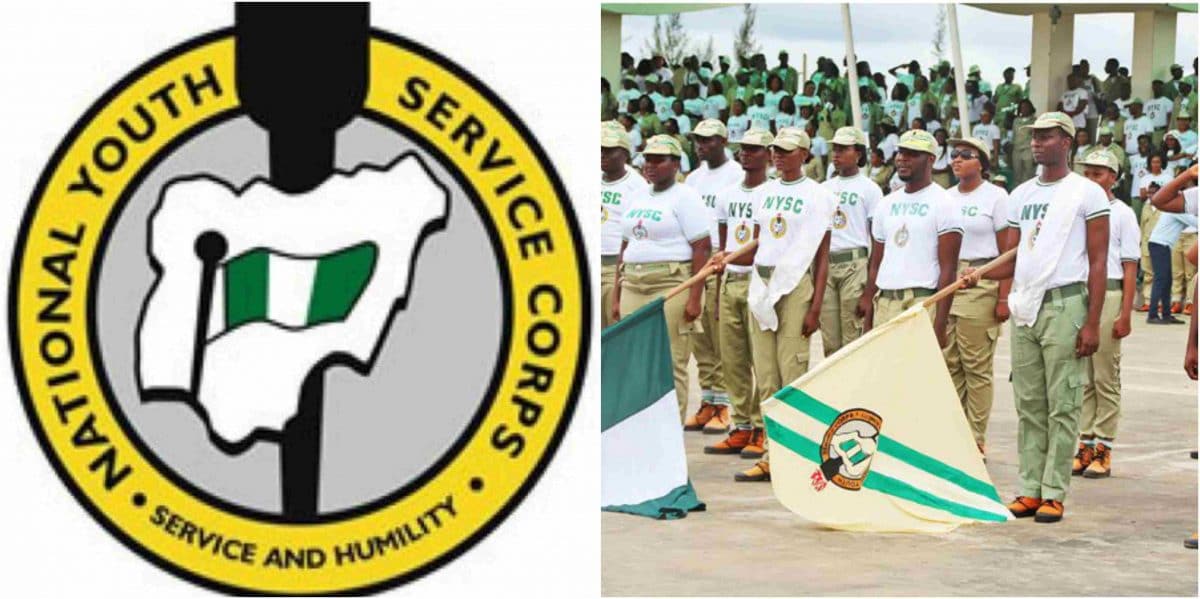
After the ugly event between 1967 and 1970 in Nigeria that threatened to end the country’s years of coexistence, the then Federal Government sought to mend the fences by mandating one year of National Youth Service  Corps (NYSC) for university and, later, polytechnic graduates.

The program was made effective by ruling that prospective Corps are deployed interchangeably across regions and states. This provides a platform to understand better the country’s cultural diversity and catalogue other differences among Nigerians.

To many, the NYSC scheme is a brainchild to later life achievements, building connections that lead to many things such as jobs, skills acquisitions, marriage or lifelong friendship.

However, out of not knowing, many prospective Corps members risk missing out from this one-lifetime experience in the name of redeployment or service in absentia.

At the tail ends of the NYSC three-week orientation camp, one thing that dominates the exercise is relocation application.

The NYSC commission has provided the options for relocation after completing the three weeks orientation camp from one state of service to another on the grounds of many reasons such as health, marriage, security and what have you.

Many Corp members would seek to outsmart this relocation window, intentionally citing health grounds, among many other reasons, for the relocation. Last Thursday, during the ongoing orientation camp, Gombe State chapter DG had echoed that: “There is no need to invite sickness you do not have upon yourself for the sake of relocation”

It doesn’t take careful observation to note that most applicants are typical northerners, aka Hausa-Fulani.

This leads to an intriguing conclusion; Hausa-Fulani folks are home loving-people. Therefore, they do not want to explore other regions apart from their familiar environment despite the enormous possibilities attached with that.

These home-loving youths would come home after redeployment only to continue from where they stopped; the circle of routine activities but little do they realize that the bet wasn’t worth it.

In education, unarguably where the NYSC scheme found its most important use, many secondary schools poised as Place of Primary Assignment (PPA), especially the public ones, would improve their teaching capacity with these agile youth (bubbling with fresh ideas) who came from different backgrounds. In addition, many students would get their inspiration for future careers from these  Corp members. I’m a living witness, and I have come across many friends who testified to that.

Those Corps who came away from their PPAs have only the service to offer; therefore, they are the most dedicated to their service. Service at home is a deterrent to the prospective Corp members from giving their best; therefore, it makes redeployment to home non-recommendable. On the other hand, service in absentia deprives the host PPA; it will also come back hunting the Corp members involved.

Sometimes later, whenever there is a discussion on the NYSC memories period while those who served in absentia are sent into oblivion, the deployed youths will just be cut short with little to reminisce. However, many of them never hesitate to voice their regret for being deployed to their homes or even from rural to urban cities.

When it comes to having eventful memories, serving in the rural areas is the bomb. That is where NYSC youth Corps members are treated with glamour or grandeur, unlike in urban areas. Perhaps the lack of due recognition to NYSC in the urban areas is because of the high number of youths who were once members; the society became used to the scheme.

Initially, when deployed to a particular environment, primarily rural, it depends on how rural the area is; the writing will be all over the wall that a significant readjustment is necessary, the hopeless loom large on the horizon. Cortisol level overshoot, the less tough youth (female) breakdown crying. Yet, at the same time, men who are more practical with emotions keep it within them. This traumatic experience would soon make the relocation processes continue at an unprecedented rate or invoke planning ideas of serving in absentia either by showing up just during the monthly CDSs or abdicating completely with impunity.

However, the enigma of the arrival would naturally fade away; the cortisol level would come down and, after given sufficient time, the codes of living in the newfound environment begin to be deciphered. One can then manipulate the environment to his taste until at a point after settled. Then, one begins to imagine the wind-up is fast approaching or even fantasy for an extension of the programs.

Dear Corps members currently on the camps or those coming later, avoid plunging into remorse later and shortchange the PPA community. It would be best if you rethink the idea of redeployment or service in absentia.

Bilyamin Abdulmumin is a PhD candidate, Chemical Engineering, ABU Zaria. He can be reached via bilal4riid13@gmail.com.

Onyemelukwe-Onuobi wins NLNG prize for Literature, 2021 worth $100,000

By Hussaina Sufyan Ahmad

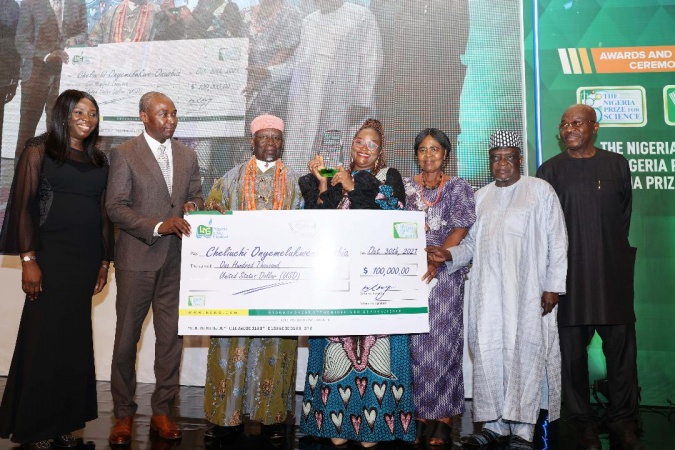
Cheluchi Onyemelukwe-Onuobi at the NLNG award night at Lagos on October 30, 2021, won the $100,000 NLNG Prize for Literature, 2021.

Chairman of the Advisory Board, The Nigeria Prize for Literature & Literary Criticism, Prof Akachi Adimorah-Ezeigbo, disclosed that Cheluchi Onyemelukwe-Onuobi’s “The Son of the House” beat two other shortlisted novels, Abi Dare’s “The Girl with Louding Voice” and Obinna Udenwe’s “Colours of Hatred” to emerge the winner.

“The journey leading to the event started several months ago with the receipt of 202 novels for the Literature Prize since the genre in focus is Prose Fiction. Immediately the Panel of Judges were constituted, they swung into action and despite the challenges imposed by the pandemic, found creative ways to do their work meticulously, using a set of 11 clearly defined and approved Criteria. The Panel of judges also worked in close coordination with the Advisory Board, and the Secretariat of the Prize to produce evaluate and prune down the 202 entries to 50, then 25. From this point, they were able to produce a long list of 11 and thereafter, a shortlist of 3,” she said.

According to Adimorah-Ezeigbo, “Cheluchi Onyemelukwe-Onuobi’s “The Son of the House” was published in 2019 by Parresia Publishers. The novel presents the predicaments of two women, Nwabulu a one-time housemaid and a successful fashion designer; and Julie, an educated woman who lived through tricks, deceits and manipulation, as they meet in captivity.

Both women decide to tell each other their stories. They soon discover that their lives had crossed at different points. The subject matter of the novel is developed through the rupture of traditional plot and the mediation of a single narrative voice. It is made up of a prologue and three-part story moments, each dominated by multiple points of narration, “The Son of the House” is an experimental novel with a complex plot structure made up of the main plot and several subordinate plots that intercept.

OBASANJO: Nigeria should have state police

By Hussaina Sufyan Ahmad


The former president of Nigeria, Olusegun Obasanjo has called for the creation of state police while delivering his speech at a lecture titled, ‘Social responsibility in nation building,’ to mark the 78th anniversary of Island Club in Lagos, on Friday.


Obasanjo said Nigeria needs state police to efficiently tackle the insecurity challenges of the country. He said only a safe environment can guarantee nation building.


According to Obasanjo:

“I have said it before and I will say it again. Nigeria should have state police all over the various states so that insecurity can be tackled efficiently. uaranteeing citizens a safe environment and round security is one thing a government must do.


No nation can be built where peace, security and stability are not guaranteed and with reasonable predictability of the President and the future not enthroned.”

Tertiary institutions students to be supported as CBN donates N500 grant


By Uzair Adam Imam

The Central Bank of Nigeria (CBN) has earmarked N500 million grant to the universities and polytechnics in Nigeria.

CBN said that the effort is to help the teeming youths in tertiary institutions to promote entrepreneurship and also reduce unemployment.

In the report titled: “Guidelines for the implementation of tertiary institutions entrepreneurship scheme”, CBN made this known on Wednesday

“Five top Nigerian polytechnics and universities with the best entrepreneurial pitches/ideas shall be awarded as follows: first place – N150m; second place – N120m; third place – N100m; fourth place – N80m; and fifth place – N50m,” it said.

According to the guideline, the aim of the scheme is to promote access to finance by undergraduates and graduates of universities and polytechnics in Nigeria.

Students will be help with innovative Entrepreneurial and technological ideas to enable them build their future.

The guidline added that Individuals will be entitled to a loan limit of N5.0 million to be paid within the maximum period of 5 years at an interest rate of 5 percent for each year.

Where do we go from here?

By MA Iliasu

This one is a personal experience about our society’s current state of affairs and the ills they may be carrying instead of any brainstorming discourse. It started a little more than two years ago when a young man, pressed by the excessive frugality of his godfather, looted his quarterly savings and ran away to Cote d’Ivoire. Fortunately, the godfather didn’t get mad at him on the belief that the boy ran away with what was worthy of his long years of servitude. Months later, he came back, maybe after receiving assurance about his immunity. Most people developed an interest in the bold-albeit-stupid young man, mostly about why he would betray his godfather cum cousin’s trust. But knowing people’s tendency for moral hazard, I thought it shouldn’t surprise anyone why he did it. Quite differently, I am more interested in why he chose Cote d’Ivoire above all the places to run within Nigeria and nearby. To me, the choice seemed very odd, which surely can’t be a coincidence. I shall explain why.

Firstly, the place is very far from here, and in my experience, our people aren’t very fond of distance. Secondly, the excessive cultural and linguistic variation would shake the thoughts of any young man of such age and education, who are primarily monolingual and inept on homogeneity. Thirdly because of the infamous homesickness and risk aversion. Thus, what warrants the overlooking of such defining factors should rationally be investigated beyond the naivety of a scared young man. But it may also be wondered why would I be so interested in something that doesn’t directly concern me.

As a rule, a wise guardian tasked with the responsibility of an immature youth that can’t be within his sight all the time is only right to extend surveillance on the developments surrounding new trends, norms, habits and idiosyncrasies that inform the conduct of the respective age bracket. The young man belongs in the age bracket that must interest any guardian.

He said, “a kola nut trader who used to stop at Mariri (a kola nut market in Kano) arrived in Ujile (another kola nut market in the metropolis) once told us about the opportunities that await in the kola nut farms and industries in Cote d’Ivoire. He portrayed that as far better than any job we do here”. I smiled because I predicted that. “And what did you discover when you arrived? Was he telling the truth?” I asked him. “He was, but partially,” the boy replied. “The opportunities aren’t better than the ones here. But the environment in Ivory Coast is far more liberating and nourishing. You can’t separate the rich from the poor based on food. They’re not very sensitive to what happens between a man and a woman, even if she’s not his wife. And that alone is a reason for me to stay,” he added.

“Holy God,” I sighed. The boy’s account was revealing and taking an exciting dimension, so I asked him again, “How many of you went there (Ivory Coast)?” He replied: “We were seven. But many others were aiming to reach Libya and Algeria to work in the goldmines or become professional footballers. Other groups were set to follow also.”

I became dumbfounded that many young men have taken the risk of fleeing to the far West and North Africa for different reasons and confessed my concern to a friend who lives in a neighbourhood away. To my utmost surprise, he told me that his younger brother too had, four weeks ago, led a group of young men and ran away to work in the goldmines in Libya. More unfortunate is that it’s against their mother’s wishes. I lamented at how a tragedy of such magnitude could occur without myself being informed. And he laughed it off with the claim: “it is nothing serious. Such has been the norm for a while down here”.

A month later, he informed me that the boy had made it to Libya. They started working but later got apprehended and sold into slavery. I couldn’t believe it. Slavery in the 21st century? But he erased my doubts when he outlined the financial plan they were putting in place to buy the boy’s freedom. “Merciful God,” I said, “man has turned into a commodity”. In a short while, the boy made it back alone to meet the troubles of other boy’s parents, who blamed him for their children’s departure.

The depth of my grief grew big; emigration as a function of trade and brain drain isn’t particularly worrying. After all, the young men have attained the age of choice. What they do within the boundaries of the reason is even welcoming. But the unique circumstances surrounding the decisions of those youths must worry any sane person.

I pondered how the young men came from a society where the emerging youths are characterised by risk aversion, phobia to distance, homesickness, monolingualism and relative poverty of world-class skills. And they’re certainly not traders; they are relatively ignorant and unskilled labourers. On the other hand, some of them are pretty talented in sports and athletics. So it’s obvious, what’s happening isn’t brain drain but a willed-slavery. Indeed the forces that rattle the youths into overcoming those fears heedlessly warrant an investigation.

Let me say the obvious: the ravaging unemployment has since become the fuel of thuggery, pick-pocketing, phone-snatching, armed burglary. The rotten state of public education has produced more cunning kids who discovered they should rather hawk sachet-water than waste their time in a place that resembles a poorly-kept third-world prison than a school. The parental nonchalance plagues the family institution is graduating malnourished, under-schooled, undisciplined, wicked, and mentally unprepared rotten eggs. Coupled with the unfortunate trend of social organisation, people no longer serve as their brother’s keepers. Immorality, especially amongst youths, is being granted a place in the code of conduct, excuse in the intelligentsia and warming reception in the mainstream opinion. While the moral police are either questioned on a far-fetched basis or upon a deliberate loyalty for cancel culture.

It wouldn’t require an expert to predict how the future looks bleak. Critically it asks the question of the accuracy of the relative size of any sample. However, it’s scary that when a menace breakout like a bushfire, a small sample only tells the story of the little that appears obvious. The reality in Kano, amidst the meagre of the sample size, is an emerging bracket of youths being radicalised into emigration-cum-slavery in North Africa. And the weak social forces can only hope to stop them.

MA Iliasu can be contacted via muhada102@gmail.com.

US to help Nigeria fight banditry

By Uzair Adam Imam

The United States Principal Deputy National Security Advisor, Jon Finer, said US government will help Nigeria fight against banditry.

He made this known on Monday during a press round table discussion held in Abuja, assuring Nigeria their full support to carry on the mission.

It is obvious that insecurity in Nigeria is one of the major problems that lingers for a very long time, more especially in some Northwest states.

Mr. Finer added that: “We’ll provide technical assistance for justice programming, much of which is dedicated to help Nigeria get a turnaround at this time of banditry challenges, and we will continue to provide programmes like that to help the country.


“I think we’ve made clear our expectations on how the firefighters are going to be use in a right way,” he said. Read More

2023: North-West youths urge Governor Yahaya Bello to run for president

By Sumayyah Auwal Ishaq

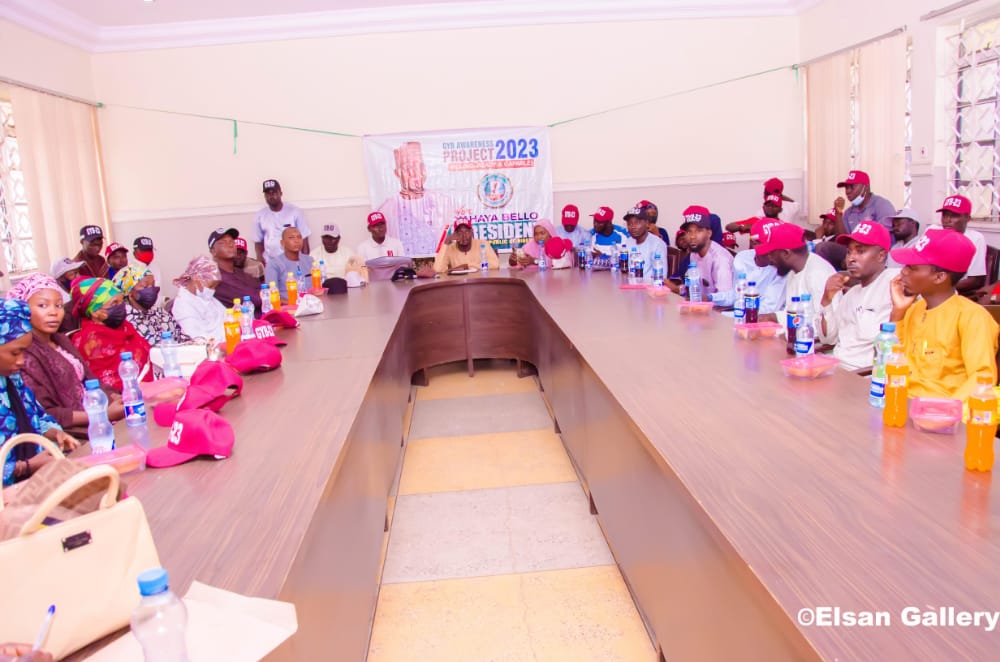
Nigerian youths under the auspices of GYB Awareness Project 2023 across the North-West geopolitical zone have urged Governor Yahaya Bello of Kogi to run for the office of president in 2023.

The youths on Saturday declared their support for Governor Bello during a press conference in Kaduna. Mr Saifullahi Bawa Kajuru, leader of the group said “the objective of the meeting is to conscientise Nigerians, especially the youths in the north-west on the need to support youth presidency come 2023”. He said a young person of Mr Bello’s calibre in 21st century Nigeria could change the narratives of the country through effective leadership and governance.

Mr Bawa added that “after wide consultation with stakeholders, youth groups, student unions, market unions, religious and traditional bodies from the North-West geopolitical zone, we the Northwest Youth under the umbrella of GYB Awareness Project 2023, hereby call on Governor Yahaya Bello to contest for the office of the President, the Federal Republic of Nigeria come 2023. Nigeria must continue to move on the right path in 2023”

“GYB Awareness Project 2023 will continue support, propagate, promote and project the ideals of Governor Yahaya Bello. It also wishes to confidently state that the entire youths of the north-west region comprising of Kaduna, Kano, Katsina, Kebbi, Sokoto, Jigawa and Zamfara States are solidly behind Governor Yahaya Bello candidacy comes 2023” the statement added.

Some of the state coordinators of GYB Awareness Project 2023 from Kano, Katsina, Kebbi, Sokoto, Jigawa, Zamfara and others urged Nigerians and the leadership of the ruling party to present Governor Bello as the candidate of the party in the next general elections.

The Southeast is no less a burden

Ahmadu Shehu, PhD.

As we continue the inconvenient conversation on Biafra and what it portends for the Southeast and our country, I find the need to clarify some insinuations raised in the troupes of comments and rejoinders that trailed my previous articles. But, before proceeding, I must commend many southeasterners for their dispassionate contributions and insightful perspectives.

However, although critical, some of the comments have missed salient truths that need further explanation. This will help our generation avoid past mistakes committed mostly by overzealous politicians, leading to avoidable wars and near-disintegration of our dear country.

There is this illusion that conflates southern Nigeria, particularly the Niger Delta, with the Southeast or “Biafra”. The truth is that the people of the Niger Delta region (let alone the southwest) do not align with the Southeast in politics and administration. For the information of our youth, the first secessionist war in Nigeria was fought between Niger Delta activists under the leadership of Isaac Adaka Boro and the Nigerian forces led by Chumeka Ojukwu, who later became a secessionist himself.

The three phases of Ojukwu’s career: from a defender of Nigeria’s unity at the battlefield to a rebel against his own country and later a senator and presidential candidate for the very country he fought to disintegrate should tell discerning minds that there are many faces to the idea of Biafra, none of which is the common interest of the Igbo people.

Please permit me to be blunter here. As far as our contemporary political and economic realities are concerned, the Southeast is only hiding behind the shadows of other regions in the south to claim prosperity. In other words, when our Igbo brothers call the northerners parasites, lazy or Abuja-dependent, they are actually borrowing the glory of the Niger Delta, and probably Lagos State, to abuse others. Because in reality, the contributions of the Southeast in the so-called feeding the nation is not as significant as they may like us to believe.

If you doubt this, let’s ask a few questions on the most critical sectors of the Nigerian economy. Since 90% of Nigeria’s foreign income depends on crude oil, what is the contribution of the Southeast in the two million barrels Nigeria makes per day? Very little is the answer. For, out of the nine oil-bearing states in Nigeria, Imo and Abia are the only southeastern states, accounting for an abysmal 1.6% and 0.68% of the total crude oil produced in the country. This is very negligible, as far as the numbers in this sector are concerned.

The Nigerian GDP, which is the bedrock of the economy and the source of non-oil revenue, primarily comes from agriculture. What is the contribution of the Southeast to agricultural production? The numbers are even more insignificant here. It is unfortunate that except for the oil-spilt Ogoni land, the Southeast is Nigeria’s least agriculturally viable region. Most states and local councils in the Southeast are not food sufficient.

By the nature of its geography, the Southeast sits on one of the country’s most infertile, erosion-prone lands. It is also the smallest and most overpopulated region leading to congestion and resource scarcity. It is no coincidence, therefore, that no one buys farm produce from there. Conversely, we see tons of raw food and livestock being transported daily to feed the region.

Some people may argue that the economic strength of the Southeast lies in its profoundly robust revenue base generated from industries and MSEs. They further postulate that the region contributes the most to the Nigerian revenue basket, albeit without evidence. Well, all the regions of the federation contribute their fair share to the federation tax revenue. However, the evidence available proves that the Southeast is neither the highest contributor nor is it self-reliant.

According to the National Bureau of Statistics, Southwest and South-South have the highest IGR per capita, and the Southeast is at par with North-Central, followed by Northwest and Northeast. None of the five southeastern states appears close to the top ten high revenue-generating states. Like any other northern state, none of the southeastern states – despite the 12% derivation funds – is wealthy enough to pay salaries without the federation account. Thus, one may ask: what kind of entrepreneurship and economic prosperity we are talking about here?

The fallacy behind the overestimated economic contribution of the Southeast is just one of the many problems. For instance, more than once, our country’s unity and cohesion are put on dangerous edges, thanks to the secessionist tendencies of the Southeast. Instead of forging ahead and pursuing alliances and friendships countrywide, the region and some of its people have continued on the path of division and segregation. The hatred propagated against anything and anyone perceived to be anti-Biafra has been phenomenal.

Furthermore, the Southeast is the main culprit in destroying Nigeria’s image and dignity in the international community. The Nigerian passport, which commanded respect a few decades ago, has become a suspect document worldwide. This unfortunate degradation of national identity and pride is the handwork of Nigerian drug pushers, physical and internet scammers, illegal migrants and human traffickers, most of whom are known to be southeasterners.

The same people are dealers and distributors of fake, contraband medications and drugs in all the nooks and crannies of this country, particularly in the North. This has always been an open secret and has been made even more vividly evident by the recent successes of the Nigerian Drug Law Enforcement Agency (NDLEA). The dangers these portend to our national development and global recognition is unquantifiable.

Therefore, if the above is true, claiming that the North is a mere burden on the Nigerian federation is absurd. For some, this might be based on ignorance, while for others, it is a deliberate attempt to malign and stereotype the region for reasons best known to the perpetrators of these dangerous narratives. But, whatever the motive is, we must recognize that all the federating units cause shared burdens to our national growth and development.

Since the North’s limitations and other regions have been overstretched in our national discourse, I believe it is equally important to remind our brothers in the Southeast that they are no less a burden than the other regions. As Nigerians, we should prepare to share both the positive and negative consequences of the actions and inactions of our fellow citizens. But, this is only possible when all parties acknowledge their limitations and are ready to embrace one another. Nigerians are siblings of a single family that are more alike than different. The earlier we accept this truth, the better.

Dr Ahmadu Shehu is a nomad cum herdsman, an Assistant Professor at the American University of Nigeria, Yola, and is passionate about the Nigerian project.
IPOB and the myth of the rising sun

By Tahir Ibrahim Tahir (Talban Bauchi)

We went on a trip a while ago to Jama’are local government in Bauchi state for the turbaning ceremony of my cousin as the Ubandoman Jama’are. Jama’are is a 2-hour journey from the Bauchi metropolis. On our way there, we ran into a pothole, and we got a twisted tyre. After our event, we proceeded to Azare, another local government in Bauchi, a 30 minutes drive from Jama’are, hoping that we would get a tyre to replace our damaged one. We were directed from one shop to the other, and each time we arrived at any of the shops, we met them all locked up. We got the puzzling explanation that one of the shop owners lost his father and that he and all his brothers had gone for the burial. They meant that Igbos owned all the shops, and they were the only ones that sold the size of tyres we were looking for. We had to manage the twisted tyre all the way back to Bauchi because Chinedu’s uncle had died, and nobody else sold proper tyres in Azare, a whole local government, deep in the North East!

At Emab plaza in Abuja, I dare not step in to buy even a memory card, and my ‘customer’ NG, who is Igbo, would jokingly hound me for not telling her that I was coming to buy a phone! She was a shop attendant to her brother, who is a friend of mine. He had opened new outlets, and she became the CEO of the Emab division. I dare not buy what she sells from elsewhere. I’m off the hook and free to spend my money at any other shop, only if she doesn’t have what I’m looking for. My relationship with my Igbo friend’s shop is not less than 15 years old!

There’s a car service place at Wuse 2, on the famous Adetokumbo Ademola Crescent in Abuja. They usually get your tyres checked, balanced and aligned, and all that car check routine. An Igbo guy, Pat, hangs around there; when you have to get a new tyre, Pat is there, ready to get you all the brands, from Korea to Japan, China, France — you name it, and he’s got it. So Pat is the go-to guy even when I’m far away in Bauchi, and I need to get the accurate market prices of tyres from different brands. This is a ‘customership’ that has spanned over 15 years as well!

So goes with the guy at the Barbing Salon. Chike is about the nicest hairdo guy I have ever known. Courteous, cheerful, hardworking and good at his job. For the entire corona lockdown year, I left my clipper with him. Finally, a good one year after, I hop into town, and there is my clipper, safe and sound. It was serviced and polished, looking even newer than I left it. Chike’s courtesy leaves you scraping through your pockets to get something for him, aside from the shop’s charges. From working in his Oga’s shop, he had moved to his own place, with a few of the other barbers he worked it.

Igbos own an estimated 60% of land, property and businesses in Abuja. There is no denying them being industrious, hardworking and very enterprising. They are all over the country, handling numerous firms and bossing most of the trade they engage in. That is why it is super difficult to understand the meaning, purpose and direction of the Indigenous People of Biafra (IPOB). Biafra is all over Nigeria, and it is just silly to try to corner it to a cranny as small as Niger State! If you alienate yourself from Nigeria and create your own country, do you expect to keep all the businesses all over Nigeria and get patronage from Nigerians? Isn’t this a money-wise, pound foolish idea? The whole concept of self-determination and the attendant superiority complex is eating up the UK now – albeit they may not accept it publicly. It is the same trap that awaits Biafra, should it see the light of day.

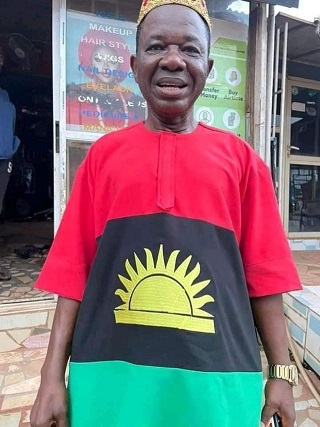
The Nigerian army recently rolled out Operation Still Water, an ember months programme, to maintain security during the festive period. It is a continuation of the previous operations such as Crocodile Smile, Python Dance, and so on. In the midst of it, popular actor Chiwetalu Agu was arrested at Upper Iweka Road, Onitsha, Anambra state, for inciting public members and soliciting support for IPOB. He was donning an IPOB attire when he was arrested. The army denied maltreating him, as was widely reported. A video surfaced later, which gave a snippet of what their interaction with him was like. He said that the Sun showing on his cloth was a rising Sun and that the colour combination was just coincidental and didn’t signify IPOB. He said he was educated enough to know where to go to and where not to go to. He squarely denied IPOB and said he had nothing to do with it. So many Igbos are coming out of their shells to deny IPOB and publicly give their activities a dressing down.

The Igbos we relate with every day are not the ones that IPOB represent, right? So the barbaric activities of the group need to be clamped down by the Igbos themselves. They must make it clear that the narrative of that movement is not theirs and is not in their own interest.

Joe Igbokwe’s house was razed in his hometown of Nnewi, Anambra state. Dr Chike Akunyili was killed in the Idemili North local government of Anambra state. A fire that seems to rage on from a distant neighbour’s residence clearly indicates that your own house is not insulated from the same kind of fire. A proverb in Hausa says, “If you see your neighbour’s beard in flames, you must hurry and rub your own with water.”

The tiny flame that started in Borno has spread like cancer to the entire North. South easterners should not allow this in their backyard. The earlier the Igbos rise against this so-called rising Sun, the better for us all. We have a risen Sun to be grateful for already. There is no need to go looking for more Sun. The heat would definitely be unbearable!

Tahir is Talban Bauchi can be contacted via talbanbauchi@yahoo.com.