Nigeria

Is federalism about “eat what you kill”?

By Simbo Olorunfemi

Federalism is not a Nigerian creation, tempting as one might be led to assume it is. Federalism is a concept in Political Science, with a consensus on what constitutes its grundnorm and what its main features are. I had thought, as a student of Political Science, that I had a modest understanding of what federalism is, having taken a number of courses wholly devoted to it at undergraduate and postgraduate levels. But that was until Nigerians happened on the concept of federalism and I realised how little I knew about it. I have now come to accept that what Nigerians cannot happen to does not exist. Nigerians took hold of federalism, created the aberrant idea of ‘true federalism’, as if there is ‘false federalism’ in practice somewhere, and there has been no rest ever since.

Yet, even though dissensus over the definition of concepts is part and parcel of interrogation in the field of Political Science, there is, in fact, a broad consensus on the definition of Federalism. “What sets federal states apart from other national communities is not their values but a number of institutional design principles that include a division of legislative authority between two orders of government, each of which is elected directly by citizens, and each of which is sovereign in at least one legislative domain. This division of powers is set out in a written constitution that cannot be amended unilaterally by either order of government. In addition, federal states provide for the formal representation of their constituent communities (states or provinces) within the national legislature, although the means by which this is done range from direct popular election (Australia and the United States) to indirect election through constituent governments (Germany), and even to the appointment of friends and partisan colleagues of the prime minister (Canada)” (Watts,1998).

In simple terms, federalism is essentially about shared and self-rule is about sharing powers, functions and responsibilities, against the backdrop of forces of plurality and diversity pulling the people apart. In accordance with this principle considered by Political Scientists as the fundamental plank upon which the concept of Federalism rests, Watts (1996) submits that there are 23 federations in the world. “They vary widely, however, in the character of the underlying social diversity, in the form and scope of the distribution of legislative and administrative powers and financial resources, in the form and processes of the shared representative institutions, in the scope and role of the courts as constitutional umpires, in the character of intergovernmental relations, and in the processes for flexibility and constitutional adjustment”.

The variety out there again reinforces the argument against the ‘Nigerian’ assumption of one Federalism as true and another false. It is absolutely erroneous. As I have repeatedly argued, every federal arrangement is a work in progress, each with its imperfections, with no finishing line for any to arrive at, that it might be adjudged as having attained perfection. On account of constant friction and collision by what Tekena Tamuno described as ‘centre-seeking’ and ‘centre-fleeing’ forces, federations are often under stress and in a constant state of flux, coming under pressure to undergo recreation and adaptation.

In North America, Canada has been struggling with what Ronald Watts described as “three decades of political and constitutional crises, rooted deeply in its fundamental cultural cleavages”. Her neighbour, United States has her issues to deal with as the national and state governments clash. Mexico has its own issues, just like Argentina, Brazil, and Venezuela in South America. The situation is the same in Australia, countries in Europe, India and of course, in Africa as well.

While the nature of the stress in Nigeria, as to be expected, does differ from that of other places, that does not in any way vitiate the position that what is in practice in Nigeria is federalism, contrary to what some argue. It is simply a confirmation of the fact that federalism is a coat of many colours, with our green-white-green been one of the variants.

I recall that it was in the course of our conversations around federalism five years ago, that the distinguished Prince, Adekanmi Ademiluyi anchored his submission around a statement he attributed to the former Canadian Prime Minister, John Diefenbaker that ” Federalism means that you eat what you kill”. I disagreed with his position then and I, obviously, still do now. I don’t even think the essence of Federalism is about pulling apart, as the statement seems to suggest, as it is about pulling together. I do not think the essence of the coming together is that each might farm with the mind of self, by eating on the strength of the kill, rather I would suggest that it is more about broadening the collective base, that there might be enough for the collective good.


I have, however, only just decided to check up on the statement by John Diefenbaker to gain insight into the context in which he might have made it. Unfortunately, I have been unable to track it. Well, what does it matter? The statement provoked enough curiosity in me to have inspired this interrogation. Taking a second look at it, I cannot find grounds to agree with it. I would even argue that Diefenbaker must have been misled about what federalism to have made such a statement. What will be the point of a federation if it is all about self? Why will anyone want to be a part of a federation if the fundamental plank upon which a group, diverse in culture and other respects, is just to “eat what you kill”?

As I have repeatedly argued, federalism is primarily about pulling together, with accommodation for the interests and peculiarities of the component parts, with a view to widening the pool and leveraging on opportunities that come with size and other factors.


Indeed, there is the economic component embedded in the political shell of federalism and for some, it is about the political component tucked inside an economic shell, especially for federalist arrangements that started out as ‘customs unions’. I do not even think that the primary essence of federalism is about eating. Eating what one kills is not and cannot be the driver for federalism. Fundamental to the concept is shared duties and responsibilities with governance.

As we have come to see, the Nigerian elite has managed to make the arrangement here about eating, the same way everything else is reduced to food. That misunderstanding of the essence of Federalism is at the root of a lot of the crises – real, imagined or contrived. It is what is fueling the confusion around VAT. It is behind the divisive and bigoted positions increasing dominating the civic space. It is about people assuming themselves to be better endowed arguing that it should be about “eat what you kill”. If only the mentality can change from that to “eat what you need”.

The argument about eating what you kill is largely about revenue allocation. On that, I had this to say in 2017:

“Much has been made of the revenue allocation system which many see as rather lopsided in favour of the FG and have called for a review. One Senator declared the formula being used by the Revenue Mobilisation Allocation and Fiscal Commission (RMFAC) illegal’ by some weird deduction.

There is really nothing new to the debate as finding the most appropriate revenue allocation formulae, just like the debate, is an age-long one. Some recommendations have been made, just as reviews have taken place over time, especially In the last 40 years.

Before independence, there was the Phillipson Commission set up in 1946, the Hicks-Phillipson Commission of 1953, the Raisman Commission in 1958 and the Binn’s Commission of 1964, even after independence, all with the mandate to work out an acceptable formula, to no satisfaction of any group.

There was the Dina Commission in 1968, the Aboyade Technical Committee of 1977 and there was the Okigbo Commission which largely influenced the 1981 Revenue Act which allocated 55% to FG, 30.5% to State Governments, 10% to LGs and 4.5% for Special funds.

Modifications were further made in 1984 and 1992 which allocated 48.5% to FG, 24% to State Governments, 20% to LGs and 7.5% for Special funds, of which 1% for mineral-producing states on the basis of derivation.

By virtue of the current formula, about 52.68 % is allocated to the federal government from the Federation Account, 26.70% to the 36 states and 20.60% to the local government councils in the Federation.


Please note that sharing revenue among State governments and local governments were done on the basis of 4 principles, with different weights attached to each – population; equality of states or LGs, as the case might be; social development factor, revenue factor.

Also note how the allocation to Local Governments, in terms of percentage, going from 10% to 20%, even when many argue that the LGs are mostly non-functional, delivering very little in value.

So, by and large, there have been only marginal reviews in the structure of the allocation formula, over the years, especially the vertical aspect of it.

That, in spite of the fact that experts like Prof Okigbo and others have worked on it. So, when some reduce this to a North-South thing or hide behind the finger of restructuring to push it, it is obvious that they are not as guided on process or details behind some of the issues they pick up or simply echo”.

So, am I saying that there is nothing wrong with the system as it is? Far from it. The point I make is that Federalism is a work in progress and that as the journey goes on, what people do is engage in the process of negotiation to navigate into a more acceptable arrangement. It is not about seeking to bring the roof down. Our undue obsession with who eats what, when and how, makes our conversations convoluted and unhelpful. How we redirect the conversation to enlarging the pot, rather than wanting to have a bigger spoon or even making away with the pot should be of greater concern, as I think that is what federalism is supposed to foster.

There is nothing to suggest, either from the historical, ideological or philosophical premise, that federalism is supposed to be a closed shop arrangement, which locks one variant in and a different type out. It makes allowance even for hybrids, with quasi-federalist arrangements as well receiving the nod, as fundamental to the adoption of federalism is the desire to seek accommodation for forces seeking to pull and push. That being the case, where each federation finds its solution and how it adopts it will be up to it, as long as it is democratic, for Adele Jinadu maintains that “democracy is a condition of federalism”.

The challenge with some of our conversations is not just a defective recollection of history but the tragedy of assumptions about a number of things. This time, it is about what federalism is. I would suggest that the real essence of Federalism is in the traditional motto of the US – “e pluribus unum” which means “out of many, one. At the end of the day, we must remember the words of J.J. Linz that “federalism can only assure that nobody could be fully unhappy but certainly not that everybody will be happy with the solution.”

In Football, not everyone in the squad can make the team, not everyone in the team makes the field at once. Perhaps, there is something there as a cue. It should always be about what is in the best interest of the collective. As someone says, federalism can be a flexible system if the partners themselves are capable of flexibility.

Simbo Olorunfemi can be reached via simboor@yahoo.com.

British and American English(es): same or different thing(s)?

By Rabiu Muhammad Gama

Introduction

Have you ever wondered why Americans go on vacation while Brits go on holiday? I am sure you have. Or haven’t you ever heard that American kids like candy while British kids are crazy about sweets? Our Law of Contract lecturer, who was so lucky to do his PhD in England, once told us how nice his flat was when he was in England. On the other hand, one of our learned professors, who was privileged to have some training from Harvard Law School, lamented that he suffered before he could afford an apartment during his stay in the US. Curious?  Well, I can’t actually blame you for that. I think all these go to show us how beautiful the English language is.

British and American English

That famous Irish playwright, George Bernard Shaw, once said, “the United States and the United Kingdom are two countries divided by a common language.” That was Shaw. And he wasn’t entirely wrong.

There are many varieties of English today: American English, British English, Australian English, Canadian English, Caribbean English, to mention but a few. However, for some historical and accidental factors, American and British Englishes are the most widely used across the globe today. These two Englishes,  I am confident you may be aware of, are not always the same. However, they are not very different either. As far as this article is concerned, American English is that variety of the English language widely written and spoken in the United States and some parts of Canada. While British English, just as the name hints, is the standard dialect of the English language spoken and written in the United Kingdom (England, Scotland, Wales and Northern Ireland).

The most noticeable areas where British and American Englishes differ are vocabulary, spelling, grammar, and, though very rarely, idiomatic expressions. Forget about pronunciation; it does not count – as far as Standard English is concerned, pronunciation is not an accurate barometer for measuring “good English”. Ask around if you doubt me.

Vocabulary

This is arguably the most significant area where the two Englishes differ. Americans don’t say lifter; they say elevator. It’s the Britons that call it lifter. Had Leonel Messi moved to Manchester City rather than Paris Saint-Germain, he would have been playing football by now. But, if he were to move to any football team in the US, say, the indomitable Seattle Sounders or the New York City FC, he would be playing soccer. Donald Trump, the most confused American president in recent history, is crazy about expensive automobiles. It may shock you to hear that the current Prime Minister of England, Boris Johnson, doesn’t know how to drive a car! If you go to the US, you will need an airplane to commute from Orlando to Las Vegas (the Sin City) because the cities are very far from each other. Go to the UK afterwards; you won’t need an aeroplane to move from Liverpool to Manchester – the two cities are only a stone’s throw from each other.

Spelling

There are many spelling differences between American and British English. Words like color, labor and honor are found only in American English. In England, they would write these words as colour, labour and honour, respectively. In words like these, where the Americans use an “o”, the Britons would use “ou”. Where an American would ask you if you know any good theater, a Briton would ask you if you know any good theatre, “er” in American English changes to “re” in British English. The Britons organise programmes, but the Americans only organize programs. I am sure you got this last point, too, don’t you?

Grammar

In addition to spelling and vocabulary, there are specific grammar differences between British and American English. For instance, collective nouns are considered singular in American English, while they’re mostly treated as plural in British English. For example,  where an American would tell you that “his family is large”, a Briton would, most likely, tell you that “his family are large.” The Americans always take a shower, while the Britons mostly have a shower. The word “gotten”, the past particle of “get”, is now dead and buried in British English. Surprisingly enough, the word is still alive and kicking in American English.

On a final note, American English is the child of British English. Nonetheless, the former is the most widely written and spoken English today, thanks to America’s technology and robust economy. So, don’t be shocked whenever you read that the Brits actually introduced the language to the Americans because it’s true. Anyway, it is not uncommon to see a child that overshadows his dad. It’s, however, very unusual, perhaps unprecedented, to see a child reporting his mom to an anti-graft agency!

Rabiu Muhammad Gama is a level 300 Law student and  English Enthusiast. He can be reached on rabiuminuwa327@gmail.com or 09061912994.

6 Nigerian citizens declared wanted by UAE for terrorism

By Muhammad Sabiu

The United Arab Emirates has declared thirty-eight individuals wanted, of which six are Nigerian citizens.

The declaration is in connection to allegations of involvement in terrorism and related activities, which had the names of the individuals included on the country’s terror designation list.

A foreign news platform, Al Arabiya, reports, “The decision, WAM stated, comes within the framework of the UAE’s efforts to target and disrupt networks associated with the financing of terrorism and its associated activities.”

Other individuals on the UAE’s terror list are from Iran, Iraq, India, Russia, Jordan, Britain and others.

According to the Daily Trust newspaper, the six Nigerians are Abdurrahaman Ado Musa, Salihu Yusuf Adamu, Bashir Ali Yusuf, Muhammed Ibrahim Isa, Ibrahim Ali Alhassan and Surajo Abubakar Muhammad.

For the good of the North

By Abubakar Isah Baba

The misrepresentation of northern Nigeria ranges from distorting and falsifying reality, profiling, underreporting, and not reporting about the region by media outlets owned and controlled by others. Apparent and alarming as this is, it has been going on for a long time. This requires no evidence or justification; it is a growing trend, especially when the country propagates alienation over harmony. But who cares? Even those who have the responsibility to do so are busily aggrandising their powers.

But how long it will take the sick region to learn from this great proverb: Until the lion has a historian, the story of the hunt will always favour the hunter. The North was painted black with negative phrases, tales of violence, poverty, unemployment, irresponsible marriages, out-of-school children and whatnot as if there were no other positive realities.

John Campbell attests to the above mischaracterisation in his book, Nigeria: Dancing on the Brink, that “The Nigerian media, mostly headquartered in the Southern part of the country, is routinely insensitive and simplistic in its reportage about Northern Nigeria. And it is the Nigerian media that colors the too-often superficial Western view of the North.” This has a significant effect on the economic decline in the North as no investor will invest in the region that is dangerous, volatile and unpromising.

Apart from the traditional cores of mass communication, which include informing, educating, and entertaining, it is also used for propaganda to gain support or sympathy from the public or authority. EndSARS saga is an indicator of the power of propaganda, for it taught the north a lesson that “Dokin mai baki ya fi gudu” – the South has a much louder voice. Please don’t confuse my lamenting with Afghanistanism (a term used in journalism to describe journalists who shun the problem of their community but go extra-mile in condemning others), far from it. I suggest North should define itself and tell its version of the story; represent itself properly as bias in the news is often backgrounded. Others could not define us nor report us properly. 

Traditional rulers, political leaders, scholars, and concerned people in Northern Nigeria should speedily and strategically address this problem of bad press and misrepresentation of the North through investing in the media and utilising it for the good of their people. With Daily Nigerian, Sahelian Times, Nigerian Tracker and recently The Daily Reality (TDR), we need to see more outlets so we can ship our information without thinking about sinking. Recently, TDR’s publications have changed the North’s fate. Remember CBN and the reopening of the NIRSAL site, Netflix and the Kannywood, etc.

Abubakar Isah Baba writes from Kano. He can be reached via abubakarisahbaba01@gmail.com.

Dr Pantami, silence is not golden

By Ibrahiym A. El-Caleel

Saner climes aren’t saner climes for nothing. They seem to have broader perspectives on life. They acknowledge success wherever it is and not getting unnecessarily fixated on just one thing. 

In Nigeria and several African countries, academic qualifications and honorary titles are seen as the only testimonial to weigh your level of intellect, level of exposure, degree of societal awareness and overall social image. So, if you want to be seen as a “rare gem” and the next human being to have sense since Plato, then you must accumulate as many academic qualifications as possible and have titles. 

Several people laughed at my comment elsewhere on Africans and their love for titles. I reminded us that the official name of the former Gambian President was, His Excellency Sheikh Professor Alhaji Dr Yahya Abdul-Aziz Awal Jemus Junkung Jammeh Naasiru Deen Babili Mansa. You may please count the number of titles there. If you are a meticulous fellow like the academics, you would want to follow each of these titles to see how Yahya Jammeh got them. In most of the titles, you’ll see that they are either honorary or just self-assigned. 

The truth is, you don’t need all those titles before you can become an effective President. At the same time, across saner climes, America’s President was simply “Barack Obama”; UK’s Prime Minister was simply “Theresa May”; Turkish Prime Minister was simply “Recep Erdogan”. Yet all these countries were doing far better than the country whose president accumulated more titles than his name. 

Do not get me wrong. If you have titles, please feel free to assemble them before your name at birth. It is said that titles are adornments. If you have terms, flaunt them to everyone’s eyes! If you don’t have them, work hard to get them and then exhibit them. But do not get so obsessed with titles and attach them to your name; then, when it is time for verification, it will seem as if people are just envious of you or hate you. People want to verify things that aren’t so clear to them. It is in the spirit of filtering contents before they go into history. The unborn generation deserves to read truthful content. We owe them that. 

With all this Dr Pantami’s issue going on, I continuously kept visiting his official Facebook page to see what he might have to say. But, unfortunately, there was nothing there to read on the issue. 

As an academic, professorial chair is the pinnacle of your career. How would someone attain such great success and not be overwhelmed with joy to the extent of announcing it to us, his lovers and admirers? Isn’t such a promotion what we should celebrate with our loved one? Don’t we deserve to be let aware from the horse’s mouth? Do we deserve to be let in the hands of “envious academics” and polemicists who churn out narratives and counter-narratives as the clock ticks? 

I think lovers and fans deserve better treatment. With the level of energy dissipated, silence is not golden. The silence is graduating to the approval of the professorial appointment or promotion or whatnot. 

On the one hand, if the professorial appointment is genuine and legit, Dr Isa Pantami will only clarify the inconsistencies on his number of peer-reviewed papers and the number of years spent in active service. Whatever it is that the Federal University of Technology, Owerri (FUTO) used as a legit fulcrum to promote him, that is just what he will explain, and the world will have to live with it. 

On the other hand, if the promotion is just the sensationalism of overzealous fans, then Dr Isa Pantami only needs to clarify so to ask the public to disregard it. Because his silence would imply an integrity defect which is bad for his image first as a reputable Islamic scholar and second, as a distinguished compatriot of the Federal Republic of Nigeria. 


Ibrahiym A. El-Caleel writes from Zaria and can be reached via caleel2009@gmail.com.

Politics is not to blame: how good people get corrupted through politics

By AF Sesay

When we talk of politicians, we mostly regard them as aliens or spirits from the evil forest. We often see them as people who came with their own set of beliefs, attitudes, approaches to life and different perspectives on divine justice and the torture of Hell. We talk of erstwhile compassionate friends who entered politics and suddenly became monsters. We speak about them like we do of cold, callous aliens whose race is bent on inflicting the greatest damage possible on the human race. But wait…who are these politicians?

Let’s keep the answer in the brain and move on to something urgent: the design of governance experience. Do we really see this as something we should do better? Should leaders and followers look at governance from the lens of user experience design? I think they should!

If every product, starting with the Constitution to the Curriculum, was designed with the people who this will affect in mind, I am pretty sure the outcomes will be different. Hardly anybody will look at the current Constitution and Curriculum and say: “Yes, these were designed with empathy, love and responsiveness to the needs of the citizens”.

If the guy who presses the button at NEPA or, more recently, NEDCO/KEDCO have the empathy to think that with every touch of the red buttons somebody is going out of business, a baby is dying in the hospital; an investor is packing his bag to leave Nigeria for good, a boy is missing vital lessons because he can no longer cope with doing his assignment in the dark, a family is exposing their lives to carbon monoxide generated by Generators. If he ever approaches his work as a user experience designer…

If the northerner or southerner stealing from the public treasury realises that with every kobo stolen a citizen dies, this corruption-induced death is agnostic of region, religion or tribe. Suppose every Contractor realised that every badly-designed road is a graveyard for his fellow citizens.

If every Nigerian who had the opportunity to lead ten people or more or even less realised that these micro leadership tasks are a microcosm of the overall leadership output of the nation. Suppose every employer knew that every right violated is the beginning of bad governance. Then, you would have seen around you thoughtful and resourceful leaders who would eventually emerge as national leaders.

If every young person on Twitter knew that every tweet could potentially destroy a life, even if it looks like catching a cruise. Suppose every journalist knew that every fake report opens bigger wounds and increases the pain point of his readers. Then, you would have had cause to verify less news and have less regrets for sharing harmful and divisive contents.

When we start seeing this problem as a design problem and not just problems caused by some aliens or foreign species, then we will be mentally ready to ask the right questions.

While scratching at the surface for the past 60 years has given some temporary relief, ousted leaders we hate, brought our tribesmen to power and opened doors to stupendous wealth, the truth is that the problems have compounded.

At the mention of Nigeria, everybody becomes an expert. But most of this expertise only hit the surface, compounding the problem with false claims, unverified and alternative truths, faulty assumptions, stereotypes, bigotry, and received “wisdom”.

We have got to wake up and smell the coffee. There is a design problem out here. Until we are heavy on researching root causes and being genuinely interested in knowing all the whys of the problem, until we see ourselves beyond the just-a-citizen mindset to the mindset of restless inventors, these problems are only growing bigger and more complex regardless of who is at the top.

We have got to build a culture of research and replace that with assumptions and stereotypes. Research could actually confirm some of our beliefs, by the way. But, until we see the products of today as collective input of everybody who played a role, no matter how little, until the people in power (from Local Government to Federal Government)  create a mechanism to capture feedback and seek continual improvement regularly, we will still have to come to these basics many years later.

Go to the archives and read headlines of the ’70s and ’80s and compare them to today’s headlines; you will observe a pattern that will shock you. In short, the design process is faulty, but we are finding it difficult to rethink the process, because thinking itself is going to require an effort that we are not yet ready to put in!

AF Sesay is a writer based in Lagos. He can be reached via amarasesay.amir@gmail.com.

21st-century students and reading culture challenges

By Muhammad Abubakar

Technology has changed the world of education. It provides quicker ways of accessing learning materials in varieties. Indeed, this is a brilliant opportunity. Technology provided cyber-libraries, fully occupied with every knowledge in every fabric of human endeavour. From sciences to humanities, all is available over the internet. There they are available, every time, every day, everywhere and for everyone.

Knowledge with the help of the internet has become accessible and very cheap for almost everyone. With very affordable data, one can download as many reading or learning materials as he wishes to possess in every literature genre—poetry or prose. Moreover, the technology is beyond providing a reader with the recently published works; much older works, dating five, six, seven or more hundreds years back, can be found and be successfully downloaded.

Often I say, “If you want to see the world naked, fall in love with books.” Only through reading and writing the recorded history of the past nations and communities reside in these days; only through it would we record the present as a documentary to the younger ones and the future generations to come. A good reader would have an excellent knowledge of the past, present and can predict the future. Readers have eyes to see the unborn days. If readers didn’t read and write, we might not have lived a complete account of life.

Reading culture died among young people these days. However, in the past three to four decades—albeit I was not part of the days there, I collided with authentic histories of how the predecessors [students] of those days suffered in seeking knowledge. I academically encountered examples of good students—who came through the doors of past days, whose education, knowledge and experience are beyond the curriculum. They are well educated and well trained. They read, write and speak better than 21-century students. Despite their meagre technological resources, short-planned curriculum, reading and learning materials scarcity, they are far more developed than us.

Twenty-first-century students’ poor reading habits lead to many crying stories and anti-social behaviour—for instance, school violence, massive failure and examination malpractice. The massive failure of the 2021 UTME in Nigeria is an example of bad elements generating by poor reading culture.

Students don’t read, and they need high quantity certificates. This century provides an excellent opportunity for students in reading, self-development and intellectual development. But we prefer utilizing our time in other options than reading. We spend most of our time; exhaust most of our data: gossiping and uploading pictures to appreciate others.

Technological advancement has a role in adjusting our reading attitudes. Students should adopt the habit of utilizing most of the time reading. The difference between the past students and these of the present is befriending books. Our being online on Facebook, WhatsApp, Instagram, Tik Tok, and other media platforms should be less—and if necessary, let’s use it positively. It’s crystal-clear that our habits show that we hate reading. Despite the resources we possess in today’s world [21 century], most secondary and tertiary institutions students can not effectively write a letter of any format.

For example, PDF Drive provides any kind of material students can require to learn, curricular or extracurricular. University of People also delivers lectures on every topic need. You don’t need to be constantly reading, and every time, twenty to thirty pages of a book every day will suffice you. Better too late than never. If you’re finding reading boring—read simple stuff, gradually you will make it.

I recommend we should promote reading culture among ourselves through reading and writing challenges. For example, organizing poetry and prose contest, book chats and reading sessions can help. Reading culture would be rapidly promoted among students [young and older ones] in our communities through these means and others.

In conclusion, during our leisure time, weekends and breaks—let’s train our younger siblings; divert their zeal to books. Coach and guide them towards their curricular and beyond. Read them stories, poems, and lots more. Ask them to practice writing—and make simple competitions to them regarding reading and writing. Let’s no go and leave the young generation behind.

Muhammad Abubakar can be reached via muhammadabk1097@gmail.com.

Popular Nigerian university dismisses lecturer over ‘sexual misconduct’

By Muhammad Sabiu

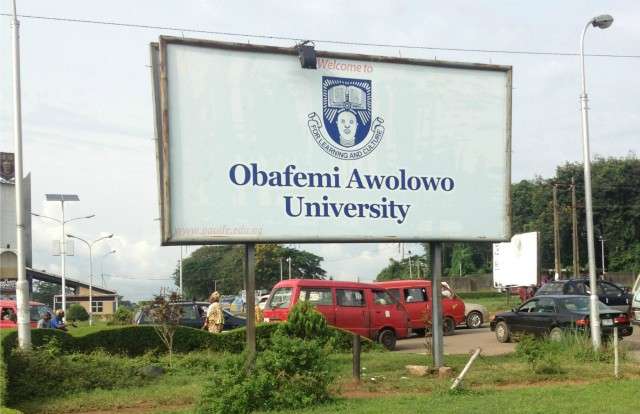
Authorities of the Obafemi Awolowo University (OAU), Ile-Ife, have dismissed a senior lecture, Adebayo Mosobalaje, from the institution over alleged sexual misconduct.

The senior lecturer was from the Department of English in the Faculty of Arts.

The dismissal was announced in a statement by the university’s public relations officer, Abiodun Olarewaju.

Mr Olarewaju said, “In its avowed determination to rid the University of any form of sexual intimidation, harassment and, or coercion, the Governing Council of Obafemi Awolowo University, Ile-Ife, has dismissed another lecturer who was found guilty of sexual demeanour against a female student.

“The decision to dismiss Dr. Adebayo Mosobalaje of the Department of English Language in the Faculty of Arts was taken by the University Council at its last sitting on Tuesday, September 7th, 2021.

“Having exhaustively deliberated on the report of the Joint Committee of Council and Senate, which investigated the case of sexual harassment against Mosobalaje, the University Council, unambiguously declared its zero tolerance to sexual harassment in any form or guise and, accordingly, applied the appropriate University sanctions for such an offence as contained in the University regulation.”

This is not the first time the OAU got enmeshed in the scandal of sexual misconduct between lecturers and students.

In 2018, a professor of accounting at the institution, Richard Akindele, was also found to have been involved in a sex-for-marks scandal, which got him fired from the institution.

Prof. Akindele demanded five-round sex from a student before he would pass her in a course he took. 

The news went viral after the student exposed him through their recordings in the course of their engagement.

Since 2018 when the story of sexual harassment allegations against a professor of accounting at the university’s Faculty of Administration, Richard Akindele, went viral, the institution has regularly been in the news for similar reasons.

Akindele, who the university dismissed, was also found guilty and sentenced to two years imprisonment following his prosecution by the Independent Corrupt Practices and Other Related Offences Commission (ICPC). He has since been released.

There is also the unresolved case of a lecturer of International Relations, Bisi Olaleye, and another at the school’s Centre for Distance Learning, Monday Omo-Etan.

Can Sheikh Pantami be a professor now?

By Idris Hamza Yana

Allah knows I love and revere Shiekh Isa Ali Ibrahim Pantami – I prefer addressing him as Sheikh than Dr. I am not sure if the Sheikh can remember me or the encounter that brought our paths together. That encounter, however, left a lasting impression on me about him. Most of my friends, online and offline, know that I support and defend him in many issues, especially since he became a minister. This does not, in any way, mean I am looking for validation, acceptance or favour, from the learned Sheikh. I am also not a blind supporter.

Besides, I want to say a few words regarding the news of his promotion to the rank of professor, which has generated a lot of controversies. However, before dwelling on that, I want to unequivocally state that Sheikh Pantami’s academic excellence is beyond a reasonable doubt. He is an academic par excellence, just as he is an Islamic scholar. There is no doubt about that. Being promoted to the rank of professor, however, goes a bit beyond academic excellence. Some things (have to) complement one’s academic excellence to guarantee one’s chances of becoming a professor. I will mention the crucial ones.

Specific criteria qualify one to be a professor in Nigeria. They include obtaining a certain level of education, engagement in teaching, research and community service, and scholarship assessment. A doctorate is mostly a requirement, except for medical sciences who recognise a professional fellowship. According to each university’s Condition of Service, teaching for some years, including engagement in other academic activities such as supervision, are part of the process.

Community services refer to both academic and non-academic positions held (such as Head of Department, Dean, Director, etc.). A professorial candidate must also present his scholarly works, which relevant scholars in the field will assess. Candidate’s works are usually submitted to three people, and they can only be promoted to the professor rank if at least two out of the three recommend that.

Active service is another crucial component for promotion to the rank of professor. One must be actively teaching in a university at the time of their promotion. Another option is at the point of appointment from one university to another. If a person presents proof indicating he meets the requirement for a professorial chair in a university they are applying for a job, the committee responsible for his appointment has the prerogative to appoint him with a rank of professor even if he was not a professor in the previous institution he was working.

Therefore, looking at the above criteria, it is improbable for Sheikh Pantami to become a professor in his current circumstances. He is currently a minister of the Federal Republic of Nigeria. Part of the conditions of his appointment as the minister is that he had to take an unpaid leave from the university he was working for in KSA. This shows that he is not in “active service” with an institution of learning.

The purported reports about his promotion to the rank of professor say that it is a university in Nigeria (Owerri to be specific) that promoted him. This is very unlikely because the university cannot promote someone that is not its staff. Obviously, Sheikh Pantami is not a staff of that university. Since there is no “honourary professorship,” like a doctorate, we can conclude that the university has no power to do that. Though in Nigeria, anything is possible.

This, however, does mean Sheikh Pantami will not be a professor in the future. There are countless examples of academics who joined public service at some point in their lives and later went back to academia to become professors.

For now, we can only wish Sheikh Pantami more enviable successes as a minister, a safe landing and a prosperous academic future.

Idris Hamza Yana is a Doctoral Researcher at the University of Exeter, United Kingdom. His social media handles are:

Facebook: https://www.facebook.com/idris.yana/

Twitter: https://twitter.com/Idrisyana