Nigeria

‘You Are Not Forgotten’: Tinubu Vows to Rescue Abducted Children, Orders Intensified Security Operations


By Abdullahi Mukhtar Algasgaini

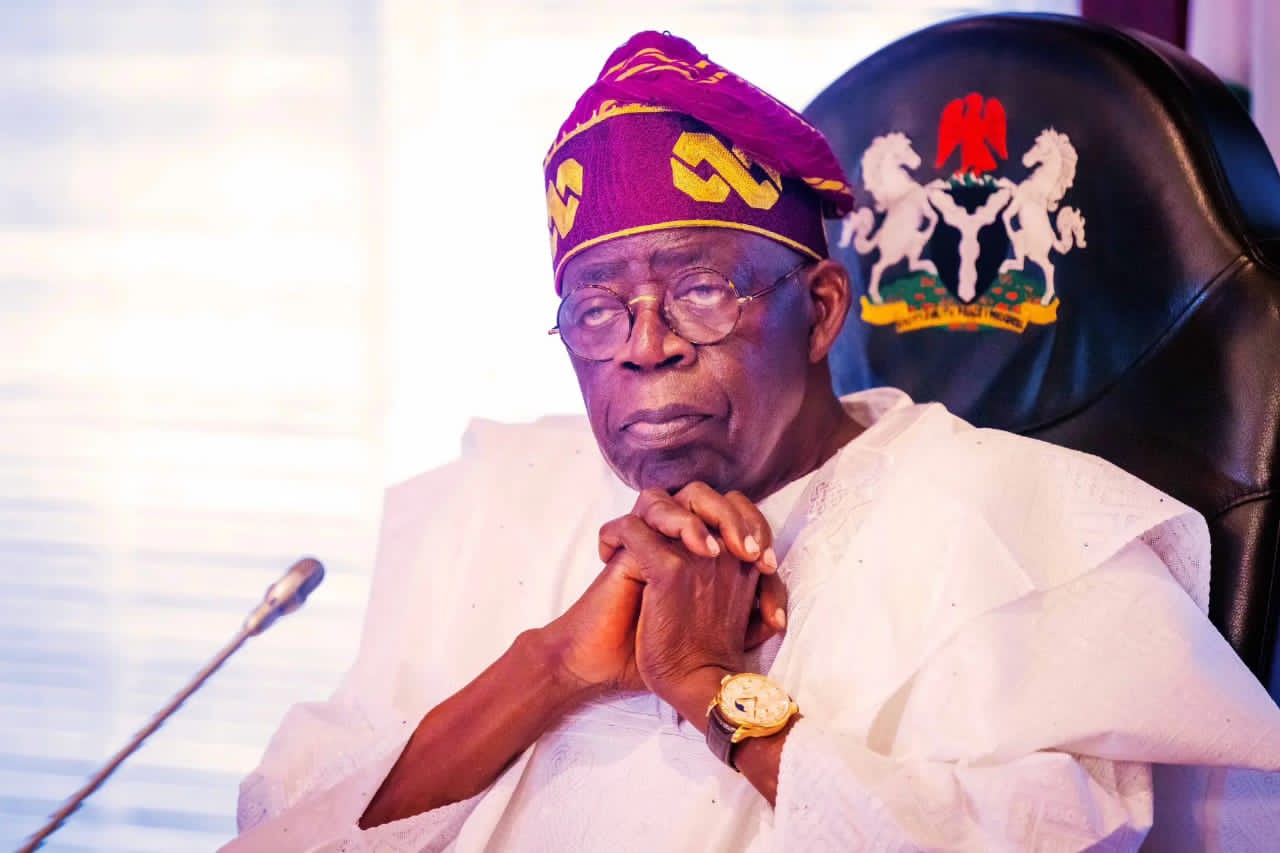
President Bola Ahmed Tinubu on Wednesday assured Nigerian children held captive by criminals in Oyo, Borno, and other states that they have not been abandoned by his administration, as he issued a series of directives to security agencies to intensify rescue operations nationwide.

In a Children’s Day statement released by the State House, the President also acknowledged the pain of grieving families, saying, “Your government will not turn your pain into ceremony.”

The address, which coincided with Eid-el-Kabir, struck a somber tone as Tinubu noted that while the nation celebrates its youngest citizens, some children and their teachers remain in captivity instead of being home with their families.

“To those children, their parents, and their teachers, I say this as a father and your President: you are not forgotten. You are not abandoned,” Tinubu said.

He directed all relevant security agencies to sustain and intensify coordinated rescue operations for abducted children and other vulnerable citizens, insisting that such operations must be “intelligence-led, carefully executed and focused on the safe recovery of our children.”

The President also ordered the strengthening of school protection measures in high-risk areas, including updated school vulnerability mapping, closer coordination between state governments and security commands, rapid response links between schools and local security units, and stronger community-based early warning systems.

The Federal Ministry of Education, working with state governments, is to deepen the implementation of the Safe Schools framework “with clear reporting, clear responsibility and clear timelines,” Tinubu added.

Beyond rescue, the President directed relevant ministries and agencies to ensure recovered children receive proper reintegration support, including medical attention, counselling, education, and dignity. “Rescue is not the end of the government’s duty,” he said.

Tinubu also appealed to parents, teachers, traditional rulers, religious leaders, community leaders, transport unions, local vigilantes, and the media to play active roles in protecting children, warning that silence about suspicious movements around schools places children at risk.

“The fight to protect children must begin before an attack happens, not after one has already occurred,” he said.

The President reaffirmed his administration’s commitment to investing in education, healthcare, nutrition, social protection, digital skills, and safer communities, adding: “Childhood must not be a privilege reserved for a few. It is the right of every Nigerian child.”

He ended with a direct message to Nigerian children: “You matter—your dreams matter; your safety matters. Your education matters. Be assured that your future matters to this government and to this nation, and we will safeguard it.”

Presidency Seeks Legal Action Against VeryDarkMan Over Alleged Fake Tinubu Audio

By Sabiu Abdullahi

The Presidency has called for legal action against social media influencer Martins Vincent Otse, widely known as VeryDarkMan (VDM), over an audio clip allegedly linked to President Bola Tinubu.

Bayo Onanuga, the Special Adviser to the President on Information and Strategy, accused the influencer of spreading false information capable of misleading Nigerians and damaging the President’s reputation.

In a post shared on X on Wednesday, Onanuga condemned the circulation of the recording, which allegedly contained fabricated comments attributed to Tinubu ahead of the 2027 general elections.

“This VDM needs to face the weight of the law for being the conveyor and disseminator of a fake audio of President Tinubu. This is a clear case of an egregious abuse of the social media platform,” Onanuga wrote.

The controversial audio, which many observers suspect may have been generated through artificial intelligence voice-cloning technology, allegedly featured Tinubu making sensitive political remarks. Among the claims in the recording were allegations that insecurity in the South-East was intentional, that the President once asked former Labour Party presidential candidate Peter Obi to withdraw from the 2023 race in his favour, and that he was unconcerned about the country’s economic difficulties.

The recording also alleged that funds obtained through World Bank loans were being channelled into election activities.

VDM shared the clip alongside a video message directed at his followers. He urged Nigerians to listen carefully to the audio before deciding whether to support Tinubu in the next presidential election.

“You people watch it, see this next video I’m about to play. After you people watch it, we’ll come decide whether na for shrine them cook una mind. All the people wey wan support Bola Ahmed Tinubu for 2027, you go come know whether they don cook your mind (“Watch this next video I’m about to play. After you watch it, we will decide whether your minds have been influenced in a ritualistic manner. All those who intend to support Bola Ahmed Tinubu in 2027 will then understand whether they have been mentally manipulated),” he said.

After playing the audio, the influencer openly rejected the possibility of Tinubu returning to office in 2027.

“This man does not have anything to offer. Come 2027, any other option is welcome, but for me, myself and I, President Bola Ahmed Tinubu cannot offer us anything anymore. So he should go,” he added.

Bauchi Pilgrim Reportedly Dies After Leaving Arafat


By Uzair Adam

A Nigerian pilgrim participating in the 2026 Hajj exercise has died in Muzdalifah shortly after arriving from Arafat during the early hours of Wednesday.

The deceased, believed to be from Bauchi State, reportedly collapsed during the overnight movement of pilgrims between the two holy sites.

Witnesses said Saudi security personnel and emergency medical officials swiftly evacuated the pilgrim from the area after the incident.

He was seen being wheeled away by security officers alongside members of the emergency response team.

Two officials attached to the Bauchi State pilgrims contingent were also present during the evacuation.

As of the time of filing this report, authorities had not officially confirmed the identity of the deceased, while the cause of death remained unknown pending an official statement.

The incident occurred during one of the most physically demanding stages of the Hajj pilgrimage, as millions of pilgrims move between holy sites amid large crowds and intense weather conditions.

Thousands of Nigerian pilgrims had earlier arrived in Muzdalifah after observing the Day of Arafat, regarded as the spiritual climax of the annual pilgrimage.

Eid-el-Kabir: Kano Govt Supports Vulnerable Groups With Sallah Cows


By Uzair Adam

As part of efforts to ensure an inclusive Eid-el-Kabir celebration, the Kano State Government has donated Sallah cows to persons with special needs and vulnerable homes across the state.
P0PQ1)

The intervention, coordinated by the Ministry of Women Affairs, Children and Persons with Special Needs, saw six clusters of persons living with disabilities receive one cow each alongside N20,000 transport support.

The benefiting groups include persons with spinal cord injuries, persons living with albinism, persons affected by leprosy, the visually impaired, the hearing impaired, and persons with physical disabilities.

Speaking during the distribution ceremony at the Nassarawa Children’s Home, the Commissioner for Women Affairs, Children and Persons with Special Needs, Hajiya Amina Abdullahi Sani, said the gesture reflects Governor Abba Kabir Yusuf’s commitment to improving the welfare of vulnerable residents in the state.

She noted that the administration considered it important for persons with special needs and other disadvantaged groups to celebrate the Sallah festivities with joy and dignity alongside their families.

According to her, the donation is part of the government’s broader humanitarian and inclusive governance agenda aimed at supporting vulnerable members of society.

The Director of Persons with Special Needs, Dr. Binta Bala, commended the ministry for sustaining initiatives targeted at improving the lives of vulnerable persons in Kano State.

In a similar gesture, the state government also presented one cow each to Nassarawa Children’s Home, Remand Home Goron Dutse, Kwalli VVF Centre, and Tudun Maliki Torrey Home to enable residents celebrate the Eid-el-Kabir festivities.


Representatives of the benefiting associations expressed appreciation to the governor and the ministry for the support, describing the intervention as timely. They also offered prayers for continued guidance and protection for the governor.

Atiku Wins ADC Presidential Primaries in Kano


By Uzair Adam

Former Vice President Atiku Abubakar has won the African Democratic Congress (ADC) presidential primaries held in Kano State.

Announcing the outcome, chairman of the electoral committee, Dr. John Ayuba, said the exercise was successfully conducted across the 44 local government areas and 484 wards of the state.

The collated results showed that Atiku polled 155,595 votes to emerge ahead of other contenders. Mohammed Hayatu-Deen secured 15,914 votes, while Rotimi Amaechi received 9,994 votes.

Dr. Ayuba explained that the results would be forwarded to the party’s National Coalition Centre in Abuja for ratification and official confirmation of the party’s presidential candidate.

He urged party members to remain united and committed ahead of the 2027 general elections to ensure the ADC produces Nigeria’s next president.

Meanwhile, the party has delayed the announcement of results for the Kano governorship primaries pending further directives from the national leadership.

The governorship race is being contested by Ibrahim Ali Amin Little and Malam Ibrahim Khalil, with the party reportedly considering a consensus arrangement to choose its candidate.

Police Bust Suspected Drug Syndicate, Arrest Four in Kano


By Uzair Adam

Operatives of the Kano State Police Command have arrested four suspected drug dealers during coordinated raids across parts of Kano metropolis.

The operation, carried out by the Command’s Special Intervention Squad (SIS) and officers from the Gezawa Police Division, followed directives from the Inspector-General of Police, IGP Olatunji Rilwan Disu, on intelligence-led and community-oriented policing.

Police said the arrests were made after credible intelligence gathered from public tips and surveillance operations.

On May 23, 2026, SIS operatives arrested Abdulsalam Muhammad, 30, of Hotoro in Nassarawa Local Government Area, and Murtala Sani, 34, of Zangon Dakata in Ungoggo Local Government Area, along Nassarawa GRA.

The suspects were allegedly found with a Bagco sack containing suspected illicit drugs.

During interrogation, Abdulsalam reportedly confessed that the sack contained Tramadol supplied by two accomplices who are currently on the run.

A subsequent search of the sack led to the recovery of 23 rolls of Tramadol, with each roll containing 10 packs.

Police said both suspects confessed to the crime, while efforts are ongoing to arrest the fleeing accomplices.

In a separate operation, officers attached to Gezawa Police Division arrested Sama’ila Ado, 40, from Dabi Village in Ringim Local Government Area of Jigawa State, at a known black spot in Bangare Village for allegedly selling Cannabis Sativa openly.

Police recovered 130 wraps and half a block of dried leaves suspected to be Cannabis Sativa from the suspect. Authorities said he would be arraigned before a Magistrate Court.

Similarly, Umar Salisu, 25, of Yunbu Village in Gabasawa Local Government Area, was arrested at Gezawa Mesanda black spot.

Recovered from him were 10 wraps of suspected Cannabis Sativa and two bottles of rubber solution.

The Kano State Commissioner of Police, Ibrahim Adamu Bakori, commended the officers involved in the operations for their professionalism and dedication.

He also appreciated residents of the state for providing useful information that aided the arrests, urging members of the public to continue reporting suspicious activities to security agencies.

Bakori reaffirmed the Command’s commitment to tackling crime and ensuring the safety of residents across the state.

A Generation Trapped Between Certificates, Closed Doors and Broken Promises

By Haroon Aremu 

I remembered an article I once wrote, titled “After NYSC, A call for National job Creation and Youth Empowerment”. It was a piece born not from research papers or policy documents, but from lived experience. I wrote it at a time close to the completion of my service to the nation, armed with certificates, skills, energy, and hope, yet utterly directionless. 

No roadmap. No safety net. No assurance that the years spent in classrooms, lecture halls, and service camps would translate into something as basic as dignity through work. That article was a lament, yes, but more importantly, it was a warning. Today, that warning has become reality for millions.

In Nigeria, the idea of job security, especially for young people, has become almost mythical. It is spoken of like folklore: something people claim once existed, but which no one can quite prove anymore. Every year, universities, polytechnics, and colleges release fresh graduates into the labour market, and every year the market responds with silence. 

The government is often the first to be blamed, and rightly so. A state that cannot productively absorb its youth is sowing the seeds of long-term instability. But even when we turn to the private sector, supposedly the saviour, the door is only slightly ajar, and guarded by impossible conditions like “Five years’ experience,” “Six years’ experience”, and even “Prior industry exposure required.”

The question that screams but is never answered is simple: where does a young graduate get five years of experience without first being given an opportunity? How does one prove competence without access? How does potential survive when every door demands proof that can only come from another locked door?

Government jobs, which should ideally serve as a stabilising force, offer no refuge either. Age limits of 25, 30, and sometimes 35 are rigidly enforced, as though unemployment itself does not age people. What happens to the graduate who has been searching for work for six, seven, or eight years? By the time opportunity finally knocks, they are too old. They are now “too old” to be hired, yet too young to retire. Suspended in limbo.

The harsh truth is this: Nigeria’s population has outgrown its job opportunities. The numbers no longer lie. And in that imbalance, hope is often the first casualty.

Ironically, this is happening in a country that once celebrated progress with the signing of the Not Too Young to Run Bill by the late former President Muhammadu Buhari. That legislation symbolised inclusion, youth participation, and generational renewal. 

And to some extent, it has worked; young people are more visible in politics today than ever before. But visibility is not the same as empowerment. Representation without economic opportunity is cosmetic. 

Youth may now sit at tables of power, but they are largely absent from the tables of employment. Jobs are still distributed through networks, connections, patronage, or, as many whisper, through outright payments. Merit, in too many cases, has been demoted.

Today, employment in Nigeria often feels like a lottery where knowing someone matters more than knowing something. Or worse, like a spiritual pursuit, where success is attributed to “divine intervention” rather than transparent systems. 

Exams are written. Portals are filled. Interviews are attended. Then silence. No feedback. No closure. Just another unanswered email and another year added to one’s age.

Yes, vocational skills are important. Yes, entrepreneurship is valuable. But we must ask difficult questions: what structures has the government put in place to make vocational pathways truly viable? 

Our polytechnics, once designed to be hubs of technical and practical excellence, are themselves struggling for relevance, funding, and modernisation. The Ministry of Education must answer why vocational education has been reduced to rhetoric rather than strategy.

Even within the civil service, recent extensions of retirement age, while beneficial to those currently employed, have inadvertently shut the door further on younger Nigerians. If those inside cannot exit, those outside cannot enter. The system becomes a closed loop, recycling the same faces while millions wait endlessly at the gate.

Add to this the persistent rumours sometimes whispered about federal agencies where jobs allegedly come with price tags, and one must ask: what hope is there for the common Nigerian without money, without godfathers, without connections?

Unemployment does not exist in isolation. It feeds insecurity. It fuels crime. This is not abstract advocacy. This is not borrowed outrage. This is me speaking for myself and for countless others like me who are willing, able, and eager to work. 

Not all Nigerian youths are lazy. Many want to serve. Many want to build. Many want nothing more than a fair chance to contribute to the nation they call home.

So, Mr President, Bola Ahmed Tinubu, this conversation must reach you. Yes, we acknowledge the complexities of governance. Yes, we recognise the economic challenges you inherited. But youth unemployment cannot remain a footnote in national policy. It is an emergency.

What is the future of NYSC if service only becomes a transition into joblessness? Are we merely increasing the pool of unemployed graduates every year? What systems exist to absorb them? What hope do we offer those who cannot immediately pivot to vocational work, even as we encourage skills acquisition?

The youth are not just important to your government—they are its foundation. Without deliberate, transparent, and inclusive employment policies, frustration will continue to grow. And a nation where its youth feel abandoned is a nation sitting on a ticking clock.

We are not asking for favours. We are asking for an opportunity. We are asking for fairness. We are asking to be seen, heard, and included.

After NYSC, what’s next? Until Nigeria answers that question convincingly, the silence will remain louder than any promise.

Haroon Aremu Abiodun is a Nigerian Writer and can be reached via exponentumera@gmail.com.

FG Declares Two-Day Public Holiday for Eid ul Adha Celebration

By Abdullahi Mukhtar Algasgaini

The Federal Government has announced Wednesday, 27th and Thursday, 28th May, 2026 as public holidays to commemorate this year’s Eid ul Adha.

The Minister of Interior, Dr. Olubunmi Tunji-Ojo, made the declaration in a statement issued on Monday in Abuja.

The minister conveyed the Federal Government’s warm felicitations to Muslim faithful in Nigeria and across the Diaspora, noting that Eid ul Adha is a festival of deep spiritual significance rooted in the values of sacrifice, obedience to God, and compassion for fellow human beings.

According to the statement signed by the Permanent Secretary of the Ministry, Dr. Magdalene Ajani, the declaration affirms the Federal Government’s profound respect for the faith and spiritual heritage of millions of Nigerian Muslims who join the global Islamic community in observing this sacred occasion.

The Federal Government urged all Nigerians to use the period for prayer and sober reflection, seeking divine guidance for the country as it continues its pursuit of peace, security, and prosperity for every citizen.

“In the spirit of brotherhood, shared humanity, and national unity, the Federal Government wishes all Muslims a peaceful, blessed, and joyous celebration,” the statement read.

The holidays are expected to allow Muslims across the country to join their counterparts worldwide in performing the symbolic sacrifices and prayers associated with the festival.

Dr. Omanibe Ameh-Sanusi and the Rise of Women-Led Humanitarian Movements in Africa

 By Leah Nickaf 

Across Africa, women are increasingly taking centre stage in driving social change, community development, and humanitarian action. From education and healthcare to poverty alleviation and youth empowerment, female leaders are reshaping the continent’s development landscape through compassion-driven initiatives that address some of society’s most pressing challenges. Among these emerging voices is Amb. Dr Omanibe Ameh-Sanusi, founder of Oma Life Rescue Foundation, whose recent recognition as African Iconic Person of the Year highlights the growing influence of women-led humanitarian movements across Africa.

The special honour is more than a personal achievement; it is a recognition of the impact that dedicated women leaders are making within their communities. Through Oma Life Rescue Foundation, Dr Ameh-Sanusi has championed initiatives focused on education, empowerment, and humanitarian support for vulnerable populations. Her commitment to improving lives, particularly through projects such as the A Million Dream Educational Scholarship, reflects a leadership style centred on service, inclusion, and sustainable development. The award serves as a testament to the lives transformed through her vision and the foundation’s outreach efforts.

Women-led organisations are increasingly demonstrating that effective humanitarian work goes beyond providing immediate relief.

They are creating long-term solutions that empower individuals and strengthen communities. Under Dr Ameh-Sanusi’s leadership, Oma Life Rescue Foundation has embraced this approach by investing in education, supporting underserved communities, and creating opportunities for young people to build better futures. These efforts align with a broader movement across Africa, in which women are leading innovative responses to social challenges and advancing community-driven development.

The recognition of Dr Ameh-Sanusi also highlights the importance of supporting female leadership in the humanitarian sector. Across the continent, women continue to break barriers and redefine leadership by combining empathy with action. Their ability to understand community needs and mobilise resources for positive change has become a powerful force in addressing inequality, expanding access to opportunities, and fostering social progress.

As Oma Life Rescue Foundation continues to expand its reach, the award represents both a celebration of past achievements and a call to greater impact. It reinforces the foundation’s mission to transform lives while inspiring other women to pursue leadership roles in humanitarian work. In an era when Africa’s development increasingly depends on collaborative and inclusive leadership, Dr Omanibe Ameh-Sanusi stands as an example of how one woman’s vision can grow into a movement that uplifts communities and creates lasting change.

The rise of women-led humanitarian movements across Africa is not merely a trend; it is a transformative force. Through leaders like Dr Omanibe Ameh-Sanusi, the continent is witnessing the power of compassion, resilience, and purposeful leadership to build a more equitable and hopeful future for generations to come.

BUK Lecturer, Musa Labaran, Dies After Brief Illness


By Uzair Adam


A lecturer with the Faculty of Communication at Bayero University Kano (BUK), Dr. Musa Adamu Labaran, has died following a brief illness.

The Head of the Department of Information and Media Studies, Professor Nura Ibrahim, confirmed the development on Monday.

Professor Ibrahim said the academic died in the early hours of Monday and would be buried in his hometown of Makarfi, Kaduna State, at about 11:00 a.m. in accordance with Islamic rites.

He described the late lecturer as a committed academic who contributed significantly to the growth of the department and the intellectual development of students.

Dr. Labaran, who hailed from Makarfi Local Government Area of Kaduna State, is survived by two wives and children.

One of his wives, Dr. Ummee Muhammad Hassan, is also a lecturer in the Department of Mass Communication at Bayero University Kano.

Meanwhile, colleagues, students, and associates have continued to mourn his death, describing him as supportive, hardworking, and dedicated throughout his academic career.