Nigeria

Bauchi govt shuts all schools over security concerns

By Sabiu Abdullahi

The Bauchi State Government has ordered the immediate closure of all schools across the state due to rising security challenges.

The directive affects primary, secondary and tertiary institutions. It also covers Federal Government-owned schools and private schools operating within the state.

In a public announcement signed by the Information and Public Relations Officer of the Ministry of Education, Jalaludeen Usman, the government said: “The Bauchi State Government wishes to notify the general public that all primary, secondary, and tertiary institutions—including Federal Government-owned schools and private schools—are hereby closed with immediate effect.”

The statement explained that the decision was not taken lightly. It said:“This decision, though difficult, was taken by the Government of Bauchi State after extensive consultations and in response to overwhelming security concerns affecting the safety of students, teachers, and school communities across the state.”

He acknowledged the disruption the closure may cause. It added:“The government is fully aware of the inconvenience this may cause. However, the protection of our children remains our highest moral responsibility. Every student in Bauchi State deserves to learn in an environment that is safe, stable, and free of fear.”

Parents, guardians, school owners and other stakeholders were urged not to panic. The statement said:“We therefore call on parents, guardians, school proprietors, and all concerned stakeholders not to panic, but to remain calm and cooperative. The government is working closely with security agencies to address the concerns swiftly and comprehensively, ensuring that normal academic activities resume as soon as it is safe to do so.”

The government also appealed to residents to stay alert and support security efforts. It stated:“If you see something, say something. Timely information from the public is crucial in safeguarding our communities.”

It assured the public that updates will be provided as the situation develops.

Wife allegedly kills husband 3 days after wedding in Katsina

By Anas Abbas

A newly married woman, Zainab Muhammad, has allegedly killed her husband, Abubakar Abdurrahman, barely 3 days after their wedding in Jibia, Katsina State.

The couple reportedly tied the knot on Thursday afternoon in the Jibia area of Katsina state.

However, according to a neighbor, the tragic incident occurred yesterday afternoon when Zainab allegedly slaughtered her groom.

The neighbor who spoke to The Daily Reality said the shocking incident happened inside the couple’s residence, throwing the community into confusion.

Speaking on the cause, the ward head told our reporter that the suspect had been battling what he described as “jinn/[demons]-related problems,” which he believes may have influenced her actions.

He noted that community members were aware of her condition prior to the incident.

Abubakar’s remains were buried yesterday at about 5 p.m. according to Islamic rites.

Police authorities have taken the suspect into custody for further investigation into the circumstances surrounding the killing.

Bandits murder Islamic preacher, abduct wife, daughter in Bauchi

By Sabiu Abdullahi

Suspected bandits attacked Zalau, a village in Toro Local Government Area of Bauchi State, late on Saturday, November 22, 2025. In the raid, they killed Alh. Muhammad Bakoshi, an Islamic cleric.

The attackers, whose numbers could not be confirmed, targeted the home of the late cleric, who served as the Discipline Officer of the Jama’atu Izalatil Bid’ah Wa Iqamatus Sunnah (JIBWIS) in Zalau.

According to reports, the cleric was killed, while his wife—who gave birth just two weeks ago—and their five-year-old daughter were abducted and taken to an unknown location.

A resident said the attackers arrived between 11 p.m. and midnight, firing shots into the air before heading straight to Bakoshi’s house.

He added that the incident has left the community gripped by fear and sorrow, as residents feel increasingly vulnerable to repeated bandit attacks.

The resident also expressed the community’s hopes, stating, “Bandits and kidnappers in Nigeria do not target only Christians. These criminals go after anyone they see as vulnerable, regardless of religion. Let’s focus on safety and unity, not divide ourselves by faith.”

Local residents are praying for the safe return of the victims and for strength for the bereaved family during this difficult time.

As of the filing of this report, the Bauchi State Police Command had not issued any official statement.

Bashir Ahmad faults The Herd for “dangerous” stereotyping of Fulani herders

By Muhammad Abubakar

Former presidential aide Bashir Ahmad has criticised the newly released Netflix film The Herd, arguing that it reinforces harmful stereotypes about Fulani herders and the wider Arewa region. In a post shared on social media, Ahmad said the problem is not the film’s focus on banditry, which he acknowledged is a tragic reality, but its “dangerously inaccurate” portrayal of an entire ethnic group.

Ahmad pointed to a scene in the movie’s teaser in which herders suddenly pull out guns and abduct travellers, describing it as a misleading depiction that paints all Fulani herders as violent criminals. He stressed that while some bandits are indeed Fulani, the vast majority are innocent and among the worst affected by insecurity, having lost their cattle, livelihoods and loved ones.

He warned that such portrayals in international films risk shaping global perceptions in damaging ways, fuelling suspicion and discrimination against innocent people. “That is how stigma is created,” he said, noting that millions of viewers may come to believe that every Fulani herder is a terrorist.

Ahmad faulted the filmmakers for failing to conduct adequate research or engage stakeholders, security experts, victims and pastoralist groups before tackling such a sensitive national issue. He also suggested that the Nigerian Film Corporation, led by Ali Nuhu, should have provided better guidance to avoid what he described as “damaging portrayals.”

He concluded by calling for responsible storytelling that condemns criminals without casting “a shadow of suspicion over millions of innocent herders,” warning that Nigeria’s fragile security situation should not be worsened by divisive media content.

Still on America’s grievances with Nigeria

By Lawal Dahiru Mamman

History has shown, time and again, that empires rise and fall. The Roman Empire, one of the most powerful the world has ever known, once ran its affairs through the “cursus publicus”, a state-run courier service that carried official messages, documents, and goods across vast territories. At its peak, that system was the lifeblood of Rome’s political and economic power.

It was through the “cursus publicus” that Rome sustained control over trade, tax collection, commercial regulation, and responses to economic challenges. It kept the wheels of commerce turning, ensured that official supplies — from grains and olive oil to textiles and metals — moved swiftly, and maintained the empire’s hold over its provinces.

But as Rome began to lose its grip on that system, communication faltered. Trade weakened. Taxes dwindled. Economic integration collapsed. What followed was a slow, sprawling decline that signalled the empire’s loss of power and the gradual rise of others.

Today, empires no longer look like Rome. They are defined by global influence, control of international systems, and the ability to shape the world order. The West — especially the United States — has long enjoyed that advantage. But emerging power blocs are redrawing the world map, and anyone can see the global balance is shifting.

It is against this backdrop that the recent noise around an alleged “Christian Genocide” in Nigeria must be understood. Following that allegation, US President Donald Trump redesignated Nigeria as a Country of Particular Concern (CPC). The designation carries several potential consequences: aid cuts, export license restrictions, asset freezes, limited security cooperation, and even American opposition to international loans and investments.

Not stopping there, Trump went a step further, issuing a dramatic threat of military action that would be “fast, vicious, and sweet” if the Nigerian government failed to protect its citizens. His declaration sparked reactions far beyond Nigeria’s borders, raising an important question: What truly motivates America’s sudden aggression?

To understand this, one must consider the broader geopolitical shifts unfolding beneath the surface. In January 2025, Nigeria joined BRICS — a powerful intercontinental bloc formed by Brazil, Russia, India, and China, with South Africa later joining. The BRICS exists largely to counter the dominance of Western institutions like the IMF and the World Bank and to promote a multipolar global economy in which the US dollar no longer reigns supreme. 

With a combined GDP of roughly $30 trillion, the bloc wields real economic weight. Nigeria’s entry strengthens its ties with major economies such as China and India, promising new investments in energy, agriculture, infrastructure, and industrial development. It also opens the door to greater export opportunities, especially in oil and natural gas. 

For a country long boxed into Western-controlled financial systems, BRICS offers breathing space — and alternatives. There is also the Dangote Refinery, with its single-train capacity of 650,000 barrels per day. For decades, Nigeria relied on imported fuel despite its abundant crude oil. That era is ending. Import figures are falling sharply — 24.15 million litres per day in January 2025, 19.26 million in September, and just 15.11 million in the first ten days of October. 

With Dangote planning to expand to 1.4 million barrels per day, Nigeria is on the path to fuel independence, rivalling India’s Jamnagar Refinery, the world’s largest. This development, naturally, unsettles countries that benefit from Nigeria’s dependence — America included.

Then there is Nigeria’s deepening relationship with China. In the past year alone, Nigeria has signed major deals on industrial parks, rail and port infrastructure, mineral exploration, and energy development. China’s economic footprint in Nigeria is expanding rapidly. Meanwhile, Russia’s growing presence across sub-Saharan Africa and Nigeria’s renewed ties with France add to America’s discomfort.

The mineral dimension is equally sensitive. Beyond oil, Nigeria holds rare minerals — including lithium — that power the world’s battery industry. In a world moving toward electric mobility and renewable energy, lithium is the new oil. And China, not the United States, is securing access.

US Senator Ted Cruz once captured America’s anxiety bluntly during a congressional session when he warned: “China is a global threat that must be confronted territory by territory, nation by nation… China is pouring billions into its Belt and Road Initiative… gaining control over cobalt, lithium and other rare earth minerals… refining more than 70% of the world’s cobalt and controlling vast shares of global supply chains.”

His comments speak volumes when placed beside today’s geopolitical tensions. None of this denies the fact that Nigeria still faces grave security challenges. Our leaders must rise to their responsibilities and make the country safe for all. But it is naïve to imagine that America’s sabre-rattling is purely humanitarian. 

The United States may not be threatening a “sweet” military strike out of concern for Nigerian lives. Rather, like Rome losing its “cursus publicus”, America may be reacting to a shifting world order in which its grip is slipping — and Nigeria now sits at the centre of that shift.

Lawal Dahiru Mamman writes from Abuja. He can be contacted at: dahirulawal90@gmail.com.

Tinubu cancels attending G20 Summit, assigns Shettima

By Ibrahim Yunusa

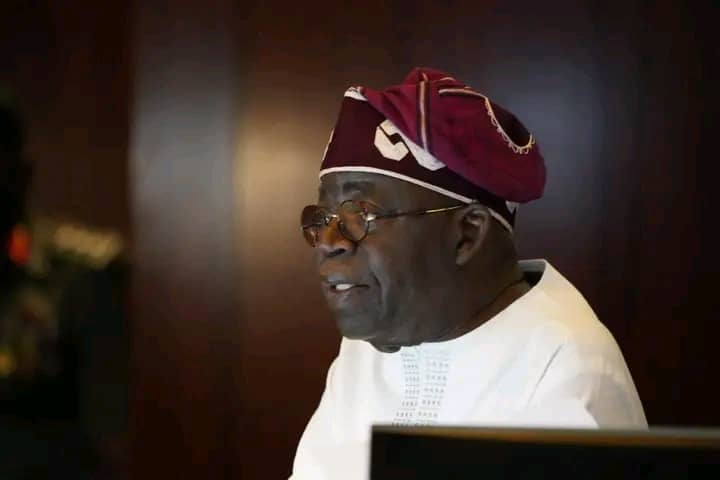
Amidst the heightened security tension, President Bola Ahmad cancels his planned trip to G20 Leader’s Summit in Johannesburg, South Africa and delegated Vice president, Kashim Shettima to represent him in the meeting.

Disclosed by Stanley Nkwocha, the Senior Special Assistant to the President on Media and Communications, Office of The Vice President, Shettima has departed Abuja for the G20 Leader’s Summit.

President Tinubu has cancelled the trip to South Africa awaiting the security briefings on the current escalated terrorists operations in Kebbi and Niger state.

The Presidential statement said, President Cyril Ramaphosa, the South African leader who also serves as the current President of the G20 group had invited his Nigerian counterpart to participate in this year’s edition.

The Summit, scheduled to take place from Saturday, November 22nd, to Sunday, November 23rd, at the Johannesburg Expo Centre, will bring together leaders from the world’s top 20 economies, including the European Union, the African Union, financial institutions, among others.

Pope counters genocide claims, says Nigeria’s crisis hits both Muslims, Christians

By Sabiu Abdullahi

Pope Leo XIV has played down claims that Christians alone are the targets of mass killings in Nigeria, stressing that the country’s insecurity threatens people of every faith.

The Catholic leader made the clarification during an interaction with journalists as he departed his Castel Gandolfo residence in The Vatican.

A reporter sought his view on the safety of Nigerian Christians, a topic that has drawn considerable attention in Western political debates.

The pontiff said Nigeria’s violence cannot be separated from terrorism, economic pressures, and fierce disputes over land.

“I think in Nigeria, in certain areas, there is certainly a danger for Christians, but for all people. Christians and Muslims have been slaughtered,” he stated in response to EWTN News.

“There’s a question of terrorism. There’s a question that has to do a lot with economics, if you will, and control of the lands that they have. Unfortunately, many Christians have died, and I think it’s very, it’s important to seek a way for the government, with all peoples, to promote authentic religious freedom.”

His remarks come after former U.S. President Donald Trump designated Nigeria a Country of Particular Concern over alleged religious persecution.

Abuja strongly rejected the designation, arguing that the crisis is not an assault on one religion but a complex conflict involving multiple groups.

Cardinal Pietro Parolin, the Vatican secretary of state, also echoed a similar view last month. At the launch of the 2025 Religious Freedom Report by Aid to the Church in Need, he said the violence in Nigeria fits more into a “social conflict,” often between herders and farmers, rather than a religious confrontation.

In an effort to address the growing narrative in Washington, National Security Adviser Nuhu Ribadu led a federal delegation to the United States on Wednesday.

The team met with Congressman Riley Moore, whom Trump appointed to review Nigeria’s situation. Moore later said he and the delegation held a “frank, honest, and productive discussion.”

Nnamdi Kanu sentenced to life imprisonment

By Muhammad Abubakar

A federal court in Abuja has sentenced Nnamdi Kanu, leader of the banned Indigenous People of Biafra (IPOB), to life imprisonment for terrorism-related charges. The judge stated that Kanu’s calls for “sit-at-home” orders incited violence and constituted acts of terrorism.

The court ruled that for several of the charges, the law prescribes either life imprisonment or the death penalty. In delivering the verdict, the judge described Kanu as a “tyrant” capable of violence and said he should no longer remain a part of society.

The prosecution immediately called for the death penalty following the conviction. Kanu has previously been imprisoned, first in 2015 and again in 2021 after a controversial extradition from Kenya.

Supporters of Kanu have staged protests, and opposition politicians have criticised the government, alleging that the trial was politically motivated.

Uncovering Truths: Christian genocide myths and Muslim suffering in Nigeria

By Umar Sani Adamu, 

For a long time, Western media outlets, foreign politicians, and advocacy groups have repeatedly described Nigeria as the scene of an ongoing “Christian genocide” at the hands of Muslims, particularly Fulani herdsmen. The charge is serious, emotional, and widely circulated. However, a closer examination of the facts on the ground reveals a much more complex and painful truth: the primary victims of the country’s deadliest insecurity crisis, armed banditry, are overwhelmingly northern Muslims.

Multiple independent investigations have found no evidence of a systematic, religiously motivated campaign to exterminate Christians. A 2024 BBC Global Disinformation Unit report, fact-checks by AFP and Al Jazeera, and even cautious statements from Open Doors, the Christian persecution monitor frequently quoted by genocide advocates, have all warned that the term “genocide” is being misused and exaggerated in the Nigerian context.

The violence plaguing the country is real, but it is predominantly criminal, not confessional. Since 2015, armed banditry, kidnapping for ransom, cattle rustling, village raids and mass killings have turned Zamfara, Katsina, Kaduna, Sokoto and parts of Niger State into killing fields. These states are 90–98 per cent Muslim. Most bandits are ethnic Fulani Muslims who prey primarily on Hausa Muslim farming communities.

Complex numbers tell the story that western headlines rarely do:  

– Zamfara State alone recorded over 1,200 banditry-related deaths in 2023,  almost all Muslim.  

– In the first nine months of 2025, more than 2,800 people were killed by bandits across the North West, according to the Nigerian Atrocities Documentation Project. The vast majority were Muslim.  

– The U.S. Commission on International Religious Freedom stated in its 2025 report that banditry “disproportionately affects Muslim-majority areas”.

While Christians have suffered real losses in Middle Belt farmer-herder clashes and church attacks, the scale and frequency pale in comparison to the daily carnage in the Muslim North West.

 When the clergy cross the line

This month, Plateau State Police Command arrested a Catholic priest for allegedly supplying AK-47 rifles and thousands of rounds of ammunition to bandit gangs operating across Plateau, Kaduna and Bauchi. Weapons recovered from the cleric have reportedly been linked to recent deadly raids. He was paraded on November 12.

It is not an isolated case. In February 2025, another Reverend Father, a deaconess and several church members were arrested in Taraba for allegedly running arms to both Boko Haram and bandit groups. Similar arrests of Christian clergy and lay workers have occurred in Benue and Nasarawa.

Social media reaction was swift and furious: “They label every Fulani man a terrorist, yet a Reverend Father is caught red-handed arming the same killers,” wrote one widely shared post.

Why the false narrative endures

Images of burnt churches and grieving Christian widows travel fast on global networks. Footage of torched Muslim villages in remote Zurmi or Tsafe rarely does. Poor, Hausa-speaking northerners lack the lobbying machinery that amplifies Middle Belt voices in Washington and London.

As one northern governor privately admitted: “When they shout ‘Christian genocide’ abroad, the grants go to NGOs in Jos and Enugu — never to the millions of displaced Muslims rotting in camps in Gusau and Birnin Gwari.”

The way forward

Nigeria’s crisis is one of state failure, poverty, climate stress and organised crime not a holy war. Treating banditry as jihad only deepens division and delays solutions. Community policing, economic revival in the rural North, and ruthless prosecution of arms suppliers regardless of collar or turban offer the only realistic path to peace.

Until the world stops peddling a convenient myth, the people bearing the heaviest burden — ordinary Muslim farmers, women and children of the North West — will continue to bleed in silence.

There is no Christian genocide in Nigeria. There is, however, a predominantly Muslim tragedy that the world has chosen not to see.

Umar Sani Adamu can be reached via umarhashidu1994@gmail.com.

SGF Akume says Trump’s remarks sparked fresh attacks by violent groups

By Sabiu Abdullahi

Secretary to the Government of the Federation, George Akume, has said that recent statements made by former United States President Donald Trump have revived the confidence of violent groups that are seeking to exploit global narratives for renewed attacks.

Akume issued the warning in a statement released on Wednesday. He addressed the evolving pattern of violent extremism, banditry and the broader security issues confronting Nigeria.

Trump had declared Nigeria a “country of particular concern’’ on October 31 over allegations of a Christian genocide.

He cautioned that American forces could be deployed to Nigeria if the alleged killings of Christians continued.

He also said he had directed the U.S. Department of War to prepare for “possible action” should the situation deteriorate.

Trump further threatened to suspend all American assistance to Nigeria if President Bola Tinubu’s government failed to stop the purported persecution.

Akume said insurgent networks had been weakened before those remarks were made. He noted that some groups are now attempting to use the international attention as an advantage.

His statement read in part, “Recent pronouncements from the United States have inadvertently emboldened opportunistic violent groups seeking to exploit international narratives and make bold statements by attacking soft targets.

“Before these statements, insurgency structures had been significantly degraded and reduced to isolated banditry. This resurgence underscores the vital need for collaboration—not public labeling—between Nigeria and the United States.”

He reaffirmed the Federal Government’s stance that Nigeria does not need foreign troops. According to him, the Nigerian Armed Forces have reclaimed territories and dismantled Boko Haram and ISWAP command structures.

He stressed that the country requires specific support in the areas of intelligence, technology and equipment rather than foreign boots on the ground.

He said, “The Nigerian Armed Forces are highly capable, experienced and professional. They have reclaimed vast territories, degraded Boko Haram/ISWAP leadership structures, and conducted successful multi-theatre operations.

“Nigeria does not require foreign troops. What is needed is targeted support from partners, especially the United States, in the areas of intelligence cooperation, technology and military equipment support for advanced engagement against the insurgents.”

Akume also rejected claims that the conflict in Nigeria amounts to a “Christian genocide”. He said available evidence shows that insurgents and criminal elements attack both churches and mosques and that victims include Muslims and Christians.

He added that Nigeria remains a secular nation and that government appointments represent the country’s religious and ethnic diversity.

He stated, “Nigeria rejects any characterisation of the conflict as a genocide against Christians or any group. Verified evidence shows that insurgents and criminal networks attack both churches and mosques, killing Muslims and Christians alike. The Government remains committed to protecting all citizens and strengthening cooperation with international partners—especially the United States—to dismantle extremist and criminal networks.

“Nigeria is a secular state as guaranteed by various provisions of the Constitution of the Federal Republic of Nigeria 1999 as amended. No state religion is adopted as a national religion and no citizen of Nigeria is above the Nigerian constitution.

“The appointment made by the present administration reflects the diversities of our nation and both Christians and Muslims and members of the Federal Executive Council holding key positions in equal proportion, including the Nigerian security council, the body that deals with all security challenges in Nigeria.”