NCC

Kano based lawyers sue Pantami, MTN, others . . . demand 600 million damages

By Aisar Fagge

One of the leading telecommunication companies, MTN Nigeria Communication PLC, has been sued at Federal High Court for poor quality service delivery, invasion of privacy and nonchalant attitude towards genuine complaint of the plaintiffs’ request and therefore demands over 600 million naira as damages.

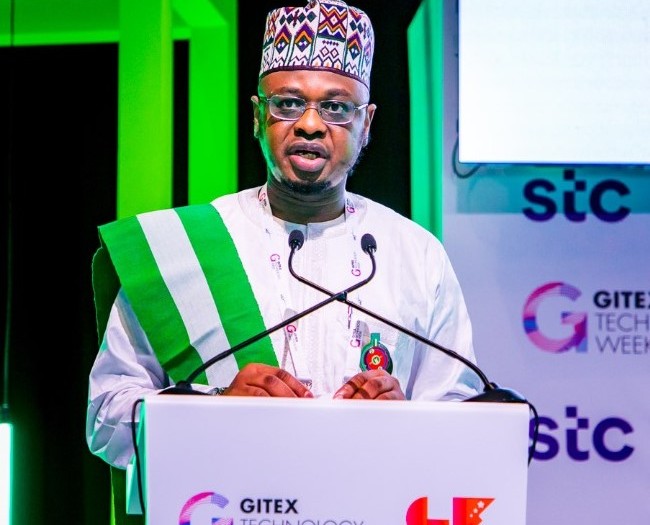
Nigeria Communication Commission (NCC) and Minister of Communication and Digital Economy, Prof. Isa Ali Pantami were also part of the suit for breach of statutory duty to protect the interest of the plaintiffs and ensure compliance with the Nigeria Communications Act, 2005.

The case was filed by the plaintiffs’ counsel, Barrister Abdulkarim Kabiru Maude and the defendants were served with about 150 pages of process on May 12, 2022, and were given 30 days to respond or face the wrath of the court.

According to the plaintiffs, Barrister Ishaq Abubakar Baba and Barrister Shamsi Ubale Jibril who is the staff of Kano State Polytechnic, on November 24, 2021, between the hours of 8:00 pm and 12 midnight, and also on December 13, 2021, around 7:40 pm and 8:45 pm, the MTN Nigeria PLC deprived them a business opportunity with their clients all because of their poor network service delivery which has caused them serious economic loss and mental injury.

In addition, the plaintiffs also complained of receiving disgusting unsolicited SMS from third parties which were allowed by the MTN. This constitutes a violation of their privacy of telephone conversation and telegraphic communication guaranteed to them by the Constitution of the Federal Republic of Nigeria, 1999 (as amended).

The counsel of the plaintiffs seeks “An order of this honourable court awarding the sum of N 50,000,000 (fifty million naira only) against the 1st defendant (MTN) in favour of the plaintiffs for invasion of their right to privacy . . . .”

“An order of this honourable court awarding the sum of N 500,000,000 (five hundred million naira only) to the plaintiffs as exemplary damages against the 1st defendant (MTN) for aggravating their damage through its act of continued . . . “, part of the process reads.

Telecom firms write NCC, propose new prices for calls and data

By Ibrahim Nasidi Saal

Nigerians may have to pay more for calls and data as telecommunication companies proposed a new tariff increase of 40 per cent. They made this known in a letter sent to the Nigerian Communications Commission titled, ‘Impact of the Economic and Security Issues on the Telecommunications Sector’.

The telecommunications companies wrote the letter under the aegis of the Association of Licensed Telecommunication Operators of Nigeria to the NCC.

According to The Daily Reality sources, the Telcos have proposed the price floor of calls will increase from N6.4 to N8.95 while the price cap of SMS will increase from N4 to N5.61.

The Telcos noted that the increase in energy costs had impacted their operating expenses by 35 per cent, Our Source added. 

The Telcos, which include MTN, Glo, Airtel, and 9mobile, also said that the introduction of the recent excise duty of five per cent on telecom services had further increased the burden of multiple taxes and levies on the industry. 

The letter read in part:

 “As the commission may be aware, the power sector, under the supervision of its Nigerian Electricity Regulatory Commission of the power sector in November 2020, undertook a review of electricity tariffs to cater for the economic headwinds reported above.

“In view of the foregoing, ALTON considers it expedient for the telecommunications sector to undergo periodic cost adjustments through the commission’s intervention in order to minimise the impact of the challenging economic issues faced by our members.

“Upward review of the price determination for voice and data and SMS. Given the state of the economy and the circa 40 per cent increase in the cost of doing business, we wish to request for an interim administrative review of the mobile (voice) termination rate for voice; administrative data floor price, and cost of SMS as reflected in extant instruments.

“With respect to voice an SMS cost, ALTON respectfully requests the commission to consider a mark-up approach to address the upward price adjustment desirable for the industry. We have enclosed herein and marked as ‘Annexure 1’our proposal in that regard.

“For data services, we wish to request that the commission implements the recommendations in the August 2020 KPMG report on the determination of cost-based pricing for wholesale and retail broadband service in Nigeria. Excerpts from the report, are attached and marked ‘Annexure 2’ to provide a further illustration.

“In implementing the said recommendations, however, we recommend that the 40 per cent increase in the cost of doing business be factored in to arrive at a cost price per GB in view of the current economic situation.” 

SERAP gives FG 72 hours to unblock 72 million SIMs with NIN linkage issues

By Muhammadu Sabiu

President Muhammadu Buhari has been given a 72-hour deadline by the Socio-Economic Rights and Accountability Project (SERAP) to rescind the decision to block the mobile connections of 72 million Nigerians.

SERAP tells the president to order the Minister of Communications, Isa Ali Pantami, and the Nigerian Communications Commission (NCC) to immediately revoke the seemingly unlawful decision to prevent over 72 million active telecommunication subscribers from making calls on their SIMs.

Recall that the Federal Government ‘directed’ telecoms firms this week to stop outgoing calls on all unlinked lines after the verification deadline passed on March 31.

Over 72 million users have been prevented from making calls as a result of the directive.

SERAP, on the other hand, said that prohibiting people from making calls constituted an infringement on their right to free expression.

Again, FG extends deadline for SIM-NIN linkage

By Muhammad Sabiu

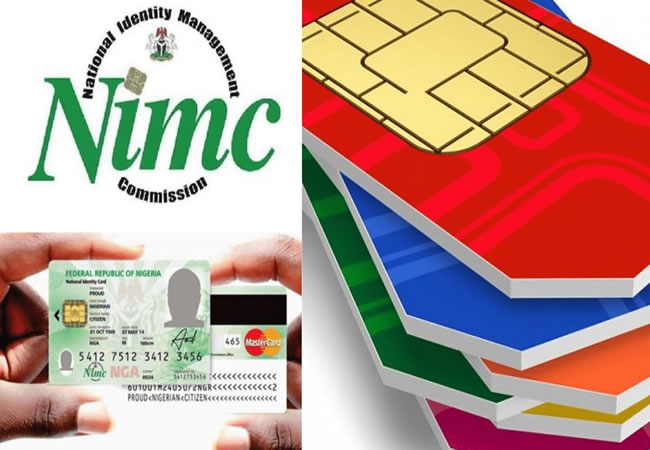
The Nigerian government has extended the deadline for the country’s mobile phone users to link their SIM cards and their National Identity Numbers (NINs).

The announcement of the extension is contained in a joint statement signed by the spokespersons of the National Identity Management Commission (NIMC), Kayode Adegoke and the Nigerian Communications Commission (NCC), Ikechukwu Adinde.

This is not the first time the government has extended the deadline as every mobile phone user “should be able to obtain their NINs and link them with their SIMs before the end of the year.”

According to the statement, the move is due to appeals made by mobile network operators and other stakeholders.

“The decision to extend the deadline was made further to appeals by the Mobile Network Operators and other industry stakeholders, soliciting for a further extension to ensure better compliance with government’s directive and to avoid widening the digital divide.

“The extension would also provide the enabling environment for the registration of Nigerians in remote areas, diaspora, schools, hospitals, worship centres, as well as foreigners, diplomatic missions, those in other areas that were hitherto unreachable, and increase enrolments in countries with a significant number of Nigerians,” the statement read.

Connecting the unconnected: How CITAD is bridging digital divide in Northern Nigeria

By: Ali Sabo

Internet connectivity is becoming part and parcel of humans’ lives all over the globe. However, the story in the undeveloped countries, especially those living in the African continent, is different and not encouraging. Millions of people in Africa are finding it difficult to access this network, and even in places where these networks exist most of the time, it’s inefficient and costly. Moreover, the emergence of the covid-19 pandemic has exposed how fragile humans are and their dependence on the services internet provides to their daily lives.

Reports have indicated that only less than 50% of the Nigerian population is connected or has access to the internet. Of this 50%, many do not have the resources to own smartphones or computers that will allow accessing these services due to the high level of poverty ravaging the majority of the country’s population. To ensure more people are connected and have access to internet services in Nigeria, the government, through its communications agencies such as Nigerian Communications Commission (NCC) and National Information Technology Development Agencies (NITDA), have brought about many programs such as Universal Service Provision Fund (USPF) and provide free computers and internet services to some communities and academic institutions in the country.

Non-profit organizations such as the Centre for Information Technology and Development (CITAD), whose main focus is using Information and Communication Technology (ICT) to empower citizens, have initiated many programs that will liberate Nigerian people from this digital “darkness” and make the country one of the developed nations in terms of internet connectivity and other areas of human development as the internet gives people ample opportunities in their academic pursuit, businesses and in the health care sector, among others.

To ensure no one is left behind in the process, CITAD in 2016 launched the Digital Livelihood program, which centred on training women on digital technology and digital entrepreneurship in northern Nigeria, focusing on Abuja rural communities, Kano and Bauchi states. It, later on, included Jigawa State. The program has achieved tremendous success as the lives of hundreds of young girls and women have been changed and transformed. Many trained girls have now become digital entrepreneurs; graphic designing, web designers, online marketers etc. In an interview in one of the Nigerian Newspapers, one of the beneficiaries, Sadiya Danyaro, stated that the training “has drastically changed her life and made her become an employer rather than a job seeker. She also described the training as the turning point of discovering her passion and dream”. 

Before the commencement of the community network project by CITAD, supported by the Foreign, Commonwealth and Development Office (FCDO) through the Association for Progressive Communication in Nigeria, CITAD had set up seven (7) computers in the past centres in two states in Nigeria. The aim was to ease internet access to these underserved and neglected communities in terms of internet connectivity. The communities are Tungan Ashere, Dakwa Community, Pasepa, Gaube and Leleyi Gwari in rural Abuja communities, Jama’are and Itas-Gadau in Bauchi State.

At the peak of the Covid-19 pandemic, which highlighted the need and necessity of connecting everyone with an affordable and efficient internet connection, the community network project was launched by APC with support of FCDO in three continents; Africa, Asia and Latin America and championed by CITAD in Nigeria. Community networks are telecommunications infrastructure deployed and operated by local groups to meet their own communication needs and also a communications infrastructure, designed and erected to be managed for use by local communities. This communication needs can be voice, data, etc. and can be a point of convergence for community to come together to address their common community problems.

This initiative is aimed at enhancing the capacity of communities to design, deploy and manage community networks to meet their communication needs while at the same time engaging regulators and other relevant policymakers to enact policies and provide the support that could enhance the flourishing of community networks in the country. Due to resource constraints, CITAD piloted some sites in seven communities across three states: Jama’are and Itas in Bauchi State, Kafanchan in Kaduna State, and four sites in the rural communities of Federal Capital Territory, Abuja (Tungen Ashere, Dakwa Community, Pasepa and Leleyi Gwari).

Some of the activities carried out by CITAD under this project include training of the community champions in these communities on the need for setting up community network centres in these areas and on advocacy to engage their representatives more effectively; forming a community network advisory committee which consists of individuals from Civil society Organizations, ICT sector, Government and members of the communities; high-level engagements with government (NCC and NITDA), engagement with House of Representatives and championing discussions on designing policies on community network in Nigeria.   

So far, with persistent engagements and advocacies visits by CITAD, progress on setting up community networks in Nigeria has been made. Through the House Committee on ICT, the Nigerian government has drafted a bill that contains provisions on community networks; Itas and Jama’are local governments, both in Bauchi State, have donated a piece of land to CITAD to build community network centres in their communities. In addition, following meetings with CITAD, NCC has indicated that it will develop a policy to guide the development of community networks in the country.

Ali Sabo is the Campaigns and Communications Officer of CITAD and can be reached via his email address: aliyuncee@gmail.com or his Twitter handle @a_sabo12.