Lebanon

Massie: Halt U.S. Aid to Israel for One Month and ‘There’ll Be Instant Peace’

By Muhammad Abubakar

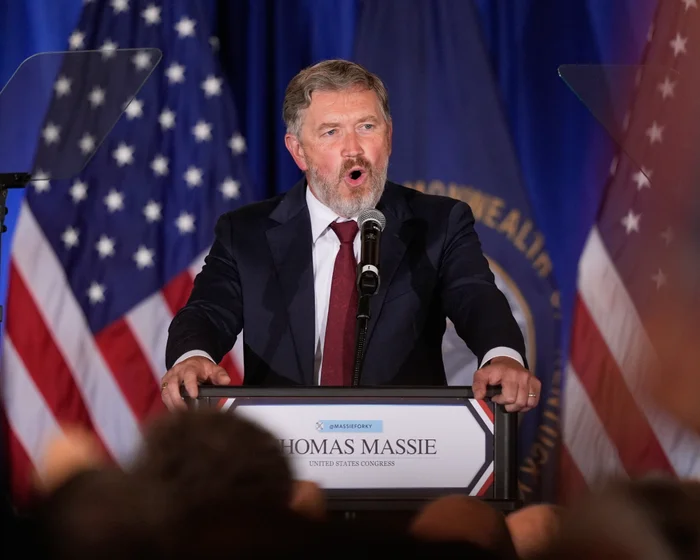
U.S. Representative Thomas Massie has called for a temporary suspension of American aid to Israel, arguing that such a move would quickly reduce tensions in the Middle East and lower energy prices.

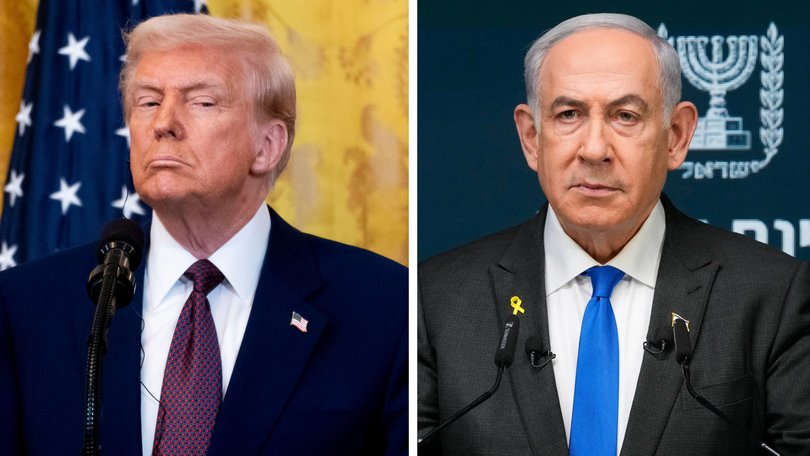
Massie’s remarks came in response to reports that President Donald Trump angrily confronted Israeli Prime Minister Benjamin Netanyahu over Israel’s military actions in Lebanon. According to Axios, Trump warned Netanyahu that Israel’s operations were undermining U.S. diplomatic efforts in the region and risked escalating the conflict.

Reacting to the report on social media, Massie wrote that Washington should “just withhold foreign aid to Israel for a month,” claiming the move would prompt Israel to halt military operations against its neighbours, help reopen the Strait of Hormuz, and reduce U.S. gasoline prices. He also described Israel as “the biggest welfare recipient from American taxpayers.”

Massie’s comments add to ongoing debates in Washington over U.S. military and financial support for Israel amid heightened regional tensions and concerns about the broader economic impact of instability in the Middle East.

‘Everybody Hates You Now’: Trump Unleashes Fury on Netanyahu in Explosive Phone Call

By Muhammad Abubakar

U.S. President Donald Trump reportedly launched into a profanity-laden tirade against Israeli Prime Minister Benjamin Netanyahu during their latest phone conversation, according to a report by Axios.

Citing unnamed sources familiar with the exchange, Axios reported that Trump told Netanyahu: “You’re fucking crazy. You’d be in prison if it weren’t for me. I’m saving your ass. Everybody hates you now. Everybody hates Israel because of this.”

The reported remarks reflect growing tensions over Israel’s handling of the ongoing conflict in Gaza and increasing international criticism of the Israeli government. Neither Trump nor Netanyahu had publicly commented on the report at the time of publication.

If confirmed, the exchange would mark one of the sharpest known criticisms of Netanyahu by Trump, despite the close relationship the two leaders maintained during Trump’s presidency.

Israeli Military Probes Soldier Over Desecration of Virgin Mary Statue in Lebanon


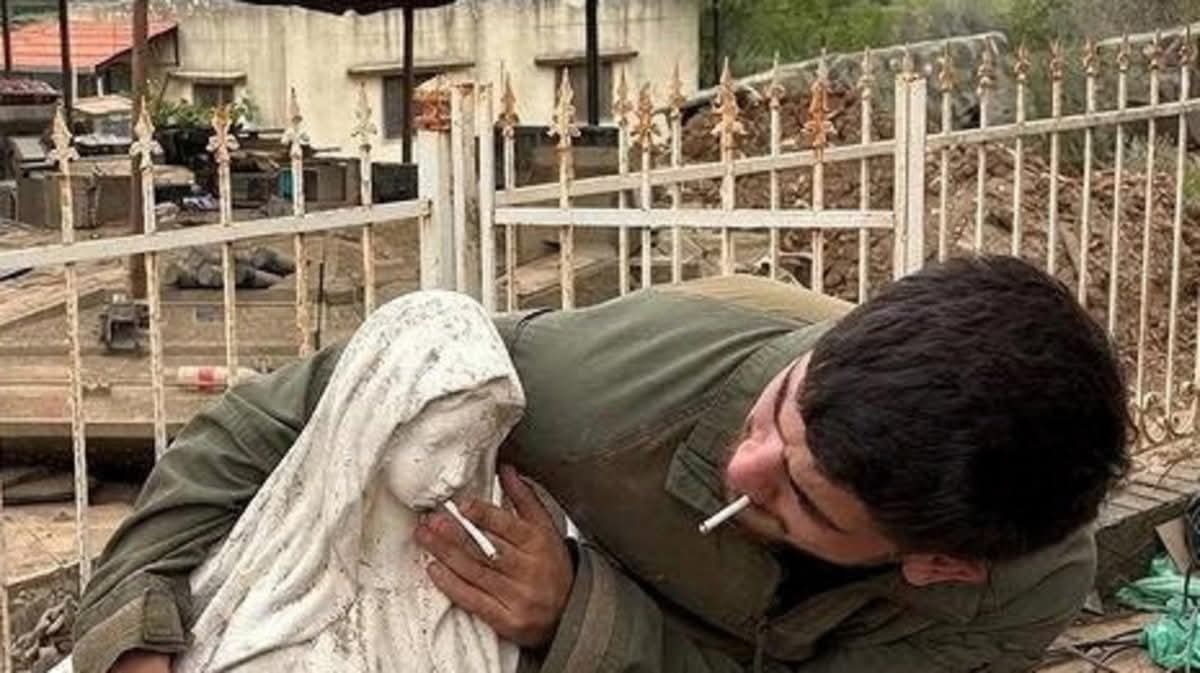
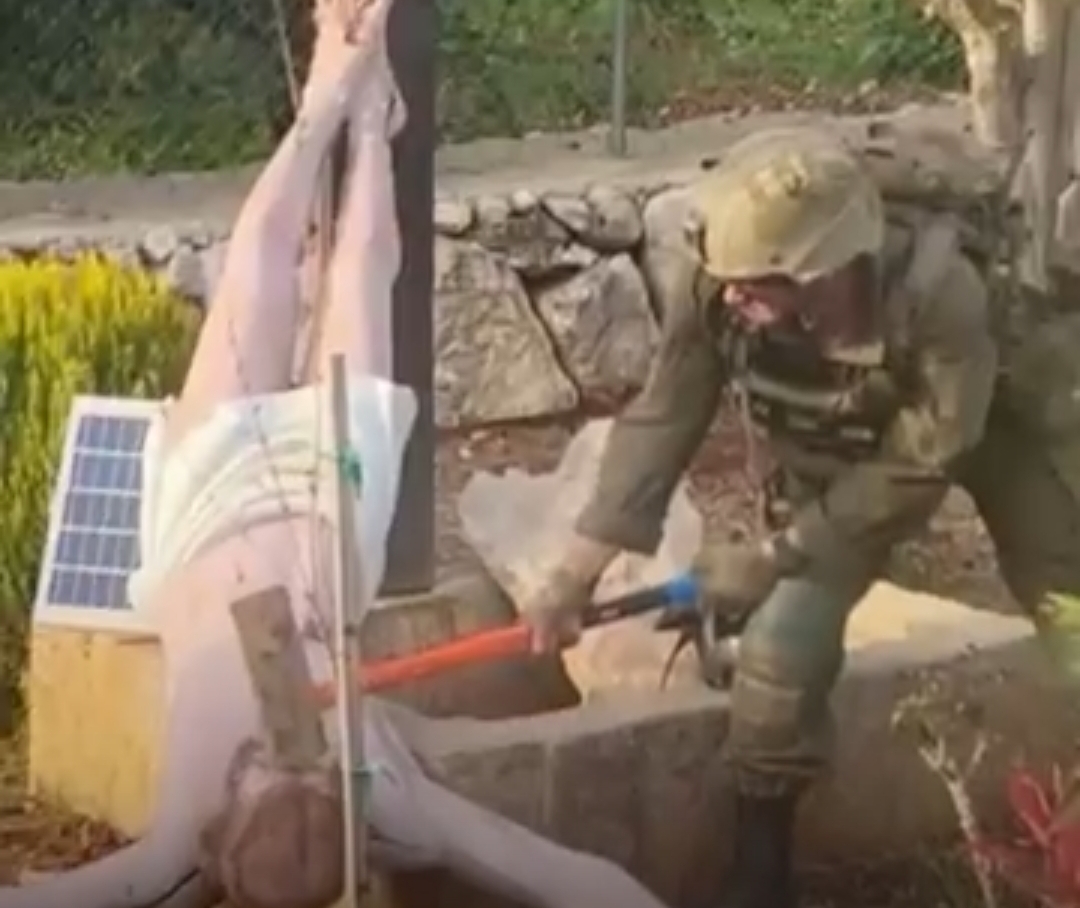
The Israeli military has opened an investigation after a photograph circulated online allegedly showing one of its soldiers desecrating a statue of the Virgin Mary in southern Lebanon.

According to reports published on Wednesday, the image showed the soldier placing a cigarette in the mouth of the statue while also smoking.

The military described the matter as serious and vowed to take action against the soldier. The Times of Israel reported that the army viewed the “incident gravely”.

Preliminary findings indicated that the photograph was taken several weeks ago in Debel, a Christian-majority village in southern Lebanon. However, the image only surfaced online on Wednesday.

The development has added to growing accusations of misconduct by Israeli troops in southern Lebanon. Last month, another Israeli soldier was reportedly photographed damaging a statue of Jesus in the same community.

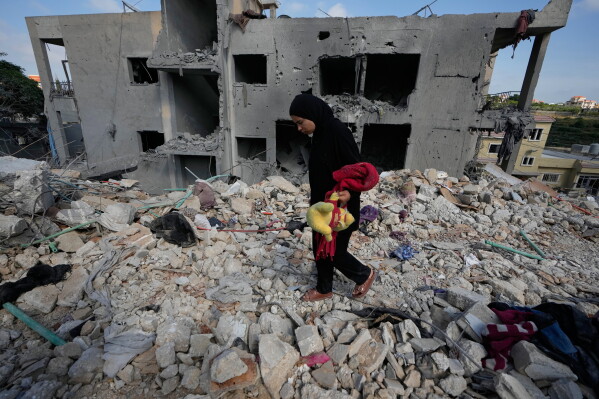
Lebanese media outlets also alleged that Israeli troops destroyed solar panels used to power the town’s water supply system. Reports further claimed that homes, roads and olive trees in the area were damaged.

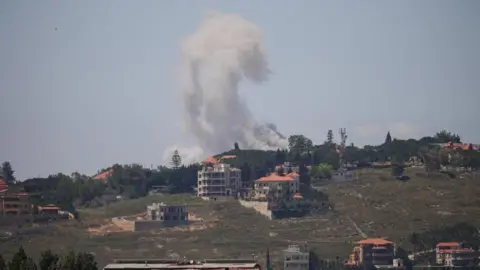
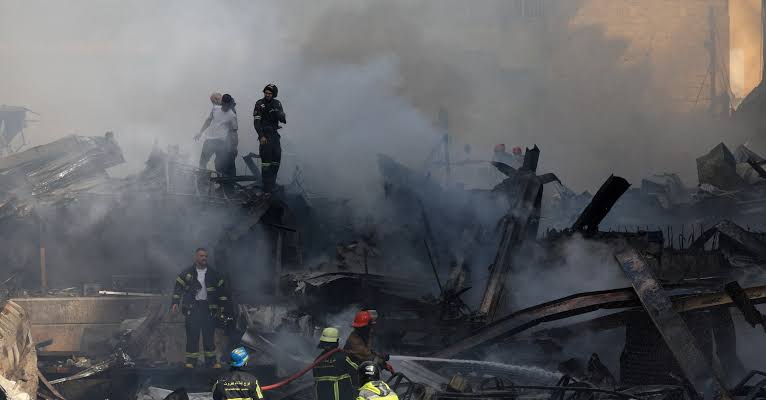
The latest controversy comes amid intensified Israeli military operations in Lebanon. Israeli forces have carried out repeated attacks in Beirut and other parts of the country. Israel said the operations target Hezbollah fighters and infrastructure.

Israeli troops still maintain a presence in parts of southern Lebanon. Residents and officials in the area have expressed concern over widespread destruction in communities affected by the conflict.

Meanwhile, concerns have continued to mount over reported attacks against Christians in Israel and the occupied Palestinian territories.

Religious organisations have documented incidents involving harassment and violence against Christian pilgrims, clergy members and Palestinian Christians. Some of the reported attacks allegedly involved ultra-Orthodox Jewish seminary students.

One incident involved a French nun near Jerusalem’s Old City last month. Video footage reportedly showed a man pushing the nun to the ground, causing a head injury, before returning to kick her while she was on the ground.

Israeli police later announced the arrest of a 36-year-old suspect after the video drew international attention.

Following criticism over the destruction of the Jesus statue in Debel, the office of Prime Minister Benjamin Netanyahu condemned the act. The two soldiers involved were removed from combat duties and sentenced to 30 days in prison.

In another incident in March, Netanyahu’s office apologised after Israeli police prevented Latin Patriarch of Jerusalem Pierbattista Pizzaballa from accessing the Church of the Holy Sepulchre to lead Palm Sunday mass.

Observers say disciplinary measures against Israeli soldiers remain uncommon despite repeated allegations involving military conduct.

The report also referenced the killing of Al Jazeera journalist Shireen Abu Akleh, who was shot dead during an Israeli military operation in the occupied West Bank in 2022.

In Gaza, several religious sites have suffered destruction during the war. These include the historic Great Omari Mosque and Saint Porphyrius Church, one of the oldest churches in the world.

Israeli Military Probes Own Soldier Over Jesus Statue Vandalism In Southern Lebanon

By Sabiu Abdullahi

The Israel Defense Forces (IDF) has opened an investigation into a soldier accused of damaging a Christian religious symbol in southern Lebanon after a viral image showed him smashing a statue of Jesus Christ with a hammer. The military described the act as a serious violation of its standards and values.

The IDF confirmed the authenticity of the image in a statement posted on X on Sunday. It said:

“The IDF views the incident with great severity and emphasizes that the soldier’s conduct is wholly inconsistent with the values expected of its troops,”

The army said the matter is already under review and has been escalated within its command structure.

“The incident is being investigated by the Northern Command and is currently being addressed through the chain of command. Appropriate measures will be taken against those involved in accordance with the findings,”

The military also stated that it is engaging efforts to assist in restoring the damaged statue. It insisted that its operations in southern Lebanon are not directed at religious or civilian sites.

“The IDF is operating to dismantle the terrorist infrastructure established by Hezbollah in southern Lebanon, and has no intention of harming civilian infrastructure, including religious buildings or religious symbols,”

The image first appeared online after Palestinian journalist Younis Tirawi shared it, a development that triggered widespread reactions on social media. Tirawi said the incident took place in southern Lebanon. A local community page identified the site as the outskirts of Dibil, a Christian-majority town in the Bint Jbeil District near the Israeli border.

The official Dibil page also published a photo of the damaged statue alongside a biblical verse: “Father, forgive them; for they know not what they do,” reflecting the community’s grief over the incident.

International reactions followed. Former U.S. congresswoman Marjorie Taylor Greene criticised continued American support for Israel while sharing the image. She wrote, “Our greatest ally that takes billions of our tax dollars and weapons every year,”

Former U.S. lawmaker Matt Gaetz also reacted to the image and described it as “horrific.”

The incident has intensified scrutiny of military conduct in conflict areas, especially regarding the protection of religious and cultural heritage sites.

In earlier conflicts involving Gaza and Lebanon, Israel has faced similar criticism over damage linked to religious landmarks. In 2023, an Israeli airstrike struck a building next to the Greek Orthodox Church of Saint Porphyrius in Gaza, which led to at least 18 deaths. In 2025, shrapnel from a tank shell hit the Holy Family Church, the only Catholic church in the enclave, and caused three deaths.

Hundreds Killed And Injured As Israel Launches Massive Strikes Across Lebanon

By Sabiu Abdullahi

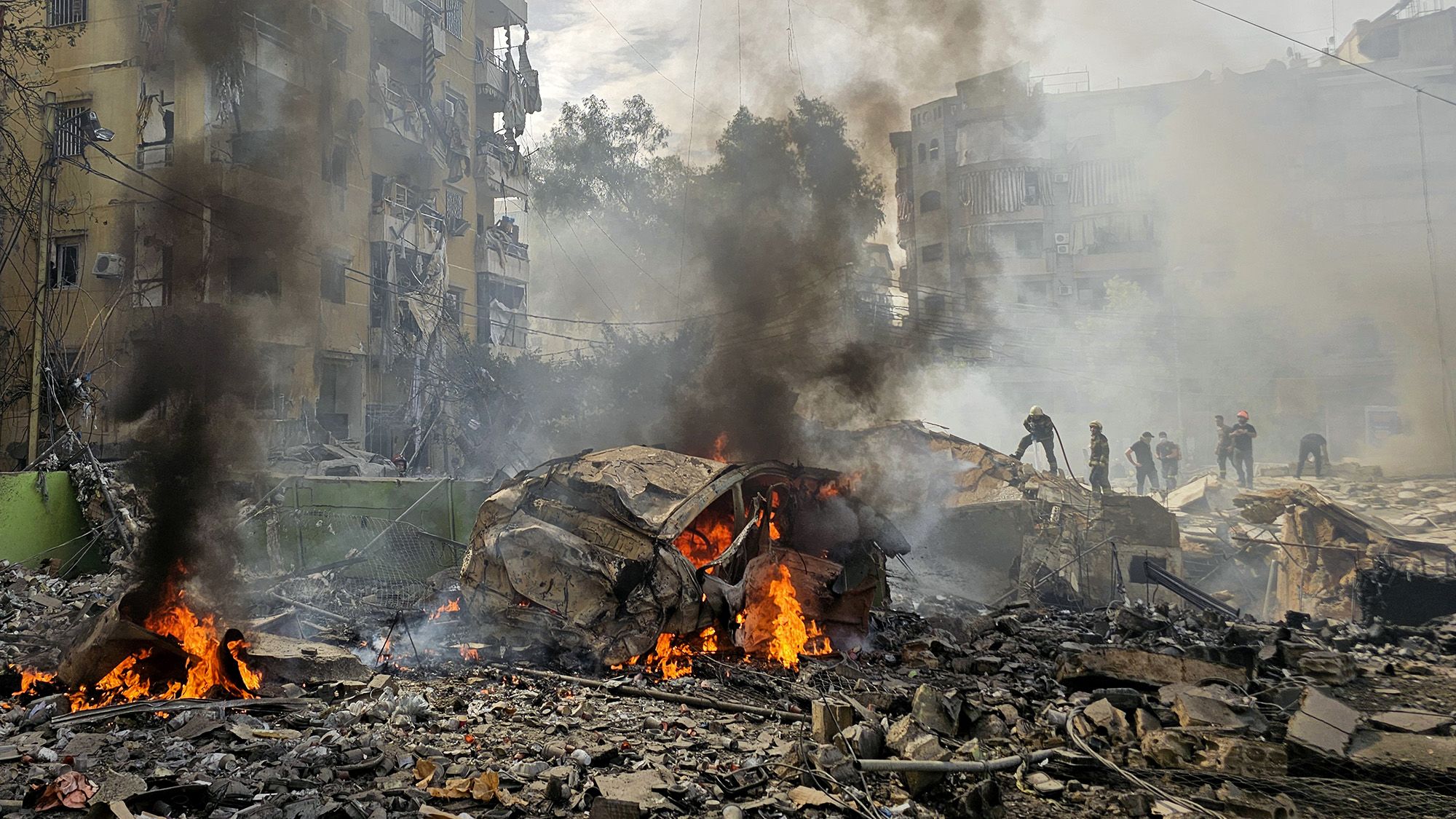
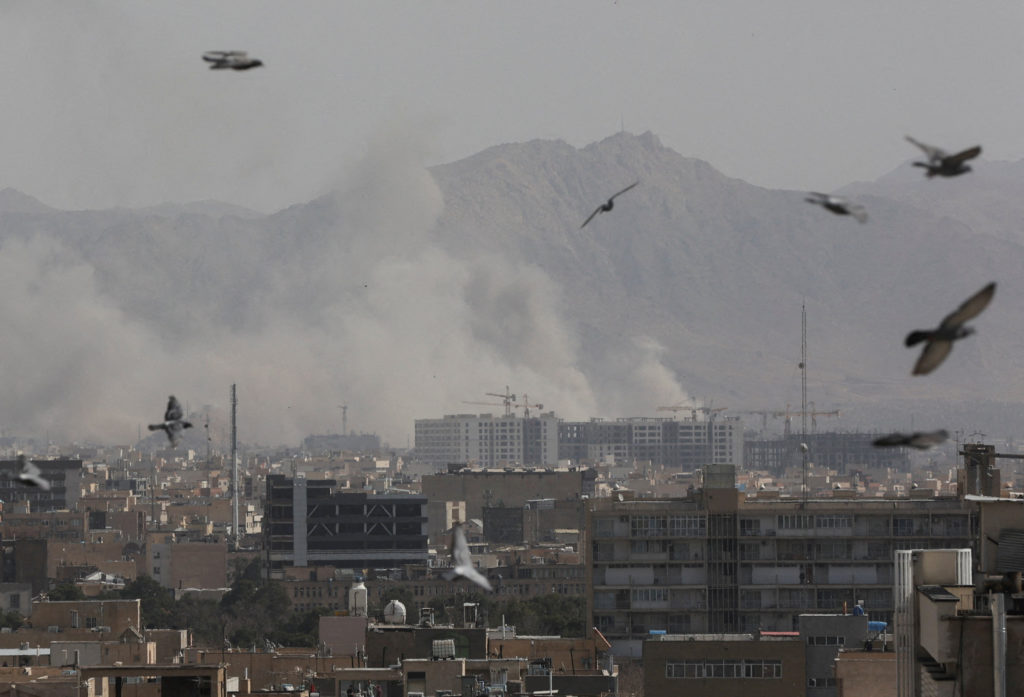
Hundreds of people have been killed and many others injured after Israeli forces carried out a fresh wave of airstrikes across Lebanon, Lebanese Health Minister Rakan Nassereddine has said.

The attacks followed an announcement by the Israel Defence Forces (IDF), which confirmed it had executed what it described as its most extensive coordinated military action in Lebanon since the launch of “Operation Roaring Lion.”

In a message shared on its official X account, the IDF stated, “In 10 minutes, the IDF completed the largest coordinated strike across Lebanon since the start of Operation Roaring Lion.”

According to the Israeli military, more than 100 locations linked to Hezbollah were targeted during the operation. These included “headquarters, military arrays, & command-and-control centers in Beirut, Beqaa and southern Lebanon.”

The IDF added that the strikes also focused on “intelligence command centers and central headquarters used planning terror attacks,” alongside “infrastructure of firepower and naval arrays, responsible for launching missiles.”

It further disclosed that the operation hit “assets of the Radwan Force, & the Aerial unit—Hezbollah’s elite units.”

The bombardment affected several parts of the country, including Beirut, the Beqaa Valley, and southern Lebanon. The scale of the assault marks a sharp escalation in the ongoing hostilities between Israeli forces and Hezbollah fighters.

Lebanese authorities confirmed a high number of casualties. However, they have not provided a precise breakdown of those killed or injured. Emergency teams are still working at multiple sites to rescue victims and assess the damage.

Israel indicated that its military campaign will continue. The IDF said it intends to maintain pressure on Hezbollah due to security concerns in northern Israel.

“We will continue striking the Hezbollah terror organization and will utilize every operational opportunity. We will not compromise the security of the residents of northern Israel. We will continue to strike with determination,” said IDF Chief of the General Staff, Lieutenant General Eyal Zamir, who supervised the operation.

The situation has heightened tensions across the region, with fears growing that the conflict could widen. Cross-border exchanges between Israel and Hezbollah have intensified in recent days.

Israel had earlier stated that it would sustain its strikes on Lebanon despite a two-week ceasefire agreement between Iran and the United States in the broader Middle East conflict.

Several countries have previously urged Israel to halt military actions in Lebanon. Israel, however, maintains that Hezbollah, an ally of Iran, remains a significant threat due to its presence in the country.

Amid the ongoing crisis, Lebanon’s Foreign Affairs Minister, Youssef Raggi, announced a diplomatic move against Iran. He revealed that Lebanon had withdrawn its approval for Iran’s designated ambassador, Mohammad Reza Shibani, and ordered him to leave the country.

In a statement, Raggi said, “I instructed today the Secretary-General of the Ministry of Foreign Affairs and Emigrants to summon the Iranian Chargé d’Affaires in Lebanon to inform him of the decision to withdraw the agrément for the designated Iranian Ambassador, Mohammad Reza Shibani, declare him persona non grata, and request that he leave Lebanese territory no later than 29 March 2026.”

Israel Kills Journalists, Paramedics In Southern Lebanon Deadly Strike

By Sabiu Abdullahi

At least three journalists and nine paramedics have lost their lives following a series of Israeli airstrikes in southern Lebanon, as tensions continue to rise in the broader regional conflict linked to the ongoing U.S.-Israel-Iran war.

The deceased journalists were identified as Fatima Ftouni and her brother, Mohammed Ftouni, who both worked with Al Mayadeen, as well as Ali Shuaib of Al-Manar.

Reports indicate that the journalists were travelling in a clearly marked press vehicle along Jezzine Road when it was struck by multiple precision missiles. The vehicle was reportedly hit four times within a short span, leaving no survivors. Other journalists sustained injuries in the attack.

Emergency responders who arrived at the scene were also targeted. In separate incidents across southern Lebanon, ambulances and medical teams came under fire, raising concerns among humanitarian organisations and health authorities.

The World Health Organisation confirmed that several healthcare workers were affected in five different attacks on medical operations. According to the agency, eight paramedics were killed while seven others were injured.

Although the Israeli military acknowledged carrying out the strike that killed the journalists, it alleged that Ali Shuaib had been working alongside a Hezbollah intelligence unit and was monitoring troop movements. It also accused him of spreading propaganda.

Al-Manar dismissed the claim. The organisation described Shuaib as a seasoned war correspondent with decades of experience covering Israeli military activities in Lebanon. Both Al-Manar and Al Mayadeen rejected Israel’s explanation. They insisted that those killed were civilians carrying out their professional duties.

Israel has faced repeated criticism over strikes involving journalists, especially in Gaza, where hundreds of media workers have reportedly died. In many cases, authorities have alleged links between victims and armed groups but have not presented clear public evidence.

Lebanese President Joseph Aoun condemned the attack. He described it as “a blatant crime that violates all norms and treaties under which journalists are granted international protection during armed conflicts.”

Prime Minister Nawaf Salam also criticised the incident. He called it “a flagrant violation of international humanitarian law.”

A journalist reporting from the southern city of Tyre said media workers in the area remain determined despite the dangers. “All the journalists that I’m speaking to here today say that they were just doing their job, and that the journalists that are still here are going to continue to carry out their work despite the obvious dangers,” he said.

The WHO Director-General confirmed the scale of the attacks on healthcare workers and facilities. He detailed multiple incidents across different المناطق, saying:

“In Zoutar al-Sharqiya, five health workers were killed in a strike, and two were injured, one critically.

“Two more health workers were killed and three wounded in Kfar Tibnit; one paramedic died in an attack at a health facility in Ghandouriyeh, while another was killed in a strike in Jezzine. Two were wounded in an attack on Kfar Dajjal,” Ghebreyesus said.

He warned that repeated attacks on medical personnel and infrastructure have severely disrupted healthcare delivery in the region. Several hospitals and dozens of primary healthcare centres have been forced to shut down, while others struggle to operate.

Fatima Ftouni had earlier reported on an Israeli strike that killed her uncle and his entire family earlier in the month. Her death brings the number of Al Mayadeen journalists killed since the conflict began to six.

Figures from Lebanon’s Ministry of Health show that more than 1,100 people have been killed and over 3,300 injured since early March as the conflict intensifies.

Meanwhile, Israeli ground troops are said to have advanced further into southern Lebanon, approaching the Litani River. Hezbollah claims it has carried out multiple retaliatory attacks against Israeli forces within the past day.

In a separate incident, an Israeli airstrike in Deir al-Zahrani reportedly killed a Lebanese soldier, according to official sources.

Describing conditions in the region, a correspondent noted that explosions could still be heard across the الجنوب as bombardments continued. He referred to areas south of the Litani River as effectively a “no-go zone,” adding that while many residents have fled, about 20 per cent remain.

He said those who stayed were taking what he described as a “very deadly gamble.”

Press freedom organisations have expressed concern over the rising number of journalist deaths worldwide. A recent report recorded 129 journalist fatalities in 2025, the highest in more than three decades, with Israel accounting for a significant portion of the cases.

Earlier in the month, another Israeli strike in central Beirut killed Mohammad Sherri, a senior official at Al-Manar, highlighting the increasing risks faced by media professionals in the region.

British Journalist Survives Suspected Israeli Airstrike In Lebanon

By Sabiu Abdullahi

A British journalist narrowly escaped death after a missile exploded just metres from his position while he was reporting in southern Lebanon on Thursday, March 19, 2026.

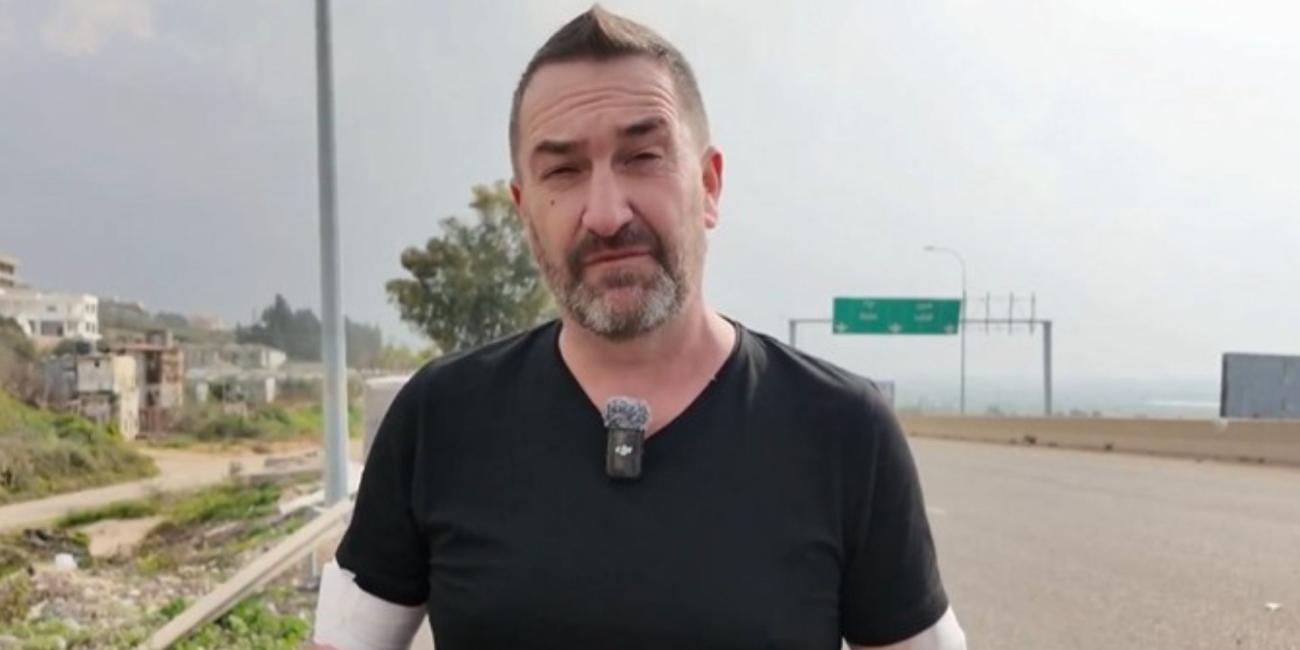
Steve Sweeney, the Lebanon Bureau Chief for RT, was covering the destruction of civilian infrastructure near the Al-Qasmiya Bridge when the strike occurred. Dramatic footage showed Sweeney diving for cover as the missile hit the ground behind him, sending thick black smoke into the air.

Both Sweeney and his cameraman, Ali Rida, suffered shrapnel injuries and were taken to a local hospital for emergency treatment.

After surgery to remove shrapnel from his arm, Sweeney accused the Israeli Defense Forces (IDF) of trying to “silence” journalists reporting on what he described as a widespread campaign of ethnic cleansing.

“Today I$rael tried to kill me in a targeted airstrike in southern Lebanon as I was reporting on was the targeting of bridges and the forced displacement of 1 million people, an ethnic cleansing operation on a larger scale than the Nakba,” Sweeney stated on his X handle.

He rejected claims that the strike was accidental, emphasizing that his team was wearing marked “PRESS” vests and had permission from the Lebanese Army to film.

“I have absolutely no doubt that this was deliberate. Despite claims there were no warnings ahead of the strike and no notifications sent to the Lebanese Army who allowed us to film,” Sweeney said.

The journalist also criticized international backers of Israel, accusing Western powers of enabling the violence.

“It is the western powers who provide political and military support for Israel, arming it to the teeth to carry out genocide in Gaza and ethnic cleansing here in Lebanon,” he said. “They are not simply complicit, but active participants and should be held accountable.”

Russia’s Foreign Ministry condemned the attack. Spokesperson Maria Zakharova stated that the strike “cannot be called accidental,” noting that over 200 journalists have been killed in Gaza since the regional conflict began.

While the IDF claimed the bridge was a “Hezbollah crossing” and that warnings had been posted online, Sweeney said no direct notification reached either the journalists or the Lebanese Army units securing the area.

Despite the near-fatal attack, Sweeney vowed to continue reporting from the region.

“If Israel thinks today’s strike will silence us and keep us out of the field, they are very, very mistaken,” he concluded.

Iran warns of strikes on Israeli embassies worldwide

By Sabiu Abdullahi

Iran’s armed forces have issued a strong warning to Israel over what they described as a possible attack on Tehran’s diplomatic mission in Lebanon.

A military spokesperson said on Wednesday that Iran would respond by targeting Israeli embassies across the globe if such an action takes place.

Abolfazl Shekarchi, spokesperson for the Iranian armed forces, spoke during a live television broadcast. He said, “if Israel commits such a crime, it will force us to make all Israeli embassies around the world our legitimate target.”

His remarks followed a statement by the Israeli military a day earlier. On Tuesday, Avichay Adraee, the Arabic-language spokesperson for the Israeli army, said it “warns representatives of the Iranian regime who are still in Lebanon to leave immediately before being targeted”, and gave them 24 hours to depart.

The exchange comes amid rising hostilities between Iran, the United States, and Israel. Iran has faced joint US-Israeli airstrikes since February 28. Reports indicate that more than 40 senior Iranian government officials have been killed in the bombardment. Among those reported dead is Iran’s Supreme Leader, Ali Khamenei.

The strikes have also affected civilians. More than 1,000 non-combatants have lost their lives, according to reports. The attacks prompted Iran to launch retaliatory measures.

Washington has accused the government led by Khamenei of suppressing its citizens and pursuing nuclear weapons development. Tehran has denied the claims and rejected the allegations.

The situation has continued to heighten tensions across the region, with both sides exchanging threats as the conflict deepens.

Iranian security chief promises continued support for Lebanon

By Anwar Usman

The top security chief of Iran, Ali Larijani, vowed in Lebanon on Wednesday that his government would continue to provide support, after the Lebanese government ordered the army to devise a plan to disarm Tehran-backed militant group Hezbollah.

Ali Larijani’s trip to Lebanon comes after Iran expressed opposition to a government plan to disarm Hezbollah, which, before a war with Israel last year, was believed to be better armed than the Lebanese military.

“If the Lebanese people are suffering, we in Iran will also feel this pain and we will stand by the dear people of Lebanon in all circumstances,” Larijani, the head of the National Security Council, told reporters after landing in BeirutDozens of Hezbollah supporters gathered along the airport road to welcome Larijani.

He briefly stepped out of his car to greet them as they chanted slogans of support.

In Lebanon, the security chief is expected to meet with President Joseph Aoun, Prime Minister Nawaf Salam, and Parliament Speaker Nabih Berri, who is close to Hezbollah.

Iran has suffered a series of blows in its long-running rivalry with Israel, including during 12 days of open war between the two countries in June.

Reports show that, Hezbollah is part of Iran’s so-called “axis of resistance” — a network of armed groups in the region, including Hamas in Gaza and Yemen’s Huthi rebels, united in their opposition to Israel.

The ouster in December of Bashar al-Assad in Syria, which long served as a conduit for weapons deliveries between Iran and Hezbollah, cut off the supply route to Lebanon.

Iran has declared its firm opposition to the Lebanese government’s bid to disarm Hezbollah, while the movement itself has slammed the decision as a “grave sin”.

U.S. deports Rhode Island doctor over alleged Hezbollah ties

By Hadiza Abdulkadir

U.S. authorities have deported a Rhode Island doctor, Rasha Alawieh, to Lebanon after allegedly discovering “sympathetic photos and videos” related to Hezbollah on her cellphone, officials announced Monday.

Dr Alawieh had been living in the United States for several years. Officials said forensic analysis of her deleted files revealed images and footage of the late Hezbollah leader, as well as militant activities.

Authorities did not specify whether she had direct ties to the group, but her presence in the U.S. was deemed a security concern. She was deported last week following an investigation.

The case underscores the heightened scrutiny of potential security threats, as officials continue to monitor individuals with suspected extremist affiliations.