Kwankwaso

Kwankwaso visits Indian university to boost educational collaboration

By Sabiu Abdullahi


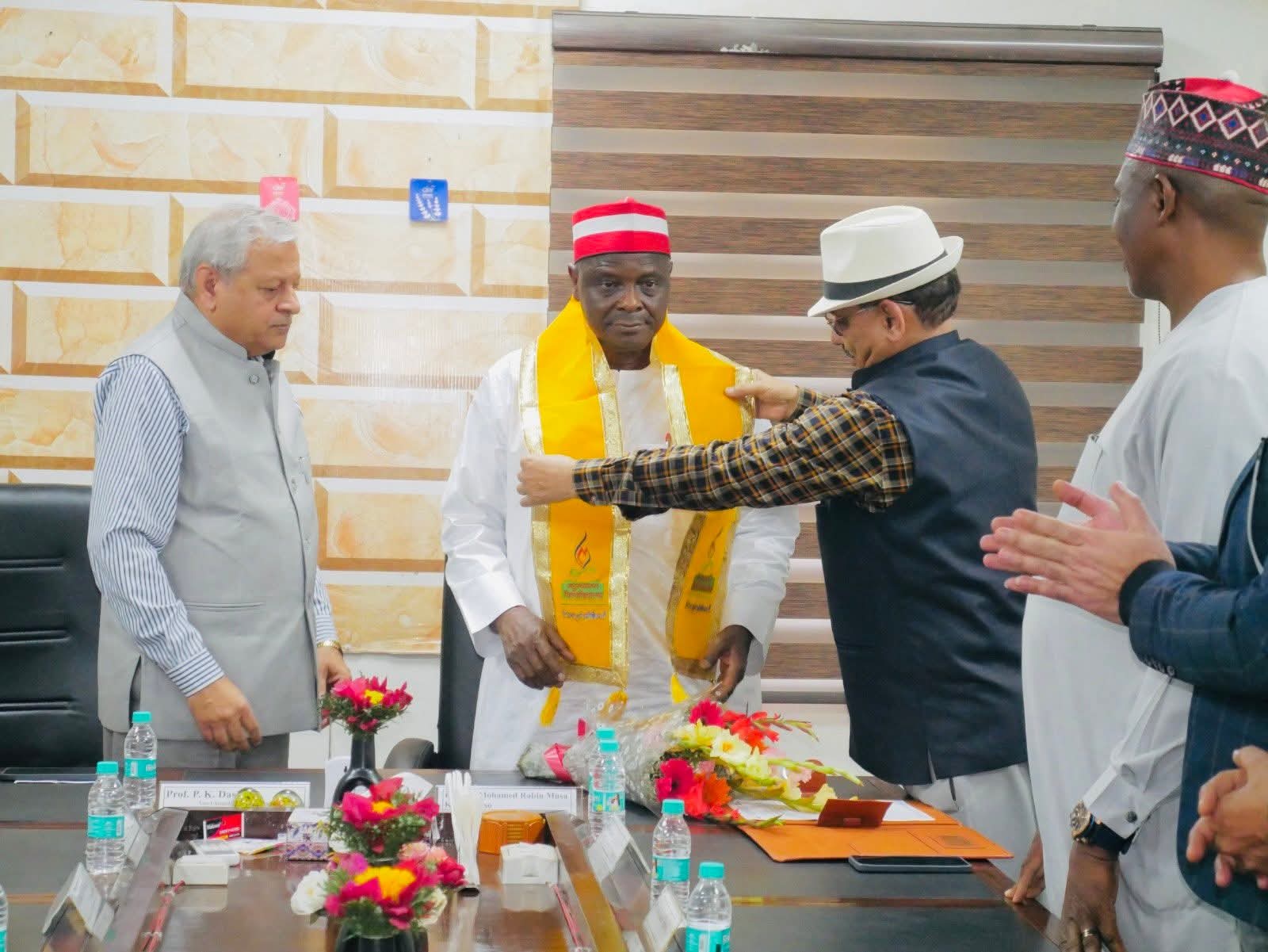
Former Kano State Governor, Rabiu Musa Kwankwaso, visited Mangalayatan University in Aligarh (Beswan), Uttar Pradesh, India, on Wednesday as part of efforts to strengthen education and expand access to quality learning opportunities for Nigerians.

Mr. Kwankwaso stated this in a statement he posted via his official Facebook handle today Thursday.


According to Kwankwaso, the visit aims “to foster meaningful collaborations in research, technology, and academic exchange between Nigerian institutions and their Indian counterparts, promoting mutual growth and innovation in higher education.”

He also expressed gratitude to the university community for their hospitality, stating: “I extend my heartfelt appreciation to the entire Mangalayatan University community—particularly the Chancellor, Vice Chancellor, Senate, and staff— for their exceptional warmth, hospitality, and gracious reception.”

Kwankwaso’s visit highlights ongoing initiatives to build partnerships that could enhance the standard of higher education in Nigeria through international cooperation.

US lawmakers seek visa bans, asset freezes for Kwankwaso, three others

By Uzair Adam

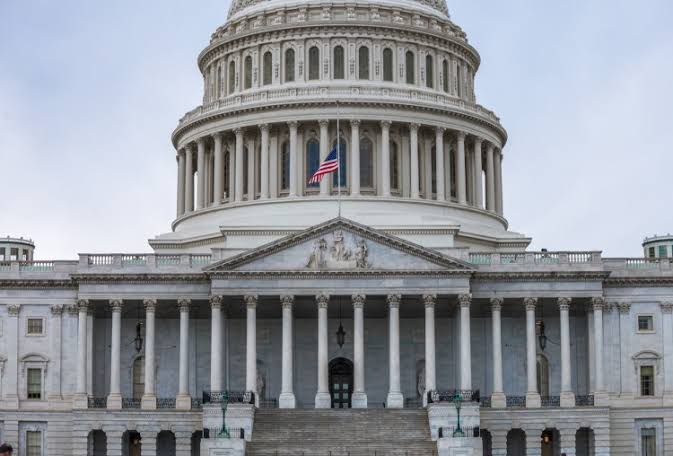
Five members of the United States Congress have introduced a bill requiring the US Secretary of State to submit a comprehensive report on efforts to address ongoing religious persecution and mass atrocities in Nigeria.

If passed into law, the proposed legislation would mandate the Departments of State and Treasury to impose sanctions, including visa bans and asset freezes, on individuals or entities found responsible for severe violations of religious freedom in Nigeria.

Among those named in the bill for possible sanctions are a former Kano State Governor and national leader of the New Nigeria People’s Party (NNPP), Rabiu Musa Kwankwaso; Miyetti Allah Cattle Breeders Association of Nigeria (MACBAN); Miyetti Allah Kautal Hore; and groups described as “Fulani-ethnic nomad militias in Nigeria.”

The bill, titled Nigeria Religious Freedom and Accountability Act of 2026, was introduced on Tuesday in the US House of Representatives.

Its sponsors include Chris Smith, Riley Moore (the bill’s author), Brian Mast, Mario Diaz-Balart, and Bill Huizenga.

The lawmakers said President Donald Trump “acted justly” by redesignating Nigeria as a Country of Particular Concern (CPC), a classification that enables the US government to apply diplomatic and economic measures.

According to the sponsors, the United States should deploy “all available diplomatic, humanitarian, economic, and security tools to pressure the Government of Nigeria to end impunity for perpetrators of mass atrocities and religious persecution and protect Christian communities, clergy, and other targeted religious minorities.”

The bill also directs the Secretary of State to determine whether certain Fulani-ethnic militias in Nigeria meet the criteria for designation as a Foreign Terrorist Organisation.

Part of the proposed legislation states that the US should provide humanitarian assistance — co-funded by the Nigerian government — through trusted civil society and faith-based organisations operating in Nigeria’s Middle Belt states.

It further urges the Departments of State and Treasury to impose targeted sanctions under the Global Magnitsky Human Rights Accountability Act on those responsible for serious religious freedom violations or report to Congress why such measures have not been applied.

Representative Moore, who authored the bill, has consistently maintained that Christians in Nigeria face systemic persecution. He visited Nigeria in November 2025 in connection with the issue.

In November 2025, President Trump redesignated Nigeria as a Country of Particular Concern, a move that paved the way for possible diplomatic and economic actions.

He also authorised coordinated strikes with the Nigerian government against suspected militants on Christmas Day 2025.

Tinubu, Kwankwaso in high-stakes talks as 2027 calculations begin

By Abdullahi Mukhtar AlgasgainiA major political realignment may be imminent as President Bola Tinubu is set to meet with the leader of the Kwankwasiyya movement, Senator Rabiu Musa Kwankwaso.The highly anticipated meeting, scheduled for later today, follows closely on the heels of President Tinubu’s closed-door session with Kano State Governor Abba Kabir Yusuf, a key Kwankwaso protégé, at the Presidential Villa on Wednesday.Reliable sources indicate Governor Yusuf facilitated the engagement after President Tinubu expressed a desire to harmonize political interests across party lines. This is seen as part of broader consultations ahead of the 2027 general elections.Senator Kwankwaso, the 2023 presidential candidate of the New Nigeria Peoples Party (NNPP), had previously opposed joining the ruling All Progressives Congress (APC). However, he recently hinted at a potential shift, stating he would consider a move if presented with a “satisfactory offer” from the ruling party.A senior APC North-West leader confirmed the planned meeting, stating, “The President is keen on broadening his political base. Discussions will likely focus on national stability, political cooperation, and the future alignment of forces ahead of 2027.”This rapid political maneuvering has intensified speculation about the future of the NNPP and the influential Kwankwasiyya structure. It remains unclear whether Kwankwaso and Governor Yusuf are planning a coordinated move or separate strategies.Political analysts suggest that aligning the Kwankwasiyya movement with the APC would significantly reshape northern politics. Such a move could also undermine efforts by opposition figures like Peter Obi and Atiku Abubakar to form a formidable “Third Force” coalition, with Kwankwaso previously considered a central pillar.Securing the cooperation of both Kano’s sitting governor and its most influential political movement would dramatically bolster the APC’s strength in the vote-rich state, a critical battleground in any national election.All parties involved have yet to make official statements as the political landscape awaits the outcome of this crucial meeting.

In defence of Kwankwaso and the scholars who stand with him

By Muhammad Sani Ilyasu

I woke up to a video circulating on social media by a former Kano State anti-corruption czar, giving his opinion about scholarship beneficiaries on why they had no moral right to identify with Kwankwasiyya. It is important to clear the air. Much of what is being said comes from people who were never inside the scheme and never lived the consequences.

Let me state this clearly and upfront: I do not identify with Kwankwasiyya. I disengaged from the movement in 2020. What follows is not partisan advocacy. It is testimony.

Criticism of Rabiu Musa Kwankwaso and scholars associated either rightly or wrongly with his ideology has become fashionable. But much of that criticism is detached from the lived realities that shaped those associations, especially the horrible experience of Kano State scholarship beneficiaries. I write as one of them.

Yes, the scholarships were funded with Kano State resources. But at no point—none that I can recall—were beneficiaries compelled to support Kwankwaso politically. There was no loyalty test, no ideological oath, no expectation of political repayment. In fact, many scholars openly opposed him. I personally recall frequent debates with colleagues who were supporters of Ibrahim Shekarau, many of whom never gave Kwankwaso any credit for the scholarship. Most of us were indifferent, credit was never the issue.

The lesson however came in 2015. That was when Abdullahi Ganduje assumed office—and when all of us, including Kwankwaso’s fiercest critics among the scholars, learned the brutal difference between right and privilege. Tuition payments were halted. Upkeep allowances disappeared. Return-ticket funds were withheld. Scholars were stranded and pushed into destitution in foreign countries.

Some waited over eight years to receive their certificates after the scheme was abruptly terminated. In some cases, parents died without ever seeing the academic fruits of sacrifices they had made.

As if that were not enough, scholars were publicly discredited—labeled products of “substandard universities,” their academic legitimacy questioned to justify administrative neglect. Throughout this period, Kano State went silent.

Religious leaders. Business elites. Civil society organizations. The same voices that now moralize and gaslight scholars looked away. The only “crime” of the scholars was that Kwankwaso started the program.

If, as some critics claim, the scheme was merely a vehicle for siphoning public funds, a simple question remains unanswered: why was Kwankwaso never prosecuted—and why were scholars punished instead? Why were entitlements withheld if the beneficiaries were not the accused?

What makes the silence more damning is that this neglect extended beyond foreign scholars. Until the return of a Kwankwasiyya-led government, even undergraduate scholars sent to private universities within Nigeria—and to Egypt and Cyprus—were denied certificates. For postgraduate students, the delay was damaging. For undergraduates, it was life-shattering: no certificate meant no employment, no future.

In all those years, only one political current consistently raised the issue and demanded settlement: Kwankwasiyya. This is the context critics conveniently ignore.

What they now describe as “indoctrination” or “blind loyalty” was, in reality, a rational response to abandonment. You cannot withdraw education, dignity, and future—then later shame people for gravitating toward the only structure that acknowledged their suffering.

That is not principled criticism. It is double standard. Scholars were not pushed toward Kwankwaso by manipulation. They were pushed there by neglect and even for those of us who have long moved on, that historical truth remains intact—uncomfortable, inconvenient, and undeniable.

Gaslighting scholars for the choices they made under abandonment is not moral courage.
It is hypocrisy.

Muhammad writes from Baltimore Maryland and can be reached at msaniiliyasu@gmail.com.