Kwankwaso

Jos Attack: Kwankwaso Laments ‘Barbaric’ Killing of 27 Nigerians

By Uzair Adam

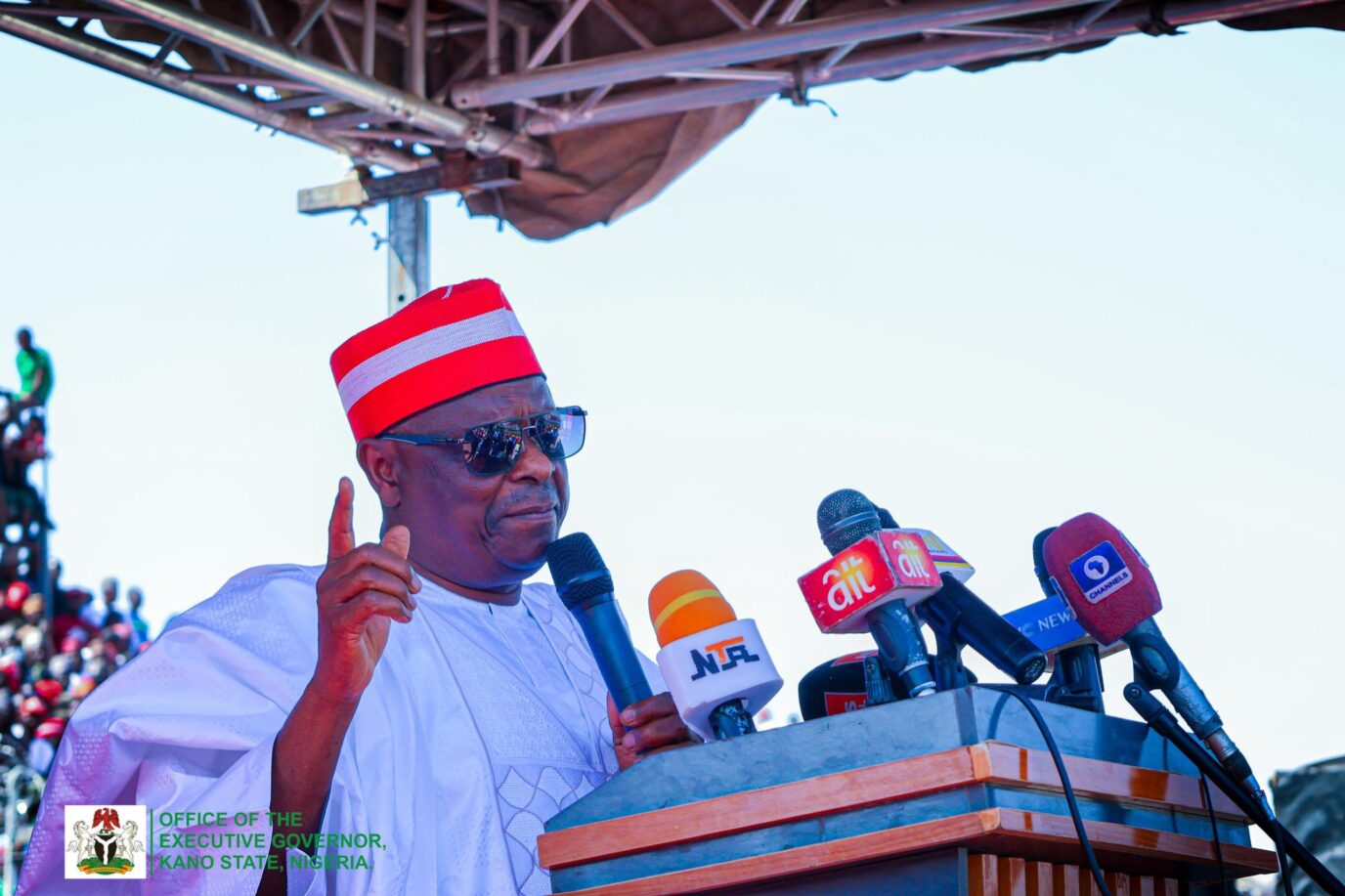
A former Kano State governor and national leader of the Kwankwasiyya Movement, Rabiu Musa Kwankwaso, has condemned the killing of no fewer than 27 people in Gari Ya Waye community of Angwan Rukuba in Jos, Plateau State, describing the attack as barbaric and another tragic chapter in Nigeria’s history.

Kwankwaso, in a statement he personally signed on Tuesday, expressed deep concern over the incident, saying the senseless bloodshed underscores the persistent failure of leadership and the growing culture of impunity that has turned parts of the country into what he called “killing fields.”

The former governor said the recurring violence in Plateau State and other parts of Nigeria should no longer be treated as routine incidents, stressing that the situation demands urgent attention as a national emergency.

“The barbaric attack on the Gari Ya Waye community in Angwan Rukuba, Jos, which claimed the lives of no fewer than 27 Nigerians and left many others injured, is yet another tragic and shameful chapter in our nation’s history,” he said.

Kwankwaso added that the continued attacks on communities highlight the urgent need for decisive leadership and stronger measures to protect lives and property across the country.

According to him, Nigerians deserve to live in peace, security and dignity regardless of their ethnic or religious backgrounds.

The former minister of defence also extended his condolences to the families of the victims, the injured and residents of the affected community.

“My heartfelt condolences and prayers go to the families of the victims, the injured, and the entire Gari Ya Waye community in this moment of profound grief,” he said.

Kwankwaso Formally Defects to ADC, Seeks Credible Leadership for Nigeria

By Uzair Adam

Former Kano State Governor, Rabiu Musa Kwankwaso, on Monday formally aligned with the African Democratic Congress (ADC), a development observers describe as a significant moment for opposition politics in Nigeria.

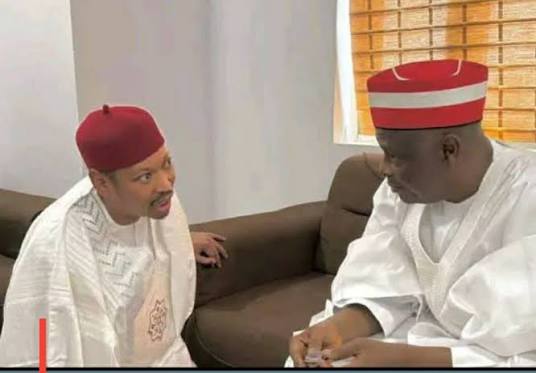
The Daily Reality reports that the party’s National Chairman, David Mark, received Kwankwaso and his supporters at his residence on Monday.

Mark said Kwankwaso’s decision to join the party represented more than a political realignment, noting that it reflected growing calls by Nigerians for a united and formidable opposition capable of safeguarding democratic values.

He explained that the ADC was emerging as a rallying platform for a broad-based national movement founded on inclusion, integrity, competence and progress.

According to him, the coalition aims to offer Nigerians credible alternatives and rebuild public confidence in democratic governance.

Mark also expressed concern over what he described as a gradual shrinking of opposition space in the country, warning that actions capable of limiting political participation could threaten democracy.

“The future of Nigeria cannot be built on domination but on participation. Leadership must be earned through trust rather than sustained by control,” he said.

The ADC chairman noted that Kwankwaso commands a large grassroots following, particularly in Northern Nigeria, through the Kwankwasiyya movement.

He called on Nigerians across ethnic, religious and regional lines to join the movement and play active roles in building a more inclusive and accountable system of governance.

Mark also invited other political parties, civil society organisations and youth groups to work towards a united coalition, stressing that strengthening democracy requires collective effort and sacrifice.

He expressed optimism that the emerging alliance could mark a turning point in Nigeria’s democratic journey, urging citizens to embrace unity, participation and hope in shaping the country’s future.

Earlier, Kwankwaso urged ADC supporters to register massively as members of the party.

He also encouraged them to promote the party’s ideals and prepare to elect credible leaders for good governance through registration with the Independent National Electoral Commission (INEC).

PHOTOS: ADC Leaders Storm Kano as Kwankwaso Set to Join Party

By Uzair Adam

Several top figures of the African Democratic Congress (ADC) have arrived at Miller Road in Kano, the residence of former Kano State governor, Rabiu Musa Kwankwaso, ahead of his expected official defection to the party today.

Those present include the former Senate President and ADC National Chairman, David Mark; the party’s National Secretary and former Minister of Interior, Rauf Aregbesola; former Sokoto State governor, Aminu Waziri Tambuwal; former Minister of Transportation, Rotimi Amaechi; Senator Dino Melaye; former APC National Chairman, John Odigie-Oyegun; and former Imo State governor, Emeka Ihedioha.

The delegation arrived in Kano through Malam Aminu Kano International Airport (MAKIA), where they were received by the immediate past deputy governor of Kano State, Aminu Abdussalam Gwarzo.

OFFICIAL: Kwankwaso Resigns From NNPP

By Sabiu Abdullahi

A former Governor of Kano State, Rabiu Musa Kwankwaso, has stepped down from the New Nigeria People’s Party (NNPP), pointing to the need for a shift in political direction.

Kwankwaso, who flew the party’s flag in the 2023 presidential election, made his decision public in a statement released on Sunday. He confirmed that his resignation takes immediate effect.

“I wish to formally announce my resignation from the New Nigeria People’s Party (NNPP) with immediate effect.”

He described the move as difficult, given his history with the party, but said current political realities influenced his choice.

“As a committed and bonafide member of the party, this was not an easy decision to make. However, considering the current trajectory of the nation’s political landscape, which calls for strategic realignment, I have found it necessary to identify with another political platform that offers the best opportunity to effectively change the nation,” he said.

Kwankwaso expressed gratitude to the leadership of the NNPP, including the National Chairman, Ajuji Ahmed, as well as other party organs, for their support during his time in the party.

“I extend my deepest appreciation to the National Chairman, Ajuji Ahmed and the entire National Working Committee for their steadfast support throughout my time. I also thank the Board of Trustees, the National Executive Committee, and all levels of leadership across the party — from the ward to the state level,” he stated.

He also acknowledged the backing of members of the Kwankwasiyya Movement and party supporters across the country.

“We shall continue to collaborate and work together towards charting a better and more prosperous future for our dear nation,” he added.

The former governor did not reveal his next political destination. However, sources within both the NNPP and the African Democratic Congress indicated that he may formally join the party on Monday in Kano.

Party insiders disclosed that top figures, including David Mark and Rauf Aregbesola, are expected to receive him into the ADC.

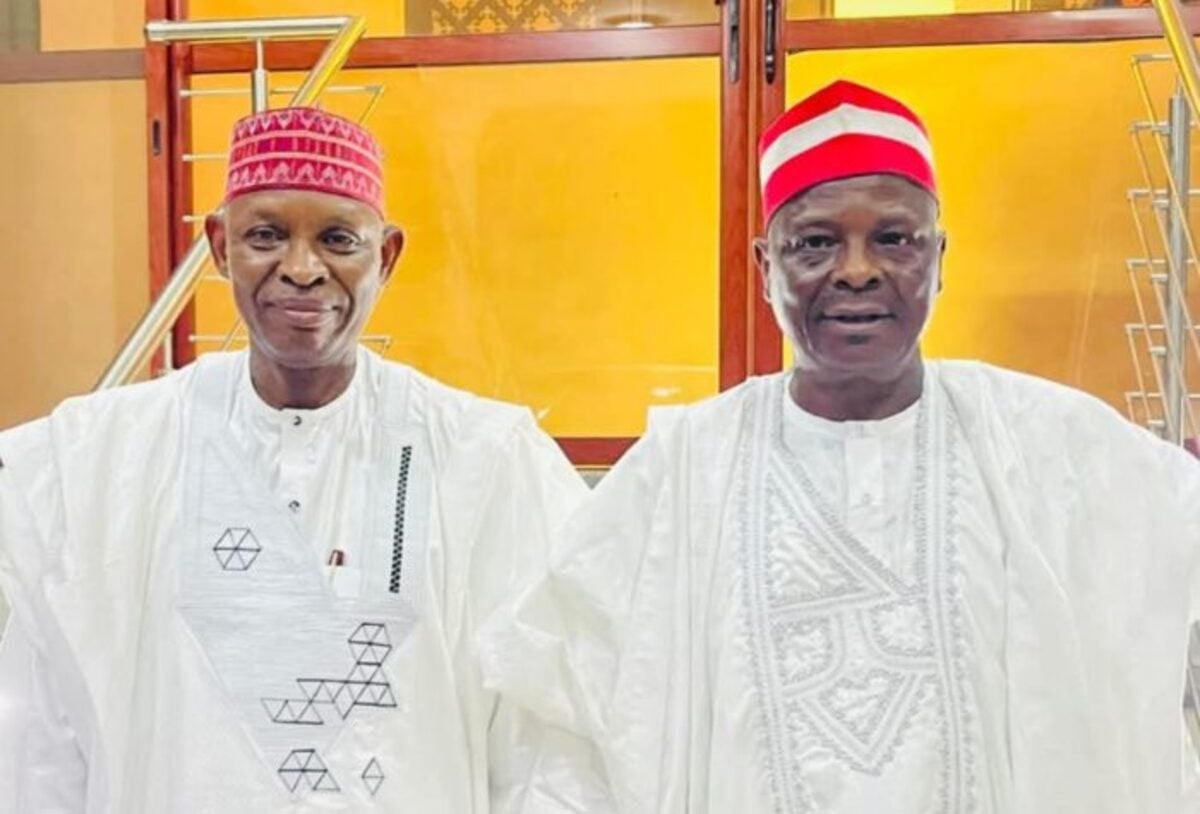
There are also indications that Kwankwaso may move alongside former Kano State Deputy Governor, Aminu Abdussalam Gwarzo.

In a related development, former presidential candidate of the Peoples Democratic Party and a key figure in the ADC, Atiku Abubakar, recently hosted Kwankwaso in Abuja. According to Atiku, the visit was a courtesy call during which both leaders discussed national issues at length.

Kwankwaso Set To Join ADC Monday

By Anwar Usman

The former Kano State governor and leader of the Kwankwasiyya movement, Rabiu Musa Kwankwaso, is set to join the African Democratic Congress, ADC, on Monday.

The Daily Reality reports that the planned defection follows series of consultations between Engr. Rabiu Kwankwaso, his Kwankwasiyya movement, and leaders of the ADC.

Recalled that, Kwankwaso had, in recent weeks, held a series of high-level engagements with ADC stakeholders and other opposition figures.

Last week, he met with party leaders and stakeholders in Kano State as part of the ongoing consultations.

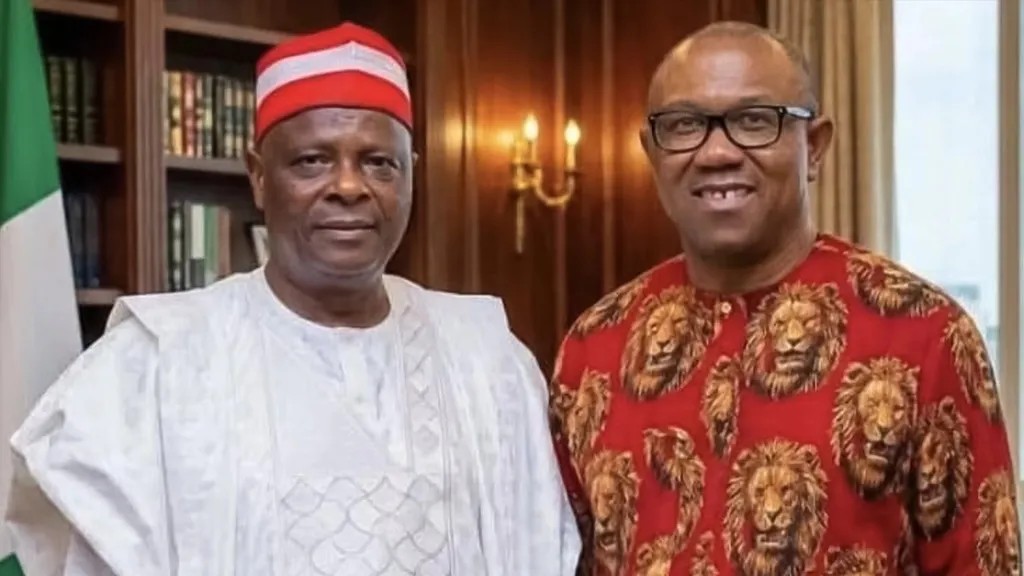
It is evident that, he also held talks with key political figures, such as Naja’atu Muhammad, the ADC National Secretary, Rauf Aregbesola; the Labour Party’s 2023 presidential candidate, Peter Obi; Oyo State Governor, Seyi Makinde; and the senator representing Bayelsa West, Seriake Dickson.

Reports has it that, the move is part of broader opposition realignments ahead of the 2027 general elections, aimed at unseating the ruling All Progressives Congress, APC.

The development comes after Dr. Rabiu Kwankwaso and his political protégé, Kano State governor, Abba Yusuf parted ways.

Engr. Abba Yusuf, widely regarded as Kwankwaso’s political godson and a major beneficiary of the Kwankwasiyya movement, recently defected from the NNPP to the APC alongside several lawmakers and political appointees.

However, Kwankwaso, opposed the move and distanced himself from it, describing it as a betrayal.

PHOTOS: How Nigeria’s Opposition Leaders Visit Kwankwaso for Sallah Amid Political Realignments

By Uzair Adam

Prominent opposition figures in Nigeria have paid a visit to the residence of Kwankwasiyya leader, Rabiu Musa Kwankwaso.

Those present at the visit included former Labour Party presidential candidate Peter Obi, Oyo State Governor Seyi Makinde, and Senator Seriake Dickson, among other political stakeholders.

In a post shared on his Facebook page, Kwankwaso stated that the politicians were at his residence on a Sallah homage.

Kwankwaso, a leading figure in the opposition New Nigeria Peoples Party, is widely speculated to be considering a move to another political party.

This follows the recent defection of Kano State Governor, Abba Kabir Yusuf, from the NNPP to the ruling All Progressives Congress.

Meanwhile, Peter Obi recently confirmed his official move to the African Democratic Congress, while Governor Makinde remains one of the few governors still in the Peoples Democratic Party, alongside his Bauchi State counterpart.

Why Kwankwaso was singled out in US religious freedom bill – Kperogi

By Uzair Adam

Professor Farooq Kperogi has explained why former Kano State Governor, Senator Rabiu Musa Kwankwaso, was singled out in a proposed United States congressional bill seeking visa bans and asset freezes against certain Nigerian officials over religious freedom concerns.

Kperogi, a Nigerian-American scholar and media commentator, disclosed this in a Facebook post on Wednesday while reacting to the proposed “Nigeria Religious Freedom and Accountability Act of 2026,” introduced by Republican Congressman Riley Moore and other lawmakers.

The bill reportedly seeks to hold Nigerian officials accountable over allegations of religious persecution, including actions connected to the implementation of Sharia law in some northern states.

Kwankwaso, who served as Kano governor from 1999 to 2003 and later from 2011 to 2015, and was the presidential candidate of the New Nigeria People’s Party (NNPP) in the 2023 general election, was mentioned in connection with Kano’s adoption of Sharia in 2000.

In his post, Kperogi said he was initially “surprised, shocked even” that Kwankwaso was singled out among northern Muslim politicians, arguing that the former governor is not, “by any stretch of the imagination, a religious fanatic.”

Drawing from his experience as Assistant News Editor of Weekly Trust at the time, Kperogi recalled that Kwankwaso was reluctant to declare Sharia in Kano in 2000.

He said the Sharia bill in Kano was a private member’s bill, not sponsored by the governor or the state executive, unlike in several other northern states.

According to him, Kwankwaso resisted pressure for months and found himself at odds with both the public and the Muslim clerical establishment.

He cited his June 30, 2000 report co-authored with Sulaiman Aliyu, in which he wrote: “The governor was trapped in a delicate cul-de-sac. And his escape route was the launching of Sharia on the 21st of June 2000.”

Kperogi added that the pressure on the governor became so intense that he temporarily avoided public events, with his deputy, Abdullahi Ganduje, often representing him.

On one occasion, Ganduje was reportedly stoned during a Maulud celebration while standing in for the governor.

He further quoted Kwankwaso’s remarks at the formal launch of Sharia in Kano: “Only the state government has the right to punish offenders. We should avoid taking the law into our hands. We should not intimidate those who are not Muslims,” arguing that such a statement did not reflect extremist rhetoric.

Kperogi maintained that Kwankwaso’s implementation of Sharia was widely perceived as lukewarm, which, he said, contributed significantly to his loss in the 2003 governorship election to Ibrahim Shekarau, who had strong backing from the clerical establishment.

Explaining why the U.S. lawmakers may have targeted Kwankwaso, Kperogi said the former governor was the only nationally prominent Nigerian politician who openly criticised the United States’ designation of Nigeria as a Country of Particular Concern (CPC) over religious freedom issues.

Kwankwaso had argued that the designation was unhelpful, reduced a complex problem to simplistic binaries, risked worsening interreligious tensions, and that cooperation would be more constructive than confrontation.

Kperogi noted that Congressman Moore reacted sharply on social media, accusing Kwankwaso of complicity in the deaths of Christians and referencing his role in instituting Sharia law in Kano. Kwankwaso did not respond publicly to the provocation.

According to Kperogi, the inclusion of Kwankwaso in the bill appears to be rooted less in his historical record and more in his public dissent from a particular U.S. policy stance.

He, however, pointed out that the bill remains at the introduction stage in the U.S. House of Representatives and must pass through several legislative processes before it can become law, noting that many Nigeria-specific standalone bills do not advance beyond preliminary stages.

Kwankwaso visits Indian university to boost educational collaboration

By Sabiu Abdullahi


Former Kano State Governor, Rabiu Musa Kwankwaso, visited Mangalayatan University in Aligarh (Beswan), Uttar Pradesh, India, on Wednesday as part of efforts to strengthen education and expand access to quality learning opportunities for Nigerians.

Mr. Kwankwaso stated this in a statement he posted via his official Facebook handle today Thursday.


According to Kwankwaso, the visit aims “to foster meaningful collaborations in research, technology, and academic exchange between Nigerian institutions and their Indian counterparts, promoting mutual growth and innovation in higher education.”

He also expressed gratitude to the university community for their hospitality, stating: “I extend my heartfelt appreciation to the entire Mangalayatan University community—particularly the Chancellor, Vice Chancellor, Senate, and staff— for their exceptional warmth, hospitality, and gracious reception.”

Kwankwaso’s visit highlights ongoing initiatives to build partnerships that could enhance the standard of higher education in Nigeria through international cooperation.

US lawmakers seek visa bans, asset freezes for Kwankwaso, three others

By Uzair Adam

Five members of the United States Congress have introduced a bill requiring the US Secretary of State to submit a comprehensive report on efforts to address ongoing religious persecution and mass atrocities in Nigeria.

If passed into law, the proposed legislation would mandate the Departments of State and Treasury to impose sanctions, including visa bans and asset freezes, on individuals or entities found responsible for severe violations of religious freedom in Nigeria.

Among those named in the bill for possible sanctions are a former Kano State Governor and national leader of the New Nigeria People’s Party (NNPP), Rabiu Musa Kwankwaso; Miyetti Allah Cattle Breeders Association of Nigeria (MACBAN); Miyetti Allah Kautal Hore; and groups described as “Fulani-ethnic nomad militias in Nigeria.”

The bill, titled Nigeria Religious Freedom and Accountability Act of 2026, was introduced on Tuesday in the US House of Representatives.

Its sponsors include Chris Smith, Riley Moore (the bill’s author), Brian Mast, Mario Diaz-Balart, and Bill Huizenga.

The lawmakers said President Donald Trump “acted justly” by redesignating Nigeria as a Country of Particular Concern (CPC), a classification that enables the US government to apply diplomatic and economic measures.

According to the sponsors, the United States should deploy “all available diplomatic, humanitarian, economic, and security tools to pressure the Government of Nigeria to end impunity for perpetrators of mass atrocities and religious persecution and protect Christian communities, clergy, and other targeted religious minorities.”

The bill also directs the Secretary of State to determine whether certain Fulani-ethnic militias in Nigeria meet the criteria for designation as a Foreign Terrorist Organisation.

Part of the proposed legislation states that the US should provide humanitarian assistance — co-funded by the Nigerian government — through trusted civil society and faith-based organisations operating in Nigeria’s Middle Belt states.

It further urges the Departments of State and Treasury to impose targeted sanctions under the Global Magnitsky Human Rights Accountability Act on those responsible for serious religious freedom violations or report to Congress why such measures have not been applied.

Representative Moore, who authored the bill, has consistently maintained that Christians in Nigeria face systemic persecution. He visited Nigeria in November 2025 in connection with the issue.

In November 2025, President Trump redesignated Nigeria as a Country of Particular Concern, a move that paved the way for possible diplomatic and economic actions.

He also authorised coordinated strikes with the Nigerian government against suspected militants on Christmas Day 2025.

Tinubu, Kwankwaso in high-stakes talks as 2027 calculations begin

By Abdullahi Mukhtar AlgasgainiA major political realignment may be imminent as President Bola Tinubu is set to meet with the leader of the Kwankwasiyya movement, Senator Rabiu Musa Kwankwaso.The highly anticipated meeting, scheduled for later today, follows closely on the heels of President Tinubu’s closed-door session with Kano State Governor Abba Kabir Yusuf, a key Kwankwaso protégé, at the Presidential Villa on Wednesday.Reliable sources indicate Governor Yusuf facilitated the engagement after President Tinubu expressed a desire to harmonize political interests across party lines. This is seen as part of broader consultations ahead of the 2027 general elections.Senator Kwankwaso, the 2023 presidential candidate of the New Nigeria Peoples Party (NNPP), had previously opposed joining the ruling All Progressives Congress (APC). However, he recently hinted at a potential shift, stating he would consider a move if presented with a “satisfactory offer” from the ruling party.A senior APC North-West leader confirmed the planned meeting, stating, “The President is keen on broadening his political base. Discussions will likely focus on national stability, political cooperation, and the future alignment of forces ahead of 2027.”This rapid political maneuvering has intensified speculation about the future of the NNPP and the influential Kwankwasiyya structure. It remains unclear whether Kwankwaso and Governor Yusuf are planning a coordinated move or separate strategies.Political analysts suggest that aligning the Kwankwasiyya movement with the APC would significantly reshape northern politics. Such a move could also undermine efforts by opposition figures like Peter Obi and Atiku Abubakar to form a formidable “Third Force” coalition, with Kwankwaso previously considered a central pillar.Securing the cooperation of both Kano’s sitting governor and its most influential political movement would dramatically bolster the APC’s strength in the vote-rich state, a critical battleground in any national election.All parties involved have yet to make official statements as the political landscape awaits the outcome of this crucial meeting.