Kidnapping

Train blast is not a problem of Kaduna alone

By Aliyu Nuhu

When we criticize this government, some people deride us as Buhari bashers. They complain that we lack patriotism because we run down our country. But look at Nigeria today and say if it is the kind of country you want to live in or it is the kind of country you want your children and grandchildren to inhabit.

What is the fault of the government in matters that concern our security? It is because of the way it neglected police affairs. Banditry and terrorism are, among others, products of poor community policing. Humans are products of communities, good or bad. The police decide the kind of communities we have as far as crimes are concerned. Before they kidnap anyone, criminals emerge from the community and when they kidnap they return to the communities. Good police will ensure that they don’t emerge and if they do, they can’t return to the community. But today’s Nigerian police are going on strike because of poor salaries and delays in payment of even the poor salaries. Police lack all working tools from the basics such as lie detectors, electricity, and computers; to the complex ones such as data banks for fingerprints and DNA.

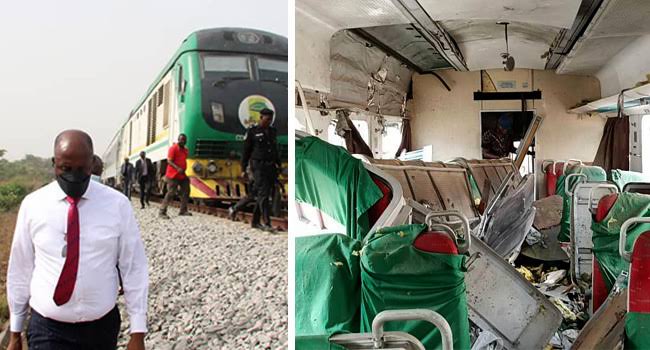
Whenever there is a bomb blast you see the president holding emergency meetings with service chiefs. That is missing the point. What have navy, airforce and army got to do with attacks on the train? The president should hold his emergency meeting with police high commands, NSCDC and DSS. That is where the missing links lie.

The military ordinarily has no business safeguarding railways, doing the work of police, DSS and NSCDC. They have no budget to safeguard the railway. The military can be called to give additional firepower to the police when there is a need but they have no solution to the problem and cannot prevent future attacks.

The railway is a product of technology and there is technology to protect it. Only Nigeria will invest so much in railway and refuse to deploy the technology to protect it. There are real-time intelligent railway protection systems of various types to deploy. The minister for transportation had made such a request after the first attack which was denied (though the request was later accused of being through a seemingly corrupt process). The second attack has made the president see the reasons and approved of the technology. I hope that with the new measures, future attacks on railways will be prevented.

Who were the attackers?

According to the Daily Trust, a Kaduna security source, who did not want his name in print, said the attack was carried out by Boko Haram elements in collaboration with bandits.

“Two sources; a local with knowledge of bandits’ activities and a senior intelligence officer in Abuja confirmed that a Kaduna-based bandits leader, Boderi, was involved in hatching the attack.

Boderi is notorious for masterminding a number of atrocious attacks in Giwa, Chikun, Igabi and Zaria Local Governments in Kaduna State, including the abduction of students of the Federal College of Forestry Mechanisation, Afaka, in March last year and kidnapping of the Emir of Bungudu, Alhaji Hassan Attahiru in October of the same year.”

Also, victims said they were not the regular Fulani kidnappers that carry out their raids on the highways. They said they were very young boys between the ages of 18 to 25 years and spoke good English. Some of them were pronouncing “Allahu Akbar”. It pointed to either Boko Haram or ISWAP. Deployment of IED technology is Boko and ISWAP franchise. The attackers used buses, unlike the Fulani kidnappers that use motorcycles, an indication that they came from a long distance. How about 200 terrorists came in buses and carried people and disappeared into thin air beat all minds. There was no single casualty on the side of the attackers and no one was captured. We have a long way to go in security matters.

Arewa’s potential and the Maitatsine syndrome

By A.F. Sesay

It’s difficult to fathom how a region of such numbers, resources, and beautiful cultural heritage/pedigree came to become such a scourge on national conscience in a space of forty years. What happened to the passion of the Sardauna, the native pride and dignity of your people, the welfarism that always motivated your brothers from the south or neighbouring countries to stay beyond those initial dates of return or even decide to be permanent residents?

If you were to canvas for answers,  different answers would come from different sources based on intellectual and cultural biases or leanings. That’s also the case with all matters of human endeavour. So, no shaking! And the more complex the issue the more divergent opinions and perspectives.

But in the case of recent events in northern Nigeria, with an emphasis on the Muslim hemisphere, there is something striking in the people’s unwanton love for the material side of life, contrary to the previous cultural ethos. Equally matched by this is the fear for death which naturally comes with more cravings for the transient pleasures of life. What happened to the studious efforts of the serious and sincere ulama (religious scholars)?

Let me hazard a few guesses. While some unscrupulous elements in both local and international media make it look like Arewa is Africa’s human abattoir where people are killed for the fun of it, non-northerners who have lived there before this litany of crises have fond memories of a people who are peaceful to a fault. This peace, which was largely a product of a contented heart, died with the pressure to keep up with the Joneses. And in that pressure was buried the deep fear of death. Before this, you knew people who were courageous, who stood for what they believed in no matter whose axe was gored and no matter the deadly consequence.

Crimes like kidnapping and banditry couldn’t reign supreme because criminals weren’t feared. We all remembered the courageous youths of Azare who risked their lives to confront armed bandits in 2012. Instances abound when community leaders (mai unguwas) coordinated young people to serve and defend the community within the ambit of the law. So, what happened?

How did we come to this period of life when people in a region of over 100 million people stood by and watched unknown faces and small groups of scums hack away their future and that of their children, one local government at a time?

Maybe we should look at the trends and evolution of materialism. Look at a few nations whose socio-economic progress have been meteoric in the last 50 years and look at northern Nigeria, you will see a striking lack of priority as well as a  lack of agency and urgency. And what underlies all this is the base love for material things among the elite which oozed out into the wider society rubbed off on the talakawa (proletariat) Suddenly, suddenly every Bala wants this: a luxurious house with a tall gate, a fleet of cars, tall, fair and wide-eyed women and other fine, yet fleeting things of life. Yet, neither the education nor the economy was tailored to sustain this onward rush to glitters: new trends come up annually in the design of houses, new brands of cars, new phones and so on.

Whoever is going to keep up with that has to have unrestricted access to money either through commerce or a job that pays an incredibly high salary. In the absence of this is another companion to money: stealing and everything extortion. Under this falls the myriads of problems we see today: unbridled corruption in governance, banditry, kidnapping and the rest in this nefarious family of ills.

Let’s say we flipped the conversation and say the fault is not in the people, but their enemies. It is logical to think that a region this steeped in tradition, with such great potential in numbers and unexplored resources is bound to be a target of both visible and invisible enemies, what is not logical though is when this becomes an excuse for inertia, baseless polemics, cancel culture and hurling of insults left right and centre. About enemies, who hasn’t had one? About insults, we haven’t seen one- I mean- we haven’t had an economy built solely on the foundation of the people’s ability to hurl insults at each other.

While there are certainly smithereens of enmity and animosity smothered on all of the region’s myriads of problems (a common case is a bias in data and reportage on and about the north, but let’s not digress), there is certainly a need for deep introspection. What happened? Are these manifestations of problems long foretold? Could something be wrong with the very approach to problem-solving? Or is this a huge cultural gap nobody is willing to talk about? Does it have something to do with population or outright carelessness on the part of the ruling class?

The north, in its long political sojourn as part of a nation in which it was severely disadvantaged in education, yet extremely well-positioned in Politics and Administration, has had its fair share of wins and losses. What remains to be seen is the ingenious manipulation of pluses and minuses. The world is watching and history’s pen is looming over you!

All told, the current state of affairs should remind you of the popular hadith of Prophet Muhammad (peace and blessings of Allah be upon him). And if this is a behavioural problem like it was rightly observed, then it’s going to require a behavioural solution: moderate the wanton love for material things and be courageous enough to confront death when your dignity and that of the generations unborn are at stake. 

A.F. Sesay sent this via amarasesay.amir@gmail.com.

Seven kidnap victims rescued in Kaduna

By Muhammad Sabiu

On Monday, February 7, 2022, the Kaduna State Government said that troops had rescued seven people in the state who had been kidnapped.

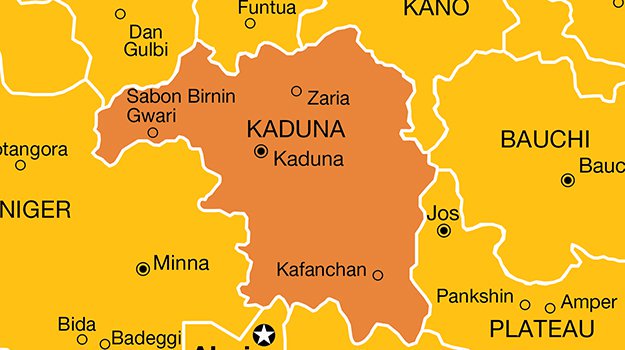
Security forces revealed to the government that the troops rescued seven persons from bandits who attacked Ungwan Garama in the Maraban Rido General Area of Chikun Local Government, Kaduna State, according to Samuel Aruwan, the state’s Commissioner for Internal Security and Home Affairs.

The troops, he claimed, got distress calls alerting them of a bandit raid and swiftly engaged the attackers.

The criminals were forced to flee due to the soldiers’ superior firepower, he continued.

Security authorities, according to him, were able to exploit the criminals’ escape path and recover seven abducted people, adding that all of the rescued victims have been reunited with their relatives.

Abba Kyari forced me to accept being a kidnapper, Evans tells court

By Ahmad Deedat Zakari

The alleged kidnap Kingpin, Chukwudimeme Onwuamadike, alias Evans, said his confession was obtained under duress and threat to his family by the embattled suspended Deputy Commissioner of Police, Abba Kyari and his team.

Speaking during his hearing at Ikeja Special Offences Court on February 4, 2022, Evans made the allegations against the suspended police chief.

Evans said, “One day at the IG Guest House, the police brought some documents and asked me to sign. I asked what the documents were for, but they didn’t answer me. They said if I didn’t cooperate with them they would kill me.

They killed about six persons in my presence and I signed the document, I was not allowed to read it. I think it is the document that was used to bring me to court.”

He was also asked why he was looking undisturbed and he said, “The police told me to laugh and smile in the video. You do not know what I encountered in the hands of Abba Kyari and his boys. My eyes saw hell.”

Evans is presently standing trial on a four-count charge of kidnapping and unlawful possession of firearms alongside a dismissed soldier, Victor Aduba.

The case has been adjourned until March 11 for the continuation of the trial.

Of criminality, economic stability, birth control and northern Nigeria

By Zakari Abubakar

It is evident that whenever there is an upsurge in criminal activities in parts of northern Nigeria, a perennial debate usually rears its head among those interested in the root causes of the problem. This is understandable. Without identifying the cause of a problem, its solution may not be in the offing. Like virtually every year, this debate is also gaining traction in this early part of 2022.

Admittedly, this view adds to the existing number of discussions on this topic. Those who are following the debates are not unaware that there are a group of people who link the rise in criminal activities in the north and the rate of excruciating poverty among its people, mainly to the large number of children born in virtually every family in the region. This group of people base their argument SOLELY on the superficial and generalised assumption that people with a large number of children, more often, engage in irresponsible parenting.

Another reason why this group of people see an individual with a large number of children as a potential source of criminality and economic stagnation is that Nigerian authorities have for long been finding it difficult to provide social services such as education, electricity and other life essentials to these growing number of citizens which leads to more people becoming poor. This is where I find their argument too simplistic. Because the same authorities are providing these services to themselves, their families or their cronies.

Going back to their first argument, it is glaringly verifiable that for every individual with many children who fail to cater for them, hundreds, if not thousands, bore many children and saw to their responsible upbringing. This example is on the level of individuals. There are many more such examples on the societal level. For instance, several countries and regions of the world have nearly the same population as northern Nigeria or are more populous but are not facing the same challenges.

Those societies have considered such a phenomenon as a gift and therefore utilise it positively. To buttress this point, the five most populous countries in 2021, according to sources, are China, India, the United States, Indonesia, and Pakistan. Although these countries may be facing their security and economic challenges, the standard of living in those societies is by far more robust than what is obtainable in northern Nigeria.

To cite a specific example: about 90% of China’s population is Han Chinese. They are over a billion people, yet, there is no accusation from the rest of the population in that country or the Hans themselves that the Hans are a potential source of poverty or criminality. Similarly, the most populous state in India is Uttar Pradesh, with over 200 million inhabitants. But go to India. How does Uttar Pradesh fare compared to the rest of Indian territories in terms of economic prosperity?

No one is disputing that northern Nigeria is recently replete with a high rate of criminality occasioned by poverty among its growing population. But to solely link this problem with the region’s birth rate is to accord the topic attention that is less than it badly desires. For example, what about the other seemingly systemic problems that have to do with governance and political leadership?

One may say, why do people resort to adding problems for themselves by producing more children since the government failed to sustain their needs? Then I would say, instead of blaming those who fail to provide those essentials (though they are providing them for themselves and their families), we resort to blaming the poor, despite his effort to always get himself out of the effects of poor/bad political leadership?

Elsewhere, other regions of the world are complaining of a decline in their population. Thus, they outsource other remedies for their problems, like encouraging men and women to engage in economic activities. Therefore, no matter how small, we should demand accountability from our political leaders and seek other possible options that are more viable than resorting to birth control, which has its implication on man’s overall health.

Zakari Abubakar is with the Department of Physical and Health Education, Aminu Saleh College of Education, Azare. He can be contacted via zakariabubakarnng@gmail.com.

Unknown gunmen abduct ex-President Jonathan’s cousin

By Uzair Adam Imam

The cousin of the former president of Nigeria, Goodluck Jonathan, was reported to have been abducted by unknown gunmen at his residence in Yenagoa, Bayelsa State.

The cousin, identified as Jephthah Robert, was abducted on Monday, 24, January 2022.

The Daily Reality has learnt that the abductors have yet to contact the family long since his abduction

SP Asinim Butswat, the police spokesman in Bayelsa State, confirmed the development while addressing the journalist.

He added that this has resulted in intensifying efforts to save the victim and arrest the culprits.

Reports from the state have shown that the rate of kidnappings in Bayelsa State has increased recently.

A minute of silence for Hanifa Abubakar

By Maryam Muhammad Lawan

“Baby sis! I’m craving for something spicy,” I said in a cosseted voice. 

“Don’t worry, please. Your lazy sis will take care of you today. Guess what! No, I’m not even telling you anymore. Just wait for it,” sis said. 

I jabbed at her amusingly while saying, “Go and prepare whatsoever it’s please”.

“So, you’re poking fun at me. I’ll surprise you today”, My sister said while cackling.

“Yeah, don’t surprise me with rubbish, please, “I teased while she guffawed and moved on. “What a sis? Bless her ya Allah, “I said silently.  

I was left alone in the room when I logged into my Facebook account and started scrolling. Why do I see Haneefah’s pictures on almost every post? Did those other sets of humans release her? So I decided to read, to discover what it is. 

SubhanAllah! AstagfiruLah! I read as many updates as possible, for I couldn’t believe what I read from the first update. But eventually, I realized even the first update was as right as a trivet. 

“Don’t tell me you couldn’t wait for me to finish. I want to cook delicious food, so be more patient, please,” My sister said as she heard my footsteps towards the kitchen. I stood there, and she quickly looked at me. “Okay. Cry, cry, baby, what’s wrong again? Let me turn off this cooker before this mood of yours spoil my hot spicy meal,” sis said aggressively.

I couldn’t spell out even a word, maybe because I was emotional. So all I could do was to extend the phone to her. 

She used her hands and closed her mouth. Tears had no option rather than to roll out of her eyes.

Innaa lillaahi wa innaa ilaihi raaji’uun! AstagfirulLah wa atubu ilaik! Ya Allah, have mercy on us. The girl I so much like? Though I don’t know her, the girl I always pray for Allah to protect her wherever she’s, and from the evil of those men?” she said with a sorrowful voice. She continued reciting, “HasbunalLahu wa ni’imal wakeel”.

“Her school teacher did this, then, if learning places are not safe, where on earth then? What a wicked world, Ya Rahman, have mercy on us. Ya Razzaq, grant her parents the fortitude to bear this loss,” My sister prayed

I replied, “Ameen ya Rabb,” while giving her a shoulder to cry on.

Maryam Muhammad Lawal wrote from Kaduna via mmafamam@gmail.com.

Police officers killed in Jigawa

The killings of two officers in Taura Local Government Area and the abduction of Haruna Maifata, the state’s contractor’s son-in-law, have been confirmed by Jigawa State police.

The incident happened at Kwalam, part of the Taura LGA, where the contractor lives.

Ma’aru Abubakar, the contractor’s son-in-law, was kidnapped.

While confirming the event to reporters, Lawan Adam, a police spokesperson in Jigawa, said the police were stepping up their efforts to apprehend the bandits. According to him, Anas Usaini, a superintendent of police, and Sunusi Alhassan, an inspector, were killed.

According to him, the cops were shot and killed beside an improvised patrol car set on fire by the attackers.

Residents stated that the gunmen broke inside their target’s home after striking a security formation and then proceeded unhindered into the town.

Residents said the latest incident happened less than three months after a businessman, Kabiru Taura, was kidnapped and released after allegedly paying a ransom of over N20 million.

Jigawa is a comparatively tranquil state in Nigeria’s troublesome northwestern area, but locals have urged for increased security to guarantee that the situation there does not worsen.

Compared to neighbouring Northwestern states like Kaduna, Zamfara, and Kebbi, where thousands of people were slain or kidnapped last year, the state has seen far fewer armed attacks.

Hanifa Abubakar: How democracy devalues human life

By Ibrahiym El-Caleel

I am writing this emotional article with a heavy heart. Thousands of Nigerians are grieving a heart-wrenching pedicide that occurred in Kano State.

Hanifa Abubakar, 5, went missing on 3rd December 2021 while returning home from school. Her pictures flooded social media with a dear request that she be helped located. However, several weeks later, it turned out that she was actually kidnapped, and 6 million naira was demanded as ransom. Hanifa’s parents struggled to raise the ransom and deliver it to the kidnapper.

At the point of collecting the ransom on 20th January 2022, a 37-year old Abdulmalik Mohammed Tanko was arrested. Abdulmalik confessed that he was both Hanifa’s kidnapper and school proprietor. He further admitted that he had already killed Hanifa weeks ago with a rodent poison and buried her in a shallow grave in his school. He led security forces to the shallow grave, where the decomposed body of Hanifa was exhumed. She was beyond recognition as her body appeared to have been dismembered after the poisoning. She was afterwards given a befitting burial according to Islamic rites. Thousands of sympathizers are still mourning in extreme melancholy.

A few hours after Hanifa’s story was uncovered, a new case of pedicide was reported from Zaria. Shu’aibu Wa’alamu Ubandawaki, a Zaria-based businessman, reported that his 8-year old daughter, Asmau (alias Husna), has been killed by her abductors. He had also paid 3 million naira as ransom, but the kidnappers killed Husna anyway. Revelations later emerged that the kidnapper is their close neighbour.

Several months earlier, in May 2021, a 6-year old Mohammed Kabiru was kidnapped by his neighbour at Badarawa, in Kaduna State. This neighbour had received one million-naira ransom from Kabiru’s father but still proceeded to strangle the innocent boy. After detectives apprehended the kidnap gang, they admitted strangling the boy to death because one of the members of the criminal team feared that the boy recognized him.

Cases like this are too numerous to count. Even yesterday, the police in Kano interviewed a youth who said he had slaughtered a girl hawker after she recognized him.

Child abductors have lately developed the attitude of killing their innocent victims because they fear they might recognize them when freed. All that follows is a social media hashtag trend; a promise by the security forces to charge the suspects to court and then a brief silence before the next case arrives.

The homicide rate is skyrocketing in Northern Nigeria, and this is no thanks to our current system of governance. Since the transition of Nigeria to democracy in 1999, we see a judicial system that romances murderers with no fair regard to their victims. Despite democracy’s snail-speed judiciary to prosecute murderers, it frowns at executing them in the spirit of legal retribution.

This problem is not specific to Nigeria. It is a global curse. The governance system maintains a gentle approach to capital crimes by seeking to abolish the death penalty and public executions. Therefore, pressure groups like Amnesty International have sworn themselves as apologists of murderers. As a result, every nation is now reluctant in passing deserved death sentences, not to even talk of actually executing the death penalty. Only a handful of countries like China, Saudi, Iran and North Korea still practice public execution.

The UN-led democratic world of today considers public executions as a ‘cruel, inhuman and degrading nature of punishment’. This is why everyone shies away from public executions. For potential murderers, this is quite a protective cover to go-ahead to kill whoever they want to kill! They have nothing to fear. Take anyone’s life if you wish, and the UN and Amnesty International will protect yours! Mahatma Gandhi ingloriously articulated that, “An eye for an eye will make the whole world blind”. With this statement, Gandhi might have insensitively passed one of the greatest injustices upon the victims of human barbarism. An eye for an eye will rid the world of barbarians who have desires to pluck the eyes of their fellow humans. If we let barbarians keep their eyes, they will continue to pluck people’s eyes till the whole world becomes blind, and only barbarians will have eyes. At this time, they will have to start amputating people’s limbs since Mahatma Gandhi would decree, “a limb for a limb will make the whole world limbless”!

A life for a life is fair enough. This is what every fair legal system should maximally execute in the spirit of retribution. The only chance you have to keep your eye is when you don’t pluck anyone’s eyes. Similarly, the only chance you have to keep your life is when you don’t take anyone’s life.

Countries like the UAE, Bahrain and Bangladesh recently resumed public executions because they discovered that Gandhi’s, UN’s, and Amnesty International’s way is merely idealistic. After returning to power last year, the Taliban continued its public executions in Herat by hanging four bodies of kidnappers from cranes. They said it should serve as a lesson for other kidnappers. Nigeria is still massaging Evans, her revivalist billionaire kidnap kingpin. Yet we wonder why bandits in the forests are making a mockery of the Nigerian armed forces. Do we wonder why people like Abdulmalik are out there looking for the Hanifas they will kidnap for their financial welfare?

Nigeria’s constitution still maintains the death penalty for capital crimes like murder, mutiny, terrorism and treason. The courts are passing the judgements, but they are rarely executed. A Premium Times report in 2021 narrated that Nigeria’s correctional centres are housing 3,602 death-row inmates. Of course, these inmates will never be executed under this UN-subscribed Nigeria’s democracy. Some of them will naturally die in detention after living to a ripe octogenarian or nonagenarian age. Others will be pardoned by the state governors and the president at any time they so politically wish. The murderers will be re-integrated into society as if nothing had happened. Why shouldn’t they commit another murder? Why shouldn’t the next barbarian commit murder?

This ugly scenario is why some people take laws into their hands. They decide to avenge the murder of their loved ones so that they become the beneficiaries of this controversial protection of human life championed by the UN and Amnesty International. In some cases, security forces decide to be the courts themselves, thereby making extrajudicial killings of apprehended criminals. This is because they get tired of arresting the same criminals repeatedly for the same crimes.

Nigeria has decided not to make any changes to arrest this ugly situation. But, of course, there are good excuses like; even the United States has a snail-speed judiciary when it comes to executing death-row inmates. Out of its 2,474 death-row inmates, the US executed only 11 of them in 2021. All of them committed their capital crimes about thirty years ago. So, Nigeria would say, if this is in the US, what more of Nigeria?

Therefore, it is humane that we are boiling with rage over Hanifa and Husna’s deaths. Every sane individual would do the same. We are craving that the law legally executes their murderers. But we have to understand that the problem is systemic. We have to come together as both leaders and ordinary citizens to amend our ways. Our laws need to practically show to everyone that for every eye taken illegally, an eye will follow it legally. Murder begets state execution. This is the only practical way through which Nigeria can recover the depreciated value of human life in the eyes of barbarians.

Unless the death penalty and public executions resume for culpable homicides, potential murderers will continue to have a field day.

Ibrahiym A. El-Caleel wrote from Zaria, Kaduna State. He can be reached via caleel2009@gmail.com.

Police arrest man for kidnapping, murdering 71-year-old man

By Uzair Adam Imam


Police in Imo State have arrested a 35-year-old man identified as Onyekachi and his wife, Oluchi, for allegedly kidnapping, murdering and burning the corpse of a 71-year-old man, Chief Precious Okorie.


Onyekachi was reported to have killed the man for allegedly sleeping with his wife, Oluchi.


The Imo State Commissioner of Police, Mr Hussain Rabiu, made the disclosure while parading the suspect, adding that the deceased was kidnapped on November 12, 2021.


According to the police commissioner, he ordered the commander of the Anti-Kidnapping Squad, Oladimeji Oyeyiyewa, and his operatives to swing into action after a report from the family about the case.


However, he added that this has led to the gang leader’s arrest, Agubata Maxwell Chimezie, known as “The Boss”, on December 10th, 2021, while Oluchi was arrested on December 20, and her husband was picked up on January 10th, 2022 in Owerri.