Kidnapping

Kaduna train attack: 7 hostages regain freedom, reunite with family

By Muhammad Sabiu

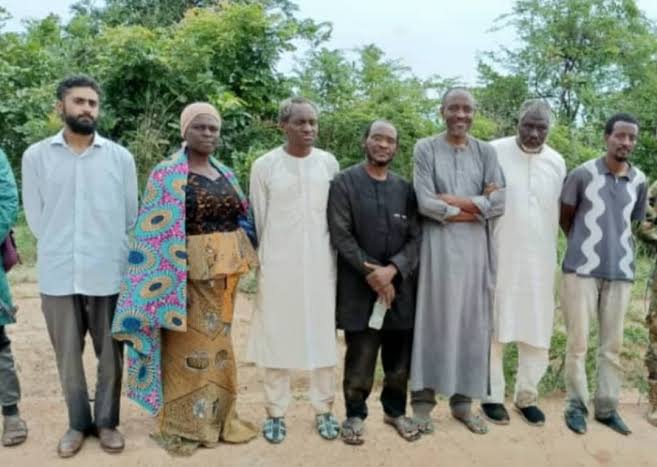
The families of the seven captives released by the terrorists who attacked the AK-9 Abuja-Kaduna train have been reunited.

On Saturday, the terrorists freed a further group of seven captives after more than a hundred days in captivity.

According to reports, the terrorists released 11 of the remaining 50 hostages from the 61 victims of the kidnapped train passengers three weeks ago, leaving 43 hostages in their hideout.

The release of the hostages and their reunion with their families was announced on Sunday by Mallam Tukur Mamu, one of the negotiators and the media advisor to Islamic cleric Sheikh Ahmad Gumi.

The hostages include Bosede Olurotimi, Abubakar Zubairu, Alhassan Sule and Sadiq Ango Abdullahi, Muhammad Daiyabu Paki, Aliyu Usman as well as only foreign national of Pakistani origin, Dr Muhammad Abuzar Afzal.

Kogi: Disguised Sallah guests abduct petrol station CEO

By Uzair Adam Imam 

Alhaji Muhammed Jamiu Idris, the Chief Executive Officer of Always Petroleum Energy Services, has been abducted by unknown gunmen. 

Our reporters gathered that Idris was abducted at his residence in Idare in Okene Local Government Area of Kogi State.

However, he was said to have been beaten mercilessly before being whisked to an unknown destination.

A family source disclosed that the men disguised as Sallah visitors before they eventually brought out sophisticated weapons and instructed Idris to follow them.

The source added that the kidnappers shot sporadically to scare people who attempted to resist the kidnapping of Idris.

The Kogi State Police Command has confirmed the incident to journalists. He stated that the abductors went to the house shortly after the Eid prayers.

The kidnappers had not made any contact with his family as at the time of this report.

Why are our leaders unable to resign even after failing to deliver?

By Abdulrahman Yunusa 

Upon all the existing factors that are enough to be the reasons for one’s resignation as an elected leader in Nigeria, I don’t know what often shields them from towing on to that path. Despite the gruesome killing, kidnappings, molestation and other unfavourable crimes thriving in our localities, they remain in power.

There is no “Resignation” in the vocabulary of Nigerian leaders. Because you hardly see them making resignations when things tend to go out of their control. Sadly, they prepare to die in power than live outside the power. 

Unlike our shabby mentality, those who have tried and failed in saner climes mostly took the most honourable decision by relieving themselves of the burden threatening their yoke. Some resign for reasons which we might eye as petty ones. Some quit for being unable to deliver the political promises they have made during the campaign. Some leave for failure to secure the lives of their people, which is one of the best reasons for one to vacate.

That silly mentality should be tamed with immediate effect. Else the next generation will suffer at the hands of evil beings who will soon assume the mantle of leadership and keep subjecting the lives of millions of people to excruciating pains. 

Enough is enough. Just tender resignation whenever conditions warrant that. Don’t subject the lives of millions of people to jeopardy for political greediness. Instead, learn to relinquish your position for the sake of your people. Maybe that will be the only positive impact you will ever make for your people.

The social, political and economic vicissitudes we are facing incessantly in Nigeria are the result of our leaders’ greediness. It’s simple to get that when you analyze and evaluate the current scenario in the country. 

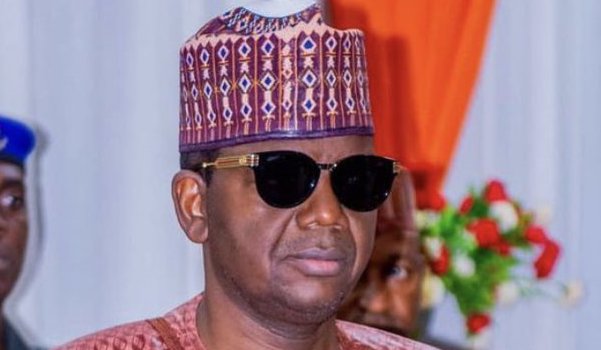
Recently, Zamfara State Governor openly admitted that his govt has failed to discharge its primary responsibility, which is the protection of the lives and properties of its people. He urged them to pick firearms to defend themselves against bandits.

That pathetic scenario is enough to tell you they are more concerned about their political seats than the lives of their people, which are ideally more worthy than their useless thrones. So they can’t tender resignation later to let the better hands have the chance to try their luck. Instead, they rather remain there and keep watching their people dying mercilessly in cold blood. 

No wonder, as the saying goes, “Da na gaba ake koyi“, people learn from their elders. Buhari is the president who enjoys more power than any other person within the polity. He should therefore be the best object of emulation. But, no, he too does not care about the lives of his citizens. Hence, the governors follow suit, despite the sheer incompetence and ineptitude, coupled with the I-don’t-care attitude they exhibit at the extreme. Yet, they don’t mind resigning or taking any proactive measures. God is watching!

Until we console our greedy minds to do away with that uncultured culture of political greediness by learning how to vacate position when things tend to get out of our control, we shall find it difficult to scale through the dark ocean. 

May we scale through the dark ocean soon, amin.

Abdulrahman Yunusa is a social and political affairs analyst. He writes from Bauchi and can be reached via abdulrahmanyunusa10@gmail.com.

Reflections on inflation and our ineffective population

By Nusaiba Ibrahim Na’abba

The ongoing unexpected outrageous hike in prices of goods and services stringed by inflation is not all new to our survival in Nigeria as we’ve learnt the hard way to navigate through hurdles and thorns to manage our lives. Simply put, things are at the moment not falling apart but in their right places – exactly where we want them to be. And by extension, we are reaping the seeds our predecessors sowed.

Contextualizing the global outrage on inflation unveils how our population crises are highly influential to the inflation catastrophe we are recently experiencing in Nigeria. Conversations around our incapacitated population have always been cumbersome. People keep reproducing to demonstrate their selfish reasons and associating them with religion, even when they’re fully aware of their inability to cater for their needs – a lifetime debate. Due to cultural and religious reasons, overpopulation is always quite a sensitive issue. Religious gatherings, cultural discussions and even governmental activities deliberately skip them to avoid chaotic scenes.

For reasons best known to the Nigerian government, the census that was supposed to take place a year after President Buhari assumed office in 2016 was unfortunately not prioritized in the list of essential development activities. There wasn’t even a convincing explanation for why it did not occur. I buy that the President was out of office as he severely fought to regain sound health. Still, his deputy, Prof. Yemi Osibanjo, was acting President until he recovered. He also didn’t give it the much significance it deserves. The worth of a National Census isn’t that shabby to escape their radar, as it assumes an unchallenged role in catalyzing the development of every society and nation-building.

Well, as it stands, many international sources now place the Nigerian population to have surpassed 200 million. But, referring to our precedents, the past administrations were unwilling to manage rapid population increase by corroborating it with needed economic, financial and health opportunities, among others. Instead, they were more or less obsessed with starting gigantic projects to leave them halfway done when leaving offices. Regrettably, from budgets, policies and programs among myriad activities, the population is often not carefully factored in.

At this point, explaining the statistical representations of our ailing population is almost unnecessary, especially since we are gradually failing to comprehend the magnitude of our plight in statistical terms. Presently, there exists a colossal number of youths that are desperately seeking jobs. Not only that, they are unemployed. Some are drug addicts, miscreants, and even kidnappers and whatnot. Their realm also includes people still hopeful for job opportunities, including a handful employed but in deep struggles, as they continue to shoulder countless responsibilities. This fraction is the largest among the demography of our country and, sadly, the most ineffective.

Then we have children, who contribute a fair share to the general population. A disturbing figure is that of out-of-school children due to their being part of the lower class and a lot who are quadrupling in number as insecurity is not slowing down in forcing them out of their communities. Visibly, most of them embrace street hawking and begging while others aimlessly litter the streets and little girls into forced labour. Picturing our population from a pie sketch, we also have the elderly, many of whom have delivered relentless service to the nation but have only been rewarded unkempt wretched feet as they search for their legitimate hard-earned pensions. And I don’t forget that we have People Living with Disabilities (PLWDs) who wallow in poverty. This is a fair elucidation of Nigeria’s population pie sketch.

Indeed, how inflation is ripping us apart in this country is an incredibly devastating experience. Development activities here have always journeyed long, and even more terrifying is that slow processes in everything aren’t much valued in today’s fast-paced world. As frightening as it appears, the race to the 2023 general elections is already painting a horrible scene for us. The primary elections recently concluded with alleged countless irregularities and corruption aren’t appealing. Hence, it becomes challenging to collate one’s thoughts regarding how life will likely be as we fight to forge ahead.

In a way, this current plight provokes the young minds who are already out of viable options to embark on deadly voyages to Europe. They risk their lives in search of a better life there. It is terrifying to know that the number of youths clamoring for these voyages includes graduates and those earning petty stipends and are well conscious of the dangers involved. However, they aren’t blameworthy for viewing their lives from angles of their responsibilities.

Many optimists, including myself, are hopeful about Nigeria’s transformation for the best. But, until alternative routes to utilizing our teeming population for efficient development are incurred, we’ll keep chasing the uncertain light at the end of the tunnel. Nigeria is behind schedule on capitalizing on effective strategies to breed an efficient population, opposing its self-anointed maxim of “no dey carry last”. We must reinvent this unfortunate wheel of inefficiency by adopting a knowledge-based economy model to harness the enormous potential of our massive population for the best.

Nusaiba Ibrahim Na’abba is a master’s student from the Department of Mass Communication, BUK. She is a freelance writer and researcher. She can be reached via nusaibaibrahim66@gmail.com.

Gov. Matawalle should not open a Pandora’s box

By Mallam Musbahu Magayaki

The Zamfara State Government has officially directed the inhabited communities of the state to carry arms for self-defence as a result of the insurmountable bandit’s attack shattering the state, leading to the destruction of lives and personal possessions of the zone’s commoners. This action, however, would add fuel to the sad development unfolding in the state and beyond by potentially making it unmanageable because everyone would have a gun to protect himself from these foreboding omens. This defensive stance would lead to an offensive.

The government should therefore be conscious that the Ukraine war, which induced President Volodymyr Zelensky to ring up civilians to take up arms in defence of Russia’s invasion of their state, was the result of Russia’s military outmatching Ukraine’s on every level. This implies that the Ukrainian military may be unable to withstand and deter a full-scale invasion.

Mexico should be a case of study as it became a precedent in the past that was destabilised by its innermost citizens when they were constitutionally allowed to hold weapons for self-defence. As such, we need to be thoroughly observing the situations in those developed countries and be capable of identifying those areas where they erred so that we would avoid repeating what they did.

Although Nigeria is one of the biggest African countries with military power, the one million dollar questions are: is our military number insufficient to strike back against these outlaws’ threat? Or are they not functioning effectively in this hazardous assignment? This action would seriously make the efforts of our brave military less appreciative as, in reality, they have been audaciously doing their best to safeguard our lives and properties day-in-day-out.

In a country like Nigeria, where a breach of law has prevalently become the norm, what can be expected to happen devastatingly if a citizen takes up arms? This is a wrong decision that should be changed to a better option. Moreover, what is the essence of creating various security units in the country if they cannot be utilised to defeat those terrorising the country?

Instead of coming up with this irrational idea, why not engage the state vigilantes, empower them with advanced sophisticated weaponry, and train them with military tactics to strengthen our military capacity? Zamfara government should, head over heels, request support from the Federal Government in employing more civilians for this vigilante unit in different angles of the state to fight these law violators.

Simply put, the government has shown its ineptitude in the fight against terrorism. Nonetheless, Borno State has faced more challenges from Boko Haram militias than Zamfara State, but its governor has never come up with the wrong notion of state dwellers carrying arms.

Mallam Musbahu Magayaki wrote from Sabon Fegi, Azare, Bauchi State via musbahumuhammad258@gmail.com.

Kidnapping in Alkaleri: An existential threat to our collective security

By Zahraddeen Mallam Saleh.

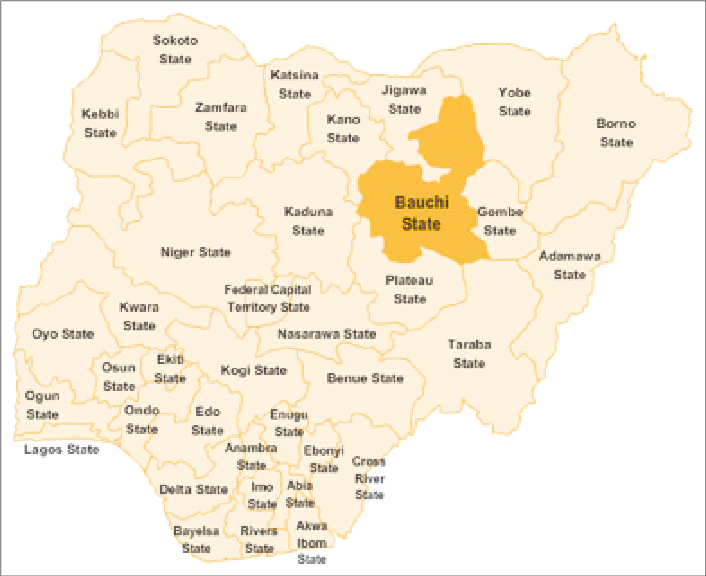
The rise of kidnappings in Alakleri is one of the most pressing security issues in Bauchi State, yet underreported. Many villages in Gwana, Duguri, and Pali Districts suffer from the devastating criminal activity of kidnappers and cattle rustlers. As a result, kidnappings for ransom have become more common and a security concern in recent years in those communities.

A few days ago, kidnappers attacked Garin Bono in Maimadi ward and Sabon Gari in Pali ward, along Alkaleri/Futuk road, killing four people and injuring others. Scores of kidnapping incidences have recently occurred in Gwana District, from abducting prominent personalities to the commoners who found it difficult to feed their families. Nowadays, kidnappers target all people, irrespective of whether they are rich or poor, because wealthy individuals from rural areas migrated to urban cities to live in peace and harmony with their families.

Four children were kidnapped at the outskirt of Yalo. Yalo is less than 100 kilometres away from Alkaleri, the council headquarter. In Kargo, Malam Hamza was abducted at his residence in neighbouring Mansur. In addition, three farmers were kidnapped while working on their farms. As I write this piece, information reaching us revealed that four people were abducted today, 23rd June 2022, at Bakin Layi, a suburb of Yalo town.

All these victims cannot pay the ransom or their proxy relatives. Evidence shows that most of today’s victims are poor villagers, a departure from the earlier kidnapping of wealthy individuals. This category of victims loses their lives in the process due to their inability to pay the ransom because of relative poverty.

It was estimated that from January 2022 to date, in Gwana District alone, more than one hundred (100) cases of kidnappings were reported to the office of the District head of Gwana, located in Futuk. This depicts the ugly nature of the situation where most armless commoners are indiscriminately taken for ransom. People live in distrust and fear due to this ugly picture of our security situation. Members of different bandit groups have been seen carrying heavy arms around Jada forest in Maimadi ward, a forest that comprises part of Yankari forest, harassing locals and farmers. A development that compelled many farmers to abandon their farms for fear of being kidnapped. For instance, Aliyu Inuwa (Messi), a resident of Futuk, left his maize farm despite spending a considerable amount of money. 

In her effort to curb the menace, the Bauchi state government procured and distributed motorcycles across the affected areas in the state. In addition, Hilux Patron vans were also distributed across all local governments. In Gwana District, in particular, the local security architecture has Patrol Hilux and several motorcycles provided by this administration in order to facilitate security surveillance and end criminal activities in the entire community. Hence, this intervention from the state government is highly commendable and appreciated. However, the situation demands a more formidable security architecture in curtailing this disease.

Equally, the military detachment in Futuk, Digare, and Mansur and the recent deployment of an anti-kidnapping squad in Yalo and Kargo aimed to reduce criminal activities in our areas. But the existing security architectures showcased their professionalism in collecting N20, N30, N50 and N100 from the motorists and motorcycle riders daily than dealing with monsters called bandits/kidnappers. We are not denying or undermining their role in protecting lives and property. I’m just reporting what I saw with my naked eyes on my recent trip from Futuk to Mansur to collect primary data for my postgraduate study.

Bauchi state government should put more effort into securing its people before it metamorphoses into what is happening in Zamfara, Katsina and Sokoto. In addition, the government should encourage and promote education.

Zahraddeen Mallam Saleh wrote from Futuk, Gwana District, Alakleri LG. He can be reached via zahradeenmsaleh@gmail.com.

Zamfara: We flee our communities as bandits are now in control, residents lament

By Muhammadu Sabiu

Residents living in the Mada district of the Gusau Local Government Area, Zamfara State, have lamented that gunmen operating in the area have now taken complete control of the region.

According to available information, the district’s residents had abandoned their communities as a result of the men of the underworld’s relentless terror strikes.

A source states that numerous peasants have set up camp along the route between Kotorkoshi and Mada town as refugees after the robbers defeated the security personnel.

“We have not taken our baths for some days now because the notorious bandits have hijacked the entire area as they have overpowered the security operatives.

“As I am talking to you now, I don’t know the whereabouts of my two wives and children and I don’t know whether they have been kidnapped or they escaped to another area.

“We have no other means of livelihood except farming but we have been banned from our farming activities by bandits. The only wife and children with me now have entered Kotorkoshi village to beg for food for us to survive,” a resident identified as Mallan Ibrahim Mada was quoted as saying.

Recall that the Zamfara State government through its commissioner of information, Hon. Ibrahim Magaji Dosara and that of Security and Internal Affairs confirmed that Mada district has been witnessing incessant terror attacks.

This forced the government to close all the markets and gas stations in the affected areas due to the increasing frequency of banditry operations in the axis.

“The State government is aware of the plight of the people due to banditry activities bedevilling the entire area; we, therefore, decided to shut down all the markets and filling stations to reduce the incessant terror attacks in the axis.

The incessant attacks appear to be one of the reasons the Matawalle-led administration seeks the Federal Government’s approval to legalise the use of firearms by residents of the affected communities.

The commissioner said, “We engaged the Federal Government into dialogue so that it can approve our request for everyone that is qualified to be carrying weapons for self-defense to reduce the tension.”

Buratai calls for dialogue with terrorists

By Ahmad Deedat Zakari

A former Chief of Army Staff and Nigeria’s Ambassador to the Benin Republic, Lt. Gen. Tukur Yusuf Burutai, has called for negotiation with insurgents and armed groups terrorizing the country.

Buratai spoke at a one-day symposium on National Security organized by Arewa House in Kaduna on Saturday.

According to Burutai, there must be a serious effort that there are no ungoverned places in the country.

Buratai also commended Sheikh Ahmad Gumi and agreed with him on his negotiation approach with bandits as a way of ending insurgency in the country.

“This is where I commend Sheikh Gumi for his initiative. One-third of the fight is military; others should be non-kinetic through dialogue. We must get this solution, and this is the right time to get it done,” he stated.

Burna Boy decries killings in Nigeria

By Ahmad Deedat Zakari

Nigerian award-winning artist, Damini Ebunoluwa Ogulu, popularly known as Burna Boy, has expressed sadness and delivered condolence over the terrorist attacks happening across Nigeria. 

Burna Boy took to his verified Facebook account on Monday, June 6, 2022, to express sorrow, condolence and solidarity with the victims of the incessant attacks ravaging the country.

“Nothing is sacred anymore!? Mother’s, fathers, children and babies getting killed. 💔My heartfelt condolences to all those who have lost family or friends from terrorists strikes across our country 🇳🇬 these past few months. I stand with you.” He posted 

In recent times, notorious terrorists have been hitting many places in Nigeria, which has caused the loss of lives and property.

Terrorist bandits launch brutal attacks on Zamfara communities, kidnap many

By Muhammad Sabi’u

Gunmen have carried out another horrific attack in four Zamfara State towns, killing dozens of residents. According to an eyewitness, the number of villagers slain could not be determined yet, but the bandits took several of them, leaving four individuals with varying degree of injuries.

According to reports, the villages are Gidan Dan-Inna, Gwaji, Karoka in Kwai-Kwai District, and Faru, in Bungudu and Maradun local government districts.

Some eyewitnesses reveal that, majority of those killed were members of a local vigilante group who were protecting the communities, and some of the community members were attacked on their farms.

Terrorists with powerful weapons were claimed to have assaulted the villages, killing and rustling animals. The communities were reportedly attacked on Sunday evening and early Monday morning, destroying properties worth millions of naira.

When contacted, the State Police Command Spokesman, SP Mohammed Shehu, confirmed the tragedy, adding that twenty people were slained in three villages in Bungudu Local Government and five more in Maradun Local Government Areas of the State.

Armed operatives have been dispatched to the affected and surrounding areas to protect people and their properties in the axis, he said.