Kano

The fallacy behind free education in Kano

By Salisu Uba Kofar-Wambai

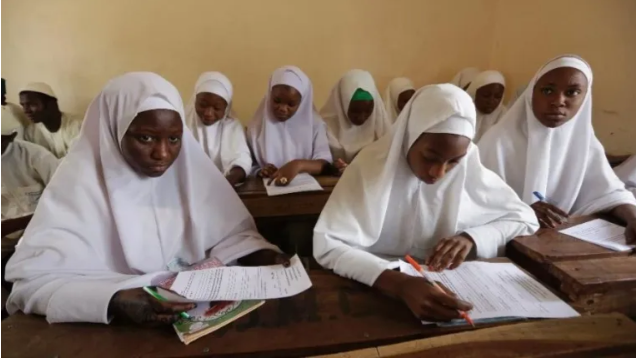
It might sound obnoxious, as bitter as gall, if I may say this free education program by the Kano state government may not see the light of the day. Often, politicians politicise education. The concept of free education has been with us for quite a long spell. Our education has always been free. The token amount collected from the students isn’t the actual school fees. Students only pay 700 Naira per term. Is this the school fees?

And hardly could you find where a student is deprived of attending classes because he fails to settle his payment.

In fact, the school heads face punishment if they send away a student or pupil who can’t pay his fees. The only way is to persuade the student to do the needful or grant him an exclusion considering his financial plight. The money raised is always spent in the school under the watch of the PTA, and auditors come from the education ministry to ensure the money collected isn’t embezzled and is used wisely and judiciously. Prudence is always the watchword.

The school heads usually run into trouble if they’re found wanting in the area of class furniture problems, paucity of teaching aids, unrepaired broken windows and doors, non-provision of markers and chalks and what-have-you.

Now, the government has directed the schools’ authorities to stop collecting such peanuts to maintain, sustain and administer the schools in the name of free education and claimed to be giving out money to the schools as upkeep to take care of them.

The bone of contention here is that: could the government continue to provide this fund? In case of delay or non-payment by the concerned authorities, what will happen to the schools? It will be very hard if they can continue supporting the schools.

This was a similar scenario under Engr. Rabiu Musa Kwankwaso administration. He stopped the tertiary institutions and universities from collecting fees in the name of “free education” and couldn’t provide enough funds to run the schools.

I am not hoping and praying to have problems with the program, but at least we shall embark on something feasible. Unfortunately, the politicians are only trying to be popular with the program, to impress voters, to the detriment of the system.

Many outside the system may not get me right. And our society will see me as someone who has no sympathy or don’t like to see the children of the poor getting education, NO! It isn’t. Rather am doing this for the betterment of their education.

National Conference on Reading: Bayero University offers Advanced Diploma in Reading

By Muhammad Sulaiman Abdullahi

It has been widely confirmed and unanimously agreed by academics and other educational stakeholders that the culture of reading is fast dying across the globe, especially in Nigeria. This may be the reason why Bayero University, Kano, in collaboration and support of Florida State University, USA, established “The Nigeria Centre for Reading Research and Development” at Bayero University, Kano.

The Centre’s main aim is to encourage, support and upgrade the nature of reading and revive the reading culture, which, according to experts, is the only way and key to development of any nation.

The Director of the Centre, Professor Talatu Musa Garba, disclosed this development today during the opening ceremony of the 3rd National Conference on Children’s Book and the Teaching of Early Grade Reading in Nigeria.

Garba added that “It is my pleasure to announce that the Centre is now focused to develop various courses, in collaboration with the Department of Education, Bayero University, Kano, following the expiration of its collaboration with Florida State University earlier this year.

The Postgraduate Diploma in the Teaching of Reading approved by the university and advertised on the BUK official website has already commenced this academic year, which opened last week, on 1st November, 2021. The Centre has also concluded arrangements to offer the Certificate in the Teaching of Reading beginning in July 2022″.

BUK Vice-Chancellor, Professor Sagir Adamu Abbas, revealed that the Nigeria Centre for Reading, Research and Development is now entirely under Bayero University, Kano. He further added that “We in the management pledge to support its operation fully. In this regard, I  am pleased to inform the conference that the construction of the permanent building for the Centre has reached an advanced stage, as the physical structure is currently being furnished and equipped, accordingly. What remains is the landscaping, and the university is making provision for that before the end of the year.

The conference is still ongoing, and it will dwell and deliberate on “Children’s books as tools for the effective teaching of reading skills in the early grade in Nigeria”.

Fuel scarcity hits Kano

By Hussaina Sufyan Ahmad

Lines of cars on heavy queues return to Kano filling stations on November 7, 2021, prompting some people to accuse the Independent Petroleum Marketers Association (IPMAN) of intentionally creating an artificial scarcity.

Most filling stations have been nil with no sign of activities, while motorists move about looking for the fuel.

Reports indicate that speculation of a possible increase in fuel price by the Federal Government might have resulted in the scarcity.

Baffa Bichi donates food items to over 500 households in Kano State

By Abdurraman Muhammad

As many Muslims around the world are celebrating the birthday of Prophet Muhammad (Peace be unto him), the former Executive Secretary of Tertiary Education Trust Fund (TETFUND), Dr Abdullahi Baffa Bichi has distributed food items to over 500 households as a philanthropic gesture to commemorate the 1443 Maulud Celebration.

Speaking during the distribution exercise, that took place in his residence at Bayero University Kano, Old Campus, Dr Bichi said the essence was to put smile on the faces of people by cushioning the effect of harsh economic situation in the country.

He noted that many people are finding it difficult to feed their families and therefore, his action was to make them happy on this festive period.

The donated items included a bundle of cloth, bag of rice, millet and maize each and a portion of meet.

“As we are today celebrating the birth of our Noble Prophet SAW, we feel obliged to put smiles on the faces of our brothers who could not afford a good food for their families”.

Many people who benefitted from the gesture expressed their appreciations by describing him as the rising politician who has the interest of a common man at heart.

After collecting his items, Malam Abubakar Idris said, “the items came handy as he had no single grain in his house with a family of five.

Another woman busted into tears of joy, lamenting that it has been over a week since last they cooked a solid food in the house. They just rely on other difficult means.

“We were surviving on crunches for the last few weeks, as we have nothing in the house, my husband died last year during the Covid-19 pandemic, he left me with five children and no one to feed us. The selling of akra I was doing did not last long due to lack of capital. In addition to the food items, he equally supported us with a  by to take-off money to start a business. We really appreciate him and may Allah continue to guide him. Alhamdulillah.”

A director in the One 2 Tell 10 campaign organisation of Baffa Bichi, Honourable Ghali while explaining the concept of human empowerment, noted that the desire was to bail out the needy especially widows, orphans and other needy persons in the society.

Honourable Ghali disclosed that the only way out of the economic crunch is for all the wealthy and public sprites individuals to come up with program that would have a positive pact on the lives of the less privilege by providing them with capital money so as to be independent and self reliant.

“Our desire is to empower people to be self-reliant so that they can as well be productive to the society. No nation can grow and prosper if the teeming populace are in abject poverty and economic dependency. Ours is to teach a person how to fish so that he can be productive in the society,” he declared.

Rumour of my arrest is false and baseless – Kwankwaso

By Uzair Adam Imam

The former governor of Kano State, Engr. Rabu Musa Kwankwaso, has described the rumour of his arrest by the Economic and Financial Crimes Commission (EFCC) as false and baseless, contrary to media reports.

This was contained in a statement signed by the Coordinator of Kwankwaso Media Center, Malam Sunusi Bature Dawakin Tofa.

The statement said that Kwankwaso personally visited the commission’s office to clear his name over some allegations made against him.

The former governor, according to the statement, has described the petition as politically motivated.

The statement reads in part: “The rumour of my arrest is false and baseless. As a law-abiding and respected citizen, I personally visited the commission on Saturday in order to clear my name and exactly that’s what happened.

“I met with them, the officials of EFCC, and told them that I came to clear my name over a petition written since 2015 against me. I provided answers to all the questions raised by the officials,” the statement quoted the former governor.

Late Sheikh Ja’afar’s daughter named Izala women leader

By Muhammad Sabiu

The daughter of the late Sheikh Ja’afar Mahmud Adam, Zainab, has been appointed as the new leader of a JIBWIS women body, also known as Nisa’us Sunna.

Delivering her acceptance speech after she was named the leader of Nisau Sunna, Malama Zainab expressed her gratitude to the Almighty Allah for making the event a reality.

She said, “I am grateful for being given this opportunity not because we are better than anybody, but for the simple reason that trust has been vested in us, with the thought that we will try our level best. And we hope the Almighty will spare us from disappointing (you), and may He grant us the opportunity to discharge the good expected of us.

“We, therefore, seek their [our leaders’] guidance in different aspects—in the aspect of praying for us as our parents, and on the part of commanding us.”

She also stressed the importance of the inclusion of women in areas that have to do with community development, adding that women are of great importance in any effort of bringing development.

The naming of Malama Zainab as a women’s leader went viral, thanks to the prominence and influence of her late father, Sheikh Ja’afar.

Recall that the late cleric was murdered in 2007. However, no culprit had been brought to justice even though a former leader of Boko Haram, Abubakar Shekau, claimed responsibility for his killing on several occasions.

Governors’ forums do more harm than good in Nigeria

By Abubakar Ibrahim

Those looking for devolution of powers to make the states more powerful than the centre had forgotten about history.

The Soviet Union (USSSR) collapsed when it gave more powers to its states.

Nigeria government has given Governors’ clubs (governors forum; southern governors forum, northern Governors forum, etc.) leverage to the extent that they are now flaunting executive orders.

No governor obeyed the executive order to give monthly allocation directly to local government councils, legislature and judiciary in their respective states.

The antics of southern governors, especially of Rivers, Lagos and Ogun, will send Nigeria to its waterloo.

Governors forums have made them act as devils instead of angels. They have frustrated the inflow of funds to LGAs, state legislatures and judiciary. They have refused to pay the correct minimum wage.

Governors forums have done more harm than good. They are only good at wasting state resources in crisis, crossing the skies in charted flights attending their meetings at various locations. The worst scenario is they will leave their states at the mercy of nobody. Hence, this stagnates work until they are back.

It is time for these unproductive governors forums to be abolished. We like to see state governors behaving like former governors with integrity, people like late Governor Jakande, who had never travelled outside Nigeria and never run away from his state responsibilities throughout his tenure.

Governors like Audu Bako, through under a military regime, would only travel out to bring back goodies for the ordinary person, such as “irrigation schemes” that Kano people are still benefiting from after all these long years. It is a legacy he left behind.

Nigerians should come back from supporting politicians who are only good at building themselves and championing the course of disintegration.

Abubakar Ibrahim can be contacted via ai869802@gmail.com.

Open letter to Kano State governor on possible Coronavirus outbreak in Kwari market

Dear Sir,

This is to draw your attention and that of NCDC to the ongoing controversy over the cluttering of Kwari Market. We hope you will temper the issue with compassion and shrewdness befitting your sage, administrative excellence and political dexterity. Sir, if you solemnly declared that Kano will become a megacity in the very near future, which you did as reported on Blueprint Newspaper, August 21, 2020, why do you now allow our markets, especially Kwari to be congested? You made the declaration “on the eve of the Kano Economic and Investment Summit (KanInvest) which held in May, 2017, where stakeholders and bigwigs in the business sector converged to share ideas concerning issues affecting the economy, especially as it concerns Kano state”. There you rightly observed that the crowded population of Kano of about 20 million people will multiply in 5 years time. With Coronavirus threatening our lives, now is the time to decongest the city or else risk spreading the virus like wildfire.

In the process of affirming your declaration, you continue with the construction of the new Economic City of Kano located at Dangwauro Town along Kano -Zaria federal highway. However, your construction of a mall at the popular Kantin Kwari textile market named ‘Yan Tebura Mall has opened a dangerous door of congesting the market. What follows the mall are structures being erected on Taambo and Bayajidda Streets in the market. Unfortunately they are becoming a greater bone of contention because they stand on the way and so will endanger our hygiene, your excellency. After the recent rainfalls in Kano, the market was always flooded as the main waterways there happen to be on these streets. With the buildings being erected on them, the ancient market is seriously damaged, congested and so the megacity target is defeated.

Moreover, the damage brought about by the new buildings includes blockage of the former known 16 entries to the market which were serving as good ventilation and escape exits in case of a stampede. Still, the structures have saturated almost all the streets in the market, whereas the frontage of every shop is also “officially” being choked with iron stalls which would lead to disaffection, disharmony and clashes between the shop owners and stallers. To make matters worse, the installers of these iron stalls are damaging some newly tarred roads as they fix the stalls on the edge of the roads to larger part of the roadside drainage. Therefore, as the whole pathways are narrowed to almost nothing, people have to be squeezing around, highly vulnerable to Coronavirus infection.

These problems are not far from the government’s sidelining of the market people in the activities of the market, especially on strategies to improve the government’s revenue. This way, the outsiders brought in to supervise and advise on such affairs, as in the case of an administrator appointed from the head of service, come to enrich themselves only at the expense of anything good in the market. They never protect the interests of the market but theirs and sometimes end up starting a fire of enmity among business friends. It is a wonder how an outsider could tell an owner of a house where roofing leaks. Instead of looking at what is good for the market, those people look at what could bring them money no matter how damaging they appear to the good people of Kano. In that respect, owners of shops have to pay 200 thousand Naira to buy their shop front if they do not want that iron stall stationed there for sale.

Worse still, over five thousand labourers stand the risk of losing their livelihood if the contentious buildings continue. As a politician who is committed to forestall the increasing poverty-induced insecurity in the State, we are sure that you would not take this risk. Notwithstanding, the already erected structures have no accessibly enough toilets as those available are far upstairs and so women customers going to the market suffer super shame when they want to ease themselves in the centre of a Shari’a compliant state, under you, Khadimul Islam. In case of a fire accident like that of Sabon Gari Market, God forbid, the large fire fighting vehicles that need room for manoeuvre would never get entry as the ways are now being blocked. So against this background, all concerned persons in the market say no to the project and even go to court.

Following on from that, the State High Court, on 12th August, presided by Justice Suleiman Baba Namallam, has restrained the Government of Kano State from blocking or erecting structures at any part of Taambu and Bayajidda Streets at the popular market, pending the hearing and determination of the motion on notice. Nonetheless, It has never been our intention, your excellency, to be at loggerheads with your government over this issue. We are only after decongesting the market especially to observe the Coronavirus protocol; to help the government, on the other hand, in spacing the already jam-packed market in preparation to reaching the megacity status and to target the recent Federal Government’s campaign of “Ease of Doing Business”.

Nevertheless, Your excellency, we appreciate your effort towards making Kano a megacity as you ease traffic congestion by finishing the construction of the Sabon Gari axis 2km bridge inland flyover (named after the Kano business mogul Alhaji Aminu Alhassan Dantata) along Murtala Muhammad Way, which is the longest in West Africa; the Sharada/Panshekara Junction Underpass; the Bukavu Barracks underpass; the Underpass, Flyover and Roundabout at Dangi road connecting Zaria road-Zoo road and Silver Jubilee road as well as the now-under construction Hotoro NNPC (Muhammadu Buhari) bridge among others. These justify your administration’s commitment to the safe development of the sprawling city of Kano. In spite of that, we also need our existing markets to be spacious, uncrowded and comfortable so as to have good standards of health and hygiene regulations, especially Covid-19 protocol.

It is our fervent hope that Kano will continue to benefit from the wealth of your immense administrative experience and astuteness in politics, especially in this much worrying matter. Show the world that you are an ace politician, agreeable to the yearnings and aspirations of your people by justifying the confidence collectively reposed on your administration and unselfish persona.

We pray that may Allah Subhanahu wata’ala strengthen your resolve in elevating the status of Kano to compete with other megacities around the world. May you be successful in your future political endeavour. May Kano remain peaceful forever! Amin thumma Amin!

Yours,
Concerned Citizens!
08067444787

VAT: Between common sense and critical observation

By MA Iliasu

The chart showing the performance of Nigerian State governments in internal revenue generation has done its part in unveiling the mixed performances of the state economies. As expected, the public reactions, which to me are warranted, carry both the weight of reason and emotion. And maybe for the first time in the history of the Nigerian political economy debates aren’t taken over by regionalism and ethnic jingoism. Instead, it seems that consciousness has succumbed after realising how laziness and incompetence have been fairly distributed among both the northern and southern ruling classes, governors mainly.

Having learnt the flow of sentiments from the day the revenue rankings were released to date, I conclude that the discussions around Internally Generated Revenue (IGR) and Value Added Tax (VAT) are more skewed toward the search for self-actualisation rather than exclusive state independence. For which I’m hoping to be correct. Because if I’m wrong, that’ll mean most of the commentaries are not more than unwarranted emotional outbursts on how the economy really works.

Critical observation will tell that states like Kano are painfully underachieving. Possibly because the government ignores countless taxable entities and many other revenue streams, or it doesn’t care to investigate the conduct of the revenue agencies, it’s very self inclusive. For it’s a fact that the government source massive revenue not only from taxation but from the sales of valuable assets, among others.

On the other hand, without even mentioning Lagos that no economy has come close to compete with, you’ve Kaduna and Rivers states. The economies that can quickly be agreed to be of similar strength if not inferior to Kano’s. Yet with the astronomical difference in IGR. The defining factor in that dilemma lies in their respective self-actualisation and economic competence. The same can be said on the other high-earning states against their low-earning counterparts. And where that’s concerned, questions are right to be asked on why should a state enjoy a sizable share of other state’s hard work when in itself it’s in a unique position to contribute as much if not more.

The way I see it, that’s where the conversation becomes critical. The high-earners think every state should enjoy as it earns. While the low-earners think the economic union should not be dissolved because they’re geographically and industrially rigged by nature. The indigenes of high-earners agree with their state’s notion. As do that of low-earners who think isolating their state expenditure with its earned revenue will awake them from the shameless slumber and make them more creative. The important of all is, does the economy work that way?

To begin with, governors who believe nature hinders their income stream must know that geography in an economic context is either an advantage or a symbol of unique opportunity. For example, it’s a fact that Lagos and Rivers, as the custodians of Nigerian ports, have found it easy, therefore, advantageous to source revenue. But it’s the same with Jigawa, that’s strategically positioned to be a massive tech-hub and schooling environment across Sahara, Yobe that’s agriculturally equipped to grow the most unique seeds and Delta that’s attracted to the non-fossils industry. Therefore, using nature as an excuse is beyond lazy.

Nevertheless, no matter what any state does to achieve economic supremacy, one state must earn more than another. Thus, one state must record a deficit in trade with another. It’s a simple law of nature that’s very sensitive in economic policy, especially in accounting internal trade.

For instance, it makes sense that Kano, the largest textiles market and importer in Africa, pays more to Lagos and Rivers, who are the custodians of ports than it receives. Likewise, if Kano, as the distributor of the shipment, receives more from Bauchi, a retailer, than it pays. The same line of argument can be asserted to the states that own what other states need more than it needs from them. And so, recording deficit by the paying state is inevitable because needs and economies of scale can never be the same.

Due to that vivid notion, the famous British economist John Maynard Keynes argued that economies must be bound together to solve the inevitable rigidities that’ll be caused by the unavoidable deficit bred by such economic interdependence. According to Keynes, crises can be redemptive and non-redemptive crises. The redemptive crisis is the type of crisis that’s capable of becoming its own medicine. In short, any problem that can paradoxically become its own solution qualifies as redemptive. While the non-redemptive crisis is the type of crisis that can’t solve itself.

For example, the ever prophetic General Theory explained how a trade-off exists between inflation and unemployment. That’s to say, by compromising inflation, unemployment often rises, which give rise to another wave of cyclical negativity. Meanwhile, inflation can be risked to reduce the level of unemployment. And the lower level of unemployment means higher employment which can help eliminate inflation. That way, inflation has laid the very foundation of its demise. The very redemptive crisis that Keynes had explained concisely.

The phenomenon with our state economies is that the internal trade between those respective states records deficit in the books of payers and surplus in the books of the receivers. The receivers are often the highest-earning in the ranking of VAT, while the payers are mostly the low ranking. And the intriguing dilemma is that where deficit and surplus are concerned, a serious tension occurs to the market flexibility that’ll need cohesive effort by those states to be released. And if they’re isolated from one another by warranting each state only to enjoy as it earns, it won’t be possible.

It’s like two siblings in a family of three. The older is a farmer who therefore is discharged with buying food and consumables. While the younger is an engineer, who’s charged with water and electricity bills. It was agreed that none should interfere with any’s responsibility. Interestingly a period of bumper harvest keeps taking place for the older. But sadly, the younger hasn’t been able to secure a job. Food has been available. But no water and electricity. The family eats, but it reaches the level where there’s neither the water to boil the food nor the electricity to power the oven. The bathrooms are inept too. Their mother becomes worried. Things begin to fall apart because the house has gone insane, and a family meeting gets summoned. A tension of similar magnitude will happen if state economies are left to their own mercy.

Firstly, in an economic context, Nigeria is a single-family because the states are bound by a single currency and enjoy free trade with one another. Secondly, the states must collectively pay for one another’s incapabilities like beloved siblings because they live within the same family. The flaw of one can devastate the situation of the other. Just like what happened when the above younger sibling couldn’t secure a job while the older enjoyed bumper harvests. Thirdly, all that has been mentioned doesn’t need to be accepted or agreed upon but must be complied with, whether one side is lazy or hardworking because it poses a direct threat to the economic stability of Nigeria. Moreover, it’s compensation for inflicting deficit in the event of a trade, which was why the US and its dollar have been more stable than Europe and its Euro; all because the same currency binds them.

It’s from that, therefore, that I learnt when Gov. Wike of Rivers suggested exclusive state supremacy on VAT, he was totally ignoring or ignorant of how the remittances among those states become what enables the highest-ranking states to record the surplus that they’re boasting about. It’s simple logic. As the lowest in the ranking, Bayelsa State is isolated with its small Internally Generated Revenue (IGR), its purchasing power would decline severely. And state’s purchasing power is the consumer’s purchasing power. If it drops, it’ll mean no buyers for the available commodities in the Bayelsa market, which will hinder restocking from the industries in Lagos and Anambra. When it persists, the commodity market will die. Deflation will strike, and consequently, the investment will disappear. Small enterprises will become bankrupt.

Trade deficit goes hand in hand with governments that are also in deficit. If an economic crisis occurs within any among the economies that are bound by the same currency, the fall in demand will trickle down to the deficit economies. Once the crisis began, whether in a surplus state or not, it would inevitably soon reach both the surplus and deficit states. Even if it arrived in the form of a slight downturn, some debtors would be made to feel that they were carrying too much debt. Keen to reduce their exposure, they would cut spending. But since, at the level of the national economy, society’s overall demand is the sum of private and public expenditure, when a large segment of the business community tries to reduce debt (by cutting expenditure), overall demand declines, sales drop, businesses close their doors, unemployment rises, and prices fall. As prices fall, consumers decide to wait for them to fall further before buying costly items. A vicious debt-deflation cycle thus takes hold.

Now that’s the question the Nigerian state economies must sit down and ask themselves; is this where we want to go?

From what we’ve learnt, recycling mechanisms are necessary to avoid the bubble from bursting. Likewise, it’ll be absurd to allow lazy economies to keep enjoying off the hard work of others. The best response, in my opinion, is to set a minimum threshold, one that each state must abide by. An evaluation of the state’s income streams must be made so that no state should source less than it should. Gubernatorial candidates must adequately explain henceforth how they intend to fund ambitious capital and recurrent projects. Both to the voters and intellectuals. Because the days of off-head projections are over. The truth is Nigeria is broke. And most states are lazy. While cutting them off will destroy the economy as a whole. The room for politicians who dreamt of becoming governors when they’re young is no longer there. What’s there is a capacity for difference makers. Policymaking bodies can no longer be filled with empty-headed pot-belly carrying nepotists. Trained economists must be engaged. For now, everything is up to the central authority; we shall see if it’ll tame the situation or sink the economy further.


MA Iliasu writes from Kano State. He can be reached via his email muhada102@gmail.com.

National Board for Technology Incubation DG visits Engausa Global Technology Hub

The Director-General, National Board for Technology Incubation, Engr. Dr Muhammad Jibril paid a special visit to Engausa Global Tech Hub, Kano, on September 11, 2021. The Engausa Management warmly welcomed the DG.

As the DG frequently does, the purpose of the visit was to monitor and ascertain the level of commitment of the business under the centre towards human capital development, skill development, and youths empowerment.

On his part, the Founder/CEO of Engausa, Engr Mustapha Habu Ringim, profoundly thanked the Federal Government, the Federal Ministry of Science and Technology (through the National Board for Technology Incubation) and the Federal Ministry Communications and Digital Economy ( through National Information Technology Development Agency) for providing a favourable business environment for Engausa Global Tech. Hub

The CEO noted that, if not for this elderly support and guidance from the Agencies, Engausa would not have recorded the successes so far.

Furthermore, the CEO briefed the DG NBTI about the 47 businesses harvested out by the hub and 1000 graduated apprentices powerfully trained in digital technology to bridge the digital skill gaps we have in the North and Nigeria at large.

The DG heartily applauded Engausa’s impact across the country and pledged to support the hub’s goals to cover more milestones. The DG added that they would do whatever it takes to help businesses and grow them to withstand any business tides through his office. He said that people who have business ideas, especially technology and innovation related ones, should put those ideas to work because the government will always be there to support innovative businesses like Engausa.

The DG was taken around the hub and ascertained the quality of the training tools, equipment, and bilingual education system deployed to ameliorate teeming youths’ learning difficulties.