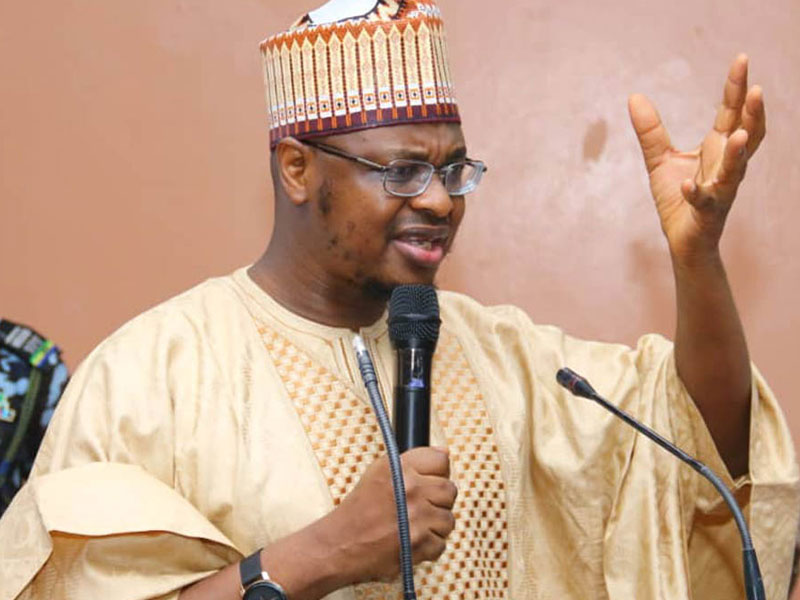
Isa Ali Ibrahim Pantami

Rarara vs Pantami: Criticism Is Not an Attack on a Faith

By Muhammad Abubakar

Since I came to France for work, I have been extremely cautious about criticising Israel or Benjamin Netanyahu. Often, though wrongly, people conflate criticism of an entity or a person with criticism of an idea or of an entire ethnic or religious group.

Soon after Hamas’s attack on Israel on October 7, I felt driven to write about the unresolved conflict. It was difficult to ignore the subject. Yet I was also concerned that expressing my views might affect my employment or even my residency status in France. To be certain, I reached out to our Human Resources department for guidance.

We essentially agreed on an important distinction. Israel and Benjamin Netanyahu are not the same as the Jewish people or Judaism. One can criticise the policies of the Israeli government or the actions of its prime minister without expressing hostility towards Jews or the Jewish faith. The same principle applies elsewhere. A person may criticise Saudi Arabia or Crown Prince Mohammed bin Salman without being an Islamophobe or an enemy of Islam.

This distinction is fundamental in any society that values free expression and intellectual honesty. Democracies depend on the ability of citizens to question governments, leaders and public figures. If every criticism of a political leader is interpreted as an attack on an entire religion or ethnic group, meaningful public debate becomes impossible.

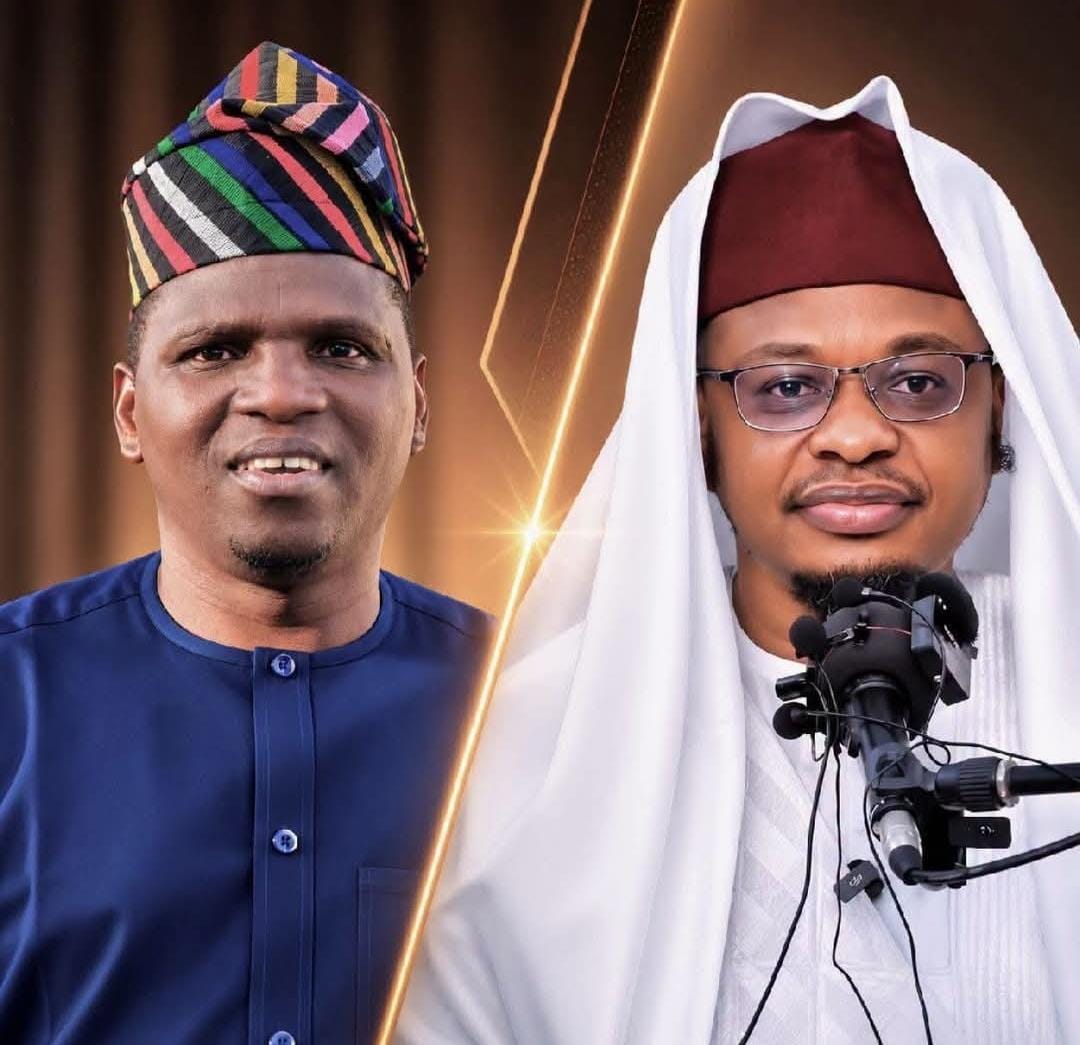
I was reminded of this principle after listening to new songs released yesterday by the Nigerian political singer, Dauda Kahutu, popularly known as Rarara. The songs appear to criticise an opposition politician in Gombe State, Sheikh Ali Isa Ibrahim Pantami, who is also a respected Islamic scholar.

Unfortunately, I have seen some people make the same mistake that often appears in discussions about international politics. They have framed criticism of Pantami as though it were criticism of Islam itself.

Pantami does not represent Islam. He is a Muslim and an influential public figure, but he remains an individual whose political choices, public statements and actions are open to public scrutiny, just like those of any other politician. Defending him is entirely legitimate, but such a defence should be based on facts, evidence and reason rather than on the assumption that any criticism directed at him is an attack on the religion he professes.

By any definition, both the singer and the governorship candidate he appears to criticise in his songs are Muslims. Neither of them represents Islam. Their political disagreements should therefore remain political disagreements. Turning them into religious disputes serves neither truth nor the public interest.

This tendency to wrap political figures in the cloak of religion is dangerous. It discourages accountability and deepens unnecessary divisions within society. Once religion becomes a shield against legitimate criticism, it becomes difficult to separate public responsibility from personal belief.

Nigeria’s diversity demands greater care in the language we use. Political competition should not be transformed into religious confrontation. Citizens should be able to disagree with politicians, governors, ministers or scholars without being accused of attacking an entire faith.

The lesson is simple. We must distinguish between people and the principles they claim to represent, between governments and the nations they govern, and between political leaders and the religions they practise. Failing to make these distinctions only fuels misunderstanding and polarisation.

Criticise ideas. Debate policies. Defend people if you wish. But let us avoid presenting political disagreements as battles for religion. In the long run, both politics and religion are better served when we keep that distinction clear.

Malam Yayi Rawa and the New Politics of Praise Singing

By Ibrahim Aliyu Gurin 

In Northern Nigeria’s political battlegrounds, the loudest attacks don’t always come from campaign podiums. Long before Facebook, TikTok and WhatsApp turned everyone into a publisher, Hausaland already had its own version of political messaging.

The maroƙi (praise-singer) was more than a singer. He was a storyteller, historian and public commentator. When a leader did well, he sang yabo, verses filled with praise and the same performer could just as easily turn that skill toward humiliation by mocking a rival’s failures, appearance, or character in verses crafted to stick in public memory, which is referred to as zambo. 

Zambo is a sharp, witty poetry designed to mock, embarrass or expose. It wasn’t always pleasant, but it was part of the culture; the difference today is that zambo has become a political business.

Instead of entertaining a local crowd, one song can now reach millions of people before sunset. A chorus recorded in Kano can be playing in Kaduna, Sokoto, Abuja and even among Hausa communities abroad within hours.

No one illustrates this better than Dauda Kahutu Rarara. Over the years, he has released songs like Hannun Karɓa, Masu Gudu Su Gudu, Baba Buhari Dodar, Jagaba Shi Ne Gaba and recently Malam Ya Yi Rawa. To his supporters, these are campaign anthems. To his critics, they are political attacks wrapped in catchy melodies. Whatever side you take, one thing is difficult to deny: people remember the songs long after they have forgotten the campaign speeches, and this alone says something about the power of music.

What makes today’s political songs different from the poetry of men like Sa’adu Zungur, Mudi Sipikin or Garba Affa is intention. Earlier political poetry was designed to awaken society, challenge injustice and educate the people. Much of today’s political music is driven by patronage. A politician hires a musician, the musician praises one side, ridicules the other, and the song becomes another campaign strategy.

Perhaps that is why political music now feels less like public service and more like political advertising. There is nothing wrong with musicians supporting politicians. Every artist has the right to hold political views. The concern begins when entertainment replaces truth, becomes more influential than verified facts, and insults travel farther than ideas.

Maybe the bigger question is not why politicians pay musicians. Maybe it is why we, the listeners, remember the insults more easily than the policies.

As another election season approaches, perhaps the challenge is to enjoy the music without allowing the chorus to become our ballot paper. After all, a hit song lasts only a few minutes, but the consequences of the leaders we choose can last for years.

Ibrahim Aliyu Gurin is a graduate of mass communication from Bayero University, Kano, and can be reached at ibrahimaliyu5023@gmail.com.

2027: The Pantami Question

By Zayyad I. Muhammad 

One of the gubernatorial ambitions generating the most intense debate and public interest ahead of the Gombe State 2027 governorship race is that of Professor Isa Ali Ibrahim Pantami.

From the outset, Professor Pantami’s reported interest in contesting for the governorship attracted attention far beyond the borders of Gombe State. This is largely because he is not regarded as a conventional politician. Rather, he is an accomplished academic, Islamic scholar, technocrat, and former Minister of Communications and Digital Economy whose tenure earned him national recognition for driving Nigeria’s digital transformation.

Pantami’s potential candidacy appears to enjoy support from three distinct constituencies.

The first consists of those who genuinely believe he has something significant to offer the state. They draw inspiration from his performance as minister, citing his reforms in the digital economy, the expansion of broadband infrastructure, the growth of digital identity enrolment, and his emphasis on innovation, transparency, and public sector efficiency. To this group, his administrative record demonstrates that he possesses the competence and vision required to govern Gombe State.

The second group is found within the opposition in Gombe state, particularly elements of the PDP, who view Pantami as one of the few personalities with the political profile, credibility, and public appeal capable of mounting a serious challenge against the APC’s candidate-Dr. Jamilu Isiyaku Gwamna. Whether they support him or not, many acknowledge that his entry into the race would significantly alter the political equation.

The third constituency comprises sections of the religious community who see his ambition as an opportunity for one of their own to demonstrate how religious scholarship, intellectual depth, and public service can translate into effective democratic governance. For many within this group, his candidacy represents more than a political contest; it is an opportunity to test whether the values he has consistently preached can be successfully applied in elective office.

Like every major political figure, Pantami also faces opposition from different quarters.

The first group consists mainly of career politicians who believe he is entering a political space traditionally occupied by established political actors. To them, he is an outsider attempting to disrupt existing political calculations, alliances, and structures that have been built over many years.

Perhaps more surprisingly, the second group of opponents comes from within sections of his immediate religious constituency. Some clerics and religious associates reportedly believe that during his tenure as minister, he did not sufficiently carry them along or extend the expected level of inclusion and patronage. Consequently, while they may respect his scholarly credentials, they remain reluctant to support his political ambition.

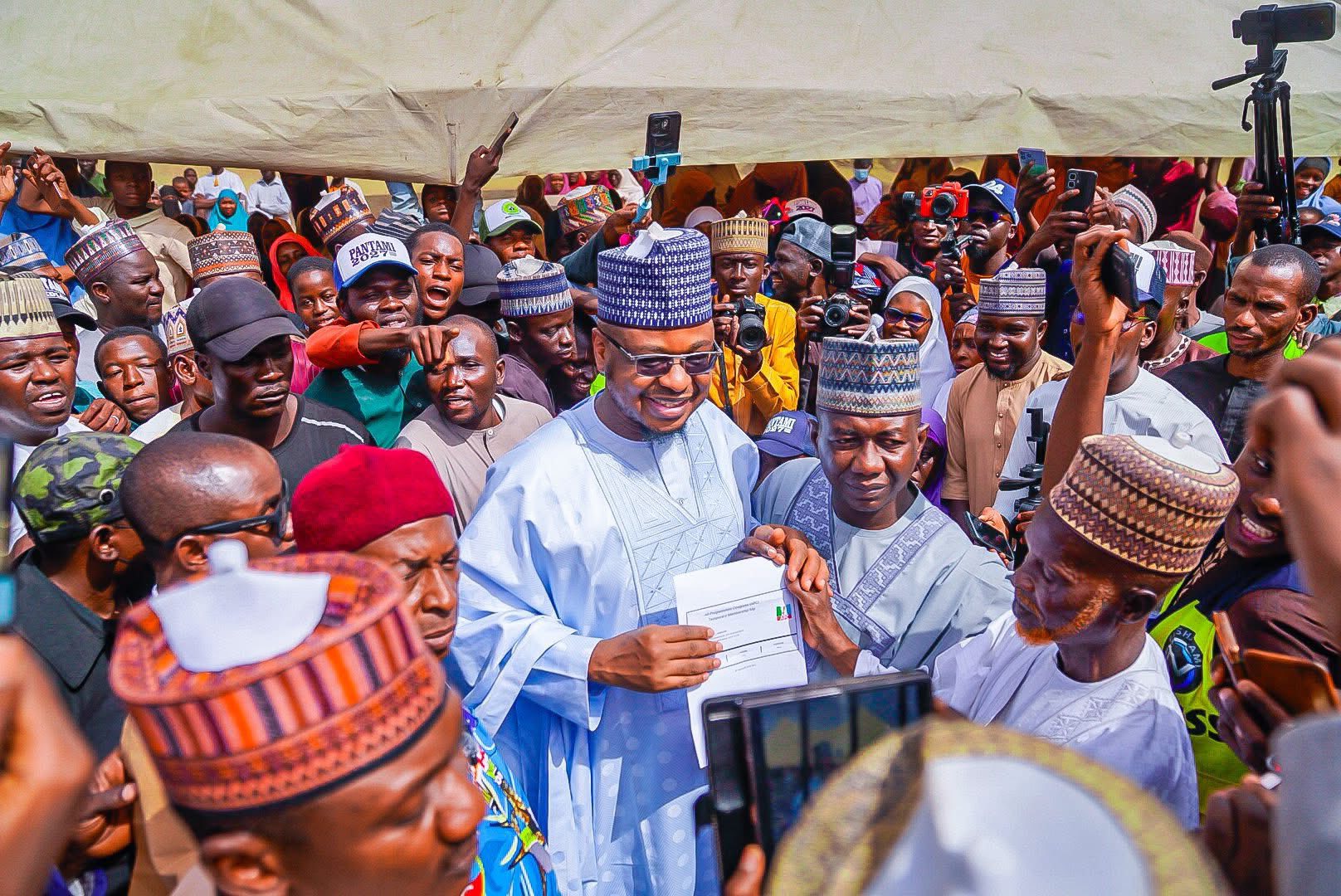
Another dimension that has attracted considerable attention is the political dexterity with which Pantami secured the PDP gubernatorial ticket. The manner in which he navigated the party’s internal dynamics and emerged as its flagbearer suggests careful planning and strategic preparation rather than mere political ambition. His decision to align with the Nyesom Wike-led faction of the PDP, a bloc widely perceived in political circles as maintaining a cooperative relationship with the APC-led Federal Government, has further strengthened his political positioning. The goodwill and support he reportedly enjoys within that tendency of the PDP could prove to be a significant advantage as the campaign unfolds.

In addition, Pantami could benefit from protest votes originating from within the APC. Some influential APC stakeholders and their supporters who believe Governor Muhammadu Inuwa Yahaya has not done sufficient justice to their political aspirations or interests may choose to channel their dissatisfaction by supporting Pantami. While it remains to be seen how substantial such a shift could be, the possibility of cross-party protest votes is a factor that political observers cannot ignore.

Whichever way one chooses to examine it, Professor Isa Ali Ibrahim Pantami’s potential governorship candidacy is in a class of its own. What initially appeared to be little more than speculation or a distant aspiration has steadily evolved into one of the defining conversations in Gombe State politics. official campaign has yet to commence, but the discussions surrounding Pantami’s governorship ambition have already reshaped Gombe State’s political landscape, making him a force that political stakeholders can no longer afford to ignore.

The ultimate test, however, will not simply be the enthusiasm surrounding his candidacy but his ability to convert goodwill into an effective political structure, sustain broad-based alliances, and persuade the electorate that his administrative achievements at the federal level can be replicated in Gombe State. Regardless of the eventual outcome, Pantami has already ensured that the Gombe 2027 governorship contest will be one of the most closely watched political battles in the state’s history.

Zayyad I. Muhammad writes from Abuja via zaymohd@yahoo.com.

Why Pantami May Win the Gombe Guber Election

By Ukasha Kofarnassarawa 

Like almost everyone, I saw that Sheikh Ali Isa Ibrahim Pantami is now PDP’s gubernatorial flag bearer for Gombe State. Congratulations to him. Pantami is now everything he once criticised. But that’s not my focus here; the internet has receipts for anyone interested in digging.

The real calculation:

Amid all the “consensus-coronation” drama unfolding nationwide, many observers expected Sheikh to defect to either ADC or the NDC, which are seen as the strongest opposition blocs. But Abuja is playing a different game. This looks calculated.

Right now, the entire core North — both North-West and North-East — is held by APC governors, except Bauchi, which lately switched to APM. The party’s structure and acceptability are widely seen as weak, and the state is likely to return to APC in the next election, given its current flag bearer, the former governor of the state.

For the President’s party, having zero opposition across the whole core north would be a dangerous optics problem. It would look like a monopoly. To avoid that, Abuja needs to “sacrifice” 2  core northern states to the opposition, just to create balance. One in the northwest and the other in the northeast.

And among all opposition parties, PDP is the “lesser evil” from Abuja’s view because one of its sons controls a major faction there. So Pantami decamped to the PDP, which functions as an extension of the APC. The plan: he gets “appointed” governor to create the illusion of balance, then switches to the main APC immediately after winning.

Abuja’s handwriting is not hard to understand.

Ukasha Kofarnassarawa wrote via Ukasha_sani@yahoo.com.

Indeed, Pantami — The North Must Tell Its Own Story

By Abubakar Musa Idris

During a recent Ramadhan Tafseer session in Abuja, former minister Isa Ali Pantami made a remark that ought to trouble every Nigerian who cares about media fairness. The North, he argued, needs a strong media presence capable of projecting its narratives to the world. This was not a regional call. It was a practical response to a structural imbalance that leaves Northern perspectives underrepresented both within Nigeria and beyond.

Two concepts explain what Pantami identified. The first is agenda-setting: when news platforms decide what to cover, they are effectively deciding for millions what matters. The second is the battle for narrative control: the competition to shape public conversation. He who wins this battle helps set the agenda. He who has no platform is spoken for by others. This battle plays out globally, where international outlets shape how the world sees Nigeria, and nationally, where the concentration of media houses influences which stories receive prominence.

Consider Nigeria’s media geography. Most major privately owned networks are headquartered in Lagos. This is not a conspiracy; it is a commercial reality. Lagos is the natural home of advertising revenue and media infrastructure. Consequently, perspectives from that region receive sustained national attention not out of malice, but simply because journalists live there. When newsrooms are concentrated in one area, other regions struggle for airtime. The North is reported on rather than reporting. This absence of strong Northern media with national reach is not favourable to accurate national discourse.

The international dimension is equally urgent. Global wire services—Reuters, AP, BBC, CNN, Al Jazeera function as gatekeepers of the world’s agenda. Their choices shape the understanding of billions. Research confirms that coverage of developing nations is almost entirely limited to stories of war and disaster. If a region cannot feed its perspectives into these channels, its stories will be told by others, whether incompletely or inaccurately, sometimes with hostile intent.

Consider what happened on February 19, 2026, when suspected Lakurawa terrorists attacked Kebbi State, killing thirty-four Muslims fasting for Ramadan. The next day, gunmen massacred thirty-eight more in Zamfara. Earlier that week, gunmen in Plateau abducted an imam and seven mosque committee members. Where was the sustained national coverage? Where were the front-page stories? Coverage existed, but it was minimal relative to the horror.

Not because these deaths mattered less. They received less attention because the institutions with the power to amplify them are far from affected communities, and because the North lacks platforms to project these tragedies into national consciousness.

Now contrast this with another narrative that dominated global discourse throughout 2025. Between January and October, a story alleging Christian genocide in Nigeria gained significant traction. Investigators traced this coordinated campaign to networks affiliated with IPOB. The narrative reached 2.83 billion impressions on X alone. It influenced the United States to designate Nigeria a Country of Particular Concern. It shaped discourse around the Sokoto airstrike. It is now cited in discussions about sanctions against Northern figures and proposals to label Fulani groups as terrorist organisations. 

One side had an army of storytellers. The other had none. Agenda-setting power shifted accordingly in Abuja and Washington. The absence of strong Northern media is not favourable in such a landscape.

The proposed sanctions and scrutiny of the Fulani illustrate where this leads. As analyst Yushau Shuaib observed, criminal elements exist across every line. But the Fulani are a diverse population numbering in the millions. Collective blame is profiling. 

Yet profiling becomes easier when only some perspectives dominate discourse. The Fulani have no platform to tell their own story, their history, their contributions, their humanity. They risk being defined solely by what others say. This is about ensuring all Nigerians can represent themselves accurately when the world is watching.

Pantami also pointed inward, critiquing Northern media that prioritize entertainment over substantive reporting. Insecurity, education, industrial revitalisation, issues that shape daily life receive far less attention than partisan conflicts. The stakes are higher for regions with limited platforms. When local media fails to set a serious agenda, it becomes distraction. 

But the problem is also reaching. Numerous Northern stations exist, but many broadcast locally in Hausa, limiting national influence. Reliance on NTA alone is insufficient. The absence of strong, English-language, professionally run Northern media with national ambition is simply not favourable.

Pantami also called for a world-class station broadcasting in English, French, and other global languages. Its purpose: to speak to Nigeria and the world. To feed alternative narratives into national and global ecosystems and claim power to help set the agenda. He pointed to Al Jazeera.

 Before Al Jazeera, the Arab world was narrated by Western outlets. After, Arab perspectives could not be ignored. The channel succeeded not as propaganda, it faced criticism from all sides but because it invested in professional journalism and built credibility. A Nigerian equivalent could do the same.

Consequences extend beyond the North. When any community cannot tell its story, the nation’s image is shaped by whoever has the loudest platforms. International sanctions and diplomatic decisions are increasingly influenced by narrative control. So too are national decisions: budget allocations, security responses. If Northern realities are not part of the national conversation, they will not be part of the national response. Without professional media projecting Nigerian perspectives, the country will be defined by whichever voices dominate existing platforms. This is not favourable to national cohesion.

Pantami spoke during a religious gathering, but his message was strategic. He identified a vulnerability and proposed a solution. The question is whether Northern elites will redirect resources toward building the media infrastructure the region desperately needs. The North must tell its own story. Not because its story matters more, but because every community deserves to represent itself. Nigeria needs multiple voices engaging with the nation and world.

Today, many platforms shaping perceptions of Northern Nigeria are headquartered elsewhere. This is not an accusation. It is media geography. And geography can be changed. The North can build. It can invest. It can tell its own story. Not through propaganda, but through professionalism. Not by silencing others, but by adding its voice.

Abubakar Idris wrote via abkidris99@gmail.com.

Pantami, Power and the Burden of Moral Clarity

By Abdulhamid Abdullahi Aliyu

A Hausa proverb warns that you cannot run at full speed while scratching an itch. The saying captures, with striking simplicity, the dilemma now surrounding Sheikh Isa Ali Pantami as conversations about his political ambitions gain momentum.

Public life demands clarity of role and consistency of purpose. When an individual seeks to occupy two morally and structurally conflicting spaces simultaneously, momentum is lost, and credibility is strained. This is the core tension in Pantami’s current trajectory: the attempt to remain a preacher with clerical authority while simultaneously stepping into partisan politics.

The problem is not ambition itself. It is role conflict. Clerical authority depends on moral certainty and spiritual distance from power, while politics thrives on negotiation, compromise, and moral ambiguity. Attempting to inhabit both worlds simultaneously risks weakening the integrity of each.

This tension becomes even more consequential in a plural society like Nigeria, where religion carries deep emotional authority and political power must remain anchored in constitutional legitimacy. Once religious influence is injected into partisan competition, power risks acquiring a sacred character. Political disagreement can then be reframed, subtly or overtly, as moral failure or spiritual deviation rather than a contest of ideas and interests.

Some have argued, including respected commentators like Jaafar Jaafar, that religious clerics should avoid politics altogether because political space is inherently compromised by bargaining, corruption and ethical trade-offs. Others counter with a seemingly reasonable question: if the aim is to sanitise politics, why not allow upright clerics like Pantami to participate?

That question, however, misunderstands the core concern. The issue is not whether a cleric is personally virtuous. It is about the separation of religion and the state. Democracy relies on pluralism, persuasion and accountability. When religious authority enters partisan politics, votes may be influenced not by policy debate, but by guilt, fear, or claims of divine sanction. That is a dangerous precedent in any diverse society.

The concern deepens when the individual seeking political office has, in the past, described politics itself as immoral or ungodly. Such a record invites legitimate questions of coherence. Has politics suddenly become virtuous, or has it merely become useful? Citizens are entitled to ask not out of prejudice, but out of democratic caution.

More troubling still are historical associations with ideological currents that have openly viewed democratic participation not as a means of strengthening institutions, but as a strategy to hollow them out from within — the well-known shiga daga ciki a gyara argument. In societies that have suffered from extremism and institutional fragility, such histories cannot be brushed aside or dismissed as irrelevant.

None of this is about excluding religion from public life. Faith has always shaped values, ethics and social responsibility in Nigeria. But there is a difference between moral inspiration and political authority. When religion becomes a substitute for constitutional legitimacy, the democratic project itself is weakened.

Politics, by its nature, is a flawed human enterprise. It requires compromise, negotiation and accountability to citizens, not to spiritual hierarchies. Clerical authority, on the other hand, rests on moral clarity and trust. Mixing the two without a clear break risks eroding both.

If Professor Pantami intends to pursue politics, the burden before him is not merely electoral. It is moral and institutional. He must offer clarity, openly reckon with past positions, and demonstrate consistency over time. Nigerians are not asking for perfection. They are asking for coherence.

In the end, democracy survives not on sacred claims, but on transparent choices, accountable leadership and the acceptance that political authority derives from citizens, not sanctity. That distinction must remain clear — for the sake of both faith and the republic.

Abdulhamid Abdullahi Aliyu is a journalist and syndicate writer based in Abuja.

Pantami’s three faces

By Zayyad I. Muhammad 

Isa Ali Ibrahim Pantami, former Honourable Minister of Communication and Digital Economy, an Islamic sheikh, and a UK-trained Ph.D. holder, has found himself in a triangular situation: an Islamic sheikh, a politician, and an academic. This revered status means any issue that affects his personality will always be a hot topic and attract public scrutiny.

Pantami’s full transformation into a politician who is eyeing the ‘ballot box’ was noticed during this year’s Ramadan Tafsir; his style of delivery and the content of his messages were noticeably altered. Traditionally known for his sticking to religious contents during tafsirs, this time, the sheikh took every opportunity to showcase his extensive knowledge of the economy, geography, and global politics. This shift did not go unnoticed by the audience and observers.

Pantami’s discussions were peppered with references to economic policies, geographic strategies, and the intricacies of international relations, signalling a significant change in his focus and priorities. Pantami continues to align himself more closely with political aspirations, and his body language has also evolved to reflect this new ambition. 

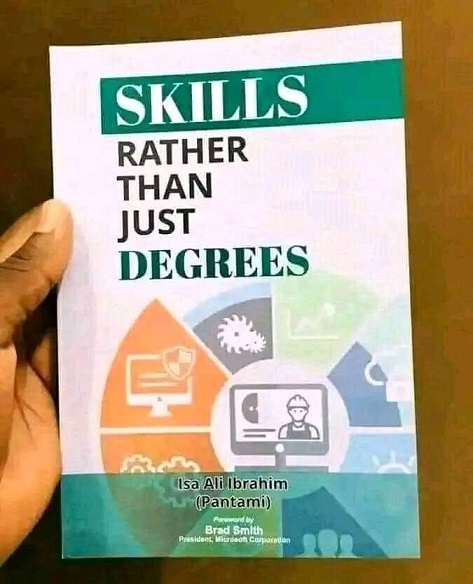
Recently, controversies, debates, and discussions have emerged about Pantami’s books, Skills, Rather than Just a Degree and A Scholar’s Journey: Navigating the Academia. These books trended for a while and reignited old controversies about how he obtained his professorship. This situation has also awakened Pantami’s political adversaries, who view his behind-the-scenes early efforts to enter the Gombe state governorship race as an encroachment on their territory.

Many politicians, especially in his home state of Gombe, are upset with Pantami because they view him as an outsider who seized opportunities to occupy their ‘slots,’ first as the Director-General of NITDA and later as a federal minister representing Gombe State. However, after eight years of working independently, he now seeks their support to establish himself in their domain.

Conversely, the majority of Pantami’s critics regarding his appointment as a professor are academics. In contrast, most of those who backed the critics were Pantami’s political opponents and their supporters.

One of Pantami’s critics was reported to have penned this: 

“Mr. Pantami was only for the most part a Lecturer 1 or 2 where he first served and didn’t spend a whole working career in the university system or in a university’s employment,” he was “made” a Professor by a university where he never worked, taught, sat in its Senate, worked in its committees, never examined or marked UG or PG exam scripts, and his whole promotion papers were never processed at the departmental and faculty levels, and, indeed, he never had a payroll number… Mr. Pantami was thus never a scholar in the classical or academic sense of that word. I wonder whether he’s now teaching or giving classes or seminar papers at any university after his leaving office in May 2023.”

On the other hand, supporters of Pantami’s professorship encompass academics with a fondness for him, members of religious groups, his students, and his political associates. 

In fairness to Pantami, having held a ministerial position, he is already entrenched in politics. Moreover, the criticisms in his books predominantly consist of one-off comments rather than comprehensive analyses or academic discourse. Furthermore, Pantami’s challenge for a debate on his book is yet to take place. 

The debate about Isa Pantami’s books, professorship, and foray into politics has three divides: his adherents, his opponents, and those sitting on the fence. The views of his followers and critics are well known and are often based on their perspectives. However, those sitting on the fence have, on many occasions, provided valid points both for and against Pantami.

Isa Ali Pantami’s transition from an Islamic scholar to a politician and professor has sparked both controversy and applause. His political opponents view his entry into politics as an intrusion into their territory, while his academic critics regard his professorship as ‘unearned.’ On the other hand, his supporters perceive his multifaceted identity—as a sheikh, a politician, and a professor—as exceptional among his peers.

Zayyad I. Muhammad writes from Abuja via zaymohd@yahoo.com.

In response to Farouq Abba’s baseless critism of Pantami’s book 

By Usama Abdullahi

I don’t understand why someone like Farouq Abba, whose command of the English language is faulty, would waste his time kissing off Sheikh Ali Isa Ibrahim Pantami’s book titled, Skills Rather Than Just Degrees. I am pretty sure everyone who stumbles upon his criticism of the book would know that it’s such a ridiculous attempt to downplay the superbness of the book. To be honest, I find his criticism very tasteless and insulting. To insist that a comma must precede  ‘Skills’ before ‘Rather’ is to insist that the English language isn’t a complex one. Unknown to the faultfinder-Abba, putting a comma before ‘Rather’ is quite unnecessary.

It’s up to the author to decide whether to insert a comma or not. And the absence of a comma in the book’s title doesn’t invalidate the effectiveness of the book. Well, it’s obvious that the critic is plainly being too naive to conceive that idea. That being said, his understanding of grammatical rules is limited. So, we may wish to dismiss his critique as a misguided priority or some sort of attention-seeking thing.

Surprisingly, Abba has admitted by himself that he hasn’t yet read the book. But he’s quick to point out some “gaffes” in the book’s title. I guess he’s simply being hypocritical like he has always been when it comes to matters of great importance. 

I’m amused that he ended up exposing his ignorance while trying to alter what’s already inalterable. I understand that there are a number of people who wrongly assume that the use of ‘just’ in the book’s title is shocking. Contrary to their misapprehension of the adverb ‘just’, it can be understood in a series of ways. We all know that ‘just’ is synonymous with ‘only.’ Therefore,  there’s nothing to worry about in that title. It’s as simple as it seems. I, however, do not wish to denigrate Abba. I only wish to disagree with him. 

He also characterised the art on the book’s cover as being “too basic”. I don’t know what he clearly meant by that. But, to think that way is to think that the earth should revolve around him alone. That the book’s painting is “too basic” doesn’t mean the book won’t be impactful as it’s expected to be. You can only imagine what the book has in store if you haven’t read it. A good brother-cum-friend has shared the book with me via WhatsApp, and I have started reading it. It’ll be an interesting one. 

In conclusion, the book is such a great masterpiece. It argues that having a degree doesn’t guarantee that a person possesses the necessary skills to succeed in a given position or industry. Moreover, it suggests that instead of sorely relying on academic achievements, employers should focus on an individual’s (applicant’s) experience, practical knowledge and work-related skills because that determines how they will perform the job effectively.

The truth is, having relevant skills is much more valuable than simply having academic qualifications. Isn’t it funny that this is the kind of book which Abba sought to dishonour?!

Usama Abdullahi is an Abuja-based writer.  He can be reached via usamagayyi@gmail.com.

Why Nigeria needs a comprehensive data protection law now

By Muhammad Mikail

‘The amount of data being generated today is enormous; as such, it has become necessary to have a full-fledged data protection law to ensure confidentiality and privacy of the data’ – Prof. Isa Ali Ibrahim Pantami

In today’s digital world, data is key to the extent that some scholars have termed ‘data as the new oil’. This speaks to the huge revenue potential data has for every country serious about growing its digital economy. Nigeria is certainly one. This data is in the form of personal information, which is frequently collected, stored, and shared by businesses, governments, and individuals.

According to Professor Isa Ali Ibrahim Pantami, the Hon Minister of Communication and Digital Economy, who spoke at the recently held maiden edition of the ‘Digital Economy Regional Conference’ in Abuja with the theme: Positioning West Africa’s Digital Economy for the Future, “In the fourth industrial revolution, data is key. In 48 hours, the quantity of data generated globally is equal to the quantity of data that was generated within a period of 5000 years.”

However, without clear regulations to govern the use of such data, individuals and entities are left vulnerable to privacy violations such as data breaches, identity theft, and other forms of abuse. Today, it is a global best practice to have a data protection law in place. Otherwise, nations find it difficult to attract so many interventions beneficial to their countries. A data-secured environment is an investment wonderland.

The above explains why many development partners, international financial institutions, critical stakeholders in the digital economy space and even potential investors today have continued to ask questions as to why Nigeria does not have a data protection law in place. Having such a law in place will align the country with the scores of others around the globe and make Nigeria a global player. Put differently, the costs of a lack of a proper data protection law are enormous.

To address this issue, the Federal Government of Nigeria established the Nigeria Data Protection Bureau (NDPB) in 2022 as the regulatory institution responsible for ensuring that people’s personal information is kept private and safe when used for ‘digital things.’ Furthermore, in January 2023, the Federal Executive Council (FEC) approved the Nigeria Data Protection Bill presented by the Hon Minister of Communication and Digital Economy for transmission to the National Assembly for consideration.

The draft data protection Bill was sent to the National Assembly by the President in separate letters addressed to the leadership of the National Assembly and read on the floor of both chambers on Tuesday, the 4th of April, 2023. The Bill has gone through the first and second readings and sent to the ‘Committee of Whole’ in the National Assembly to harmonise positions from both chambers. This Bill will provide a legal framework for the protection of personal information, safeguard people’s basic rights and freedoms, and establish a data protection commission for the regulation of the processing of personal information and data when passed into law.

The eight Assembly previously passed the Draft Data Protection Bill, but President Muhammadu Buhari declined assent. This was due to concerns raised by stakeholders on some identified areas and clauses in the Bill. So far, Nigeria Data Protection, in collaboration with the Nigeria Digital Identification for Development Project, NDID4D, has been working with critical stakeholders, captains of industries and policymakers on addressing those concerns and perfecting the bill.

Recently, a validation workshop was held to present the draft bill to stakeholders for their buy-in, comments, criticism, and suggestions to improve the bill.  Senator Ibrahim Hossein, and Rt. Hon Lado Suleja, both Chairman Senate and House Committee on ICT and Cybersecurity, respectively, have, on numerous outings, conveyed the support and willingness of the National Assembly to diligently work on the bill to ensure speedy passage and eventual assent by the President.

‘Data Protection is a constitutional right in Nigeria’, is an oft-quoted statement of Prof. Pantami, the communications minister, as Section 37 of the 1999 constitution as amended provides that: “The privacy of citizens, their homes, correspondence, telephone conversations and telegraphic communications is hereby guaranteed and protected.” In the same vein, the core rights of data subjects under the Nigeria Data Protection Regulation provide a data subject have a right to be informed, the right of access, the right to object, the right to data portability, the right to erasure, right to restriction of processing, rights to rectification and rights regarding automated decision making.

Thus, data protection law is urgently needed in Nigeria as citizens have had one form of data or the other compromised without the ease of recovery, leading to huge financial losses, reputational damage, revenue losses, and other forms of abuse. This is pertinent, especially with the growing rate of identity theft, cyberstalking, data mining, theft, internet fraud and increasing reported cases of abuse of financial information by financial institutions, mobile service providers and telecom companies, unregulated loan credit companies and so on.

The current National Assembly needs to pass the data protection bill for President Buhari to assent to it before May 29th, 2023. This will provide an additional layer of protection for the nation’s digital identity ecosystem and, in no small measure, safeguard the Nation’s fast-growing digital economy, boost investor’s confidence, attract foreign direct investment, improve our GDP, and ensure robust protection and safeguarding of personal information from being stolen and misused for fraudulent purposes, reducing the incidence of identity theft and fraud as well as serve as a buffer for citizens’ personal data privacy.

Data is critical to the survival of every nation’s economy, particularly in today’s digitised global home. It is on record that Nigeria is the first African country to join the developed countries in celebrating international data privacy day. This demonstrates the Nation’s drive and willingness to take its pride of place as a leading African digital economy hub amongst the comity of nations.

The data protection law is not in any way meant to punish our citizens but rather to create awareness so that we will all be data compliant. We are urged to comply. Today, because of awareness creation, collaboration amongst digital economy ecosystem partners, critical stakeholders in the data sphere, reaching out to institutions, sanctions, and interrogating others, the data protection and privacy compliance rate is on a steady increase.

Additionally, businesses and organisations will be held accountable for any data breaches or privacy violations, which will encourage them to take data protection seriously and implement proper measures to protect personal data.

The current Assembly should take due credit and ensure the speedy passage of this lofty bill, and President Buhari should quickly assent to it for the good of posterity. The passage of a comprehensive data protection law in Nigeria is urgent and should not be delayed further.

Muhammad Mikail writes from Abuja, Nigeria and can be reached via muhammadnmikail.mm@gmail.com.
Holy Qur’an University confers honorary doctorate on Sheikh Pantami

By Abdurrahman Muhammad

The University of the Holy Qur’an and Taseel of Sciences of the Republic of Sudan awarded Nigeria’s Minister of Communications and Digital Economy and renowned Islamic cleric, Professor Isa Ali Ibrahim (Pantami), with an Honorary Doctoral Degree in Qur’anic Science.

While the Honourable Minister was awarded in May 2021, he received the award certificate and shared the same on social media only recently.

According to the official social media handles of the Minister, he was the first person in sub-Saharan Africa to receive the award. The statement, in part, reads:

“With the exemption of North Africa, he was the first African to receive the recognition on the Glorious Qur’an.”

During Ramadan, Sheikh Pantami delivers Tafsir at the Annur Masjid in the Nigerian capital, FCT Abuja. He also holds other preaching sessions outside the Holy Month at the same mosque or elsewhere.