By Prof. Abdelghaffar Amoka Abdelmalik
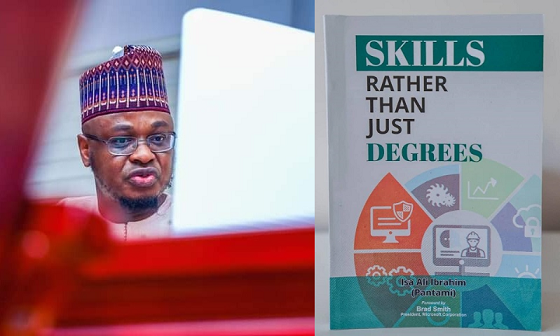
A recently published book by Dr Ali Isa Pantami has rekindled the debate between degrees and skills. Even though the book focused on digital skills, “educated” Nigerians are trying hard to separate skills from university degrees (education). That someone graduated in computer science without being able to write a computer code does not mean that all graduates in computer science cannot write computer code.
Public primary and secondary schools have collapsed, and there is no debate on a possible mission to rescue them. The public universities are on the path to the state of the public primary and secondary schools, and all we want is to keep the kids in the class to MILT (manage it like that).
Some of the questions that came to my mind as I watched the debate were: What is skill? Can you truly separate skills from university degrees? What qualified you to receive a degree from a university? What skills do you need to survive in Nigeria? What skills do we need to propel Nigeria to a particular height? Just digital skills? What are the available jobs in high demand in Nigeria? Over the last 20 years, tell me about a job that was advertised, and after all the screening, they could not get a qualified graduate in Nigeria with the appropriate skills for the job.
The debate on degrees and certificates is getting more interesting. It is more interesting to me this time around as the Northern elites champion it. We are growing up.
I did my National Youth Service in a secondary school in Bagwai, Kano state, between 2000 and 2001. One weekend, I went to the market to get some stuff and met the Senior Teacher. I jokingly asked why he was in the market and didn’t let the wife do the shopping. That led to a lengthy discussion where I mentioned the General Hospital, Bichi. As of then, there were 3 Doctors, all male, at the hospital. Two were Yoruba and one Igbo. They were all Christians. There was no female doctor. I told him that they need to encourage their daughters to go to school so that we can have their daughters as Doctors in those hospitals. I guess I was wrong. Degrees are useless.
We are fond of mentioning our iconic automotive designer, Jelani Aliyu, as an example of skills rather than degrees. This is a very interesting example with a missing background. Jelani was a very good student and truly left the university for the polytechnic because he wanted a more practically oriented program. That is what polytechnics are originally meant for. So, after finishing his HND from the polytechnic as the Best All-Round Student, he got a scholarship from the Sokoto state scholarship board to study automotive design at the College for Creative Studies in Detroit, US. They got certificates every step to show that he has acquired the requisite skills. The rest is history.
You see, anyone can write a book on degrees vs skills, especially people at high places whose entire success is based on their degree certificates. But can the book change our reality? Not likely. Only a few Nigerians actually read books. A long post on Facebook is even difficult to read. We prefer to use the time to argue over who is the football G.O.A.T. How do we change that? There are several challenges to deal with to save our system.
But then, by the virtue of your degree certificate, you got a job as a Graduate Assistant at a public university. You built on that to have your Master’s degree in the university. And being a lecturer in a public university, you got a scholarship for PhD in the UK. With a PhD degree from the UK, you got a job offer as an Assistant Professor at a university abroad. Then, a few years later, you got an appointment outside academia. I guess a skill was identified that took you to all these places. There was no record of industry experience. So, all the skills were acquired at the university. So, what is your problem with the university? If you have got all these skills in the university and the necessary skills that your students in your department need to have are missing, then we should blame you for it.
All that you are was built on your degrees, and the same degrees are suddenly no more important but skills? We are supposed to be the light of our society. So, what is skill? What do we do in the universities? Are university environments unskilled environment? Where do you get the skills? Meanwhile, their kids are in university acquiring degrees. My guess is that you need skills, while their kids need degrees to manage your skill.
One of my senior colleagues once told us during an undergraduate lecture in the ’90s that physics makes you think. That’s a skill. He said, whatever you decide to do after graduation, physics will help your thinking. Sometimes back, I had a discussion with one of our graduates who switched from physics to IT after graduation, and he said IT is a piece of cake compared to Physics. He said he finds it easy having studied physics. Of course, let’s preach skills and not degrees while our best graduates are been harvested by the US, Canada, France, Norway, England, Germany, etc.
Recently, there were some trending Master’s graduation lists from UK universities where the graduates were 99% Nigerians. The tuition fee for the master’s program can start a business in Nigeria, but they decided to give the money to the UK university to acquire a certificate that will qualify them to work in the UK. Their first degree from Nigeria got them admission to a Master’s program in the UK. That qualifies them for the two years post-study visa to get a job. They don’t intend to come back, and they will get a job there with a university degree.
Shaquille O’Neal found it offensive when he walked into business meetings, and people would only talk to his representatives. He felt he was lacking something and found it necessary to enrol in a Master’s degree program at the University of Phoenix. He told them that he wanted somebody to teach him in class but was informed that the course he enrolled for was only taught online and that he can’t be taught alone. He asked for the requirements to have a physical class, and he was told that they needed a minimum of 15 students. Shaq paid for 15 of his friends to join him in the Master’s program. There was a gap, and he got a degree to fill it. It is up to you if degrees are skillless.
Barrister Jimoh Ibrahim recently got a Doctor of Business degree from Cambridge Judge Business School, University of Cambridge. He is a billionaire with an MSc in Major Programme Management from Oxford, an MBA from Cambridge, a Certificate in International Tax Law from Harvard, an MPA from Ife, and a Bachelor of Law from Ife. He has been a billionaire. What does he need another degree for?
Our universities are not in the best form, nor are our polytechnics the way they were during Jelani’s days. We watched public educational institutions degrade over the years without any resistance except ASUU. That we have lost some vital components of what made a university a university is not a global case. It’s a peculiarity that we have to deal with to save our system. Our efforts should be towards reviving the lost skills that ought to be acquired at each level of our education, from primary schools to polytechnics and universities.
Sadly, instead of making efforts to save the education system of the country and direct it toward the developmental needs of the nation, we are arguing over degrees and skills while they are taking the extra steps for the further destruction of public universities. The people telling you to go for skills instead of degrees have got their kids in schools abroad or private universities. What are they acquiring there? Unskilled knowledge? They have systematically destroyed what made the university a university but complained of a lack of skills. Double standard.
Since our brothers are championing the commercialization of public universities and skills rather than degrees, I hope our general hospitals in the North have got enough doctors so that we can close down our degree programs for medical sciences. What about law, finance, etc.? Optic fibre, which has revolutionized medicine and telecommunication, was a product of research from the university. A simple physics concept (total internal reflection in a material) that was engineered. Endoscopy and broadband transmission are not products of questionnaires but skilled thinking.
The World Bank recently said it will take northern states 40 years to catch up with their southern counterparts considering the current growth rates. Meanwhile, northern leaders don’t seem to bother about that but doing politics with the education of the people. I was informed today that grasses have taken over some of the primary schools in a state in the North-central. If we are to stop going to school, we need to start telling them to lead the way on the skills we need to survive in the North and make Nigeria work. Is it farming, as the president advised?
In a recent World Bank report, the Bank stated that “despite its vast natural resources and a young, entrepreneurial population, development in Nigeria has stagnated over the last decade, and the country is failing to keep up with the GDP growth of its peers. Declining private investment and demographic pressure push young Nigerians to pursue opportunities overseas”. Lack of skilled leadership and not a skilled workforce is possibly responsible for this.
It wasn’t a lack of skilled workforce that caused the massive unemployment in the country. There won’t be unemployment if there are jobs. There can’t be jobs if there is no job creation or an enabling environment for job creation. We are quick to forget that every certificate, degree or not, comes with the requisite knowledge and skills. The certificate is to show that you have acquired the prescribed skills. Of course, some find a way to get it without getting the requisite skill. This is Nigeria, where everything is possible. That is a systematic problem. That is why there is an interview.
Are you dealing with incompetent graduates? Blame your hiring process or yourself for not conducting the required interview. That you can’t find a job in Nigeria does not mean you don’t have the skill to get a job. The jobs ain’t just there. Go and study in the UK. If you stay back, you will get a job without any need to know someone that knows somebody. But if you dare return to Nigeria out of that thing called “patriotism” to contribute, you may need to buy a job or know somebody at a high place to get that dream job.
The problem is that we don’t even know what we want. No strategic plans. Everyone is just looking out for his pocket. After seven years, there is no clear education policy for the country. They said there are not enough resources to properly fund education, but they can’t produce a sustainable funding model for education. We are still living and surviving in lamentation mode.
They said a country cannot grow beyond the level of education of the people. Meanwhile, the education system of the country is in a deep mess, and no one is calling for a discussion on the sort of education that we need to aid our development as a developing nation. Every opportunist sits in the comfort of his office to push a policy through our throat, policies that will naturally die after they are out of the office.
It was entrepreneurship yesterday and that made them introduce entrepreneurship as a compulsory subject in secondary schools and as a general studies course in the universities. But which entrepreneur will go and sit as a secondary teacher in a class to receive slave wages of N40,000 per month? The course is taught at the university by colleagues struggling to get home with their take-home pay.
The subject is taught by people struggling with monthly salaries and doesn’t know what entrepreneurship looks like aside from what they read in the book. The government that introduced the policy, as usual, did not make adequate provisions for it to be taught. But they are happy to have introduced the subject. Not sure of how many entrepreneurs we have produced from the teaching of the courses. Today, it is skill acquisition. Are we confused?
Just like the “entrepreneurship” package of yesterday, “Skills rather than Degrees” seems to be the new gold mine among those in government with different packages for funding from the government. At least we have started spending billions on skill acquisition across states. A report from Vanguard on April 6, 2022, says over N6.2 billion was spent to train and equip 16,820 Bauchi youths in the art of smartphone repairs. That’s about N368,609 per person.
You can write books on skills and get Bill Gates to write the foreword, but that won’t change our situation until we are willing to change it. We are not getting it right with our education system, and we have refused to ask honest questions and find answers to them. Some of the skills needed to be acquired at the university are missing due to system failure, and we pretend that all is well. All that our leaders want is to hear that students are in class and manage it like that. The quality of the teaching is not important to them. After all, their kids ain’t there. Unfortunately, we don’t see anything wrong with the MILT syndrome, and some of the victims even consider questioning/challenging the leaders as insubordination.
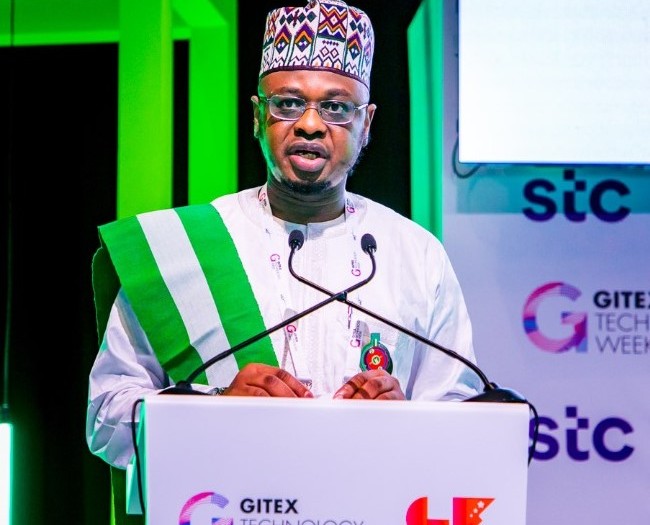
A member of this government is championing the “Skills and NOT Degrees” campaign, and he has written a book on it. I did not know that ministers have the luxury of time to write books while in office, despite their tight schedules. Well done, sir. I hope the idea will not die in May 2023 after leaving office.
There is no doubt that all is not well in our universities, from the hiring process to the interference of professional bodies to funding to the strangulation of the system by government agents to the killing of motivation to the localization of the universities to the internal politics to the quest for positions to the loss of a scholarship, etc. But condemning the university system that made us because of our mindset against ASUU won’t solve our problem unless we ask the right questions and find answers to them.
Why did the public primary schools collapse? What is the basic skill requirement at the primary school level? Why are those skills missing? What are the deliverables at the secondary schools? How did we lose it? We had the Government Technical Colleges. What happened to them? Can we restore them? What are the expectations from the polytechnics and the university for national development? What are the obstacles to making the expectations a reality? How do we get rid of the obstacles? The University education system is a universal purposeful system that has not changed. Ours is what we made it to be. We must revive the purposeful educational system towards our developmental needs as a developing nation.
Restoring our universities and other educational institutions to the state they are meant to be needs an honest approach. But window dressing our challenges won’t solve the problems if we don’t tackle them from the root. If we don’t sit to deliberate on the sort of education system we need to aid our development as a developing nation, we’ll keep moving around the clock while our situation keeps deteriorating.
Abdelghaffar Amoka Abdelmalik, PhD, wrote from Ahmadu Bello University, Zaria. He can be reached via aaabdelmalik@gmail.com.