Iran

No distress signal from Nigerians in Iran amid rising tensions—FG

By Uzair Adam

The Nigerians in Diaspora Commission (NiDCOM) has said it has not received any distress call from Nigerians residing in Iran despite the escalating hostilities involving Iran, the United States and Israel.

The clarification comes as the Federal Ministry of Foreign Affairs disclosed that it is closely monitoring developments in the Middle East.

NiDCOM’s Director of Media and Public Relations, Abdur-Rahman Balogun, speaking on Monday, explained that although Nigerians may be living in Iran, none has formally contacted the commission to request assistance.

“I’m not saying there are no Nigerians there, I’m only saying nobody has sent any distress call,” he said.

Balogun attributed the cancellation of flights to the region to the ongoing hostilities, noting that airlines would not operate in an active war zone.

He added that temporary ceasefires are sometimes arranged to allow stranded passengers to be evacuated, but such an arrangement has yet to take place.

On the possibility of an evacuation, he said the Federal Government would only activate a full-scale operation when specific conditions are met, including an official request for help from affected citizens.

“You cannot force them. People went there voluntarily. In Sudan and Ukraine, some initially said they were not leaving,” he explained.

He stressed that Nigerians who desire evacuation must clearly indicate their willingness to return home. “People must seek help and say, ‘Our lives are in danger, can you evacuate us?’” he said.

According to him, once a formal request is made and the situation permits safe movement, the government could initiate emergency steps such as chartering aircraft and setting up a rescue committee.

“All must be Nigerian and must be ready to come back home,” he stated.

Balogun reaffirmed that safeguarding Nigerians abroad remains a key responsibility of the Federal Government under its citizen diplomacy policy.

He assured that if any Nigerian’s life is threatened and a request for assistance is received, authorities would explore available options, including leasing aircraft if necessary.

However, he maintained that evacuation would be impracticable without a ceasefire and the reopening of airspace, stressing that international aviation protocols must also be respected.

“As far as I know, I’m not aware that anybody has sent a distress call,” he reiterated.

Time for negotiations is over, Iran’s new leader Arafa tells Trump

By Sabiu Abdullahi

Iran’s newly declared Supreme Leader, Alireza Arafa, has threatened retaliation against the United States and Israel after Tehran accused both countries of carrying out military attacks on its territory.

In a statement released on Tuesday morning across several social media platforms, Arafa said diplomatic efforts had come to an end. He accused Washington of crossing a “red line.”

“The time for negotiations is over. The United States has chosen to cross the red line, the line of irreparable harm,” he said.

“By launching this war, they have signed their own death warrant: they don’t know when or how the axe will fall, but we hold the reins.”

His remarks followed reports of coordinated airstrikes by US and Israeli forces on Iranian military sites and key infrastructure. The operation marked a sharp deterioration in relations among Tehran, Washington and Tel Aviv.

Tensions between the countries have grown in recent months over Iran’s missile programme, its regional activities and allegations linked to nuclear development. The United States has repeatedly accused Iran of supporting armed groups in the Middle East and fuelling instability in the region. Iranian officials have denied those allegations.

Tehran described the recent strikes as “unprovoked.” Authorities insisted that Iran did not initiate hostilities.

Arafa rejected Western claims that the attacks were preventive steps against a nuclear threat.

“They brandish the nuclear specter like a scarecrow, blinded by their arrogance,” he said.

“They have no idea of the true extent of our power or what we are prepared to unleash.”

He directed some of his strongest remarks at Israel and warned of continued retaliation.

“As for Israel, its fate is sealed. Every strike, every crime, every act of suffering they have inflicted will come back to haunt them,” Arafa declared.

“They will remain in our sights, exposed, vulnerable, hunted.”

The exchange of threats has heightened concerns about a wider regional conflict. Armed groups aligned with Tehran in Lebanon, Syria, Iraq and Yemen could become involved if hostilities expand.

Security analysts say a prolonged confrontation could disrupt global energy supplies and deepen sectarian divisions across the Middle East.

In his concluding remarks, Arafa described the crisis as a defining struggle for Iran.

“We walk in the shadow of the Leader, and every step is a lightning bolt,” he said, before ending with the slogan: “Iran does not bend. Iran wins. Always.”

As tensions rise and military activities continue, international actors face growing calls to intervene and prevent a broader conflict that could reshape the region for years.

Iran clarifies it is at war ith US, Israel, not Gulf nations

By Sabiu Abdullahi

Iran has clarified that it is engaged in conflict with the United States and Israel, not with any countries in the Gulf region.

Speaking on Monday, Iranian Foreign Minister Seyed Abbas Araghchi said, “We’re not attacking our neighbours, we’re attacking US military bases. US soldiers fleeing to hotels will not prevent them from being targeted.” His remarks come amid ongoing US and Israeli strikes on Iranian positions, and retaliatory Iranian attacks on American and Israeli interests in the Middle East.

Al Jazeera reports that Iran accused the US of “betraying diplomacy” by launching attacks during ongoing negotiations. Araghchi also urged Gulf nations to pressure Washington to halt its military actions against Iran.

The Iranian minister emphasized that US military installations, including those located within Gulf countries, and facilities housing American troops, are considered legitimate targets.

For the third day in a row, loud explosions were reported in Dubai, UAE, and Qatar as Iran continues to respond to US and Israeli attacks. Bloomberg notes that both the UAE and Qatar have been quietly appealing to international allies to encourage President Trump to pursue a diplomatic solution instead of extending the conflict.

Qatar warned that ongoing disruptions to regional shipping could further drive up global natural gas prices. The country also announced that it intercepted two Iranian fighter planes, along with missiles and drones, which had entered its airspace. Gulf nations have pledged to continue defending their territories.

Meanwhile, the conflict between Israel and Hezbollah continues to escalate as both sides exchange attacks.

IRGC declares Strait Of Hormuz closed, warns ships will be attacked

By Sabiu Abdullahi

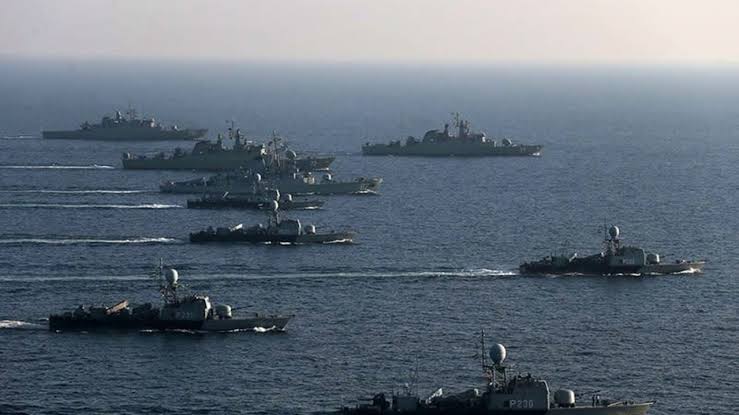
Iran’s Revolutionary Guard Corps has announced the closure of the Strait of Hormuz, a key global shipping route, and warned that any vessel attempting to pass through the waterway will face attack.

According to Iranian media reports cited by Reuters on Monday, Ebrahim Jabari, a senior adviser to the commander-in-chief of the IRGC, confirmed the decision and issued a direct warning to maritime traffic.

“The strait (of Hormuz) is closed. If anyone tries to pass, the heroes of the Revolutionary Guards and the regular navy will set those ships ablaze,” Jabari said in remarks carried by state media.

If enforced, the measure would stop commercial vessels from moving through one of the world’s most critical energy corridors. The Strait of Hormuz serves as the narrow entrance to the Gulf. Roughly one-fifth of global oil exports pass through the channel.

Oil tankers that navigate the route transport crude and gas supplies from Saudi Arabia, Kuwait, Iraq, Qatar, Bahrain, the United Arab Emirates and Iran. The northern coastline of the strait lies along Iranian territory.

Any interruption along the Strait of Hormuz has serious consequences for international energy markets. A prolonged closure would disrupt oil shipments and could drive up prices worldwide.

Jeffries challenges Trump over Iran strikes, urges focus on domestic priorities

By Sabiu Abdullahi

United States President Donald Trump is facing mounting criticism over Washington’s recent military action against Iran, as senior lawmakers question the basis and legality of the operation.

U.S. House Minority Leader Hakeem Jeffries said the administration has yet to provide proof that Iran posed an imminent danger that required military intervention. His remarks have intensified debate in Congress about both the constitutional authority for the strikes and the broader strategy behind them.

During a television interview before attending a classified congressional briefing, Jeffries stated that he would continue to review intelligence to determine whether the action was warranted. According to CNN, he expressed concern that lawmakers had not been shown evidence to support the decision.

“I will continue to look for information … to suggest that there was intelligence indicating that Iran was prepared to strike the United States. Nothing has been presented to justify what’s taking place up until this point,” Jeffries was quoted as saying.

He maintained that many Americans expect their leaders to address economic pressures at home instead of committing the country to another prolonged conflict abroad.

“Americans want the government to focus on making their life better, making their life more affordable, not getting involved in another endless war in the Middle East that is going to end in failure,” he added.

Jeffries also raised questions about the President’s authority to launch extensive military operations without prior approval from Congress. He pointed to Article I of the U.S. Constitution, which assigns the power to declare war to the legislative branch.

Reports indicate that lawmakers are seeking a vote on a war powers resolution in response to the strikes. Concerns have grown in Washington following briefings that reportedly did not show Iran was preparing an immediate attack before the joint U.S.-Israeli operation. The situation has drawn criticism from members of both major parties, who are asking for clarity on the objectives and long-term plan.

International reaction has also intensified. The United Nations Educational, Scientific and Cultural Organization (UNESCO) condemned the bombing of a girls’ primary school in southern Iran. The agency described the attack as a serious breach of international humanitarian law.

According to CNN, missiles struck a school in Minab during ongoing military operations. About 150 people were killed. Many of them were believed to be students. Nearly 100 others sustained injuries.

“The killing of pupils in a place dedicated to learning constitutes a grave violation of the protection afforded to schools under international humanitarian law,” UNESCO said, according to CNN.

The organisation warned that assaults on schools place students at grave risk and weaken the right to education. The incident ranks among the deadliest civilian casualties reported since tensions escalated.

While the strike occurred within the context of wider military action against Iranian targets, investigations into responsibility are still underway.

Humanitarian groups have renewed appeals for the protection of civilians and public infrastructure. Save the Children stressed that children often suffer most during armed conflicts.

“Every war is a war on children, and the world cannot stand by and watch children be killed or injured,” said Inger Ashing, the organisation’s chief executive, in a statement.

As tensions rise across the Middle East, lawmakers, diplomats and international bodies have warned that the crisis could spread across the region. In Washington, debate continues over the legality, purpose and human cost of the military campaign.

Israel claims strikes on Iran were lawful under self-defence

By Sabiu Abdullahi

Israel has defended its decision to launch military strikes on Iran, stating that the action complied with international law even in the absence of an imminent attack.

President Isaac Herzog said the joint US-Israeli operation constituted self-defence. He rejected suggestions that Israel needed to present proof of an “immediate use of force” by Tehran before carrying out the assault. According to him, Iran had taken steps toward developing a nuclear weapon that could threaten Israel’s existence.

The remarks place Israel’s position at odds with that of British Prime Minister Sir Keir Starmer, who did not authorise direct British participation in the strikes over the weekend amid concerns about international law.

Speaking on BBC Radio 4’s Today programme, Mr Herzog faced repeated questions about whether Israel possessed evidence of an immediate threat prior to the attack.

He said: “We are not attacking anything civilian. We are attacking places where there are launchers of huge missiles who have created havoc, death and destruction in Israel and in the entire region.”

When pressed again, he pointed to comments made earlier by Sir Keir that Iran had backed more than 20 potentially lethal plots in Britain within the past year.

He said: “If they carried out 20 attacks in Britain, or perpetrated 20 attacks in Britain, you think they didn’t attack Israel? They’ve tried to attack Israel from all corners of the earth in the last two years.”

Asked a third time to clarify the legal basis for the action, Mr Herzog responded: “But that’s not a reason in international law. In international law, you use self-defence when you know that your enemy is perpetrating and planning movement towards a bomb that wants to annihilate you, because they say: ‘This bomb is in order to annihilate you. We need to remove Israel off the map.’”

Under Article 51 of the United Nations Charter, a country may act in self-defence if it suffers an armed attack. Some legal interpretations permit pre-emptive action if the threat is overwhelming and leaves no room for delay.

Sir Keir initially declined a request from Washington to use British military bases, including RAF Fairford and the base at Diego Garcia, for the operation. He later allowed limited use of British facilities after Iran launched missiles across the region. An Iranian Shahed drone struck RAF Akrotiri in Cyprus hours after the strikes.

In a video message posted on X, the Prime Minister said: “The United States has requested permission to use British bases for specific and limited defensive purpose.

“We have taken the decision to accept that request, to prevent Iran firing missiles across the region, killing civilians, putting British lives at risk and hitting countries that have not been involved.”

During the BBC interview, Mr Herzog insisted Israel had evidence of a serious threat.

He said: “We have huge amount of proof, which we are sharing, of course, with our British allies and every other ally. The fact that your base in Akrotiri in Cyprus was attacked for the first time by missiles from Iran, what does it mean?

“They think you’re a friend or a foe? If you’re a foe, then everybody should get together and fight.

“Fight these evil forces and break this empire of evil once and for all, and bring different hope for the region and for the Middle East and for the future of the world. That’s exactly what we do.”

Germany also expressed support for the US action. Chancellor Friedrich Merz said there was little value in debating legal interpretations at this stage.

He said: “Legal assessments under international law will achieve relatively little in this regard, and this applies all the more if they largely remain without consequences … that is why now is not the moment to lecture our partners and allies.”

Mr Merz added that Germany, the United States and Israel shared an “interest in ending this regime’s terror and stopping its dangerous nuclear and ballistic armament”.

The developments have intensified diplomatic tensions across Europe and the Middle East as the conflict widens.

Iran targets Netanyahu’s office, appoints acting defence minister after strikes

By Sabiu Abdullahi

Iran’s Revolutionary Guards announced on Monday that their missile attacks targeted the office of Israeli Prime Minister Benjamin Netanyahu and the headquarters of the Israeli air force commander.

“The office of the criminal prime minister of the Zionist regime and the headquarters of the regime’s air force commander were targeted,” the Guards said in a statement carried by Fars news agency.

The statement confirmed that Kheibar missiles were employed in the operation.

Meanwhile, Iran’s President Masoud Pezeshkian appointed Revolutionary Guards General Majid Ebnelreza as acting defence minister following the death of his predecessor in Israeli-US strikes.

“By order of President Masoud Pezeshkian, Revolutionary Guards general Majid Ebnelreza has been appointed as acting defence minister,” stated Mehdi Tabatabaei, deputy for presidential communications, in a post on X.

The developments come amid escalating tensions between Iran, Israel, and the United States, raising concerns over the potential for wider conflict in the region.

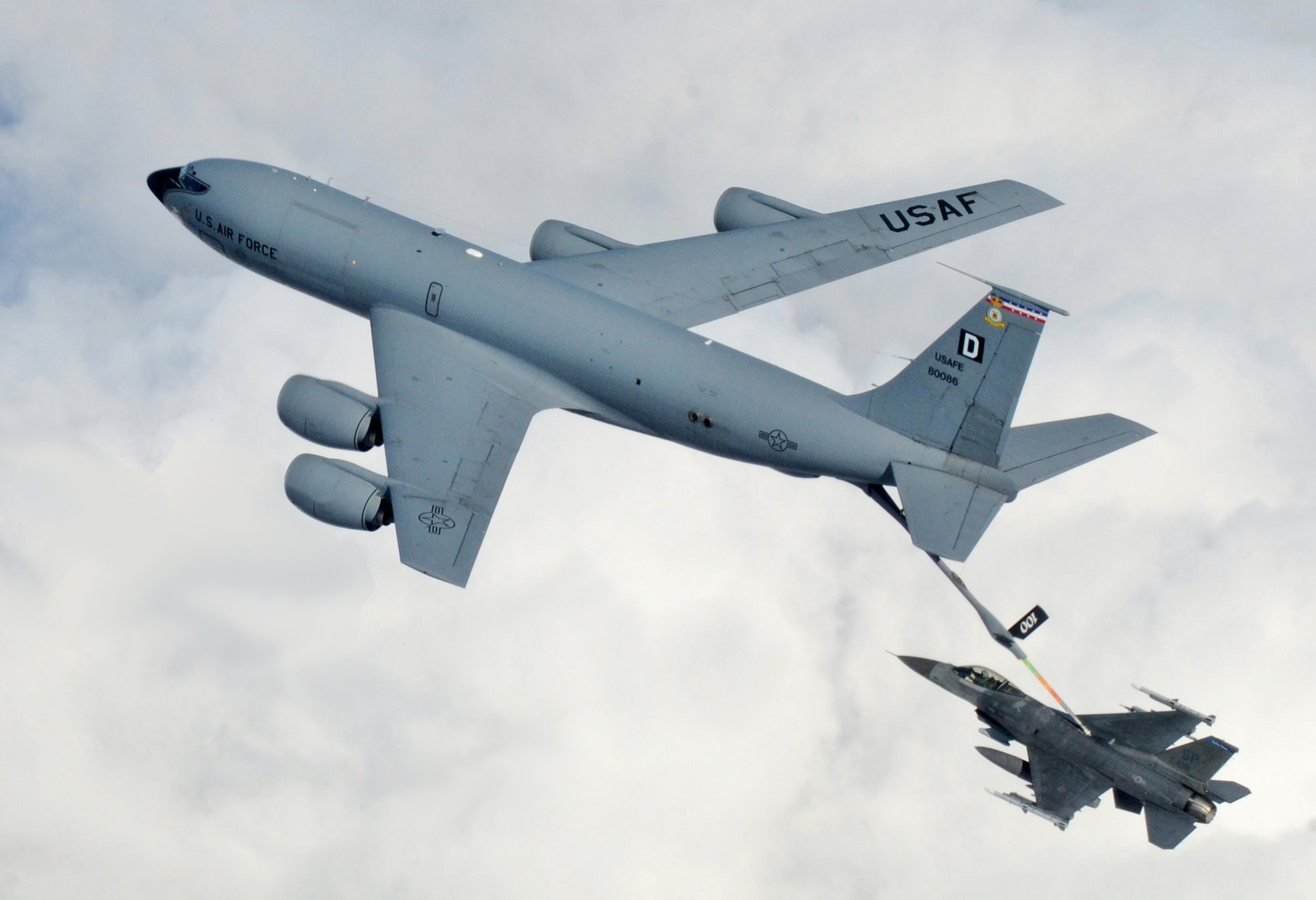
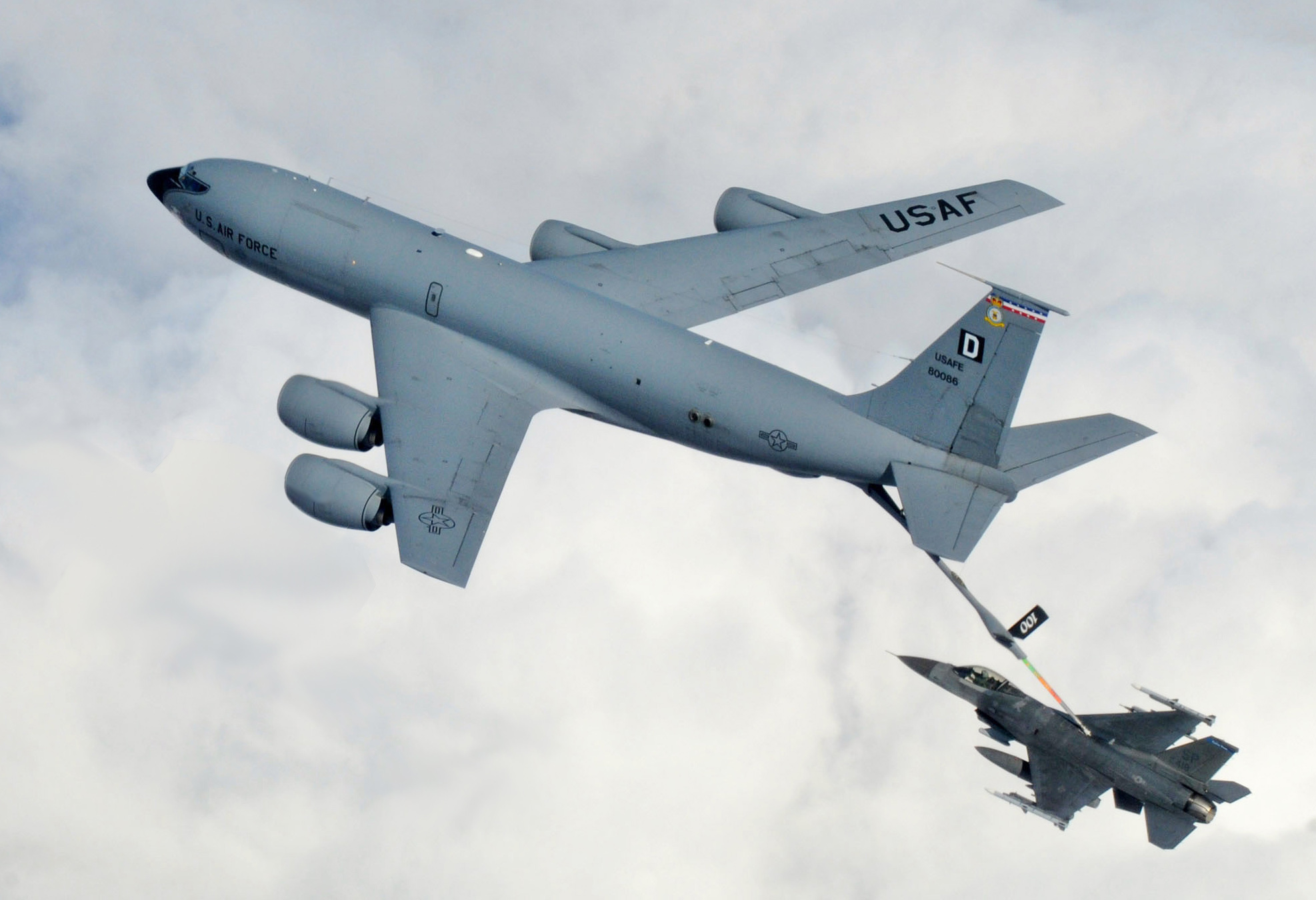
UPDATED: Kuwait confirms crash of several U.S. military aircraft

By Sabiu Abdullahi

The Kuwait Ministry of Defence has announced that several American military aircraft went down on Monday morning, as authorities continue to investigate the incidents.

In an official statement released through the ministry’s spokesperson, the government confirmed that every crew member on board the affected aircraft survived.

“In a statement issued by the ministry’s official spokesperson, authorities said all crew members aboard the affected aircraft were successfully rescued.”

The spokesperson stated that emergency teams moved swiftly after the crashes. He said search and rescue operations commenced without delay. Medical teams evacuated the crews to hospital facilities for examination and treatment. He added that their condition remains stable.

The ministry also disclosed that it established direct contact with United States forces over the matter. It confirmed that both sides initiated joint technical steps in response to the crashes. However, officials did not state the exact number of aircraft involved. They also withheld details about the crash sites and the missions underway at the time.

The spokesperson said the appropriate authorities are continuing investigations to establish the cause of the incidents. He urged the public to rely on verified official information.

The crashes occurred amid heightened military confrontation in the region. After the United States and Israel carried out airstrikes on Iran that struck Tehran and other cities and resulted in the deaths of senior leaders, including Supreme Leader Ayatollah Ali Khamenei, Tehran promised retaliation.

Iran responded within hours. It launched multiple missiles and drones at American military installations across the Gulf.

The United States maintains forces and equipment in several Gulf countries. These include Kuwait, Bahrain, Qatar, and the United Arab Emirates. Iranian forces targeted bases in those nations in a show of reach across the Middle East.

Explosions were reported near the U.S. Fifth Fleet headquarters in Manama, Bahrain. In Kuwait, Al Salem Air Base came under attack. In Qatar, Al Udeid Air Base, the largest American military facility in the region, was also struck. Missiles targeted Al Dhafra Air Base in the United Arab Emirates.

The strikes triggered alarm across the Gulf region. Smoke rose over parts of affected areas, and warning systems activated at U.S. facilities.

The escalation has intensified fears of a broader conflict. Gulf states that host American forces have found themselves drawn into the crisis, despite not taking part in the initial strikes on Iran.

Lamine Yamal sends message of sympathy over death of Ali Khamenei

By Sabiu Abdullahi

Young Barcelona star Lamine Yamal has reacted to the passing of Iran’s top religious figure, Ali Khamenei, with a message of condolence.

The footballer shared a brief statement in which he expressed support for the people of Iran and others affected by the loss.

“Heartfelt condolences to the Iranian people and all those grieving the loss of Ayatollah Ali Khamenei. Wishing you strength and peace in these sorrowful days. 🙏❤️”

The message has joined a growing number of reactions from public figures across the globe, as tributes continue to pour in following the reported death of the Iranian leader.

Ummah Movement condemns U.S.-Israel strikes on Iran, warns of looming global war


By Uzair Adam

The Ummah Movement has condemned what it described as an unprovoked and premeditated joint military attack on the Islamic Republic of Iran by the United States and Israel, warning that the action could trigger a wider regional and global conflict.

In a statement signed by its National Amir, Prof. Muhammad Babangida, on Sunday, the group expressed shock over the reported simultaneous strikes carried out on Saturday, 28th February 2026.

The movement said it was saddened that U.S. President Donald Trump and Israeli Prime Minister Benjamin Netanyahu allegedly chose the holy month of Ramadan to launch what it termed “criminal aggression” against Iran.

It also referenced the ongoing war in Gaza, claiming that more than 70,000 lives had been lost in previous joint military actions.

According to the group, the attack on Iran was launched despite what it described as ongoing negotiations in Geneva, which it alleged were used as a cover for regime change.

The Ummah Movement said the action was capable of igniting a broader regional confrontation with “unlimited disastrous consequences.”

The statement further condemned what it called the assassination of Iran’s Supreme Leader, Ayatollah Kharana’i, and other senior officials.

“This is a cowardly act which sets a dangerous precedence in conflicts between nations,” the group stated, accusing the United States and Israel of disregarding international laws and conventions in pursuit of expansionist goals.

The movement called on the Nigerian Federal Government to publicly denounce the strikes and review any existing military agreements with the United States and Israel.

It also urged Muslim-majority countries in the Middle East to shut down U.S. military bases within their territories and expel American troops as a step toward restoring peace in the region.

The group warned that failure by Muslim countries to act promptly could lead to a wider global confrontation, potentially drawing in Russia and China on the side of Iran, particularly if the conflict disrupts global fuel supplies in the Gulf.