Iran

World leaders raise alarm over U.S.–Iran crisis, EU urges restraint

By Sabiu Abdullahi

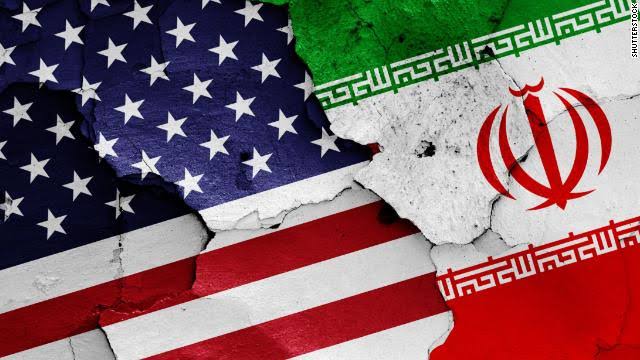
Leaders across Europe have expressed deep concern over the rising tensions involving Iran, following recent military actions by United States and Israel.

In a statement, top officials of the European Union, including Ursula von der Leyen, described the situation as “greatly concerning.” They called for restraint, protection of civilians, and adherence to international law.

The bloc stressed that dialogue remains essential. It stated that diplomatic and negotiated solutions are key to preventing a broader conflict in the Middle East. Concerns were also raised about nuclear safety and the stability of the region.

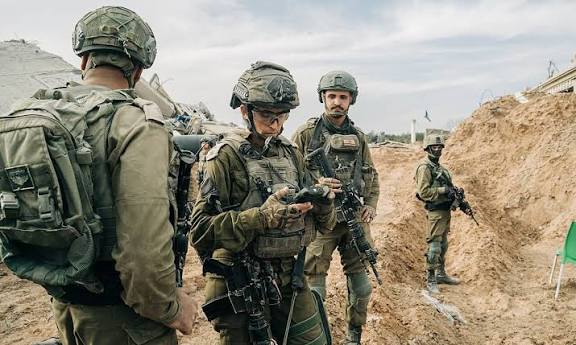
The crisis intensified on Saturday, February 28, when U.S. and Israeli forces carried out joint airstrikes on Iranian targets. The operation marked a sharp escalation tied to disputes over Iran’s nuclear and missile programmes.

Iran responded shortly after with missile strikes on American and Israeli military positions in the region. The attacks led to casualties, including civilians, and triggered widespread international reactions.

European leaders reaffirmed existing sanctions on Iran. These measures target individuals linked to repression and activities seen as destabilising. Several EU member states warned against further escalation and urged a return to diplomatic engagement.

Reactions from other parts of the world reflected similar concerns. France called for an urgent meeting of the United Nations Security Council. It warned that the strikes could threaten global peace. The United Kingdom also cautioned against a wider regional war. It maintained that Iran must not acquire nuclear weapons, while emphasising the need for restraint.

Countries in the Gulf region voiced fears that the conflict could spread beyond its current scope. They warned of possible disruptions to energy supplies and the risk of large-scale displacement of people.

The impact is already being felt. Air travel across the Middle East has faced interruptions, while oil markets have shown signs of instability.

Within Iran, tension remains high among the population. Some groups fear that the situation could develop into a larger conflict.

Leaders from Europe, Australia, and other regions continue to call for calm. They insist on protecting civilians and upholding international law, even as the situation evolves rapidly.

Iran launches retaliatory strikes on Israel, US bases across Middle East

By Sabiu Abdullahi

Iran has carried out retaliatory attacks following earlier strikes by the United States, targeting Israel and several American military installations across the Middle East, including in Qatar, Bahrain, Kuwait and the United Arab Emirates.

The escalation has disrupted air travel across the Gulf region. Several countries shut their airspace, which led to the cancellation and delay of hundreds of international flights.

According to Al Jazeera, authorities in Bahrain confirmed that a missile strike targeted the headquarters of the US Navy’s Fifth Fleet. In Qatar, the defence ministry said its Patriot air defence system intercepted an Iranian missile.

Meanwhile, Reuters reported that a loud explosion was heard in Abu Dhabi.

Prior to the escalation, Iran had warned that it would strike American interests in the region if attacked. Reports indicate that several of the targeted bases had already been evacuated, as the US anticipated a possible response.

Iran’s Islamic Revolutionary Guard Corps confirmed that it launched missiles and drones towards Israel. In a statement cited by Al Jazeera, Iran’s Ministry of Foreign Affairs said Israeli strikes earlier in the day hit the country’s “territorial integrity and national sovereignty, including defensive infrastructure and non-military locations in various cities across the country.”

“The renewed military aggression by the United States and the Zionist regime against Iran constitutes a violation of international law and the principles of the United Nations Charter. The Islamic Republic of Iran considers this aggression a clear breach of international peace and security and emphasises that it reserves its legitimate right to respond decisively.

“The Iranian nation has always demonstrated patience and restraint to prevent escalation and preserve regional stability,” it read, adding that the armed forces stand “fully prepared to defend the country and will make aggressors regret their actions.”

Iran also described the attacks by the US and Israel as a “clear example of armed aggression,” while referencing Article 51 of the United Nations Charter, which affirms its right to self-defence.

“History shows that Iranians have never surrendered to aggression. This time as well, Iran’s response will be decisive, and aggressors will regret their hostile actions,” the statement added.

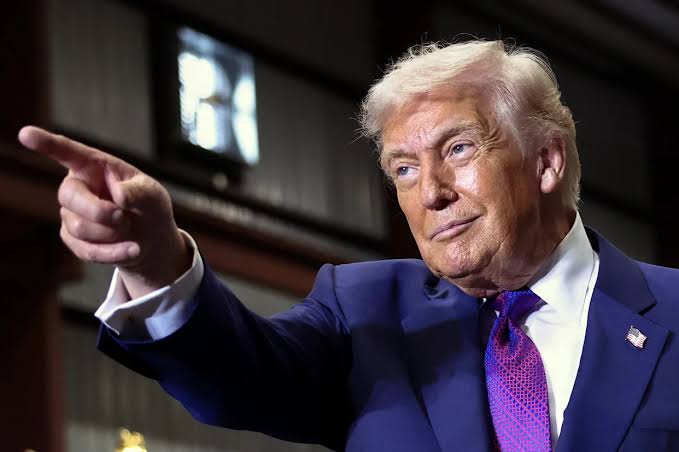
Earlier, US President Donald Trump warned that American casualties could occur as the conflict unfolds.

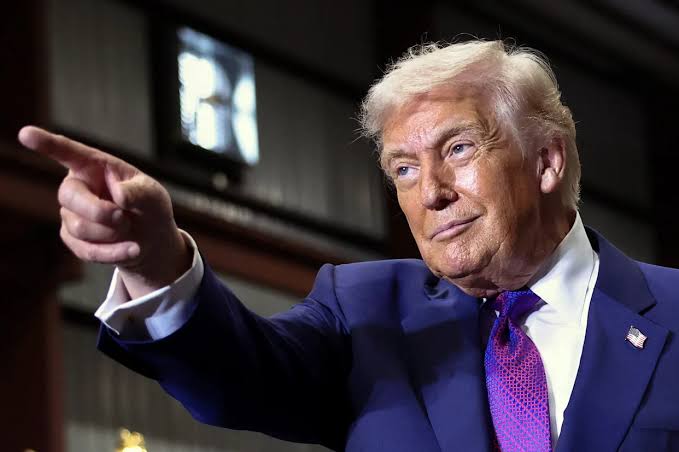
“The Iranian regime seeks to kill. The lives of courageous American heroes may be lost, and we may have casualties — that often happens in war — but we’re doing this not for now. We’re doing this for the future, and it is a noble mission,” he said in a video message released after the joint US-Israeli strikes on Iran.

He also suggested that the objective includes a possible change in Iran’s leadership.

“When we are finished, take over your government. It will be yours to take. This will be probably your only chance for generations,” the president said, addressing protesters in Iran.

The latest confrontation comes shortly after indirect talks between Iran and the United States over Tehran’s nuclear programme. The timing mirrors a similar development last June, when Israel launched attacks during ongoing negotiations.

Tensions had been building in the region. Several countries, including allies of the US, cautioned against military action, warning that it could destabilise the Middle East.

Both Iran and Israel have now closed their airspace, while air raid sirens continue to sound in Israel. Authorities there have advised residents to seek shelter.

On Friday, countries such as the United States, China and the United Kingdom urged their citizens to leave Iran and Israel due to growing fears of a wider conflict. The US also advised its citizens in Gulf states like Qatar and Bahrain to remain indoors.

This marks the second major confrontation between Iran and Israel in less than a year. The previous clash in June resulted in a 12-day conflict that caused hundreds of deaths and widespread damage on both sides. The United States later joined Israel in striking Iranian targets.

In recent weeks, the US had increased its military presence in the region, deploying additional aircraft and naval assets ahead of the latest strikes despite warnings from global leaders.

The situation remains fluid, and further developments are expected.

Israel shuts airspace after launching ‘unprovoked’ strikes on Iran

By Sabiu Abdullahi

Israel has closed its airspace to civilian flights following a military operation against Iran, as tensions escalate across the region.

Authorities in Israel confirmed on Saturday that the action followed what officials described as a preemptive strike on Iran. Air raid sirens were activated in Jerusalem, while residents across the country received emergency alerts warning of an “extremely serious” threat.

In a statement, the defence ministry said: “The State of Israel has launched a preemptive strike against Iran.

“Defence Minister Israel Katz has declared a special and immediate state of emergency throughout the country.”

In Iran, witnesses reported explosions in the capital, Tehran. Two loud blasts were heard, and thick smoke was seen rising from parts of the city.

Iranian news outlet Fars suggested the nature of the incident. “The type of explosions suggests that this is a missile attack,” the agency reported.

Following the development, Israel announced a complete shutdown of its airspace. The country’s transportation minister, Miri Regev, said: “Following the security developments, the Minister of Transportation has ordered the Director of the Israel Civil Aviation Authority to close the airspace of the State of Israel to civilian flights.”

Iran also took a similar step. Its Civil Aviation Organisation confirmed that flights have been suspended nationwide. “The airspace of the entire country is closed until further notice,” a spokesman said.

The situation has prompted precautionary measures beyond the two countries. In Qatar, the United States embassy directed its staff to remain indoors as a safety measure.

The latest developments have raised fears of a wider confrontation, with both countries taking urgent steps to secure their territories.

JUST IN: Iran vows ‘crushing’ retaliation after US, Israel strikes

By Sabiu Abdullahi

Iran has threatened to launch a strong response following recent military strikes carried out by the United States and Israel, warning that any retaliation would be “crushing”.

Explosions were reported on Saturday in several Iranian cities, including Kermanshah, Lorestan, Tabriz, Isfahan and Karaj, raising fears of a widening conflict in the region.

Israel’s Defence Minister, Israel Katz, defended the operation. He said: “The State of Israel launched a pre-emptive attack against Iran to remove threats to the State of Israel.”

The latest strikes come months after a 12-day aerial confrontation between Iran and Israel in June. The development also follows repeated warnings from Washington and Tel Aviv over Iran’s nuclear and ballistic missile activities.

An Iranian official told Reuters that authorities in Tehran are preparing a counteroffensive that would be severe in scale.

Reports indicate that Iran’s Supreme Leader, Ali Khamenei, was not in Tehran at the time of the attack. He has since been moved to a secure location.

Reacting to the strikes, the head of the National Security Commission of Iran’s parliament, Ebrahim Azizi, issued a warning to both countries. “We warned you! Now you have started down a path which end is no longer in your control,” he said.

Meanwhile, United States President Donald Trump said the action was taken to safeguard American interests.

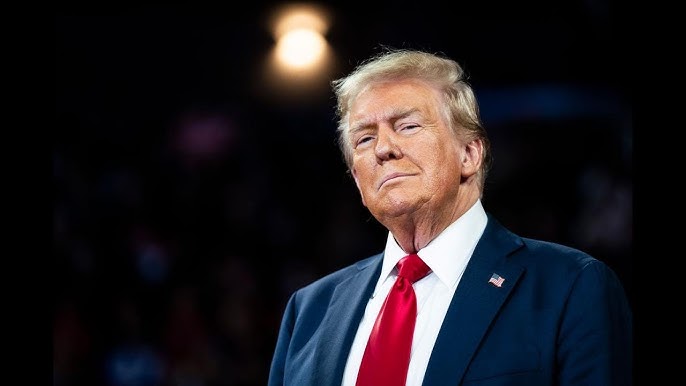
“A short time ago, the United States military began major combat operations in Iran. Our objective is to defend the American people by eliminating imminent threats from the Iranian regime, a vicious group of very hard, terrible people. Its menacing activities directly endanger the United States, our troops, our bases overseas, and our allies throughout the world,” he posted.

The situation has heightened global concern, as tensions continue to rise with both sides signalling further military action.

UK government blocks Trump from using British bases to strike Iran

By Sabiu Abdullahi

The United Kingdom government has refused to grant permission for the United States to use British military facilities for any potential strike on Iran, amid escalating tensions over Tehran’s nuclear programme.

The decision places London in a cautious diplomatic position as indications emerge that US President Donald Trump is considering military options that could involve installations located on British territory.

Reports indicate that American officials are preparing operational strategies that would depend on the joint US-UK military base at Diego Garcia in the Chagos Archipelago, as well as RAF Fairford in Gloucestershire. RAF Fairford functions as a major centre for the deployment of US heavy bombers across Europe.

Under existing defence agreements between both countries, American forces require prior approval from the British government before launching operations from UK soil. However, reports state that such authorisation has not been granted should Washington proceed with military action against Iran.

Sources within government circles attribute the hesitation to legal concerns. British authorities fear violating international law, which holds both direct actors and supporting states accountable if a military strike is later judged unlawful.

The matter reportedly featured in a telephone discussion between President Trump and UK Prime Minister Rishi Sunak on Tuesday night. Trump’s ultimatum to Iran regarding its nuclear ambitions formed a key part of the conversation.

A day later, the US president criticised the UK government’s stance on the Chagos Islands agreement. He also referenced Iran in a post on his Truth Social platform, where he suggested American forces might need access to the bases if Tehran refuses negotiations.

“Should Iran decide not to make a Deal, it may be necessary for the United States to use Diego Garcia, and the Airfield located in Fairford, in order to eradicate a potential attack by a highly unstable and dangerous Regime,” Mr Trump wrote.

He added that such a move would aim to prevent “an attack that would potentially be made on the United Kingdom, as well as other friendly countries,” suggesting that British involvement could fall under self-defence if Iran poses a direct threat.

Meanwhile, the UK government has reaffirmed its commitment to moving forward with the Chagos Islands agreement despite signals of unease from Washington.

Justice Minister Alex Davies-Jones confirmed that the necessary legislation will return to Parliament once scheduling allows. The proposed bill had earlier been withdrawn from debate in the House of Lords after a Conservative-backed amendment called for a pause, citing “changing geopolitical circumstances.” Fresh delays were also reported as a possibility.

The situation highlights growing diplomatic strain as Britain attempts to preserve its strategic alliance with the United States while addressing legal and political sensitivities tied to any direct role in a potential conflict with Iran.

Nigeria felicitates Iran on Islamic Revolution anniversary, reaffirms diplomatic relations

By Sabiu Abdullahi

The Federal Government of Nigeria has congratulated the Islamic Republic of Iran on the anniversary of its Islamic Revolution, describing the occasion as an important landmark in the country’s contemporary history.

This was contained in a statement released on Wednesday by the Ministry of Foreign Affairs and signed by its spokesperson, Kimiebi Imomotimi Ebienfa.

“The Federal Government of Nigeria extends warm congratulations to the Government and people of the Islamic Republic of Iran on the occasion of the anniversary of the Islamic Revolution,” the statement read.

Nigeria said the commemoration reflects Iran’s “enduring commitment to sovereignty and national development.”

The ministry stated that Nigeria acknowledges the importance of the anniversary to Iranians. It also recognised their “continued pursuit of progress, stability and prosperity.”

According to the statement, Nigeria and Iran have sustained diplomatic relations for more than five decades. It explained that the relationship has been anchored on mutual respect, shared interests and constructive engagement.

The ministry added that both nations continue to work together at bilateral and multilateral levels. Their cooperation covers political, economic, cultural and technical fields. It said this engagement demonstrates a shared dedication to peaceful collaboration and global partnership.

Nigeria used the occasion to restate its resolve to deepen diplomatic relations with Iran through dialogue and mutually rewarding cooperation.

“The Federal Government of Nigeria conveys its best wishes to the Government and people of Iran for continued peace, stability and prosperity,” the statement added.

We’ll do ‘something very tough’ if US demands are mot met, Trump threatens Iran

By Sabiu Abdullahi

Tensions between the United States and Iran have escalated after US President Donald Trump warned that Washington could resort to military action if Tehran fails to comply with its demands on key security issues.

In remarks made to Israeli broadcaster Channel 12 and published on Tuesday, Trump suggested that the United States was prepared to act forcefully if ongoing efforts to reach an agreement with Iran collapse.

“Either we reach a deal, or we’ll have to do something very tough,” Trump told the news outlet.

His warning came at a time when Iran’s security chief, Ali Larijani, held talks with Oman’s Sultan, Haitham bin Tariq Al Said. Their meeting focused on the outcome of recent discussions between American and Iranian officials.

In the past few weeks, Trump has highlighted the expansion of US military deployments around the region. He disclosed that a “massive armada” had been dispatched to nearby waters. The deployment includes the aircraft carrier USS Abraham Lincoln. Reports by Channel 12 and Axios also indicated that Washington is weighing the option of sending a second aircraft carrier to the Middle East.

The growing military presence has raised fears of a possible US strike on Iran. Critics argue that such action could further destabilise an already fragile region. Earlier on Monday, the United States issued fresh guidance to commercial vessels flying its flag. The advisory urged them to remain “as far as possible” from Iranian territorial waters.

‘With Speed And Violence’

Since January, Trump has intensified pressure on Tehran. He warned that the US military is “locked and loaded and ready to go”.

He drew parallels between Iran and Venezuela, where a US military mission on January 3 led to the removal of former President Nicolas Maduro.

“Like with Venezuela, [the US military] is ready, willing, and able to rapidly fulfill its mission, with speed and violence, if necessary. Hopefully Iran will quickly ‘Come to the Table’ and negotiate a fair and equitable deal,” Trump wrote on social media on January 28.

Toward the end of last month, the Trump administration outlined three broad conditions for Iran. These include halting uranium enrichment, cutting ties with regional proxy groups, and restricting its ballistic missile arsenal. Israel has long pushed for such limits.

During his first presidency, Trump withdrew the United States from the 2015 nuclear agreement that imposed strict limits on Iran’s nuclear programme in exchange for sanctions relief.

After returning to office for a second term in January 2025, he reinstated his “maximum pressure” strategy against Tehran. The campaign features sweeping sanctions and demands to dismantle Iran’s nuclear programme, which Iranian authorities insist is strictly for civilian energy use.

Last June, Trump approved military strikes on three Iranian nuclear facilities during a 12-day conflict involving Iran and Israel.

Focus On Anti-Government Protests

Trump’s renewed threats have coincided with a fresh wave of anti-government protests inside Iran.

Authorities in Tehran responded with a violent crackdown that reportedly left thousands dead. The development drew condemnation from international human rights organisations.

Reports indicated that security forces fired live rounds at demonstrators during an internet blackout.

On January 2, one day before the Venezuela operation, Trump threatened to intervene in support of the protesters and “come to their rescue”, though no such action was eventually taken.

Some analysts believe that proposed US strikes on Iran would do little to assist protesters. They argue that military action would instead align with long-standing US and Israeli objectives of weakening Iran’s military strength.

Iranian officials maintain that armed groups infiltrated the protests and attacked security personnel, leading to the deaths of hundreds of officers. Tehran has also accused foreign powers, including the United States and Israel, of backing the unrest.

While many aspects of the protests remain difficult to independently verify, Iranian authorities have acknowledged that thousands were killed during the government response.

EU rejects Iran’s move to list European armies as terrorist groups


By Sabiu Abdullahi

The European Union has dismissed Iran’s decision to classify European armies as terrorist organizations, insisting that diplomatic engagement with Tehran must remain part of its foreign policy, Anadolu reports.

Responding to the announcement, EU spokesperson Anouar El Anouni told the European Commission’s midday press briefing on Monday, “We reject the announcement of listing of EU armies as such and the accusation of terrorism altogether.”

El Anouni added that the EU expects diplomatic channels to continue functioning despite rising tensions following the bloc’s decision to list Iran’s Islamic Revolutionary Guard Corps (IRGC) as a terrorist entity. He cited remarks by the EU High Representative for Foreign Affairs and Security Policy, Kaja Kallas, saying, “We expect diplomatic channels to remain open after the decision of listing IRGC as part of the EU terror list,” and stressed that “maintaining open channels with Iran must also be part and remain part of our toolbox, as part of our engagement when it is required with our counterparts.”

On the matter of Iran summoning EU ambassadors to Tehran, El Anouni described the action as “a diplomatic practice that is part of the Vienna Convention,” adding, “I will not here go into details in terms of what member states, when and how.”

Iran announced the designation of European armies as terrorist groups in retaliation after the EU applied the same label to the IRGC over its crackdown on recent protests prompted by worsening economic conditions. Iranian Parliament Speaker Mohammad Bagher Ghalibaf said on Sunday that the decision was taken under “Article 7 of the Law on Countermeasures Against the Declaration of the IRGC as a Terrorist Organisation.”

The EU has maintained that engagement with Iran is necessary, even amid disputes, to ensure continued dialogue and diplomatic relations.

Iran summons EU ambassadors over IRGC ‘terrorist’ tag

By Sabiu Abdullahi

Iran has summoned all ambassadors of the European Union in Tehran to protest the bloc’s decision to designate the Islamic Revolutionary Guard Corps (IRGC) as a terrorist organisation, a move that has further strained relations and heightened fears of a wider conflict in the Middle East.

According to the Associated Press, Iran’s Foreign Ministry spokesman, Esmail Baghaei, confirmed on Monday that the summons started on Sunday and continued into the new week. He described the EU decision as “illegal, unreasonable and very wrong.”

“A series of actions were reviewed, various options are being prepared and sent to relevant decision-making bodies,” Baghaei said. He added that Tehran would soon decide on “reciprocal measures.”

The diplomatic confrontation comes at a time when Iran is under growing international scrutiny following its violent response to nationwide protests in January. Reports indicate that thousands were killed and tens of thousands arrested during the unrest. Human rights organisations have also warned about the risk of mass executions of detainees.

Last week, the European Union agreed to blacklist the IRGC over its role in the crackdown. Although the decision is largely symbolic, it adds to economic and political pressure on Tehran because of the Guard’s deep involvement in Iran’s economy. The United States and Canada had earlier taken similar actions.

In response, Iran’s parliament speaker spoke on Sunday and said the Islamic Republic now regards all EU militaries as “terrorist groups,” referring to a 2019 Iranian law.

At the same time, military tensions in the region continue to rise. The United States has deployed the aircraft carrier USS Abraham Lincoln alongside several guided-missile destroyers to the Middle East.

While it remains uncertain whether President Donald Trump will approve military action, Washington says the deployments aim to deter further violence and safeguard international shipping routes.

“Trump is trying to calibrate a response to Iran’s mass killing of protesters that punishes Iranian leaders without dragging the United States into a new, open-ended conflict,” the New York-based Soufan Center said in a statement on Monday.

The group added that some U.S. officials want to take advantage of Tehran’s weakened position. It also noted that American conditions for diplomacy are “unacceptable” to Iran.

Regional anxiety has also increased after Iran confirmed that the Revolutionary Guard has begun a military drill in the Strait of Hormuz. The narrow waterway carries about one-fifth of the world’s oil shipments. Iran had warned shipping operators last week about planned exercises, although it initially avoided confirming their commencement.

Satellite images analysed by the Associated Press showed small, fast-moving vessels believed to belong to the Guard operating between Iran’s Qeshm and Hengam islands, away from major commercial routes.

The U.S. Central Command has cautioned Tehran against harassing naval vessels or interfering with commercial traffic.

Despite the sharp rhetoric and military movements, Baghaei sought to calm public fears. He urged Iranians not to worry about the prospect of war, although he declined to confirm whether Washington had given Tehran any deadline to meet U.S. demands.

The IRGC was formed after Iran’s 1979 Islamic Revolution to protect the clerical system. Over the years, it has grown into a powerful military, political and economic force. Its Basij militia faces widespread accusations of leading the violent suppression of recent protests. Leaked videos have shown armed men beating and shooting demonstrators after authorities shut down internet and phone services across the country.

China, Russia, Iran Sign Strategic Pact Amid Rising US-Iran Tensions

By Sabiu Abdullahi

China, Iran, and Russia have formalized a wide-ranging strategic agreement, a development experts say could shift global power balances and heighten tensions with the United States.

The pact was announced simultaneously in Tehran, Beijing, and Moscow. Officials from the three countries described it as “a cornerstone for a new multipolar order.”

While the full text is being gradually released, authorities confirmed that the agreement covers collaboration in energy, trade, military coordination, and diplomatic strategy.

Iranian state media cited officials saying the pact reflects a joint commitment to “mutual respect, sovereign independence and a rules-based international system that rejects unilateral coercion.” Beijing and Moscow issued similar statements, highlighting their shared opposition to Western dominance.

This trilateral agreement builds on years of close bilateral ties. In January 2025, Iran and Russia signed a 20-year Comprehensive Strategic Partnership Treaty to strengthen economic and defense cooperation and counter Western sanctions. That treaty became effective last year.

Iran and China had also signed a 25-year cooperation deal in 2021, aimed at expanding trade, infrastructure, and energy cooperation.

What sets this new pact apart is that it explicitly unites all three countries under a coordinated framework. Unlike previous bilateral agreements, the pact aligns them on issues such as nuclear sovereignty, economic resilience, and military coordination.

No Formal Defence Commitment

Officials emphasized that the agreement is not a mutual defense treaty like NATO’s Article 5, which obligates members to defend one another militarily.

Past agreements between Iran and Russia did not include such guarantees, and this pact follows the same cautious approach. Analysts say it signals a political and strategic alignment intended to counterbalance US influence, resist sanctions, reduce dependence on Western financial systems, and expand regional influence.

The signing comes as tensions rise between Iran and the United States. Washington has accused Tehran of enriching uranium beyond the limits of the 2015 Joint Comprehensive Plan of Action (JCPOA). The Trump administration withdrew from the JCPOA in 2018 and reimposed sanctions that have severely impacted Iran’s economy.

Attempts to revive the deal have repeatedly stalled. Talks in Oman and Rome in 2025 ended without an agreement, deepening mistrust. US military deployments in the Gulf, including the aircraft carrier USS Abraham Lincoln, have also raised fears of escalation.

Inside Iran, protests that began in December 2025 over economic hardship have added domestic pressure. Iranian authorities accused foreign actors of fueling unrest, citing statements by US President Donald Trump in support of demonstrators as interference in domestic affairs.

Strategic Implications

For Tehran, the pact offers economic relief and strengthens deterrence against military threats by deepening ties with Russia and China.

For Moscow and Beijing, the agreement provides access to Iran’s energy resources and strengthens their capacity to challenge US alliances in the Middle East and Indo-Pacific. Both countries have expanded military cooperation with Iran, including joint naval exercises in the Gulf.

For the United States and its allies, the pact complicates efforts to isolate Iran. Gulf states, wary of Tehran’s ambitions, fear the agreement could embolden Iran and destabilize the region further.

Experts caution, however, that the pact has limits. Russia and China remain cautious about overcommitting, mindful of possible US retaliation. Iran’s ongoing economic challenges and domestic unrest could also hinder its ability to meet obligations. Without a formal defense guarantee, Tehran remains vulnerable to confrontation with the US or Israel.

Much will depend on whether Moscow and Beijing risk deeper involvement in Iran’s disputes with the West. For now, the agreement strengthens Tehran’s diplomatic position, even as tensions with Washington persist.