Insecurity

N/Assembly urges China to help Nigeria rescue abducted train passengers

By Uzair Adam Imam 

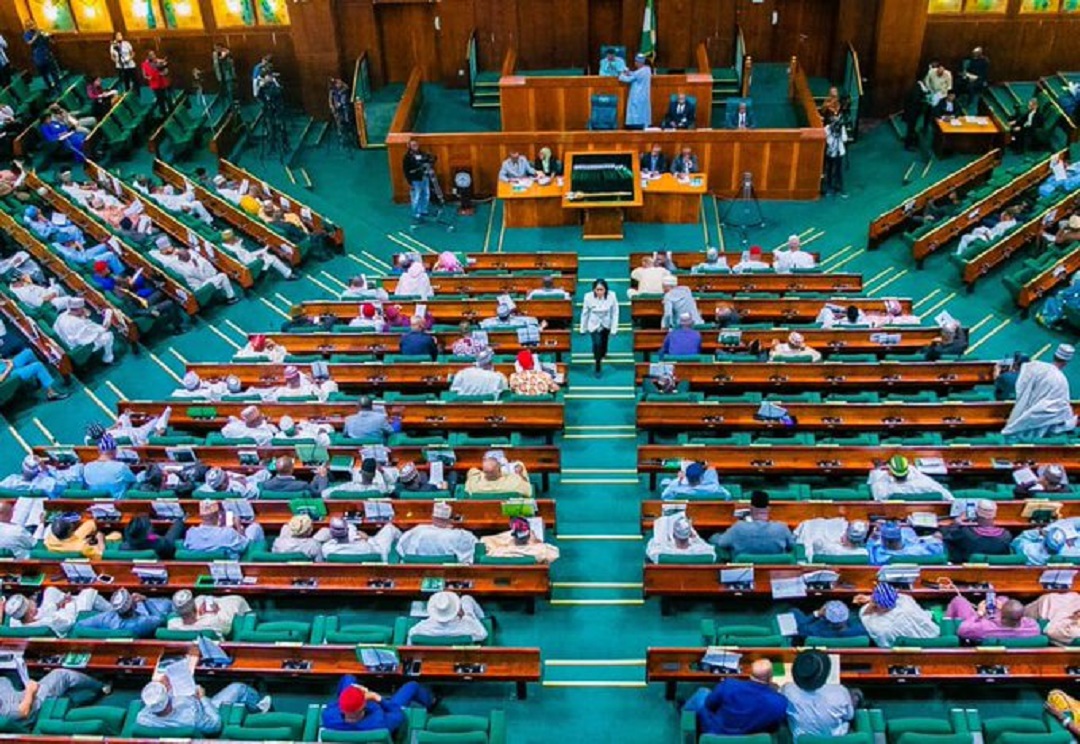
The National Assembly urged the Chinese government to help Nigeria rescue the Abuja-Kaduna abducted train passengers.

Today marks exactly 45 days since the 62 passengers were attacked and abducted while in transition on March 28, 2022.

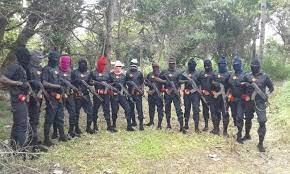
The Daily Reality reported how bandits stormed the Abuja-Kaduna train, gunned down eight people and abducted over sixty people in March. 

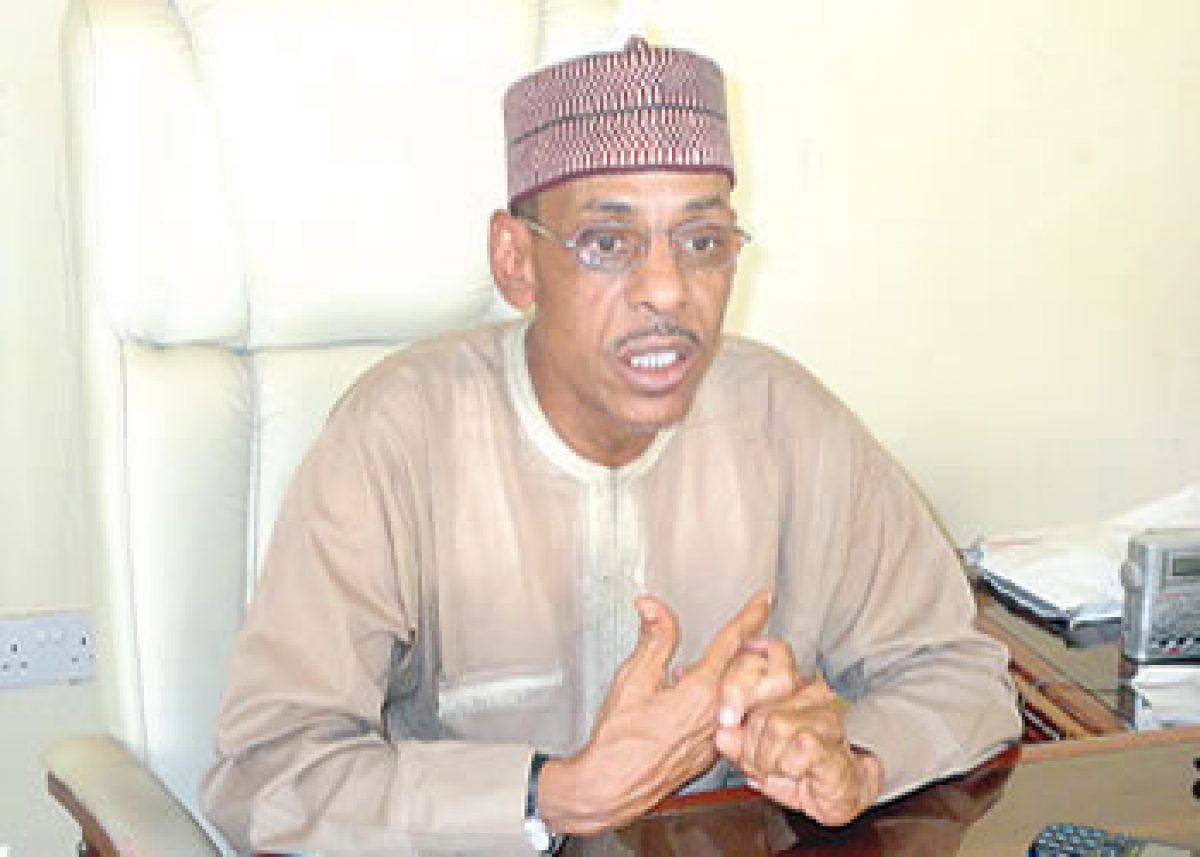
The Chairman Senate Committee on Land Transportation, Senator Abdulfatai Buhari, expressed sadness over the failure to rescue the victims 45 days after.

Also, the people concerned have shown great sadness over the government’s failure to rescue their loved ones and threatened that the train service must not resume until those abducted have regained freedom. 

The lawmaker representing Oyo North in the National Assembly decried that the attack had created fear in the minds of Nigerians who had started embracing the railway.

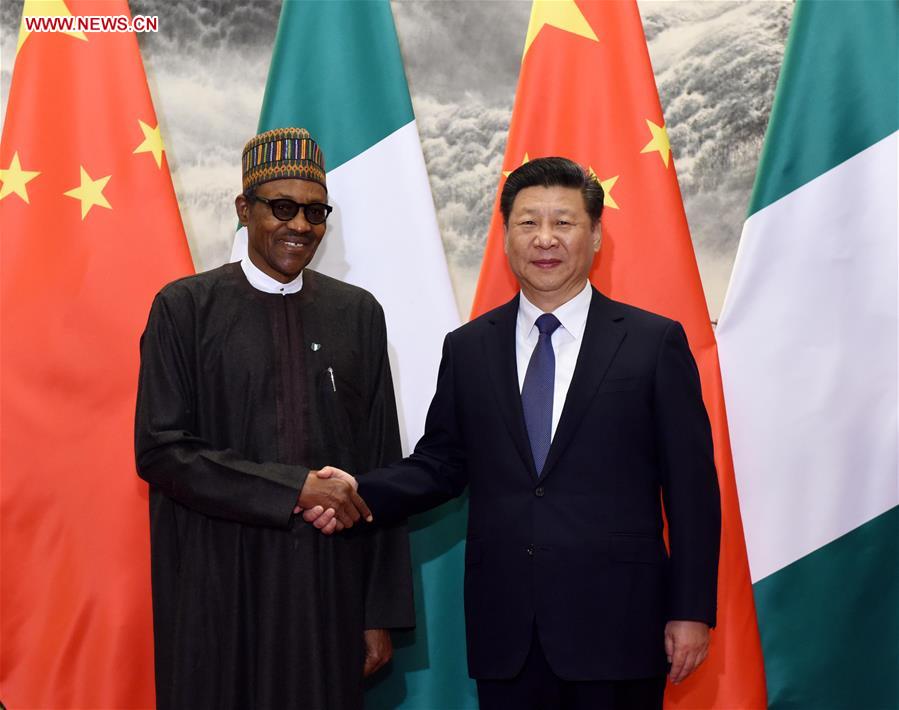
He said, “The Chinese government makes money from the many rail projects that are being handled by CCECC in Nigeria, so asking them to help us is not out of place.

“Nigerians are no longer ready to listen to the number of passengers that have been carried by the trains since they were commissioned. Nigerians are not interested in what has been put in the various stations by the CCECC. What we want to hear now is the effort being put into rescuing those people in captivity.

“If a Chinese national was among those people abducted, we know that the Chinese government would have come to rescue him.

“I remember when an American was kidnapped, the Americans came and took him away from where he was held captive. We know that with the level of technology that the Chinese have, even without leaving Beijing, they can help us track where these people are, or even give us enough intelligence that would aid their rescue,” he added. 

Almajiri and the road to Armageddon: Nafisa Abdullahi is right

By Aminu Mohammed

I have observed the raging debate over the Almajiri debacle in the last few days, especially the antagonism against a Kannywood actress Nafisa Abdullahi. The actress voiced out against parents who send their children to urban centres to memorise the Quran under the guise of an Almajiri system.

This issue resonates with me because I was once an “Almajiri”, though in a modernised form of learning. I was a product of Arabic and Islamic education. I am still grateful to my late father for seeing the wisdom in sending me to the College of Islamic Studies Afikpo, a boarding secondary school in Southeastern Nigeria funded by a Saudi Arabia-based International Islamic organisation Rabita Alamul Islam (the Muslim World League). Unlike some of my schoolmates who later studied Islamic studies at Islamic University Madina and Azhar University Cairo, Egypt, I decided to study International Studies at the Ahmadu Bello University, Zaria, against my father’s wish, whose dream was for me to be an Islamic scholar.

I am still at a loss wondering why the actress is being pilloried for telling the truth. If you ask these intellectual lilliputians and Nafisa’s traducers whether they will be comfortable sending their children out to beg on the streets under the guise of Quranic education, they will never say yes.

Before you call me “Karen farautar yahudawa”, an agent of Jews, which our people are fond of calling those who seek societal change and are in tune with modern realities, let me clarify that I did not attend a conventional secondary school. I advocate an integrated education system involving the acquisition of both western and Islamic education. 

I will never advocate against memorising the Quran or acquiring Islamic knowledge because I was a beneficiary of that. At the boarding secondary school in Afikpo, Ebonyi state, we were taught Hadith, Fiqh, Balaga, Tafsir, Tajwid, Saqafa, Sirat, Ulumul Falsaf, Sarf and Nahw, among other subjects, by some Islamic scholars mainly from Pakistan, Egypt and India. I was able to speak Arabic with confidence on completing my secondary education. I even took some Arabic courses as an elective throughout my studies in Zaria. Even here in Germany, I still communicate with my neighbours from the Middle East in Arabic.

I am not worried that this article will generate antagonism in some quarters or be pilloried for triggering anger in some folks. But the truth of the matter is that we cannot continue on this trajectory. This system can no longer continue the way it is; otherwise, we may be heading towards the precipice. 

The word Almajiri is derived from the Arabic word “Almuhajirun”, meaning a person who migrates from his locality to other places in the quest for Islamic knowledge. During the colonial era and a few years after that, the schools were maintained by the state, communities, the parents, ‘Zakkah’, ‘Waqf’ and augmented by the teachers and students through farming.  “Bara”, begging as it is known today, was completely unheard of. 

Mallams and their pupils, in return, provide the community with Islamic education, reading and writing of the Qur’an, in addition, to the development of Ajami, i.e. writing and reading of the Hausa language using Arabic Alphabets.  Based on this system, which is founded upon the teachings of the Qur’an and Hadith, the then Northern Nigeria was broadly educated with a whole way of life, governance, customs, traditional craft, trade and even the mode of dressing.

However, the system was corrupted in the past few decades, with teachers sending the children to beg for food on the streets. Similarly, many irresponsible parents were unwilling to cater to their children. Thus, they send them away to cities to purportedly acquire quranic education.

The current Almajiri system is not only archaic but atavistic. We must tell ourselves the truth that society is drifting. What we are facing today regarding security challenges in the North will be child’s play if our people refuse to change their ways. There is no gainsaying that the future is bleak if what we can boast of is an armada of malnourished and unkempt children who are roaming the streets under the guise of Islamic education. Eventually, the children may not acquire any meaningful skills to become useful members of society. 

I am not a prophet of doom and derive no joy in pessimism. But, I do not see a bright future for a region struggling with a depleted human resource, coupled with millions of underage children clad in tattered clothes with bowls roaming the streets begging for food. I do not foresee any meaningful progress and development in such a society.

I still recall, in 2012, when former President Goodluck Jonathan visited Sokoto to inaugurate the Almajiri Integrated Model School in the Gagi area of the Sokoto metropolis. This boarding school was equipped with modern facilities. As a journalist working with THISDAY Newspaper then, I was there at the commissioning and even interviewed the school’s principal Malam Ubaidullah, a few months after the inauguration. I was excited that there would be a gradual process of taking Almajiris off the streets, as was promised by former Sokoto governor Senator Aliyu Magatakarda Wamakko. However, the euphoria was short-lived as governments in the region neglected the programme while the school buildings rotted away.

I wonder why our people antagonise those who want the system to be reformed or outrightly banned in the North. Are we comfortable seeing underage children roaming the streets under such dehumanising conditions? Have we pondered over the looming famine in the Sahel as forecasted by global development organisations, of which Northern Nigeria is part due to climate change worsened by overpopulation? Are we not witnessing the level of insecurity pervading the region because of societal neglect and marginalisation caused by a rapacious elite?. Do we sit down and pray and wait for a miracle to happen while expecting that our problems will go away?

Already we are battling with banditry in the Northwest due to societal neglect of a segment of the society that we use to mock because of their ignorance. And things will even get worse in future unless drastic action is taken to reform the system to enable children to memorise Quran in a friendly atmosphere devoid of hunger and deprivation. The current Almajiri system is a pathway to perdition.

Parents should stop sending children to cities if they are not ready to cater for them. These children should stay in their localities and learn under a school system presided by their Islamic teacher or Malam. The state governments must engage those Quranic teachers and pay them a stipend. I know this is doable because the government has the means to do that.

Unfortunately, much resource has been wasted on frivolities instead of channelling it towards revitalising the Almajiri system. We must wake up from our slumber and direct our energies toward finding a way to tackle problems in our society. Taking action is the key, and I believe that is the only way we can expect to have stability and peace in the polity.

Aminu Mohammed is at the school of Sustainability, Christian- Albrechts- Universität zu Kiel, Schleswig Holstein, Germany. He can be reached via gravity23n@gmail.com or stu219013@mail.uni-kiel.de.

Reforming the Almajiri system: More action, less talking

By Khairat Suleiman Jaruma

It took too long for us to realize that one of our biggest problems in northern Nigeria is the Almajiri system, even though we still have a few slowpokes that believe there isn’t anything wrong with the archaic and inhumane system.

We have criticized and blamed the system enough. It’s high time we started doing more action and less talking. But how do we go about it? Can we stop the influx of children into the system? Completely? No, but to a very reasonable extent, yes. But, how do we deal with those in the system already? You might say they should be taken back to their parents, and you are not wrong, but some can’t even remember their parents or where they come from. We also have those who have lost their families and villages due to banditry and terrorism. So, how do you go about it?

Baffah (2022) explained, “The best way to check the Almajiri system is to empower local governments. When you create wealth at the local level, rural to urban migration becomes unattractive, economic equality is everything”. But there is more to do than just this.

It is almost impossible to abolish the Almajiri system, and previous – and even ongoing – efforts to ban it failed woefully. What the Almajiri system needs are sustainable reforms, as opposed to the white elephant reforms that have been made in the past.

NexTier SPD suggests government must adopt the Child Right Act, which is an effort by UNICEF to protect children and ease the prosecution of violators of child rights. It is equally vital that the government criminalizes the movement of Almajiris from one place to another. In addition, begging and child labour should be banned entirely.

Also, the government must work with informal structures such as religious and traditional institutions to support and promote reforms by emphasizing the gain of a reformed Almajiri system to individuals, parents, and the society at large while discouraging incessant childbirths and implementing childbirth control policies.

The importance of religious leaders and traditional stakeholders in sustainable Almajiri reforms can’t be overemphasized. But, it’s also essential that, as individuals, we stop using Almajiris as henchmen for committing heinous crimes or as a source of cheap labour.

Khairat Suleiman Jaruma wrote from Kaduna via khairatsuleh@gmail.com.

Killings: Reps urge for joint security intervention at Taraba, Plateau borders

By Uzair Adam Imam 

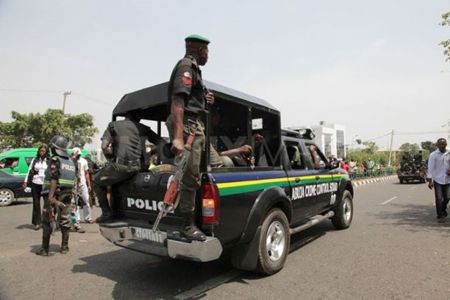
The House of Representatives decried the incessant security challenge in communities bordering Taraba and Plateau states, urging the Chief of Defence Staff, Gen. Leo Irabor, to begin joint security operations in the areas. 

This reportedly followed the adoption of a motion by a member from Taraba State, Abdulsalam Mubarak.

Mubarak raised an urgent need to mitigate the security challenge of banditry and kidnapping in the areas.

He lamented that banditry in the areas had skyrocketed with several reported cases of killings, rape and kidnappings.

However, the House also pleaded with the Ministry of Humanitarian Affairs, Disaster Management and Social Development and the North East Development Commission to assess the damage cost by banditry and provide palliative to the victims.

Insecurity is one of the menacing challenges that militate against peace in communities bordering Taraba and Plateau and the entire northeastern and northwestern parts of the country. 

Several hundreds of people were reported dead due to the insecurity, with many others kidnapped, raped or displaced. 

Northern elders ask Buhari to resign over incessant security challenge 

By Uzair Adam Imam 

The Northern Elders Forum (NEF) has demanded the immediate resignation of President Muhammadu Buhari over the incessant security challenge bedevilling the northwestern part of the country. 

The Director, Publicity and Advocacy of NEF, Dr. Hakeem Baba-Ahmed, made the call on Tuesday saying that Nigerians cannot continue to live and die under the dictates of bandits.

Baba-Ahmed lamented that Nigerians had shed enough tears and blood without an appropriate response from those with responsibilities to protect us.

He added that President Buhari’s administration does not appear to have answers to the challenges of security to which Nigerians are exposed. 

He stated that “We cannot continue to live and die under the dictates of killers, kidnappers, rapists and sundry criminal groups that have deprived us of our rights to live in peace and security.

“Our constitution has provisions for leaders to voluntarily step down if they are challenged by personal reasons, or they prove incapable of leading.
“It is now time for President Buhari to seriously consider that option since his leadership has proved spectacularly incapable of providing security over Nigerians. 

“Our Forum is aware of the weight of this advice, and it is also aware that we cannot continue to live under these conditions until 2023, when President Buhari’s term ends,” Baba-Ahmed said.

Is the Buhari-led government on holiday?

By Shafi’i Sheikh Jr.

I tried to resist the temptation to speak on matters that fringe around governance and government policies. This is because there are things that an observer can only see if he resists the temptation to jump into the fray and become an actor himself. But recent happenings have reawakened my enthusiasm to march to the stake like the man my mom had always desired me to be and take the bullet in the chest should the need arise. 

In 2015, we supported APC with our sweat and money chanting “change” wherever we found ourselves so much that it caught every household’s mood. Why? Because we thought a Buhari-led government would have no trouble handling the heaps of problems bedevilling our mettlesome Nigeria. 

Now, let’s get down to the nitty-gritty of why we-the masses brought Buhari to power in the first place. 

First of all, Nigeria, Africa’s biggest oil-producing country, was rapidly growing its economy, but the wealth had not been shared appropriately. Half of Nigeria’s population was living below the poverty line. The corruption that was partly to blame was eating into every fabric of Nigeria’s being. 

Secondly, the menace of Boko Haram was spreading wider than it started and had already claimed over 20,000 people and forced out some 3 million others from their homes. We accused the previous Goodluck E. Jonathan-led administration of not taking the menace seriously and posited that Buhari, who’s from the region, would do better if given the opportunity. 

We, therefore, came out en masse to vote Buhari into power. The 2015 election was and still is of massive significance in Nigeria’s turbulent history because, for the first time in Nigeria’s history, an opposition candidate won a presidential election free and fair. 

The president-elect (as he then was) told his supporters that “We have proven to the world that we are people who have embraced democracy. We have put the one-party state behind us.”

“You, Nigerians, have won. The people have shown their love for this nation and their belief in democracy,” He mentioned. 

It was the beginning of a new era. Nigeria and Nigerians refurbished a new hope. But these hopes were soon quashed by his incompetence to constitute a cabinet after 100 days in office. It was opined that a leader who couldn’t form a cabinet for that long is ill-prepared for the most important job in the country. 

Albeit hinging his voter appeal on waging war against corruption, fighting terrorism, and revamping the economy, the Buhari-led government had nothing to show except a plethora of controversies that embroiled his first 100 days in office. 

Today, the government only succeeded in pulling us from the shackles of Boko Haram into a dungeon full of kidnappers, IPOB and the so-called Unknown Gunmen. 

Ours is a country where lives are no longer sacred. Education has been exiled, social amenities are declared “extinct”, and food! Well, you’ll have to take a bank loan if you want to eat healthily. These terrorists attack and operate in broad daylight. 

Even after the president’s declaration in 2019 that Nigeria has “technically won the war” against Boko Haram, the country is still ravaged by insurgencies ranging from kidnappings to coordinated attacks on security forces and population centres. 

The recent attack on the Abuja-Kaduna train is a clear example that Nigerians will not forget for a very long time.

If holiday refers to that time of the year when one usually takes time away from home, work, or business to travel and relax, then this so-called government has betrayed Nigerians and gone on a holiday! 

Shafi’i Sheikh Jr. is a student of the Nigerian Law School, Kano Campus. He writes from Jos and can be reached via talk2sheikh.esq@gmail.com.

APC leader Bola Tinubu admits Nigeria is bleeding, calls for joint action

By Muhammadu Sabiu

Bola Tinubu, a former governor of Lagos State, warned on Tuesday that Nigeria is bleeding due to the recent wave of killings.

The All Progressives Congress’s National Leader asked everyone to join hands in the fight against banditry.

This comes as Governor Nasir el-Rufai stated that Nigeria is at a fork in the road and that the country must make a difficult decision by 2023 on who will lead the country out of its various problems.

Tinubu, who was in Kaduna for a condolence visit following the terrorist attack on a Kaduna-bound train from Abuja on March 28, donated N50 million to help the state government repair and care for the victims.

“We are facing the current challenges seriously, and we have to do more. Nigeria bleeds on behalf of everybody.

“We need to fight terrorism with all our energy and whatever we have. It’s not shameful for people to be poor, but it’s unacceptable to accept poverty as a norm.

“It’s shameful to be callous, wicked and be a bully or terror to instil fear in humanity, and it’s not acceptable,” Mr Tinubu was quoted as saying.

Worsening Insecurity: Our lives latter 

By Najeeb Maigatari 

The recent attack on travellers along the Abuja-Kaduna road is shocking. The fact that those ‘terrorists’ could now detonate explosives before killing and kidnapping innocent people is damming and quite alarming. It says a lot about our security system. 

It also sends a clear message to everyone that no one is safe. We are all in this mess together; the ordinary people and the ‘elites’ alike. No transportation system is secure in the country. One could now be attacked when travelling by road, railway or even by air. 

The unfortunate train attack is not the first of its kind- and will seemingly not be the last unless the needful is done. The only difference is that this time around, unlike other attacks before, the ‘terrorists’ appear well-armed, more audacious with the hunger to kill, which shows their daunting strength. 

Those terrorists have been attacking villages and killing people, especially in the northern part of the country, where such attacks have become the order of the day. They have established themselves as an authority with several villages under their control. Some of their brutal attacks and heinous crimes are underreported in the news media. 

According to the Nigeria Security Tracker (NST), in a report published from January to February, at least 1761 people lost their lives across the country in incidents related to insecurity and protracted armed violence. 

Under our noses, our beloved country, once a nation of peace and tranquillity, is gradually turning into the likes of Somalia, Libya, and Afghanistan or worse; today’s Nigeria has become a slaughterhouse, and its citizens turned into walking corpses. 

Even worse, most of those killed are people trying to make a living for themselves and their families. People are killed in their homes, offices, markets, on roads, and virtually everywhere. It’s practically killings everywhere at every turn under every circumstance. 

It suffices to conclude at the moment that there’s seemingly the creation of ‘a state within another’. On the one hand, there’s almighty sovereign Nigeria – that continually fails to protect its citizens – and on the other hand, the hypothetical terror nation ruled by such terrorists as Boko Haram, bandits, kidnappers and the likes. 

The government is evidently failing – woefully so – in its fundamental responsibility of securing the lives of citizens, as they swore to do before taking over from the previous administration. 

Therefore all hands must now be on deck to nip in the bud this issue that threatens our existence irrespective of gender, ethnicity, religious or political affiliations. 

To begin with, the government should be bold enough to fish out and address the ultimate cause of all these crises, such as answer the question as to the genesis of the terror groups, their sponsors, financial channels, sources of arms and weaponry, contacts in the community, etc. 

In addition, such factors that tend to inflame the situation as poverty, social injustice, illiteracy, etc., should also be proactively addressed by devising measures to assuage people’s suffering and displeasure. 

Furthermore, the security forces should be well equipped with state-of-the-art weapons to take the war to the terrorists’ camp. They should also engage the public as people. If people can get trained, they can be utilized for intelligence gathering, informant tracing, reporting suspicious activities, etcetera. 

In conclusion, the people should also cooperate and work hand-in-hand with security forces and other relevant government agencies in every way legally possible in order to curtail the worsening insecurity crisis ravaging the country once and for all. 

Our lives must matter as long as we continue to call this our homeland. We should not allow those ‘terrorists’ to take over our homes and rule our lives in perpetual fear. If those in authority cannot secure our lives, they should honourably step aside and let competent individuals take over the helm of affairs in the country. Enough is enough! 

Najeeb Maigatari writes from Jigawa State and could be reached via maigatari313@gmail.com.

An unpopular view of the post-conflict dilemma in Sokoto and Zamfara

By Khairat Suleiman Jaruma

I sat down in the car, slightly annoyed that the Corolla 2003 didn’t have a Bluetooth connection. I love to listen to music when travelling and I was tired of using my AirPods. I was travelling from Kano to Kaduna, and the driver had stopped at Zaria to pray. We parked inside an obsolete filling station.

I was getting bored in the car, so I decided to get out and stretch my legs. So, I walked to the roadside; many people were standing. They seemed to be waiting for travelling cars, so I went closer and figured they were all going to Abuja. Considering the road condition, especially these days, I wondered why someone would be heading to Abuja from Zaria by 4 pm. Anyway, I walked back to the car and sat down, and the driver came, and we continued our journey.

We kept on seeing more people that would scream “Abuja” if the car slowed down. Finally, I could not hold it anymore, so I decided to ask the driver since he travels a lot. I asked him why there were so many people (mostly youths) desperately going to Abuja at this unsafe hour. He said they were all “yan cirani,” meaning unskilled “migrants”.

I kept quiet for a moment, then I went ahead to ask him where they were migrating from, and he said most of them were youths from Zamfara and Sokoto who had lost their families and means of livelihood. Some were even students who could no longer afford to pay tuition fees or even feed themselves. I felt a sharp pain in my heart.

But then, I was wondering why Abuja? We all know the cost of living in Abuja is high; why not Kaduna or Kano? Unfortunately, I have not been able to answer these questions. The main point here is that you will agree with me that there are no jobs for these people in Abuja. The number of people I saw was alarming, and I was told by the driver who plies the road every day that sometimes there are even more people than this number. These people are most likely to become a nuisance to society if they eventually arrive in Abuja and are forced to face the reality of unemployment.

Another sad part is that these are youths that are expected to push this country forward with their innovative ideas. These are the young people we want to see as part of governance. But these young people have been failed and abandoned by their government. So while trying to end insecurity, it is imperative that the government addresses unemployment and creates an effective post-conflict reconstruction for affected areas. Prevention, they say, is better than cure.

Khairat Suleiman Jaruma wrote from Kaduna via khairatsuleh@gmail.com.

The bleeding North and the executive inaction of its leaders 

By Mohammed Baba Goro

God knows how hard I’ve been suppressing this uncontrollable urge to write about the damning insecurity, especially that of the bandits. Yes, our hues and heys do not matter, but the sigh that comes with someone pouring the biting grief of his heart out is a relief! Again, I wouldn’t want to get emotional in doing that, but the situation of insecurity is enough to cause any well-meaning leader to lose sleep.

I felt cold when all northern leaders could give President Muhammadu Buhari (PMB) during the convention as pass mark was hearty cheers, especially the remarks by the Senate President and Governor Atiku Bagudu of Kebbi State. The governor just lost over 60 vigilantes in one ambush, alongside police officers and a DPO. Yet, it all sounded like all was well with the North and the country.

The economy, insecurity, and corruption are the hallmarks promises of this administration, yet these are the areas the regime has failed the most. Even when you try to tinker with them because of some sparsely built infrastructures – though this is typical of every administration; the high economic numbers that have dragged more people into poverty keep staring at you in the face to have a second thought.

The recent attack on the Abuja-Kaduna train reaffirms that we don’t learn a lesson. The government is inactive, and this is an outright failure of leadership that has deserted the masses on the mercies of the Almighty.

All these tell us that, on the one hand, there is a disconnection between what those in the president’s echo chamber tell him and the reality the masses face. And on the other hand, the executive inaction of its leaders. If not, their remarks to Mr President at the convention shouldn’t have been praises alone but a mixture of some honest and collective concerns about the bleeding North and the urgent need to get to grips with it. 

I hope and pray Mr President will write his name in gold, at least for his last days in office, to exterminate these destructive elements and redeem the promise of peace and security he made amidst tears to his Northern kith and kins, and for him to have a befitting retirement.

Mohammed Baba Goro writes from Mokwa in Niger State. He can be reached at: mohammedbabagoro3@gmail.com.