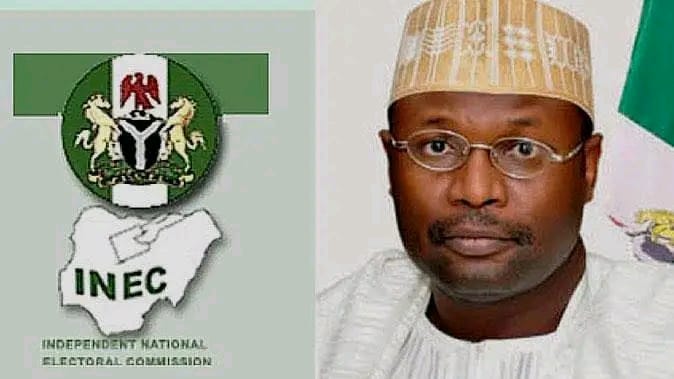
INEC

Kano 2023: Abacha’s name missing as INEC releases list of guber aspirants

By Muhammad Aminu

The Independent National Electoral Commission (INEC) Kano office has pasted names of governorship candidates that will participate in the forthcoming 2023 general election without the candidate of the court-backed faction of the People’s Democratic Party (PDP).

The electoral umpire pasted Sadiq Wali and Yusuf Bello Danbatta as gubernatorial and deputy gubernatorial candidates of the PDP in Kano.

It can be recalled that intra-party conflicts and litigations following parallel leadership structures troubled the PDP, which led to factional primary elections in Kano.

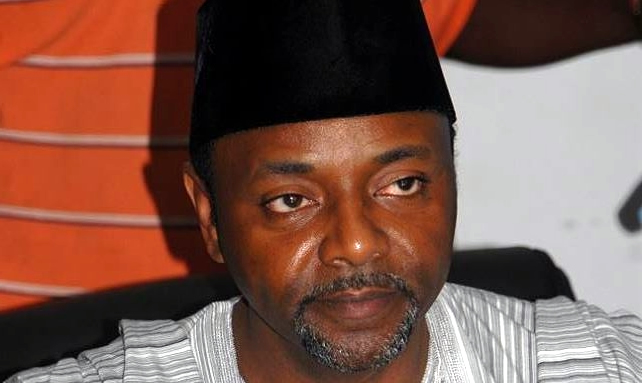
However, a federal high court gave a favourable judgement in favour of Hon. Shehu Wada Sagagi-led faction that produced Mohammed Abacha as the governorship candidate of the party.

The other faction of the party, led by Sen. Bello Hayatu Gawarzo, who is the North-West vice chairman of the party, produced Sadiq Wali as the governorship candidate of its faction in a parallel primary.

The INEC Resident Electoral Commissioner (REC) in Kano, Prof. Riskuwa Shehu, had earlier told journalists in Kano that INEC recognized Mohammed Abacha as the rightful candidate having produced by the faction that was recognized by the court of law.

Reacting to the development that creates confusion in the PDP in the state, INEC Public Relations Officer in Kano, Ahmad Adam Maulud, said the commission at the Kano office submitted the results of the primaries it had monitored to the headquarters of the electoral umpire in Abuja, but they were sent the list they pasted on Friday.

“Whoever wishes to seek any clarification should contact the national body of his or her party for any information,” Maulud said.

2023: Tension rocks APC over Tinubu’s ‘missing’ school certificates 

By Uzair Adam Imam

Tension rocks the All Progressives Congress (APC) as the party’s presidential candidate, Ahmed Bola Tinubu, allegedly obtained no primary and secondary school certificates. 

However, Tinubu insisted that he had two degrees from two American universities. Yet, he stated that the certificates were stolen by unknown soldiers during the military junta of the 1990s.

The Daily Reality gathered that the information was in an affidavit submitted by Tinubu to the INEC office as part of his eligibility filings for the 2023 presidential elections.

The documents released Friday by the electoral body showed that Tinubu completely left the columns for his primary and secondary schools unmarked.

Additionally, the latest claims by Tinubu in his submission to INEC reportedly contradicted the previous submissions of 1999 and 2003 when contested as a governorship candidate in Lagos state.

It was gathered that Tinubu allegedly claimed in 1999 and 2003 that he attended primary and secondary schools.

He indicated that he attended St. Paul Children’s Home School, Ibadan, between 1958 and 1964 and secondary school at the Government College, Ibadan, between 1965 and 1968.

Votes Count! Take note, Nigerian youths

Tordue Simon Targema

One of the most disturbing illusions in the Nigerian political space is the age-long notion that “votes don’t count”. This notion is mainly responsible for wide-scale political apathy among the citizens, especially the youths who constitute the majority of the voting population. A striking irony with the notion, however, is that those who peddle and promote it are active voters who always make sure they vote at each poll- from the ward to national elections! This irony, therefore, exposes the folly of those who accept the notion and, thus, disenfranchise themselves.

Of course, it is no longer news that the Nigerian electoral process is enmeshed in malpractices – from vote-buying to actual duplication of ballot figures. Yes, the enormity of malpractices in the Nigerian electoral system is weighty and serves to sustain this ugly notion that has become a great source of worry today.

Notwithstanding these malpractices, a fact that cannot be contested remains that votes are still essential and determine who wins the election. Yes, this is a reality, and even a casual observation of the Nigerian electoral process justifies it. For example, have you ever wondered why electoral evils such as vote-buying, underage voting, ballot snatching and massive thumbprinting of ballot papers by thugs all thrive during elections? The answer is simple: it is because politicians understand that the final vote-tally matters most and would stop at nothing to ensure that more individuals vote for them!

As a Presiding Officer in one of Nigeria’s most keenly contested national elections- the 2015 general elections, and as a voter at several elections, both local and national, I have sufficient grounds to attest to the fact that votes do not just count, but that politicians also realise this fact and stop at nothing to get their supporters to vote for them. The desperation they usually demonstrate during election seasons to woo voters justifies this. You can, therefore, refuse to vote at your sole expense!

I served as a Presiding Officer in one of the most strategic elections in Nigeria’s Fourth Republic. A popular candidate with a wide fan margin- Muhammadu Buhari, contested against the then-incumbent President Goodluck Jonathan. Buhari and his kingmakers had convinced the masses that they had all the solutions to Nigeria’s numerous problems- which were, at that time, overwhelming like always. This narrative was supported by the fact that realities proved Jonathan to be a clueless weakling who lacked the strategy and tact to successfully navigate the country out of its numerous woes- endemic insecurity, pervasive corruption and deteriorating living standards.

Despite his limitations, Jonathan had a pool of supporters who still believed in his leadership philosophy, sympathised with him based on his developmental strides, tribe, region and religion, and also had the potent privilege of incumbency! Never underestimate the power of incumbency in Nigerian elections. This made the election one of the most highly contested, as the margin between the two top contenders eventually indicated.

But most striking is the fact that technology was introduced for the first time in the conduct of elections – the almighty card reader! This made almost all the difference and took the political class aback during the polls. The political class, sensing that it would no longer be business as usual, embarked on massive mobilisation and canvassing for votes. Money flew in the air- as it has become the custom with elections in the country, gifts and inducements of all kinds – clothes, foodstuffs, livestock etc., exchanged between the political class and the masses to woo them to vote.

I had an experience as a Presiding Officer that made me believe that politicians believe in voting as the surest way to win elections! Stakeholders in my polling unit tried their best to get me to manipulate the outcome of the presidential election but to no avail. I would tactically tell them that I had a template, and any manipulation of the outcome would go against my template. Although I had no problem with that, the results would be rejected at the collation centre! This would quickly disarm them, and I had my way through without any rancour. That way, I finished the presidential election without a hitch from any angle.

By the second election- gubernatorial and state assembly, I had to contend with yet another challenge! The elite had studied the workings of the card reader and decided on how to manipulate the election, but that could only still be possible if they got people to vote- even if they were illegal voters. A particular stakeholder insisted he would convey me on his bike from the collation centre to the polling unit- some several kilometres away from the ward collation centre, which was equally an interior rural area, far removed from the local government headquarters. I obliged.

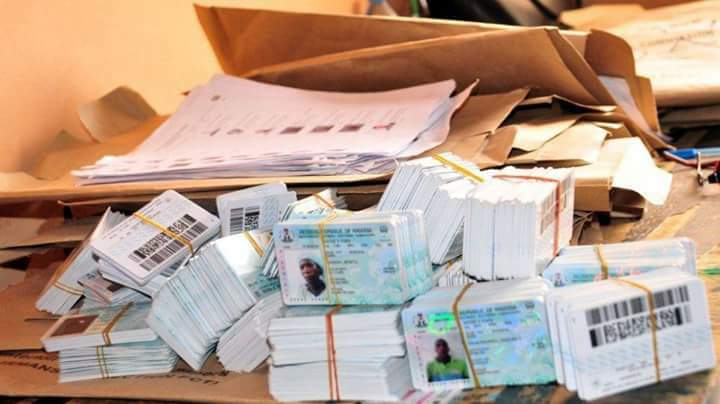
On our way, he intimated to me of his ambition: he had hundreds of unclaimed voters cards belonging to his polling unit, which he wanted to use. He observed during the presidential election that voters whose cards were successfully authenticated by the card reader and those that the machine could not authenticate their cards due to one reason or the other were eligible to vote.

The card reader operates at two levels: accreditation, which confirms whether a given card belongs to a polling unit or not, and authentication, which verifies that a voter’s biometric records match those of the card they are carrying. Authentication is usually successful once the card confirms a voter’s thumbprint. Where it fails to confirm, authentication is deemed unsuccessful, but the voter can still vote – provided that the card is successfully accredited. The Presiding Officer then fills an incident report form for such a voter. At the end of the voting process, the total number of successfully authenticated cards and the unsuccessful ones is expected to tally with- or at least, be more than the total votes cast, not the other way round.

The stakeholder pleaded with me to allow him to use the cards he was carrying since both those whose biometric records are successfully authenticated and those whose records fail are eligible voters. When I consulted with my team at the polling unit, I discovered that they had already mobilised and were ready to disrupt the election should we reject the bid. As a confirmation, we had early reports from the neighbouring polling unit that the electoral officers were booted out of the village! The Supervisory Officer had to call all of us and seek our tactical cooperation in the interest of peace.

Stakeholders at our unit then embarked on aggressive canvassing for voters- because I categorically told them that I would not allow one person to vote twice, whatever happened! So they had to pay willing young men with no cards to the turn of N500 per voting to use the unclaimed cards and vote for their political parties. Funny enough, all political parties cooperated and brought their supporters to use the unclaimed cards and vote. We had a peaceful voting process afterwards.  

During the 2019 general elections, I had an amusing but similar experience, this time around as a voter and not an electoral staff. The stakeholders of my polling unit had hundreds of unclaimed voters cards belonging to the unit. They undertook to pay each available voter N500 to vote for their parties. My friend was into the game and had to vote as many as four times! In the fourth round, the Presiding Officer warned him to respect himself and not return.

Now tell me: if votes don’t count as purported – or say they don’t matter, why would politicians go that far to get people to vote for their parties? Have you ever observed how desperate political stakeholders are during voter registration? For example, in the first and only voter registration exercise I participated in as ad-hoc staff, I was posted to the village of a one-time Member, the House of Representatives, a very interior village that is hardly accessible.

The ex-Member solely undertook to take care of our welfare; provided our accommodation, a generator for our comfort at night, ensured that we had the best meals and all of that. Why would a man do that if he had known that votes are needless and all he needs to do is manipulate election results during elections?

By my analysis, winning an election in Nigeria today is the responsibility of two sets of individuals within a political party: the individual voters and the elite class. As a voter, your duty to your party and the preferred candidate is to vote – and get as many of your friends as possible to vote for him as well. Once you do that, you have fulfilled your responsibility as a party loyalist and patriotic citizen. Leave the rest to the elite; it does not concern you. Even if your party did not win in the end, the conviction that you played your part- as a patriotic citizen would- is enough consolation.

The greatest disservice many young men do to their favourite political parties and the country at large is to make all the noise on social media while they do not know what a voters card looks like, have never voted and have no intention to vote, after all, wallowing in the illusion that “votes don’t count in Nigeria after all”. This crop of individuals is the major problem we have in Nigeria.

A clarion call to all Nigerian youths as the 2023 election approaches is to disabuse your mindset of this counterproductive notion, register, get your voters card and vote. Votes actually count! Don’t be deceived.

Tordue Simon Targema is a doctoral student at the Department of Communication Arts, University of Uyo, and teaches in the department of Mass Communication, Taraba State University Jalingo. Email: torduesimon@gmail.com.
Kano court restrains Sagagi-led PDP executives

By Ibrahim Nasidi Saal

A Federal High Court sitting in Kano on Tuesday granted an order of interim injunction restraining the Shehu Sagagi-led executives of the Peoples Democratic Party, PDP, in Kano from exercising any power pending the hearing and determination of the Motion on Notice.

Mr Sagagi is allegedly loyal to a former governor of Kano State and national leader of the New Nigeria Peoples Party, Rabiu Kwankwaso.

The case was filed before Justice A.M. Bichi by one Bello Bichi against INEC, PDP and 40 others.

The order is as follows:

 “That in order not to create a serious power vacuum In the party at the State level and to prevent any anarchy which could result from such a vacuum, an order of interim injunction is granted restraining the 3″‘ to 42nd Defendants from parading or continuing to parade themselves as the Party Executives of the PDP in Kano State, from exercising any power pursuant thereto, or doing anything in that purported capacity pending the hearing and determination of the Motion on Notice herewith filed, which is fixed for hearing on the 24th day of May, 2022.

“That an order for leave is granted allowing the substituted service of the Court Order and the originating and other subsequent processes on the 3rd to 42nd Defendants by leaving same with or at the office of the 25th Defendant, Mr. I. Wangida, Esq.”

The daily Reality reports that on April 28, another court of concurrent jurisdiction, the Federal High Court sitting in Abuja, had reinstated the Shehu Sagagi-led state and 44 local governments’ executives of PDP, pending the determination of the substantive case before it.

Ruling on the matter, Justice Taiwo O. Taiwo granted all the prayers of the Sagagi-led executives and warned the PDP national leadership against taking any action that would undermine them.

Zamfara: Fire destroys Kauran Namoda INEC office

By Ibrahim Nasidi Saal

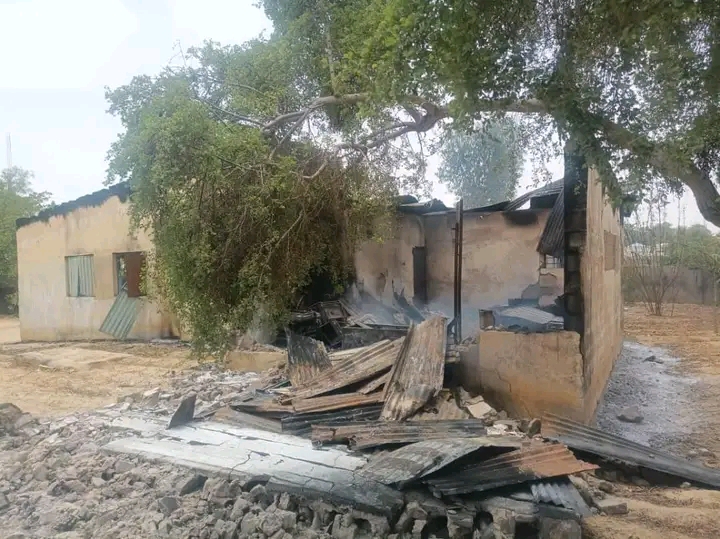
The Resident Electoral Commissioner for Zamfara State, Professor Sa’idu Babura Ahmed, reported that a fire gutted the Kauran Namoda Local Government Area office of the Commission.

The tragic incident occurred around 11.00 pm on Monday, May 2, 2022. No casualties were reported while critical materials such as Permanent Voters’ Cards (PVCs) and registration machines for the ongoing Continuous Voter Registration (CVR) exercise stored in fireproof cabinets were saved. 

However, the building was extensively damaged. Several fixed and movable office furniture were destroyed despite the best effort of the Zamfara State Fire Service and the spirited efforts of good Samaritans to contain the inferno.

The attention of the Nigeria Police has been drawn to this incident. Together with the Fire Service, they have commenced an investigation to ascertain the cause of the fire.

MURIC to INEC: Warn Muslim haters among your staff

News Desk

The chairman of the Independent National Electoral Commission (INEC), Professor Mahmood Yakubu, yesterday announced that the closing date of the registration exercise for the 2023 general elections is 30th June 2022.

Reacting to this announcement, the Muslim Rights Concern (MURIC) has appealed to the electoral body to ensure that Nigerian Muslims are not disallowed from partaking in the exercise by overzealous Muslim-haters among INEC’s ad hoc and full staff who are in the habit of disallowing hijab, cap and turban-wearing Muslims from registration.

This was contained in a statement issued on Saturday, 23rd April 2022, by the director of MURIC, Professor Ishaq Akintola.

The statement reads:

“The chairman of the Independent National Electoral Commission (INEC), Professor Mahmood Yakubu, yesterday announced that the deadline of the registration exercise for the 2023 general elections is 30th June 2022.

“While we commend INEC for successfully carrying out its duties in the past few years, we sound a wake-up call to the electoral body to prevent the disenfranchisement of millions of Muslims in the coming 2023 general election.

“It is very common for Muslim haters among INEC’s full and ad hoc staff to harass hijab-wearing female Muslims as well as cap and turban-wearing male Muslims at the registration centers in a bid to frustrate and prevent them from registering for the election. They are ordered to remove their hijab, cap or turban during capture. Such orders are illegal, unlawful, illegitimate and unconstitutional.

“Only those who are ready to compromise their faith by obeying the illegal instruction are allowed to register while others are turned back. As a result of this intimidation, millions of Muslims are disenfranchised. The effect is a huge deficit in the numerical strength of Muslim voters. This will not be tolerated in the ongoing exercise.

“INEC is fully aware that it is illegal to disallow citizens from registering for election on the basis of religion. It is also a precursor to the rigging of elections in favour of Christian candidates all over the country. This practice is evil and provocative. It can lead to crisis before, during and after elections.

“It is a major threat to a peaceful election, particularly in the 2023 exercise. Judging by the announcement of the leading Christian firebrand Pentecostal wing, namely, the Redeemed Christian Church of God (RCCG) that it has formed political wings in all its parishes, it is clear that Nigerian Christians plan to hijack the 2023 exercise.

“While Muslims in the North are not likely to fall victims of the disenfranchisement, millions of Muslims in the South are definitely exposed to the danger because it is not a new phenomenon in the southern geo-political zones of the South West, South East and South-South. It occurred in 2003, 2007, 2011, 2015 and 2019. MURIC documented these ugly events.

“We, therefore, urge INEC to give necessary instruction and training to all its staff. They should be warned against coercing Muslims on account of their manner of dressing. Apart from internal memoranda, INEC should issue public statements whose copies Muslims can use to defend their appearances in case of intimidation. In addition, INEC should discourage the opening of registration centers in places of worship.

“MURIC advises Muslims who face victimisation of any sort in registration centers to maintain their stand by insisting on being registered with their hijab, cap and turban. They should not obey illegal orders. Any refusal to register them should be reported to the Imam in the nearest mosque, Muslim leaders and officials of Islamic organisations.

“As a precaution, MURIC will document all cases of illegal prevention of Muslims from registration. Where possible, details of INEC officials involved in such unlawful prevention will be provided. We shall also institute lawsuits in courts of competent jurisdiction against perpetrators.

“All state commissioners of INEC in the three geo-political zones in Southern Nigeria are advised to ensure that no single Muslim is denied his or her Allah-given fundamental human right, including the right to partake in voting through the denial of voters’ cards. We will hold each commissioner responsible for any infraction that takes place in his or her state.

“While MURIC and the generality of Muslim voters in Nigeria seek a peaceful electoral exercise, we call on INEC not to ignore our advice in the interest of peace. Nigerian Muslims will not stomach any attempt to disenfranchise them during the 2023 general election. INEC should therefore take necessary steps to avoid the persecution of Muslim voters by its officials.”

A call to Nigerian youths on political apathy

By Salaudeen Teslim Olamilekan

Over the years, there has been an erroneously hard held belief among some Nigerians, especially the teeming youths of intellectuals, that, ordinarily, electorate votes don’t count in an election. This belief is more evidenced in social media discussions, particularly Facebook. Whether they vote in an election or not, the winner of an election is already known to the powers that be, even before the election day.

In preparation for the 2023 elections, I visited my local government secretariat to register my voter’s card. It was pretty disheartening and mind-boggling for me, realizing that what I observed the very first day I went, there was still the same thing I noticed. About 85% of the people on the queue waiting to be captured are old and mostly unlettered. They are illiterate market women, farmers and some senior civil servants. The numbers of youths in the queue were minuscule.

Many acclaimed young, exposed, and educated individuals who should know better about how a country is built are focused on venting anger and frustration on social media and gatherings against politicians. We fail to do what truly matters for the betterment of our country. It’s safe to say some youths and informed older people don’t even have voters cards, much less planning on voting. A fragment of this proportion doesn’t obtain the card for election purposes. It’s only some one-third among the youthful large social media users who lament and often weep for the country now and then will vote. In the end, the irony is, when an election comes, the old market women and farmers we often view as ill-informed and uneducated are the ones that pull the most votes.

In my conversation with some youths my age in my neighbourhood and the older ones, I discovered seemingly educated people who pride themselves on not having voters cards. They even hold and justify such ignorant views with their full chest. More surprising, a lady once told me that voters are the problem of Nigeria. She believes she’s wiser because she has never voted for any corrupt Nigerian leaders in the past. She has never exercised her right to choose who governs her country and who doesn’t, and she doesn’t seem to care. She sees people that vote as accomplices to the fraud in government. She’s among the many complainants that know every politician that’s not performing by their names but failed to see voting as a reasonable way to push them out of government and establish a new people-oriented government.

To say our votes don’t count in determining who wins or loses the election in Nigeria is a talk borne out of utter ignorance. The fact that the educated ones propagate such opinions makes it more embarrassing. Don’t let us fool ourselves. If our votes don’t count, politicians will not be spending billions of naira on advertisements and campaigns, touring every nooks and cranny of the country begging for votes. I believe anyone who shared in the anger, disappointment and dissatisfaction many of us have towards this current government and doesn’t have a voters card shouldn’t be taken seriously. You can’t complain your way into changing the political order of your country. You take action by voting. Your ignorance towards the poll keeps terrible people in power.

The thing about democracy is that you can’t separate or remove elections from its guiding principles and practices. The moment a country fails to choose its leaders by the polls, directly or indirectly, it cannot be identified as a democratic country. Elections are conducted to elect a leader to represent the people and ensure people’s dreams and aspirations are fulfilled. This mechanism hasn’t proven to be successful in choosing good leaders all the time, but it’s successful in making the majority’s will come to fruition.

It is wise that your hatred towards the ruling government should be why you’re voting, not why you’re apathetic to the poll. If you refuse to vote because you hate the government, your apathy will continue to keep bad people in power, and in so far as bad people are in control, their poor decisions will be ruling every aspect of our lives.

Nigerian politicians understand the power voters have. That’s why they focused more on enticing our poor, uneducated and easily-deceived parents with some handful of rice and N500 so that they could vote for them. Unfortunately, politics is a game of numbers. The more crowd a wrong person pulls based on his war chest, the more that wrong person will have chances of clinging to power.

My fellow Nigerian youths, come 2023, blame yourself if the wrong people win our most important national and regional political offices. Never complain. It’s your fault that you don’t vote. You should now understand that the quality of your life determines the quality of the people in power. How safe and healthy you’re, depends on the outcome of your political decisions. The political aspirations of the government in power affect the country’s political economy, including the highly established businesses and the small and medium scales. It will affect the bread sellers, labourers, and our society’s disadvantaged. We should do away from ego and ignorance and exercise our rights to vote for good and future-focused leaders.

Salaudeen Teslim Olamilekan is an undergraduate of the Federal Polytechnic Offa, Kwara, studying Mass Communication.

Greedy Nigerian leaders lack intellectual capacity to lead – Prof. Jega

By Uzair Adam Imam

Former Chairman of the Independent National Electoral Commission (INEC), Prof. Attahiru Jega, has described Nigerian leaders as greedy who lack the intellectual capacity and vision in terms of how to usher in developmental projects.

Jega stated this on Monday, 15th November 2021, at the Maitama Sule Leadership Lecture Series, organised by the Students Wing of Coalition of Northern Groups (SW-CNG), in Katsina.

He also added that the insecurity and economic challenges that have been bedeviling the country for a long time are as a result of the country’s bad leadership.

Jega said: “The major indices of these crises manifested themselves from the Northern part of this country, whether it is poverty, youth unemployment, security challenges, maternal mortality, out-of-school children, lack of girl-child education and early marriage as well as the challenge of reproduction of our females.

“Anything you can think of, the terrible statistics come from the Northern part of this country. And why is it so? That is the key question. Today, we remember the Maitama Sule, the Amadu Bellos, Isa Katais and many others.

“These were people who led and protected the North and ensured that the North developed in accordance with its ability and their own abilities as leaders. While we cherish the memories of what had happened in the past, what kind of leadership have we got from the Northern part of this country?

“We have so-called leaders who are selfish, who are not selfless, greedy, who have a narrow vision in terms of how this country can develop not to talk about the region where they come from. They really lack intellectual capacity to be classified as leaders,” he said.

We’re set to conduct governorship election in Anambra—INEC

By Muhammad Sabiu

The Independent National Electoral Commission (INEC) has given the assurance that it’s ready to conduct the Anambra State governorship election slated for November 6.

Speaking to journalists in Awka, the Anambra State capital, on Tuesday, INEC Chairman Professor Mahmood Yakubu said, “When the commission released the timetable for the conduct of election, eleven months ago, the feeling was that the time will not come. The time is already here, we only have just four days left and we are going to go as a commission.”

However, the chairman stated that the challenge before the commission was to ensure that newly registered voters participate in the upcoming election.

“To ensure that the newly registered voters take part, we decided to contact them through their email and GSM numbers to inform them of the locations to get their cards,” he said.

Also, Echeng Echeng, the State Commissioner of Police, assured that security agencies were also set for the peaceful conduct of the election, adding that security would be beefed up in order to make sure that unscrupulous individuals don’t find their way into the state.

Electronic transmission of results: Is APC jittery?

By Lawan Adamu Usman

The glimmers of hopes that the country will have a free and fair election in the 2023 general election have been dashed by our senators. Section 52(3) of amendment bill 2021 which will provide room for the electronic transmission of election results from the polling unit, received a kiss of death by the APC senators after a rowdy session in the senate. In 2015, when president Jonathan introduced the card reader machine, which was part of the technology drive to checkmate multiple voting and detect elections fraud and ensure a free and fair election, the APC, which was desperate to clinch to power, commended the bold initiative. There is no gainsaying the fact, APC was the beneficiary of the card reader machine in the 2015 general election. The election victories recorded by the party across the country could be credited to such technological innovation.  

Little wonder, many Nigerians expected President Muhammadu Buhari to maintain the momentum in 2019 by passing section52(3) of the electorate act into laws, which will pave the way for electronic transmission of results. However, President Buhari failed to convince Nigerians why he could not approve the bill, cited short of time as the reason ahead of the 2019 general election. Also, our lawmakers’ lack of political will to unanimously agree and take a common position for the quick passing of the bill is unfortunate. While other African countries have since embraced technology and reformed their electorate process in tandem with the best global practice, some unpatriotic senators are dragging us to the medieval period.

By its name, the Independent National Electorate Commission (INEC) should act independently according to the laws that established it. For the Senate to insist that INEC should collaborate with the Nigeria Communication Commission (NCC) on the possibility of adequate network coverage in the country and seek its approval before it adopts electronic transmission of results raises serious suspicion on its part. 

The million naira questions begging for answers are: why the majority of APC senators voted against the electronic transmission of results? Are they acting on the script of their party to frustrate any genuine efforts to have a credible and acceptable poll in 2023? It is either the ruling party plans to rig the 2023 elections as suspected, or it is jittery that the electronic transmission of results will expose it to serious defeat.

Civil societies organisations and Nigerians should wake up and reject this glaring rape of our democracy. Democracy the world over thrives and flourishes based on free and fair elections. This can only be achieved if INEC is allowed to conduct credible elections and transmitted the results electronically as obtained in other democratic climes.

Lawan Adamu Usman (aka Mr LA) writes from Kaduna State. He can be reached via imustapha650@gmail.com.