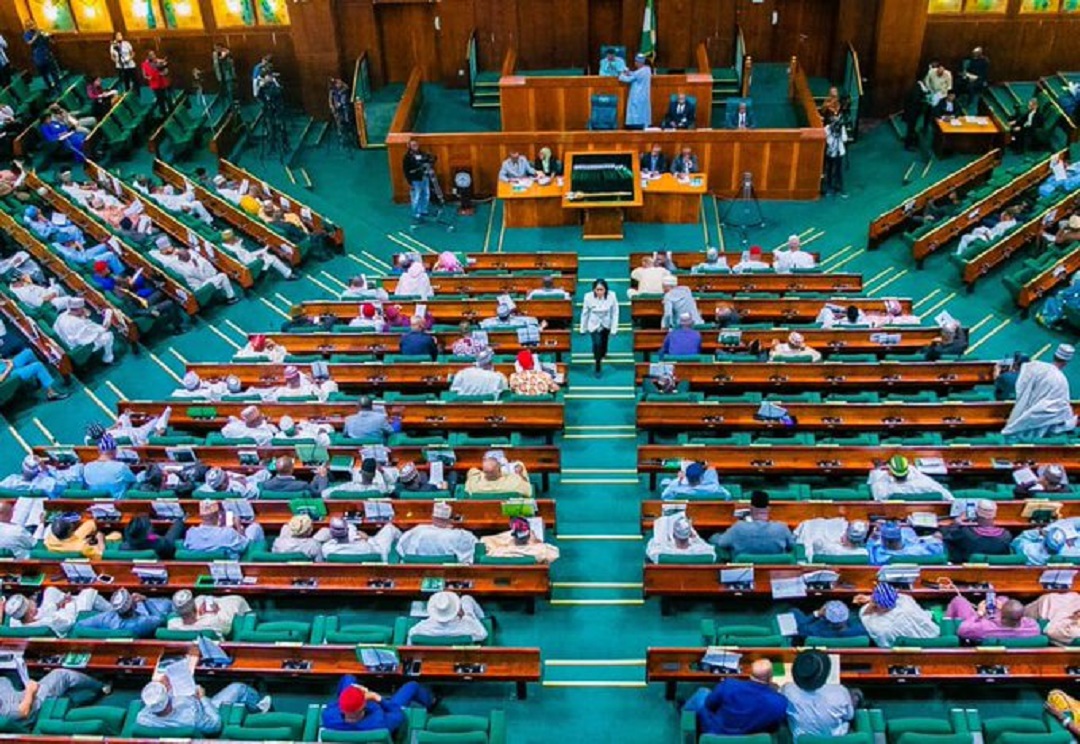
House of Representatives

Head Of Civil Service Admits Lapses As Reps Uncover Fake Documents in PFIPC Probe

By Sabiu Abdullahi

The House of Representatives has uncovered fresh details in its investigation into the controversial Presidential Foreign Investment Promotion Council (PFIPC), as the Head of the Civil Service of the Federation (HoSF), Mrs Didi Walson-Jack, admitted that her office failed to conduct sufficient checks before approving requests linked to the agency.

Lawmakers are investigating allegations that Prince Adeyemi Adeniyi, who presented himself as the Director-General of the PFIPC, obtained official recognition for the agency with fake appointment letters, fabricated legislative documents and other forged government records, despite the organisation lacking legal backing.

The House Ad-Hoc Committee also said its investigation had exposed what it described as a network of fake appointment letters, fabricated legislative documents and fictitious government offices allegedly used to secure recognition from federal institutions.

The Office of the Accountant-General of the Federation (OAGF) also admitted that an official diverted a letter meant for the Permanent Secretary, State House. The committee believes the action helped sustain the alleged scheme.

The committee, chaired by Yusuf Gagdi, who represents Kanke/Kanam/Pankshin Federal Constituency of Plateau State, has continued to examine how the purported agency secured approvals from several government institutions despite having no legal foundation.

Joshua Luka, Director of the Federal Project Financial Department in the OAGF, told the panel that the office issued an administrative code only after receiving what appeared to be an official request from the State House.

“As part of our due diligence, what we did was to convey the administrative code to the Permanent Secretary, State House, and not to the so-called agency. The idea was that if it was not genuine, the whole thing would be unravelled,” Luka said.

The committee, however, rejected the explanation after evidence showed that the letter never reached the Permanent Secretary. Instead, it was reportedly collected by Adeniyi.

Gagdi further stated that investigators discovered the Directorate of Administration and Support Services, which appeared on the correspondence, did not exist within the State House.

“There is no Directorate of Administration and Support Services in the State House. That office does not exist,” he said.

He criticised the OAGF for allowing the suspect to collect official correspondence intended for another government office.

“You allowed the fraudulent DG to come and pick the letter from your office instead of allowing someone from the Permanent Secretary’s office to receive it. If the letter had reached the Permanent Secretary, the fraud would have been unraveled immediately,” Gagdi said.

Luka maintained that the incident resulted from the actions of one official rather than a failure by the institution.

“The problem here was not an office lapse; it was an individual lapse. Somebody was supposed to deliver that letter to the Permanent Secretary, State House, and it was not delivered there,” he explained.

He identified the official as Bello Abdullahi, who admitted handing the letter to Adeniyi before the committee halted his explanation.

Appearing before the lawmakers, Walson-Jack acknowledged that her office relied on documents that were later discovered to be false.

“We now, having seen all the facts and observed all the documents, concede that we ought to have carried out more due diligence in the discharge of the duties of the office in issuing an authorised establishment and a recruitment waiver to the PEAC/PFIPC,” she told the panel.

She explained that representatives of the purported agency attended the 2025 Annual Manpower Budget Defence with what appeared to be an Establishment Act and a letter appointing a Director-General. She said civil service procedures required such documents before an agency could obtain recruitment approval.

Walson-Jack described the incident as unprecedented.

“In over almost a century of the Federal Civil Service, we have never encountered a situation like the current one. Criminals always try to be a step ahead of law enforcement,” she said.

She later disclosed that she personally examined the documents and concluded that the supposed Establishment Act was not authentic.

“I requested to see the documents myself and I saw that the Establishment Act was not really an authentic Act. I have almost 30 years of legal practice experience and immediately I saw it, I knew it was not real,” she stated.

The HoSF also questioned the authenticity of the letter said to have been issued by the Office of the Chief of Staff to the President.

“I’m not a forensic expert, but I can clearly see that the signatures are not the same,” she added after comparing the signature on the appointment letter with other official documents.

Gagdi said forensic experts from the Nigeria Police Force had already confirmed that the signatures were different.

“The Police Forensic Department has already analysed the signatures and confirmed that those signatures are not the same. In fact, according to them, there was not even an attempt to imitate the signature,” he said.

He insisted that both the appointment letter and the purported Establishment Act were fake.

“You have clearly stated that you acted on false documents. You have now established, just like we have, that the letter of appointment of the so-called DG is not only forged, it is fake.

“If something is forged, there will be an attempt to imitate the signature. But in this case, the signatures are completely different. So, I will not call it forged; I will say it is fake,” Gagdi declared.

The committee chairman also pointed out that the document presented as an Act of the National Assembly lacked essential features of valid legislation.

“Our Acts have citation numbers, Supreme Court numbers, Gazette numbers and Gazette titles. The Act presented here has none of those features,” he added.

Although she accepted responsibility for the shortcomings, Walson-Jack said officials acted in line with existing procedures based on the documents submitted.

“Everything was done in accordance with the practice in the office. Out of the 88 ministries, departments and agencies processed, we are really surprised that we were unable to detect that PEAC/PFIPC had actually given us a false Establishment Act and what has now been proved to be a false letter of appointment,” she said.

She also assured lawmakers that measures would be introduced to strengthen internal safeguards.

“We take full responsibility and we will definitely review our processes to make them more fraud-proof,” she said.

The committee also heard from Deputy Commissioner of Police Olufemi Akinola, who represented the Inspector-General of Police, Olatunji Disu. He explained that Adeniyi could not be produced before the panel because he remained in lawful custody under a subsisting court order.

“The Nigeria Police Force may not be able to produce the suspect as requested in view of the subsisting warrant. The Nigeria Police Force recognises the constitutional oversight powers of the National Assembly and remains committed to cooperating with the committee in the discharge of its mandate.

“However, in this case, it will be appreciated if a reproduction warrant could be sought from a court of competent jurisdiction to enable the police to comply with this request,” Akinola said.

The committee accepted the explanation and said it would seek the necessary court order before the suspect is brought before the panel.

Lawmakers said the investigation is nearing completion. They plan to present preliminary findings to the public next week before submitting a final report to the House of Representatives after the National Assembly resumes from recess.
House of Representative Shifts Gears on State Police, Backs Tinubu’s Bill


By Abdullahi Mukhtar Algasgaini

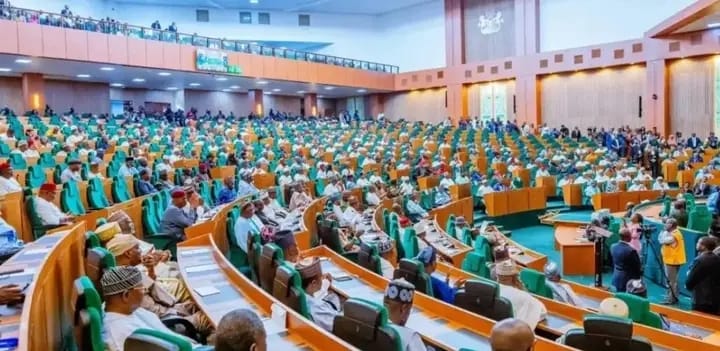
The House of Representatives has withdrawn its own constitutional amendment bill seeking to establish state police, opting instead to consider a similar proposal transmitted by President Bola Tinubu’s administration.

The decision came during Tuesday’s plenary session, where lawmakers swiftly gave the Executive-sponsored bill its first and second readings before referring it to the House Committee on Constitutional Review for further legislative action.

The move effectively suspends the House’s earlier initiative as legislators pivot to the Executive-backed amendment, which is expected to undergo detailed scrutiny at the committee stage before returning to the floor for final consideration.

The development marks a significant shift in the ongoing debate over state policing, which has gained renewed momentum amid growing concerns about rising insecurity across the country. While the House had previously pursued its own constitutional amendment on the matter, the adoption of the Executive’s proposal signals a unified approach between both arms of government.

Lawmakers are expected to examine the bill’s key provisions thoroughly, including funding mechanisms, operational frameworks, and safeguards against potential abuse, before the amendment can proceed to the Senate for concurrence.

The passage of the state police bill would require amending the 1999 Constitution to remove policing from the Exclusive Legislative List, allowing states to establish their own law enforcement agencies.

30-Year-Old PWD Clears APC Screening For Reps Seat in Kaduna


By Sabiu Abdullahi

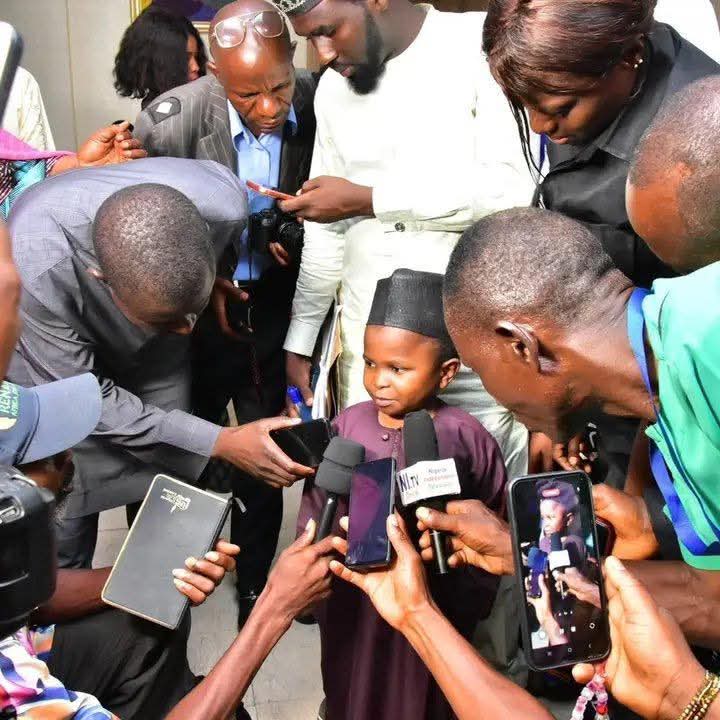
A 30-year-old person living with disability (PWD), Mahmud Sadis Buba, has successfully passed the screening organised by the All Progressives Congress (APC) ahead of the election for the House of Representatives seat in Kaduna State.

Buba, who is widely known as Abin Al-Ajabin Zazzau, is contesting to represent the Sabon Gari Federal Constituency.

The aspirant lives with dwarfism, a condition that affects physical growth and development.

He recently attracted attention on social media after a video from his APC screening exercise circulated online.

During the screening, Buba disclosed that he is the first child in a family of nine and possesses a senior secondary school certificate.

He explained that people from his constituency encouraged him to join the race and represent them at the national assembly.

“I am not doing this for myself. It is from the people. People called me to serve them, and I will serve,” he said.

Buba is seeking to unseat Sadiq Ango Abdullahi, who won the constituency seat in 2023 on the platform of the Peoples Democratic Party (PDP) before later defecting to the APC.

Abdullahi is also contesting for another term under the ruling party.

Open Letter to Hon. Aminu Sulaiman Goro: A call to return to your roots and serve the good people of Bagwai

By Bagwai LGA Concerned Forum

Dear Hon. Comrade Aminu Sulaiman Goro,

We write to you with great respect and admiration for your outstanding service to the good people of Fagge Federal Constituency over the past 12 years. Your tenure as a member of the House of Representatives has been nothing short of transformative, marked by unparalleled achievements in job creation, infrastructure development, education, and empowerment for women and youth. Your accessibility, humility, and dedication to grassroots politics have set a benchmark for leadership in Kano State and beyond.


While we celebrate your remarkable legacy in Fagge, we, the Concerned Forum of Bagwai Local Government, humbly call upon you to return to your roots—Rimin Dako, your ancestral town and one of the 10 wards that constitute Bagwai Local Government—to extend your transformative leadership to your place of origin. Bagwai has long suffered from poor governance, inadequate representation, and the mismanagement of its abundant human and natural resources by selfish and incapacitated leaders. Our people yearn for a leader of your calibre—one who is proven to be compassionate, and capable of turning challenges into opportunities.


Your return to Bagwai would not only bridge the gap of quality representation but also allow you to replicate and expand upon the successes you achieved in Fagge. Imagine the impact of your empowerment programs, educational initiatives, and infrastructure projects in a community that has been neglected for far too long. Bagwai is ripe for development, and your wealth of experience, influence, and unwavering commitment to service can ignite the change we desperately need.


Honourable Sir, we urge you to share your leadership with Bagwai, where your journey began in Rimin Dako. By answering this call, you will not only uplift your homeland but also cement your legacy as a true statesman who served his people at every level.


The time is now. Bagwai awaits you with open arms and high hopes. Come home, Hon. Goro, and let us build a brighter future together.

Signed:

Habibu Dan’ana
For: Bagwai LGA Concerned Forum
Kano State

Reps propose quota seats for women, PWDs in constitution review

By Abdullahi Mukhtar Algasgaini

In a significant move towards inclusive governance, the House of Representatives is proposing the creation of 82 reserved seats in the National Assembly specifically for women and Persons with Disabilities (PWDs) as part of the ongoing constitutional amendment process.

Speaker of the House, Rt. Hon. Tajudeen Abbas, announced the proposal on Tuesday during the 2nd Legislative Open Week in Abuja.

The plan allocates 55 reserved seats within the House of Representatives and 27 in the Senate.

Under the proposal, 10% of National Assembly seats would be reserved for women and 5% for PWDs.

Abbas stated that the reserved seats for women would be filled through direct elections on separate ballots.

Seats reserved for PWDs would be filled via nominations from accredited advocacy organisations, also through direct elections.

He framed the reform as essential to correct “decades of gender imbalance,” highlighting the stark underrepresentation of women since independence.

“At independence, women held less than 1% of seats. Today, it has barely moved,” Abbas noted, pointing to countries like Rwanda and Senegal as examples where quotas have significantly boosted women’s representation.

The proposal is among 109 constitutional amendment bills currently under consideration by the House.

Other key areas of reform include elections, judicial processes, and fiscal accountability.

Speaker Abbas also provided an overview of the 10th Assembly’s legislative output, revealing that 2,263 bills have been introduced so far, with 55 already signed into law.

Notable enacted legislation includes the Student Loan Act and the amended Electricity Act.

On public engagement, Abbas reported that the House has received 621 citizen petitions.

Of these, 24 have been resolved, 30 dismissed, and 567 remain under consideration.

Senate President Godswill Akpabio, who also addressed the Open Week, commended the House’s legislative strides and pledged the Senate’s support for collaborative efforts.

He announced plans for a joint National Assembly Open Week and expressed concern over the high turnover rate of legislators, which he said negatively impacts institutional memory.

Former Speakers Yakubu Dogara and Patricia Ette urged current lawmakers to deepen public engagement and uphold accountability.

Speaker Abbas concluded by assuring that the 10th House remains committed to “inclusive and responsive lawmaking” and strengthening collaboration with the executive branch to deliver results for Nigerians.

Nigeria’s porn ban: A distraction from real issues

By Abdulhamid Abdullahi Aliyu

The Nigerian House of Representatives has directed the Nigerian Communications Commission (NCC) to block all pornography websites, arguing that adult content is fueling moral decay in the country.

Lawmakers behind the move claim it is necessary to protect societal values, but many Nigerians are asking: With all the pressing challenges facing the nation, is this the priority?

At a time when the cost of living is unbearable, insecurity is rampant, and unemployment continues to frustrate millions, banning pornography feels like a classic case of misplaced focus.

There is no doubt that pornography is a controversial topic, especially in a country as religious and conservative as Nigeria. Many believe it is a moral threat, linking it to addiction, broken homes, and declining values among the youth. But is an outright ban the solution?

If the government is genuinely concerned about morality, should it not focus on improving education, strengthening family values, and addressing the root causes of social vices? What about the rising cases of drug abuse, internet fraud, and sexual exploitation—issues that demand urgent action?

It is often easier for politicians to push symbolic laws than to tackle society’s deeper problems. But morality cannot be legislated; it is shaped by economic stability, good governance, and proper education.

Even if we assume the government is serious about this ban, another question arises: Can it actually be enforced? Countries like India, Indonesia, and China have attempted similar restrictions, only for people to bypass them with VPNs and other simple workarounds.

Nigeria, with its millions of tech-savvy youths, will be no different. At best, this ban will be a temporary roadblock; at worst, it will push the industry underground, making regulation even more difficult.

What is most concerning is the potential for this move to set a dangerous precedent for internet censorship in Nigeria. Today, it is pornography. Tomorrow, it could be news websites, social media platforms, or even political activism.

If the government can dictate what people access online, what stops it from controlling other forms of content? Where does it end?

Beyond the moral and censorship debates, an outright ban could also have unintended economic consequences. Nigeria’s creative and tech industries thrive on the internet’s openness.

Restrictions like this could discourage investment in the digital space. Besides, history has shown that banning something does not eliminate demand—it simply drives it underground.

This move may just create a bigger mess instead of solving anything. If the real concern is protecting children and upholding values, there are smarter ways to achieve this.

Many developed countries regulate adult content through strict age verification, parental control mechanisms, and public awareness campaigns. A more effective approach would involve educating young people about digital responsibility, empowering parents with monitoring tools, and addressing the economic and social conditions that contribute to moral decline.

With the economy in crisis, insecurity worsening, and corruption still unchecked, is banning pornography really what Nigerians need right now?

This is not to suggest that pornography is beneficial or free of consequences. However, governance revolves around priorities. A country that is struggling to feed its people should not waste energy on internet policing.

Nigeria’s progress will not depend on what it bans but rather on how effectively it addresses the fundamental issues that hold it back.

And unfortunately, a porn ban does nothing to fix them.

Abdulhamid Abdullahi Aliyu, an NYSC serving corps member, writes from the Center for Crisis Communication (CCC) in Abuja. 

No proposal for new states meets constitutional requirements—Deputy Speaker

By Uzair Adam

The Deputy Speaker of the House of Representatives, Hon. Benjamin Kalu, has disclosed that none of the 31 proposals submitted for the creation of new states in Nigeria met the constitutional requirements.

Speaking at the opening of a two-day retreat for members of the Constitution Review Committee in Ikot Ekpene, Akwa Ibom State, Kalu, who also serves as the chairman of the committee, revealed that over 200 bills seeking amendments to the 1999 Constitution had been received.

He stated that while some of the proposed amendments had reached the second reading stage, others were still at the first reading.

According to him, the retreat aimed to review the bills, incorporate expert input, familiarize members with their contents, and prioritize them based on national interest.

The committee is also preparing for zonal public hearings and a harmonization meeting with the Senate.

“The compilation process has revealed instances of duplication—whether by sponsors or overlapping subject matters. This necessitates meticulous harmonization to streamline efforts and eliminate redundancy,” Kalu said.

He further explained that the bills had been grouped into thematic areas, including federal structure and power devolution, local government autonomy, public revenue, fiscal federation, revenue allocation, electoral reforms, judicial reforms, gender issues, human rights, and state creation.

Regarding state creation, Kalu said the committee received 31 requests but found none of them met the constitutional criteria.

Consequently, the submission deadline has been extended to March 5, 2025, to allow applicants to fulfill the necessary requirements.

In a move to enhance public engagement, Kalu announced the establishment of a situation room in collaboration with Policy and Legal Advocacy Centre (PLAC) to address concerns from Nigerians during the constitution amendment process.

He urged lawmakers to ensure that citizens’ voices are reflected in the ongoing reforms.

The deputy speaker also disclosed plans for zonal public hearings across the six geopolitical zones to gather more input from stakeholders before finalizing the amendments.

Nigeria can’t progress with current tax systems—House Speaker Abbas

By Abdullahi Mukhtar Algasgaini

The Speaker of the House of Representatives, Rt. Hon. Abbas Tajudeen, has stated that Nigeria cannot achieve significant progress unless its tax systems are reformed.

Speaking on Thursday in Abuja during a courtesy visit by the leadership of the Chartered Institute of Taxation of Nigeria (CITN), the Speaker noted the country’s struggles with revenue generation, adding that Nigeria ranks among the lowest in Africa in terms of tax collection.

Abbas stated that for businesses to thrive and the country to develop, there was an urgent need to overhaul the current tax system.

He explained that the House had recently passed the second reading of four tax reform bills submitted by President Bola Ahmed Tinubu, which he described as a historic move.

Abbas assured the CITN delegation that all relevant stakeholders, including the institute, would be engaged during public hearings on the proposed legislation by the end of February.

“I am one of those who believe that this country can never move forward if our tax systems remain the way they are,” Abbas said, stressing the importance of reforming the system to generate sufficient revenue.

He further pointed out that Nigeria’s tax system has not been restructured to meet the country’s development needs, particularly in terms of sectoral growth.

The Speaker also noted that the CITN’s goals align with the House’s 10th Legislative Agenda, and pledged collaboration with the institute to move Nigeria forward.

Earlier, the President of CITN, Mr. Samuel Olushola Agbeluyi, FCTI, mentioned that the institute would be celebrating its 42nd anniversary in February.

He highlighted CITN’s extensive reach, with 48 district societies worldwide, including in the U.S. and the U.K. Agbeluyi also praised the institute’s contributions to tax reforms, including the introduction of the Finance Act under the leadership of former President Muhammadu Buhari.

He further addressed the need for a strong attitude towards taxation, citing how the Nigerian National Petroleum Company Limited (NNPCL) failed to remit adequate revenue to the Federation Account, leaving the Federal Inland Revenue Service (FIRS) to intervene.

In his closing remarks, Agbeluyi stated that the purpose of the visit was to strengthen the relationship between CITN and the House of Representatives, ensuring that both entities work together for the nation’s collective progress.

The CITN delegation included senior members such as Prof. Salihu Mukailu, Prof. Mohammed Okara Mainoma, and Dr. J.K. Naiyeju, a former president of the institute, along with several other council members and aides.

Reps probe CBN’s planned retirement of 1,000 staff

By Uzair Adam

The House of Representatives has commenced an investigation into the Central Bank of Nigeria’s (CBN) planned retirement of over 1,000 staff, including senior management and directors.

This move followed a motion of urgent public importance presented by Rep.

Kama Nkemkama (LP-Ebonyi) during Tuesday’s plenary session, titled “Need to Investigate the Retirement of Over 1,000 Staff of the Central Bank of Nigeria (CBN) and the Associated N50 Billion Payoff Scheme.”

A media report on December 2 revealed that the retirement plan is part of an ongoing restructuring initiative under the leadership of the current CBN Governor.

The report further indicated that a N50 billion payoff scheme has been proposed to compensate the affected employees.

While presenting the motion, Nkemkama showed concerns regarding the selection criteria, transparency, and adherence to public service guidelines and labour laws.

He noted that the mass retirement could lead to increased unemployment and heightened public discontent.

The lawmaker also expressed concern over the N50 billion payoff scheme, pointing to potential risks of mismanagement and insufficient oversight of public funds in a sector crucial to Nigeria’s financial stability.

Following the debate, the House resolved to set up an ad hoc committee to investigate the retirement plan.

The committee will examine the criteria, legality, and transparency of the process, as well as ensure that the funds are properly utilized.

Additionally, the House urged the CBN to suspend the retirement exercise and its associated payoff scheme pending the outcome of the investigation.

The Federal Ministry of Labour and Employment was also called upon to protect the rights of the affected employees in line with Nigeria’s labour laws.

The committee is expected to report its findings to the House within four weeks for further legislative action.

Lawmakers slash salaries to address high cost of food

By Uzair Adam Imam

The House of Representatives has resolved to support the Federal Government by cutting down its salaries by 50% for six months to address the high cost of food and support food sufficiency across the country.

This decision was made on Thursday during the plenary session in Abuja, and the lawmakers also appealed to Nigerians to exercise patience with President Ahmed Tinubu’s administration as it addresses the challenges and hardships faced by citizens.

The House mandated its Committee on Appropriation, Humanitarian Affairs, Finance, and Budget to ensure compliance with the resolution. The motion was moved by Hon. Ibrahim Isiaka (APC-Ogun State) and adopted by the House.

Additionally, the House of Representatives has pledged to support the Federal Government with ₦648 million for six months to address food sufficiency and the high cost of food.

Details later….