Hisbah

Kebbi Hisbah Arrests 25 Suspects in Hotel Raid Over Alleged Immoral Activities

By Sabiu Abdullahi

The Kebbi State Hisbah Board has arrested 25 youths in Argungu town over alleged involvement in immoral activities during an operation carried out at a hotel.

The exercise was conducted by operatives of the board under the Ministry of Religious Affairs.

The Director of Shariah of the board, Sirajo Kamba, disclosed this in a statement issued in Birnin Kebbi on Saturday.

He said, “On July 3, the Kebbi Hisbah Board carried out a raid at a hotel in Argungu and successfully apprehended 25 suspects allegedly involved in immoral activities.

“Those arrested include 12 males and 13 females.

“The operation is part of the board’s ongoing efforts to combat social vices, promote moral values, and maintain peace and decency across Kebbi,” he said.

Kamba stated that the board would carry out a detailed investigation in line with the law. He added that anyone found guilty after the investigation would face legal action.

The operation formed part of ongoing measures by the Hisbah Board to address social misconduct and strengthen moral standards in the state.

Kebbi Hisbah Apprehends Man Found Inside Ghana-Must-Go Bag at Married Woman’s Residence


By Sabiu Abdullahi

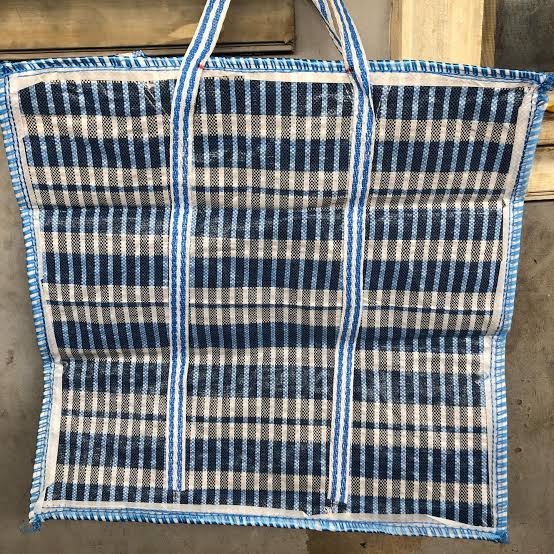
The Kebbi State Hisbah Board has arrested a man who was allegedly discovered hiding inside a “Ghana Must-Go” bag at the home of a married woman in the Badariya area of Birnin Kebbi.

The board, which operates under the Kebbi State Ministry of Religious Affairs, said residents alerted officials after they reportedly noticed the man entering the woman’s residence late at night.

The Director of Sharia at the board, Sirajo Kamba, confirmed the incident in a statement issued on Tuesday in Birnin Kebbi.

Kamba said the report reached the agency around 12:15 a.m. on Monday, May 18.

“The residents suspected an illicit affair contrary to Islamic teachings, hence their decision to formally notify the authority.

“Upon receiving the report, the Kebbi Hisbah Board swiftly deployed officers to investigate.

“When officers arrived, they requested permission to search the house, but the woman initially denied that anyone was inside,” he said.

According to him, the woman later permitted officials to conduct a search of the house. Officers subsequently found the suspect concealed inside a “Ghana Must-Go” bag.

Kamba stated that preliminary findings pointed to an alleged romantic relationship between the suspect and the married woman.

He added that the two individuals allegedly admitted to the accusation during questioning.

The Hisbah official also disclosed that the suspects would face legal proceedings in line with Islamic law.

In a related development, the Kano State Hisbah Board recently arrested two women and a fish seller over allegations of immoral conduct.

The Director of Public Enlightenment of the Kano Hisbah Board, Auwalu Sheshe, had said, “The personnel found a 35-year-old fish seller identified as Ali Abubakar, from the Kano Cooperative area, together with his female companion, Fatima Abubakar, a 28-year-old woman from Niger Republic, inside one of the rooms, allegedly preparing to engage in immoral conduct.”

Hisbah to enforce ban on female passengers sitting beside tricycle drivers in Kano

By Hadiza Abdulkadir

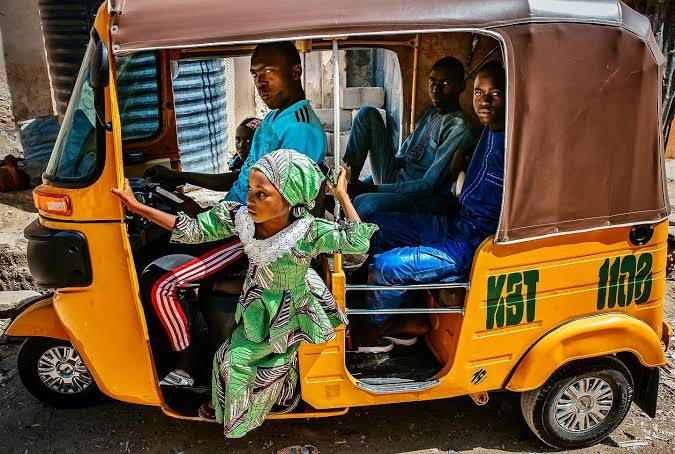
The Kano State Hisbah Board has concluded arrangements to commence enforcement against female passengers who sit beside male tricycle drivers in Kano State, in a move it says is aimed at promoting morality in society.

In a statement issued by its Director of Public Enlightenment, Auwalu Ado Sheshe, the Board said the operation would be carried out in collaboration with associations of tricycle riders and owners across the state.

The directive specifically targets situations where women ride in close proximity to drivers who are not their maharams while using commercial tricycles, popularly known as Adaidaita Sahu. The Board described the measure as part of efforts to sanitize the transport sector and prevent actions that could attract the displeasure of Allah (SWT).

It called on all tricycle operators to comply with the new regulation to avoid sanctions, warning that enforcement would begin imminently.

Female passengers were also urged to adhere to the directive, which the Board said is intended to safeguard their dignity and that of their families.

The Hisbah Board reaffirmed its commitment to ensuring a morally upright society guided by Islamic teachings, stressing that it is fully prepared to enforce the measure across the state.

Sokoto Hisbah seals hotel for accommodating underage girls

By Anwar Usman

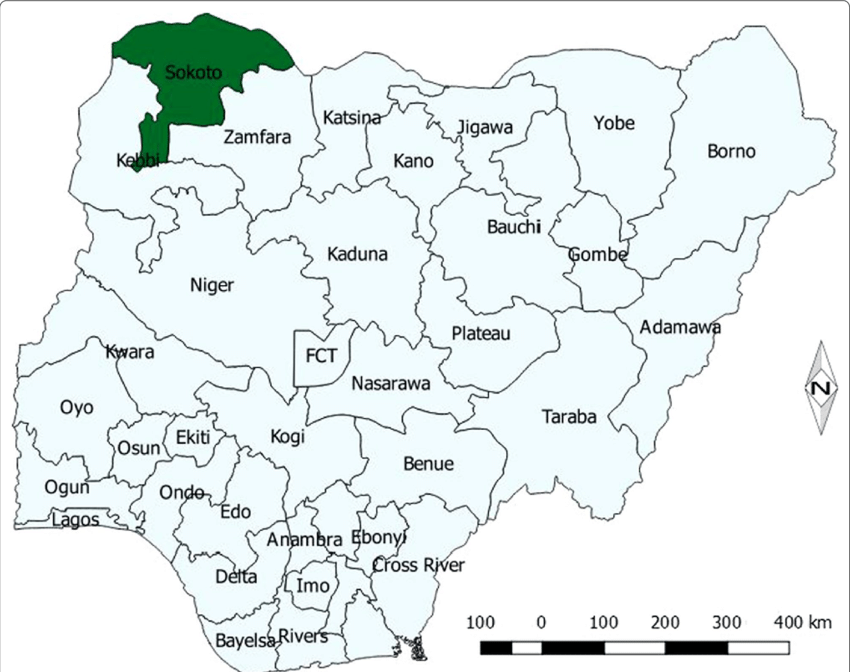
Sokoto State Hisbah Board has shutdown a hotel in the state capital over allegations of accommodating underage girls on its premises.

The incidence was confirmed by the Deputy Commander General of the board, Prof. Abubakar Usman Ribah, on Tuesday, saying that the action followed repeated violations by the hotel despite earlier warnings.

Ribah said the hotel was found to have breached regulations prohibiting the lodging of underage persons, describing the act as contrary to the moral and legal standards upheld by the board.

He stated that, the hotel had previously been cautioned and had also entered into an agreement with the Hisbah Board and other hotel operators in the state not to allow underage children to stay in their facilities.

“This is the second time such an offence has been recorded at the Executive Hotel, despite previous warnings and assurances by the management to desist from the practice,” he said.

He further explained that the decision to shut down the hotel was taken due to its failure to comply with the board’s directives and the conditions agreed upon during engagements with hotel owners across the state.

Riba further reiterated the board’s unwavering commitment to enforcing laws and would continue to enforce its regulations in line with the state’s religious and cultural values, emphasising that such measures were necessary to maintain public order and morality.

Hisbah nabs 25 for alleged same-sex marriage in Kano

By Uzair Adam 

The Kano State Hisbah Board has apprehended at least 25 persons for allegedly organising a same-sex marriage in the Hotoro area of Kano metropolis.

Deputy Commander of the Board, Dr Mujahedeen Aminudeen, confirmed the arrest in a statement made available to The Daily Reality on Sunday.

He said the suspects—18 males and seven females—were arrested at the Fatima Event Centre along Hotoro Bypass on Saturday.

“Today, Saturday, 25th October 2025, we received a report that some individuals were allegedly organising a same-sex marriage. 

“Our personnel immediately stormed the Fatima Event Centre, the venue of the illegal gathering, and successfully arrested 25 persons,” Aminudeen stated.

He added that the suspects, including the alleged groom, were from different parts of the state, such as Sheka, Yar Gaya, and Kofar Nassarawa.

Aminudeen cautioned that the Board would not tolerate any act capable of undermining the moral values of Kano State.

“We are calling on members of the public to support the Hisbah Board by reporting immoral activities across the state. 

“The Board will continue to clamp down on such gatherings that promote immorality,” he said.

Give honour to whom honour is due: Reflections on the conferment of an honorary doctorate on Sheikh Daurawa

By Murtala Uba Mohammed

Just last Saturday, September 6, 2025 (equivalent to 13th Rabi’ul Awwal, 1447 AH), the prestigious Usmanu Danfodiyo University, located in Sokoto—the historic seat of the Sokoto Caliphate—took the bold step of awarding an Honorary Doctorate Degree to Malam Aminu Ibrahim Daurawa, a renowned erudite Muslim scholar. Indeed, there could be no better place in sub-Saharan Africa to honour such a distinguished scholar than the city that once served as the headquarters of the Muslim Caliphate and home of the revered Shehu Usmanu bn Fodio.

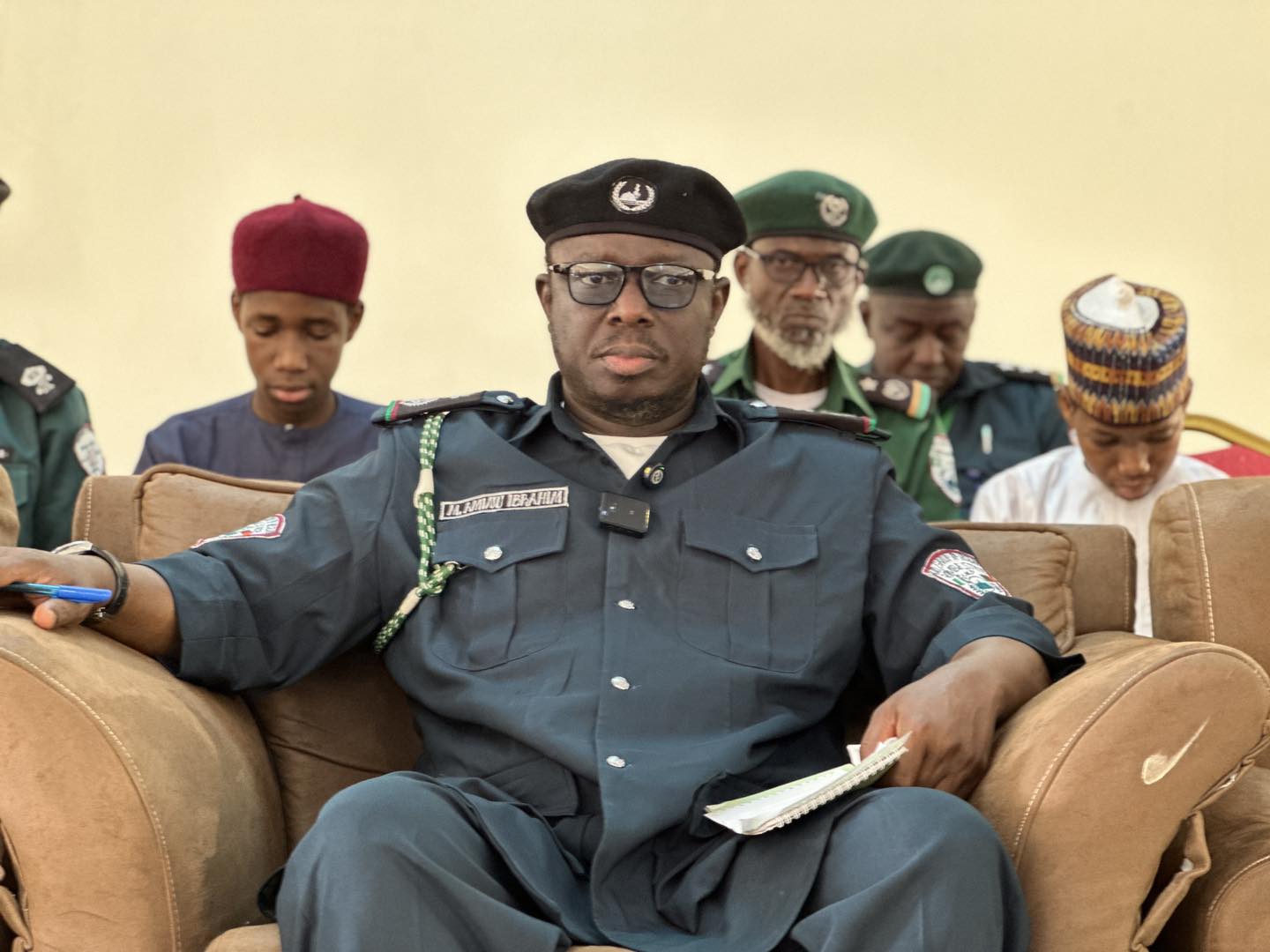
Malam Daurawa, the current Commander General of the Kano State Hisbah Board, was born some 56 years ago in the ancient city of Kano. His birthplace, Daurawa, lies just east of the Kano City Wall near Kofar Mazugal. He studied Islamic sciences under many teachers, including his father, Malam Ibrahim Maitafsiri, who was celebrated in his lifetime for his expertise in Qur’anic exegesis. Malam Daurawa’s depth of Islamic scholarship is remarkable. In addition, he pursued formal education up to the college level.

Through his teaching and preaching, Malam Daurawa has commanded great influence among Hausa-speaking Muslims across Nigeria, Niger, Cameroon, Chad, and Ghana. His reach also extends to countries with sizeable Muslim populations, such as Saudi Arabia, Sudan, and Egypt. 

Right from his childhood, Malam Daurawa has been known as a person of truth, honesty, forthrightness, humility, and impeccable integrity. This was evident during his early involvement in the Islamic Tajdīd Islamy (JTI), known for challenging Ibrahim Zakzaky’s then-concealed Shi’ite identity. While JTI exposed the deception of Zakzaky’s movement, Daurawa eventually disagreed with some members due to his conviction that Islamic scholarship should embrace a wider horizon of jurisprudential schools and perspectives. His zeal for knowledge led him to step away from the group in pursuit of deep and extensive Islamic knowledge—a commitment that has contributed greatly to his current status as one of the leading voices in Islamic learning.

Even before the dawn of Nigeria’s Fourth Republic and the spread of private radio stations, Malam Daurawa has already established himself as a dedicated teacher of Islamic knowledge, nurturing countless study circles. My first encounter with him dated back to 1999, when he commenced lessons on Imam an-Nawawī’s Riyāḍ al-Ṣāliḥīn at our mosque, Sa’ad bin Abī Waqqās Masjid, in Zango, within the historic city of Kano. That experience left an indelible mark on me.

I vividly recall the year 2002, when, as a student at CAS Kano, I listened to him delivering a lecture on Islamic history and the Sokoto Caliphate. It was then that my admiration for him deepened. The ease with which he narrated history; so fluent and effortless, as if reading directly from an unseen manuscript,was nothing short of remarkable.

His scholarship reminds me of the words once spoken about Ibn Taymiyya by one of his contemporaries thus: “I saw Ahmad ibn Taymiyya as if he had a calabash filled with knowledge before him; he would give what he wished and withhold what he wished.” Truly, Malam Daurawa is a fountain of knowledge, a wellspring of wisdom that flows generously to all who care to listen. His presence is not merely that of a preacher but of a guide whose words illuminate minds and inspire hearts.

By 2003, Malam Aminu’s gift became even more evident, particularly through his teaching sessions in various study circles within Kano city. Among the most famous of these were Triumph Mosque in Fagge, where he taught Zād al-Ma‘ād by Ibn Qayyim al-Jawziyyah, later adding al-Shifā’ bi Ta‘rīf Huqūq al-Musṭafā by Qādī ‘Iyād. He also taught at Kawu Iliya Mosque at the Brigade area. I cannot forget his short-lived teaching of Imam Mālik’s al-Muwatta at Abdurrahman bin ‘Auf Mosque in Kofar Wambai. Unfortunately, that circle of al-Muwatta was disrupted by hired miscreants who came and attacked disciples. Despite the commotion and fitnah stirred against him, Malam Aminu was willing to continue teaching. However, as we later learnt that the elder patron of the mosques, Alhaji Yusuf Abdullahi, advised that the lessons be suspended. Even so, Malam once introduced teaching of Sharh al-Sunnah by Imam al-Barbahārī at Sa’ad Mosque in Zango.

With the proliferation of private radio stations, especially from 2000s onwards, Malam Daurawa rose to greater prominence through his program Kundin Tarihi aired on Freedom Radio in Kano. The program quickly became immensely popular because it introduced a unique style of narrating the history of the Prophet Muhammad (SAW), his family and companions and Islam. With a distinct approach, Malam Daurawa presented history with clear references to its sources and explained the lessons to be drawn from it. He also responded to questions in an engaging and captivating manner. This style of teaching and narrativity of Islamic history won admiration across doctrinal—even from those who did not always identify with his Salafi creed. Before long, people across the city eagerly tuned in to his lectures. As a testimony to this impact, I recalled that the Bayero University-based double Professor, Abdalla Uba Adamu, on more than one occasion, mentioned that two scholars stood out to him: Sheikh Ibrahim Khalil and Malam Daurawa. He explained that Sheikh Khalil impressed him with his fatwa (legal verdict) and cordial relationship with the university community, while Malam Daurawa captivated him with his Kundin Tarihi program.

Usmanu Danfodiyo University, Sokoto, made it clear that it was Malam Daurawa’s lifelong service and dedication to the community that earned him the honorary doctorate degree. Anyone familiar with the revival of the Hisbah Board under his leadership can readily attest to his commitment. At various times, when the institution became comatose, Malam Daurawa was always there to resuscitate it. He has served three separate terms as Commander General of the Hisbah: 2011–2015, 2015–2019, and from 2023 to date; the longest cumulative leadership in the board’s history. A clear sign of his competence is the way he successfully served under three different governors namely: Senator Rabi’u Musa Kwankwaso, Dr. Abdullahi Umar Ganduje, and Engineer Abba Kabir Yusuf.

Beyond the Hisbah, Malam Daurawa’s leadership qualities are reflected in his service as Imam of Friday mosques, most notably the Ansarussunnah Mosque in Fagge. During the month of Ramadan, for many years, he traveled to Gombe to conduct Qur’anic tafsir. He has also established schools where children learn Qur’anic memorization and Islamic studies. Those who know him affirm that wherever Malam Daurawa resides, he establishes circles of learning for children, women, and youth. Always innovative in his pedagogy and propagation, he once advanced the idea of translating Islamic teachings and recording them in Hausa, Fulfulde, and English in an attempt to extend Islamic propagation to the far and extreme ends of Nigeria and beyond. The blessings of his knowledge have touched not only the wider community but also his home and family.

Furthermore, Malam Daurawa is an accomplished author, with more than thirteen publications in different areas of Islamic studies. One of his works, Sa‘ādatul Muslim fī mattafaqa ‘alayhi Bukhārī wa Muslim, has become a widely used teaching text in Islamiyya schools. His concern with social reform also inspired him to author books such as Kimiyyar Aure (The Science of Marriage) and Sirrin Maza (The Secret of Men).

Anyone who reflects on the life of Malam Daurawa will recognize that he is a divine trust for the community; tireless, unyielding, and sincere in every responsibility he undertakes. Indeed, Usmanu Danfodiyo University has made a wise and deserving choice in honoring him. While I congratulate Malam Daurawa on this recognition, I also congratulate the University for seizing the opportunity to bestow honor where it is truly due. Malam Daurawa is not a man of wealth who dispenses riches, nor a man of political power who grants favors. What he possesses is his time and his knowledge, and the community has long been reaping the benefits of this priceless treasure. God willing, he stands among the very best of people—khayr al-nās man yanfa‘u al-nās (the best of people are those who benefit others). May Allah reward him abundantly, elevate Usmanu Danfodiyo University, and bless all centers of learning across our nation.

Dr. Murtala is a bilingual writer who holds a PhD in geography and teaches at Bayero University Kano
Censoring the uncensored: The irony behind Hisbah’s ban on Hamisu Breaker’s song

By Ummi Muhammad Hassan

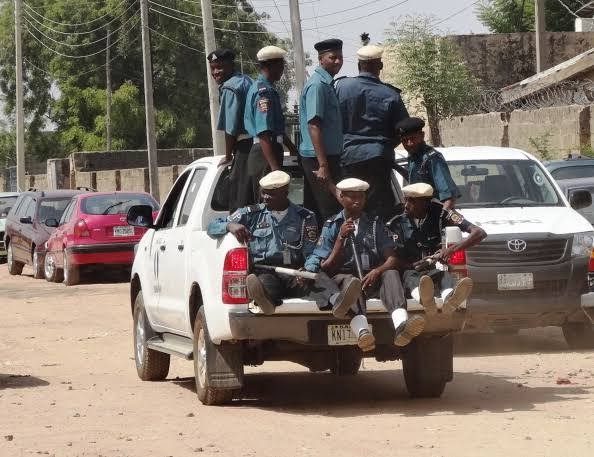
Following the ban by Hisbah on a new song titled “Amana Ta” by Hamisu Breaker, social media went into an uproar, capturing the attention of the public.

In the early hours of April 24, 2025, social media was filled with reactions following a press statement issued by the Deputy Commander of the Hisbah Board, Kano State chapter, Dr. Khadija Sagir, announcing the ban of Breaker’s new song. The reason cited was that the song allegedly contains obscene language.

This announcement, however, triggered a counterreaction from the public. Many became curious to know more about the song and the so-called obscene content, with some taking to their social media handles to express their opinions.

The irony of the situation is that Hisbah unintentionally gave the song more prominence, causing it to go viral. Many people who were previously unaware of the song searched for and listened to it, just to understand the controversy.

In my opinion, after listening to the song, it contains no obscene language. Rather, the issue seems to lie with some young women who mimed the song in a suggestive manner after hearing that Hisbah had labelled it as indecent—as though to dramatize or reinforce the claim. Some even appeared as if they were intoxicated.

To me, this is both devastating and concerning, as it reflects the erosion of the strong moral standards once upheld by Hausa women. Many young people are now making videos lip-synching the song in indecent ways. It made me pause and ask myself: where has our shyness gone? I believe this question deserves a deeper conversation on another day.

In Breaker’s case, thanks to the Hisbah ban, he became the most trending Kannywood artist in April, and his song went viral—and continues to trend.

A similar incident occurred earlier this year when the federal government banned Idris Abdulkareem’s song “Tell Your Papa.” That action unexpectedly brought the artist back into the spotlight, causing the song to trend widely.

Social media has made censorship increasingly difficult. Once a movie, text, or song reaches the internet, it becomes almost impossible to control—even by the creators themselves.

While social media censorship remains a challenge, this recent incident highlights the need for the government to intensify efforts against the spread of indecent content—through Hisbah and agencies like the Kano State Film Censorship Board.

Clear guidelines should be put in place, requiring artists and filmmakers to submit their content for review and approval before public release. This, among other strategies, could help reduce the spread of inappropriate material.

Additionally, Hisbah should be more mindful of how such announcements are made, as they may inadvertently promote the very content they seek to suppress.

Ummi Muhammad Hassan, Ph.D., is a lecturer in the Department of Mass Communication at Bayero University, Kano. She can be reached via email at: ummeemuhammadhassan@gmail.com.

The erosion of values: How Hisbah’s decision to stop arrests is affecting Kano, by Muhsin Ibrahim

By Muhsin Ibrahim – Cologne, Germany

Let me say it aloud today: the Kano Hisbah Board’s decision to stop arresting people is quite disturbing.

Of course, I am one of those brave few commentators who criticised their method of arresting suspects some time ago, and I still stand by that view and criticism.

From Berlin to Baltimore, London to Lahore, Tel Aviv to Taipei, and Moscow to Muscat, security operatives sometimes manhandle individuals when arresting them. We are all humans!

If all arrests are halted, people will have free rein in Kano. Soon after Hisbah’s announcement, some socialites from other states and countries began relocating to Kano. They act freely and upload their videos on social media.

Kano is cosmopolitan but has unique norms, values, cultures, and religion that deserve respect. We cannot stop globalisation and cultural diffusion, but we should be concerned when our values are undermined.

Globally, countries still protect their “values” in one way or another. “Muhammad” can be – and is – the most popular baby name in England and Wales, but that doesn’t mean Muslims can, for example, legally practice polygyny. This is just but one example.

Kano State Government should reconsider how it manages Hisbah. You either have a functioning Hisbah or no Hisbah at all.

Hisbah should not be a toothless dog. Several clerics are already preaching (wa’azi, nasiha, etc.). It’s not Hisbah’s role to do just that; they need some power to use “force” at a certain level.

May we be guided, amin.

Muhsin Ibrahim is a Kano-born lecturer at the University of Cologne, Germany. He can be reached via muhsin2008@gmail.com.

Hisbah shuts down hotel for allegedly lodging underage girls in Katsina

By Uzair Adam Imam

The Katsina State Hisbah Board has shut down New Palace Hotel in Katsina metropolis for allegedly corrupting the morals of underage girls.

The hotel was found to have violated an agreement with hoteliers across the state by allowing underage girls to stay on the premises.

Despite previous warnings, the hotel management failed to comply with the board’s regulations, leading to the hotel’s closure.

According to Dr. Aminu Usman (Abu Ammar), the Hisbah Commander General, the hotel was found to have lodged two underage girls in the same room during a recent inspection, which contravenes the Hisbah laws.

This is the second time the hotel has committed this offense, despite previous warnings and a promise by the hotel’s management to stop such incidents.

The Hisbah Board had earlier reached an agreement with hotel managers across the state that no hotel would accommodate underage children.

The hotel’s failure to comply with this agreement led to its closure.

The Hisbah Commander General reiterated the board’s commitment to enforcing reforms and instilling discipline that aligns with the state’s religious and cultural values.

The closure of the hotel is part of the Hisbah Board’s efforts to enforce reforms and ensure that hotels in the state comply with moral standards.

The board has been working to prevent the exploitation of underage girls and promote a culture of decency and respect for human rights.

Hisbah saga: governor’s public condemnation, misstep in leadership

By Umar Sani Adamu

The recent public criticism by Governor Abba of the Hisbah board in Kano State has sparked controversy and raised concerns about leadership decorum and responsible governance. While it is crucial for leaders to address concerns and seek improvement within government agencies, the manner in which Governor Abba chose to express his dissatisfaction raises questions about his leadership style and the potential consequences of his actions.

First and foremost, criticizing a government agency publicly, especially one tasked with religious and moral enforcement like the Hisbah board, can create unnecessary tension and undermine public trust in the institution. Governor Abba’s decision to air his grievances in a public forum instead of handling them internally or through diplomatic channels demonstrates a lack of discretion and undermines the credibility of the Hisbah board.

Furthermore, by openly criticizing the Hisbah board, Governor Abba risks exacerbating existing tensions within the community and fueling resentment towards the agency. This could potentially undermine the effectiveness of the Hisbah board in carrying out its duties and could lead to a breakdown of law and order in the state.

Additionally, Governor Abba’s public criticism of the Hisbah board without offering concrete solutions or constructive feedback demonstrates a lack of leadership maturity. Effective leaders understand the importance of providing constructive criticism in a constructive and respectful manner, focusing on solutions rather than simply pointing out problems.

Moreover, Governor Abba’s decision to publicly criticize the Hisbah board instead of engaging in private dialogue with relevant stakeholders, such as Sheikh Mallam Daurawa, further highlights his disregard for diplomatic protocols and his tendency to prioritize personal agendas over the well-being of the community.

Adding the context of Murja Kunya’s situation provides further insight into the potential implications of Governor Abba’s public criticism of the Hisbah board. Murja Kunya, a social media influencer, has been accused by the Hisbah board of encouraging indecency and immorality. In this context, Governor Abba’s public condemnation of the Hisbah board could be interpreted as a form of protection for Murja Kunya.

By publicly criticizing the Hisbah board’s handling of the situation, Governor Abba may be perceived as undermining their authority and potentially shielding individuals like Murja Kunya from accountability. This not only weakens the effectiveness of the Hisbah board in enforcing moral standards within the community but also sends a troubling message about the government’s commitment to upholding moral values and protecting societal norms.

In light of these circumstances, Governor Abba’s public condemnation of the Hisbah board takes on an even greater significance. It not only raises questions about his leadership style and approach to governance but also calls into question his commitment to upholding moral standards and protecting the well-being of the community.

Therefore, it is imperative for Governor Abba to reconsider his approach and prioritize responsible leadership that fosters constructive dialogue and collaboration, while also upholding the values and principles that are essential for the well-being of society as a whole.

Umar Sani Adamu (Kawun Baba)