Health Care

Bridging the healthcare service divide in Nigeria

By Aishat M. Abisola

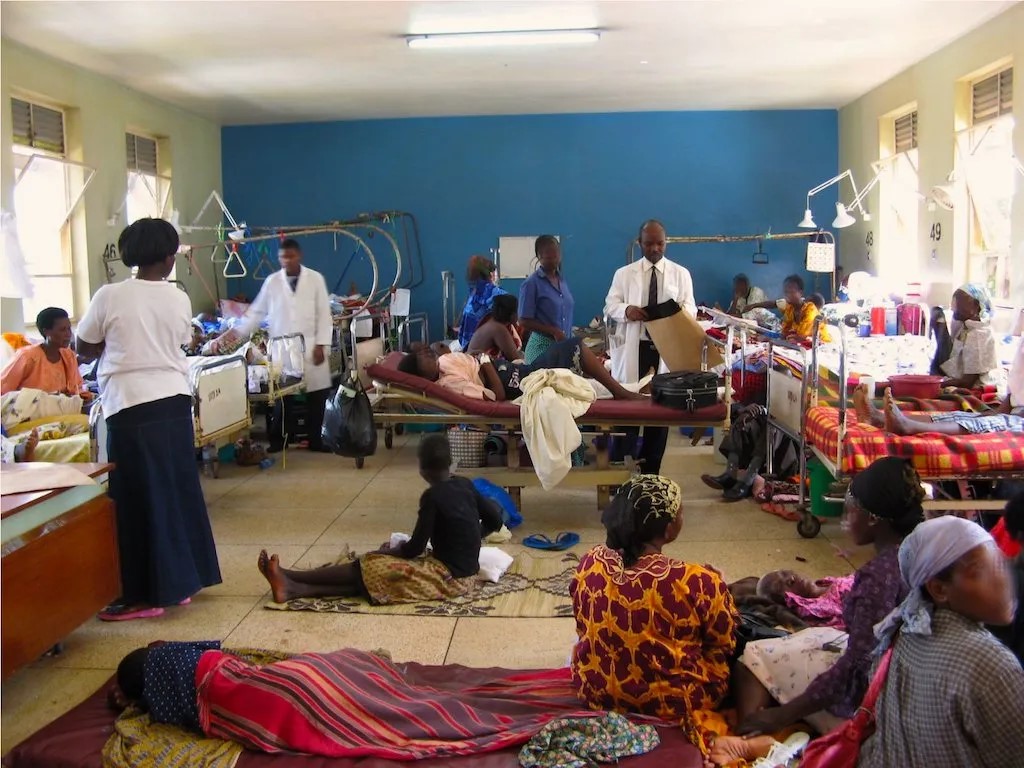
Nigeria, a nation marked by diverse landscapes and cultural richness, grapples with significant healthcare disparities between urban and rural areas. While urban centers face issues such as minimal medical resources, a lack of healthcare workers and a lack of necessary equipment, they still provide decent healthcare services unlike rural communities who face numerous challenges that hinder their access to essential healthcare services.

Rural communities in Nigeria encounter formidable barriers on regular basis when it comes to accessing healthcare services. One of the primary challenges is the shortage of healthcare facilities and trained medical professionals in remote areas.

According to a report by the World Health Organization (WHO), there is a significant urban-rural divide in the distribution of healthcare resources in Nigeria, with the majority concentrated in urban centers.

Challenges in Rural Healthcare Access

Geographic Barriers: One of the primary obstacles to healthcare access in rural areas is the geographic isolation of these communities. Many rural regions in Nigeria are situated far from urban centers, making it difficult for residents to reach healthcare facilities promptly. Long distances, poor road conditions, and a lack of reliable transportation options have contributed to delays or altogether neglected healthcare seeking behaviors.

Shortage of Healthcare Facilities and Personnel: Rural areas frequently deal with a shortage of healthcare facilities and trained medical professionals. Nigeria has a disproportionately low number of healthcare facilities in rural areas compared to urban centers. This shortage not only limits the availability of essential services but also results in prolonged waiting times for medical attention.

Financial Constraints:
Economic factors also play a significant role in healthcare access, especially in rural communities where poverty rates tend to be higher. The majority of rural residents often struggle to afford healthcare services, medications, and transportation costs to reach medical facilities. Out-of-pocket expenses associated with healthcare often deter individuals from seeking timely medical attention, exacerbating health problems and perpetuating a cycle of poverty.

Healthcare Infrastructure Disparities: The disparity in healthcare infrastructure between urban and rural areas is stark. Urban centers have significantly better hospitals and clinics, while many rural healthcare facilities are plagued by dilapidation and a lack of essential medical equipment. The Nigerian government’s National Health Facilities Registry highlights the uneven distribution of healthcare infrastructure, with urban areas having a higher concentration of better equipped facilities.

Lack of Skilled Personnel: In addition to inadequate facilities, rural areas face a shortage of skilled healthcare professionals. The WHO reports that the distribution of healthcare workers in Nigeria is highly skewed as urban areas have a more significant concentration of doctors, nurses, and other healthcare providers. This scarcity of skilled personnel in rural regions further diminishes the quality of healthcare services available to residents.

Power Challenges: Another critical aspect of healthcare infrastructure often overlooked is the lack of reliable electricity in rural regions. Many healthcare facilities in remote areas struggle with power shortages which hinders the functionality of medical equipment and limits the provision of essential healthcare services. Electrification rates in rural areas are considerably lower than in urban centers, exacerbating the healthcare infrastructure divide.

Proposed Solutions

Investment in Rural Healthcare Infrastructure: Increasing investments in rural healthcare facilities is imperative in order to address the healthcare infrastructure disparities. Building new, well-equipped healthcare centers and upgrading existing ones will improve the availability and quality of healthcare services in remote regions. The Nigerian government, in collaboration with international partners, can allocate funds specifically for rural healthcare infrastructure development.

Training and Deployment of Healthcare Professionals: Addressing the shortage of healthcare professionals in rural areas requires a comprehensive strategy. Government initiatives and incentives should be implemented to encourage medical professionals to work in undeserved communities. Investing in the education and training of local community health workers can also enhance primary healthcare services in rural areas and provide a sustainable solution to the shortage of skilled personnel.

Improving Transportation Infrastructure: Efforts to improve healthcare access should also focus on transportation infrastructure. Constructing and maintaining reliable roads in rural areas, as well as implementing affordable and accessible public transportation options, can significantly reduce travel barriers for rural residents seeking medical attention.

Financial Support and Health Insurance: The government can establish and promote health insurance programs targeted at low-income individuals in rural areas. These programs can provide financial relief and encourage healthcare utilization by covering medical expenses. Additionally, subsidies for essential medications and preventive healthcare measures can contribute to a healthier rural population.

Alternative Energy Solutions: Implementing alternative energy solutions such as solar power is crucial to provide a solution to address power challenges in rural healthcare facilities. The integration of sustainable energy sources can ensure a reliable electricity supply, enabling the consistent operation of medical equipment and improving the overall quality of healthcare services in rural areas.

Last line

Nigeria’s urban-rural disparities in healthcare accessibility and infrastructure can only be resolved when there is a concerted effort from the government, healthcare organizations, and the international community. By acknowledging the challenges faced by rural communities and implementing comprehensive, sustainable solutions, Nigeria can pave the way for a more equitable healthcare system.

Bridging these gaps is not just a matter of social justice but a strategic investment in the nation’s health and development. When stakeholders work collaboratively, the possibility of attaining accessible, quality healthcare for all Nigerians, regardless of their geographic location, can become a reality.

Aishat M. Abisola is a NYSC corps member with PRNigeria in Abuja

The impact of poverty on health, education, social structure, and crime

By Umar Sani Adamu

Poverty has far-reaching consequences on various aspects of society, including health, education, and social structure. Understanding these repercussions is crucial for addressing the root causes and developing effective strategies to alleviate poverty and its associated issues.

1. Health

Poverty significantly impacts health outcomes. Limited access to nutritious food, clean water, and adequate healthcare services contributes to a higher prevalence of malnutrition, infectious diseases, and chronic conditions among the impoverished. Lack of resources often results in substandard living conditions, exposing individuals to environmental hazards. Additionally, stressors associated with financial insecurity can lead to mental health issues, further exacerbating the overall health burden.

2. Education

Poverty creates barriers to educational attainment. Families struggling with economic hardships may prioritise immediate needs over investing in education. Children from impoverished backgrounds often face challenges such as inadequate access to quality schools, resources, and educational support. Limited access to books, technology, and extracurricular activities hinders their development. As a result, the cycle of poverty continues, as these individuals may find it challenging to break free from their circumstances through education.

3. Social Structure

The social fabric of a community is intricately linked to economic well-being. Poverty can contribute to the fragmentation of social ties as individuals grapple with the stress and uncertainty of their circumstances. Communities with high poverty rates may experience increased social inequality and a lack of social cohesion. This can manifest as reduced community engagement, weakened support networks, and a diminished sense of belonging.

4. Crime

Poverty is often identified as a significant factor contributing to crime. Several mechanisms explain this relationship. Firstly, individuals in poverty may resort to criminal activities as a means of economic survival. Limited opportunities for legitimate employment can lead some to engage in illegal activities to meet basic needs. Additionally, impoverished communities may experience higher rates of substance abuse, which can further contribute to criminal behaviour.

Furthermore, the lack of access to quality education and limited social support in impoverished areas can result in a higher prevalence of delinquency. The frustration and hopelessness stemming from persistent poverty may lead individuals, particularly young people, towards criminal behaviour as an alternative to breaking free from their challenging circumstances.

Addressing the Link Between Poverty and Crime

A multi-faceted approach is necessary to mitigate poverty’s impact on crime. Policies to reduce poverty through economic empowerment, education, and healthcare access are crucial. Investments in education, vocational training, and job creation can provide individuals with opportunities to escape the cycle of poverty and reduce the likelihood of resorting to criminal activities.

Social support programs that strengthen community bonds, mental health services, and addiction rehabilitation can address some of the root causes of criminal behaviour associated with poverty. Additionally, targeted efforts to improve law enforcement-community relations and reduce systemic inequalities can contribute to crime prevention.

In conclusion, poverty has profound consequences on health, education, and social structure, with a direct link to increased crime rates. Breaking this cycle requires comprehensive strategies that address the systemic issues contributing to poverty and simultaneously provide individuals and communities with the tools and resources needed for positive transformation.

Umar Sani Adamu (Kawun Baba) wrote via umarhashidu1994@gmail.com.

What do you do when antimicrobials stop working?

Bello Hussein Adoto

Last week, the world marked Antimicrobial Resistance Awareness (AMR) Week. The goal was to raise awareness about  AMR—a phenomenon where antimicrobials no longer kill or prevent the growth of the microbes they used to kill.

Our bodies do an excellent job of containing viral, bacterial, or fungal infections before a doctor chips in with a drug or two to kill the germs and bring us back to good health. These drugs include antibiotics for bacterial infections, antifungals for fungal infections, and antivirals for viral infections.

Unfortunately, some of us don’t go to—or wait for—the doctor to treat actual or presumed infections. We dash to the nearest chemist to buy ampicillin over-the-counter for boils (skin abscesses) and amoxil for typhoid. Patients who can’t tell the difference between dysentery and diarrhoea would buy branded Ciprofloxacin or Amoxiclav to resolve prolonged toilet troubles and stomach pain. Those who are not that buoyant would manage metronidazole.

Our health practitioners also contribute to the problem. A survey of 12 countries shows that Nigeria has the third-highest percentage of antibiotic prescriptions. Three out of every five patients on admission at our hospitals are on antibiotics. This heavy use of antibiotics contributes to Nigeria’s AMR burden.

The consequence of our use, abuse, and misuse of antibiotics is that the viruses, the bacteria, and the fungi have grown tough—they no longer fear us and our drugs. Our pills and creams are no longer as effective. Regular bacterial infections that were once treatable with first-line antibiotics have become stubborn. You may need a second or third line to treat them. Diseases that needed only Ciprotab now call for Ceftriazone and Imepenem. Diseases that were once tolerable have become debilitating, if not deadly.

The WHO recently spotlighted the story of a woman who had reconstructive facial surgery following an accident. The wound got infected and they treated the infection only for it to rebound and eat away at her face. Gradually, her facial muscles turned to cheese. Further tests showed she had MRSA, the dreaded methicillin-resistant Staphylococcus aureus. Luckily, the woman survived. “If I’d known earlier, maybe I wouldn’t have lost huge portions of my face,” she said years later.

Our ignorance about AMR doesn’t make it any less deadly. About five million people died from drug-resistant infections in 2019. More than one million of these deaths were linked directly to AMR.

Aside from being deadly, AMR is expensive. Infections with drug-resistant bacteria, for instance, mean that patients spend more on higher and more effective antibiotics. These antibiotics don’t come cheap. Augmentin, one of the go-to drugs for severe infections, is now 13,000 naira. That’s more than one-third of the minimum wage.

The task before us is to stem the tide this menace. The government is playing its part. It has drawn up a national action plan for AMR. The plan seeks to increase awareness about the problem

, promote surveillance and research, and improve access to genuine antibiotics. Doctors also have concepts like delayed prescription and antimicrobial stewardship to guide their prescriptions. You can join the fight too.

One, don’t use antibiotics without prescriptions. Trust your doctors when they say you don’t need antibiotics. Some viral infections like cold can resolve without drugs.

Secondly, complete your doses when using prescribed antibiotics. It could be tempting to abandon your drugs at the first sign of relief. It could be valid even: some research has shown that extended use of antibiotics after symptomatic relief doesn’t make any significant difference in recovery. Still, don’t discontinue your drugs at a whim. Speak with your doctor.

Thirdly, don’t share antibiotics or prescribe them to others. This should go without saying, but our desire to help friends and loved ones often pushes us to share drugs like antibiotics with them. You can do better by directing your friend or relative see a doctor. Antibiotics are not emergency drugs that can’t wait for a prescription.

Good hygienic practices can help, too. They limit the spread of infections, and the consequent antibiotics (ab)use. Wash your hands regularly. Adopt proper etiquette when you are in a hospital or laboratory environment. Doing otherwise increases your risk of contracting or transmitting new infections to your loved ones.

Five, get vaccinated. Vaccines protect you from contracting potentially resistant infections or spreading them to others. Moreover, viral infections that can be prevented with vaccines, like measles and influenza, are some of the reasons people abuse antibiotics. When you don’t contract influenza or measles, you won’t feel a need to abuse antibiotics.

The AMR Awareness Week has come and gone, but the problem and its consequences remain. They affect us all; everyone can and should contribute to the solution. You can be a part of the fight by not abusing antibiotics or demanding that your doctor prescribe antibiotics for you when you don’t need them. You can join in by not abandoning your treatment or sharing your drugs. You can get vaccinated too. Start now. Start today. Join the fight against AMR.

Hussein can be reached via bellohussein210@gmail.com.

The emotional toll on a caregiver

By Aisha Mahmud Yusuf

In August 2020, when my father was admitted to the hospital, my friend, who was doing her youth service (NYSC) at the same hospital, visited him. She later came when I was with him and told me something no one else had. She said, “I know exactly how you feel, and it’s okay to have all those emotions.” She understood that because her father had also been sick for years.

A few years later, some of my friends whose parents became sick would ask me, “Is that how you feel?” I would tell them it would get better with time and pray for the sick to get better. It made me realize that we don’t talk about it because without experiencing it, one doesn’t know how it feels to have a sick loved one and take care of them. 

Often, when someone is sick, what people see is the financial burden on the family members. But there is much more that they don’t see. The stress, anxiety, fear, and sometimes even guilt that the family members, especially the caregivers, go through is rarely acknowledged. Unfortunately, sometimes people even add to all these with their judgements and (sometimes accusations) unsolicited suggestions and advice on how to care for the patient.

People expect one to be a caregiver without showing emotions, to be on one’s feet 24/7 without a break, forgetting that we are humans too and there is a limit to what we can endure. 

In a society where mental health is still not a priority, you as a caregiver should take time to process your emotions and, if possible, take a break to avoid burnout. You cannot give from an empty cup. If it becomes overwhelming, find someone to listen and talk to them. 

When next you visit a sick person, check their caregivers too, share a few kind words, and appreciate them.  That will go a long way for them. Also, if a caregiver opens up to you, listen with empathy even if you don’t understand because you are not in their shoes and ask if you can help in any way.

Aisha Mahmud Yusuf wrote via aishatyusuf63@gmail.com.

The tragic death of Dr Tijjani Ibrahim: A call to improve healthcare in Nigeria

By Aliyu Musa Dada

Today, I want to bring our attention to a heartbreaking incident that highlights the shortcomings in our government’s support system. Dr. Tijjani Ibrahim, a young and dedicated medical doctor, fought bravely against decompensated chronic liver disease caused by Hepatitis B infection.

Despite the efforts of his friends to raise funds for his treatment, Dr Ibrahim tragically passed away before realising the required amount. This unfortunate event raises serious concerns about lacking a robust system to assist individuals, even those tirelessly dedicated to serving others, like Dr. Ibrahim.

We, as citizens, deserve a government that prioritises the well-being of its people, especially those in critical need of medical support. It is disheartening to witness the struggles faced by individuals who have dedicated their lives to saving others, only to be let down by a system that fails to provide adequate assistance.

Dr. Ibrahim’s passing is a stark reminder of the urgent need for reforms and investment in healthcare infrastructure. It should not rely solely on the goodwill and generosity of friends and well-wishers to fund essential medical treatments. Our government should be responsible for ensuring accessible and affordable healthcare for all citizens, especially those in dire situations.

In this moment of grief, let us remember Dr. Ibrahim as a compassionate and dedicated doctor who selflessly served his patients until the end. Our thoughts and prayers go out to his family and friends during this difficult time.

May Dr. Tijjani Ibrahim’s soul rest in peace, and may his legacy inspire us to advocate for change. Let us raise our voices and demand better support systems for individuals facing medical challenges.

We must unite as a community to address these issues and hold our government accountable. We can start by engaging in constructive conversations, raising awareness about the gaps in healthcare support, and urging policymakers to prioritise the well-being of their citizens.

Remember, change begins with us. Let us honour Dr. Ibrahim’s memory by actively working towards a healthcare system that provides timely and accessible support for all those in need.

ABUTH delivers first IVF baby in northwest

By Ahmad Deedat Zakari

Ahmadu Bello University Teaching Hospital, Zaria has recorded an unprecedented milestone in the North-Western region of Nigeria as the university hospital successfully delivered its first invitro fertilization (IVF) baby.

Professor Adebeyi Adesuyun of the Department of Reproductive Medicine, disclosed this to newsmen on Friday. He said, “A male baby was delivered at 10:53am on May 16 with weight of 3kg.”

The Professor noted the cost implication of the milestone and further disclosed that it was a journey began by ABUTH about twelve years ago.”

Such delivery is costly and not available in the whole of the northwest region. ABUTH is the only public health facility that offers IVF. The journey did not start today; we have been on it for more than 12 years, but paucity of funds in getting the right equipment was our major hindrance,” he said.”

He also disclosed that the hospital has patients on their waiting list to receive the treatment.